A sun tattoo carries warmth, energy and the promise of brighter days ahead, which is why so many people pick it to mark a fresh start. This guide from Holistic Ink in Boston walks through 10 designs and what each one means, then helps you choose a style, a body area and an aftercare routine that keeps the rays crisp for years. Our artists in Dorchester, South Bay and Cambridge talk through these choices with clients every day.
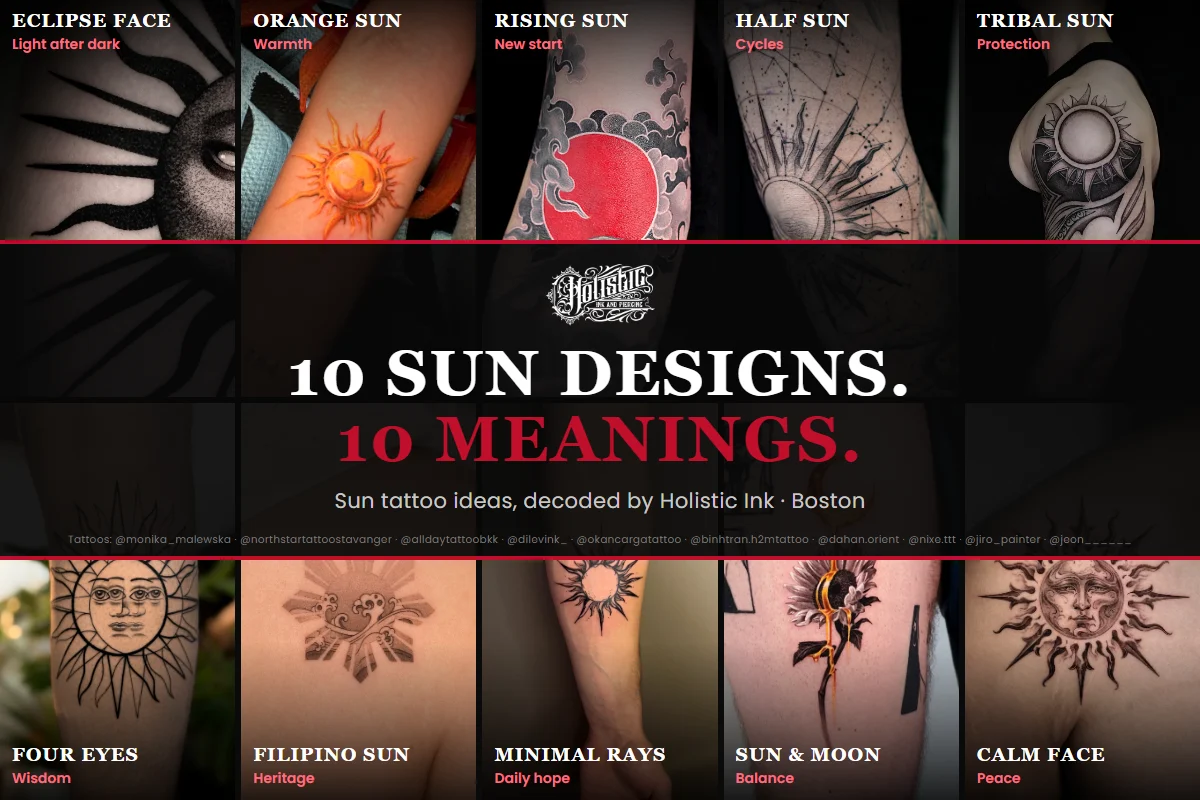
Sun Tattoo Designs and Their Meanings by Holistic Ink
Across many cultures, the sun has stood for life, light and the turning of the day. Ancient Egyptians linked it to Ra, the Inca honored Inti as a sun god, and Japan’s flag carries a red sun disc, while several Polynesian traditions work solar motifs into their art. Those associations give a design its starting point. Straight or wavy rays, a face, a half circle or one particular color then change what it says.
| Element | Meaning | Style that suits |
|---|---|---|
| Straight rays | Clarity, direct energy, confidence | Black and gray realism, linework |
| Wavy or flame rays | Heat, movement, life force | Color realism, Japanese |
| A face inside the disc | Awareness, a watchful guardian, wisdom | Realism, engraving, linework |
| Half sun on a horizon | New beginnings, cycles, hope | Fine line, dotwork, Japanese |
| Red | Vitality, good fortune, a rising sun | Japanese, color realism |
| Orange and yellow | Warmth, optimism, energy | Color realism |
| Sun with a moon | Balance between day and night | Blackwork, color accents |
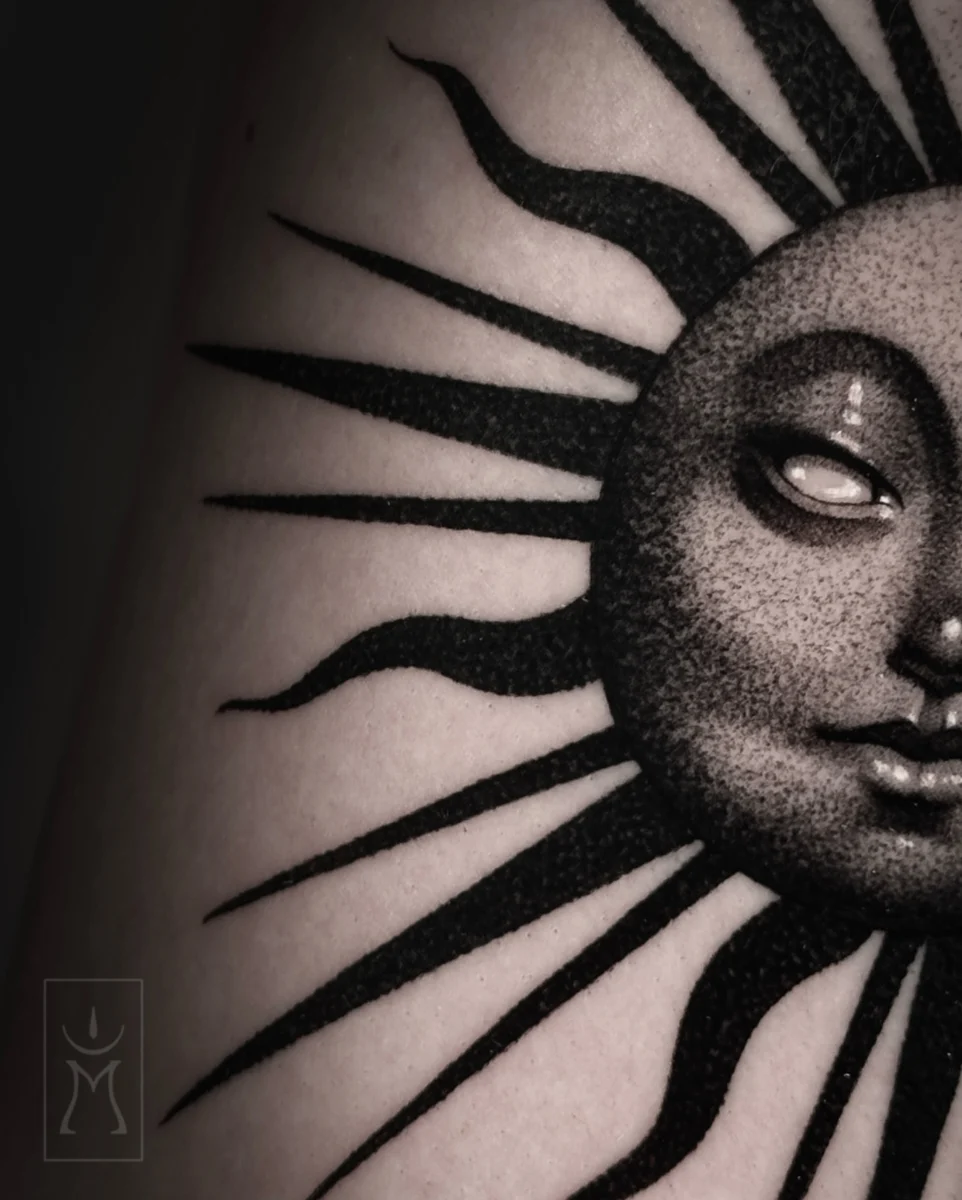
Black and Gray Realism Eclipse Sun With a Human Face
Half of a calm human face melts into a sun disc, with bold black rays fanning out around it and fine stippled shading giving the skin a soft grain. The composition resembles an eclipse, a moment when day and night overlap, so it often stands for light that arrives after a dark period. Stippling builds tone from thousands of tiny dots, and those dots need a large area, because once the piece is shrunk they run together into a flat gray patch. The shoulder or chest has a lot of room for it. Pick this one if you want a quiet reminder that a hard stretch is behind you.
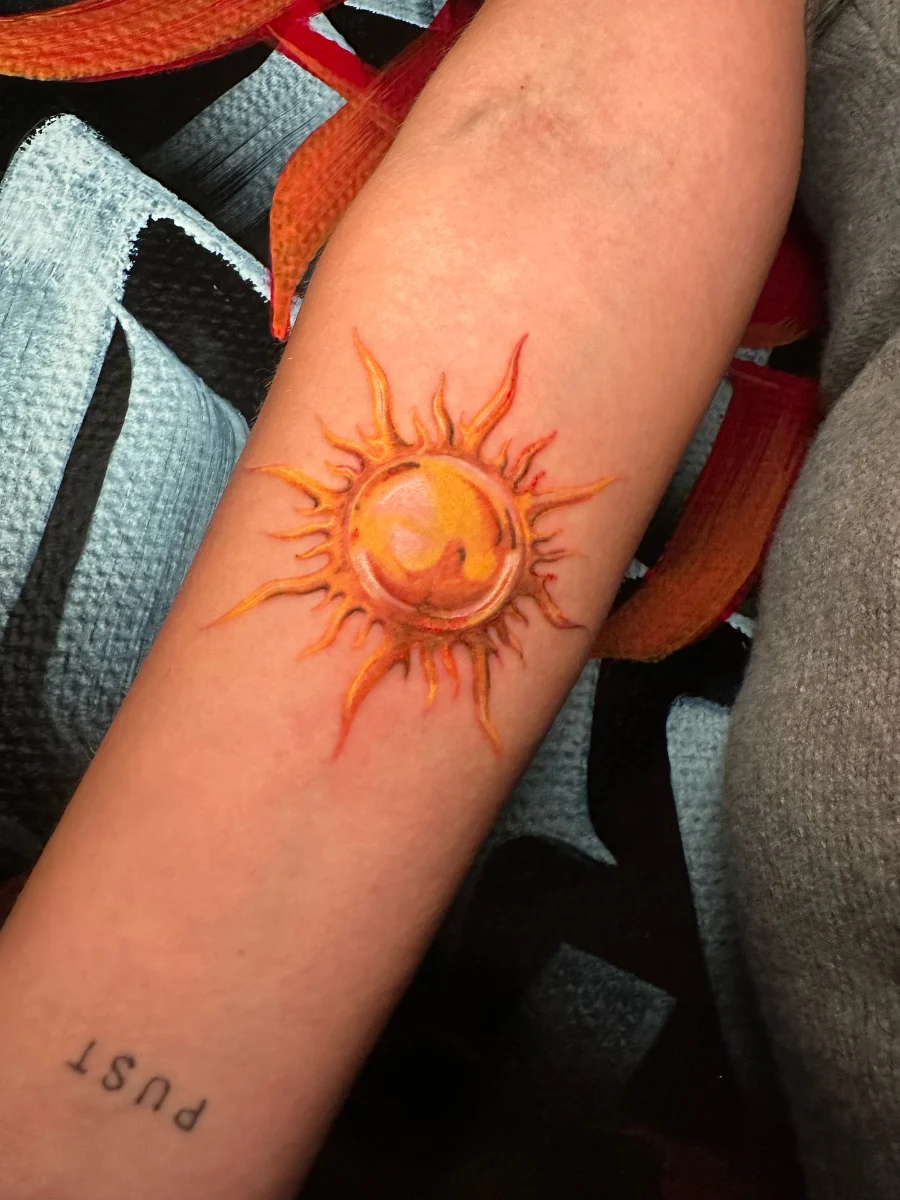
Color Realism Orange Gradient Sun
On this forearm, the sun moves from a pale yellow core through deep orange to a red edge, with thin rays spreading outward. Soft color blends do the work that outlines would do elsewhere. Smooth tonal shifts give the disc its warmth. The design speaks of energy, optimism and vitality, so it suits someone who wants a bright piece. Orange and yellow can fade sooner than black in strong sunlight, which is why broad-spectrum sunscreen and an occasional touch-up keep the glow.
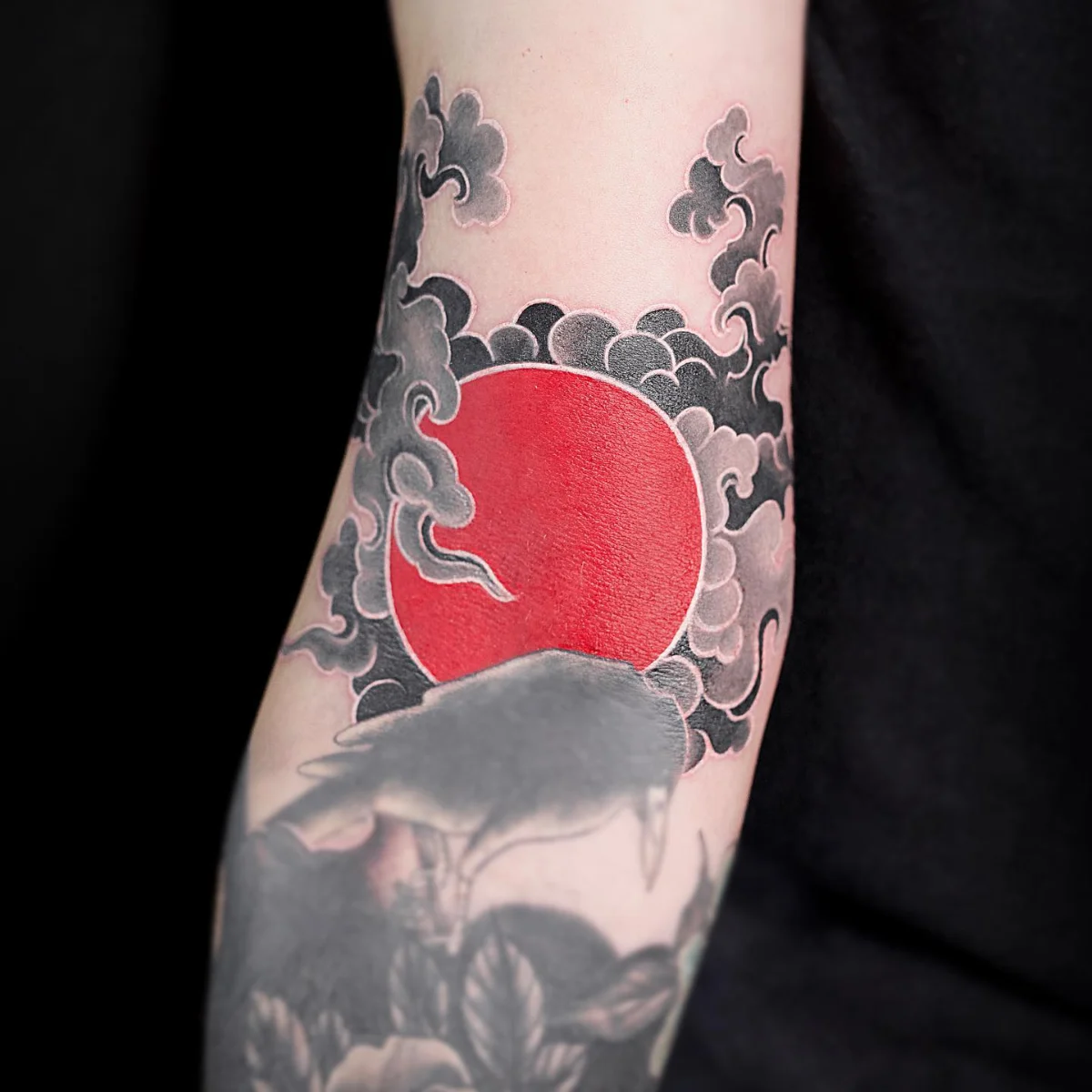
Japanese Irezumi Red Rising Sun With Clouds
A flat red disc rises behind rolling clouds drawn with heavy black outlines. A smoky black and gray background pushes the red forward, so the disc becomes the first thing your eye lands on. In Japanese-inspired work a rising sun can point to luck, a fresh start and the first light of a new day, while the clouds add movement and depth. Irezumi relies on bold outlines and packed color, and that keeps the piece readable as the skin ages. Go for it if you want strong, graphic work with a story of renewal.
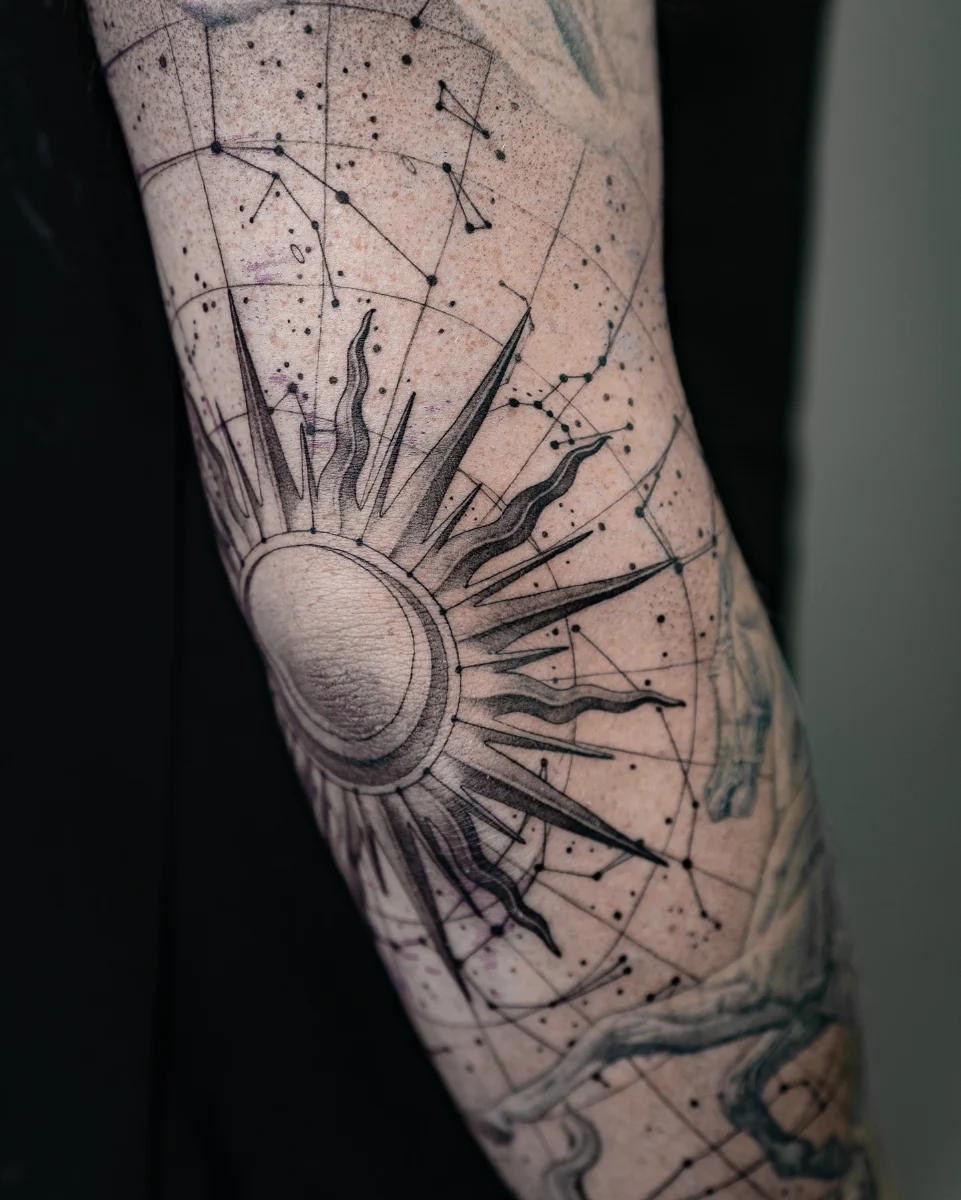
Celestial Half Sun With a Star Map
A half sun with long rays sits inside a constellation map of thin connecting lines that wraps around the forearm. The picture opens onto a much wider sky. Along the horizon, the half circle suggests the cycle of sunrise and sunset coming round again and again. Fine line work and dotwork keep it light, though thin lines need space between them to stay separate. If you love astronomy, or want a sun piece that feels delicate instead of heavy, this is a good pick.
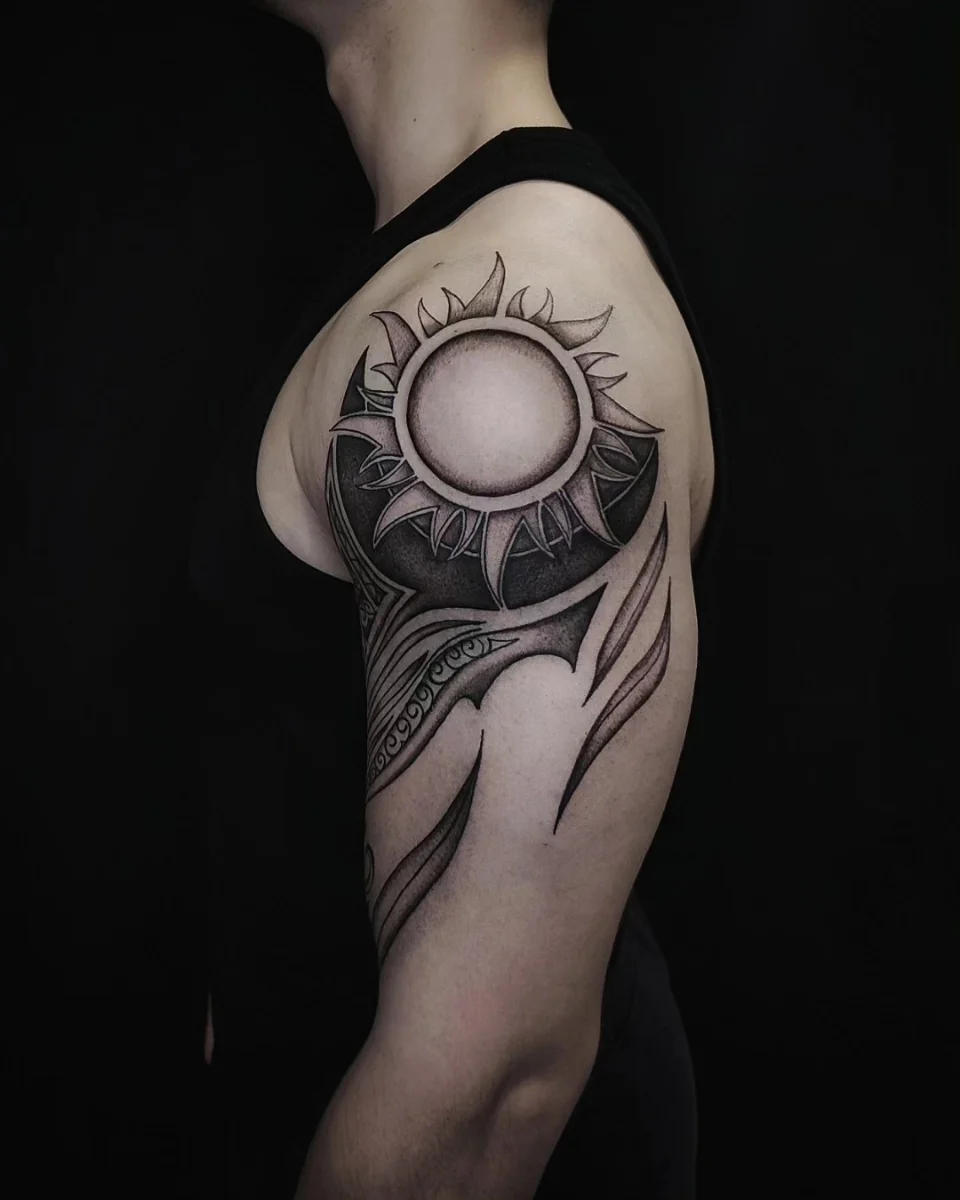
Tribal Blackwork Sun on the Shoulder
A white sun disc sits in the middle of dense black rays and curved tribal bands that follow the shape of the shoulder. Solid blackwork like this can stand for strength and protection, especially when the sun is drawn as a guardian watching over the day. Heavy black tends to keep its shape better than delicate detail, though sunscreen still matters for keeping it dark. Consider it if you want a bold, graphic mark that moves with the muscle, because the shoulder and upper arm give the bands room to curve.
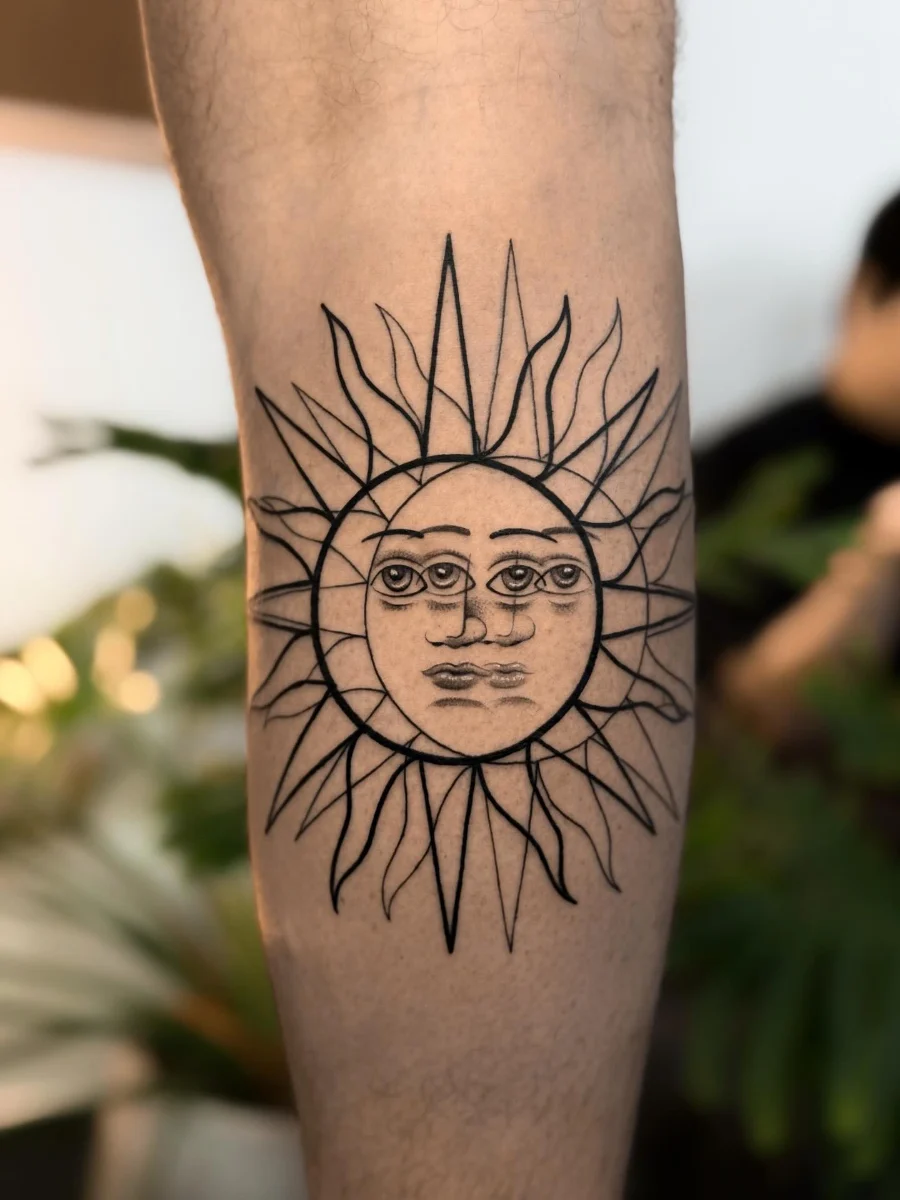
Sun Face With Two Pairs of Eyes
The face sits inside a round disc framed by two rings of sharp rays. Two pairs of eyes give it an unusual, watchful look. Many people read the extra pair as a sun that sees both day and night, which turns the design into a symbol of wisdom and awareness. Even black linework keeps the face clear at a modest size, and the inner upper arm suits it well, since the round shape sits flat there. People who spot the second pair tend to ask about it.
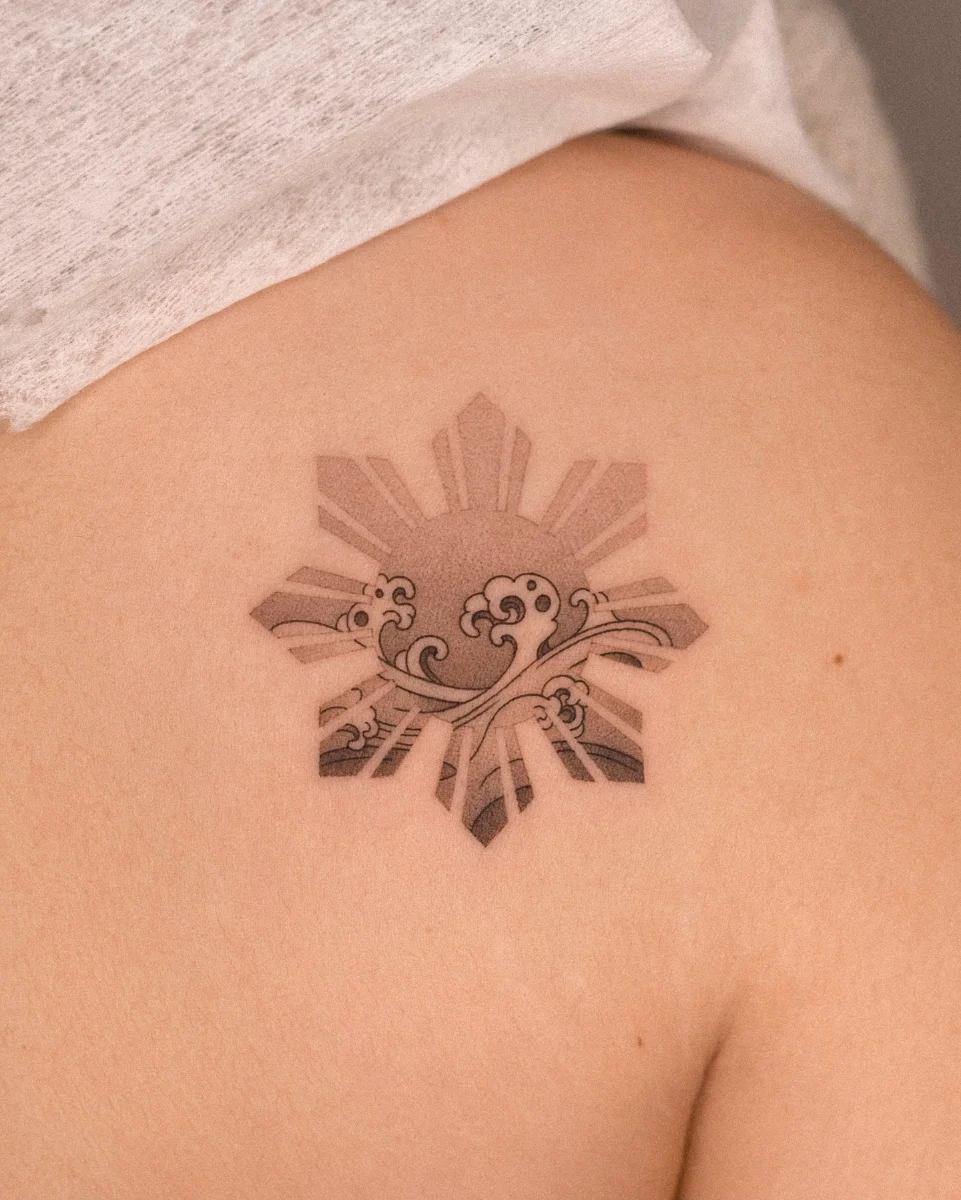
Filipino Sun With Waves
Eight rays, as on the Philippine flag, surround small waves in the middle of this design, with soft dotted shading around the edges. The eight rays are often tied to the first provinces that rose against Spanish rule, so the piece nods to history, heritage and the sea. Fine line and dotwork keep the shoulder blade piece clean, and the dots add depth without heavy black. If your family comes from the Philippines or another island culture, a design like this lets you carry that background in a way that feels personal.
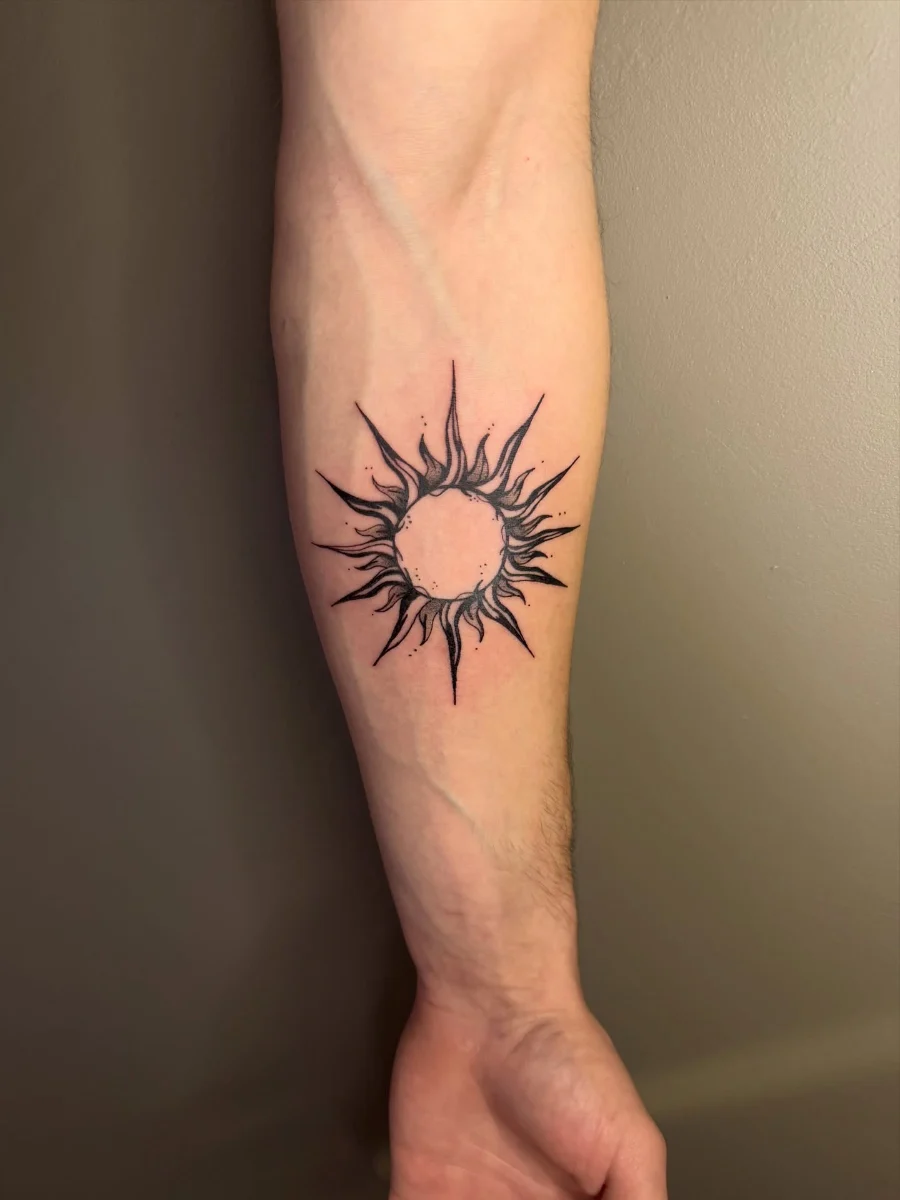
Minimal Rayed Sun in Dark Red
Thin rays of alternating length surround a small pale pink circle, all drawn in dark red ink on the inner forearm. Minimal designs like this carry a simple meaning, that every day is a fresh start, and the quiet color makes the piece feel personal instead of loud. Because the lines are so thin, size matters a lot, and an artist will usually keep the rays well apart so they don’t merge as the skin ages. It’s a great first tattoo, or a small addition to a growing collection.
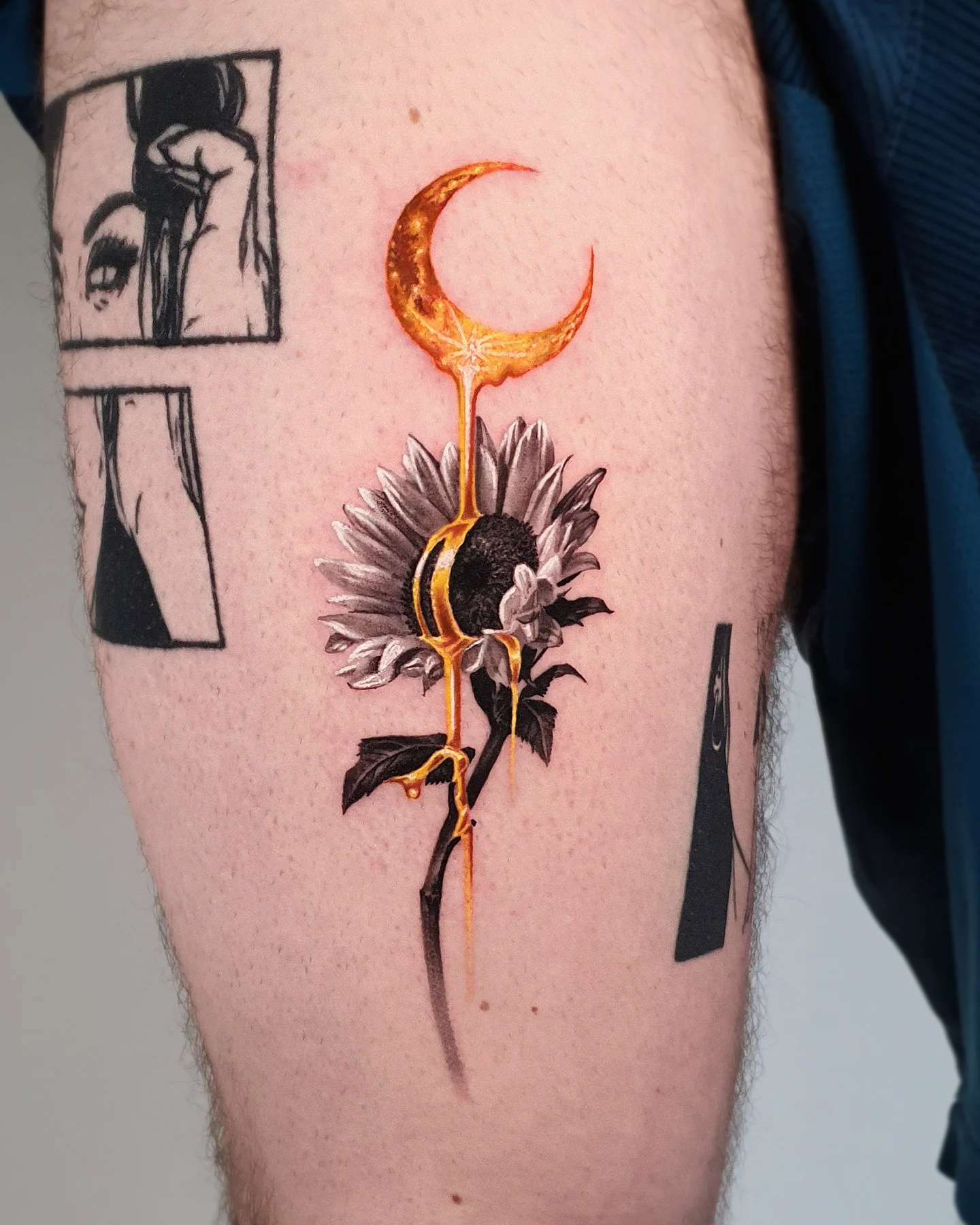
Crescent Moon and Sunflower
An orange crescent moon rests above a black sunflower on the upper arm, with a dark shadow tucked along one side. The sunflower follows the sun across the sky, so it speaks for daylight, while the crescent moon brings in night and rest. Together they build a picture of balance. Pick this one for a sun and moon pairing that feels softer and more floral than a classic face.
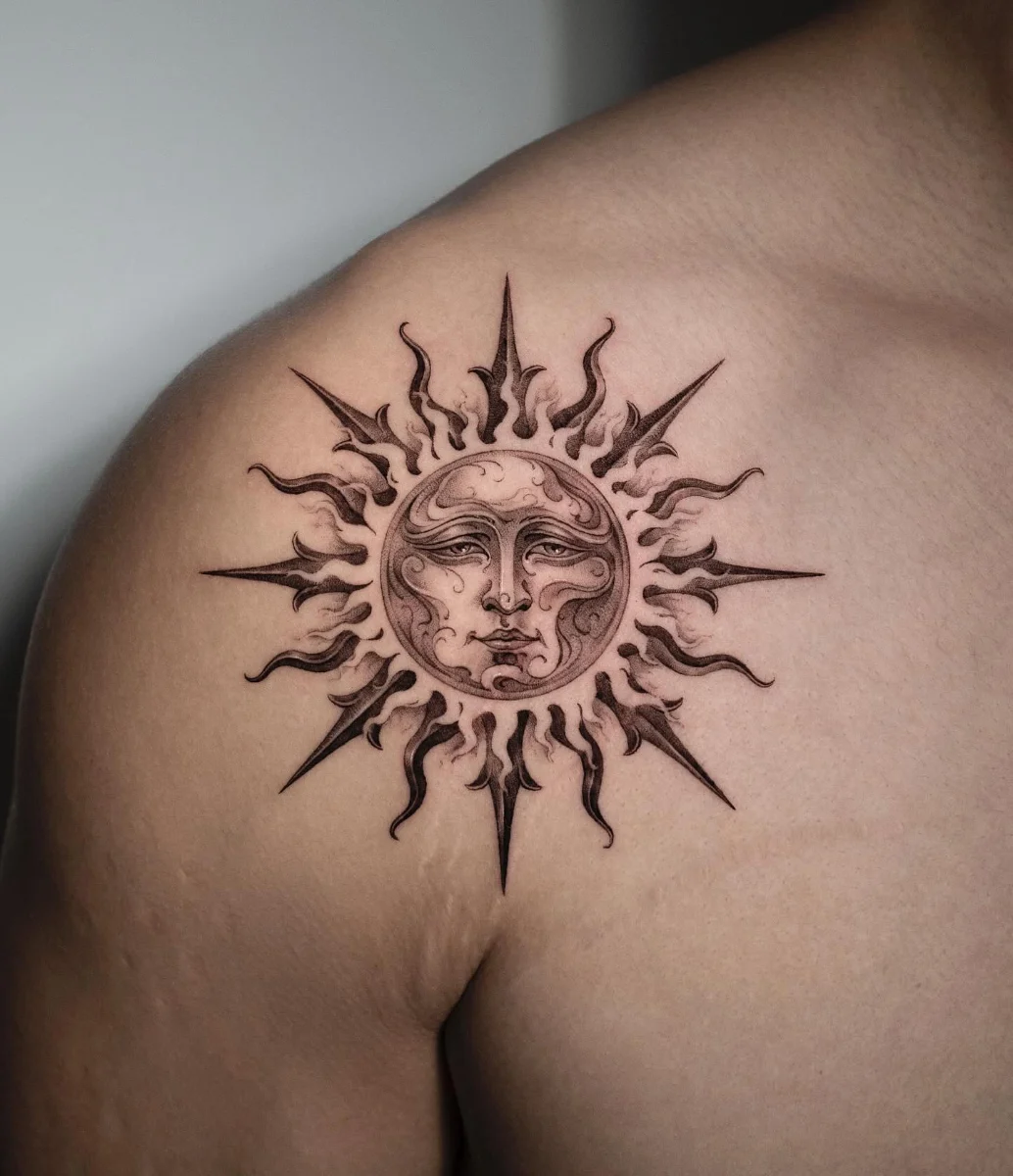
Calm Engraved Sun Face
A peaceful face sits in a round disc with long sharp rays, and fine hatching makes the shadows look carved into the skin. Hatching is a classic engraving technique that builds tone from tiny parallel lines, and here it gives the shoulder piece an old-print look. The calm expression points to awakening and inner peace, a sun that watches without rushing. Because the lines sit close together, the design needs enough size for the hatching to stay clear. The shoulder and upper back give it that space, especially for quiet, meditative imagery.
Choosing a Style for Your Sun Piece With Holistic Ink
At Holistic Ink in Boston, our artists check how thin the rays are, how much contrast the colors hold and how the shape sits on the skin before they suggest a style, and three styles come up most often. The comparison below shows how the same rays and glow change from style to style, so you can match the look to the size, area and lifestyle you have in mind.
| Style | How the sun looks | Best size and placement | How it ages | Best for |
|---|---|---|---|---|
| Black & Gray Realism | Soft shading, glowing rays, a face or eclipse with real depth | Medium to large, on the shoulder, chest or forearm | Keeps its depth when it stays large and shaded from sun | Moody, dramatic pieces with a face or clouds |
| Color Realism | Warm gradients from yellow to red with soft blends | Medium to large, on the forearm, thigh or shoulder | Warm colors benefit from sun protection and occasional touch-ups | A glowing, lifelike sun |
| Japanese / Irezumi | A bold red disc with outlined clouds, waves and a dark background | Large, on the arm, back or leg, often part of a sleeve | Heavy outlines stay readable for a long time | Strong graphic work and a story that keeps growing |
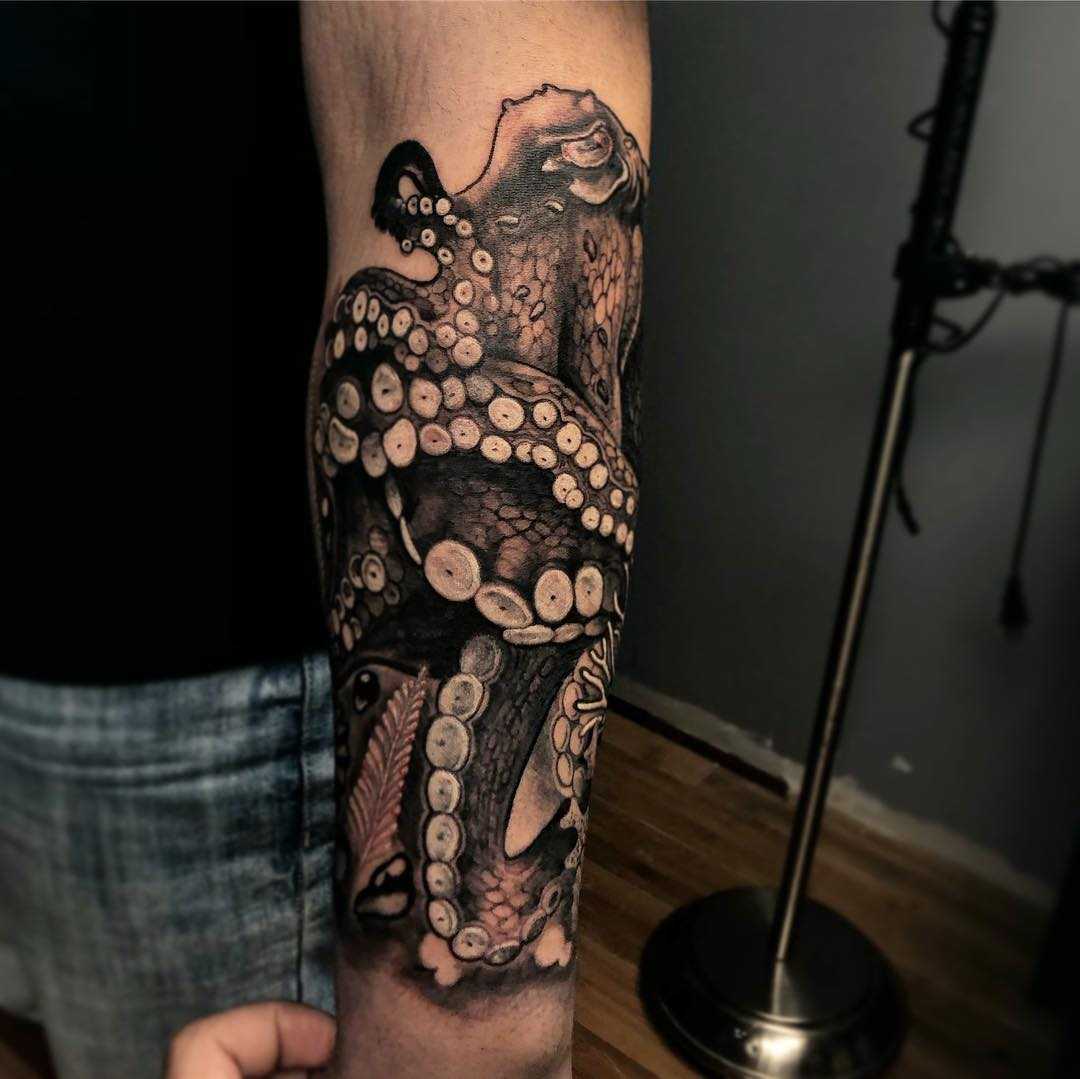
Black and gray realism is the style to pick when the sun belongs to a bigger scene, such as an eclipse, a face or a break in the clouds. Layered shading builds the glow and gives the rays a soft edge. That depth needs room to breathe, so artists usually recommend a palm-sized design or larger. The octopus below shows the smooth tonal range this style is known for.
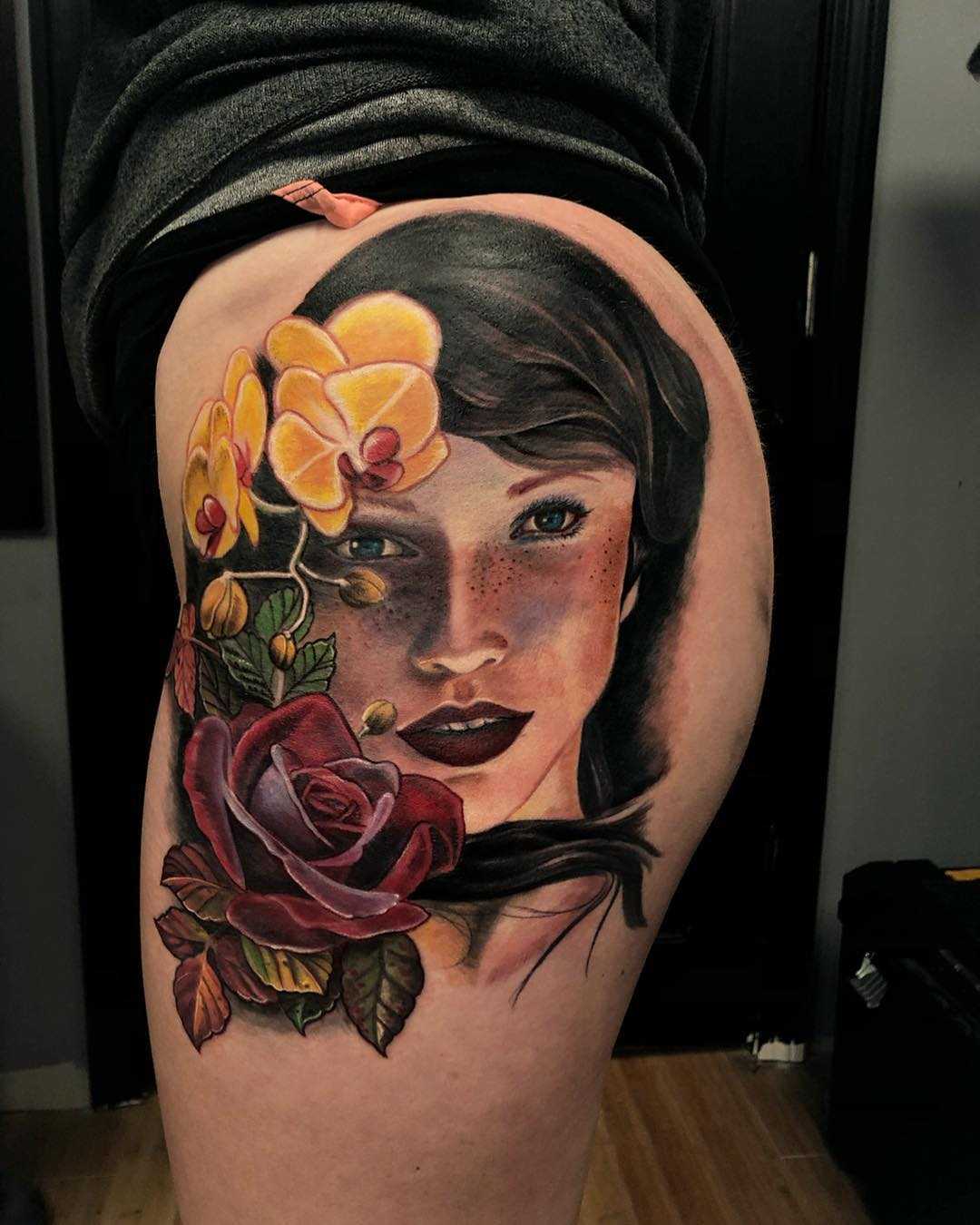
Color realism suits a sun whose warmth is the whole point. Smooth transitions from yellow through orange to red make a disc look as if it’s actually glowing, and the portrait below, with its yellow orchids and red rose, shows how those warm hues blend without hard edges. Every ink color reacts to UV, and warm tones tend to soften first. Keep sunscreen in your routine, and when the glow starts to dull, ask your artist about a touch-up.
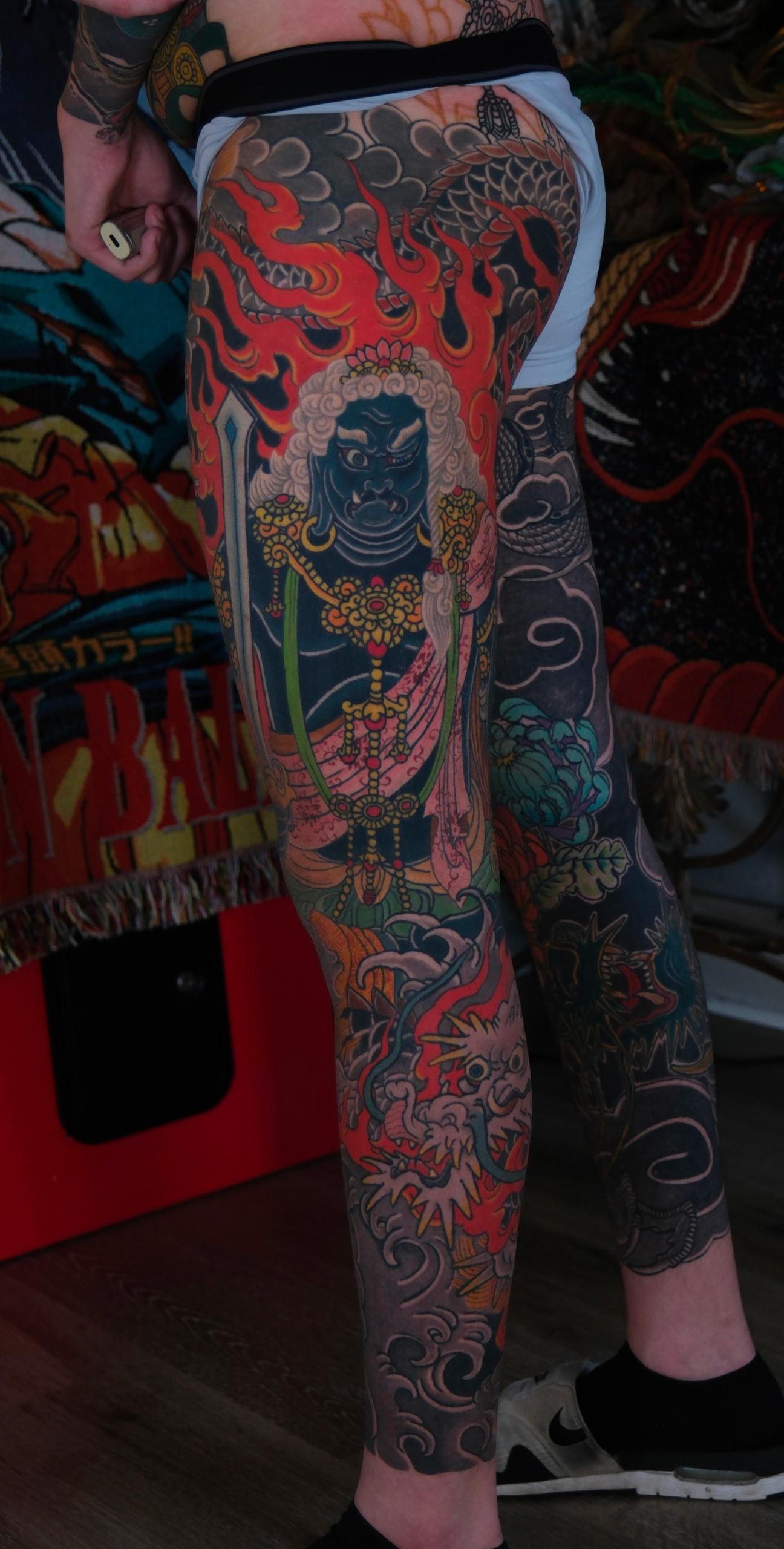
Japanese work treats the sun as one chapter in a larger story. A red disc behind clouds or waves reads clearly from across a room, and the heavy outlines carry the design through the years. The leg sleeve below, with its red flames and Fudo Myoo figure, shows that bold look.
Other styles work too. A fine line or blackwork sun looks great when it stays simple, but the rays need enough size to stay separate. Not sure which style fits? Bring two or three reference images to your consultation and point out the ray shape, the shading and the color you like, and your artist can sketch two options side by side for the spot you picked.
Mistakes to Avoid and What Shapes Price and Longevity
Most regrets with a sun design come from a handful of avoidable choices. Check your plan against this list before you book:
- Don’t pick rays so thin or so close together that they melt into a solid disc as the ink settles.
- Skip a size too small for the detail you want, since faces and gradients need room.
- Avoid copying a Pinterest photo line for line, because the shape should follow the curve of your arm or shoulder.
- Plan sun protection from the first day, since UV tends to fade warm colors first.
- Don’t choose a studio by the lowest quote, since cheap work often costs more to fix later.
Price follows the work involved. Size, detail, color, the hours in the chair and the experience of the artist all push the quote up or down, and a palm-sized black and gray piece won’t cost the same as a full-color sleeve section. For an accurate number, book a consultation at Holistic Ink, where the artist can review your reference, check the placement and talk through the level of detail before quoting a price.
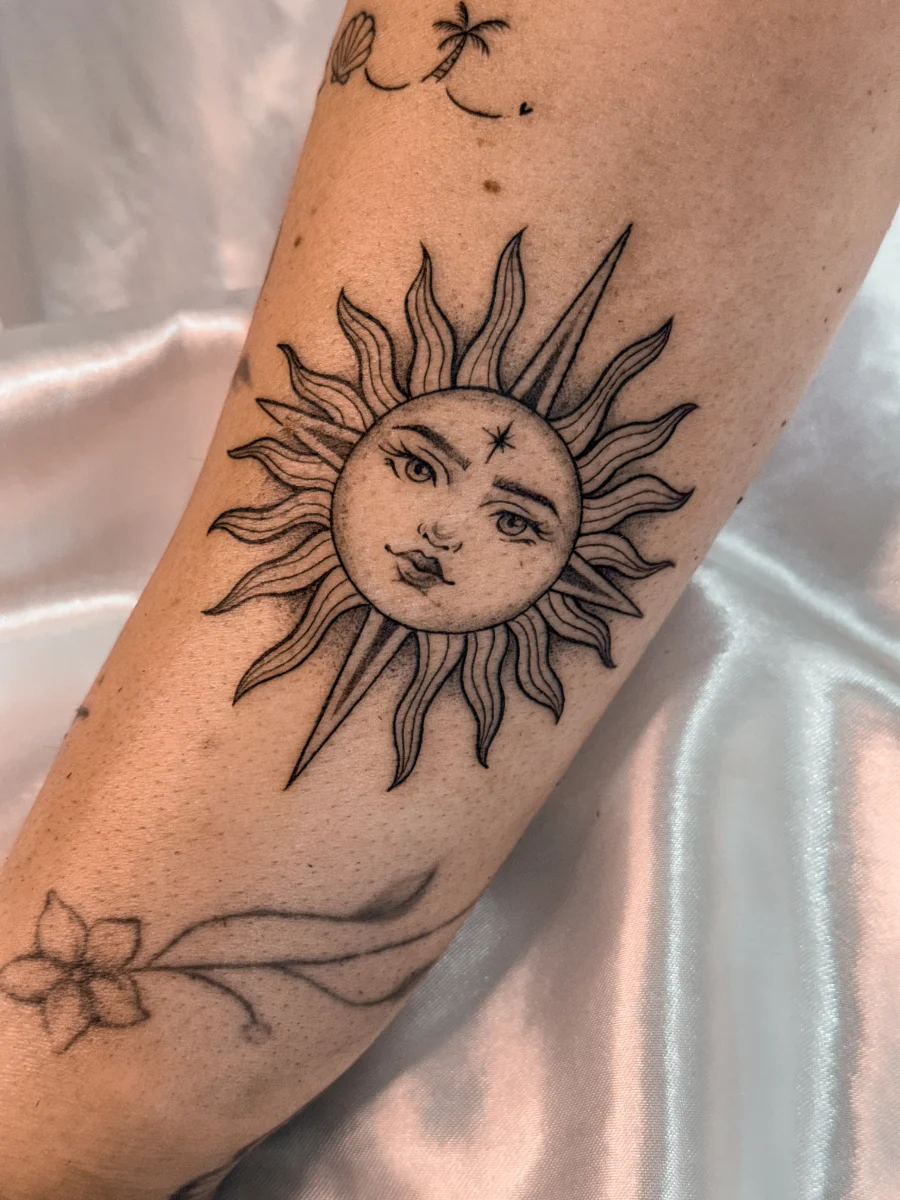
Longevity depends mostly on line weight, contrast and sun habits. Bold lines and dark, saturated areas usually stay readable longest, while pale yellows and hairline rays tend to soften first. A good artist may thicken a few rays or darken the outer ring to protect the design. Skin also changes with age, weight and time outdoors, and a touch-up every so often brings the contrast back. The forearm piece below keeps an even line weight from the face to the tips of the rays, a choice that often holds up well over the years.
Best Placements for a Sun Design
Round shapes like a sun sit best on areas that stay flat and open, while long rays look great on a surface that gives them length. That’s why the forearm and the shoulder remain the most popular spots, and why the elbow and the hand ask for more planning. The table pairs each area with the kind of sun design that fits there and the style that suits it.
| Area | Pain level | Sun design that fits | Style that suits |
|---|---|---|---|
| Forearm | Low | Rayed sun, half sun with a star map, minimal sun | Fine line, color realism, black and gray realism |
| Shoulder or upper arm | Low | Round sun, tribal sun, sun with a face | Blackwork, black and gray realism, Japanese |
| Shoulder blade | Moderate | Symmetrical sun, sun with waves | Fine line, dotwork |
| Chest | Moderate | Large radiating or swirling sun, eclipse | Black and gray realism, Japanese |
| Inner arm or elbow | High | Small rayed sun, bold solid sun | Blackwork, bold linework |
| Hand | High | Very small, simple sun | Minimal fine line |
Pain varies by person, so treat these levels as general guidance and ask your artist about the area you’re considering. Size matters just as much as location. Rays need a clear gap between them to stay separate over the years, so a design that looks fine on a screen can feel crowded once it’s shrunk to a wrist. Let the artist set the final size on the stencil, and go up a size if you want a face or a gradient inside the disc.
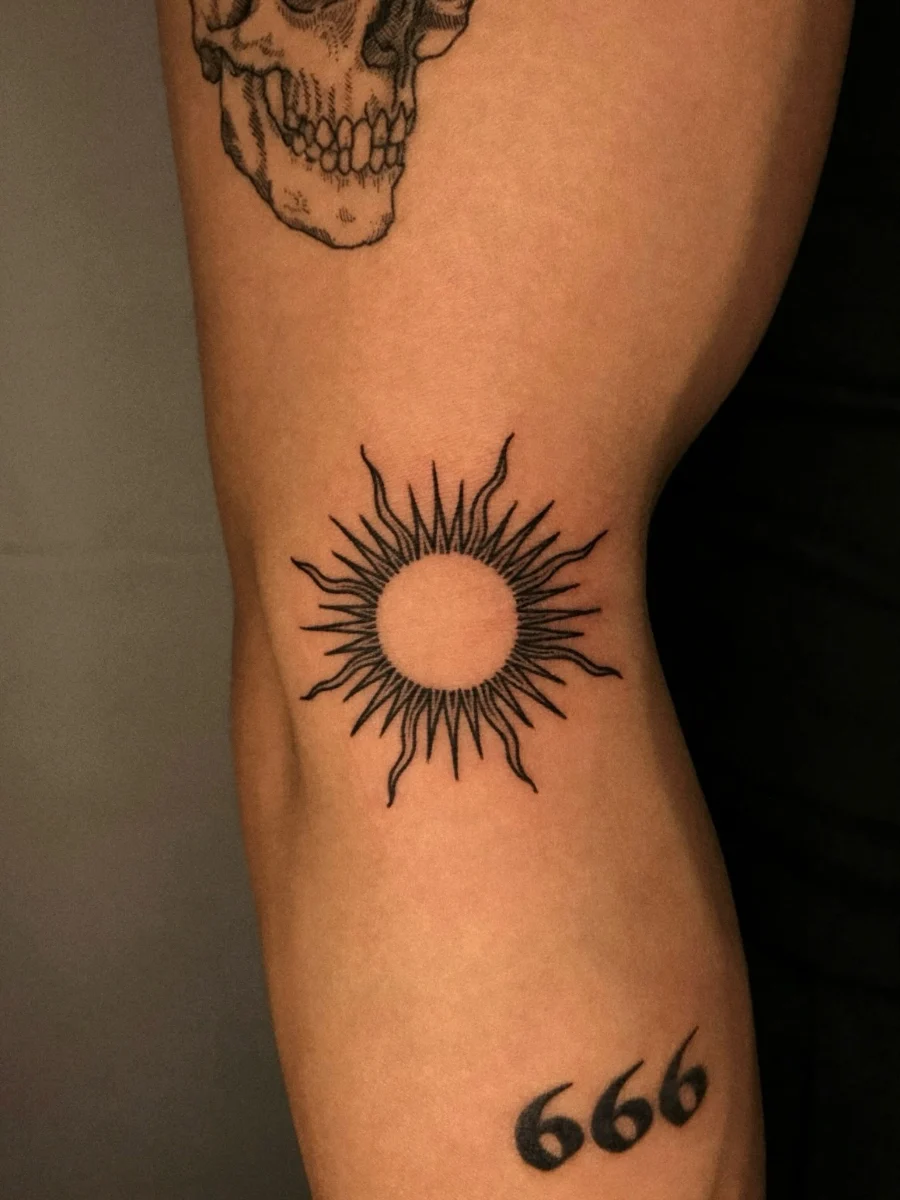
The inner arm is a good spot for a bold, simple sun, since even rays and solid black stay readable where sleeves and clothing rub. Expect a bit more discomfort there. The skin folds and moves all day, so follow your artist’s aftercare steps closely.
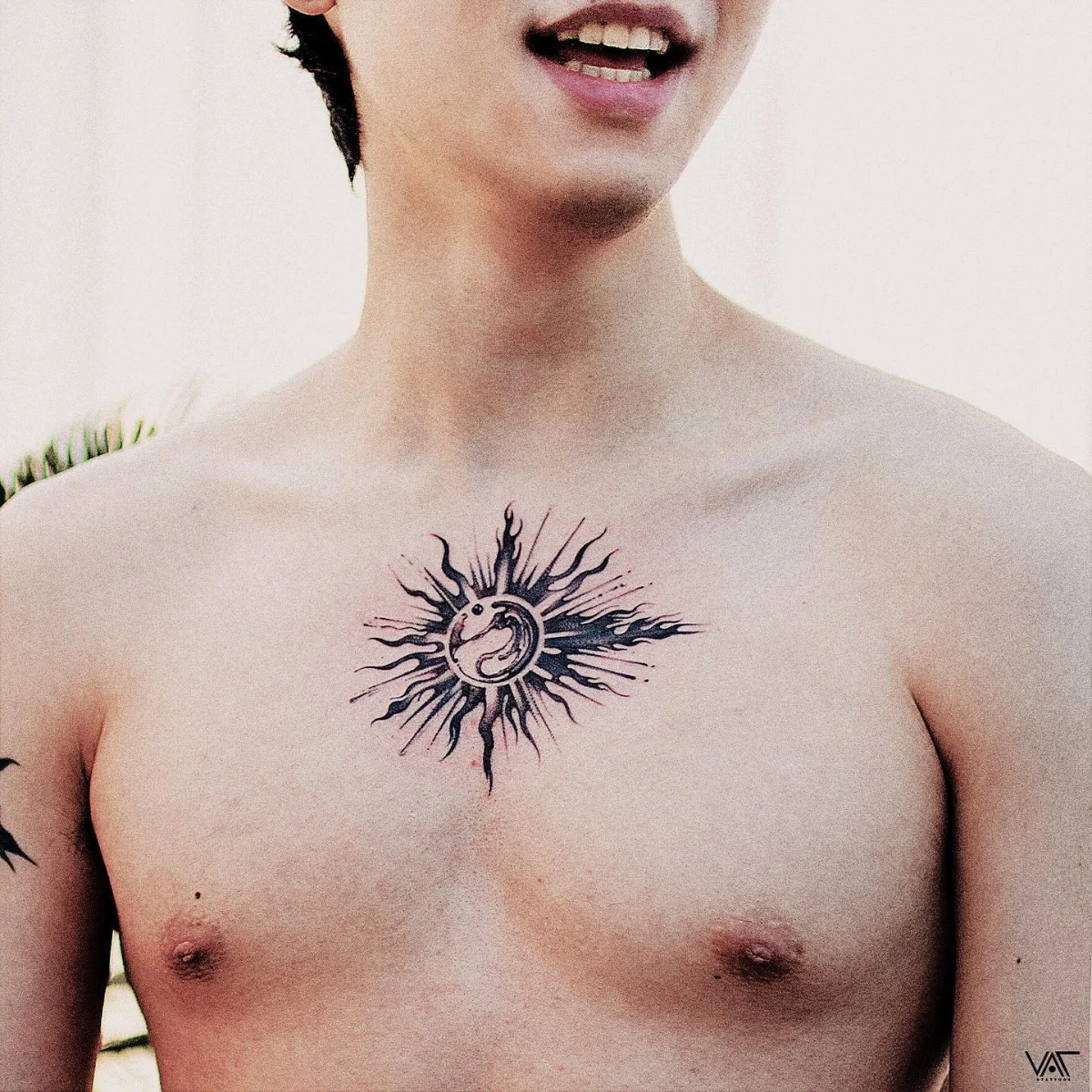
The chest gives a sun more room to radiate, and swirling or curved rays follow the shape of the body well. At Holistic Ink, artists often place the stencil first and ask the client to move around and check it in the mirror, so the rays still look balanced when the shoulders roll back.
From Consultation to Aftercare, Step by Step
A sun design goes smoothly when each stage has a clear outcome, so here is the path from your first message to a fully healed piece. At the consultation you share your references, the meaning you want the sun to carry and the area you have in mind, and the artist answers with style, size and layout ideas. By the end you should have a direction, an estimate of how many sessions the piece will take and a date. Most studios, Holistic Ink in Boston included, take a deposit to hold that date, with the amount confirmed at the consultation.
Next comes the stencil. The artist draws the design and places it on your skin, then lets you move, stand and sit so the rays look right from every angle. This is the moment to ask for thicker rays, a bigger disc or a different position, because changes are easy before any ink goes in.
During the session, the artist builds the outline first and then adds shading or color. Take breaks, eat beforehand and tell your artist if something feels wrong, since nobody minds a pause.
Aftercare begins as soon as the work is wrapped, and the first couple of weeks matter most. Keep this list handy while your skin heals:
- Wash the tattoo gently and pat it dry the way your artist showed you.
- Apply a thin layer of moisturizer, never a thick coat.
- Wear loose clothing over the area so nothing rubs it.
- Stay out of pools, hot tubs, the ocean and direct sun.
- Don’t pick or scratch the flaking skin, since that can pull ink out.
- Once it has healed, put broad-spectrum SPF on the area before any time outdoors.
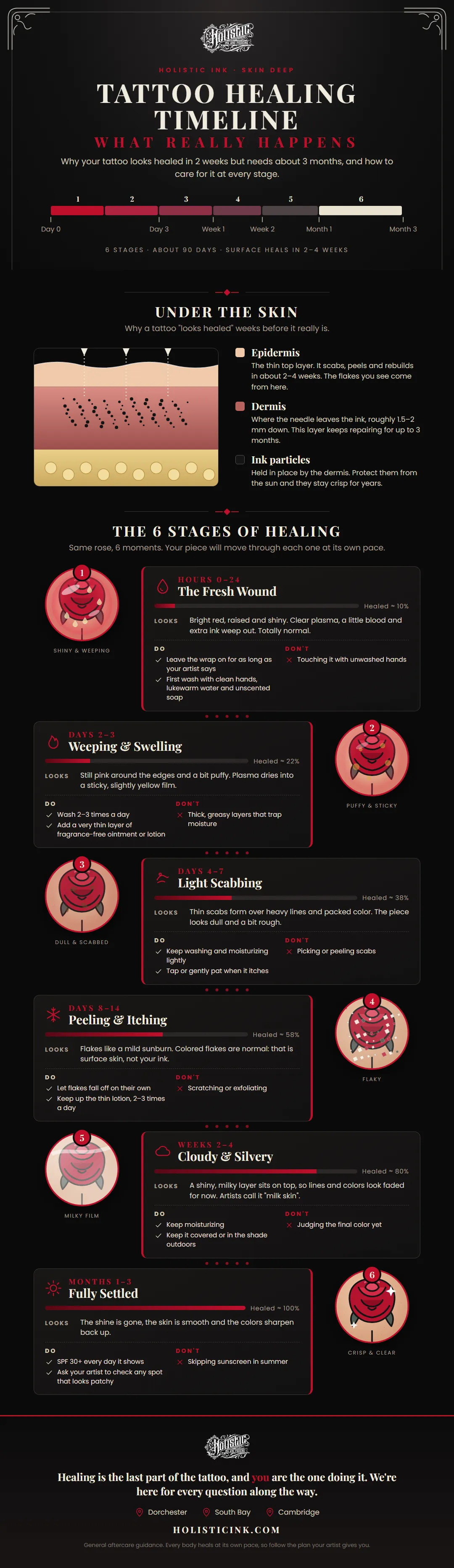
Long term care is mostly about habits. Keep healed skin moisturized and apply sunscreen whenever the area is exposed. If you notice real fading or lost detail, ask your artist whether a touch-up makes sense, since a healed sun piece that gets this attention often stays crisp for many years. The timeline below shows what happens under the skin at each stage of healing.
Frequently Asked Questions
Does a sun design fade faster in sunlight?
Yes, UV light breaks down tattoo ink over time, and warm colors such as yellow and orange tend to soften first. Apply SPF every time the area is exposed and cover it on long days outdoors. Well-made black outlines also help, because they keep the shape readable around lighter colors.
How long does a sun piece take to heal?
The outer layer of skin usually heals within a few weeks, while the deeper tissue takes longer to recover. Healing time varies with the size, the area, your skin and how closely you follow aftercare.
Can I get a sun design over a scar?
Sometimes, but scar tissue takes ink differently from regular skin, and the result can be patchy. A faded, flat scar is usually easier to work on than a raised or fresh one. Book a consultation so the artist can see and feel the area before suggesting anything.
Can I swim or work out after getting a sun piece?
Skip pools, hot tubs and the ocean until the skin has fully healed, since soaking can irritate a fresh tattoo and raise the risk of infection. Light exercise is usually fine, but avoid anything that stretches or rubs the area. Your artist can tell you when it’s safe to return to your routine.
How much does a sun design cost?
The price depends on size, detail, color, the hours needed and the artist you choose, so there is no single figure. Share your idea at a consultation at Holistic Ink and the artist can quote you after seeing the area.
Wear the Sun Your Way With Holistic Ink
This symbol can say as much or as little as you want, from a small mark that reminds you each day is new to a large piece that tells a longer story of warmth, balance and renewal. Pick the meaning first, then match it to a style, a size and an area that fit your life. When you’re ready to turn the idea into a design, book a consultation and bring your references along, so our artists can refine the shape, size and placement with you.
Ready for a bigger piece?
Our artists are known for large-scale work in 3 styles. Start with the one that fits your idea:
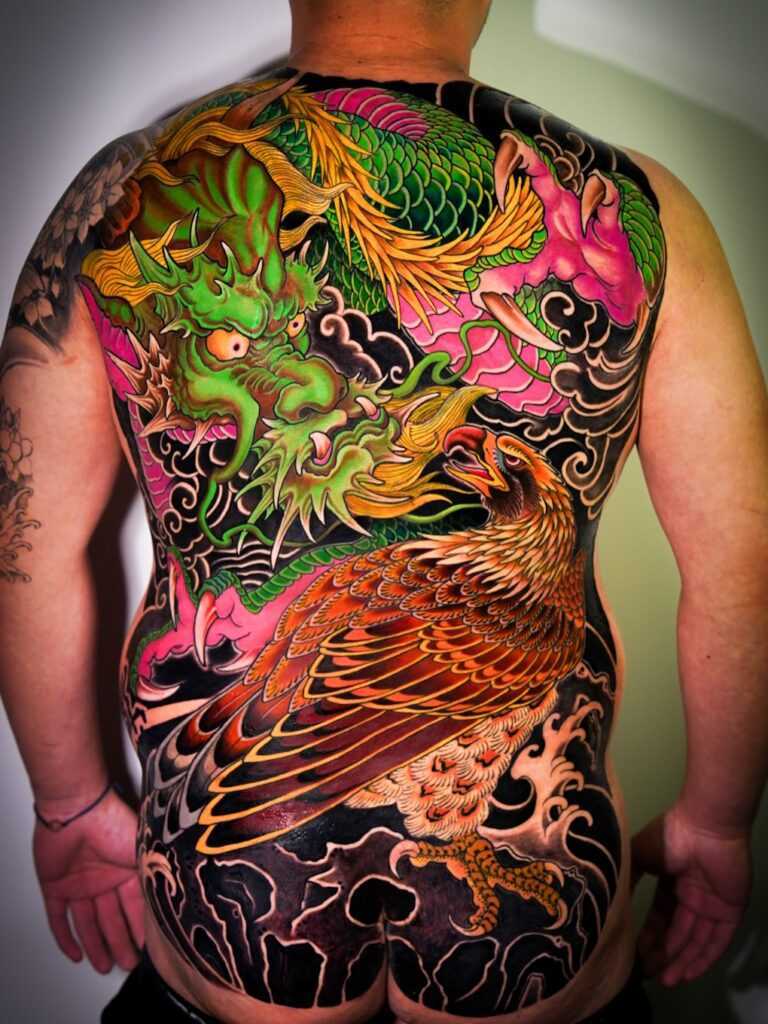 Best matchJapanese IrezumiDragons, koi, deities and full backpieces with traditional flow.
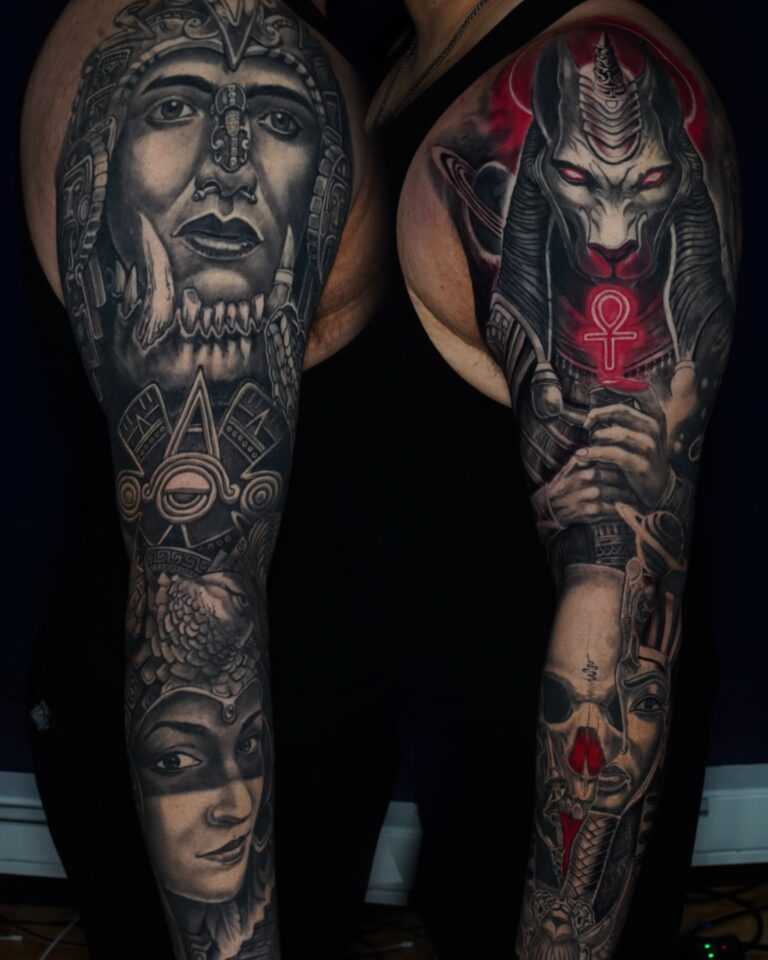 Black & Grey RealismPortraits, animals and sacred art in soft, deep shading.
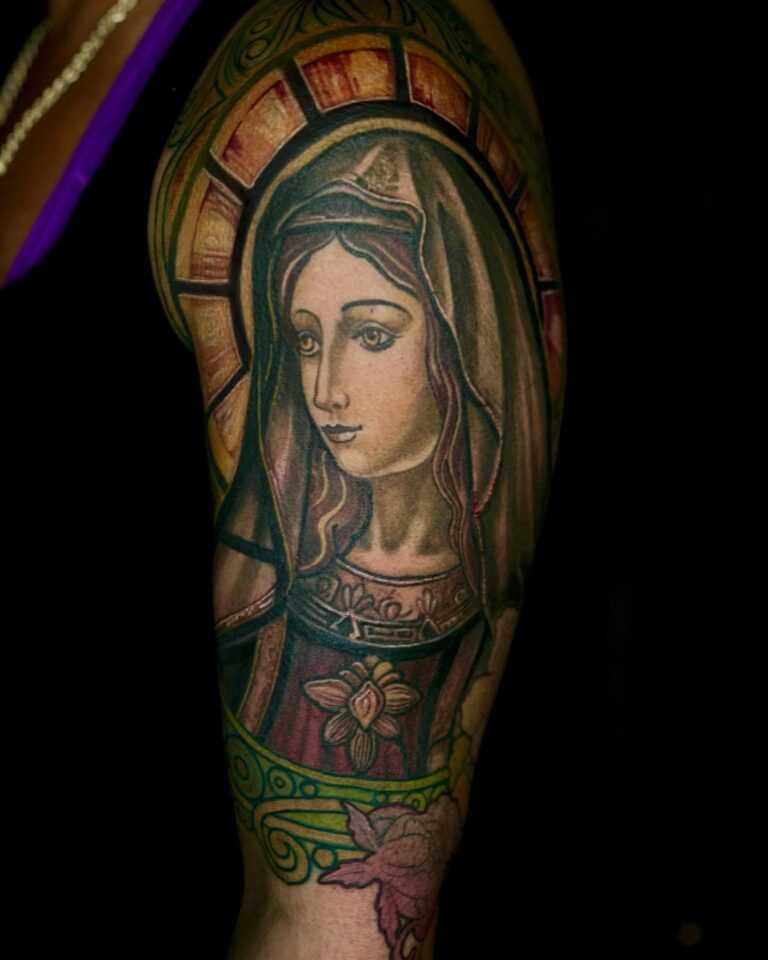 Color RealismSaturated, lifelike color for sleeves and large scenes.Signature project · Japanese IrezumiDragon Backpiece: 66 Hours, 3 Artists, Best of ShowPlacementFull backTime66 hours over 3 daysArtists3 artists, including Vinny NguyenSee the full project →
Bring your reference and placement. We plan large work session by session with you.
We also tattoo American traditional, fine line, script and small tattoos. Browse all styles →