Few places on the body are as visible as the hands, which is why a hand tattoo needs both a clear meaning and a plan for healing well. This guide from Holistic Ink walks through ten designs and what each one says, then covers style, cost, placement, pain and aftercare so you can choose with confidence.
Hand Tattoo Designs and Their Meanings by Holistic Ink
Your hands are always in view, and they move, bend and get washed all day long. A design that lives here has to read well when your fingers are open and when they are closed into a fist. Each of the ten ideas below carries its own story. Each is paired with the spot on the hand where it sits most naturally.
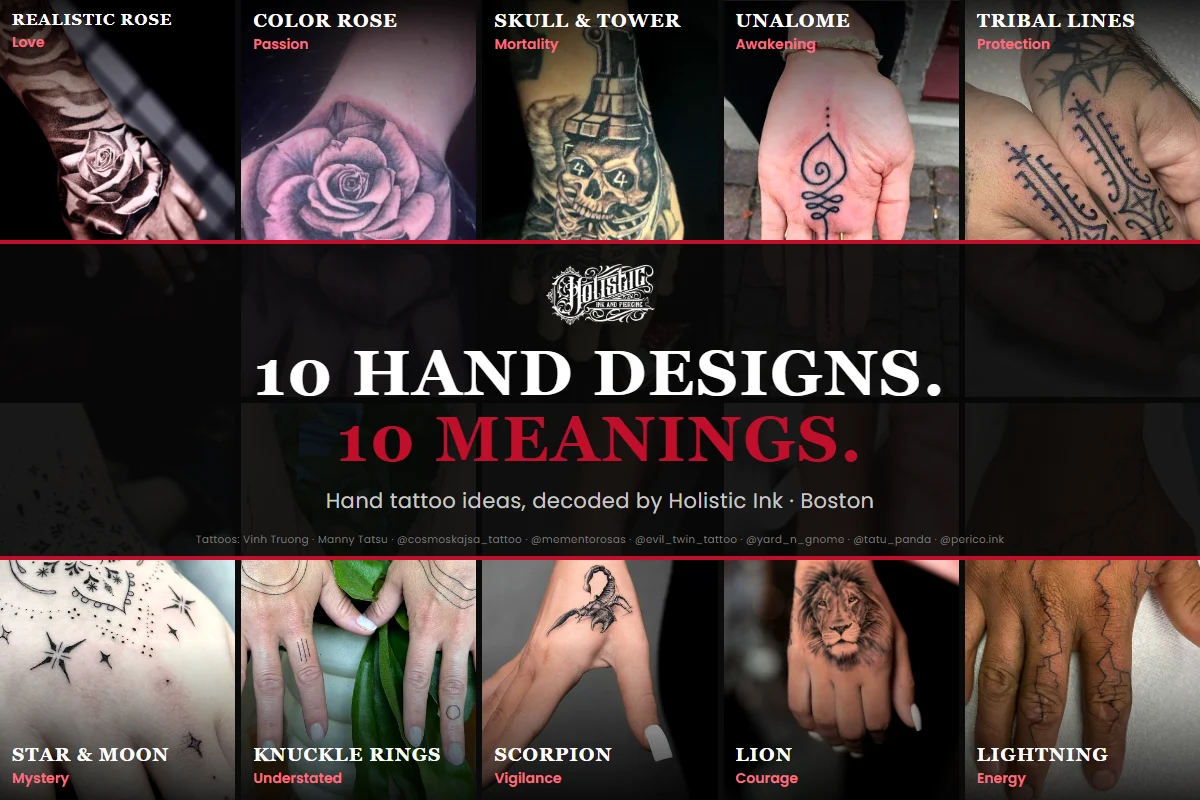
Realistic Rose on the Back of the Hand
Vinh Truong at Holistic Ink tattooed this black and grey rose with soft, smooth shading, set against a striped background that stops right at the knuckles. A rose usually stands for love. The thorns remind you that beauty can be fragile and sharp at once. The back of the hand gives the flower a wide, flat surface, so the petals keep their depth and the shading has room to breathe. It suits anyone who wants romance with a little edge.
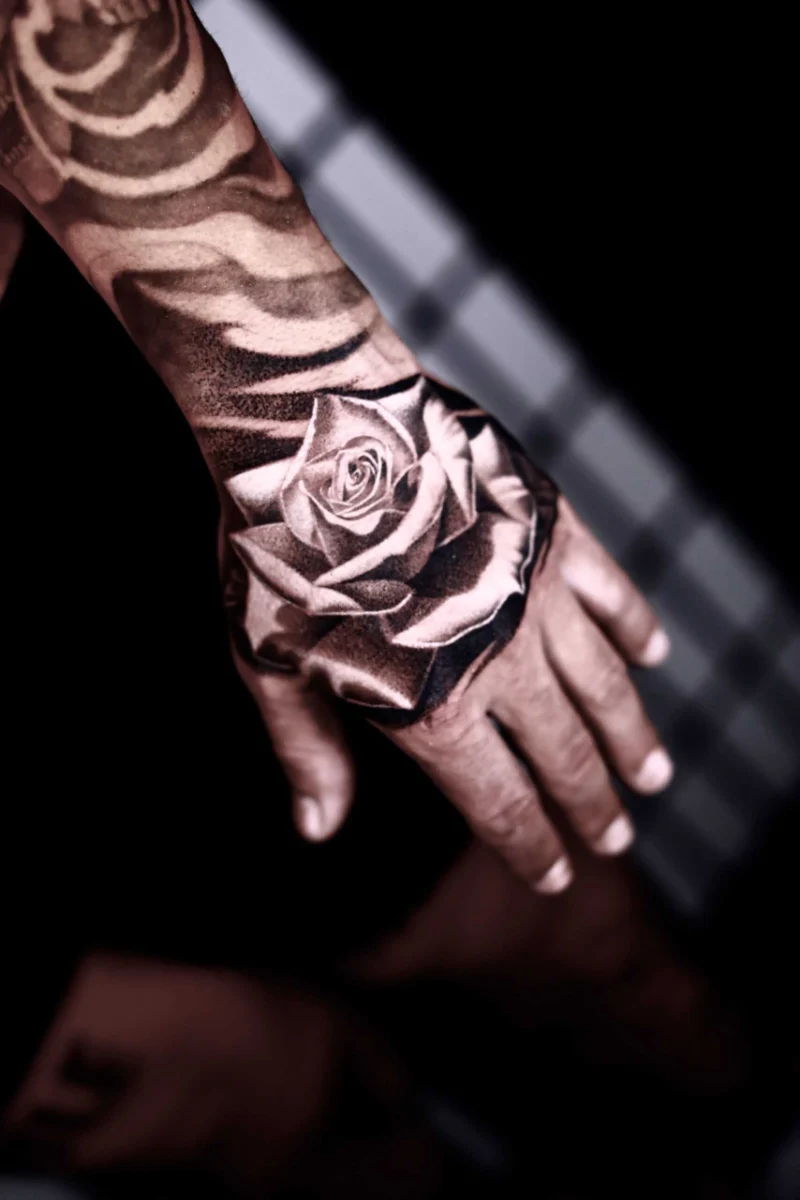
Color Realism Rose Across the Hand
Manny Tatsu at Holistic Ink filled the back of this hand with a deep pink and purple rose, blended so smoothly that the petals look almost soft to the touch. Color roses lean toward passion, femininity and confidence, and the saturated tones make the piece impossible to miss. The wide back of the hand carries that much color without crowding it. Choose it if you want a bold statement that still feels elegant, and keep in mind that bright pigment likes sunscreen.
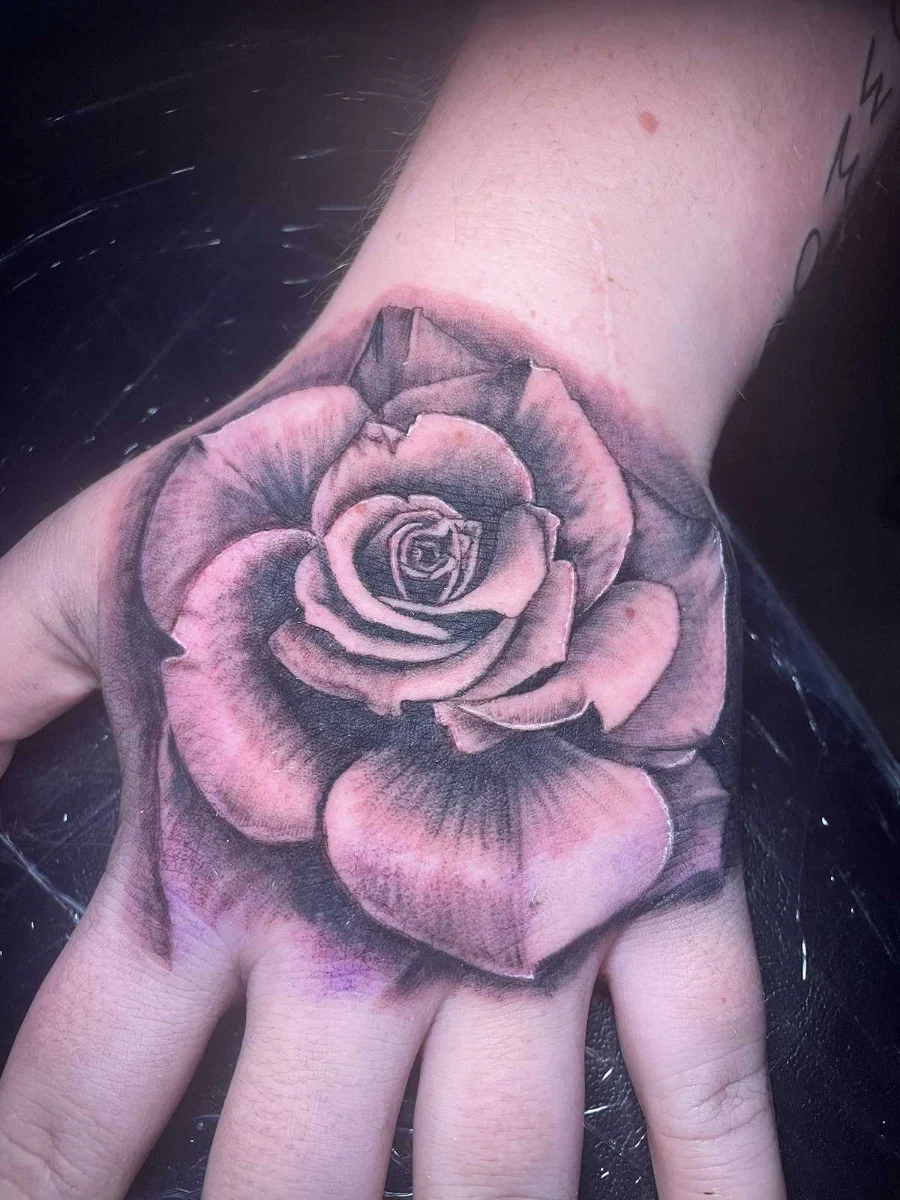
Black and Grey Realism Skull and Tower Running Down the Fingers
This black and grey piece by Manny Tatsu pairs a skull with a numbered tower, shaded in dense, mechanical grey that stretches from the back of the hand onto the fingers. Skulls speak about the passing of time and the courage to face it, and the tower adds a sense of structure and endurance. Because the artwork follows the length of the fingers, the shapes move with your hand when it opens and closes. It’s a great pick for anyone who wants a serious, dramatic piece with real weight behind it.
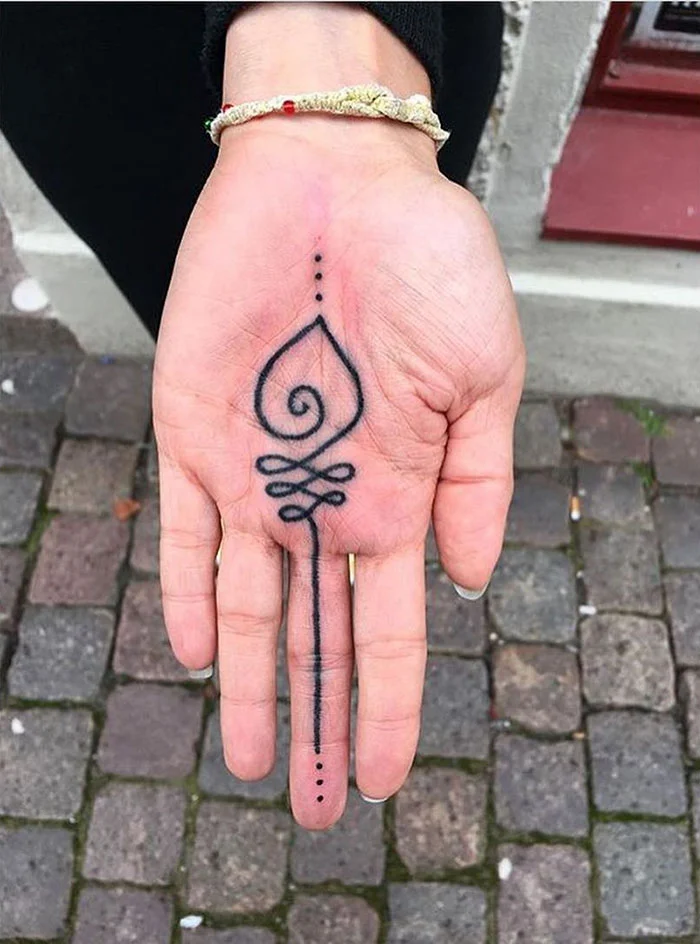
Unalome on the Palm
A thin black line spirals, then straightens down the middle of the palm and ends in three small dots. The unalome is a Buddhist symbol for the winding road toward enlightenment, so the curls stand for confusion and struggle while the straight line stands for peace. It’s a quiet, personal design for anyone marking a turning point. The palm is a tricky spot, though, since the skin there is thick and renews quickly, and ink tends to fade sooner than on the back of the hand.
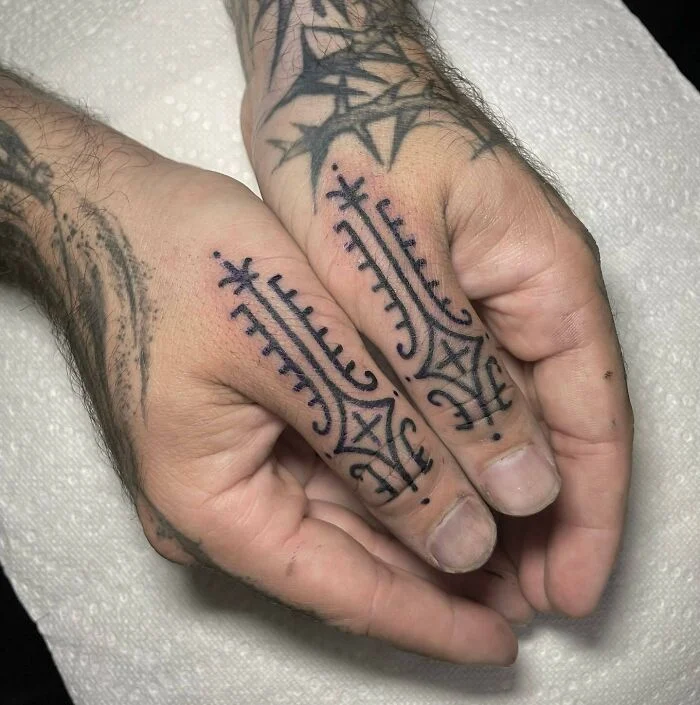
Tribal Lines on the Thumbs
Short dashes and diamond shapes run down both thumbs in a mirrored pattern. Tribal and geometric marks have long been used for protection and as a sign of passing into a new phase of life, and repeating shapes create a rhythm that feels ritual-like. The thumb and the edge of the hand are long, narrow surfaces, which suit a pattern that simply keeps going. This hand piece fits people who like a graphic, symmetrical look and don’t need a large picture to say something.
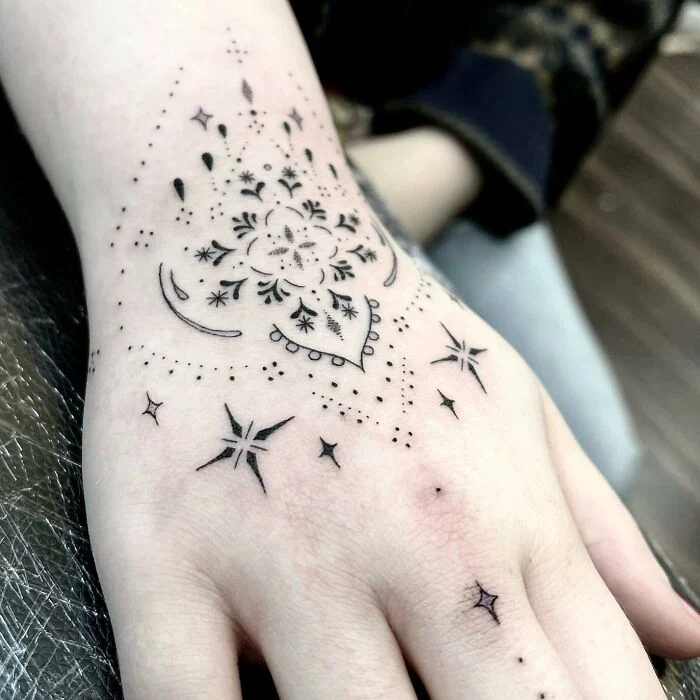
Ornamental Star and Moon on the Back of the Hand
A small mandala, a crescent moon and a few stars fall toward the knuckles in fine black dotwork. The moon and stars carry a mystical feel, and the ornamental detail makes the design read like permanent jewelry. It sits well on the back of the hand because the dots can be spaced wide enough to stay clear as the skin ages. Choose it if you love a celestial theme and prefer decoration to a single large image.
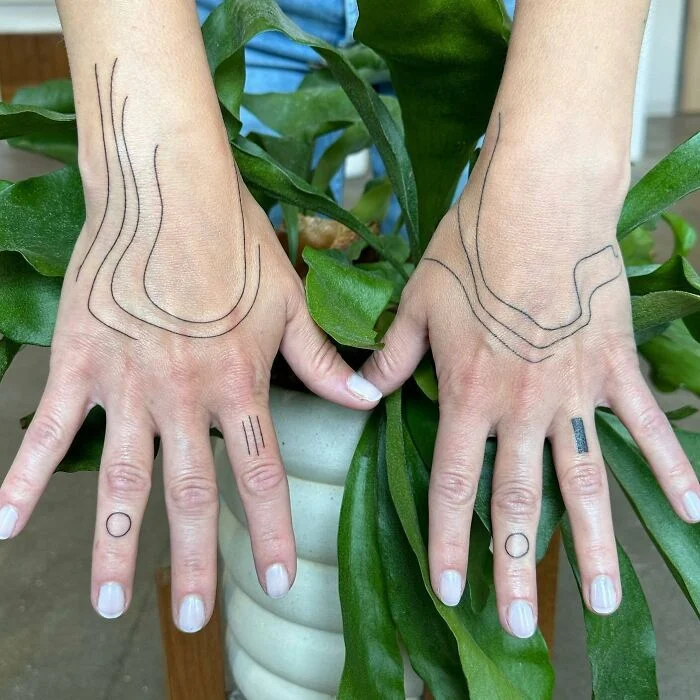
Ring Lines on the Knuckles
Thin lines wrap across the back of both hands, with tiny circles and small dashes marking each knuckle. Think of it as a ring that never comes off, a quiet sign of commitment without any metal. Knuckles are natural dividers, which means the pattern lines up with the bone and the joint without extra planning. It’s perfect for anyone who wants an understated hand design that stays out of the way, though thin lines soften sooner on busy skin.
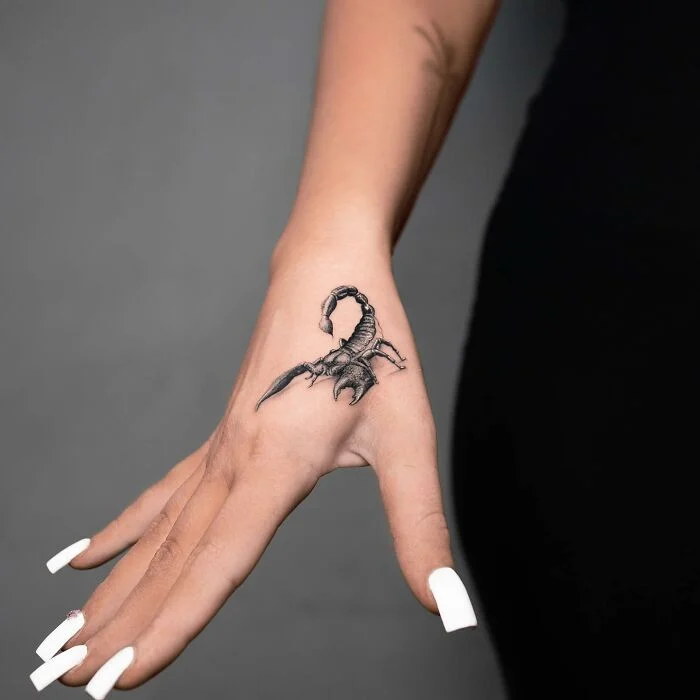
Scorpion on the Side of the Hand
A tiny scorpion rests near the thumb, shaded in fine grey with every claw and segment visible. Scorpions stand for protection and for staying alert, and the animal’s reputation for defending itself gives the design a guarded, confident attitude. The side of the hand is a small canvas, so the micro realism approach keeps the detail without crowding it. It fits anyone who wants a design that feels like a personal amulet.
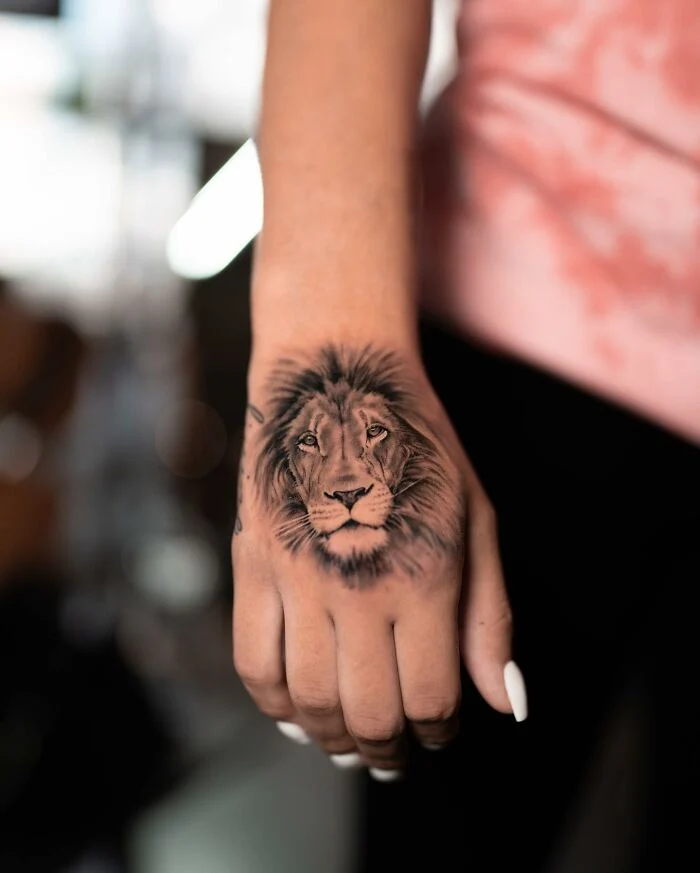
Lion on the Back of the Hand
A small lion head with a carefully shaded mane sits alone on bare skin, with nothing around it to compete. Lions are tied to courage, pride and leadership, and the lone placement lets the face speak for itself. The back of the hand is flat and visible, which gives the eyes and mane room to read clearly. It’s a good pick for someone who wants a strong symbol that looks sharp at a small size.
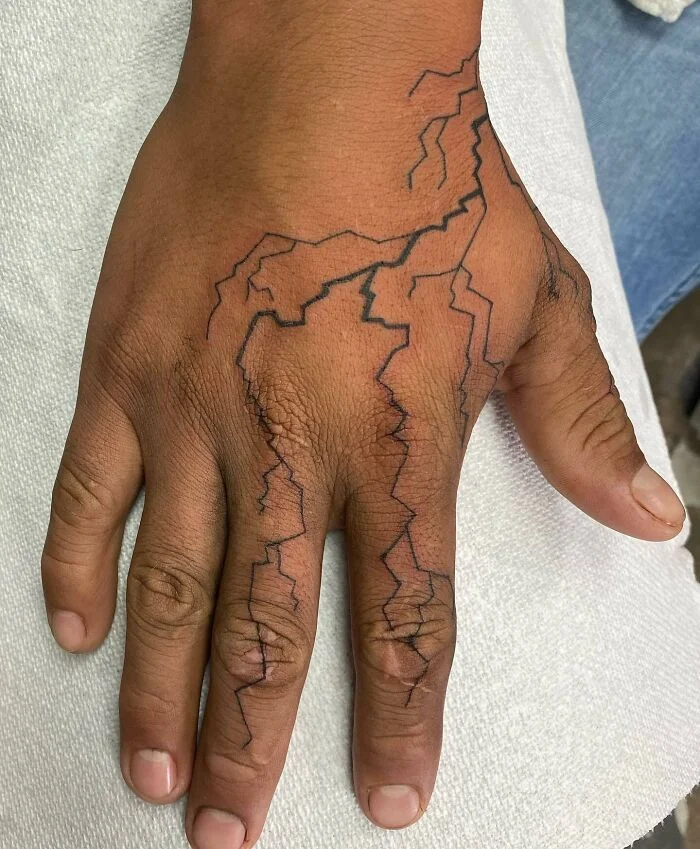
Lightning Cracks Across the Hand
Black cracks run from the wrist across the back of the hand and out toward the fingers, as if the skin has split open. Lightning is linked to sudden energy and breakthrough moments, and the cracked look turns the whole hand into the design. It tends to show best on darker skin, where the contrast pops. Choose it when you want something unusual that follows the shape of the hand instead of sitting on top of it.
Choosing a Style for Your Hand Piece With Holistic Ink
The three styles the studio is known for behave differently on skin that moves and gets washed all day. Black and grey realism, color realism and Japanese irezumi were all built for large canvases, so the question is how much of each can survive on the hands. The table below puts them side by side. Read it as a planning aid, since the right choice depends on your hand and your idea. Don’t treat any row as a rule.
| Style | How it looks on the hand | Best size and placement | How it ages | Best for |
|---|---|---|---|---|
| Black & Grey Realism | Soft shading and depth, strongest with clear contrast | Back of the hand, running onto the fingers | Light tones can soften, so deep shadows help | Roses, skulls, animals and symbols with a serious mood |
| Color Realism | Rich color and smooth blends that catch the eye | Larger area on the back of the hand | Color needs sun protection and regular care | Flowers, butterflies and bright subjects |
| Japanese Irezumi | Bold outlines, flat color and background elements | Back of the hand and base of the fingers | Heavy outlines tend to hold their shape | Guardians, waves, clouds and mythic animals |
The skin on your hands is thin and loses ink faster than your arms or legs. That means strong outlines and clear contrast serve you better than faint, fine detail, and most artists plan a touch-up as part of the process. The artists at Holistic Ink often suggest simplifying a design a little before the stencil goes on, so the final piece stays readable for years.
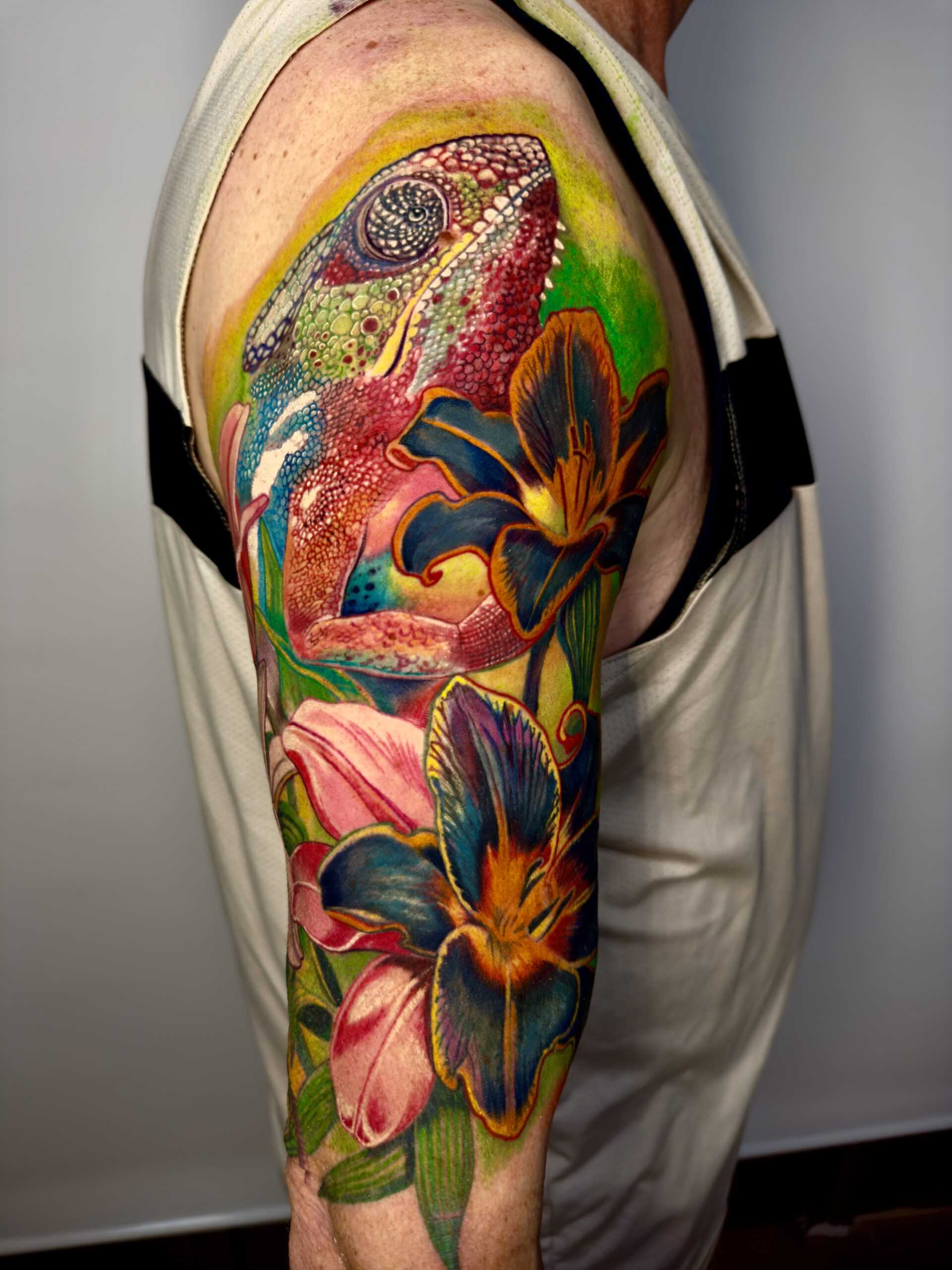
If your idea is small or delicate, another approach may fit better, and that’s fine. Fine line and blackwork can look beautiful on the hand when the lines are given enough space, and an artist can tell you honestly whether your design belongs on the hand at all. A consultation is the best place to work that out, since the artist can draw on your skin and watch how the lines move.
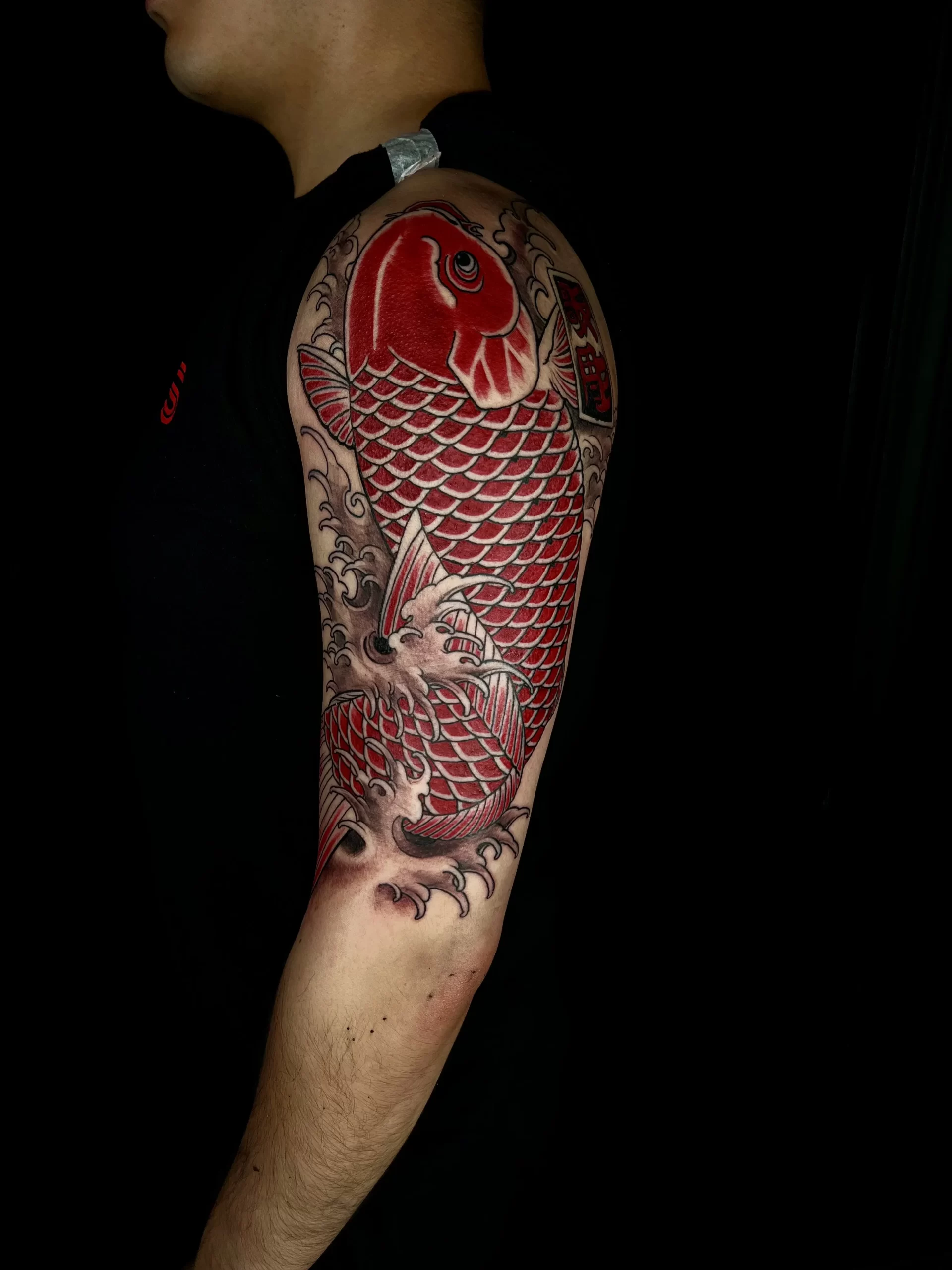
Cost, Fading and Mistakes Worth Avoiding Before You Commit
Cost depends on size, level of detail, the artist and how long the session takes, so a real quote only makes sense after you have talked through the idea in person. Smaller doesn’t always mean cheaper, because fine work in a tight space takes steady hands and plenty of time. The hands also fade faster than most areas, since the skin renews constantly and sees friction, soap and sun every day. A cover-up is harder here too, because there is so little room to work with, so it pays to get the design right the first time.
Visibility matters as well. Few outfits or jobs can hide the hands, so think about where you work and how you feel about being asked about your ink. Take a few minutes to look at your own hands in a mirror in different poses, since a design that looks balanced when your fingers are open may feel crowded when they are closed. They’re also the places where people most often cut corners. These are the mistakes that cause the most regret:
- Choose a design with tiny, dense detail that can’t stay readable on thin skin.
- Skip the touch-up your artist recommends, since hands often need one.
- Leave the area unprotected in strong sun, which fades ink quickly.
- Scrub the tattoo hard with soap while it’s still healing.
- Rush into the appointment without checking healed work from your artist.
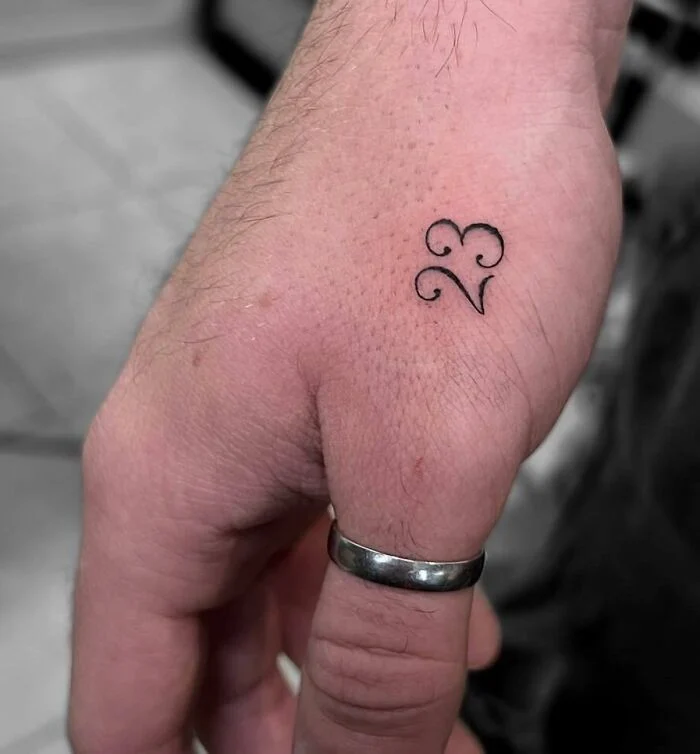
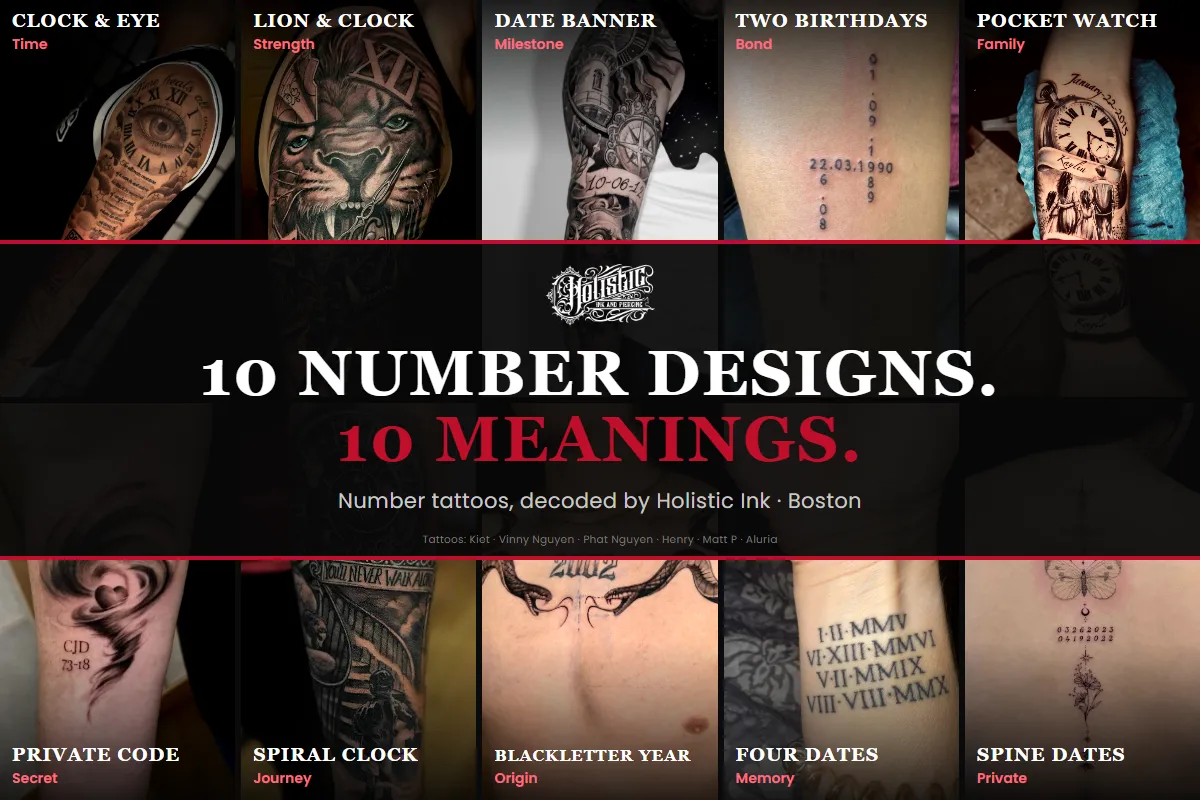
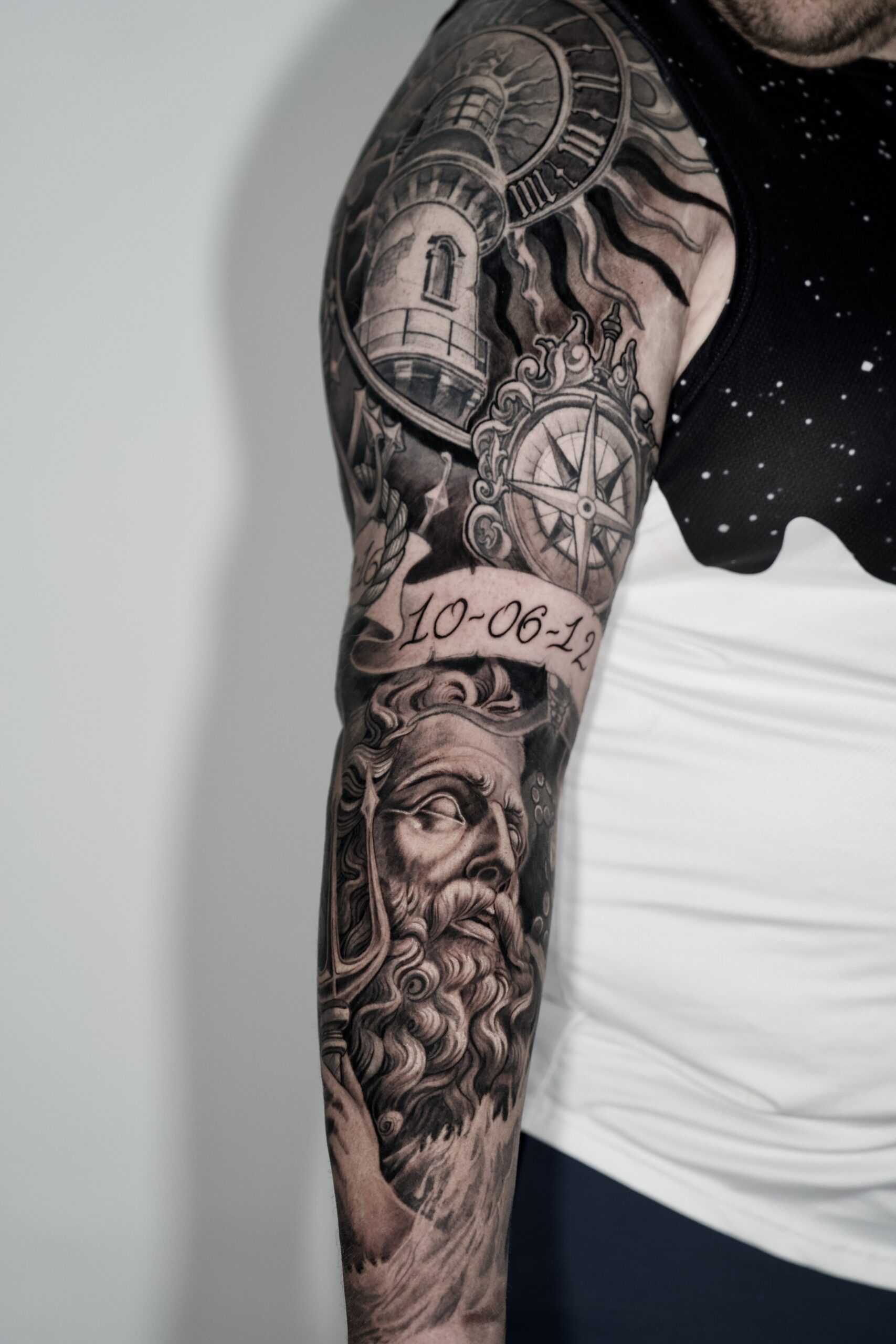
A small number or date like this one shows why size matters, because tiny characters blur sooner than bold ones. If you’re set on something small, tell your artist early. The lines can then be opened up in the right places. A short talk before the stencil often saves a lot of regret, and it helps you decide whether the idea should stay compact or grow across more of the hand.
Best Placement Areas on the Hand and Pain Expectations
Each part of the hand has its own look and its own trade-offs. The back of the hand is the easiest canvas, the palm and the sides of the fingers are the most demanding, and the knuckles give you a ready-made row for repeating shapes. Pain also changes from one spot to the next, and thin skin over bone is usually more intense than the fleshier areas.
| Area | Pain level | Design that fits | Style that suits |
|---|---|---|---|
| Back of the hand | Moderate | Roses, animals, ornamental patterns | Realism, dotwork, irezumi |
| Palm | High | Simple line work such as an unalome | Fine line, blackwork |
| Side of the hand | Moderate | Small symbols or short lines | Micro realism, fine line |
| Fingers | Moderate | Narrow shapes that follow the finger | Blackwork, traditional |
| Knuckles | High | Rings, dots and small repeating marks | Minimal line, blackwork |
| Thumb and web | High | Bold patterns and small accents | Geometric, blackwork |
Pain varies by person, so treat this as general guidance and ask your artist what to expect. Sessions on the hands often feel longer than they are, and short breaks help keep the hand still and steady. Ask for a rest whenever you need one. Your artist won’t mind, and a calm hand makes cleaner lines.
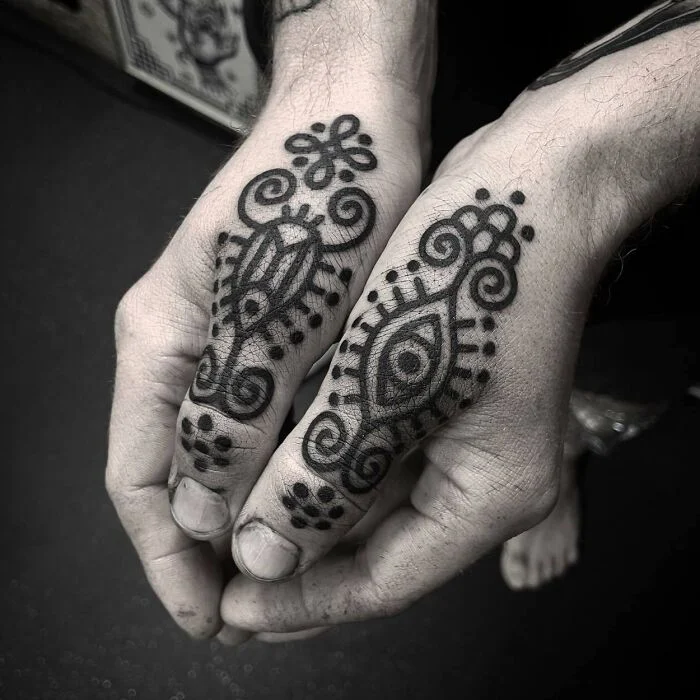
Placement shapes the design as much as the design shapes the placement. A pattern wrapped around the thumb follows the bone, while a single image on the back of the hand reads like a small painting. Picture the hand open, closed and holding a cup. The same lines can look very different in each pose. At Holistic Ink the stencil goes on first for this reason, so you can make a fist, type and stretch before the needle ever touches the skin.
From Consultation to Aftercare, Step by Step
Everything starts with a consultation. You and the artist talk about the idea, the size and the spot, and decide whether the design really suits your hand. Next comes the stencil, which is placed on your skin so you can open and close your fingers and see how it moves. Speak up here, since a stencil is easier to change than a tattoo.
On the day of the session, the artist works carefully around joints and thin skin while you rest your hand on a support. Aftercare then becomes your job, and the first two weeks matter most. You will wash your hands often, so keep this list handy while the skin heals:
- Wash the tattoo gently and pat it dry the way your artist showed you.
- Apply a thin layer of moisturizer, not a thick coat.
- Keep it out of pools, hot tubs and the ocean until it is fully healed.
- Wear gloves for dishes and rough work, since soap and friction slow healing.
- Don’t pick or scratch the flaking skin, because that can pull ink out.
- Use sunscreen once the tattoo has healed, and reapply it often.
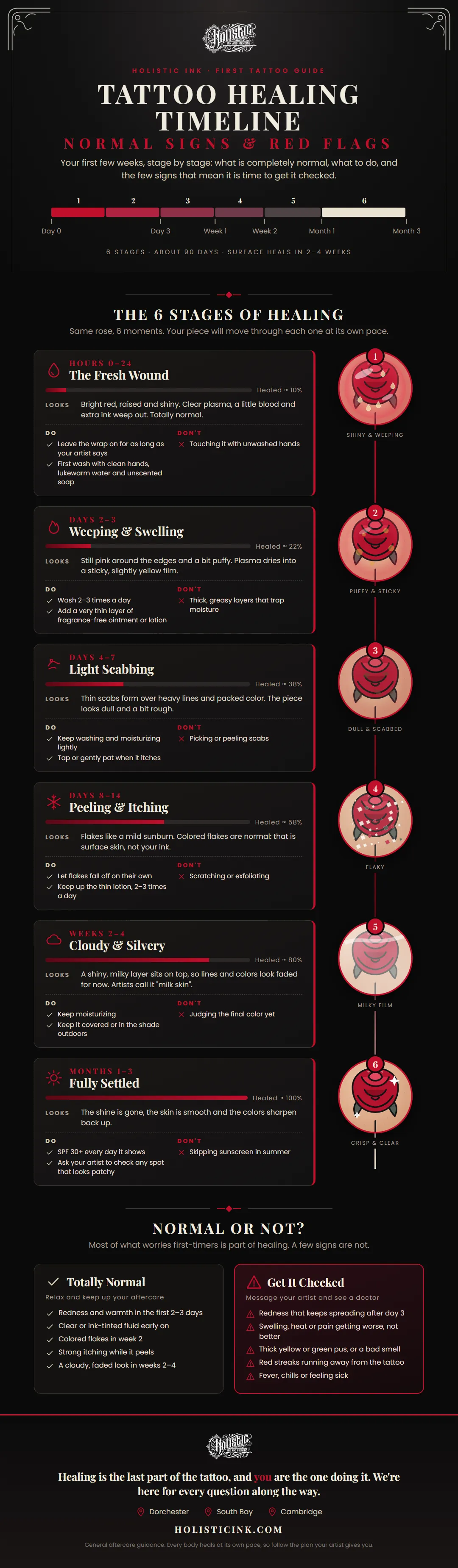
Hands are the hardest area to baby, since you can’t stop using them. Healing looks different for everyone, and it helps to know what is normal and when to get help. The graphic below shows the normal signs and the red flags that mean it’s time to get it checked.
Long term, sunscreen and moisturizer do most of the work. A touch-up now and then keeps the lines crisp. Hands fade sooner than most places, so check in with your artist when the edges start to soften. The studio keeps the door open for exactly that kind of follow-up, and a quick look is usually enough to decide whether a refresh is worth it.
Questions People Ask Before Getting Inked
Is getting inked on the hand a good idea?
It can be, as long as you choose a design that suits thin, active skin and accept that the piece will need occasional care. Bold lines and clear shapes hold up best, and it helps to think about work and daily life first. An artist can look at your hand and tell you honestly what will last.
Is the hand very painful to tattoo?
Many people find the hands sharper than fleshy areas, especially over knuckles, the palm and the thumb. The back of the hand usually feels easier. Short sessions and steady breathing make a real difference.
What is the most popular design for the hand?
Small symbols, flowers and ornamental patterns come up often, but popularity changes with trends and with each person’s story. Roses, skulls and lines across the knuckles all have loyal fans. The best choice is the one that feels personal to you.
Can I go back to the gym or wash dishes after getting one?
Wash dishes with gloves for the first couple of weeks, and keep soap and hot water brief. Gripping weights can rub new skin, so ask your artist when it’s safe to return to the gym. Your artist can give you a timeline that fits your skin.
Ready for Your Hand Piece
A good hand piece balances a clear idea, the right style and a realistic view of how skin behaves on the hands. Whether you want a bold rose, a quiet unalome or a pattern that runs from the wrist to the fingers, the team at Holistic Ink in Boston will help you shape it. When you’re ready to talk through your idea, book a consultation and bring a few references and any questions about placement or healing.
Ready for a bigger piece?
Our artists are known for large-scale work in 3 styles. Start with the one that fits your idea:
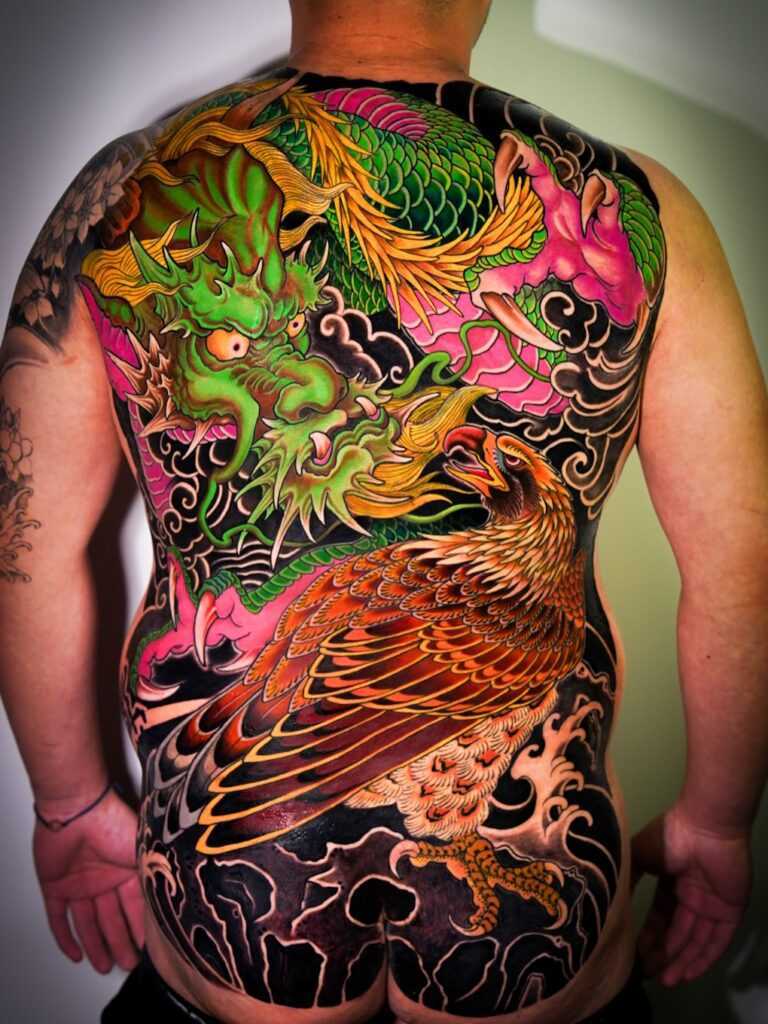 Best matchJapanese IrezumiDragons, koi, deities and full backpieces with traditional flow.
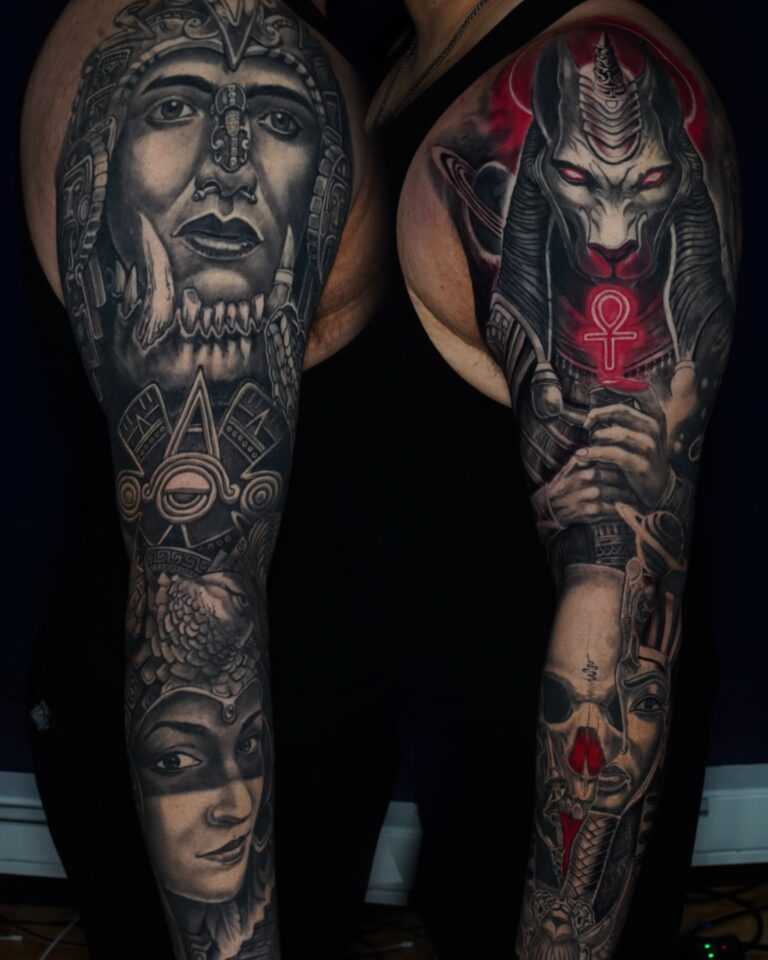 Black & Grey RealismPortraits, animals and sacred art in soft, deep shading.
 Color RealismSaturated, lifelike color for sleeves and large scenes.Signature project · Japanese IrezumiDragon Backpiece: 66 Hours, 3 Artists, Best of ShowPlacementFull backTime66 hours over 3 daysArtists3 artists, including Vinny NguyenSee the full project →
Bring your reference and placement. We plan large work session by session with you.
We also tattoo American traditional, fine line, script and small tattoos. Browse all styles →