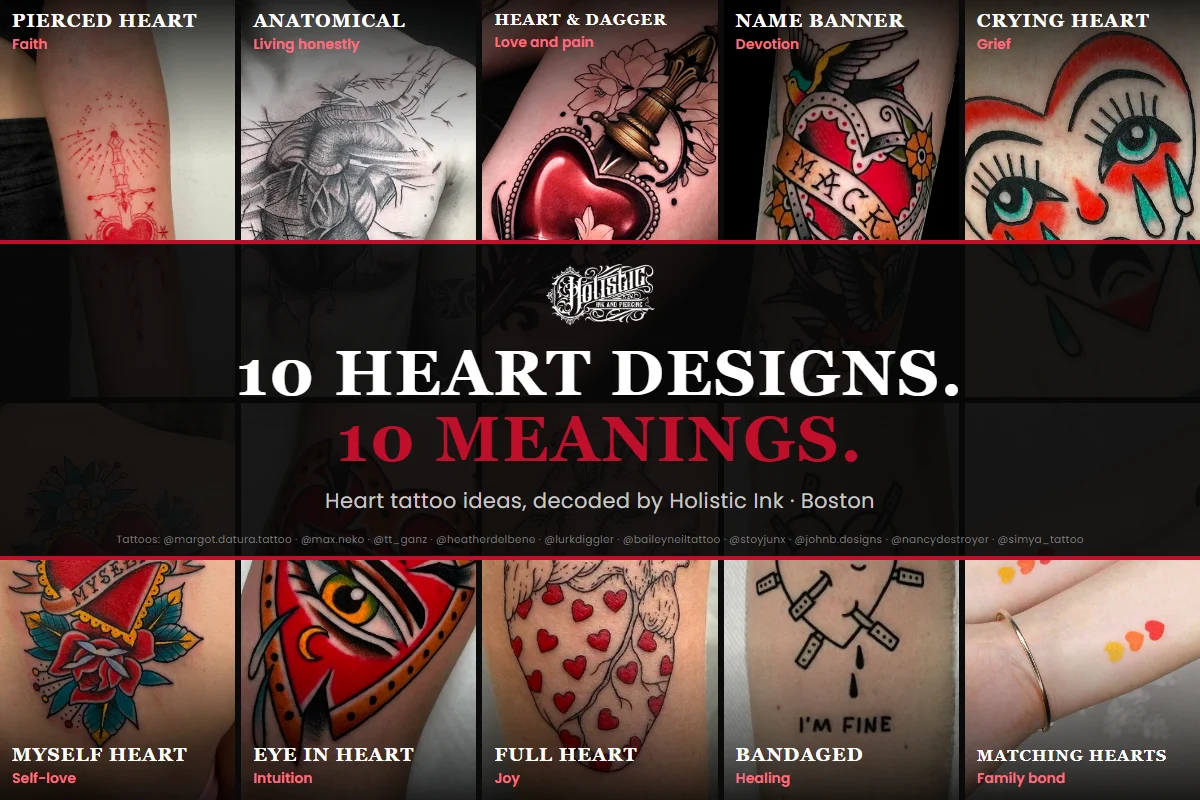
A heart is the first symbol most people picture when they think about getting inked, yet the small details around it change everything. Add a dagger and the story turns to survival, add a banner and it belongs to a single person, add tears and it’s about grief. This guide to heart tattoo ideas from Holistic Ink in Boston walks through 10 designs and their meanings, then covers style, common mistakes, placement and the road to healed skin.
Heart Tattoo Designs and Their Meanings by Holistic Ink
Hearts carry love, devotion, heartbreak, healing and faith, sometimes all at once. What decides the story is whatever gets drawn beside the heart. At Holistic Ink, our artists usually ask who the heart is for before they pick up a pencil, because that answer shapes the design more than any style choice does. Common additions shift the meaning in the table below, and the 10 designs after it put those details into real work.
| Element added to the heart | What it usually means | Style that suits |
|---|---|---|
| Flames | Passion, burning faith (sacred heart) | Traditional, color realism |
| Dagger or sword | Love mixed with pain, betrayal survived | Traditional, neo-traditional |
| Banner with a name | Devotion to one person | Traditional |
| Wings | Freedom, a loved one who has passed | Black & grey realism |
| Crown | Loyalty, self-worth | Neo-traditional |
| Lock and key | Commitment between two people | Fine line, minimalist |
| Thorns | Sacrifice, love that hurts | Black & grey realism |
Most of the designs below mix two or three of these. A pierced heart with rays, for example, tells a very different story from one wrapped in a banner, even when both are drawn in the same red.
1. Pierced Heart With Holy Rays
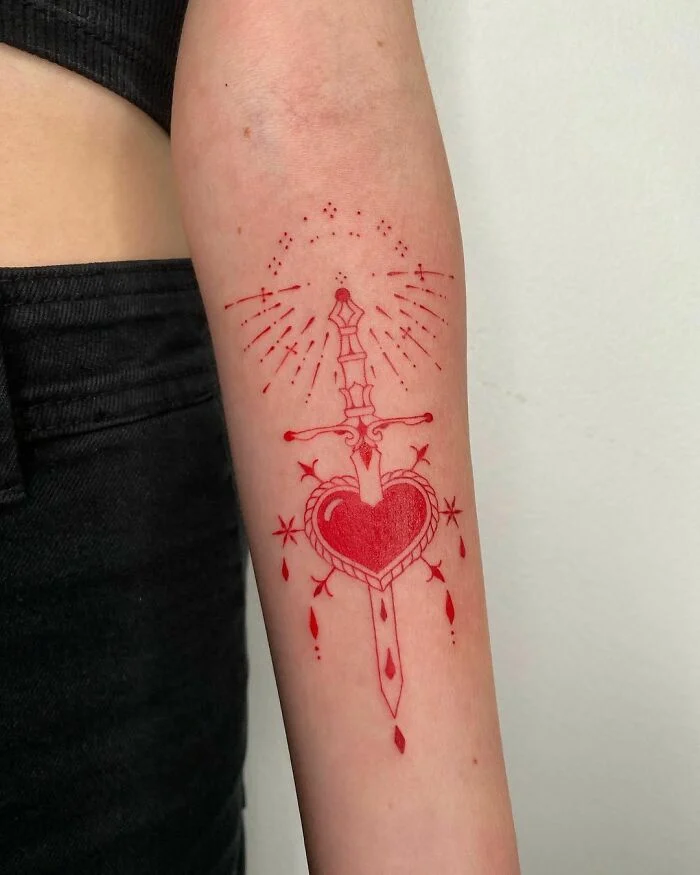
This red ink heart sits on the inner forearm, drawn in thin, even lines. A dagger runs straight through it, and short rays and dots fan out above, like light breaking from behind a cloud. The imagery draws on two Catholic symbols. Christ’s Sacred Heart is often depicted with flames and a crown of thorns, while Mary’s Immaculate Heart is pierced by a sword to mark her sorrow. The blade in this design comes from that second image. Wearers read it as faith, or as love that keeps going through pain. It’s a popular choice for people honoring a mother or grandmother. Because it uses a single red, it’s also a good pick for anyone who wants a sacred heart design without heavy shading.
2. Anatomical Heart Breaking Through the Chest
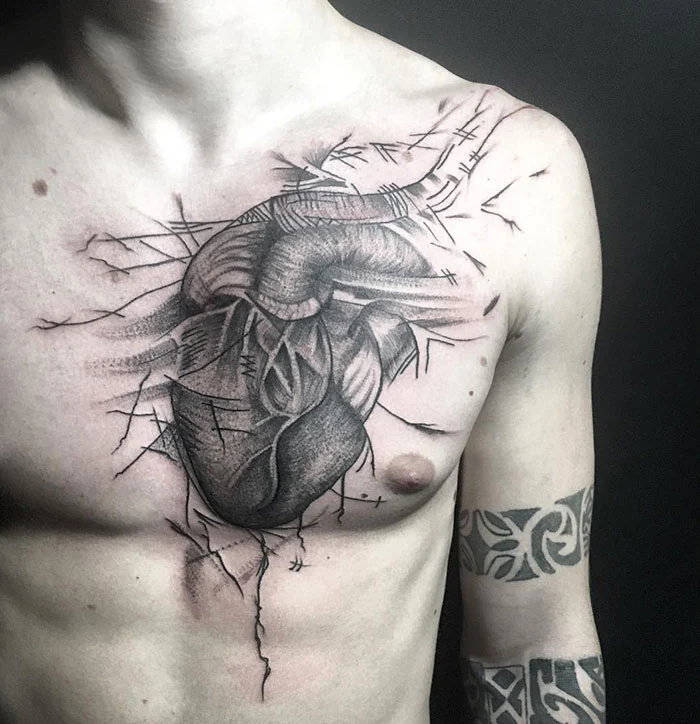
Drawn in black and grey like a medical sketch, this anatomical heart sits over the left chest, with cracks spreading through the skin around it as if the muscle were pushing outward. It stands for living honestly and letting your feelings show instead of hiding them. Some wearers read it as strength after heart surgery or a health scare. People who want a heart that feels raw rather than sweet ask for it a lot, and healthcare workers often request their own version of it. Black and grey realism handles the tissue texture especially well.
3. Heart and Dagger
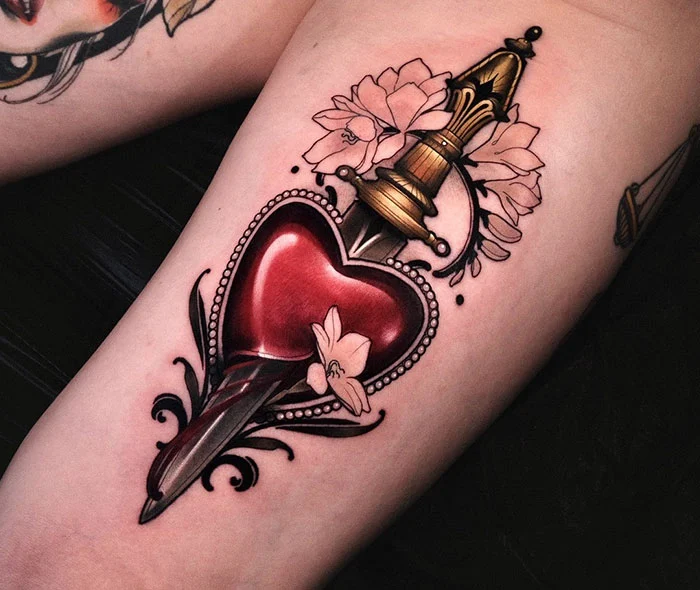
Glossy and red, this heart is pierced by a dagger with a gold hilt. Small white blossoms crowd around the wound like a bandage made of petals, and neo-traditional shading gives the red real depth, so the heart looks polished instead of flat. Love and pain travel together in this design, and wearers often use it to say they survived a betrayal and chose to love again anyway. It’s perfect for anyone fresh out of a breakup who wants a story of strength rather than a gloomy one, since the flowers soften the blade and keep the mood hopeful.
4. Heart With a Name Banner and Swallows
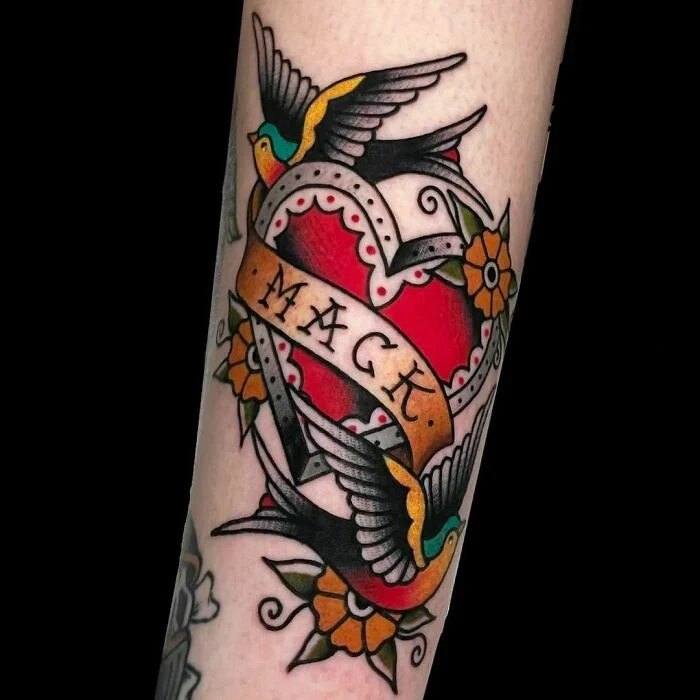
Wrapped in a ribbon banner, a red heart sits on the forearm, with two swallows circling and a few orange flowers filling the gaps. The banner carries a name, and that’s the whole point of the design. Old sailors inked swallows because the birds always find their way back, so the pair adds the idea of coming home to the person named. Mothers, children and loved ones who have died are the usual names. Before you commit, think about whether you’ll still want that name in 20 years, and ask your artist to size the banner so every letter stays clear.
5. Crying Heart
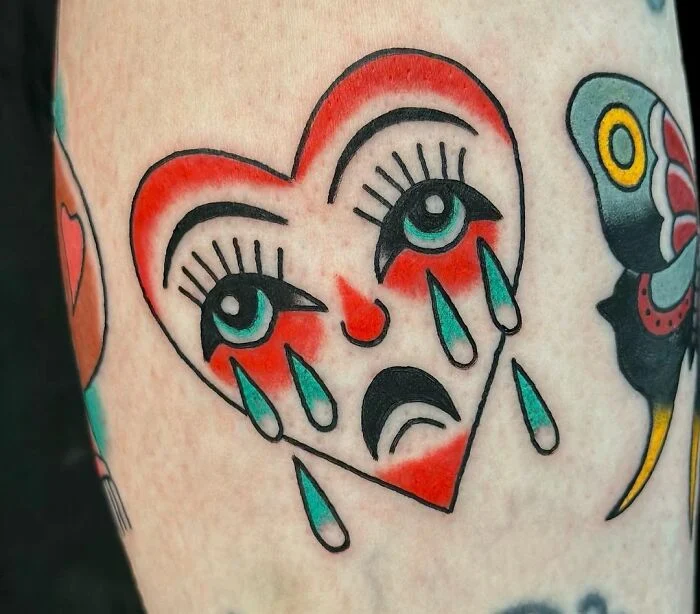
This heart has a face, with big eyes, flushed cheeks, a downturned mouth and blue tears running down, and bold traditional linework keeps that expression readable from across a room while the blue pops against the red. A crying heart literally wears its heart on its sleeve, so it often marks grief, a loss or a hard season. Some people wear it with a wink, owning their heartbreak with a little humor. If you’re looking for something honest but still colorful, this one feels lighter than a dark memorial piece.
6. “Myself” Heart With Roses
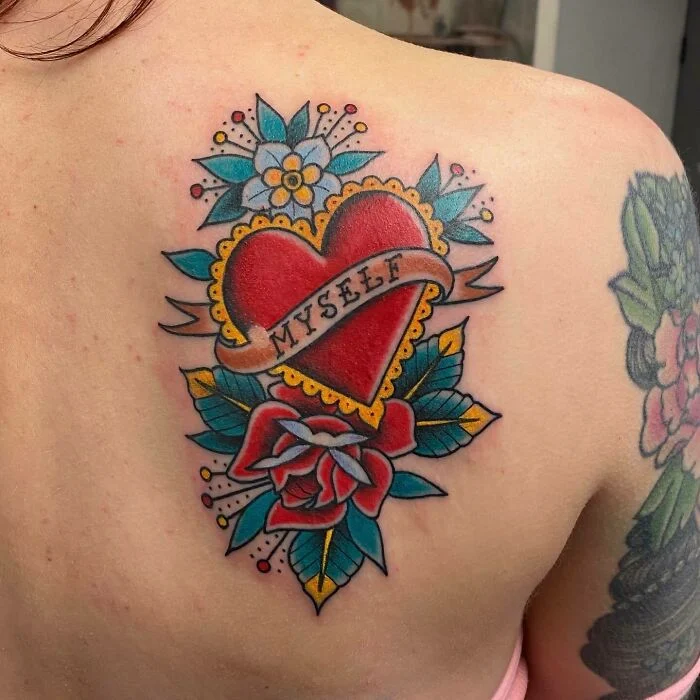
Gold borders frame this red heart, which carries a banner that reads MYSELF, with roses and blue flowers growing around it on the shoulder blade. The layout borrows from the classic Mom banner. Here, though, the name has been swapped for MYSELF, so the promise is made to the wearer. That twist turns it into a self-love piece, a reminder to treat yourself with the same loyalty you’d give a partner. Old school fans love it, because the look stays traditional while the message feels current. Choose it if you’ve just come through a rough stretch and want a fresh start written on your own skin.
7. Eye Inside the Heart
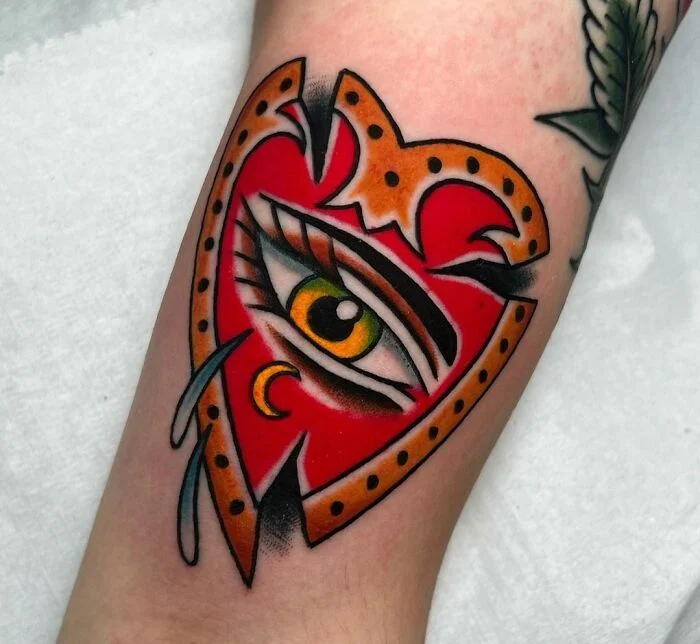
A red and orange heart with a dotted border holds a gold eye in the center. Above it rests a crescent moon. The eye points to intuition, the idea that you see clearly with your feelings and not only your head. Paired with the moon, it also carries a sense of protection, loving with your guard half up. Creative people and anyone who trusts their gut tend to pick it. Bold traditional lines work well on the upper arm, where the eye is large enough to stay readable as the ink settles over the years.
8. Anatomical Heart Filled With Tiny Hearts
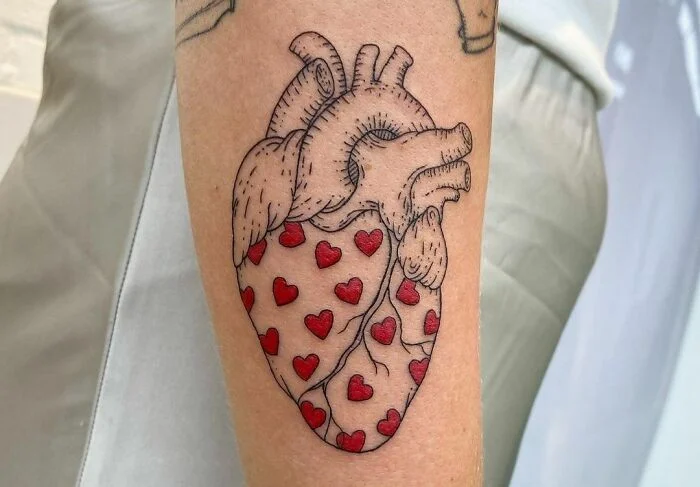
Here the heart is drawn in a thin black anatomical outline, then packed with small red hearts like confetti. The mix bridges realism and something cute, which is part of its charm. Its meaning is a heart full of love, and the playful fill leans toward self-love and gentle humor instead of drama. Because the outline is simple, it sits comfortably on a forearm and doesn’t need a long session. We often point first-timers toward designs like this one, since a simple outline makes a first session less nerve-racking and still tells a personal story.
9. Bandaged Heart
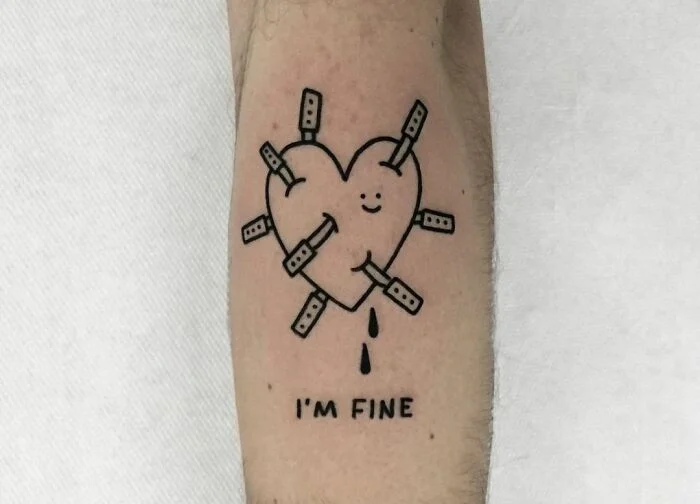
A black linework heart wears an adhesive bandage, with a single red drop below and the words I’M FINE underneath. The joke is the point. It describes someone who’s healing but not quite there yet, and it talks about mental health without heavy symbolism. Minimal lines keep it readable at a small size. Wearers choose it to mark recovery from a breakup, burnout or a hard year without turning it into a somber piece. It’s a great choice if you’d rather smile at the scar than hide it.
10. Matching Color Hearts
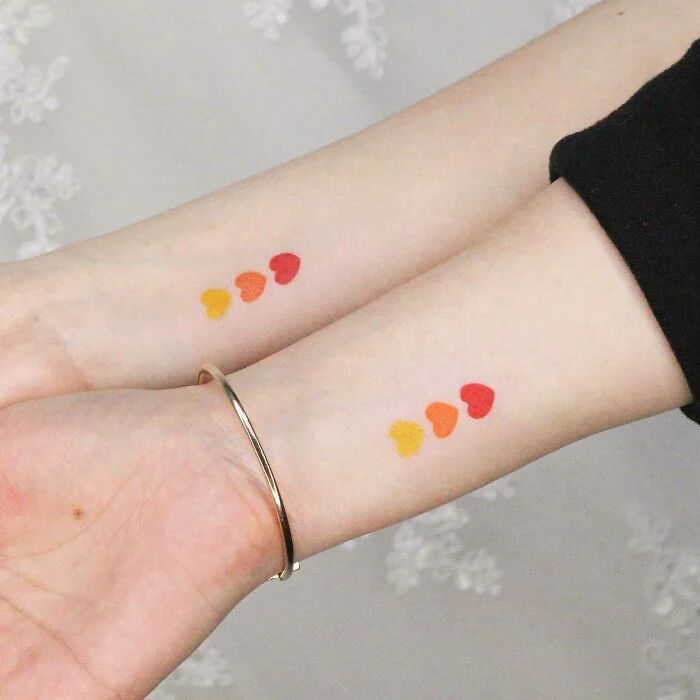
Each wrist carries a small row of three hearts in red, orange and yellow, so the pair matches across two people. Each color stands for a different person, which is why families and sisters like this design. Couples use it as well, with each person claiming a color. Small hearts like these can be done in one session, so two people can often be tattooed on the same day. Keep the spacing open so the shapes don’t blur on moving wrist skin, and let your artist test the size on a stencil before you both commit.
Choosing a Style for Your Heart Piece With Holistic Ink
A heart can look completely different depending on the style behind it, so it helps to decide early which direction fits your story. At Holistic Ink, three styles carry most of our work, and each one gives a heart its own personality. Here’s how they compare.
| Style | How the heart looks | Best size and placement | How it ages | Best for |
|---|---|---|---|---|
| Black & Grey Realism | Anatomical detail, soft shadows, stone or smoke textures | Palm-size and up; chest, forearm, calf | Holds well with healthy contrast; grey softens slowly | Anyone who wants depth without color |
| Color Realism | Glossy red heart, petals, flames, light reflections | Medium to large; upper arm, thigh, shoulder | Brightest at first; needs sunscreen to keep reds | Romantic or vivid stories |
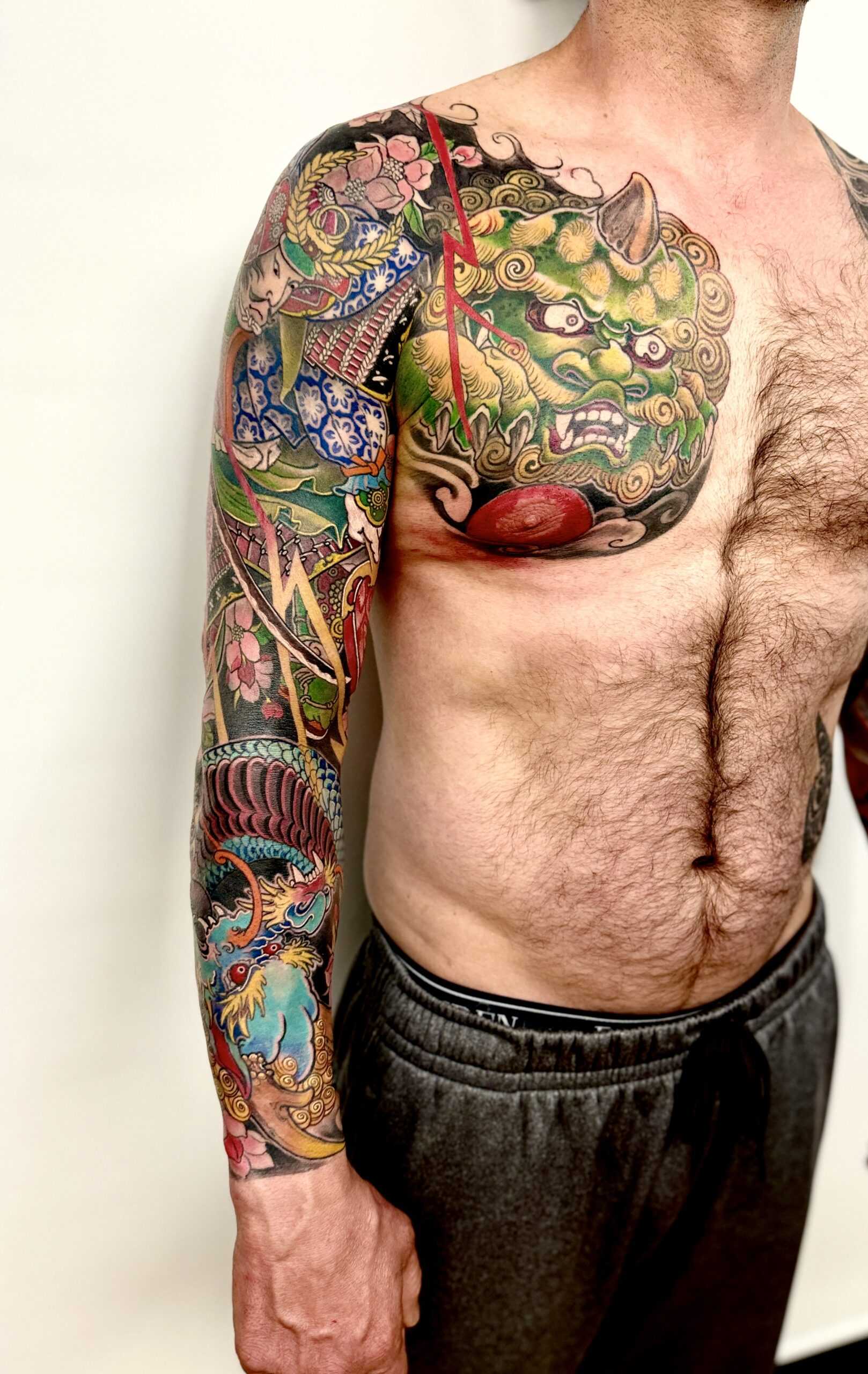
| Japanese / Irezumi | Heart framed by peonies, waves, wind bars | Large; sleeve, back, chest panel | Bold outlines stay readable as it ages | A heart inside a bigger story |
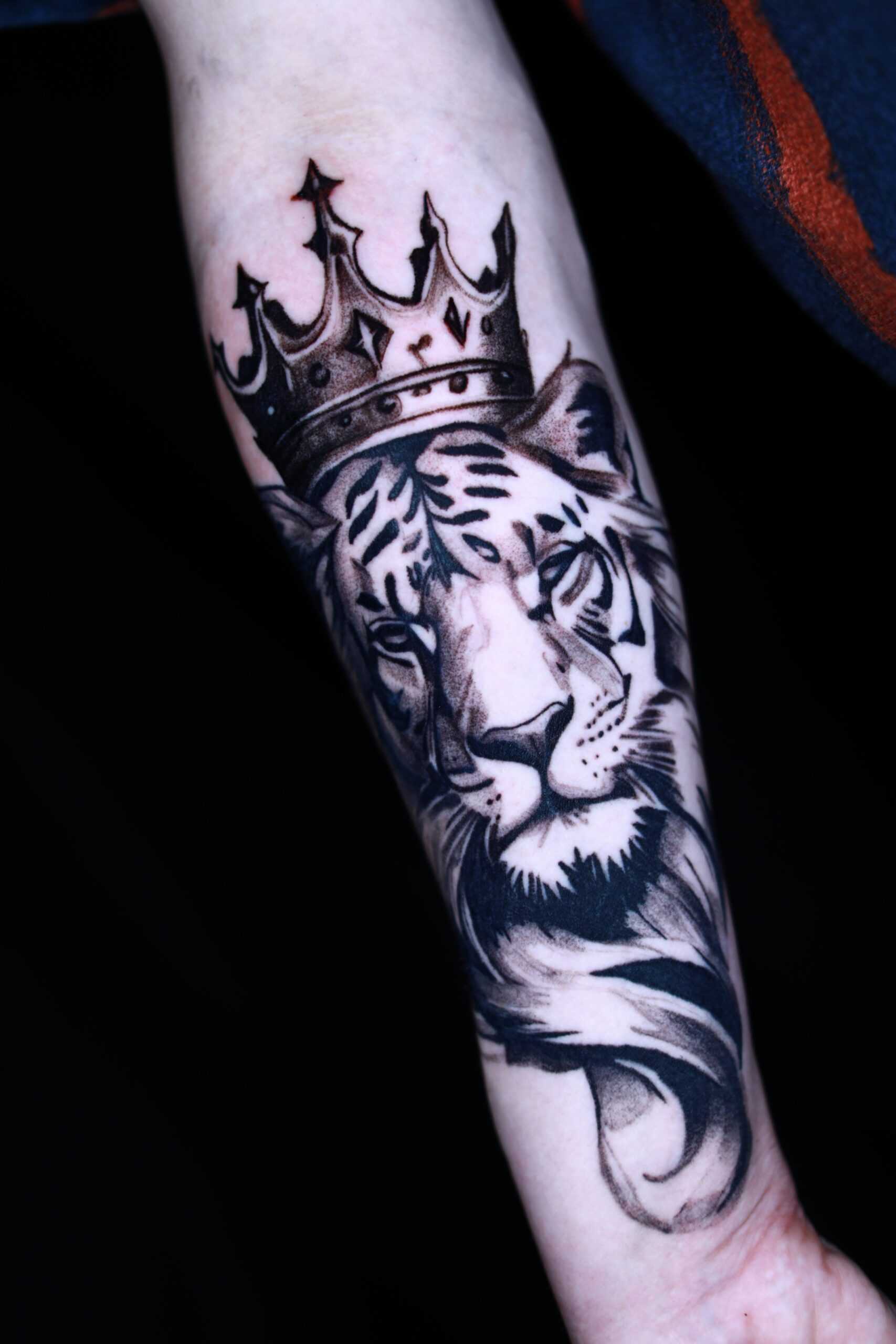
Black and grey realism works best for the anatomical heart, the winged heart and the thorn-wrapped heart. Artists build depth with soft gradients until the muscle looks almost real, and the grey softens slowly with age. Choose it when you want weight and detail without any color. The tiger below shows how smooth that shading gets on a forearm, and a heart gets the same treatment.
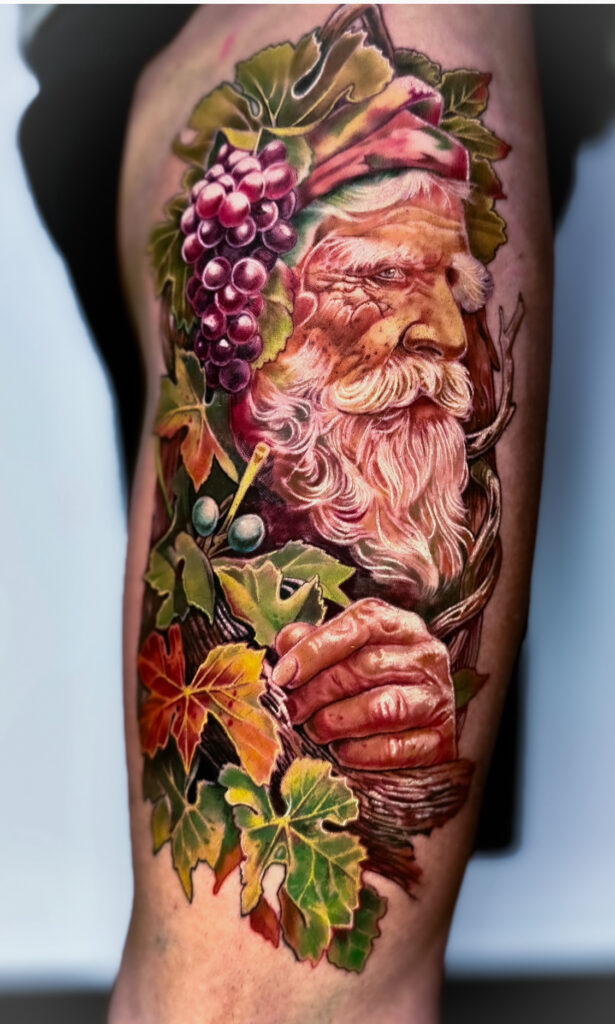
Color realism is made for the glossy red heart. Light can bounce off its surface, petals or flames can circle the edges, and the reds look rich when fresh, but without sunscreen on healed skin they’ll be the first to fade. If you’d like a heart that glows, this is your style, as long as you’re ready to look after it. The blooms below show the kind of saturation our artists aim for.
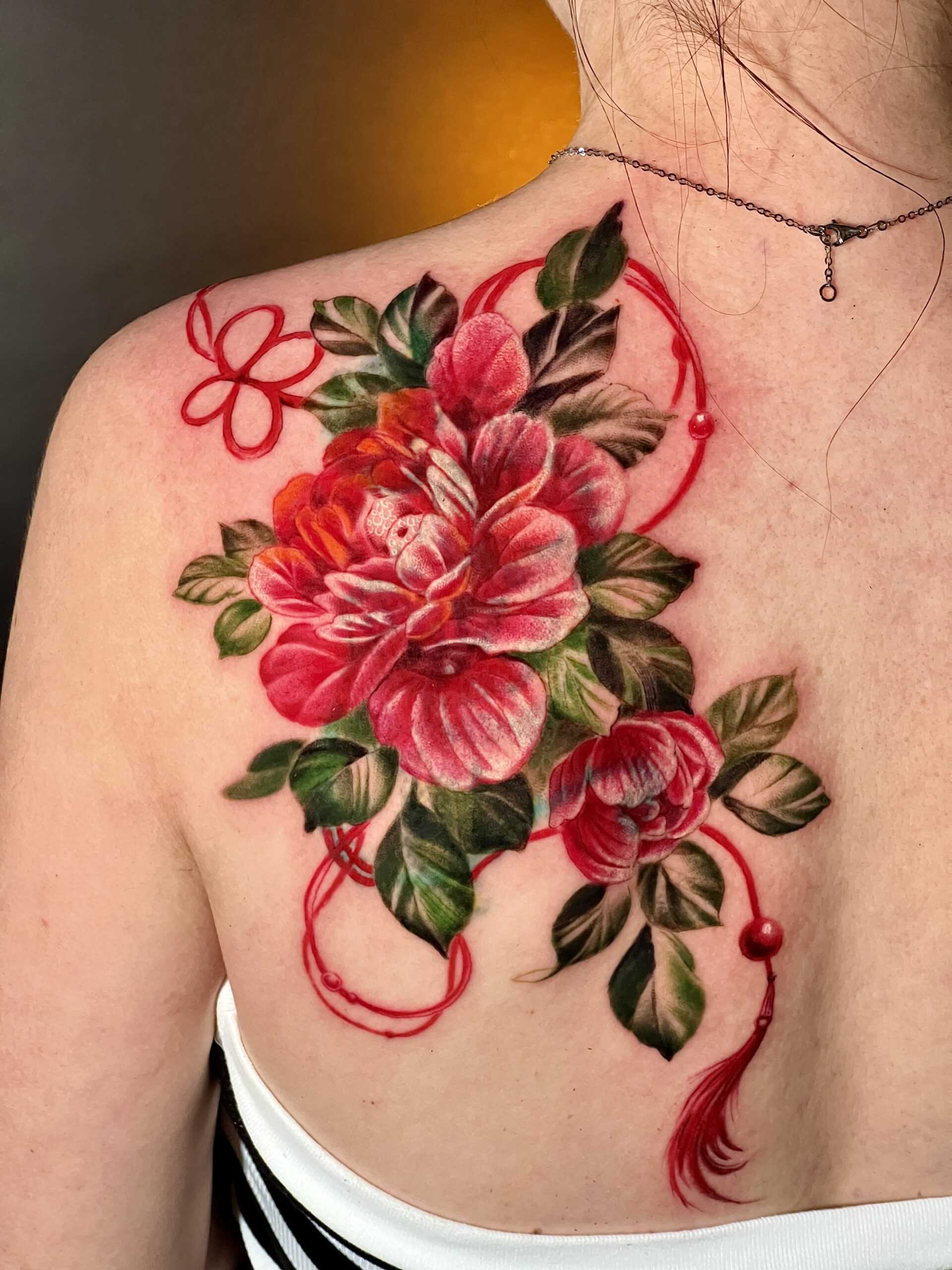
Japanese work and Irezumi treat the heart as one part of a bigger picture. Peonies, waves and wind bars wrap around it, and the heavy outlines help everything stay readable as the piece ages. A heart in this style usually belongs to a sleeve, a back piece or a chest panel, so plan for a long project with your artist.
Not every heart needs one of our signature styles. A small heart with a name banner, a single-line outline or a matching pair often looks best in traditional or fine line, where the lines stay simple and the piece stays small. If you’re unsure, bring references to a consultation and ask your artist to sketch the same idea in two styles. Seeing both on paper usually settles the choice quickly.
Common Mistakes, Cost Factors and How Small Hearts Age
The most common mistake we see is a heart that’s too small for what’s inside it. A name or a date needs room, and tiny letters inside a palm-sized shape blur together within a few years. Fingers cause trouble too, because constant hand washing and friction make the ink fade faster, so a heart on the side of a finger often needs touch-ups. Another habit is copying a photo from the internet line for line. Your artist can adjust the angle, line weight and spacing to fit your body, and a design redrawn for you usually looks more natural than a trace of someone else’s work.
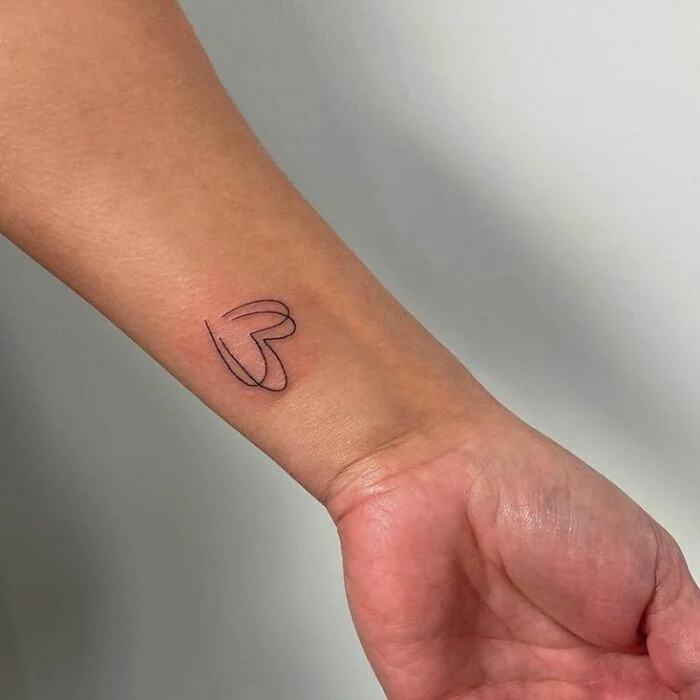
The wrist piece above shows the safer approach, with one steady line and generous open skin around it. Think twice before inking a new partner’s name inside a heart, too, since a name is the hardest detail to change later.
Price depends on several things instead of a flat rate. Size comes first, then how much detail the design has, whether it uses color or only black, and where it sits on your body. A custom drawing takes more time than flash, and a heart with roses, shading and lettering takes more time than a clean outline. Larger hearts may need more than one sitting. Nobody can quote fairly without seeing the idea and the placement, so ask about cost at your consultation with Holistic Ink.
Hearts age like any other tattoo. Lines spread a little over the years, sun fades color, and red tends to fade sooner than black. Small, fine designs tend to soften first, while bold outlines usually hold their shape longer. Sunscreen on healed skin goes a long way toward protecting the reds, and if the color does fade, a touch-up can bring it back. If you ever regret a design, a larger piece with flowers or shading can often cover it, but ask an artist to look at it in person first.
Best Placement for a Heart Design
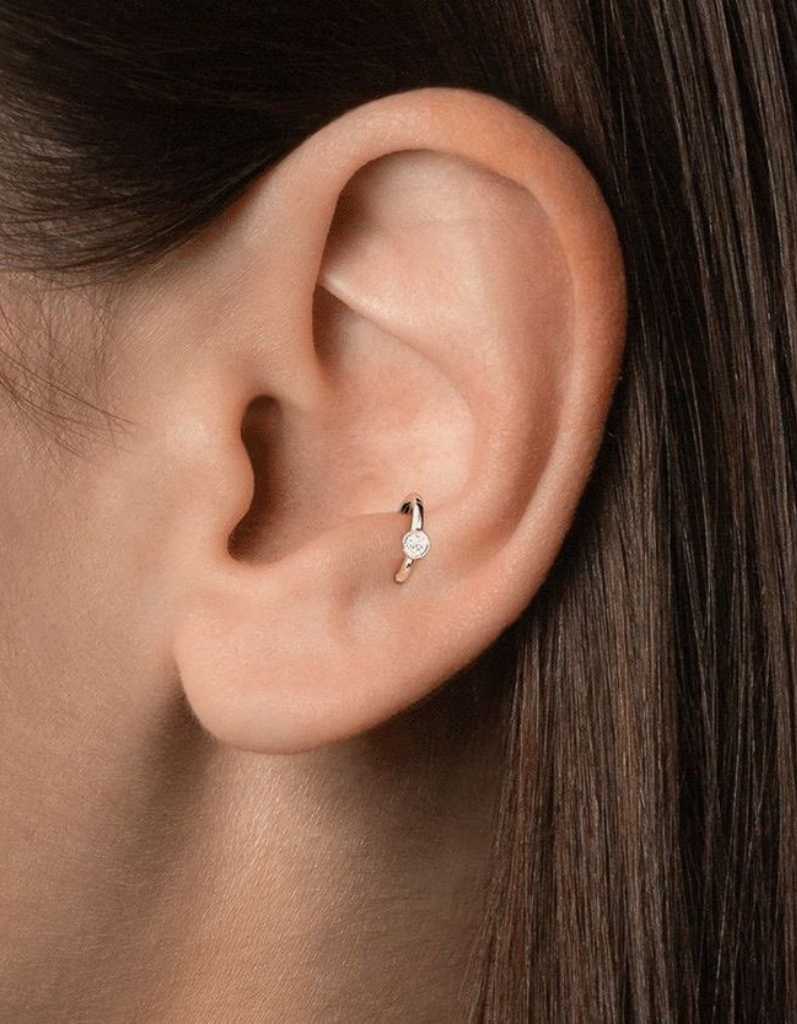
Where a heart goes should match its shape and its story. Tiny hearts and infinity signs sit nicely on the wrist or collarbone, anatomical hearts look best on the chest or forearm where there’s room for detail, and banner hearts need the flat canvas of an upper arm or shoulder blade. Other spots people choose are behind the ear, the stomach and the ribs. The artists at Holistic Ink often suggest thinking about how you’ll wear the piece day to day, since clothes and straps rub some areas more than others.
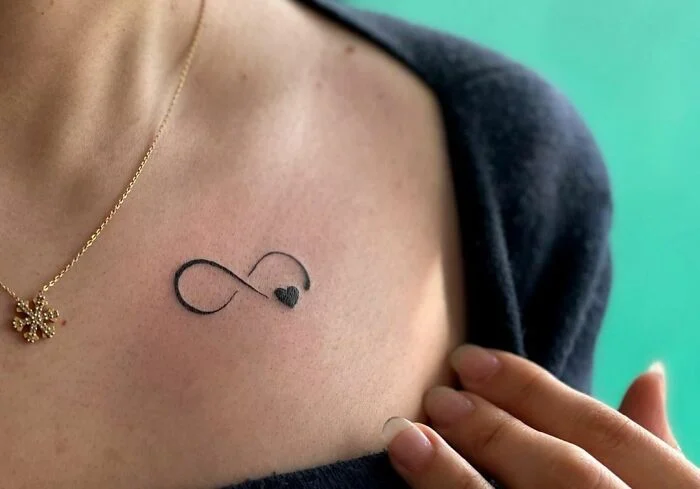
Small, delicate work like the one above looks great on the collarbone, though the bone sits close to the skin, so it tends to hurt more than a fleshier spot. Common spots and the designs that tend to fit them are listed below.
| Area | Pain level | Heart design that fits | Style that suits |
|---|---|---|---|
| Inner wrist | Moderate | Tiny outline or matching hearts | Fine line, minimalist |
| Fingers | Moderate | Very small solid heart | Bold minimalist |
| Collarbone | High | Small heart with script or infinity | Fine line |
| Chest over the heart | High | Anatomical or sacred heart | Black & grey realism, color realism |
| Forearm | Low | Heart with dagger, banner or rays | Traditional, neo-traditional |
| Shoulder blade | Moderate | Heart with roses and banner | Traditional, color realism |
| Stomach / ribs | High | Larger heart with flowers | Color realism, Japanese |
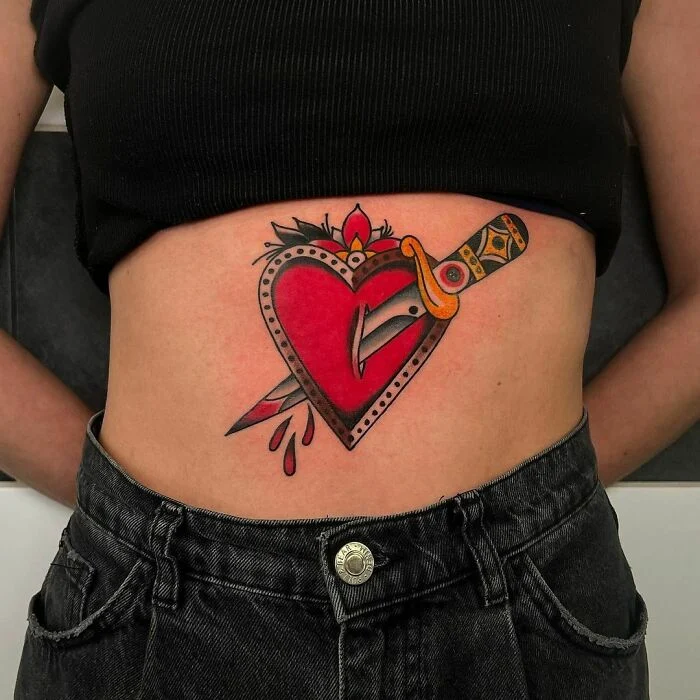
Pain varies by person, so treat that column as general guidance and not a promise. Ribs, stomach and collarbone sit over thin skin and bone, so they sting more than a forearm, and a longer session there deserves a snack and a few breaks. The forearm is often the easiest first spot, since the skin is flat, the piece is easy to watch while it heals, and a heart with a dagger or banner follows the muscle neatly.
From Consultation to Healed Ink in Five Steps
Knowing the order of events makes the whole process calmer, especially if this is your first heart. There are five stages, and each one has its own purpose.
First comes the consultation. Bring reference photos, the spot you have in mind and the story behind the heart, and your artist will help you choose between flash and custom, then talk through size, color and lettering. You leave with an agreed design and a rough plan for the session.
Next is the stencil, a transfer of the drawing placed on your skin. Stand up, move around and check it in a mirror, since a heart that looks right on paper can sit differently on a curved arm. Check any lettering letter by letter, and ask for changes now, because the needle can’t take them back.
During the session, the lines go in first and the color follows. Expect some discomfort, so eat beforehand, drink water and tell your artist when you need a pause. Short breaks are normal on larger pieces, and you’ll walk out with a wrapped tattoo and written care notes.
Aftercare starts right away, and the timeline below shows what the skin does from the first day to the third month. While it heals, keep up these habits:
- Wash gently and pat the area dry.
- Apply a thin layer of the moisturizer your artist recommends.
- Wear loose clothes over the fresh tattoo.
- Keep it out of pools, the ocean and direct sun.
- Don’t pick at flaking skin, because that can pull ink out.
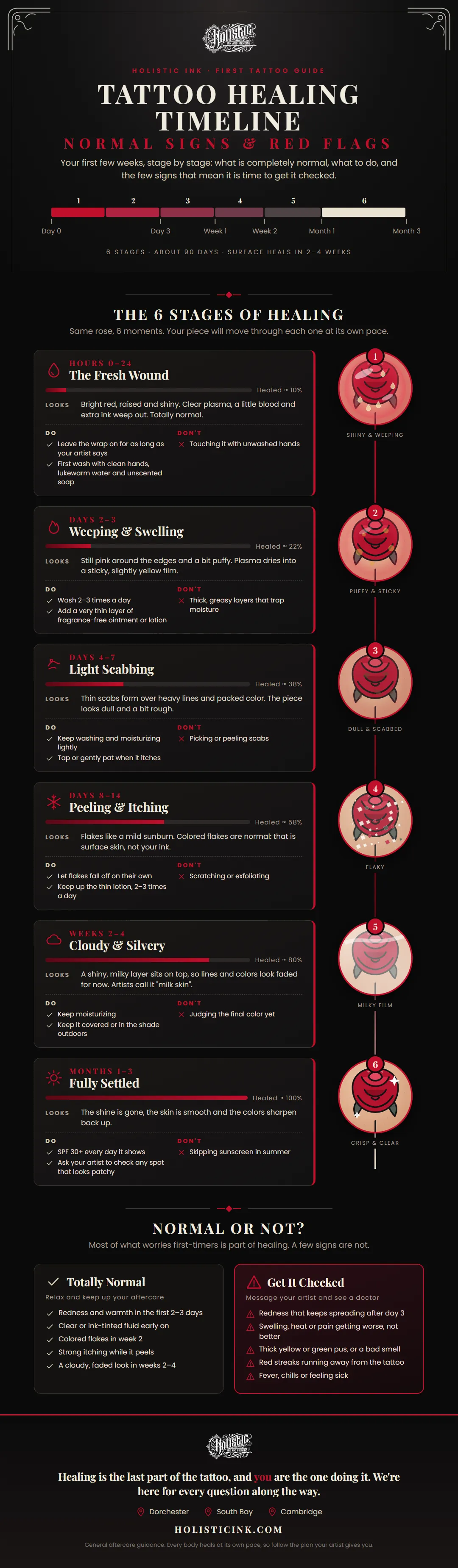
Once the tattoo has settled, keeping it sharp is simple. Use sunscreen whenever it’s exposed, keep the skin moisturized, and book a touch-up if the reds start to fade. Holistic Ink artists are glad to look at a healed piece and tell you how it’s holding up, so keep their contact details handy.
Frequently Asked Questions About Heart Designs
How much does a small heart piece cost?
A small heart is priced by size, detail, color and placement, plus the shop minimum, so there isn’t one number that fits every design, and the only reliable quote comes from an artist who has seen your idea and the exact spot on your body. Book a consultation and we’ll give you a straight answer.
What does a black heart design mean?
Black hearts usually point to mourning, rebellion, steadiness or plain love of the color black, and the meaning depends on what sits around them, so a black heart with a banner reads as grief for someone while a bold solid one is often a graphic choice with attitude. Tell your artist what you want to say and they’ll steer the details.
Is it bad luck to put a partner’s name inside a heart?
Many tattooers swear that inking a partner’s name brings bad luck for the relationship, and while that’s folklore and not fact, it’s sound advice to choose a shared symbol, a date or initials instead of a full name, especially early on. If a name is already there, a larger heart with flowers or shading can often cover it once your artist has seen it in person.
Can I work out or swim after getting inked?
Skip pools, hot tubs, lakes and the ocean until the skin has fully healed, because soaking can irritate fresh ink and raise the risk of infection, though light exercise is usually fine once you feel ready if you avoid anything that rubs or stretches the area. Wipe sweat away gently, and ask your artist how long to wait for your spot.
Your Heart Story Starts at Holistic Ink
A heart is simple to draw, but the details are what make it yours. Whether you add a dagger, a banner, a pair of wings or a row of tiny hearts, the best design starts with knowing who or what it’s for. When you’re ready, book a consultation at our Dorchester or Cambridge studio, bring your references and tell your artist the story. We’ll help you turn it into a piece that still looks right years from now.
Take your heart tattoo further
A heart design can grow into a full sleeve or backpiece. Our artists are known for large-scale work in 3 styles. Start with the one that fits your idea:
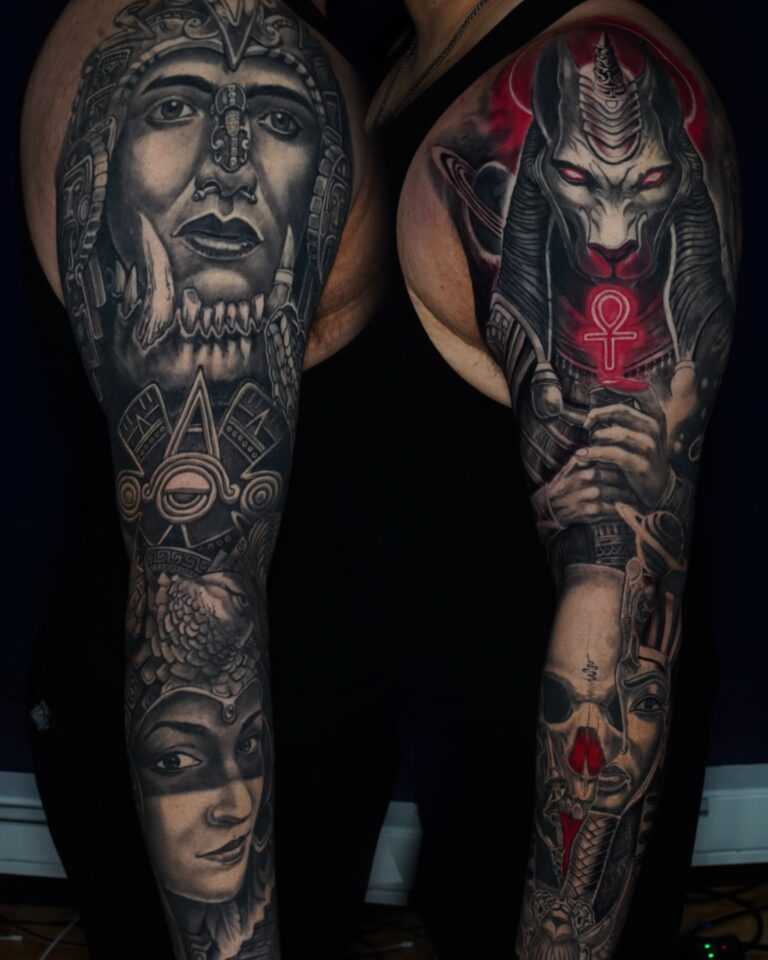 Best matchBlack & Grey RealismPortraits, animals and sacred art in soft, deep shading.
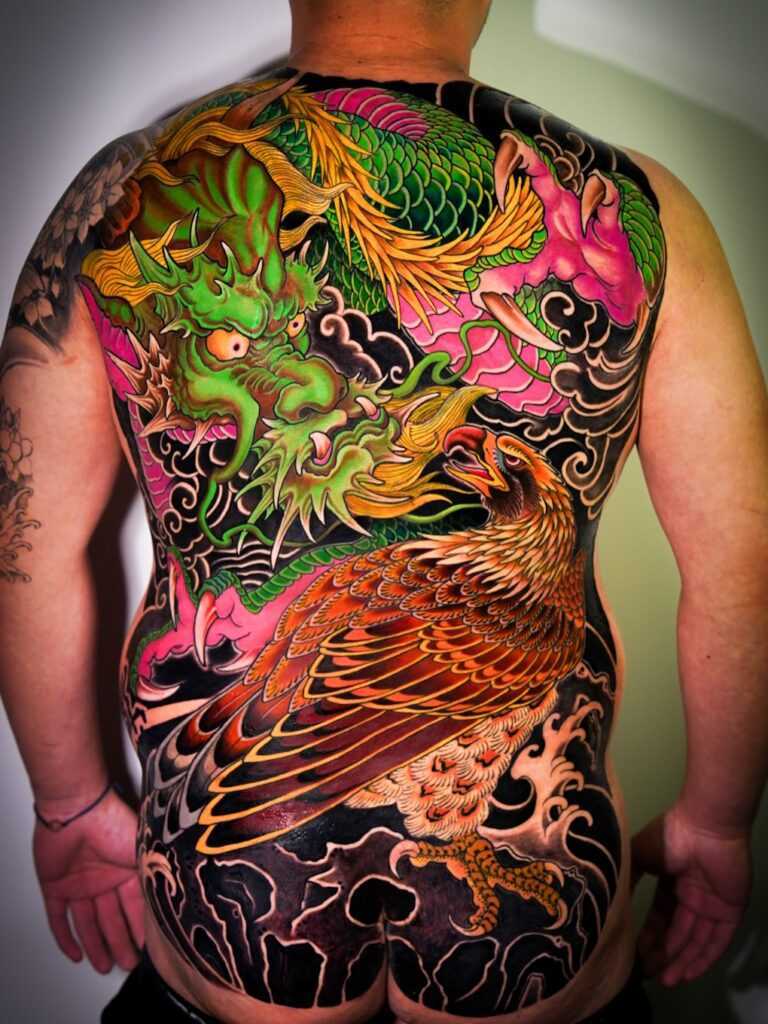 Japanese IrezumiDragons, koi, deities and full backpieces with traditional flow.
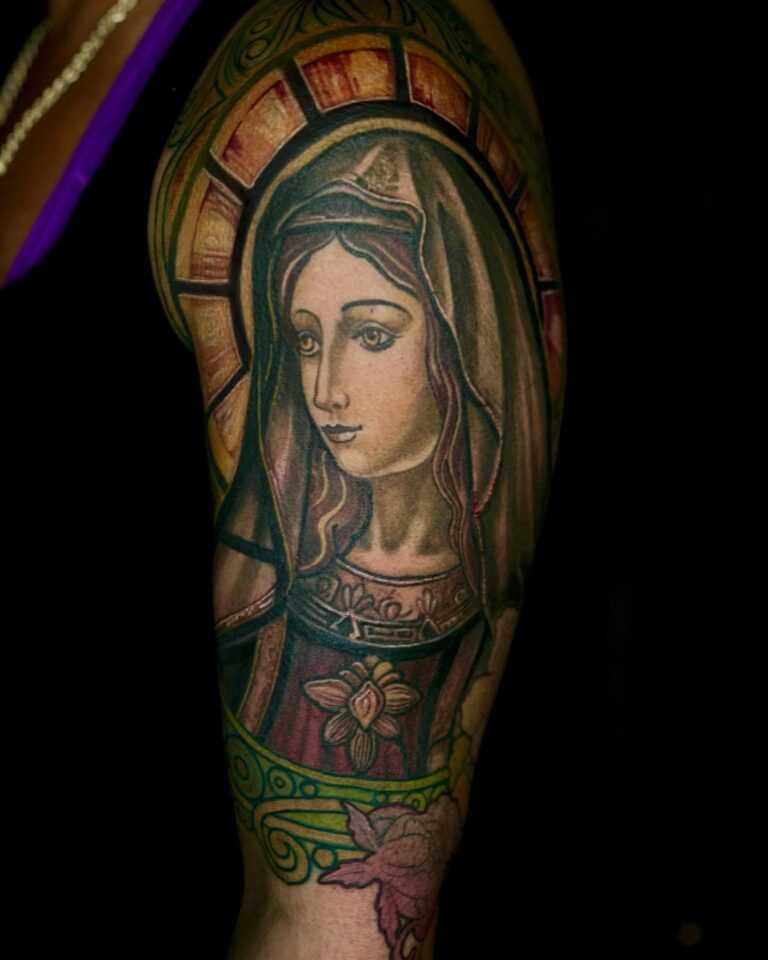 Color RealismSaturated, lifelike color for sleeves and large scenes.
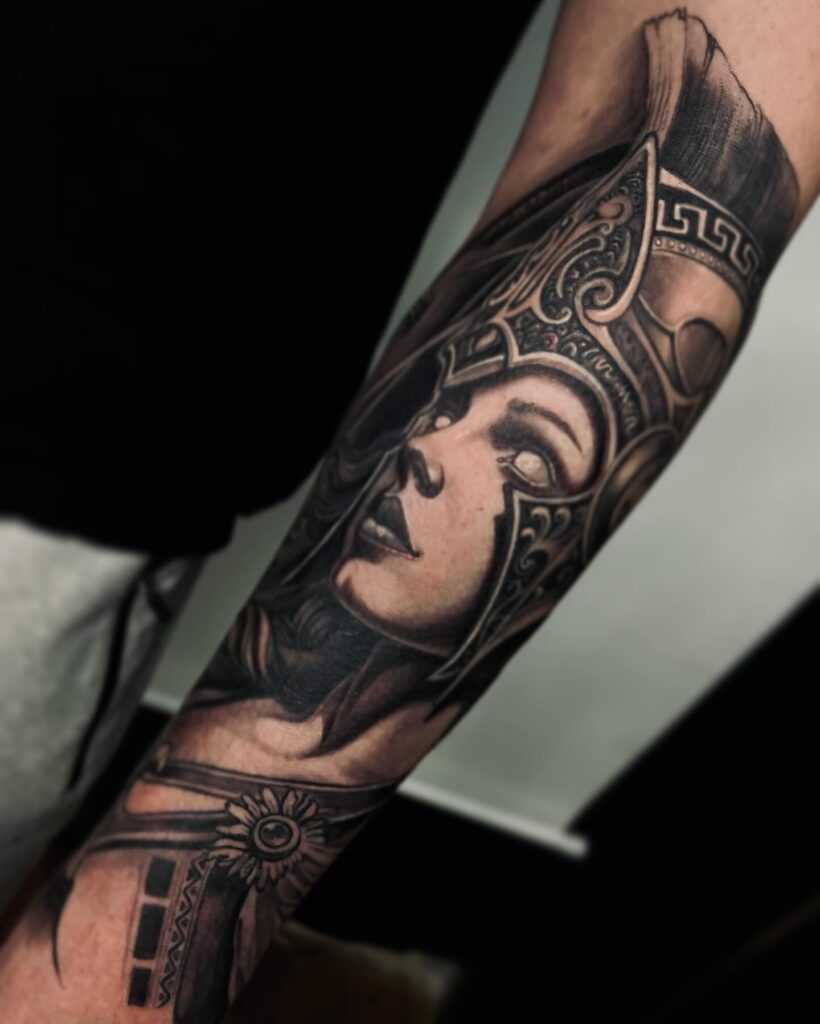 Portfolio · Black & Grey RealismBlack & grey realism by our artistsStyleSoft shading, deep contrastBest forPortraits, animals, sacred artSizeForearm to full sleeveSee the portfolio →
Bring your reference and placement. We plan large work session by session with you.
We also tattoo American traditional, fine line, script and small tattoos. Browse all styles →