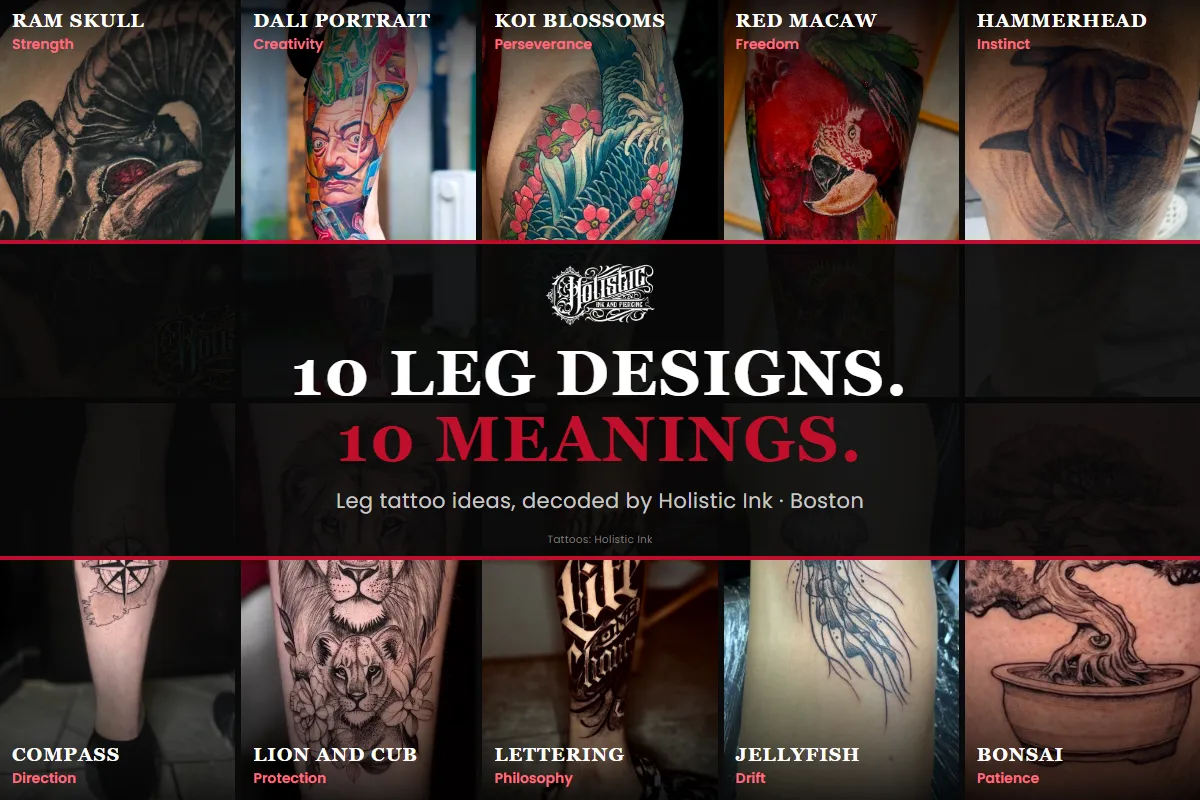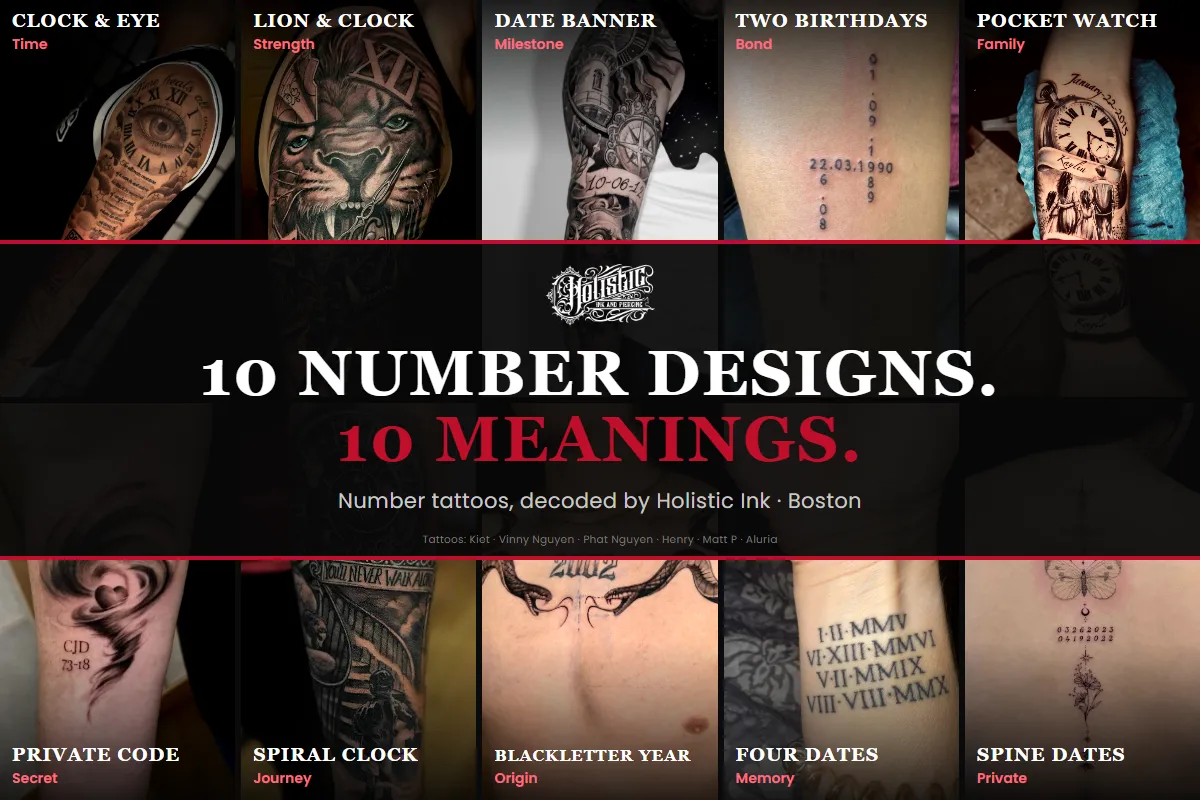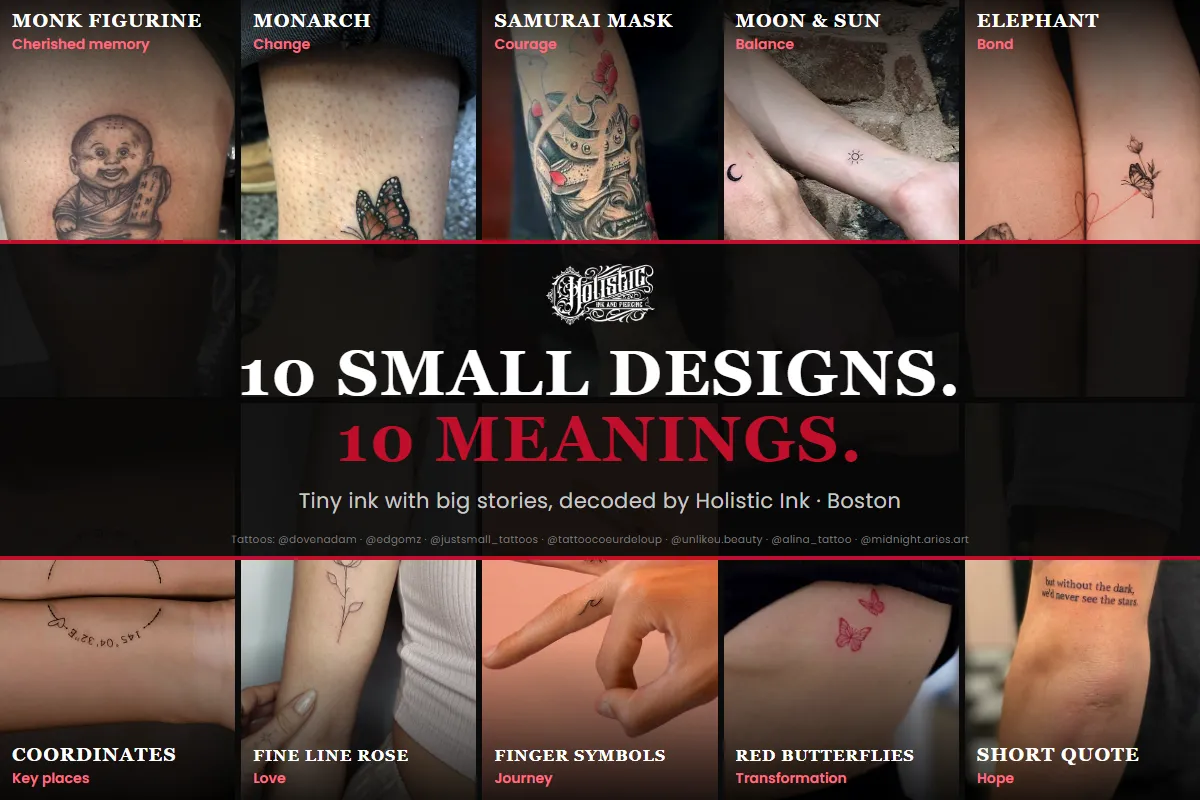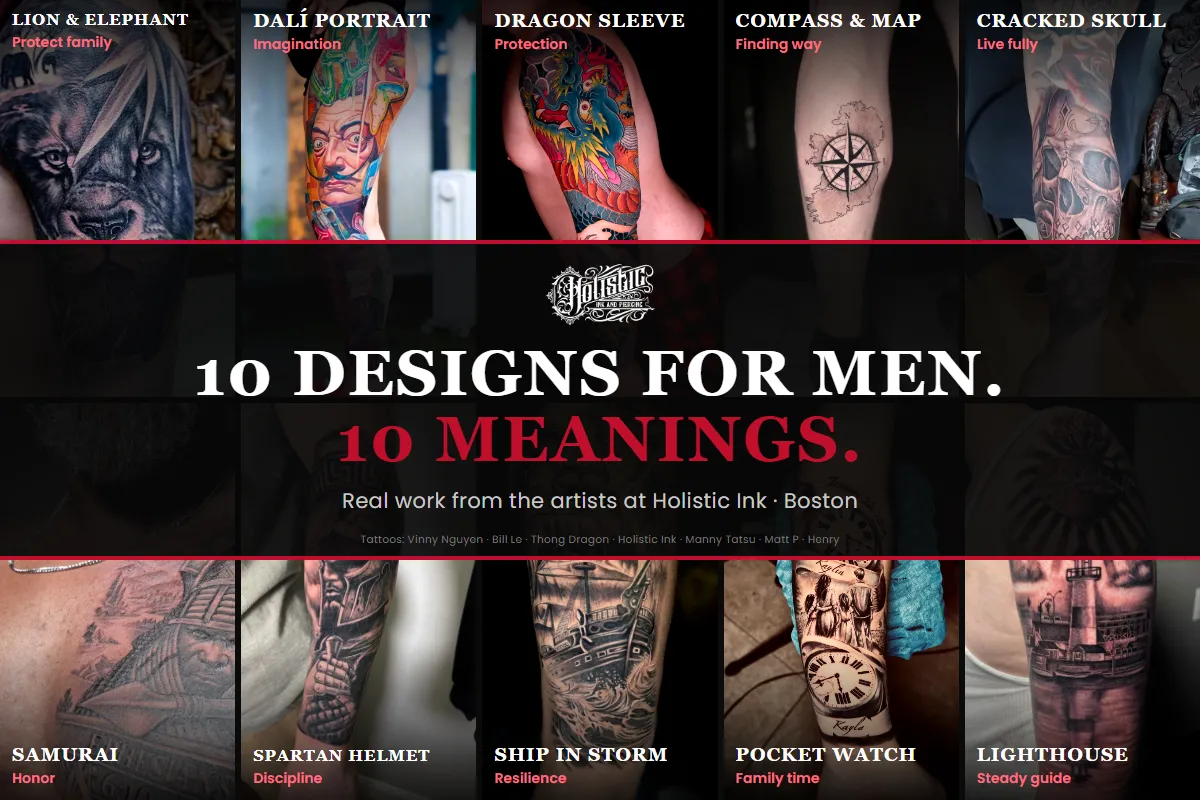
Walk into an old sailor’s tattoo shop and you’d find a wall of flash: heavy black outlines, flat red, green and yellow fills, and designs you can recognize from across the room. That’s american traditional tattoo work at its core. This guide from Holistic Ink in Boston walks through 10 classic designs, what each one means, and how to pick the right size and placement.
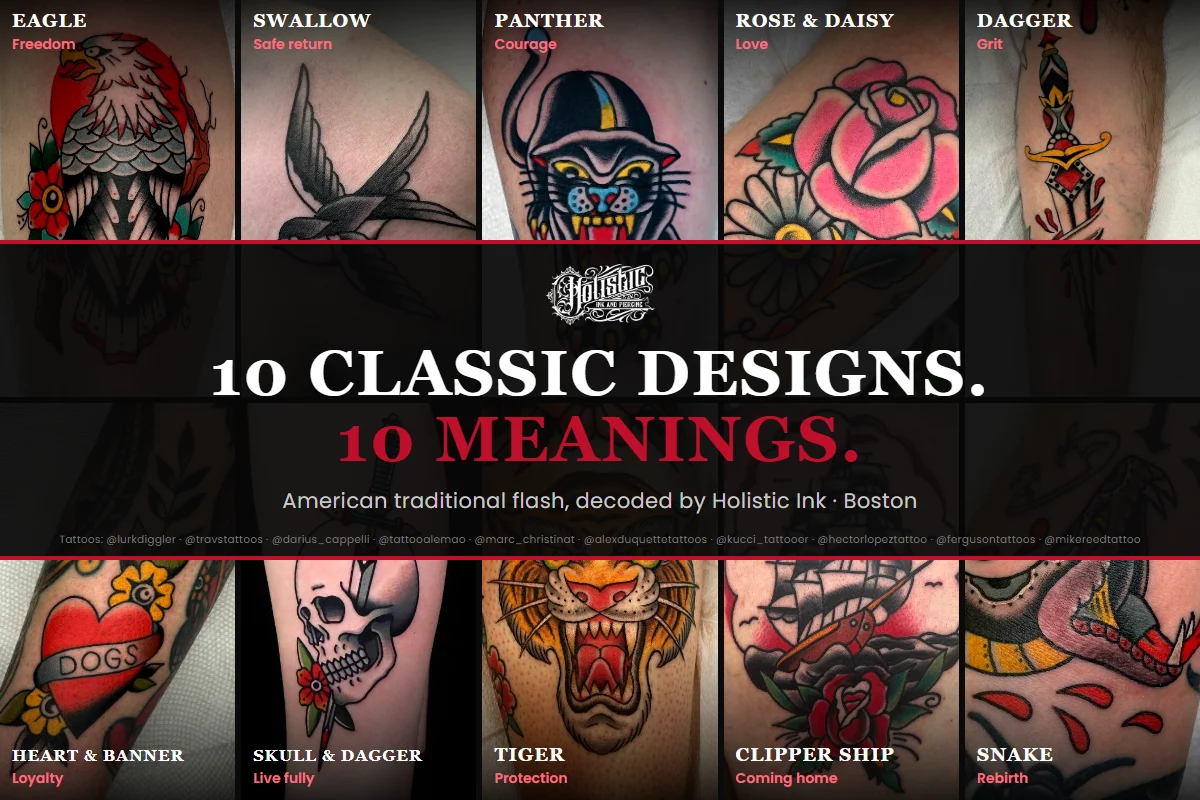
10 American Traditional Tattoo Ideas Holistic Ink Loves
The style grew out of sailors’ port towns, and Sailor Jerry helped shape the look that most shops still draw on today. Artists painted flash sheets and taped them to the wall, so a client could point and say, “That one.” The rule behind the look is simple: bold will hold. Thick lines and packed color stay readable as skin changes over the years. Each design below has its own meaning, and the table gives you a quick overview first.
| Motif | Meaning | Common pairing | Best size |
|---|---|---|---|
| Eagle | Freedom, patriotism, strength | Banner, flag, roses | Medium to large |
| Swallow | Long voyages and a safe return | Stars, small banner | Small to medium |
| Panther | Strength, courage | Roses, daggers | Medium to large |
| Rose and daisy | Love that can hurt, plus innocence | Dagger, banner | Medium |
| Dagger | Courage, getting through hard times | Rose, heart, snake | Small to medium, tall |
| Heart with banner | Loyalty to someone you love | A name, “Mom”, a pet’s name | Small to medium |
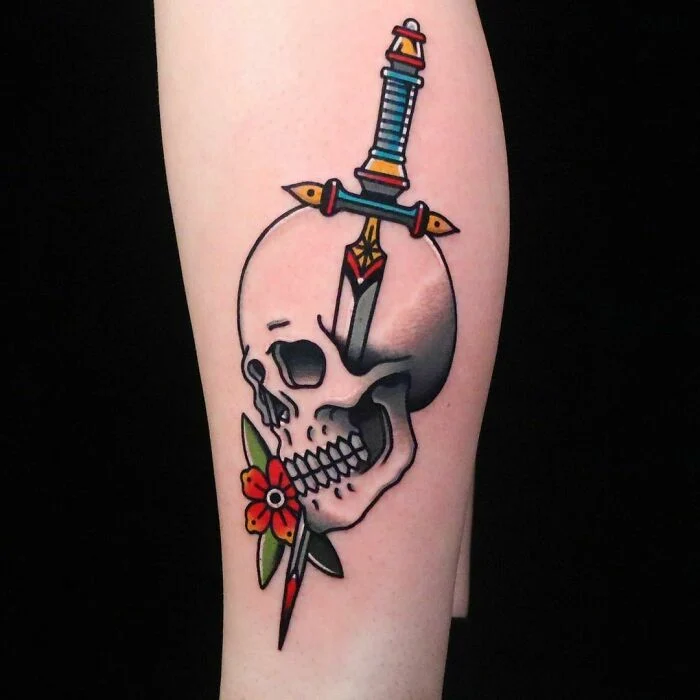
| Skull and dagger | Living fully, accepting mortality | Roses, snake | Medium |
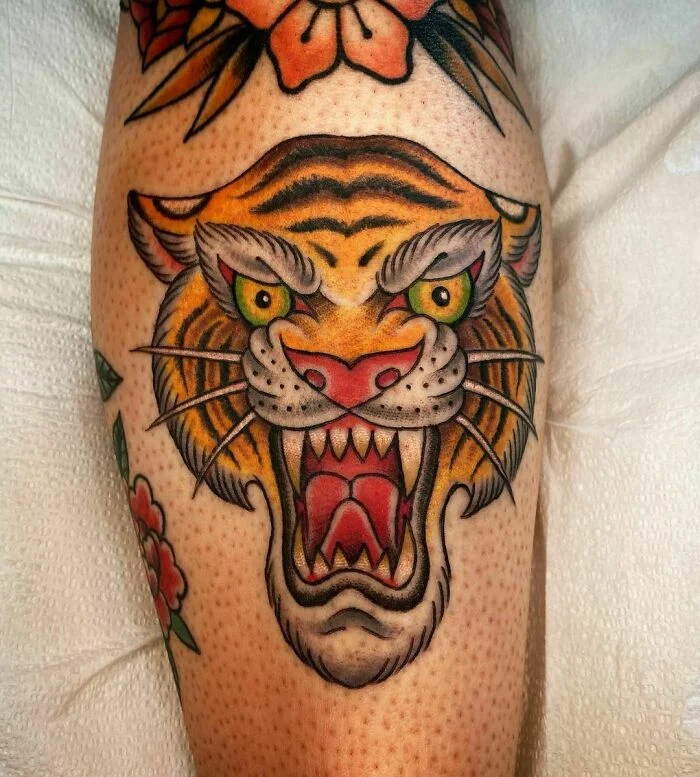
| Tiger head | Strength, protection | Flames, flowers | Medium to large |
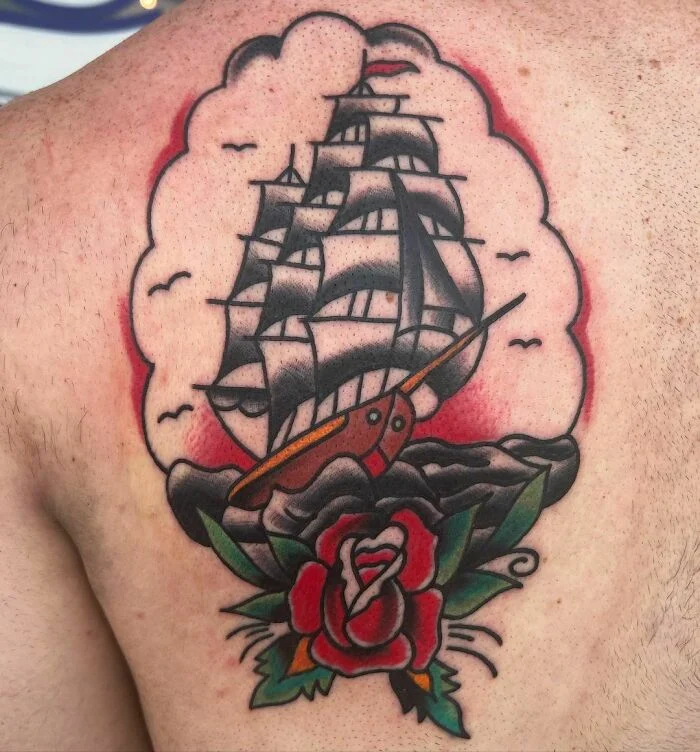
| Clipper ship | A long voyage and a safe return home | Waves, banner, compass | Large |
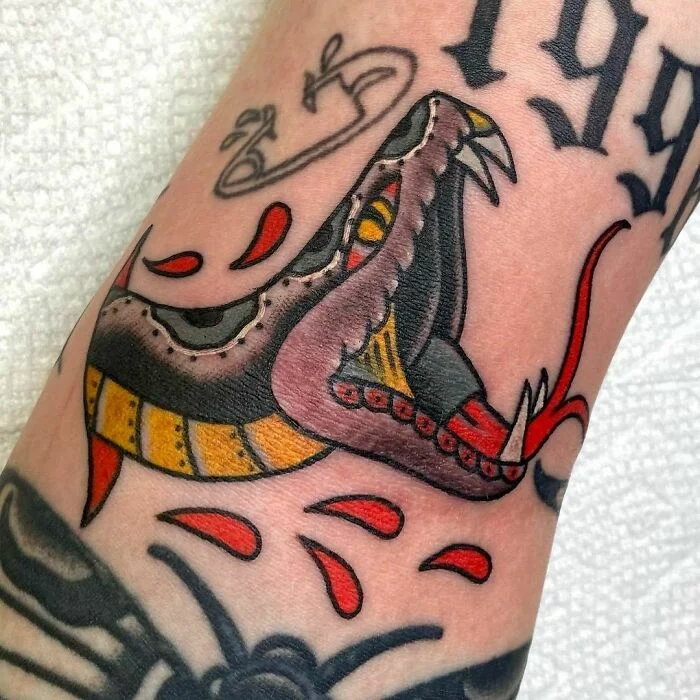
| Coiled snake | Rebirth, temptation | Dagger, rose, skull | Medium |
Spread-Wing Eagle
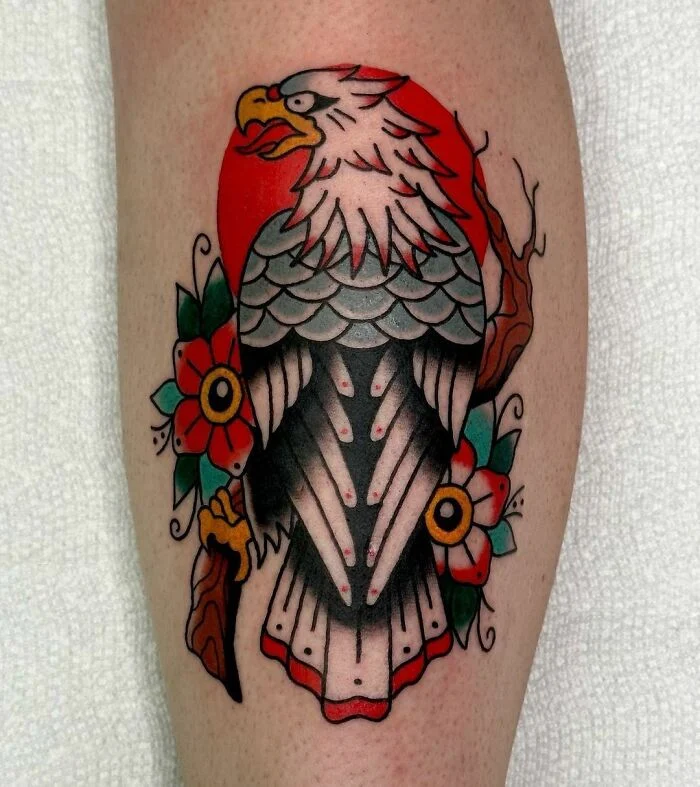
This eagle spreads its wings across the upper arm. It has a hooked beak, layered feathers, and a heavy black outline around the red, yellow, and brown. For sailors and soldiers it stood for freedom and loyalty to country, and for many wearers today it still reads as a mark of strength. That wide shape covers the bicep or chest and still reads from across the room. It’s a great choice if you want one bold piece that makes a statement. A small banner underneath often carries a name or a date.
Swallow in Black Ink
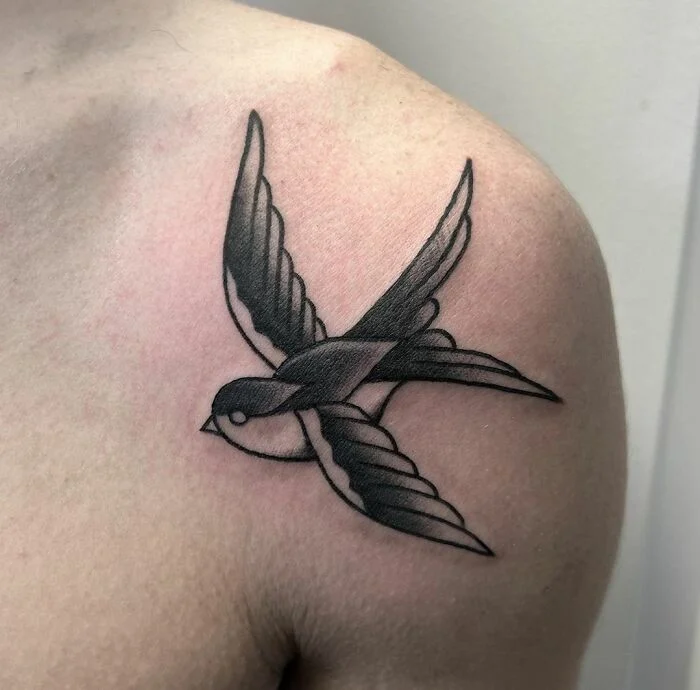
This swallow sits on the shoulder in black ink only, with simple whip shading and no color at all. Old sailor lore says a swallow marked a sailor who had crossed a lot of open water, and that the bird would carry him home again, so it came to mean a long trip and a safe return. No color needed. That makes it a good pick if you like a clean, simple look. Plenty of people add a second bird on the opposite shoulder later to make a pair.
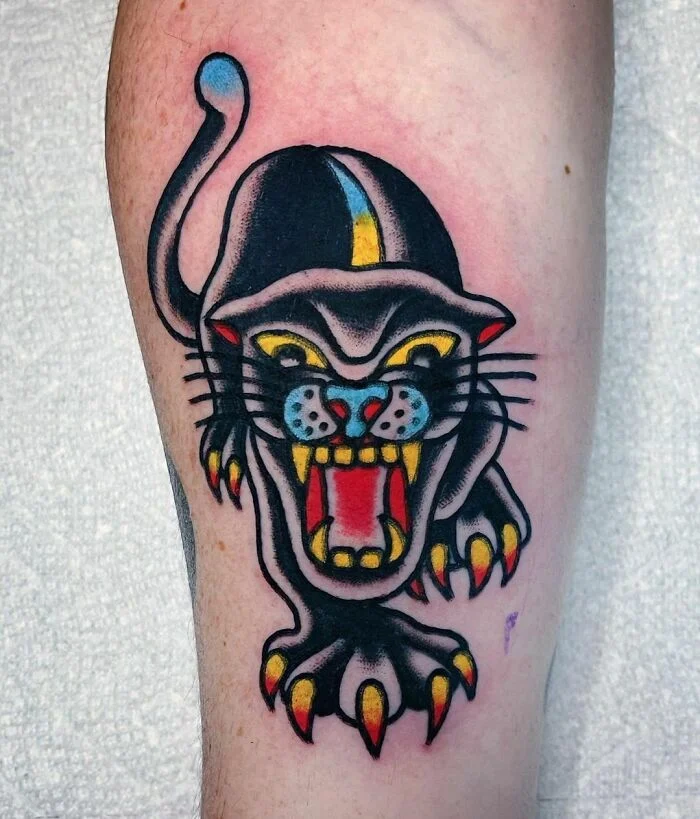
Black Panther Head
The black panther head snarls with bared teeth and curved claws. All that solid black is what makes it stand out. It stands for strength and courage. A lot of people get it as a reminder to face their fears. Good panther work leans on a few bright accents, like a red mouth or yellow eyes, so the black doesn’t overpower the design. The head fits the outer thigh, the upper arm or the calf well. Go with this one if you want something bold and fierce.
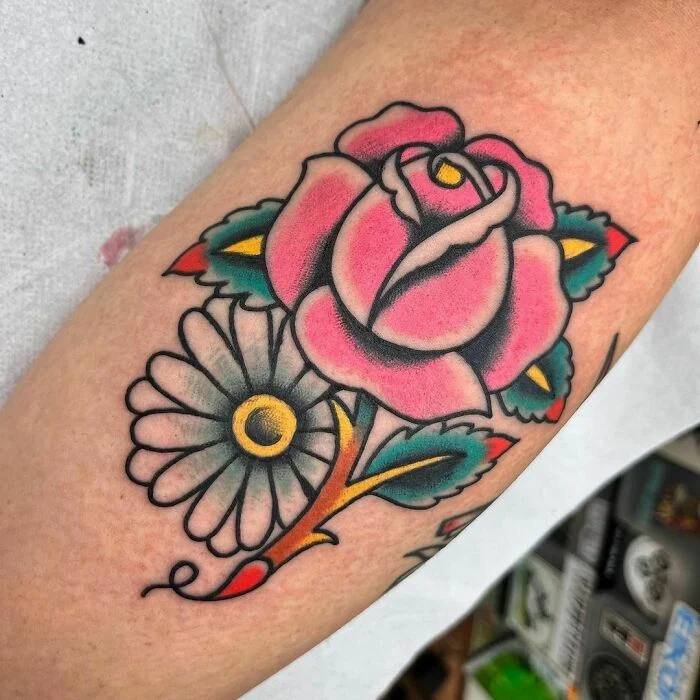
Rose and Daisy
A red rose sits next to a daisy with green leaves. Together they mix two very different moods. The rose means love that can hurt, since the thorns are part of the flower, while the daisy adds innocence and a lighter note. Those soft petals take the edge off the heavy outline. That makes it a good starting point if you’re new to the style. People often get it as a memorial piece or a matching tattoo with someone close. Leave a little negative space between the petals so they stay clear as the tattoo ages.
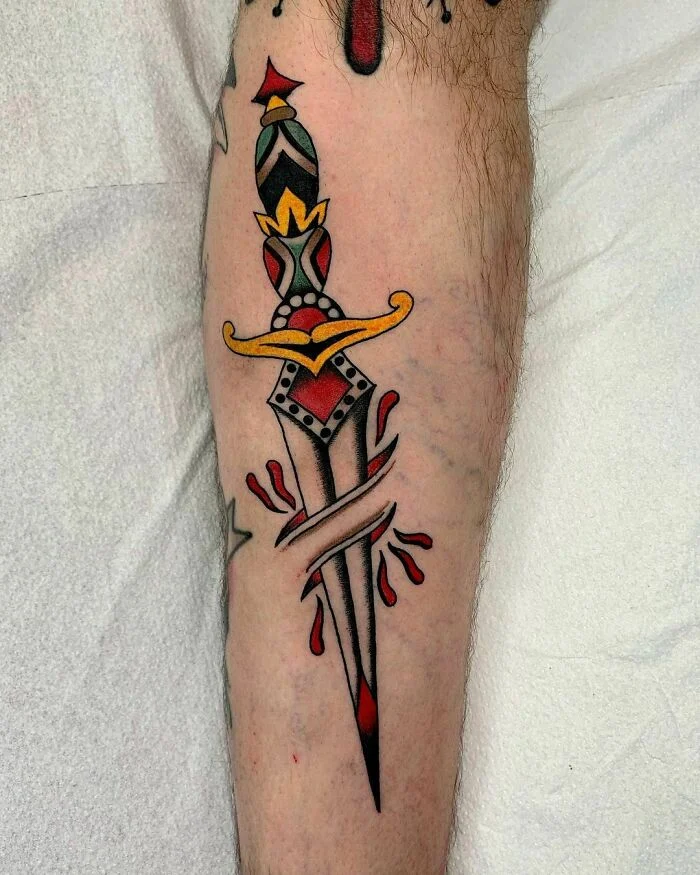
Classic Dagger
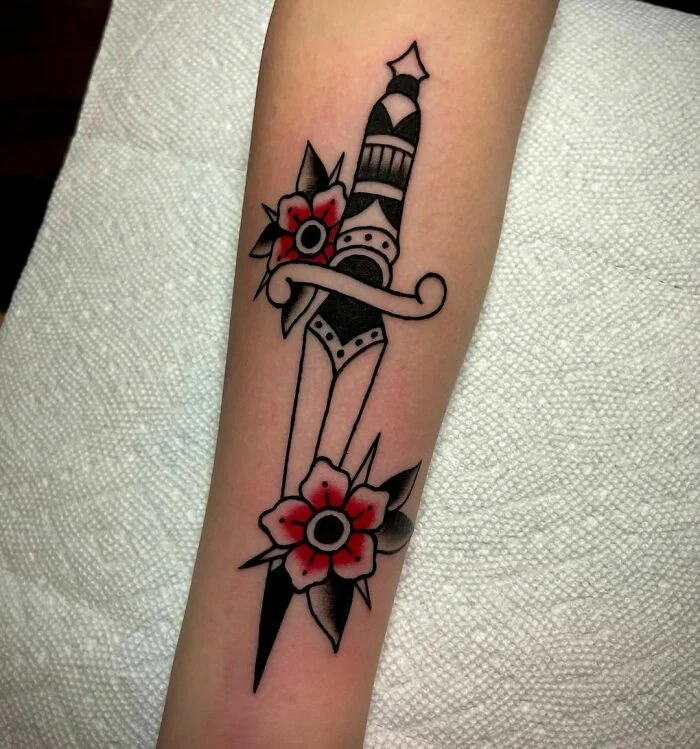
This one’s simple. It’s an upright dagger with a gold hilt, a straight blade, and a clean outline. Traditionally it points to courage and to getting through hard times, and in some pieces it hints at sacrifice. The tall, narrow shape is easy to place on a forearm, a calf or along the ribs, where it follows the body instead of fighting it. Artists often add a rose, a heart or a snake to the blade to shift the story. It’s small but meaningful.
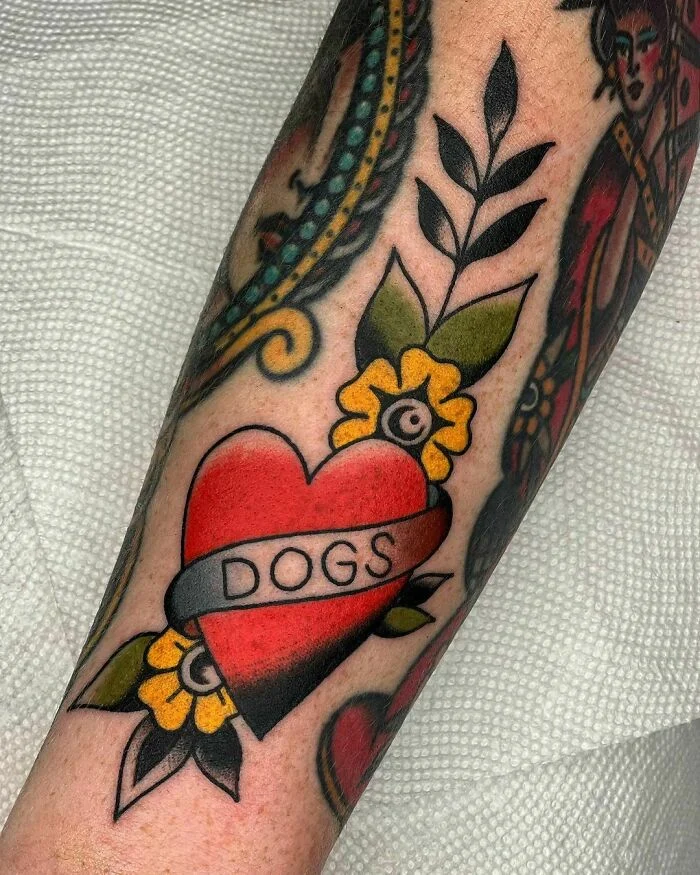
Heart With a Banner
A red heart wraps in a ribbon banner here, and the banner reads DOGS. That’s the idea behind this design. The heart stands for love, and the banner shows who it’s for. Classic versions say Mom or carry a partner’s name, but any short word works, from a pet to a place. The lettering has to stay readable, so make the banner big enough for crisp letters. It’s a great pick if you want to tell a personal story in just a few words.
Skull Pierced by a Dagger
A skull with a dagger driven through it can sound grim. It’s not as dark as it looks. It reminds you that life is short, so you should live it fully, which is the old memento mori idea. The solid white teeth and deep black sockets make the skull pop against the blade and any red accents. Roses or a snake often wrap around it to add layers of meaning. It’s perfect for anyone who likes darker imagery with a hopeful message. It looks great on the forearm, the thigh, or the chest.
Roaring Tiger Head
This roaring tiger head takes up the whole shin. It has bold orange, black stripes, and a wide-open mouth. Tigers came from Asian art. Traditional artists redrew it with thick lines and simple blocks of color. It stands for strength, and many people wear it as a symbol of protection. Contrast is key here, since the orange and black keep the stripes sharp as it heals. The shin, thigh, and upper arm all work well. If you want a bold, graphic tattoo with a protective meaning, this is the one.
Clipper Ship
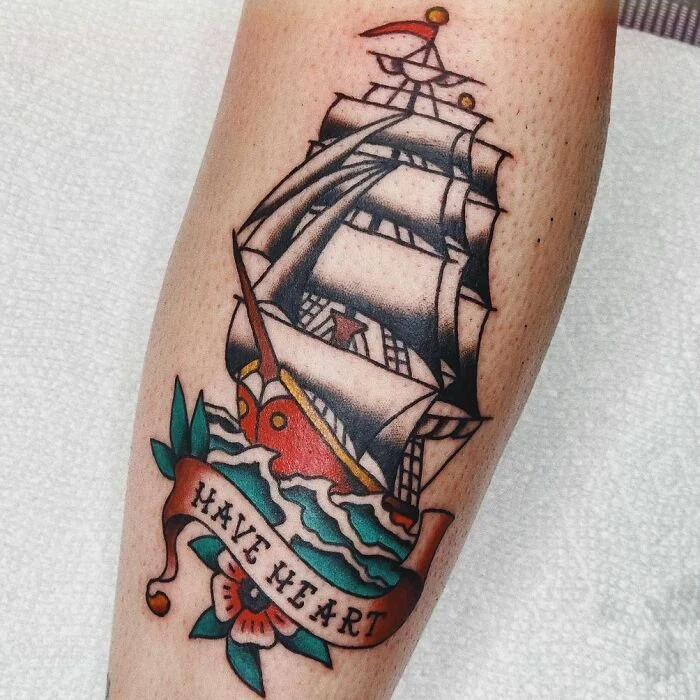
This clipper ship covers the whole back. It’s under full sail, riding blue waves with detailed rigging. Ships mark a long voyage and a safe return home, and sailors treasured them for that reason. The size matters here, since masts, sails and ropes need space to stay clear. A back, a chest or a full thigh gives that room. Many people get one to mark a major life change, like a move, a new job, or a recovery. A banner or a compass can name that change.
Coiled Snake
This snake wraps around the elbow, with blue scales and a flat red tongue. The snake sheds its skin, so it points to rebirth and a new phase, though some people also read it as temptation. Its long body lets an artist wrap it around a joint, an arm, or a calf so it moves with the muscle. The elbow is a tough spot. It takes a steady hand, and you’ll need to sit still. It’s a popular choice after a big change in life.
Holistic Ink Signature Styles Beside Bold Traditional Work
Traditional is a great starting point, but it isn’t the only way to get bold work. At Holistic Ink, our artists specialize in three other styles, and each one handles the same subject in a different way. The table below compares them with traditional so you can see where each shines.
| Style | Line work | Color | Detail level | How it ages | Best for |
|---|---|---|---|---|---|
| American Traditional | Thick, uniform black outlines | Limited palette, flat fills | Low, simple shapes | Holds its shape for years | A graphic look that reads from far away |
| Black & Grey Realism | Fine or no outlines, soft edges | Black and grey tones only | High, lifelike texture | Needs size and care to keep depth | A photographic look in a single tone |
| Color Realism | Soft, blended edges | Full natural color | High, rich blending | Needs steady sun care | Vivid subjects with real depth |
| Japanese / Irezumi | Bold outlines with flowing backgrounds | Rich color or black and grey | Medium to high, large composition | Holds well on big, connected designs | Sleeves, backs and large flowing pieces |
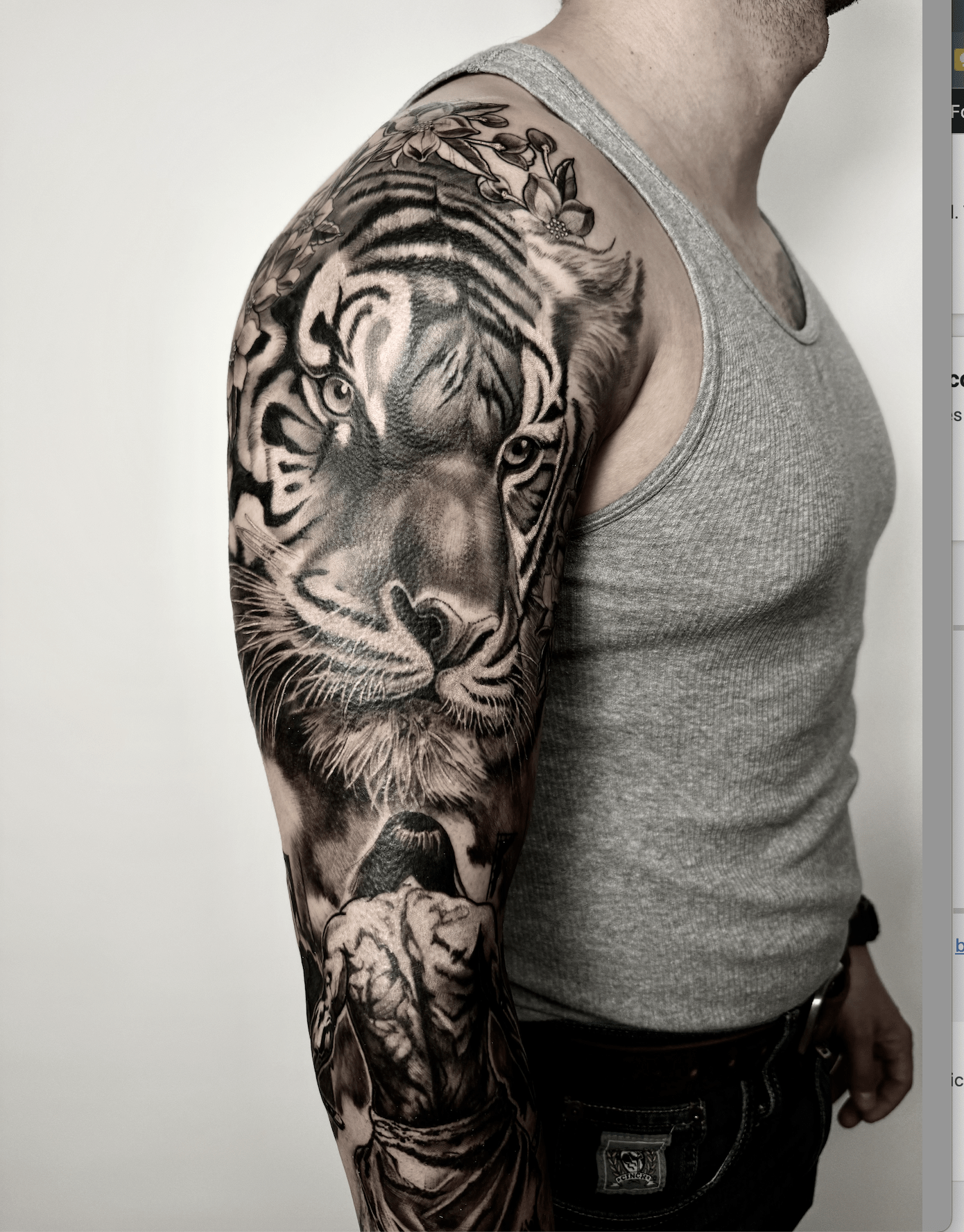
Black and grey realism trades thick outlines for smooth gradients. Instead of flat fills, our artists build tone with layers of soft shading, which gives an eagle or a tiger the depth of a photograph. The tiger sleeve below shows how much volume that shading adds across a big surface. If you love the subjects of traditional work but want them to look lifelike, this is the style to look at. It does need a bit more size to show its detail, so tiny pieces are rarely a good match.
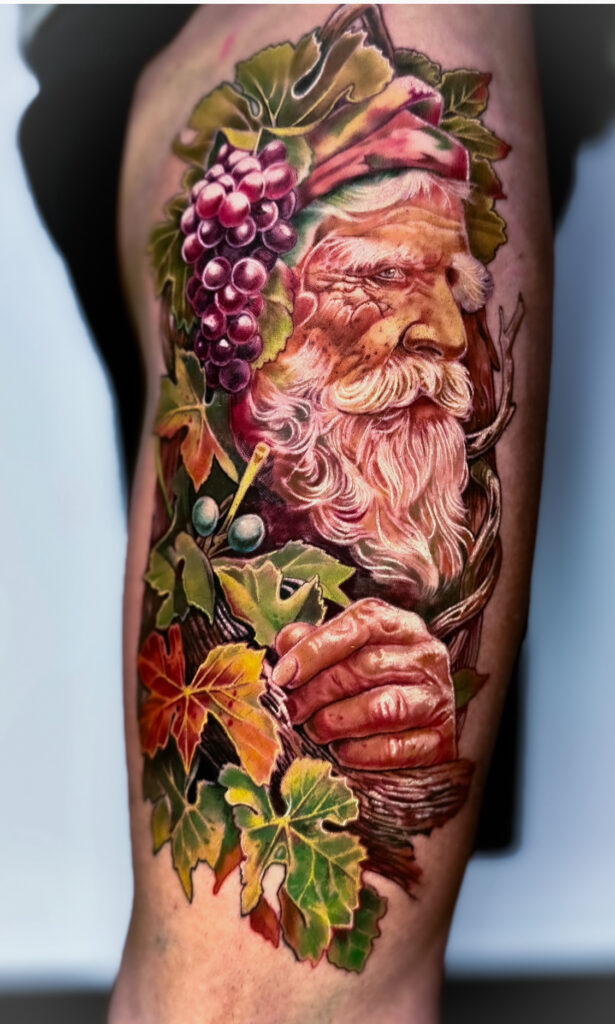
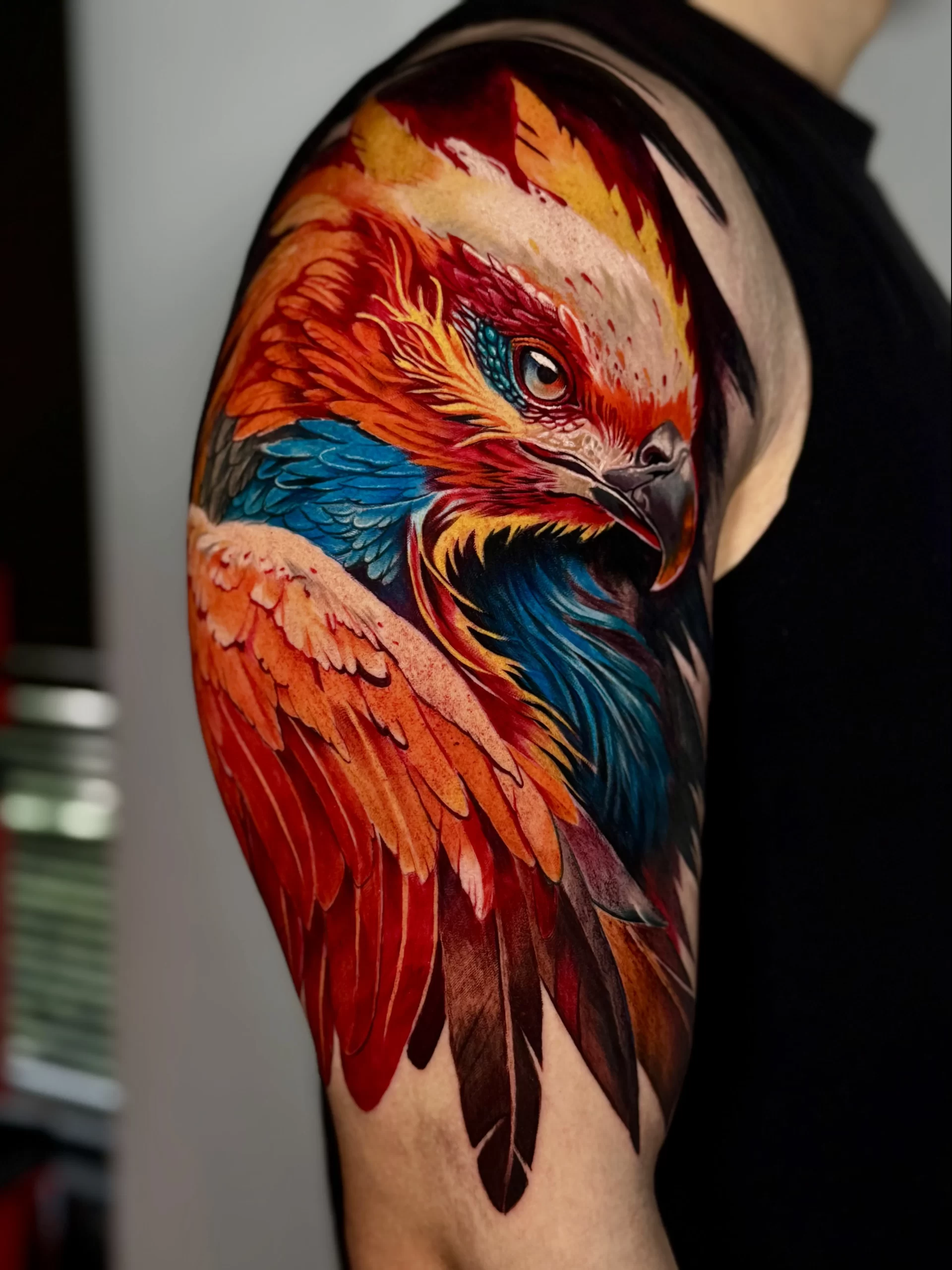
Color realism is different. It keeps the bold subjects but uses true-to-life color. Feathers, flames and petals get soft blends, so the eagle below reads more like a living bird than a symbol. It gives you far more range than the simple palette of traditional work, so it’s a great fit if you want vivid color with real depth. Color realism needs good sun care to hold those blends. If you want a flat, graphic look that forgives a little neglect, traditional is the safer choice.
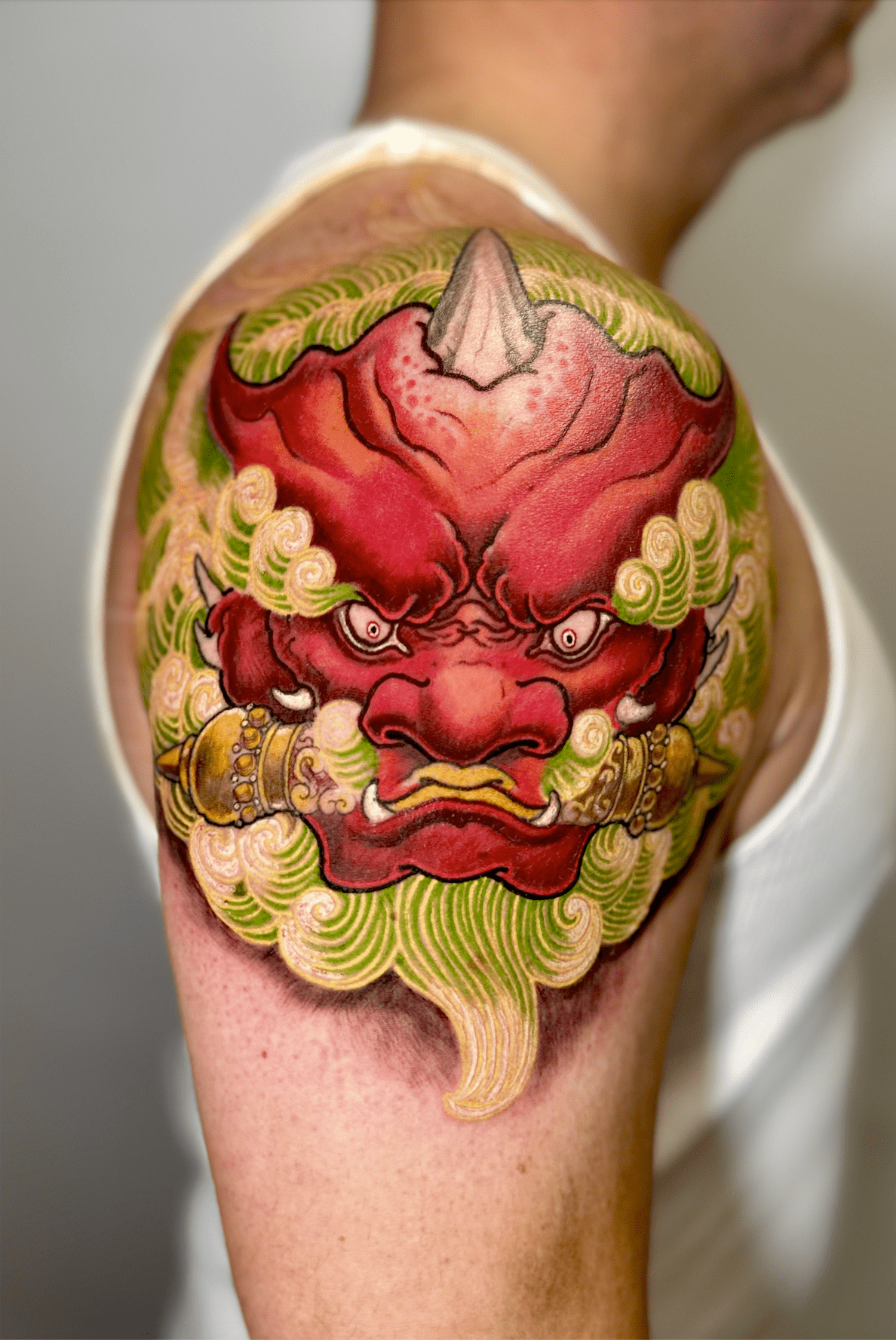
Japanese and Irezumi work shares the bold outline that traditional fans love, but it builds a large flowing composition around the subject, with wind bars, waves, clouds and flowers. The foo dog shoulder piece below shows how the background ties everything together into one shape that fits the body. Love bold lines but want something bigger? It’s a natural next step for a sleeve or a back piece.
Across all three, our artists at Holistic Ink stay true to the traditional style, with clean lines and designs that read clearly. Want pure traditional? Say so at your consultation, and your artist will keep it bold and simple. If you’re unsure, bring a few reference photos and let the artist show you how each style would treat the same idea.
Common Mistakes, Cost Factors and Longevity
The most common mistake we see is shrinking a design until the details disappear. A bold design needs room. Take a rose and shrink it down to the size of a quarter, and the petals start to blur within a few years. Packing too many extras into one piece causes the same problem. Another one is taking a flash design straight off the wall. A good artist will adjust the angle, the length, or the banner to fit your forearm or calf. Skipping sunscreen is the last mistake, and it’s a big one. The sun is a tattoo’s worst enemy.
Color choices matter too. A palette with too many shades fights the bold outline, so most classic pieces stick to red, green, yellow and black with a little brown or orange. Ask your artist where to stop so the design doesn’t get too busy.
Price depends on several factors, not a flat rate. Size is the biggest one, followed by the number of colors, how complicated the linework is and where the tattoo sits on your body. Custom artwork takes longer to draw than flash. Larger pieces may need more than one session. Flash designs often move faster because the artwork already exists, while a custom banner with your own wording takes extra prep. An artist can only price a piece after seeing the design and the spot on your body, so ask about cost at your consultation with Holistic Ink.
This style is built to last. Thick black lines and solid color hold their shape for years, which is where the saying bold will hold comes from. Still, yellow and red tend to fade first, especially on skin that gets a lot of sun. A touch-up can bring them back. When you’ll need one depends on your skin and how you care for it. Daily sunscreen once the tattoo is healed does more for the look than any other single step. Healed skin also changes with weight and age, and bold shapes tolerate those shifts better than fine detail does, which is one reason the style has stayed popular for decades.
Best Placements for Bold Line Work
Traditional designs read best on a flat area of skin. Tall designs like daggers and snakes follow narrow areas such as the forearm and calf, while wide designs like eagles and ships need room across the chest or back. The table lists common spots with the designs that tend to fit.
| Placement | Designs that fit | Size range | Pain level | Visibility |
|---|---|---|---|---|
| Forearm | Daggers, roses, swallows | Small to medium | Low to moderate | Easy to show |
| Upper arm | Eagles, panthers, hearts | Medium to large | Low to moderate | Easy to cover |
| Chest | Eagles, ships, hearts | Large | Moderate to high | Easy to cover |
| Thigh | Mermaids, tigers, roses | Medium to large | Moderate | Easy to cover |
| Shin | Tiger heads, daggers, snakes | Medium | High | Shows in shorts |
| Back | Clipper ships, large eagles | Large | Moderate | Easy to cover |
Pain varies by person, so treat that column as general guidance and not a promise. The forearm is a favorite first spot because the skin is flat, the design is easy to see while it heals, and a dagger or a rose sits neatly along the muscle. Here’s how a dagger and flower can be sized to fit that space.
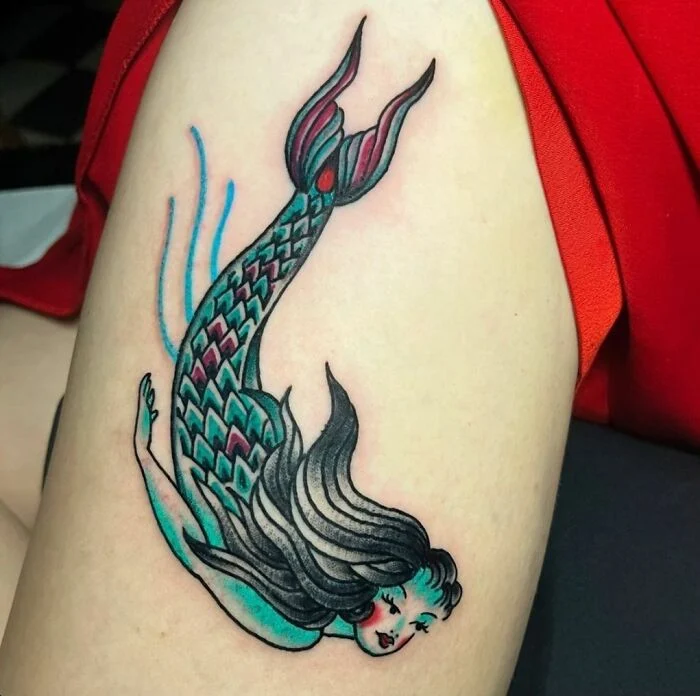
The thigh gives a larger and more forgiving canvas. A mermaid with flowing hair, for example, can stretch along the length of the leg without crowding, and the area is easy to cover for work or to show off at the beach.
Many people start with one small flash piece and keep adding. A patchwork sleeve grows that way, one motif at a time, with filler pieces like stars or small flowers tying the gaps together. Plan the spacing with your artist early so your arm doesn’t get cluttered later, and the team at Holistic Ink can map that out with you.
Ribs and the outer calf deserve a mention too. Ribs hurt more, but they give a tall dagger or a snake a long, narrow space. The outer calf is easier to sit for and works well for small to medium tigers and ships. Whichever area you pick, tell your artist how you’ll wear the tattoo day to day, since a spot that rubs against a bag strap or a waistband heals differently.
Steps From Consultation to Healed Tattoo
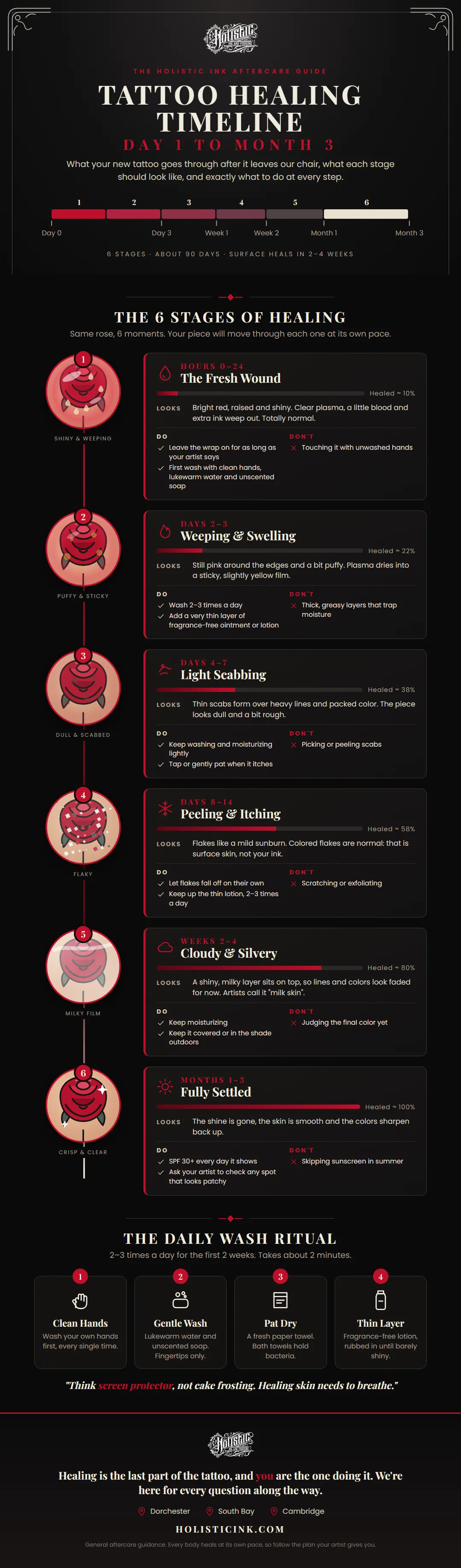
The path from idea to healed tattoo has five stages, and the infographic below tracks the healing part of that timeline. Knowing the order makes the whole process feel easier, especially for a first tattoo.
It starts with a consultation. You bring ideas, reference photos and the spot you have in mind, and the artist helps you choose between flash and custom, adjusts the design to your body and talks through size and color. You don’t need every detail decided, since half the point of the visit is to refine it together. You should leave with a clear plan and no surprises.
Next comes the stencil, a transfer of the design placed on your skin. You stand up, move around and check it in a mirror, since a design that looks right on paper can sit differently on a curved arm. Ask for changes now, because moving the design after the needle starts isn’t an option.
During the session, the lines go in first. Then the artist packs in the color. Expect some discomfort, so eat beforehand, stay hydrated and tell your artist if you need a break. Short pauses are normal on larger pieces, and the artist will wipe, rewrap and check the stencil as they go. Wear clothes that let the area stay open without rubbing.
Aftercare begins right away, and the first two weeks matter most. Keep this list handy while your skin heals:
- Wash and dry the tattoo the way your artist showed you.
- Put on a thin layer of moisturizer, not a thick coat.
- Wear loose clothing over the area.
- Stay out of the sun, pools, hot tubs and the ocean.
- Don’t pick or scratch the flaking skin, since that can pull ink out.
- When it itches, tap it lightly instead of scratching.
Once your tattoo is fully healed, looking after it is easy. Wear sunscreen whenever it’s exposed, keep it moisturized, and get a touch-up when the red or yellow fades. That keeps your tattoo looking sharp for years. Holistic Ink artists are happy to check in on how a piece has settled, so keep your artist’s contact handy in case something looks off.
Frequently Asked Questions
Should I pick flash or a custom design?
Flash is the fastest way to go, and it’s the closest to the original style, since those designs were drawn to be tattooed again and again. Choose custom when you want a name, a date or a story that belongs only to you. Many people mix the two, starting with a flash base and letting the artist change the details.
How long does a bold traditional piece take to heal?
The outer layer of skin usually settles within a few weeks, but the deeper layers keep healing for longer, so the tattoo can look a little cloudy or shiny in between. Healing differs from person to person and depends on size and placement, so follow your artist’s aftercare notes and ask what to expect for your piece.
Can I work out or swim after getting tattooed?
Skip pools, hot tubs and the ocean until the skin has fully healed, since soaking can irritate it and invite infection. Light exercise is usually fine once you feel ready, but avoid anything that rubs or stretches the area, and wipe sweat away gently.
Can a traditional design cover a scar?
Often yes, once the scar has fully matured and settled. Scar tissue takes ink differently from normal skin, so the result depends on its texture and color. Bold lines and solid fills can disguise it well, but your artist needs to see it in person at a consultation before promising anything.
Bring Your Traditional Idea to Holistic Ink
From the spread-wing eagle to the coiled snake, each of these classics has a story behind it. Pick the design that means something to you, then think about where it will live on your body and how it will age. When you’re ready, book a consultation at our Boston studio and bring your reference photos. Our artists will help you shape an idea into a bold piece that holds up for years.
Ready for a bigger piece?
Our artists are known for large-scale work in 3 styles. Start with the one that fits your idea:
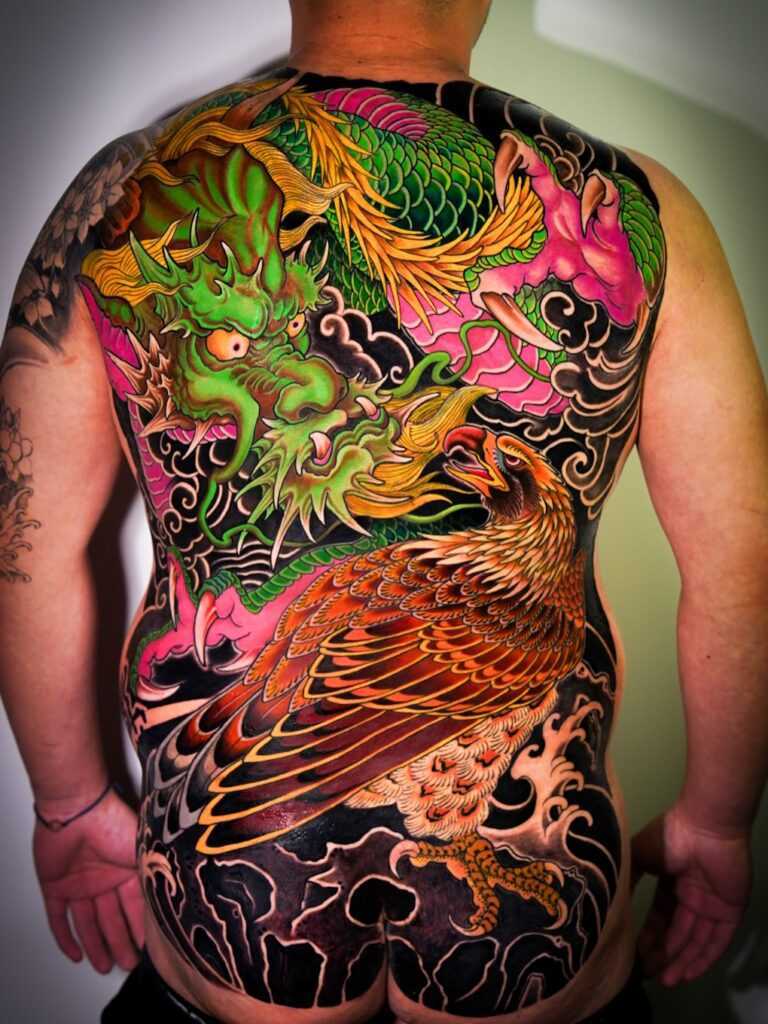 Best matchJapanese IrezumiDragons, koi, deities and full backpieces with traditional flow.
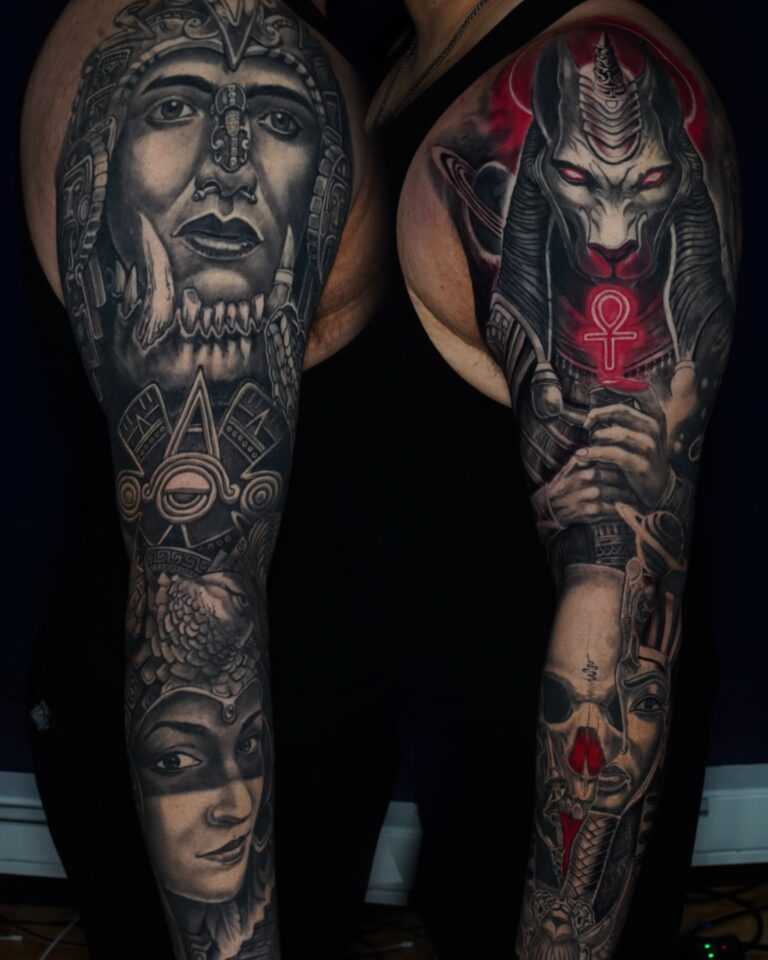 Black & Grey RealismPortraits, animals and sacred art in soft, deep shading.
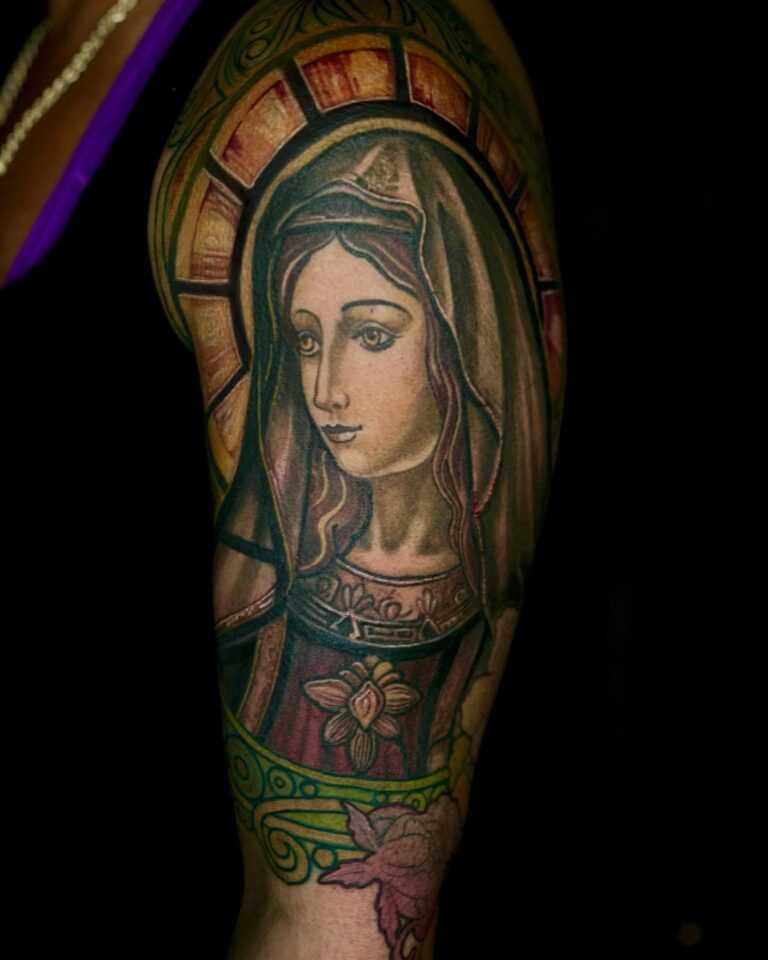 Color RealismSaturated, lifelike color for sleeves and large scenes.Signature project · Japanese IrezumiDragon Backpiece: 66 Hours, 3 Artists, Best of ShowPlacementFull backTime66 hours over 3 daysArtists3 artists, including Vinny NguyenSee the full project →
Bring your reference and placement. We plan large work session by session with you.
We also tattoo American traditional, fine line, script and small tattoos. Browse all styles →