Few tattoo placements carry as much weight as the neck. It sits at the intersection of identity and visibility—a canvas that cannot be hidden, a choice that cannot be undone quietly. For decades, neck tattoos were reserved for those who had fully committed to a life outside convention. Today, the conversation has shifted. Athletes, musicians, professionals, and first-time tattoo seekers are all asking the same question: Is a neck tattoo right for me? At Holistic Ink, we hear this question every day—and our answer always begins with understanding.
Neck Tattoo Placement Is Among the Most Striking Tattoo Choices
A tattoo on the forearm can be covered with a long sleeve. A tattoo on the ribs is only visible when you want it to be. Neck tattoo placement offers no such option. That constant visibility is exactly what makes it so appealing—and also what demands more careful consideration than almost any other placement.
Unlike the arm or the back, the neck is in constant motion whenever you turn your head, look down, or look up. As a result, the tattoo moves with your body, creating a dynamic visual effect that few other placements can achieve. From the very first sketch, the artist carefully aligns the design with the natural lines of the neck muscles and tendons to minimize distortion as the body moves.

Each area of the neck has its own distinct characteristics:
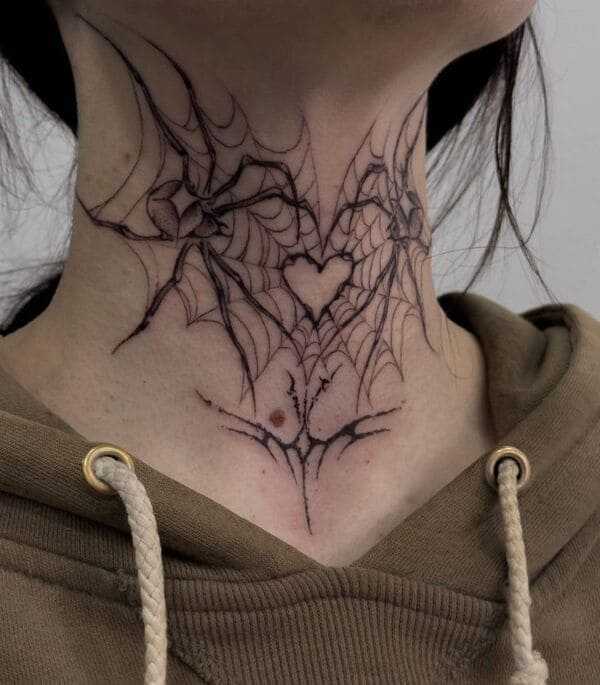
- Front of the neck (throat tattoo): Highly symmetrical, making it ideal for lettering, geometric designs, or centered ornamental artwork. This is the boldest and most statement-making neck placement.
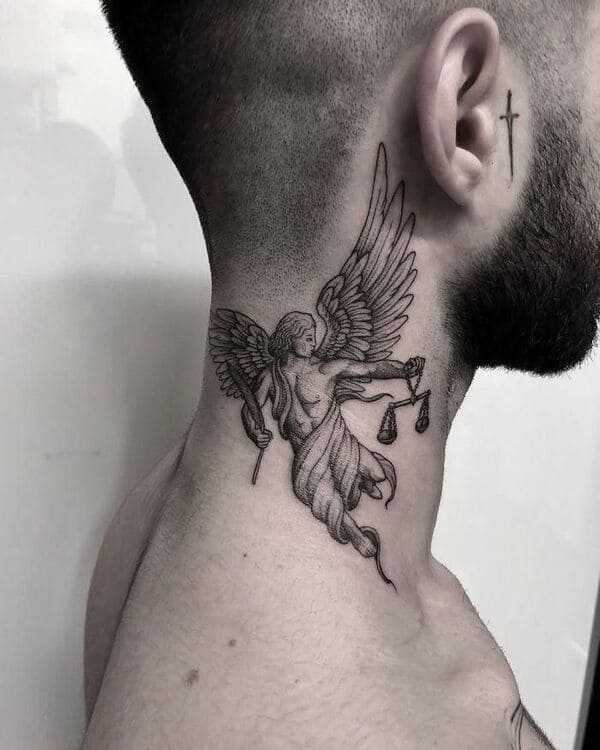
- Side of the neck (side neck tattoo): Offers greater flexibility in size. The vertical line running from the jaw to the collarbone creates an excellent canvas for flowing designs, such as branches, coiled snakes, or angled script.
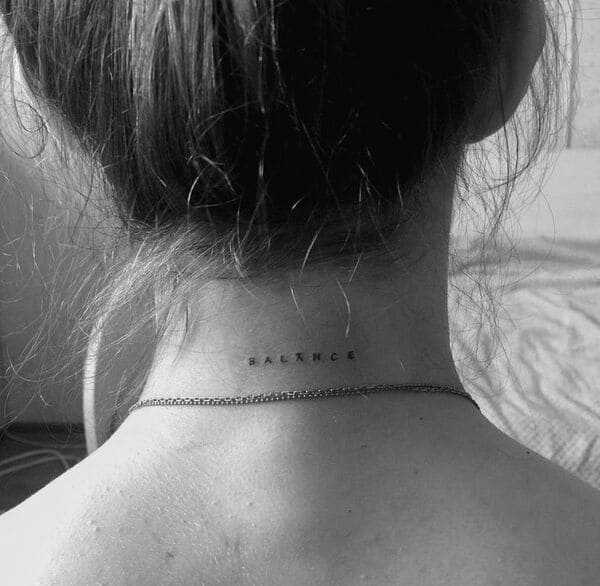
- Back of the neck (back neck tattoo): More discreet, especially when covered by long hair. It is commonly chosen for symmetrical designs or artwork that extends into an upper back tattoo.
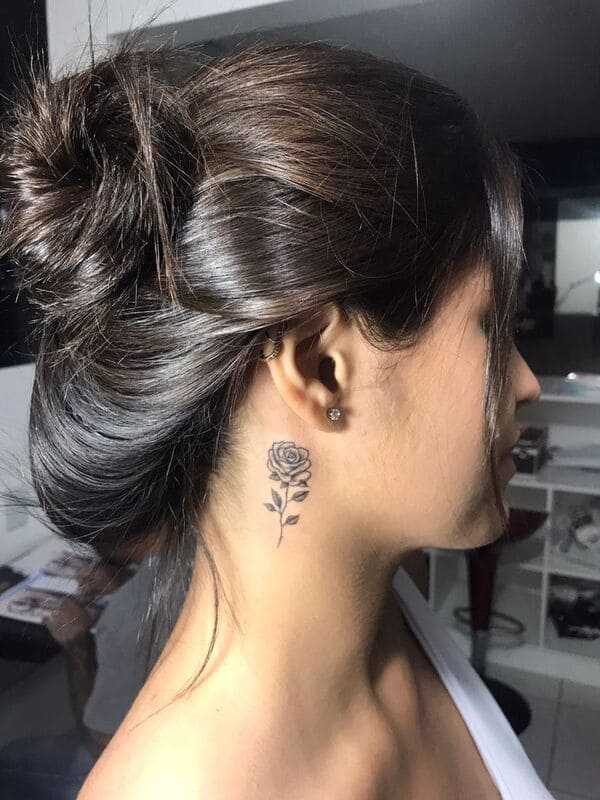
- Behind the ear: A small, intimate area best suited for minimalist designs, such as a single word, a tiny symbol, or a personal emblem.
Three factors make the neck a truly distinctive tattoo placement:
- Constant visibility — The neck remains exposed in most social and professional settings, even when wearing a suit or a moderately high-collared shirt.
- Natural anatomical contours — The structure of the neck provides a natural framework that enhances the visual impact of a tattoo, especially designs that flow vertically along its length.
- Cultural significance — Across many cultures, from traditional Māori tattooing to modern hip-hop culture, neck tattoos have long been regarded as symbols of commitment and personal identity.
Before the tattooing begins, the artist typically applies a tattoo stencil to evaluate the design’s size, placement, and proportions. During the session, line work and shading techniques are combined according to the chosen style. Selecting the appropriate needle size helps produce cleaner, sharper lines while reducing the risk of ink spreading or blurring over time.
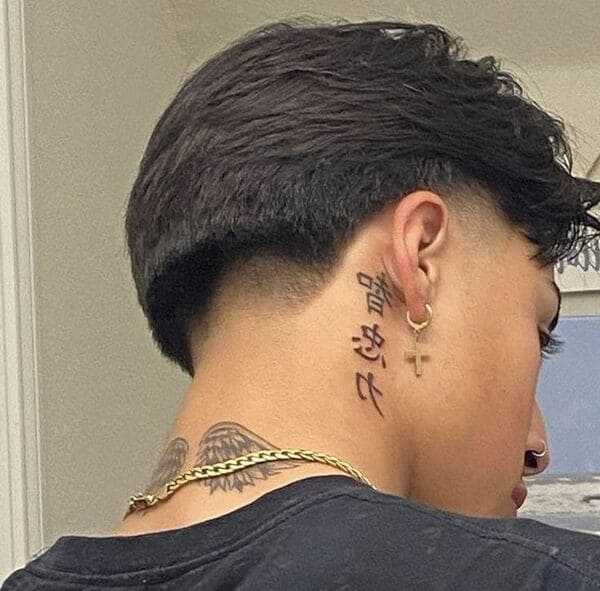
There are several practical factors worth considering:
- Career: Neck tattoos are generally more accepted in creative fields such as art, technology, sports, and design. In professions like finance, law, and healthcare, expectations may vary depending on the organization.
- The long-term commitment: Neck tattoo designs are difficult to remove and even harder to conceal. That is not a reason to avoid one—it is a reason to be more deliberate when choosing both the design and the artist.
- Tattoo order: If this is your first tattoo, some artists recommend starting with a less sensitive area to become familiar with the process. However, there is no universal rule—the right choice ultimately depends on how confident you are in your decision.
A neck tattoo is no longer the career or social barrier it once was. In today’s world, however, it remains a permanent introduction to who you are. And an introduction that lasts a lifetime deserves careful thought and preparation.
Best Neck Tattoos For Men & Women: Finding What Fits You — Holistic Ink Guide
No single tattoo placement is right for everyone. The best choice is one that complements your body’s anatomy, lifestyle, and personal aesthetic. Making the right decision requires understanding how each area of the neck behaves—not only visually, but also from a tattooing perspective.
The front and sides of the neck are well suited to those who want their tattoo to remain visible and create a strong visual presence. The skin in these areas is thinner, requiring the artist to carefully control needle depth to prevent blowout—a condition in which the ink spreads beyond the intended lines because the needle penetrates too deeply.
The back of the neck and the area behind the ear offer a more discreet option. Small neck tattoos placed behind the ear have become increasingly popular among office professionals who want a tattoo while maintaining greater control over when and how much it is seen.
A neck sleeve tattoo—a design that wraps around the entire neck—requires long-term planning. It cannot be completed in a single session. A cohesive overall concept should be established from the beginning to ensure that each section works together harmoniously rather than competing visually.
The right choice also depends on individual style preferences and personal image. Men often gravitate toward bold, masculine tattoos, while women may prefer feminine tattoos with softer lines and more delicate details. Whether choosing neck tattoos for men or neck tattoos for women, the most important consideration is achieving a design that remains balanced with your body proportions and suits your lifestyle over the long term.
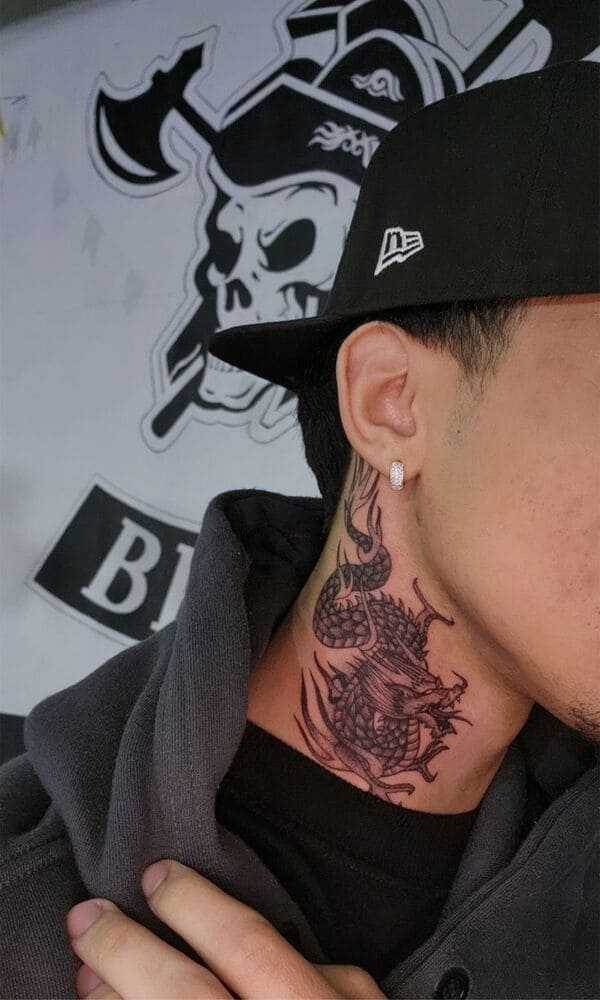
Practical checklist before choosing a neck tattoo placement:
- Determine how visible you want your tattoo to be in everyday life.
- Choose a size that suits the proportions of your neck—designs that are too small may lose detail over time, while those that are too large can appear unbalanced.
- Consider future tattoo plans if you intend to extend the design onto the head, shoulders, or upper body.
- Review your workplace’s appearance policies before committing to a specific placement.
- Consult your tattoo artist about how the design will interact with the natural movement of your neck.
Tattoo size has a direct impact on how well a design retains its detail over time. Small neck tattoos are ideal for those who prefer a subtle, understated look, while minimalist neck tattoo designs offer a clean and refined aesthetic. If you plan to expand your tattoo in the future, it is better to develop a cohesive layout from the beginning rather than committing immediately to an oversized full neck tattoo.
Popular Styles That Define Neck Tattoo Designs
Tattoo style is more than an aesthetic choice. It influences how well the tattoo ages, the level of discomfort during the session, and, more importantly, whether the design will still feel true to you ten years from now. The neck presents unique challenges: the skin is thin, it is frequently exposed to sunlight, and the available canvas is limited. As a result, not every tattoo style is equally well suited to this placement.
Fine Line Tattoo — Delicate but Technically Demanding
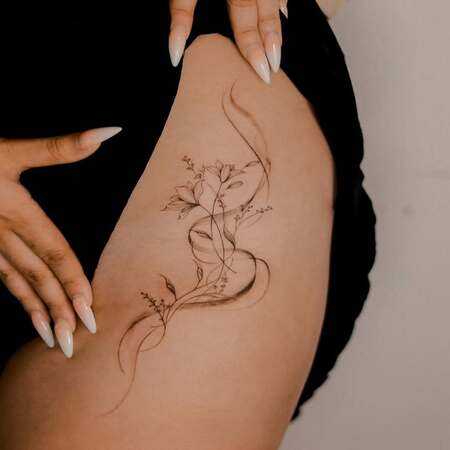
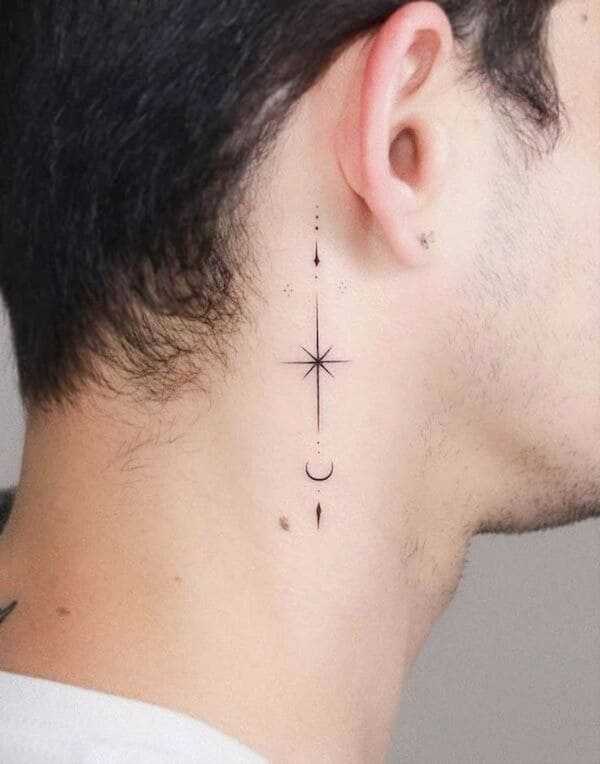
Fine line tattooing uses single needles or small needle groupings to create exceptionally thin, intricate lines. There are no bold fills or heavy shading—only clean, refined linework.
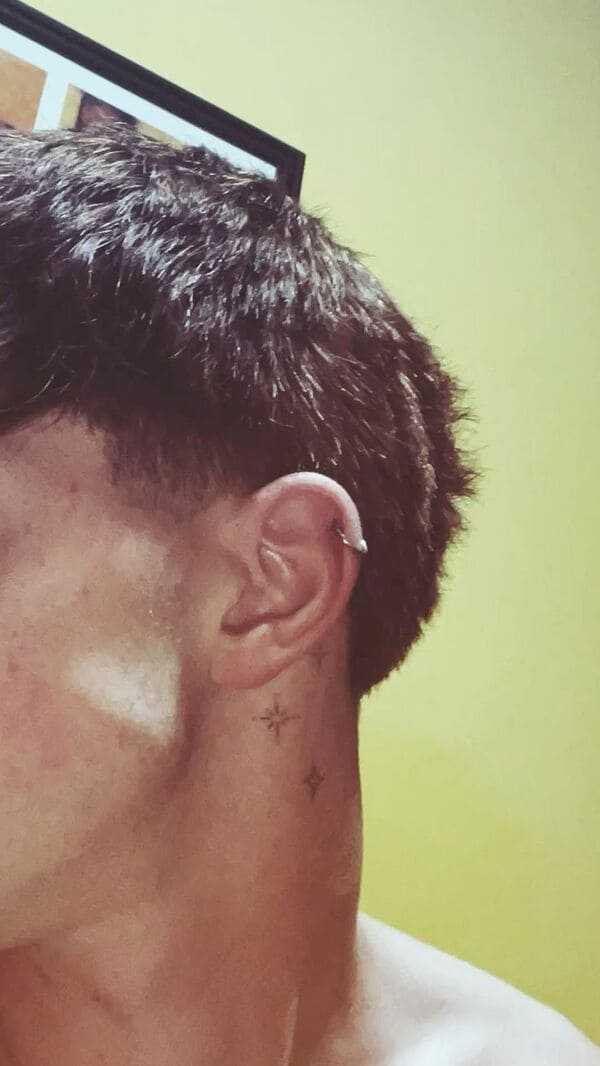
The delicate lines create the impression that the tattoo is a natural extension of the body. A slender floral branch tracing the jawline, a small cluster of stars behind the ear, or a handwritten phrase flowing down the side of the neck can all be executed in this style while maintaining an elegant, understated appearance.
However, fine line tattoos on the neck present significant technical challenges. The skin on the neck is thinner and produces more oil than areas such as the arm or back. Over time, the ink is more likely to spread slightly if the artist does not maintain precise control over needle depth. Fine lines also tend to fade more quickly when the area is frequently exposed to sunlight without adequate sunscreen protection.
A tattoo artist performing fine line work on the neck should have:
- Specific experience working on thin, delicate skin—not just general experience with fine line tattooing.
- The ability to adjust needle speed and pressure for different areas of the neck.
- An understanding of how to design tattoos that age gracefully, so the artwork remains recognizable even after five to seven years, despite the natural softening of fine lines.
Blackwork — The Language of Bold Expression
Blackwork is far more than simply tattooing with black ink. It is a style that relies exclusively on black pigment—without color or gray shading—to create striking designs through the contrast between solid black areas and untouched skin.
On the neck, blackwork delivers one of the strongest visual impacts of any tattoo style. It encompasses several distinct substyles, each with its own artistic approach:
- Tribal blackwork draws inspiration from Indigenous tattoo traditions, including Māori, Polynesian, and Filipino cultures. It features bold, angular motifs with strong symbolic meaning. On the neck, these designs often extend from the ear to the collarbone or wrap around the back of the neck.
- Geometric blackwork is built from precise straight lines, triangles, and polygonal forms. This style demands exceptional symmetry and technical precision. Even a slight misalignment can become highly noticeable on the neck.
- Botanical blackwork depicts leaves, branches, roots, and other plant forms using only black ink. It is often combined with stippling—a shading technique created through tiny dots—to add depth and texture. This style has grown increasingly popular because it balances an organic appearance with a bold visual presence.
From a technical standpoint, black ink generally retains its appearance longer than colored ink and ages more gracefully than extremely fine linework. A well-executed blackwork tattoo can maintain its strong contrast for 10 to 15 years with proper aftercare.
Ornamental Tattoo — When Skin Becomes Jewelry
Ornamental tattooing translates the visual language of jewelry onto the skin, incorporating elements such as metallic outlines, gemstones, beaded chains, and intricate filigree patterns. Few placements are better suited to this style than the neck, as it naturally mirrors the area where necklaces, chains, and chokers are traditionally worn.
An ornamental design encircling the neck can resemble a permanent piece of jewelry. When executed with precision, the boundary between tattoo and adornment becomes almost indistinguishable.
From a technical perspective, ornamental tattoos often combine extremely fine lines with delicate dotwork. This requires the artist to maintain exceptional consistency throughout what may be several hours of tattooing, as even minor irregularities in the linework can break the illusion of a real piece of jewelry.

Neo Traditional — Bridging Classic and Contemporary
Neo Traditional preserves the bold outlines of American Traditional tattooing while expanding the color palette, adding depth through advanced shading techniques, and incorporating a wider variety of artistic motifs. The result is a style that combines strong visual storytelling with a distinctly contemporary aesthetic.
On the neck, Neo Traditional works especially well for designs centered around a prominent subject, such as a fox staring forward, a fully bloomed peony, or a serpent coiled around a dagger. Compared with classic Traditional tattooing, this style gives artists greater freedom to express character, movement, and personality.
American Traditional — A Timeless Style That Ages Gracefully
American Traditional (also known as Old School) is defined by bold outlines, solid high-saturation colors, and a limited palette of red, blue, green, yellow, and black. Originating within American sailor culture in the early twentieth century, it has remained one of the most enduring tattoo styles for more than a century.
Its greatest strength is how well it ages. Thick, confident outlines retain their definition over time, while solid color fills avoid the complex fading patterns often seen in more intricate styles. For this reason, many experienced tattoo artists still regard American Traditional as a true test of technical skill—its simplicity is only apparent, requiring a deep understanding of composition, proportion, and color to execute successfully.
Japanese Tattoo — Telling Stories Through Imagery
Japanese tattooing (Irezumi) is one of the richest symbolic traditions in the history of tattoo art. Every motif carries its own layered meaning, shaped by centuries of Japanese culture. What distinguishes Irezumi is not simply its technical execution, but the depth of symbolism behind every image.
On the neck, Japanese tattoos are most often designed as an extension of a larger composition, flowing upward from the shoulder or continuing from the upper back to the nape. This style requires sufficient space to preserve proper proportions and visual balance. Executing it authentically demands more than the ability to reproduce imagery—it requires a deep understanding of traditional composition, including the movement of waves, the flow of clouds, and the placement of falling blossoms.
Japanese Dragon (Ryū)
The Japanese dragon (Ryū) can symbolize either ambition or protection, depending on the direction of its head. More broadly, it represents wisdom, guardianship, and inner strength.
In Irezumi, dragons are traditionally depicted with long, serpentine bodies, no wings, sharp claws, and flowing manes. Their colors add further symbolic meaning:
- Green or blue dragons: Associated with water, tranquility, and profound wisdom.
- Black dragons: Represent wisdom gained through experience and strength forged by overcoming hardship.
- Gold dragons: Rare and symbolic of nobility, virtue, and exceptional qualities.
- White dragons: Signify death, rebirth, and profound transformation.
On the neck, Japanese dragons typically follow a vertical composition. A dragon with its head facing upward symbolizes ambition and progress, while one facing downward represents protection and watchfulness. A lesser-known detail is the number of claws: three-clawed dragons are traditionally associated with Japan, whereas five-clawed dragons were historically reserved for the Chinese emperor.
Koi Fish — A Symbol of Perseverance
The legend of the koi fish originates in ancient China, where a school of carp swam upstream against the powerful currents of the Yellow River. Those that successfully leaped over the Dragon Gate waterfall were transformed into dragons. In tattoo symbolism, the meaning changes according to both the fish’s direction and its color.
Direction of movement:
- A koi swimming upstream symbolizes perseverance through adversity and determination to keep moving forward.
- A koi swimming downstream represents having overcome life’s struggles and entering a period of peace and fulfillment.
Color symbolism:
- Red and orange: Passion, courage, and deep love.
- Black: Strength gained from surviving great hardship.
- White and gold: Prosperity, success, and abundance.
- Blue: Calmness, maturity, and personal growth.
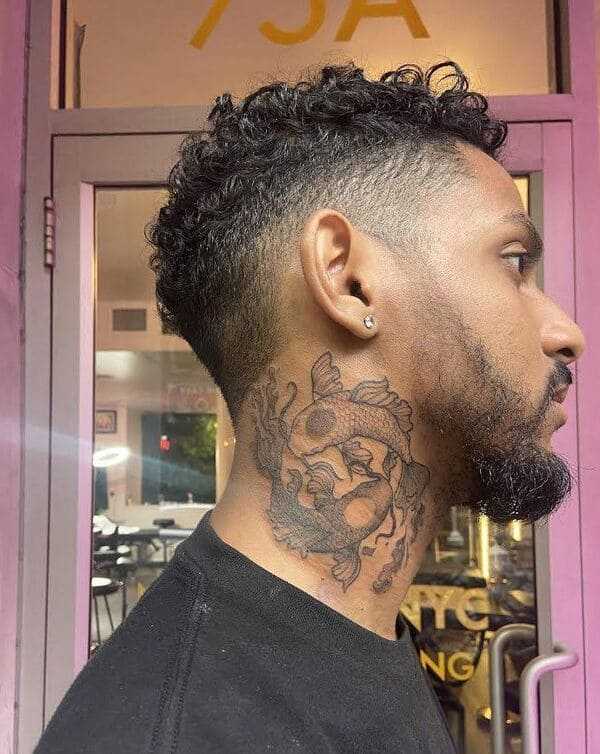
On the neck, koi are often paired with flowing water or lotus flowers, creating a natural vertical composition that extends gracefully from behind the ear toward the collarbone.
Cherry Blossoms (Sakura)
Sakura bloom for no more than two weeks each year. In Japan, the tradition of hanami—flower viewing—is not about mourning their brief life but celebrating the beauty of the present moment. Within the philosophy of Bushidō, cherry blossoms are closely associated with the samurai, representing a life lived brilliantly yet fleetingly, ending with dignity and grace.
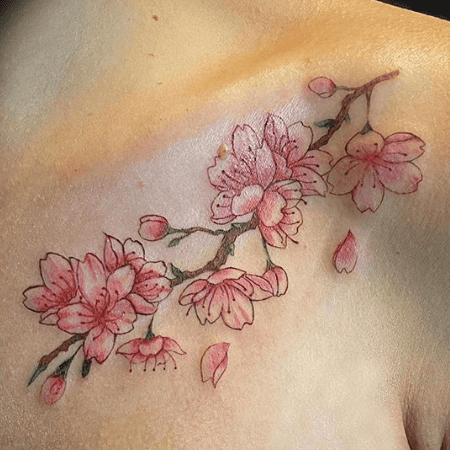
In Irezumi, sakura simultaneously symbolizes living fully in the present, honoring those who have passed away, and embracing the philosophy of wabi-sabi—the beauty found in impermanence and imperfection.
On the neck, drifting cherry blossoms naturally complement the curves and movement of the body. Sakura blackwork, executed entirely in black ink, has become increasingly popular for its stronger contrast, greater longevity, and deeper emotional association with remembrance and loss.
Oni Mask — Not Evil, but an Enforcer of Justice
The Oni mask is perhaps the most misunderstood motif in Irezumi outside Japan. In Buddhist and Shinto traditions, Oni are not demons in the Western sense of the word. They are supernatural beings that serve King Enma, the ruler of the underworld, by guarding and punishing the wicked. In other words, Oni are agents of cosmic justice rather than embodiments of evil.
Within Irezumi, the Oni mask symbolizes protection, personal justice, and the duality of human nature. It is often paired with the Hannya mask, which depicts a woman transformed into a demon through jealousy, creating a visual contrast between light and darkness existing within the same person.
On the neck, Oni masks are commonly placed on the side or back of the neck, facing outward as if standing guard. Before choosing this motif, it is worth understanding its cultural significance, as doing so will help you select a facial expression that genuinely reflects your intended message.
Hokusai Waves — Nature as a Teacher
The Great Wave off Kanagawa, created by Katsushika Hokusai around 1831, is one of the most widely reproduced works of Japanese art in history. Hokusai completed it at the age of seventy-one after more than fifty years of artistic practice, having endured poverty and personal loss. He famously regarded everything he created before the age of seventy as insignificant, believing that true understanding comes only after a lifetime of experience.
Within Irezumi, the Great Wave carries several symbolic meanings. The small boats do not battle the waves—they navigate them. Mount Fuji appears smaller than the towering wave, reminding us that even humanity’s greatest achievements remain only a small part of nature. Most importantly, the wave has not yet broken, capturing the moment immediately before everything changes—the state of confronting life’s greatest challenge.
On the neck, wave motifs work best when they flow horizontally across the back of the neck or follow the curve of the collarbone. Contemporary interpretations generally take one of two directions: a traditional ukiyo-e approach that preserves Hokusai’s iconic indigo palette, or a modern interpretation using bold blackwork or detailed fine line techniques, sometimes combined with a dragon emerging from the waves or cherry blossoms drifting across the water.
Neck Tattoo Trends in 2026 — A Deeper Look at What Is Shaping Tattoo Culture
Rather than being defined by a single dominant style, 2026 marks a broader shift in how people think about tattoos—especially in highly visible areas such as the neck. The emphasis has moved away from following trends and toward making intentional, deeply personal choices.
Micro Realism — Tiny in Scale, Exceptional in Detail
Micro realism combines realistic tattooing techniques with extremely small-scale designs. A two-centimeter sunflower with individually rendered petals, a coin-sized eye complete with reflected light, or a miniature portrait with clearly recognizable expression all exemplify this style.
On the neck, micro realism is most commonly placed behind the ear or at the nape, where the skin experiences less movement and is less prone to wrinkling over time. Its greatest technical challenge is ink merge, where details placed too closely together gradually blend as the tattoo ages. Experienced artists deliberately leave sufficient spacing between fine elements so that the design remains legible even after ten years.
Ignorant Style — Intentionally Breaking the Rules
Ignorant style embraces rough hand-drawn lines, uneven solid colors, asymmetrical compositions, and deliberately simple imagery that can appear almost childlike. The name is not intended as criticism; rather, it reflects a philosophy that rejects academic conventions and technical perfection in favor of spontaneity and authenticity.
On the neck, ignorant style creates a striking contrast with the seriousness traditionally associated with this placement. A small doodle behind the ear or a loosely handwritten phrase running down the side of the neck may look as though it were sketched with a ballpoint pen, yet convincingly reproducing that effortless appearance requires considerable artistic skill. The style continues to grow rapidly among younger tattoo enthusiasts, particularly those under thirty who seek to challenge conventional aesthetic standards.
Themed Patchwork — More Than a Collection of Tattoos
Modern patchwork tattoos are no longer random collections of unrelated designs. Increasingly, people plan an interconnected series of tattoos from the very beginning, ensuring that every motif belongs to the same visual and symbolic universe, even when individual pieces are executed in different styles.
For example, someone might build a theme centered on nature and life’s cycles, combining a moon behind the ear, a bare tree branch along the side of the neck, and migrating birds across the nape. Although each tattoo differs stylistically, together they tell a coherent story while remaining complete as individual pieces. This trend places new demands on tattoo artists, who must think beyond each standalone design and help clients develop a unified long-term vision from the very first consultation.
Negative Space Combined with Fine Line — Creating Depth Without Color
In tattooing, negative space refers to intentionally preserved areas of untouched skin that become an active part of the composition rather than empty background. When paired with fine line techniques, negative space can create the illusion of depth and dimension without relying on heavy shading or color.
On the neck, a well-executed negative space design can appear as though light is passing through the artwork—for example, leaves whose veins are formed by untouched skin surrounded by delicate black linework, or geometric patterns whose empty spaces create a striking sense of three-dimensionality. This approach requires artists to think in reverse, designing around the untouched skin instead of simply drawing onto it—a specialized skill that not every studio possesses.
Personalized Typography — Lettering as a Lasting Legacy
Tattoo typography has evolved far beyond selecting an existing font. One of the defining trends of 2026 is the creation of custom lettering designed specifically for each individual, ensuring that every piece is both deeply personal and completely unique.
Three approaches have become especially popular:
- Authentic handwriting: Clients bring samples of their own handwriting or that of someone meaningful—a handwritten note from a late parent, a spouse’s signature, or a child’s writing—which the artist faithfully reproduces. These personal marks carry emotional significance that no digital typeface can replicate.
- Custom-designed lettering: Instead of using existing fonts, the artist hand-draws every letter to reflect the client’s personality and aesthetic preferences. Although this process requires additional time, it results in a truly one-of-a-kind design.
- Multilingual lettering: Combining scripts from multiple languages—such as Vietnamese, Japanese, Arabic, or Ancient Greek—within a single composition reflects the increasingly multicultural identities of today’s tattoo collectors.
AI-Assisted Design — A Tool, Not a Replacement
More clients now arrive at tattoo studios with concepts first visualized using artificial intelligence. AI allows them to explore ideas quickly before meeting with an artist, changing the consultation process without replacing human creativity.
AI can generate compelling visual references, but it cannot evaluate the characteristics of an individual’s skin, anticipate how a design will interact with body movement, or predict how ink will behave within different layers of the skin over time. Skilled tattoo artists use AI-generated images as a starting point for understanding a client’s aesthetic preferences—not as the final blueprint for the tattoo itself.
The defining trend of 2026 is not any single tattoo style. It is a way of thinking: getting fewer tattoos, but choosing them with greater intention. Taking more time to consider every decision—and once that decision is made, committing to it completely.
Pain, Healing & How to Choose the Right Design
The neck is one of the most sensitive areas to tattoo. The skin is thin, lies close to the bone, and contains numerous nerve endings. Pain is typically rated between 6 and 8 out of 10, depending on the exact placement, with the back of the neck generally being less painful than the front.
Surface healing usually takes 2 to 3 weeks, while complete healing requires approximately 3 to 4 months.
Basic aftercare guidelines:
- Clean the tattoo gently using sterile saline solution or a fragrance-free soap.
- Apply a tattoo moisturizer or a specialized aftercare ointment in a thin, even layer.
- During the peeling, scabbing, and itching stages, avoid picking or scratching the healing skin.
- Protect the tattoo from direct sunlight and apply sunscreen once the skin has fully healed.
- Contact your tattoo artist if you notice signs of infection or swelling that persists longer than expected.
Ink selection and skin type also play an important role in the tattoo’s long-term appearance. Black ink generally retains stronger contrast over time, while colored inks may fade more quickly with frequent UV exposure. Individuals with sensitive skin or oily skin should discuss these factors with their tattoo artist beforehand to determine the most appropriate techniques and materials.
Beyond choosing the right design, prioritize a licensed tattoo studio with clearly documented sterilization procedures and a transparent portfolio of previous work. An experienced tattoo artist will recommend the most suitable composition, size, placement, and aftercare plan rather than simply reproducing a reference image.
Checklist before booking your appointment:
- Choose a tattoo artist with proven experience tattooing the neck.
- Finalize both the design and the exact placement.
- Understand the healing process and commit to proper aftercare.
- Consider the long-term implications of choosing such a highly visible location.
A neck tattoo should never be an impulsive decision. It is an intentional statement—about your style, your identity, and what you choose to present to the world every day. At Holistic Ink, we believe everyone deserves thoughtful guidance and expert craftsmanship—not because of changing trends, but because this is a decision that will stay with you for a lifetime.
That decision should also take your future workplace, dress code, and lifestyle into account. For many people, a neck tattoo is a powerful form of self-expression and personal identity, but its lasting value comes from choosing a design that genuinely reflects who you are rather than following a temporary trend.
If you would like personalized advice or have questions about the tattooing process, contact Holistic Ink for a free consultation. Our experienced team is committed to providing professional guidance, exceptional craftsmanship, and prompt service.