A moon tattoo carries cycles, intuition and light that shows up in the dark, so it’s perfect for anyone who is growing, healing or simply loves the night sky. This guide from Holistic Ink in Boston walks through 10 lunar designs and what each one means, then helps you pick a style, a body area and an aftercare routine that keeps the craters sharp for years.
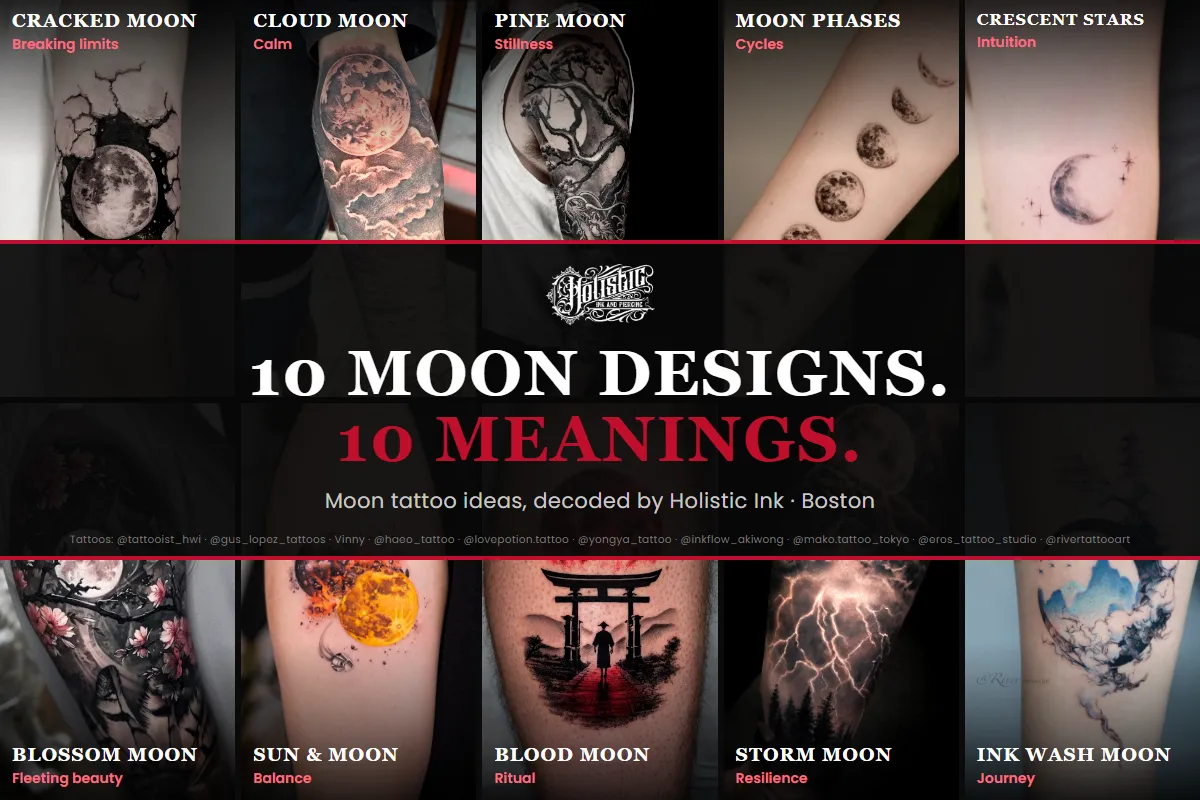
Moon Tattoo Designs and Their Meanings by Holistic Ink
People have tracked the moon for as long as they’ve told stories, and most cultures tie it to time, tides and emotion. A full disc often reads as completion and a crescent as a fresh start. A thin sliver feels like something quiet that’s still growing. Femininity, rebirth and intuition come up again and again, though the meaning you give a piece matters more than any dictionary. The table below shows how each phase usually reads and which styles carry it well.
| Moon form | Meaning | Style that suits |
|---|---|---|
| Crescent | New beginnings, intuition, gentle hope | Fine line, dotwork, watercolor |
| Full moon | Completion, clarity, strong emotion | Black and grey realism, color realism |
| Half moon | Balance, two sides of a story | Blackwork, illustrative |
| New moon | Rest, a clean slate, private plans | Minimal fine line |
| Blood moon | Ritual, change, raw energy | Color realism, Japanese |
Black and Grey Realism Cracked Full Moon
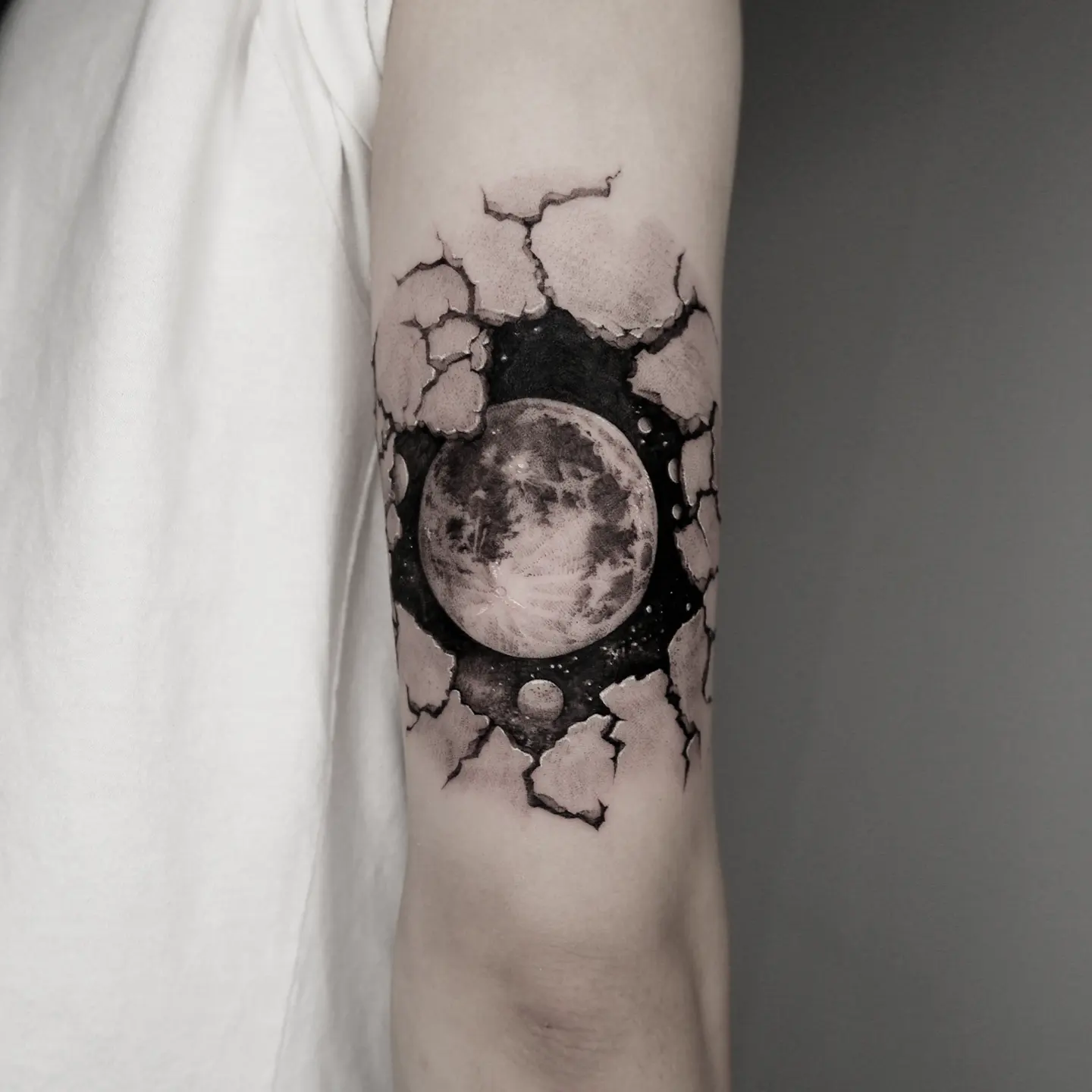
A full moon with every crater visible sits inside broken, cracked ground, as if you were looking at it through a hole in a wall. Smooth grey shading gives the surface a soft depth that photographs can’t copy. The cracks suggest breaking through a limit and seeing light on the other side. It works well on the inner forearm, where the round shape lies flat. Choose it if you’ve come out of a hard chapter and want something that says so quietly.
Color Realism Moon in the Clouds
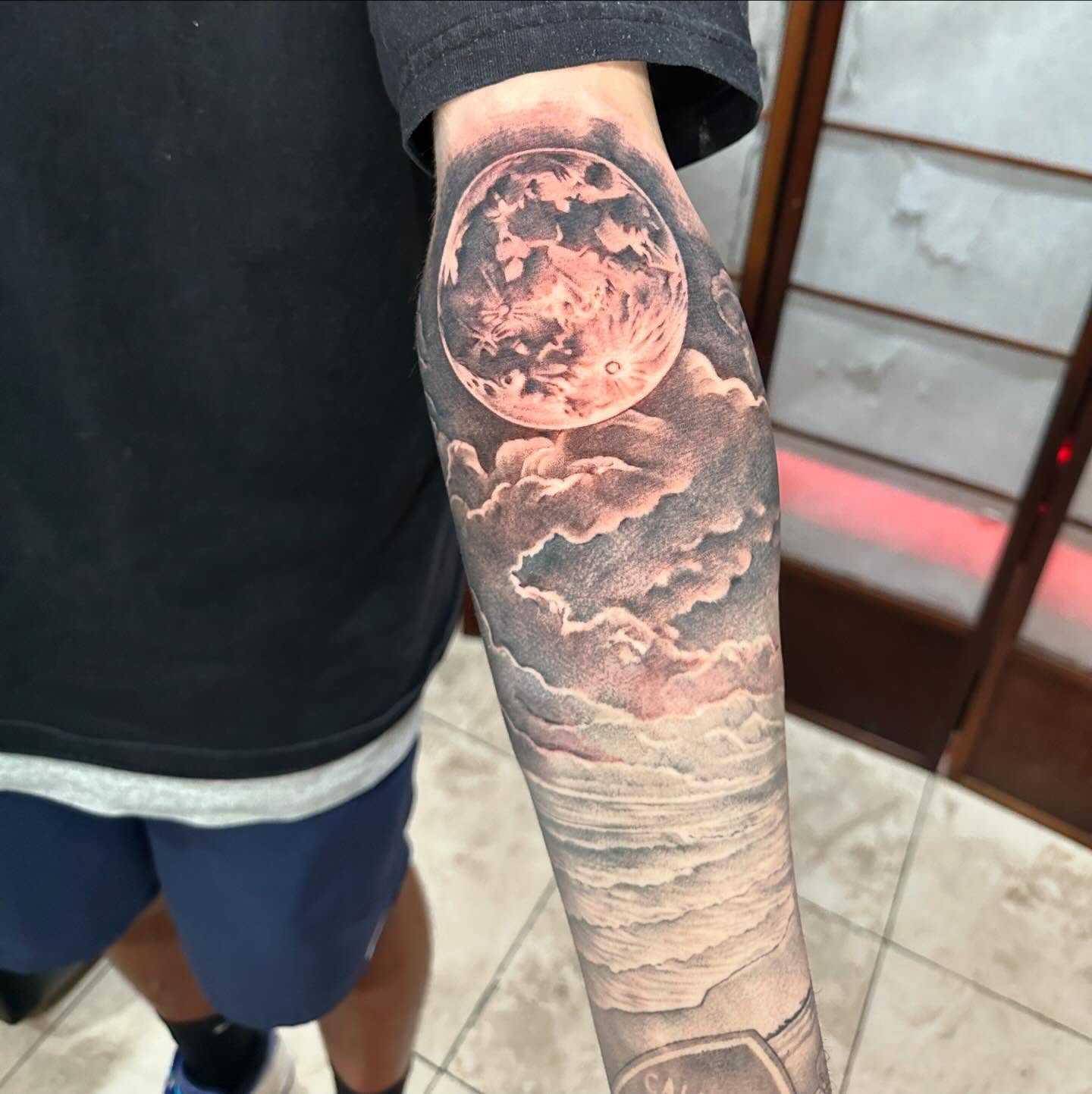
A pink and orange moon rises over a sea of grey clouds, and the colors melt into each other with no hard outline. The warm glow points to calm and to the hour when the day lets go. Smooth blends like these need a larger canvas, so a forearm sleeve gives them room. It’s a good pick if you want a peaceful scene instead of a symbol, something that feels like a quiet evening outside.
Full Moon Behind a Pine in a Japanese Sleeve
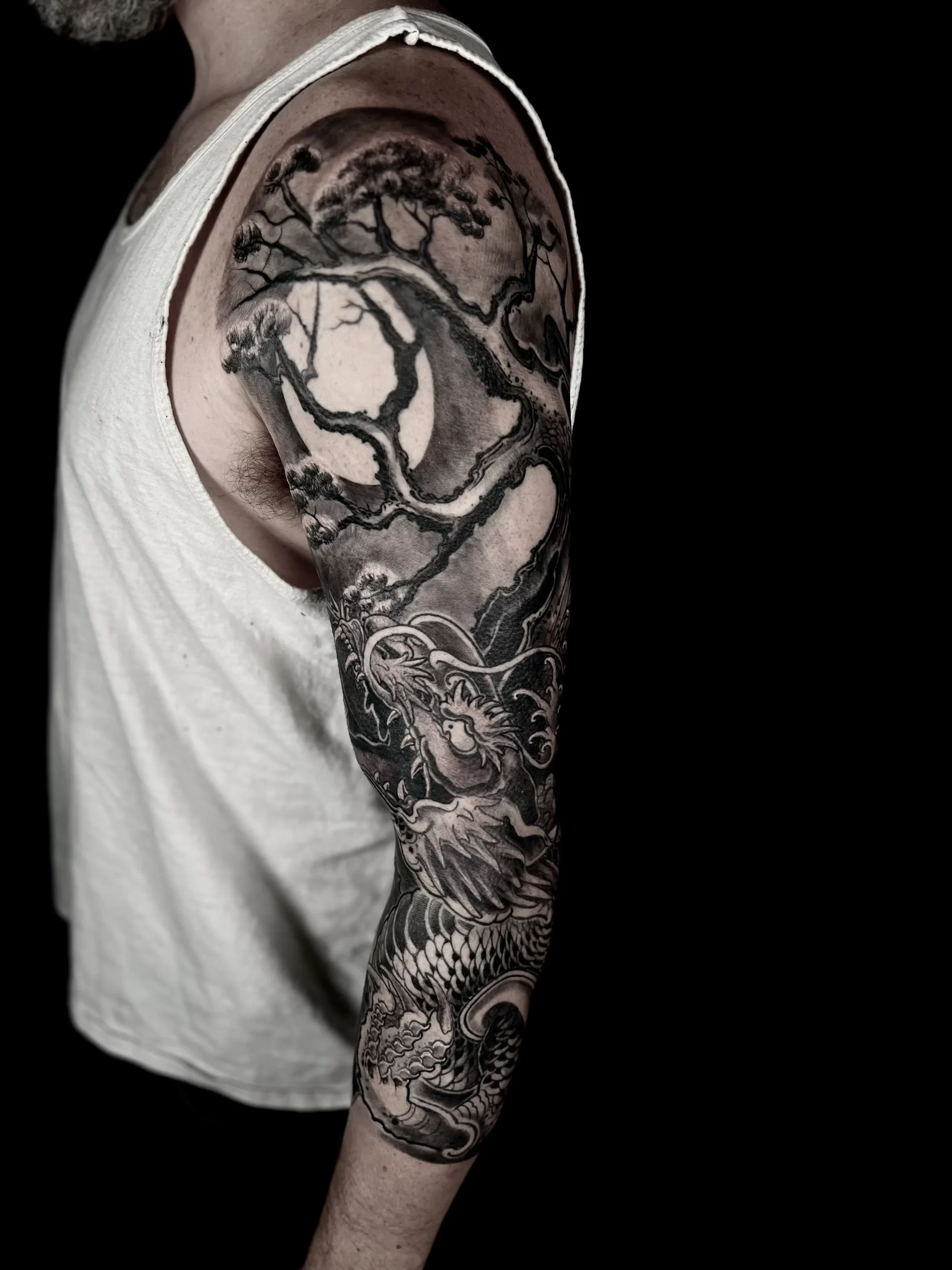
This piece is real work by Vinny at Holistic Ink in Boston. A bright full moon sits behind the branches of a pine, and a coiled dragon with heavy outlines guards the scene below, all on a dark ground that makes the disc glow. In Japanese art the night moon signals stillness, while the dragon keeps watch over it. The sleeve runs from shoulder to forearm, so the story can keep growing. It’s a strong choice for someone who loves bold, traditional composition.
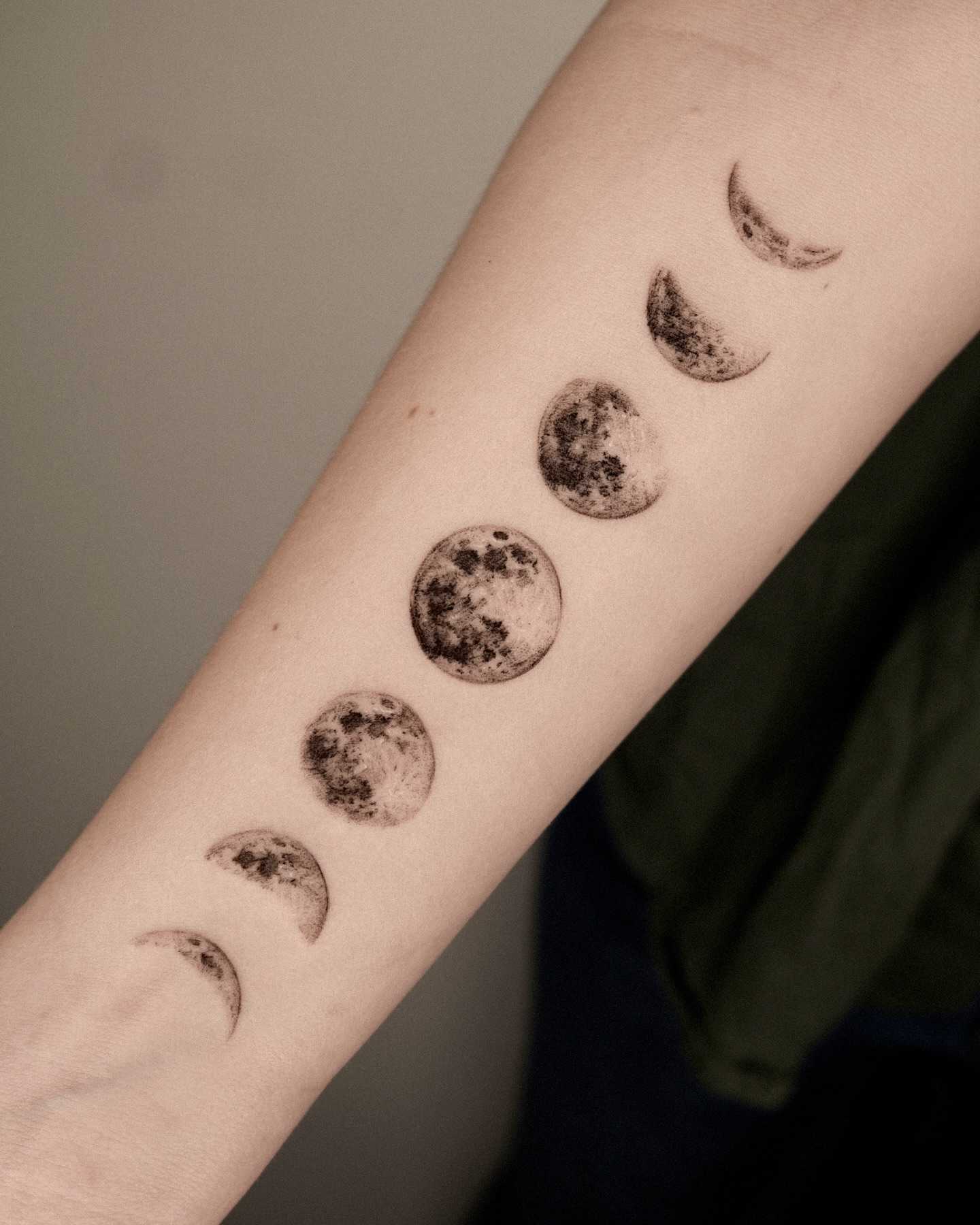
Moon Phases Line
Eight phases run diagonally down the forearm, from a thin sliver to a full disc. Each one has its own crater detail. The sequence shows change as something that happens in steps, never all at once. People often pick it for rebirth, recovery or a long project that’s finally taking shape. The line follows the natural length of the arm. Take it if you like a design that tells a story from top to bottom.
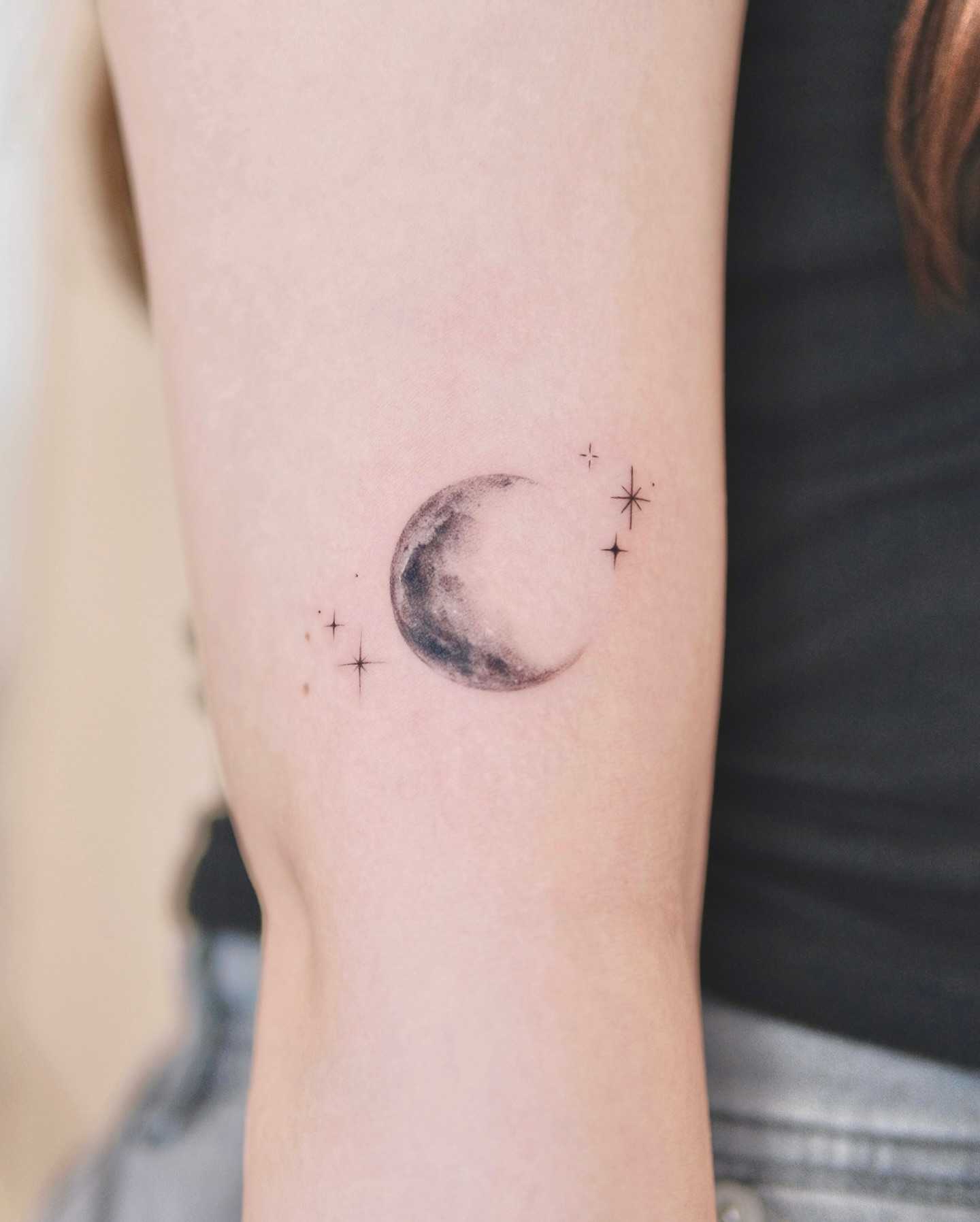
Crescent Moon With Stars
A soft grey crescent floats among a few small stars on the forearm, with fine line and dotwork keeping everything light. It reads as gentle and a little dreamy, a nod to intuition and to wishes you haven’t said aloud. The small size makes it a popular first piece. Thin lines need a bit of space between them, so the stars stay separate as the skin ages. It’s a good fit for anyone who wants a quiet mark that doesn’t shout.
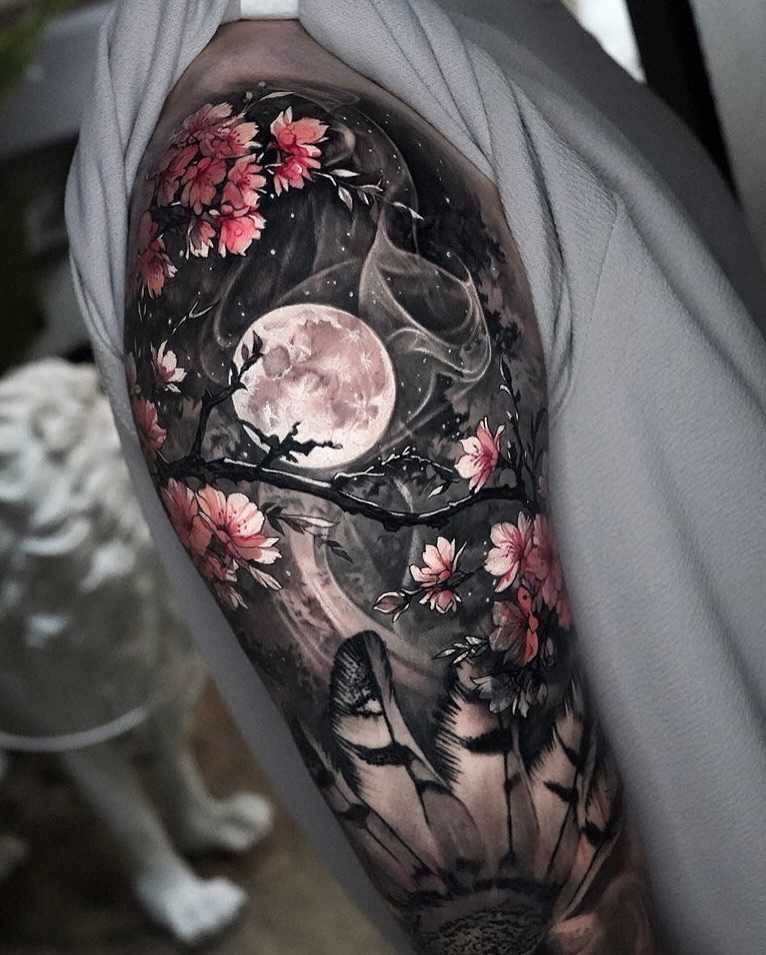
Moon With Cherry Blossoms
A pink full moon glows inside branches of cherry blossom, with smoke and a faint forest sitting in the dark behind it. The blossoms last only a short while, so the pairing carries beauty that doesn’t stay forever, along with a soft, feminine mood. Branches get room to curve on the upper arm and shoulder. This is a good match if you like romantic imagery with a hint of sadness in it.
Sun and Moon
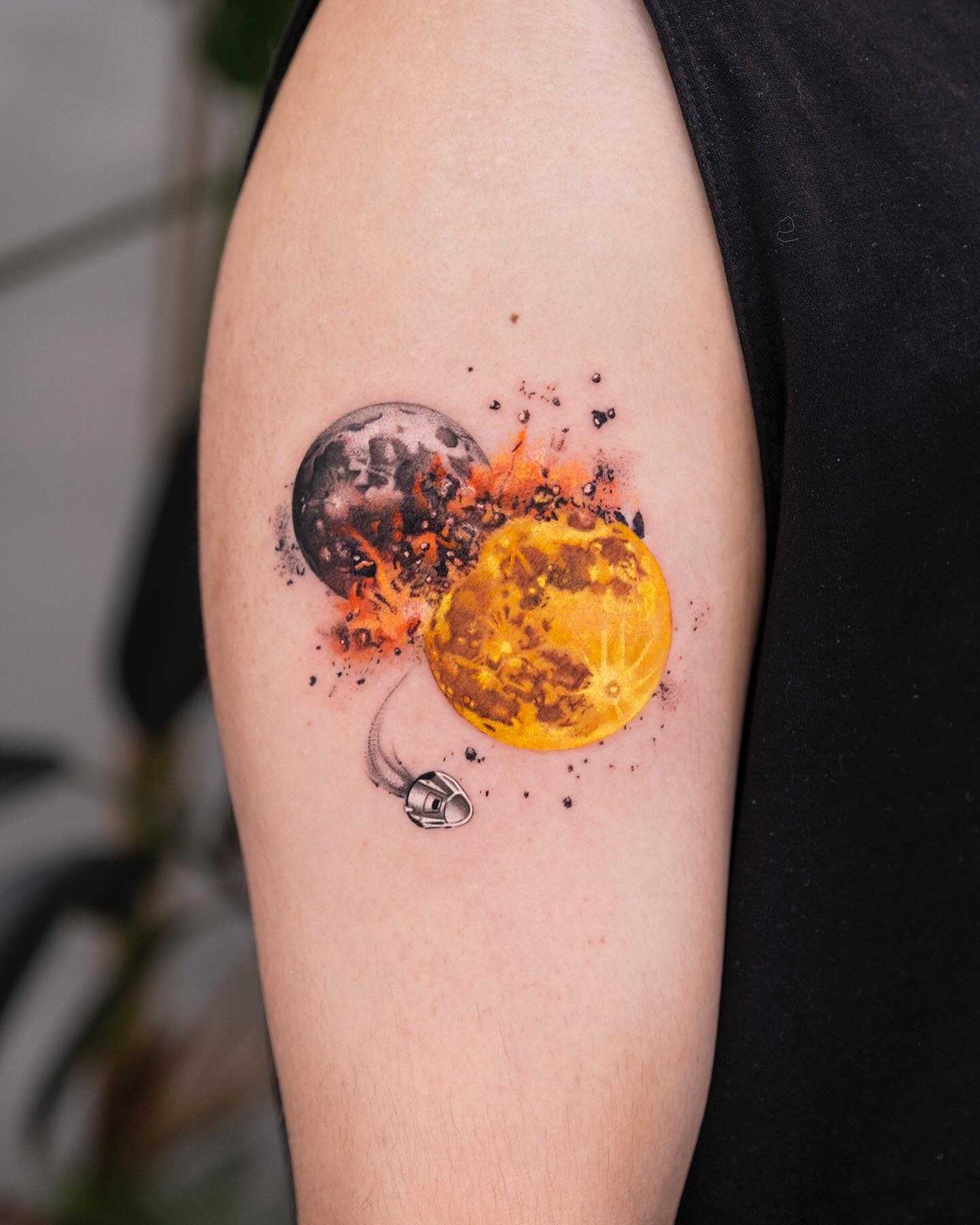
A yellow sun and a grey moon sit side by side, with sparks of flame and a few stars thrown around them. The two bodies share one sky, so the pairing speaks for balance between day and night, effort and rest. Color helps, since the warm and cool tones push against each other. It fits couples, siblings or anyone who sees two sides in themselves and wants both on the skin.
Blood Moon With Torii Gate
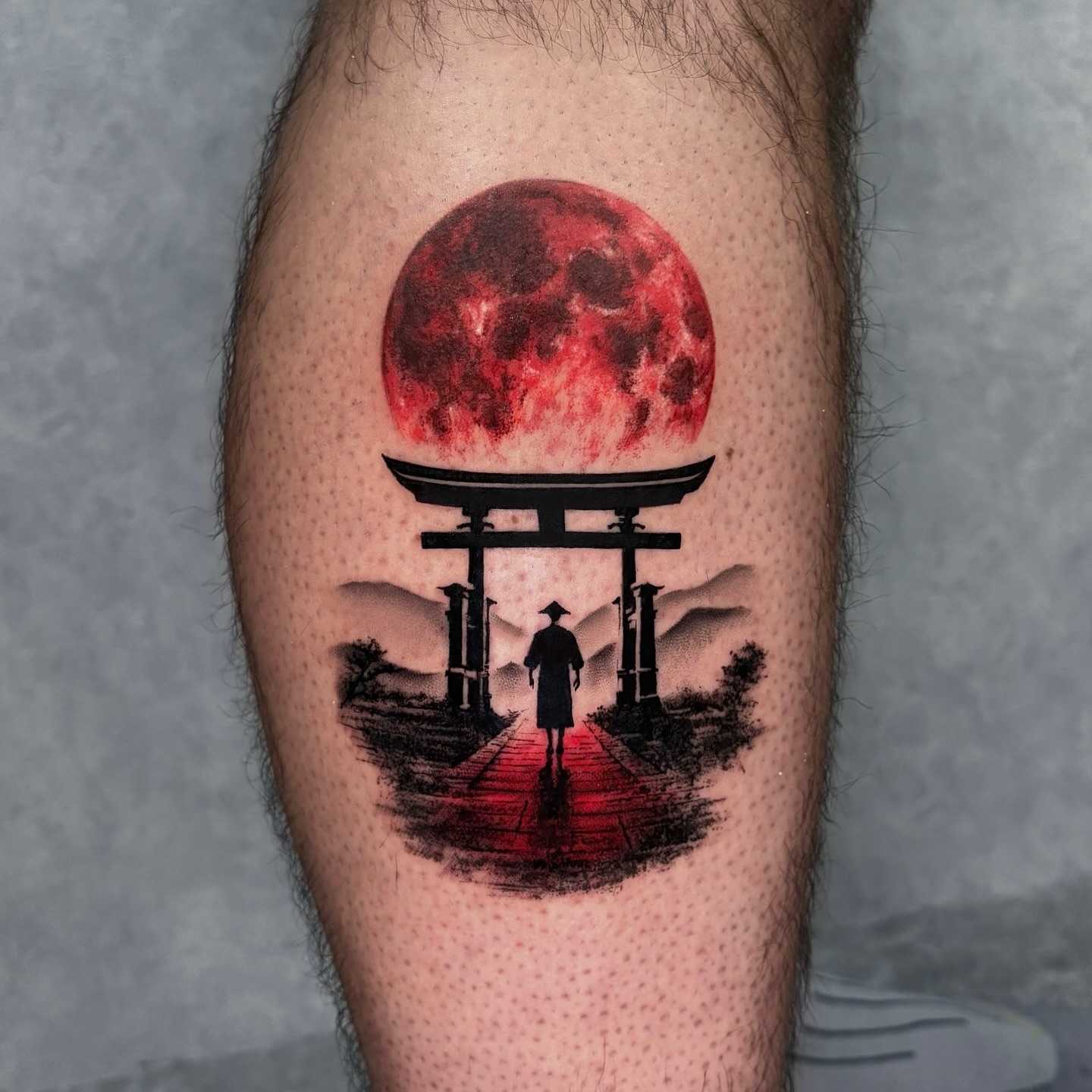
A large red moon hangs above a black torii gate on the lower leg, with a thin trail of smoke between them. In Japanese imagery a torii marks the line between everyday space and sacred ground, and the red disc adds a feeling of ritual and strong energy. The tall leg gives the gate its height. It’s a bold pick for someone marking a promise or a major change.
Moon Above Storm Clouds
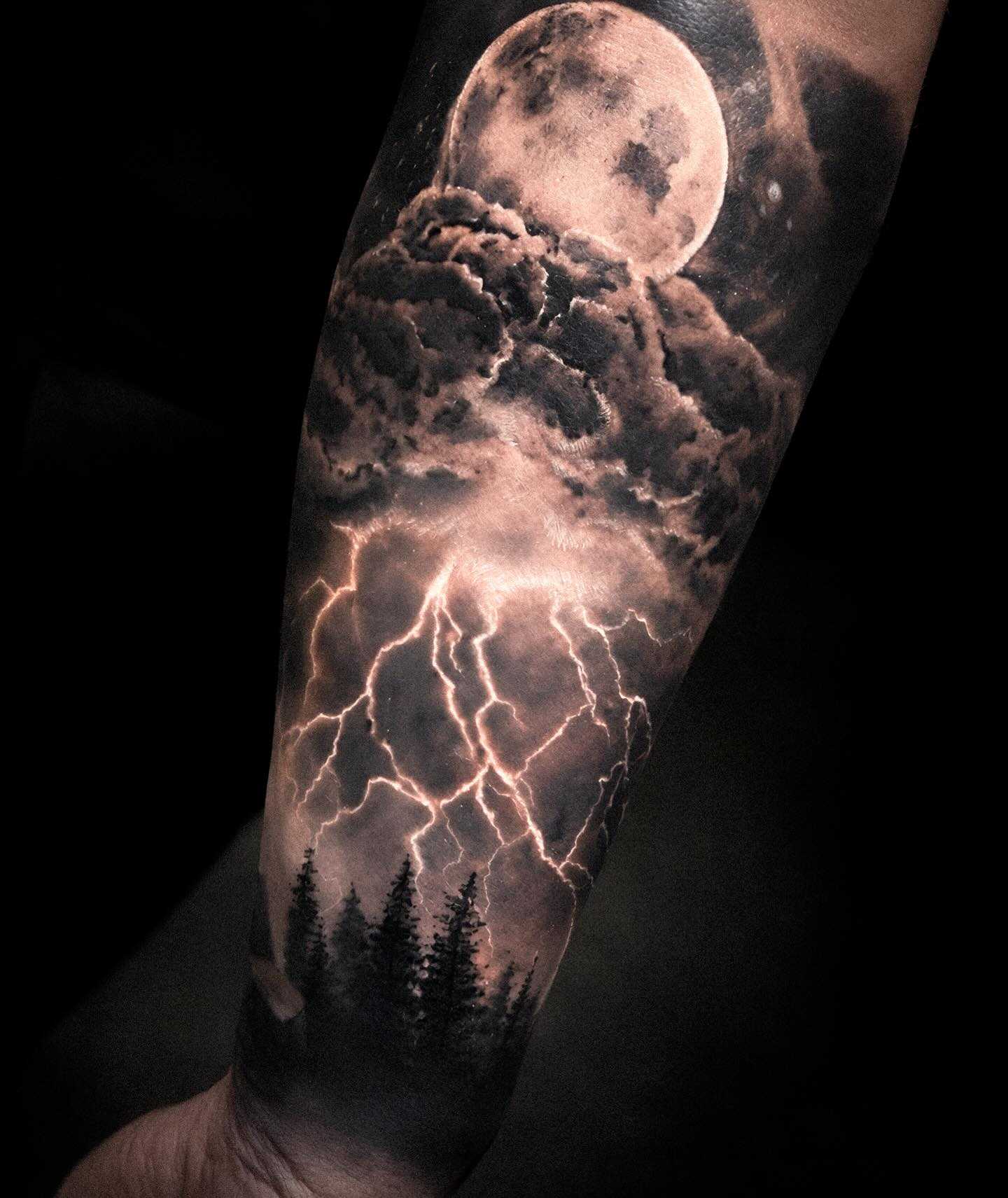
A bright full moon rises over heavy storm clouds with a faint purple lightning bolt, and black pines line the base. The weather is rough, yet the light stays whole. That’s the heart of it: getting through a storm and still being yourself. Black and grey shading keeps the clouds dramatic, and the forearm shows off the full scene. It’s a fit for anyone who has weathered something big.
Crescent Moon With Mountains in Ink Wash
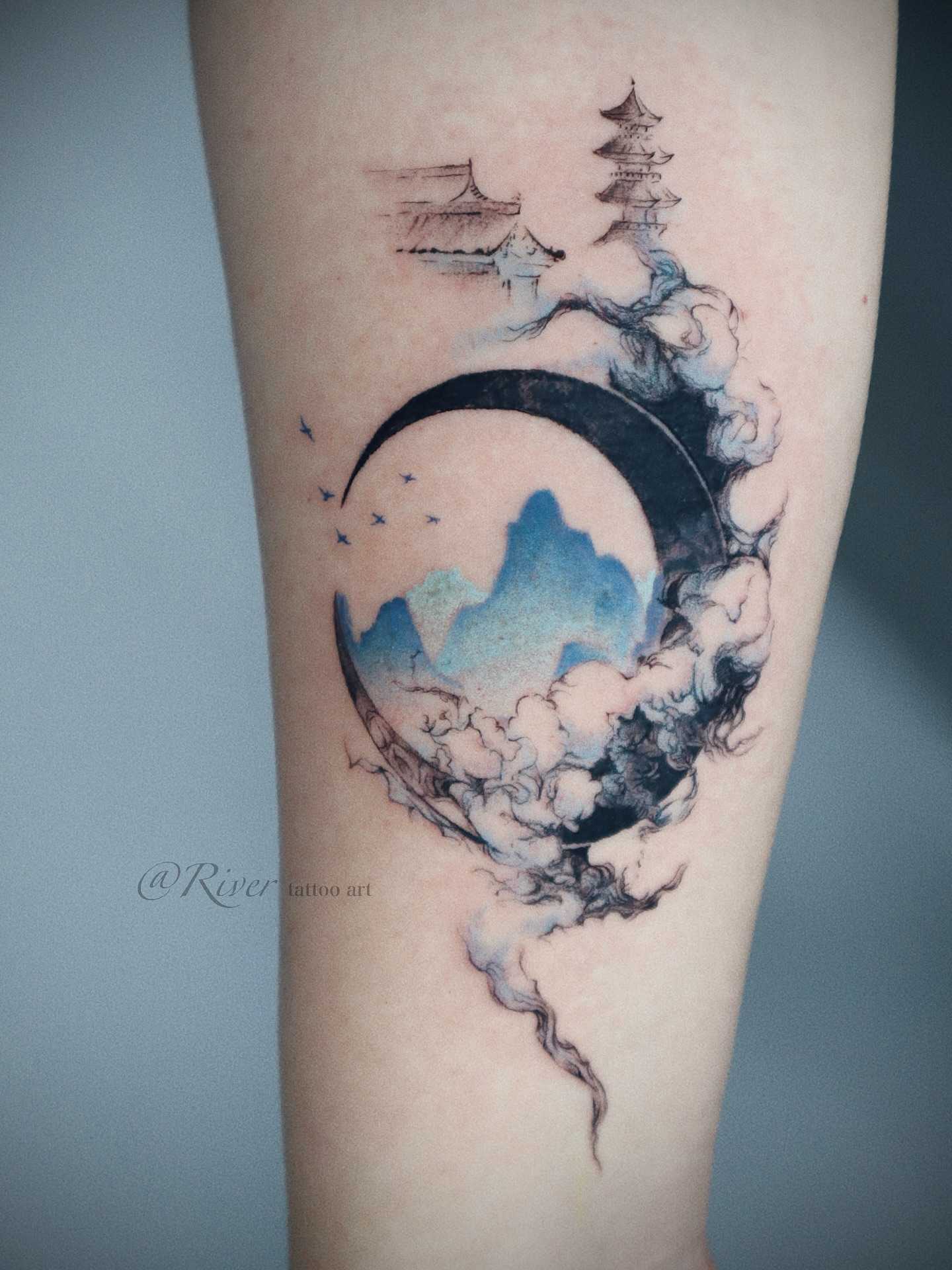
A black crescent holds blue mountains inside it, and loose ink wash smoke drifts around the edges like a brush painting. The mix of soft color and black suggests nature, stillness and the patience it takes to climb. Watercolor-style work like this needs a skilled artist, since the washes have to stay soft without turning muddy. It’s great for anyone who prefers calm, painterly pieces over sharp outlines.
Choosing a Style for Your Lunar Piece With Holistic Ink
The artists at Holistic Ink in Boston look at detail, contrast and size before they suggest a style, and three of them come up most often for the night sky. Each handles craters, glow and clouds in its own way. The comparison below shows how the same disc changes from one style to the next, so you can match the look to the size, area and lifestyle you have in mind.
| Style | How the moon looks | Best size and placement | How it ages | Best for |
|---|---|---|---|---|
| Black & Grey Realism | Soft shading, deep craters, glow from contrast | Medium to large, on the forearm, shoulder or thigh | Holds depth when it’s large and kept out of the sun | Moody, dramatic scenes with clouds or cracks |
| Color Realism | Warm or cool gradients, a glowing disc, soft cloud blends | Medium to large, on the forearm or upper arm | Colors benefit from sun care and an occasional touch-up | A lifelike sky at dusk or dawn |
| Japanese / Irezumi | A bold disc with heavy outlines, pines, clouds and dragons | Large, on the arm, back or leg, often within a sleeve | Heavy outlines stay readable for a long time | Strong graphic work that builds a story |
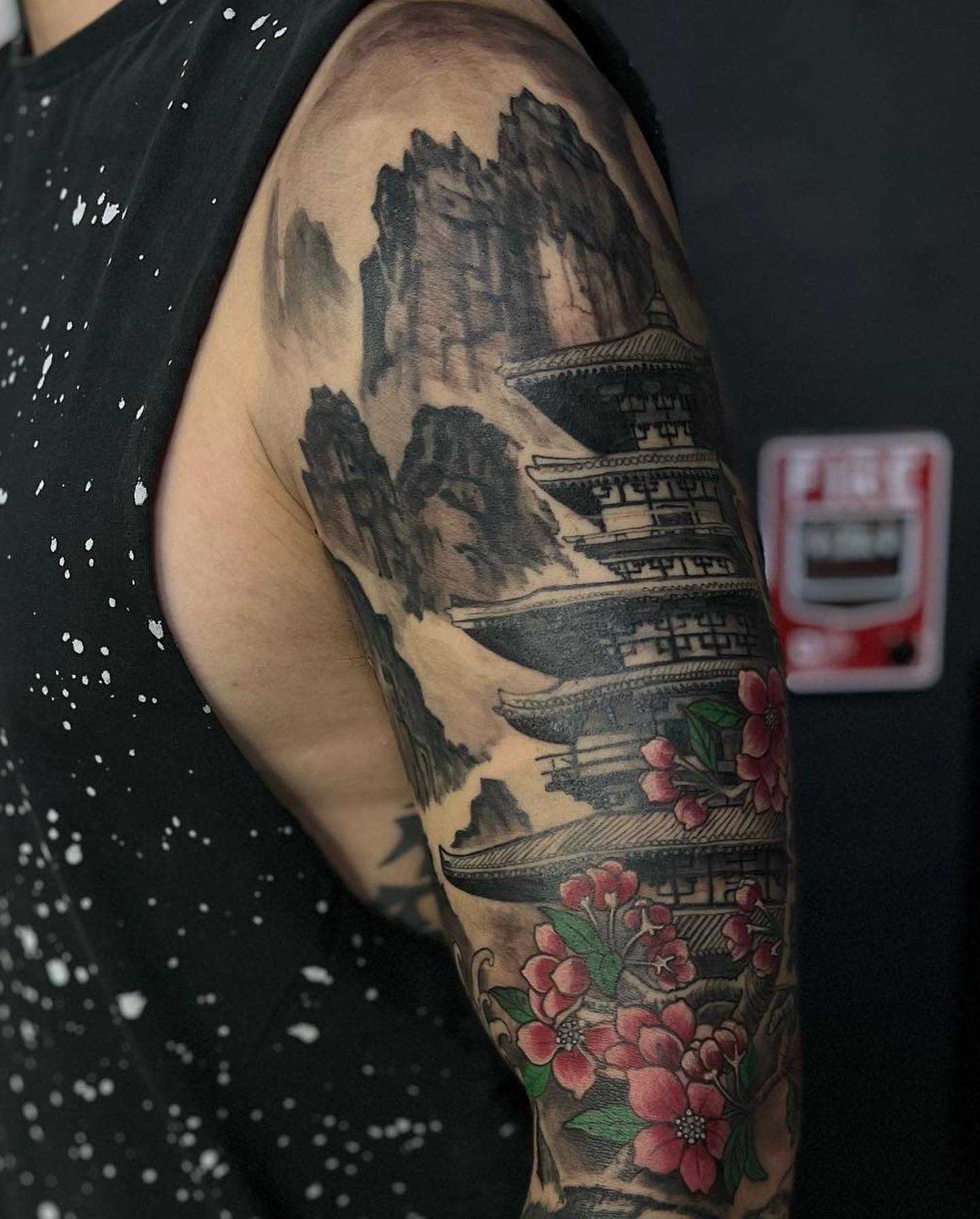
Black and grey realism is the style to choose when the disc belongs to a bigger scene. Layered shading builds each crater and gives the glow a soft edge, which is what makes the disc look lit from within. That depth needs space, so artists usually suggest a palm-sized piece or bigger. The pagoda below shows the smooth tonal range this style is known for.
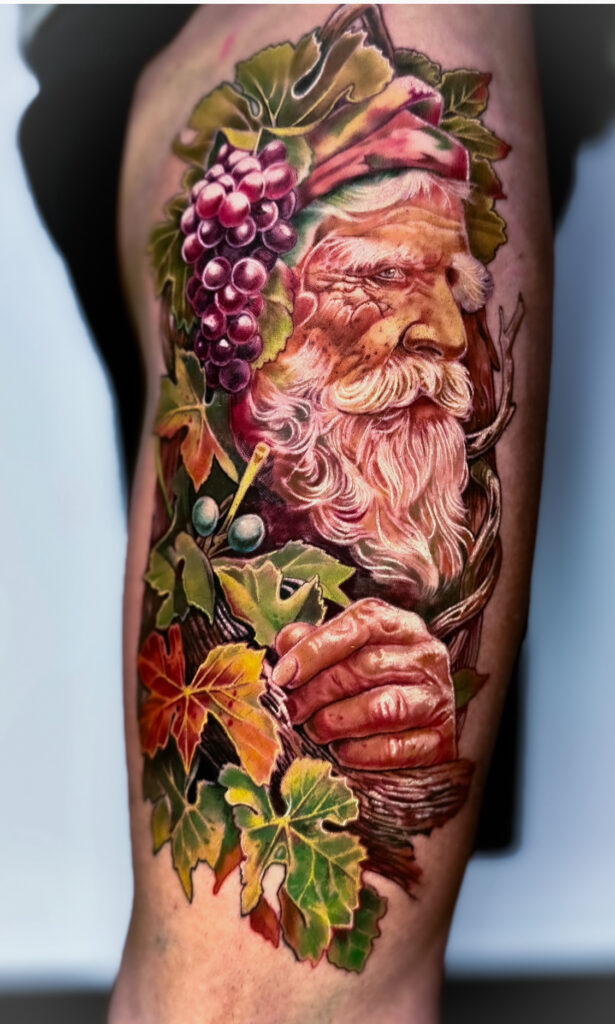
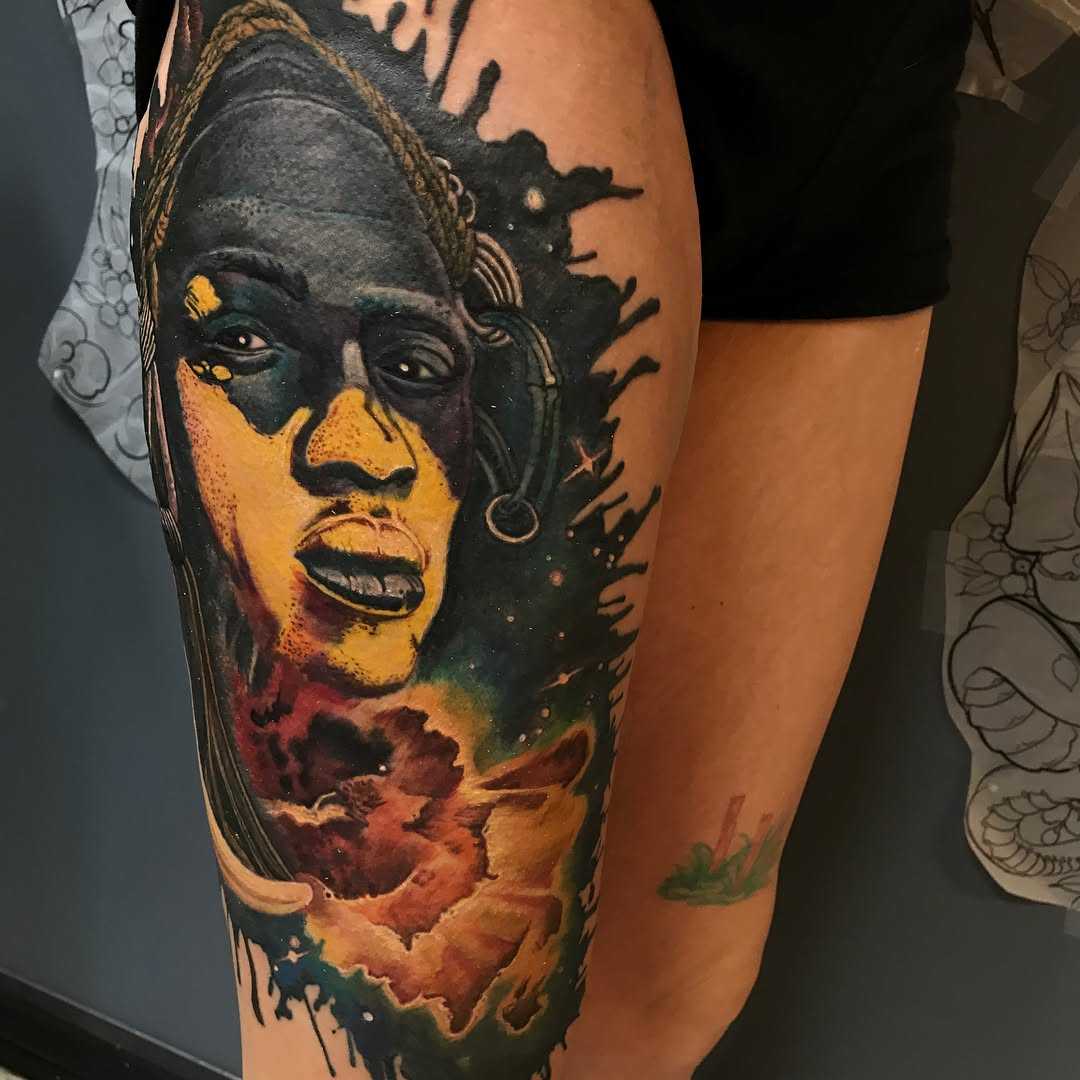
Color realism fits when the warmth is the whole point. Smooth transitions turn a disc pink, gold or deep red and make it look lit from inside. The portrait below, wrapped in colored smoke, shows how those blends sit together without hard edges. Warm tones tend to soften first in strong sun, so keep sunscreen in your routine and ask about a touch-up if the glow dulls.
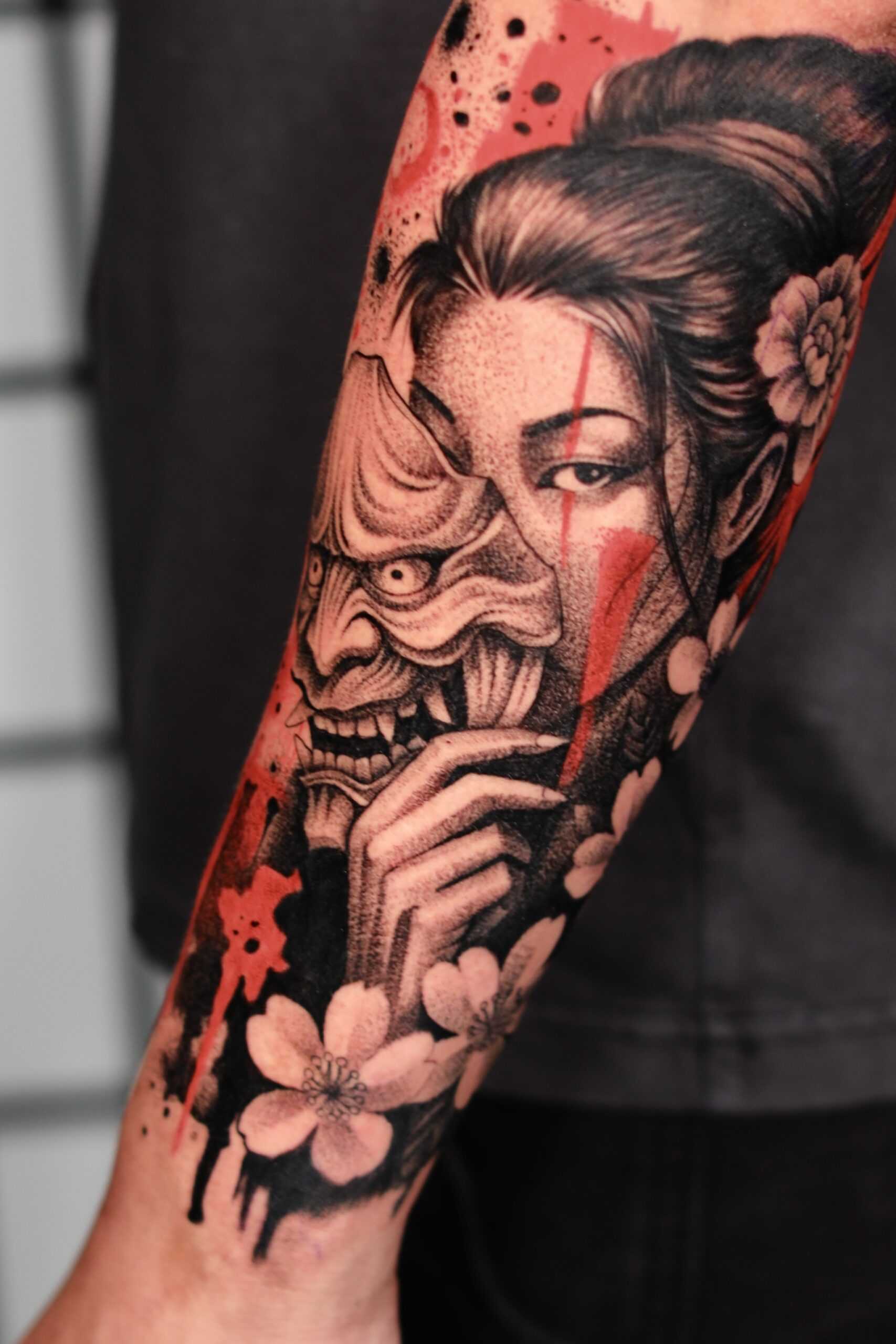
Japanese work treats the night sky as one chapter in a larger story. A disc behind pine branches or a torii gate reads clearly from across a room, and the strong outlines carry it through the years. The geisha below, with a hannya mask and cherry blossoms, shows how bold and graphic the style gets.
Other styles can work too. Fine line or dotwork suits a small crescent, and watercolor gives soft edges, though both need enough space around each detail to stay clear. Not sure what fits? Bring two or three references to your consultation and point out the shading and the colors you like, and your artist can sketch two options for the spot you picked.
Mistakes to Avoid and What Affects Cost and Longevity
Most regrets with a lunar design come from a handful of avoidable choices. Check your plan against this list before you book:
- Don’t shrink the disc so far that the craters blur into a flat grey patch.
- Skip hairline crescents that are thinner than the skin can hold over time.
- Avoid placing stars, phases or clouds so close together that they merge as the ink settles.
- Plan sun protection from day one, since UV fades pale and warm tones first.
- Don’t copy a photo line for line, because the shape should follow the curve of your arm.
- Don’t pick a studio by the lowest quote, since fixing weak work costs more later.
Price follows the work involved. Size, detail, color, the hours in the chair and the artist’s experience all push a quote up or down, and a small grey crescent won’t cost the same as a full-color scene with clouds. For a real number, book a consultation at Holistic Ink, where the artist can review your reference and the placement before quoting.
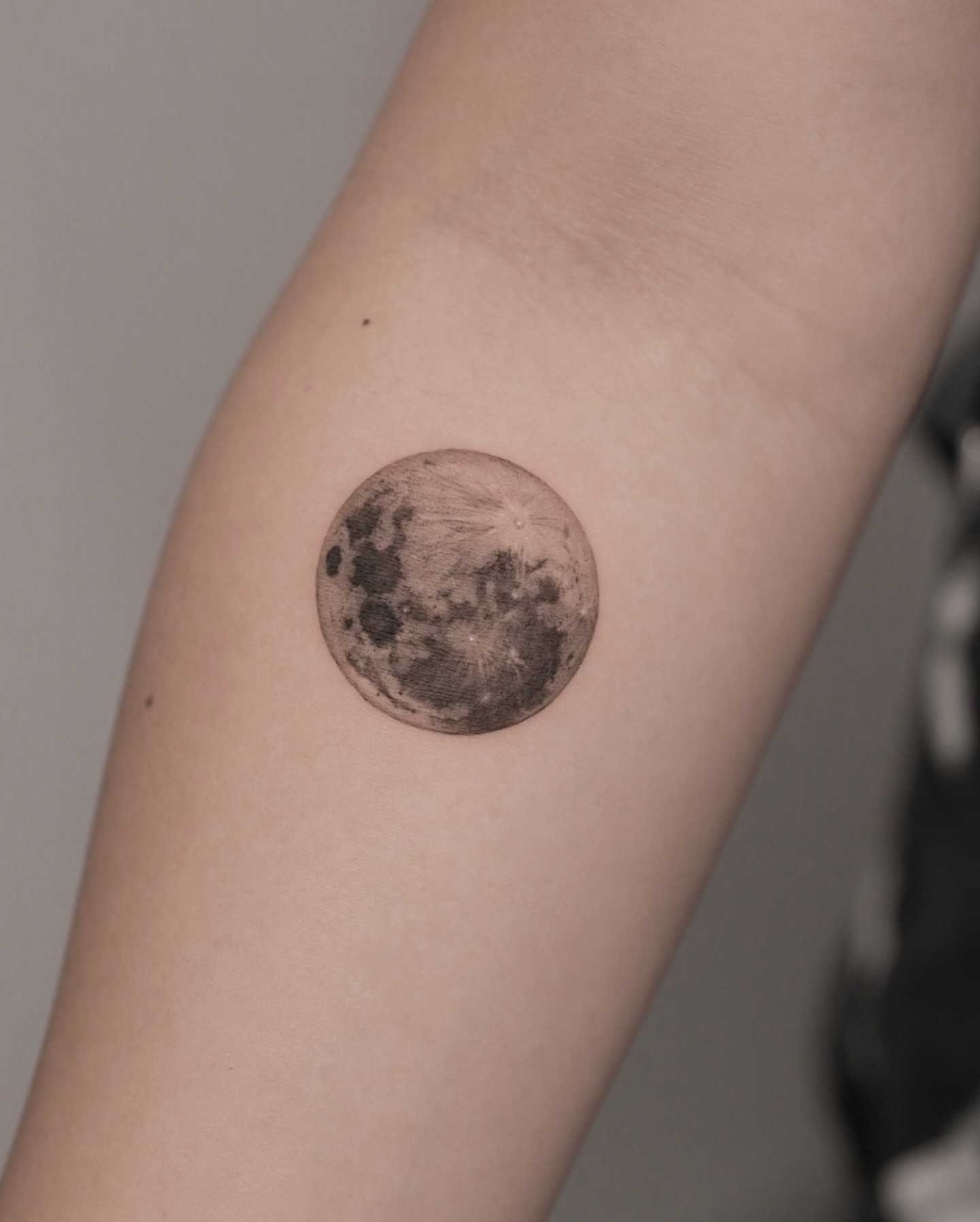
Longevity depends on line weight, contrast and sun habits. Dark, bold areas usually stay readable the longest, while pale shading and very thin lines soften first. Deepening the shadows around the craters protects the shape. Skin changes with age and time outdoors, and a touch-up now and then brings the contrast back. The forearm below keeps its crater detail clear thanks to a generous size.
Placement Ideas for Lunar Designs
Round shapes sit best on flat, open areas. Long scenes need a surface with length. That’s why the forearm and shoulder are the most common spots, and why the ribs and ankle take more planning. The table pairs each area with the kind of design that fits and the style that suits it.
| Area | Pain level | Lunar design that fits | Style that suits |
|---|---|---|---|
| Forearm | Low | Phases line, crescent with stars, cracked full disc | Black and grey realism, fine line |
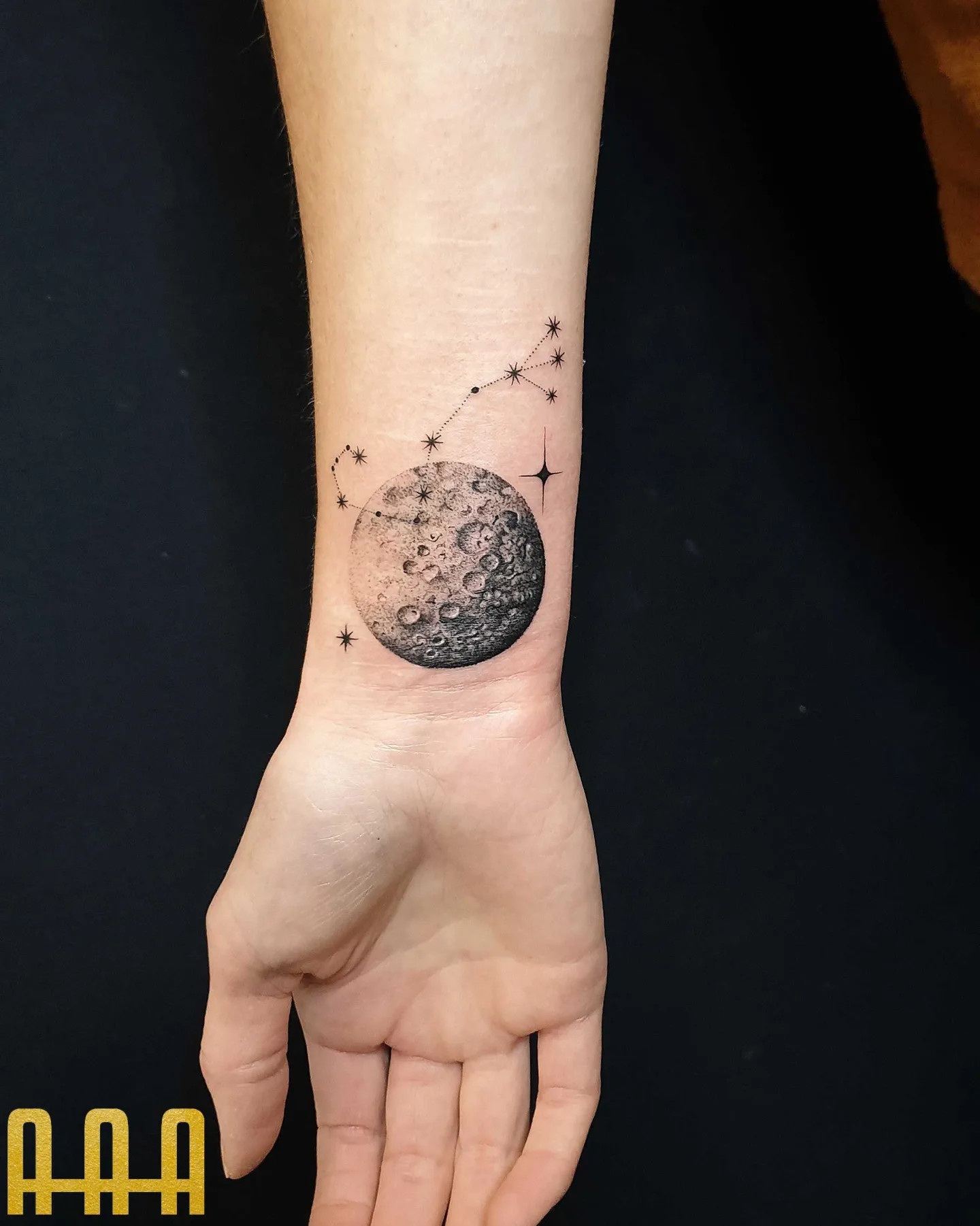
| Wrist | Moderate | Small disc with a constellation line, tiny crescent | Fine line, dotwork |
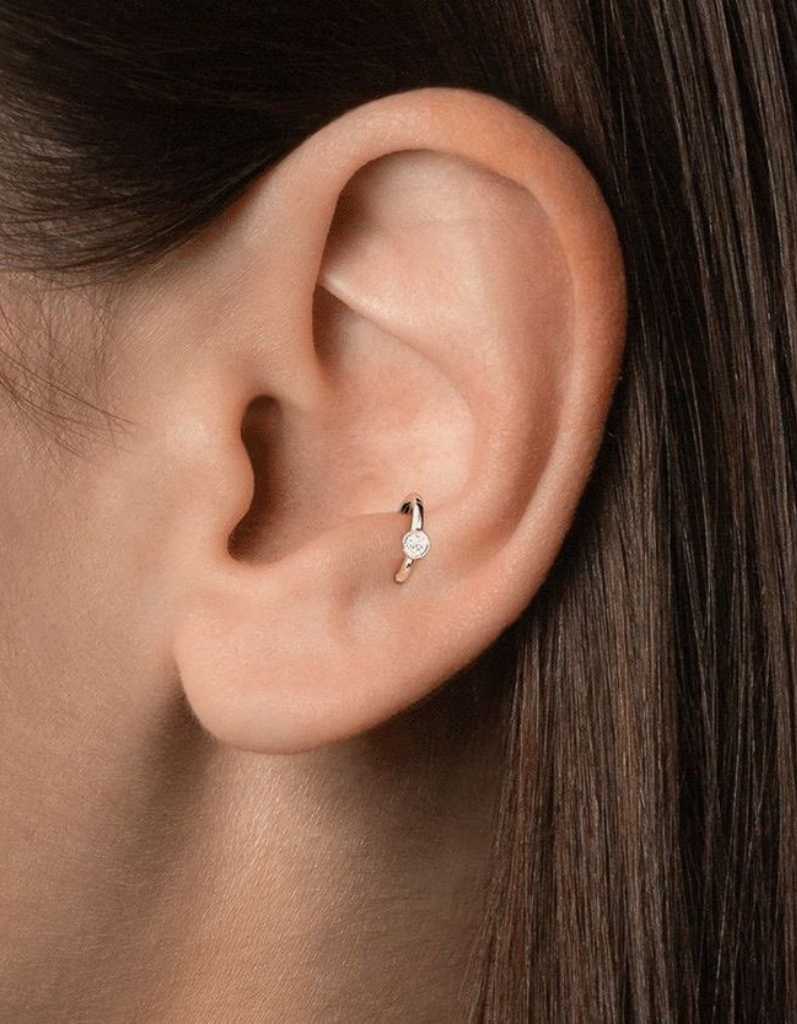
| Behind the ear | Moderate | Tiny crescent or new moon | Minimal fine line |
| Collarbone | High | Crescent with stars, a thin phases row | Fine line, dotwork |
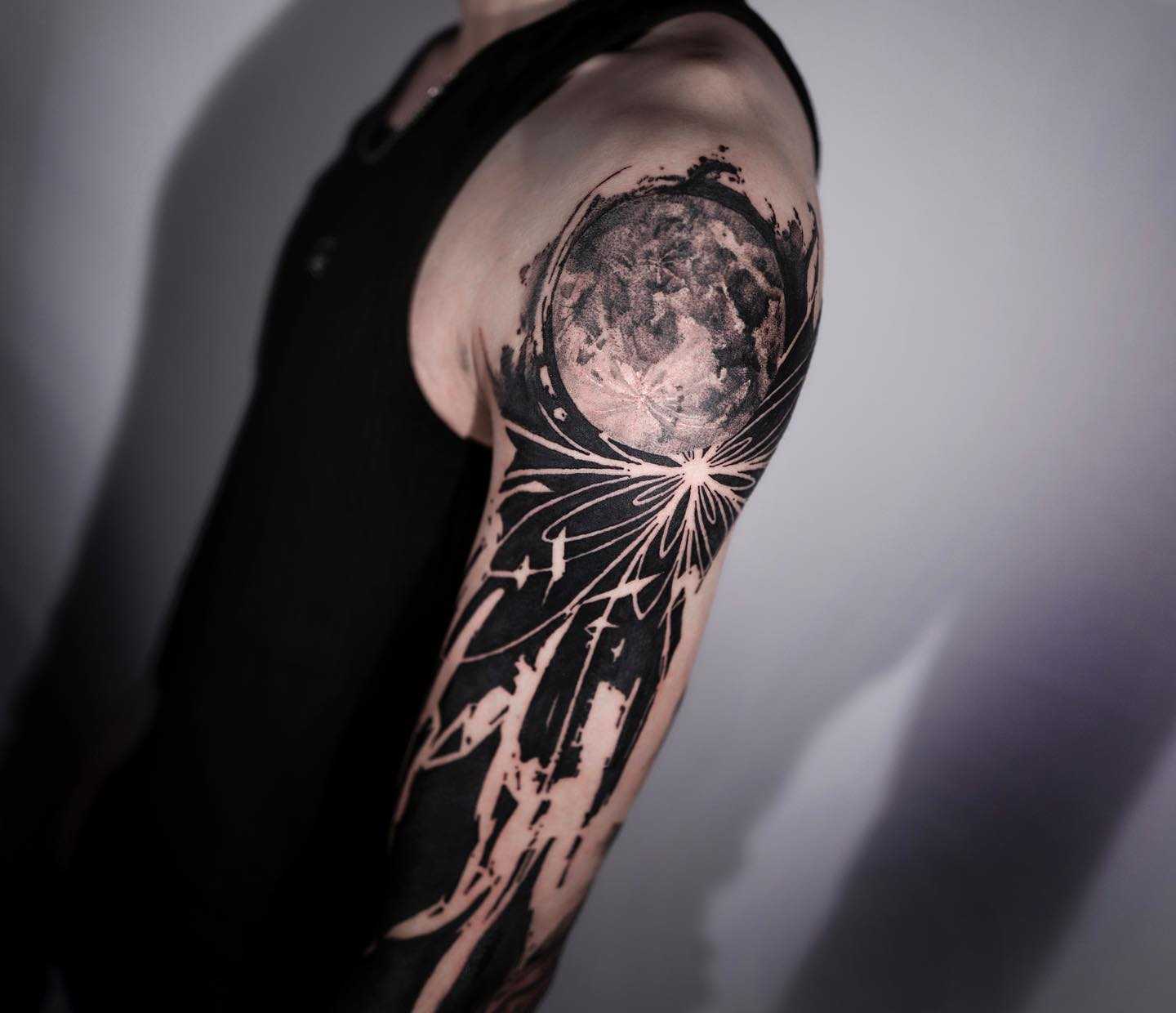
| Shoulder | Low | Full disc with rays, blossoms, sun and moon | Blackwork, color realism |
| Ribs | High | Crescent with a flowing scene | Black and grey realism, watercolor |
| Thigh | Low | Large cloud scene, storm or mountains | Black and grey, color realism, Japanese |
| Ankle | High | Small crescent or a trio of phases | Fine line, minimal |
Pain varies by person, so treat these levels as general guidance and ask your artist about the spot you’re considering. Size matters as much as location. A design that looks fine on a screen can feel crowded once it’s shrunk to a wrist, so let the artist set the final size on the stencil, and go up a size if you want craters or a gradient.
The shoulder gives a full disc room for rays, and bold black spreads out well over the muscle. At Holistic Ink, artists often place the stencil first and ask the client to move and check it in the mirror, so the rays still look balanced when the arm rolls.
The wrist suits something small and personal, like a disc joined to a thin constellation line. Fine details need clear space between them, so keep it simple.
From Consultation to Healed Ink
A lunar design goes smoothly when each stage has a clear outcome. At the consultation you share your references, the meaning you want the piece to carry and the area you have in mind, and the artist answers with style, size and layout ideas. By the end you should have a direction, a sense of how many sessions it will need and a date. Most studios take a deposit to hold that date, with the amount confirmed in person.
Next comes the stencil. The artist draws the design and places it on your skin, then lets you move, stand and sit so the disc looks right from every angle. Ask for changes here, since a bigger disc or a new position is easy to fix before any ink goes in.
During the session the artist builds the outline first and then adds shading or color. Take breaks, eat beforehand and speak up if something feels off. Nobody minds a pause.
Aftercare starts as soon as the work is wrapped, and the first two weeks matter most. Keep this list handy while your skin heals:
- Wash the tattoo gently and pat it dry the way your artist showed you.
- Apply a thin layer of moisturizer, never a thick coat.
- Wear loose clothing over the area so nothing rubs it.
- Stay out of pools, hot tubs, the ocean and direct sun.
- Don’t pick or scratch the flaking skin, since that can pull ink out.
- Once it has healed, put on broad-spectrum SPF before any time outdoors.
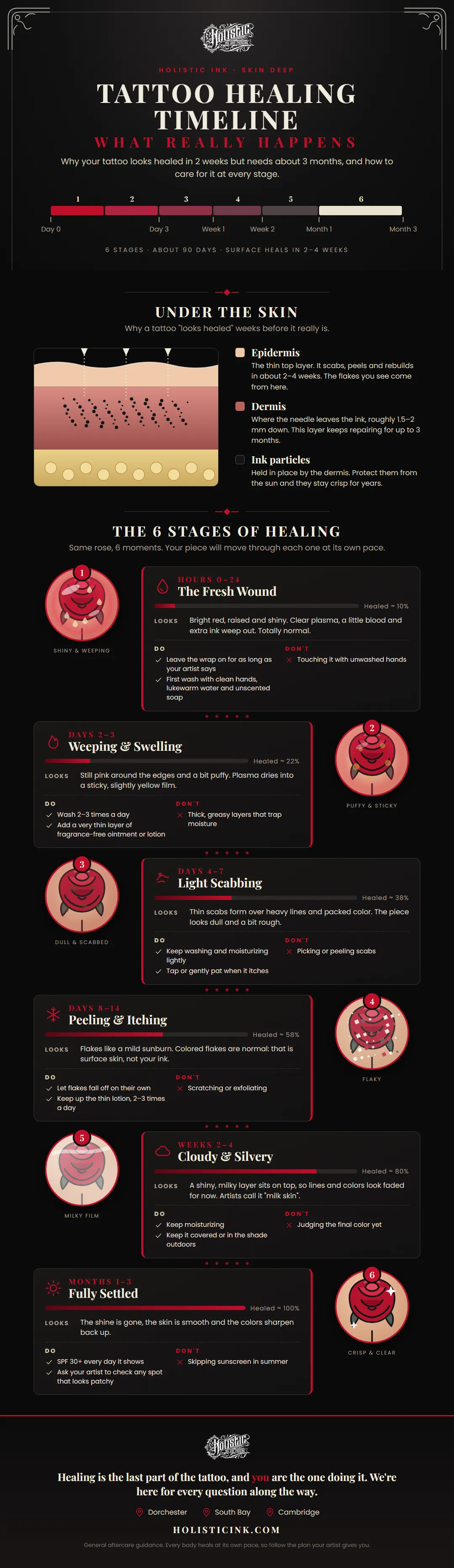
Long-term care is mostly habit. Keep healed skin moisturized, cover it on bright days, and ask your artist about a touch-up if craters lose their sharpness. Fine shading and small detail change the most over time, which is why the timeline below shows what happens under the skin at each stage of healing.
Frequently Asked Questions
What does a moon piece symbolize?
It usually points to cycles, intuition and change, since the disc grows, fades and returns every month. Many people link it to femininity and rebirth, and some see it as light in dark times. Each phase tilts the meaning a little, so the personal story you attach to it counts most.
What tattoo is for anxiety?
No tattoo treats anxiety, and a design can’t replace care from a doctor or therapist. Some people choose a calm symbol, a quiet scene or a short word as a private reminder to slow down. If anxiety is affecting your daily life, talk with a health professional first.
Are lunar designs only for women?
Not at all. The disc has been used by people of every gender, and a dark, graphic scene with storm clouds or a torii gate reads very differently from a soft crescent with stars. Choose the mood and the meaning that fit you, and let your artist shape the style around them.
How long does a small moon design take to heal?
The outer layer of skin usually settles within a few weeks, while the deeper layers take longer. Healing time varies with the size, the area and your skin, so follow your artist’s aftercare steps and ask them what to expect for your spot.
Bring Your Lunar Idea to Life at Holistic Ink
A good lunar design starts with the meaning you want to carry, whether that’s change, calm or a bit of light in a hard season. Pick that first, then match it to a style, a size and an area that fit your life. When you’re ready to turn the idea into a stencil, book a consultation and bring your references along, so our artists can refine the shape and placement with you.
Ready for a bigger piece?
Our artists are known for large-scale work in 3 styles. Start with the one that fits your idea:
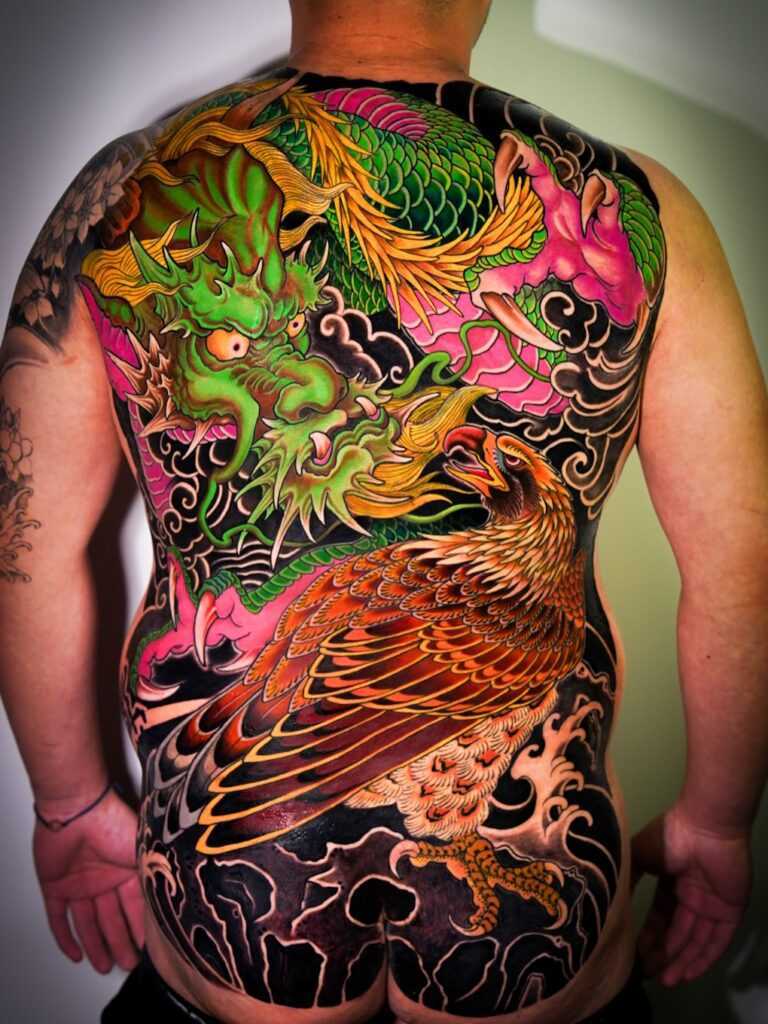 Best matchJapanese IrezumiDragons, koi, deities and full backpieces with traditional flow.
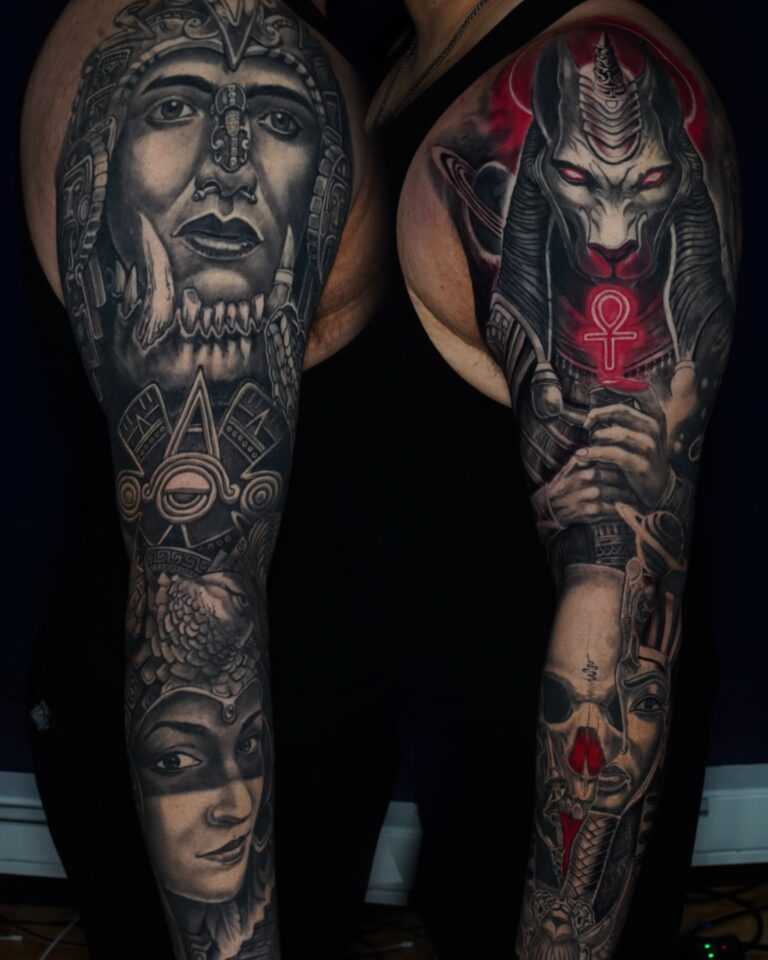 Black & Grey RealismPortraits, animals and sacred art in soft, deep shading.
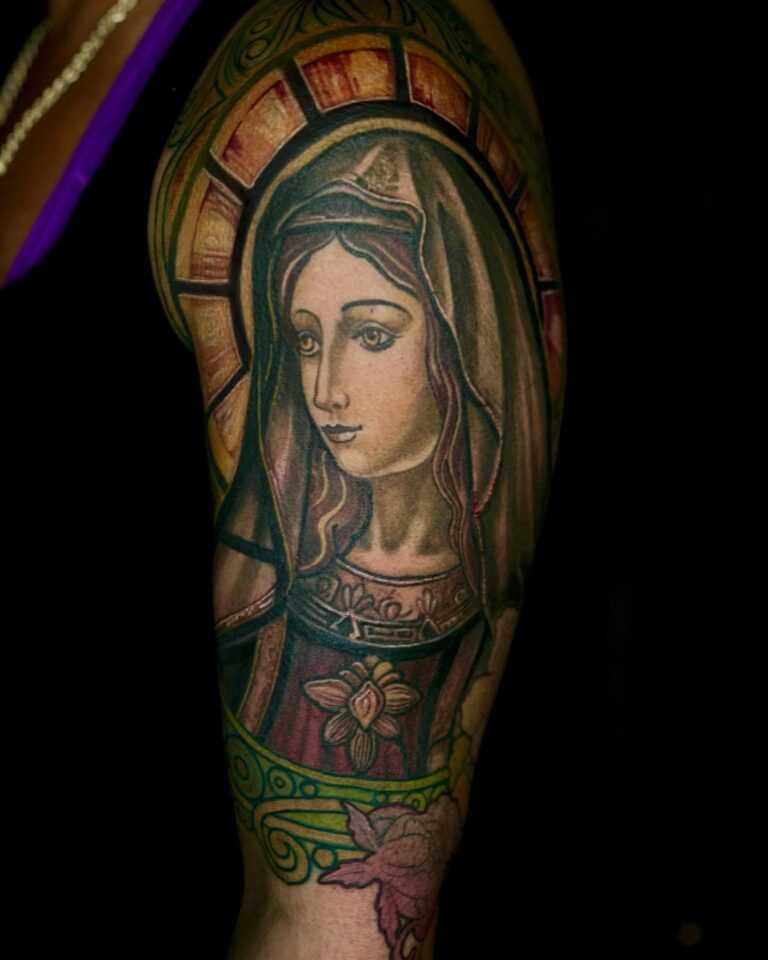 Color RealismSaturated, lifelike color for sleeves and large scenes.Signature project · Japanese IrezumiDragon Backpiece: 66 Hours, 3 Artists, Best of ShowPlacementFull backTime66 hours over 3 daysArtists3 artists, including Vinny NguyenSee the full project →
Bring your reference and placement. We plan large work session by session with you.
We also tattoo American traditional, fine line, script and small tattoos. Browse all styles →