Leg tattoos give you the longest canvas on the body, from the thigh down to the ankle, so almost any idea can find a home there. This guide from Holistic Ink in Boston shows 10 designs with real meanings, then helps you choose a style, a spot and a care plan that fit your skin. Read it before you book a consultation, and you’ll arrive with a clear idea instead of a blank page.
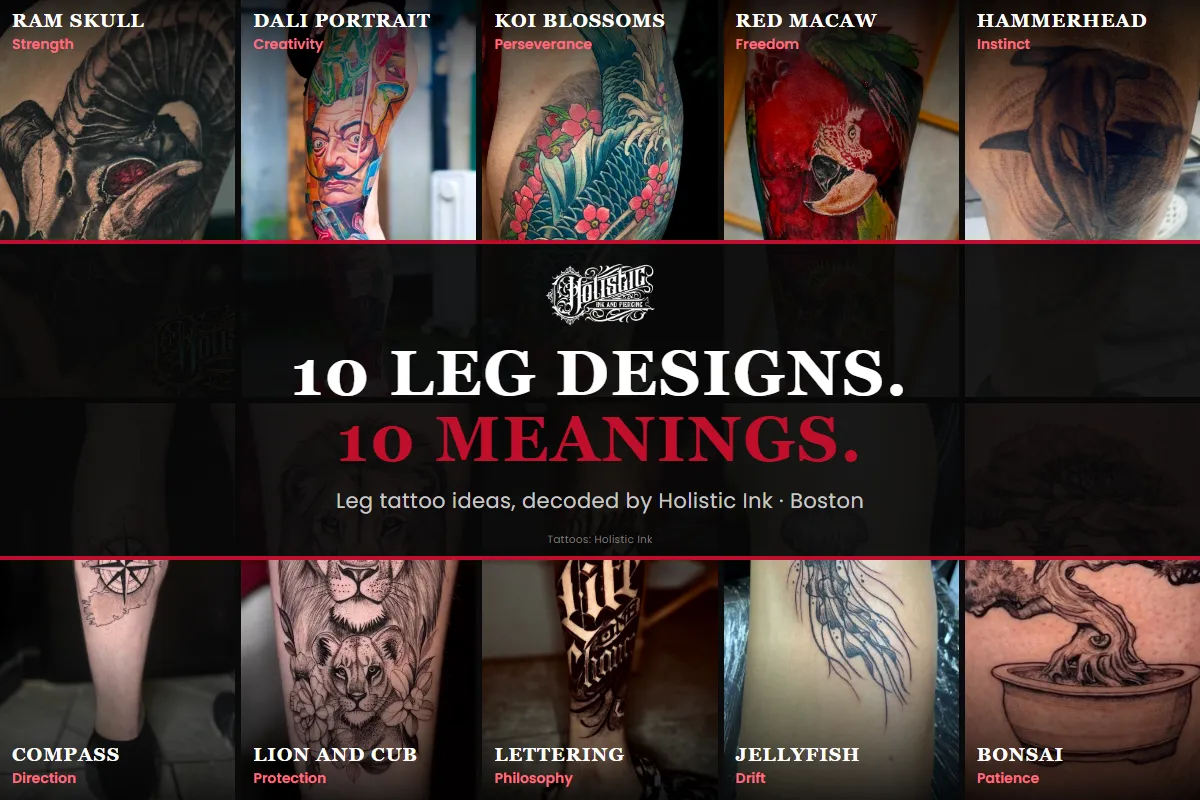
Leg Tattoos for Every Spot and Their Meanings by Holistic Ink
The leg is really several canvases in 1 limb, from the wide thigh to the rounded calf and the narrow shin, and each area favors a different kind of design. All 10 designs below are real work from the Holistic Ink studios in Boston, and some were shared by clients in their reviews. Each one explains what it means and who it’s perfect for.
Black and Grey Realism Ram Skull on the Upper Thigh
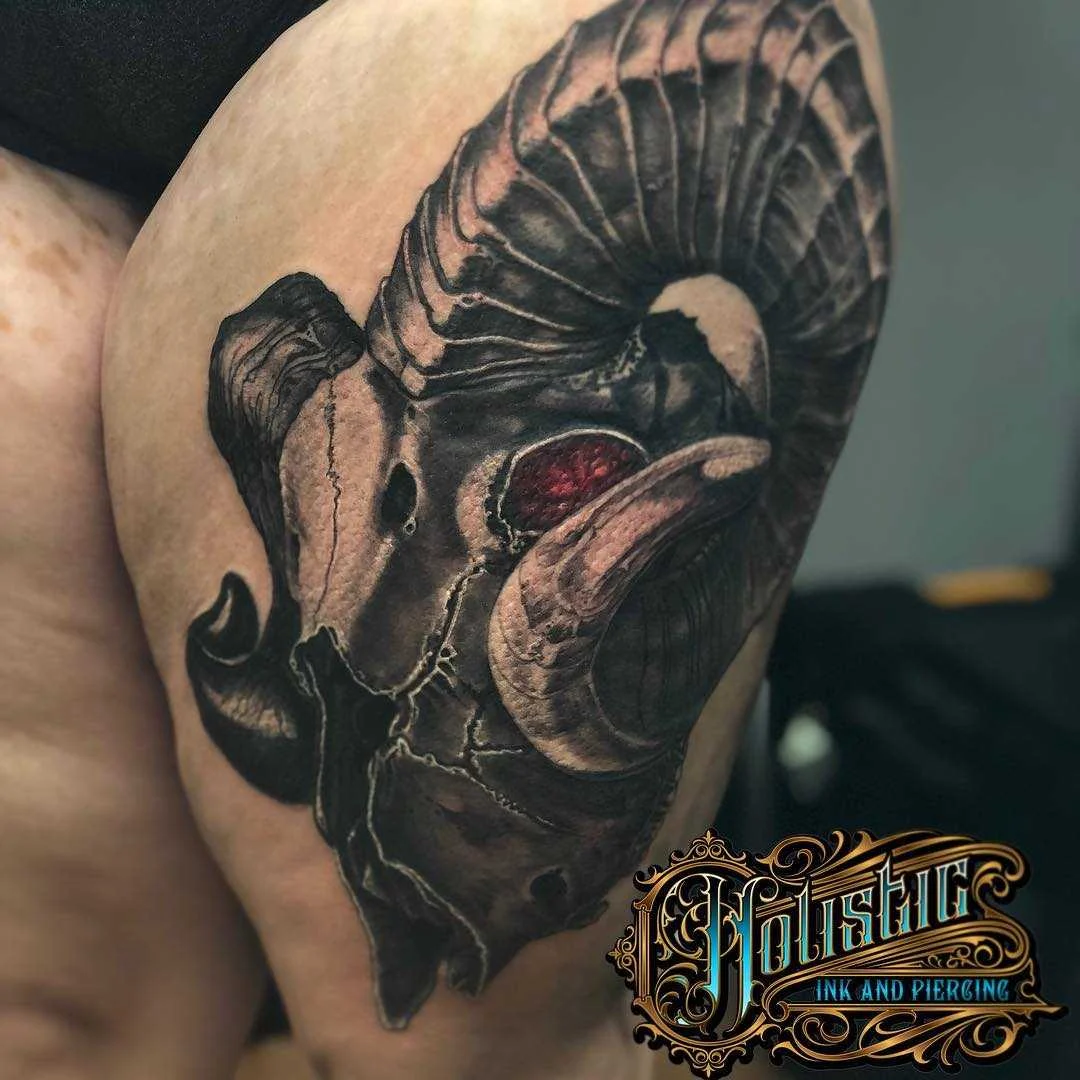
Vinny Nguyen shaded this ram skull in black and grey on the upper thigh, with twisted horns and a small red spot in the eye socket. The deep shadows make the bone look carved, and the red accent pulls the eye straight to the center. A ram skull stands for strength, instinct and the cycle of life, which is why people choose it after a hard stretch or as a reminder to stay stubborn. The wide upper thigh gives the horns room to curl without crowding. It’s perfect for anyone who wants a dark, serious design that reads from across the room.
Color Realism Dali Portrait Leg Sleeve From Thigh to Calf
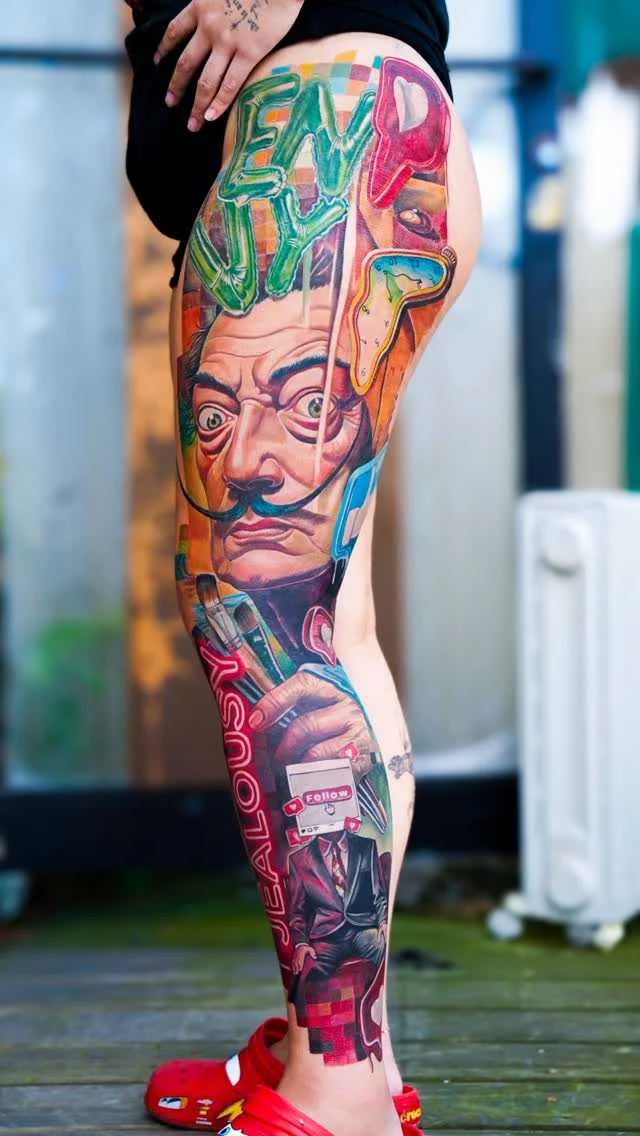
Vinny Nguyen built this full leg sleeve around a portrait in the style of Salvador Dali. Saturated color panels and fine detail carry from the thigh down to the calf. Surreal art like this stands for creativity, breaking the rules and honoring an artist who changed how you see the world. Because the design is a single long composition, it reads best across the whole limb instead of a small patch. Color realism needs strong contrast to stay vivid, so careful planning matters. It suits art lovers who are ready for a large project over many sessions.
Japanese Koi and Cherry Blossoms Wrapping the Thigh
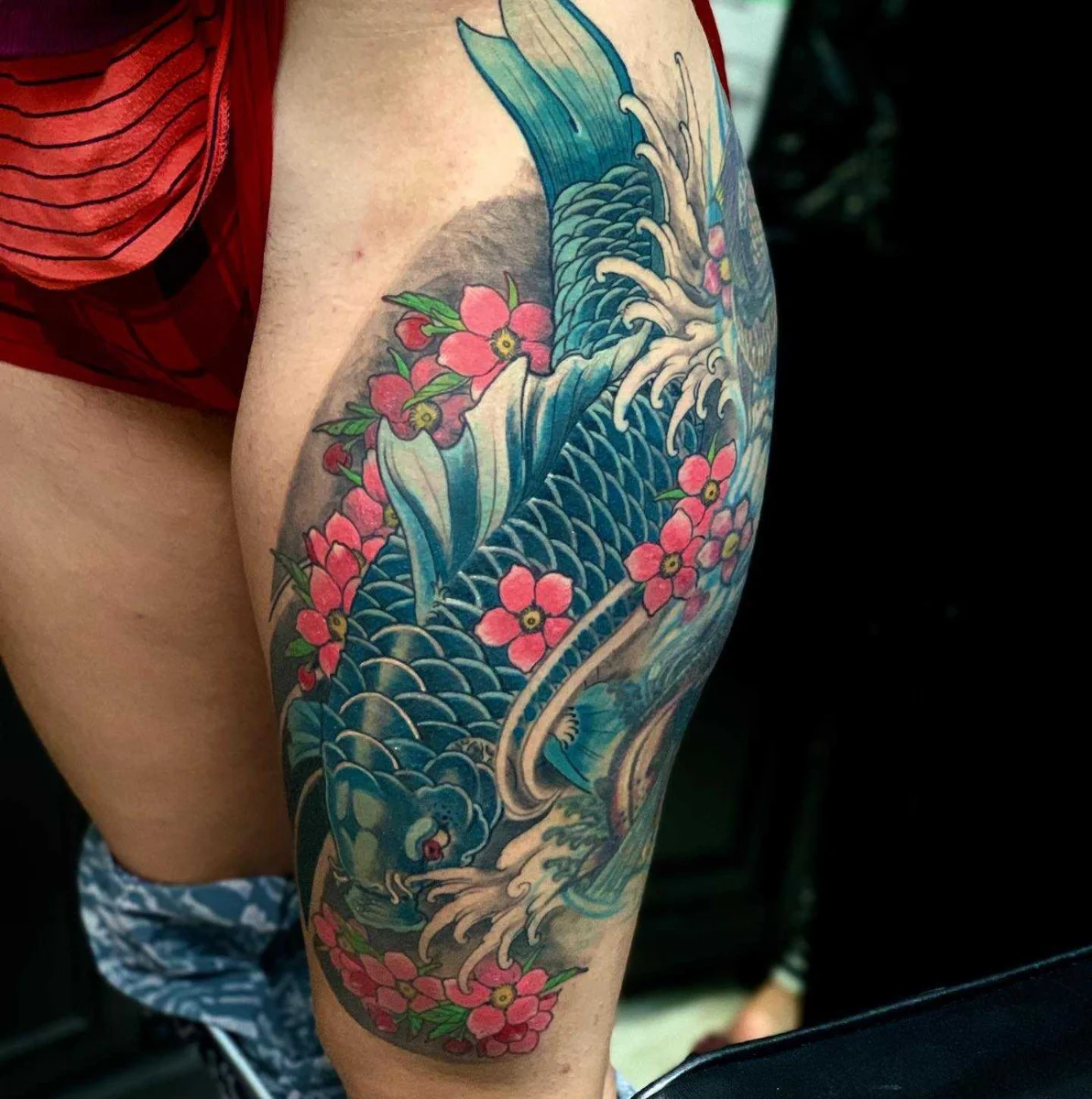
Vinny Nguyen wrapped a jade-blue koi, pink cherry blossoms and heavy-outlined waves around the front of the thigh in classic irezumi style. The koi swims against the current, so it stands for perseverance, good luck and the push to become something greater, while the blossoms remind you that beauty is brief. Bold outlines and a flowing water background keep Japanese work readable as the skin ages. The thigh offers a wide, smooth surface for all those curves. Choose it if you want a design with a long story and room to grow into a full sleeve.
Color Realism Red Macaw With a Venus Flytrap on the Calf
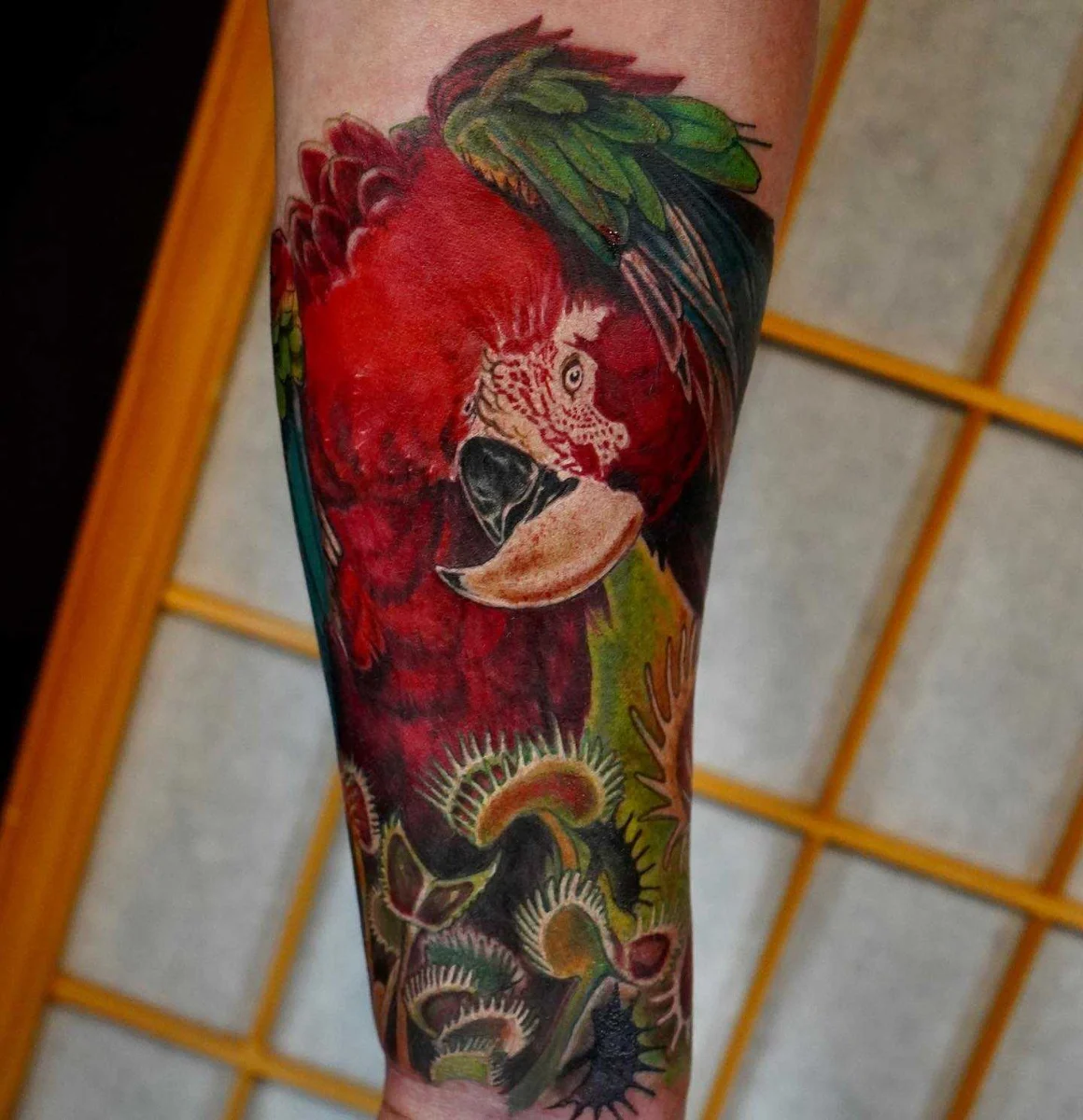
Vinny Nguyen drew a red macaw with green wing feathers above a Venus flytrap, and the saturated color runs along the length of the calf. Macaws stand for freedom and bright energy. The flytrap adds a touch of danger and the sharper side of nature. The long, narrow calf suits a tall subject like this, so the bird stands upright without bending around the muscle. Bright color needs sunscreen once healed, since calves see plenty of sun in shorts. Pick it if you love animals and want a piece that stands out.
Black and Grey Hammerhead Shark in a Whirlpool on the Calf
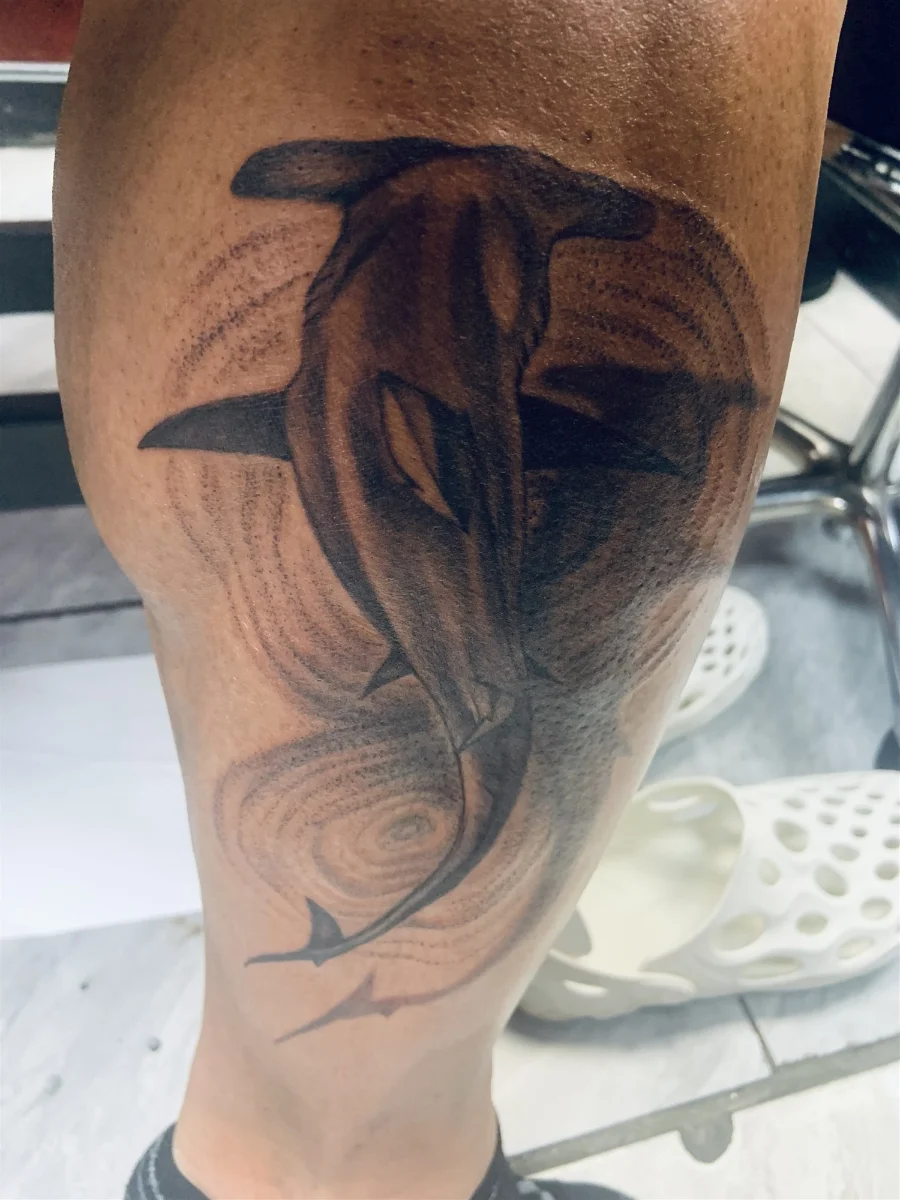
A hammerhead shark circles inside a whirlpool on the side of the calf, shaded in soft black and grey and already healed in this client photo. Sharks stand for strength, hunting instinct and moving forward without stopping. Add the whirlpool, and you get the feeling of being pulled through a rough current. The curve of the water follows the rounded side of the calf, so the shape feels natural every time you walk. Smooth gradients are what make black and grey realism look so lifelike. It’s a strong match for anyone who wants a powerful animal with a calm, moody finish.
Fine Line Compass Over a Map on the Calf
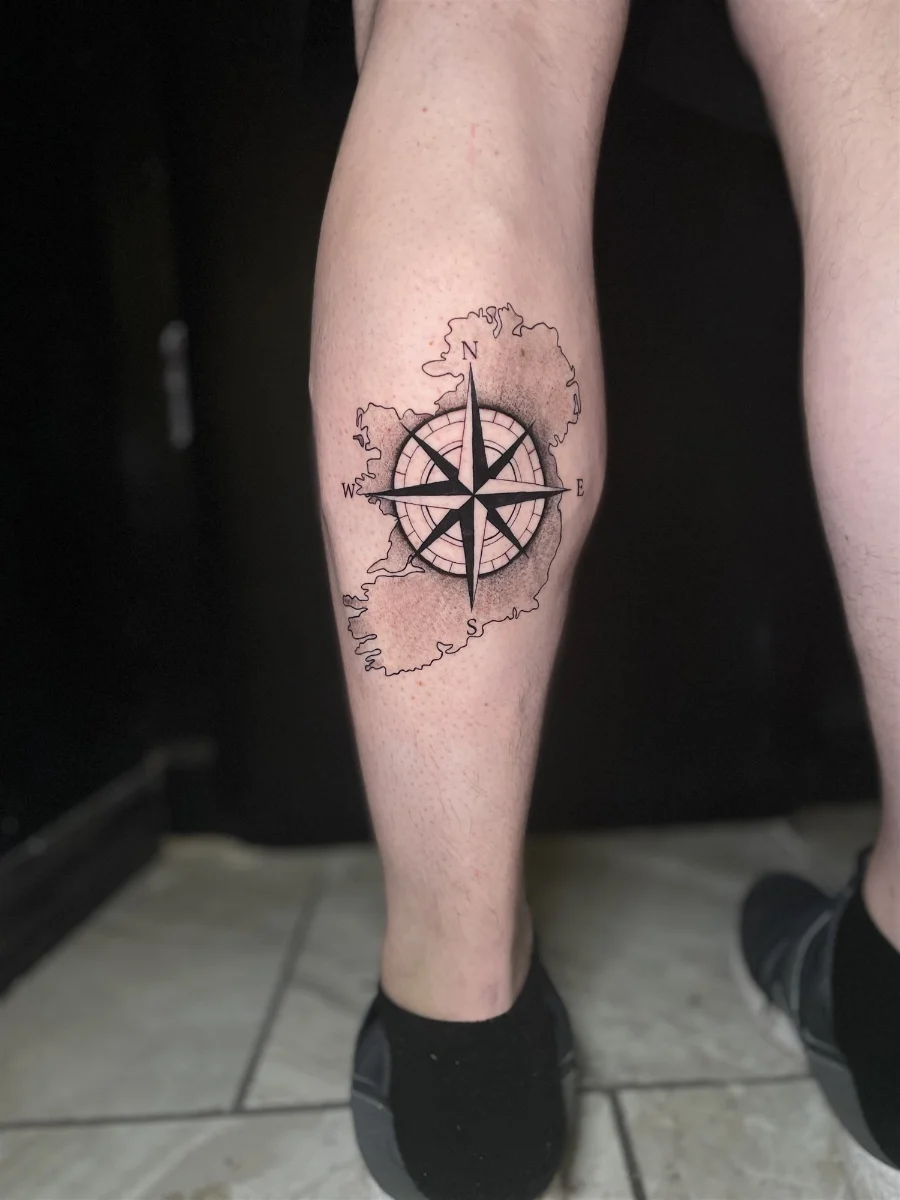
A thin compass sits over the outline of a map on the calf, drawn in fine line with plenty of bare skin around it. This piece comes from a client review of Vu Pham’s work. Compasses stand for direction, home and the road that brought you here, and the map makes the idea personal by pointing to a place that matters to you. Fine line suits small, quiet ideas, though thin lines need an artist who controls depth, so ask about it at your consultation. Travelers, people who moved far from home and first-timers will find it a good fit.
Lion and Cub With Flowers Along the Shin
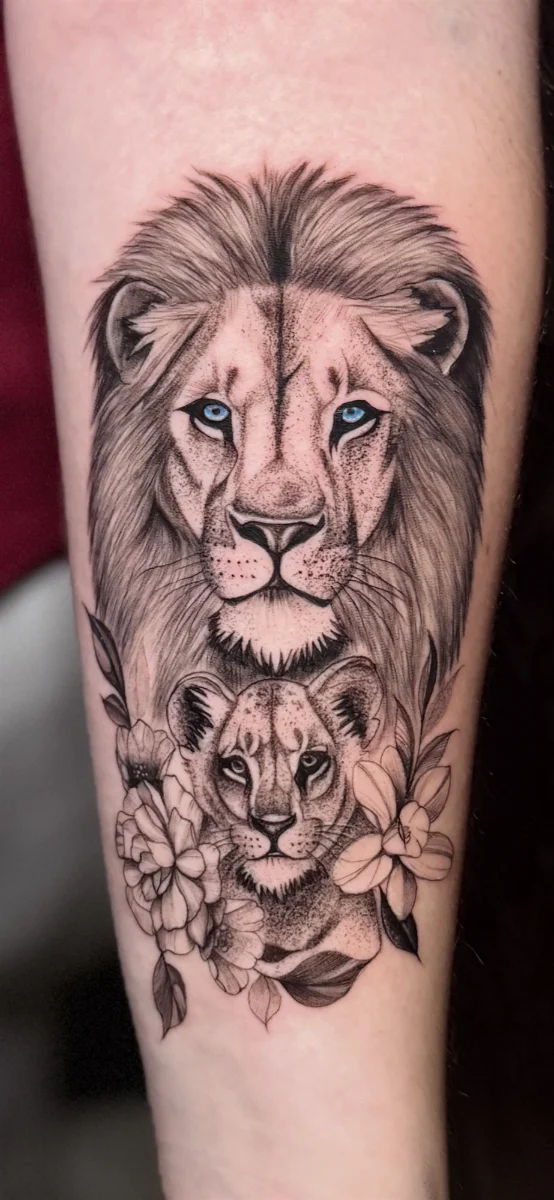
A male lion with blue eyes stands over a lion cub and a few flowers, drawn along the shin in fine line with soft realism. Vinny Nguyen is the artist, and the piece was shared in a client review. Lions stand for courage and protection, and the cub turns the design into a family story about a parent, a child or the people you’d defend. The shin is a long, narrow strip, so a vertical design that follows the bone looks sharp. The area is bony, so expect a livelier session. It’s a great choice for anyone who wants to honor a family bond, parents especially.
Gothic Lettering Curved Around the Calf Muscle
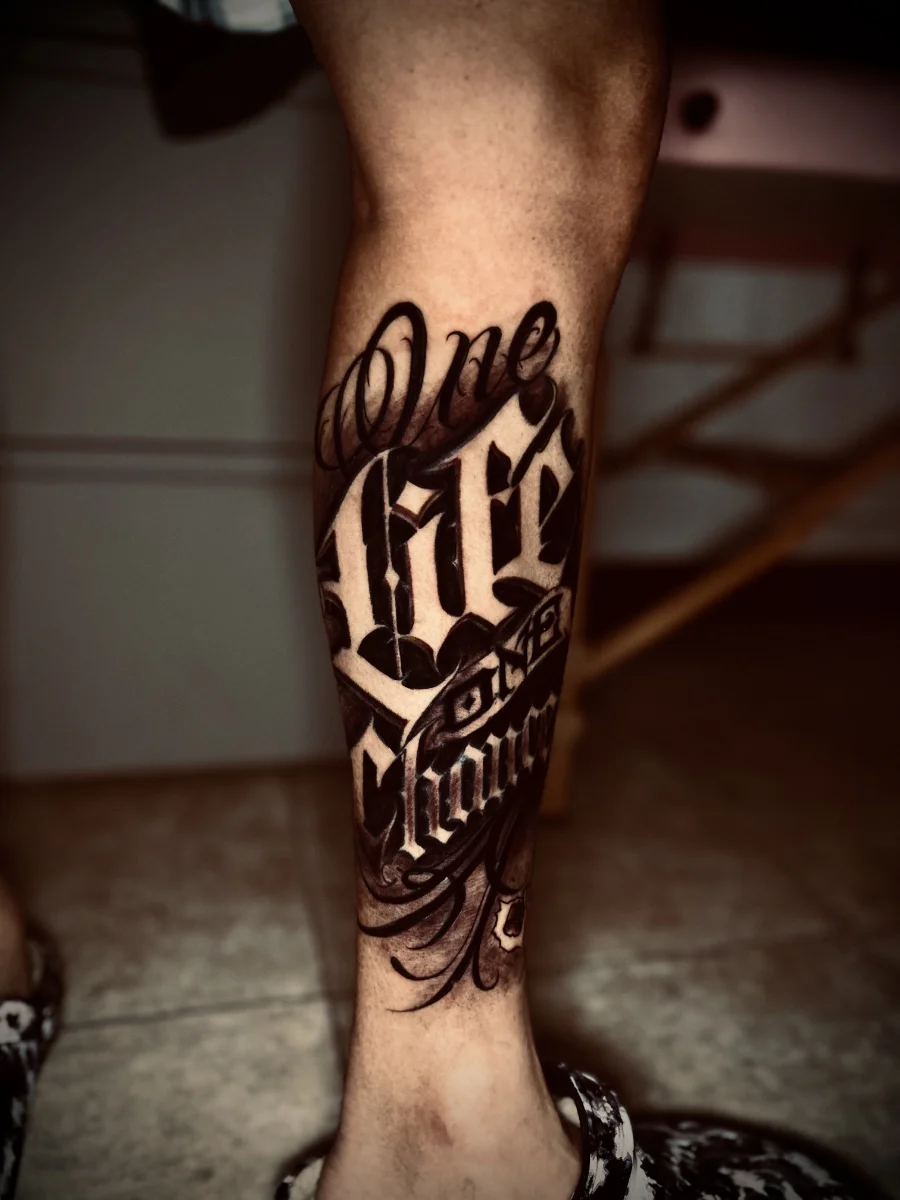
Henry set a short life motto in bold gothic black script that curves with the calf muscle, large enough to read from a few steps away. Lettering turns a personal philosophy into something you see every day, and it works as a reminder to make each chance count. Curved lines look best when the artist places the stencil while you stand, because the muscle changes shape when it flexes. Bold black holds up well over the years. It’s a good fit for people who want a message of their own instead of an image, and it needs very little skin to work.
Fine Line Jellyfish on the Back of the Lower Leg
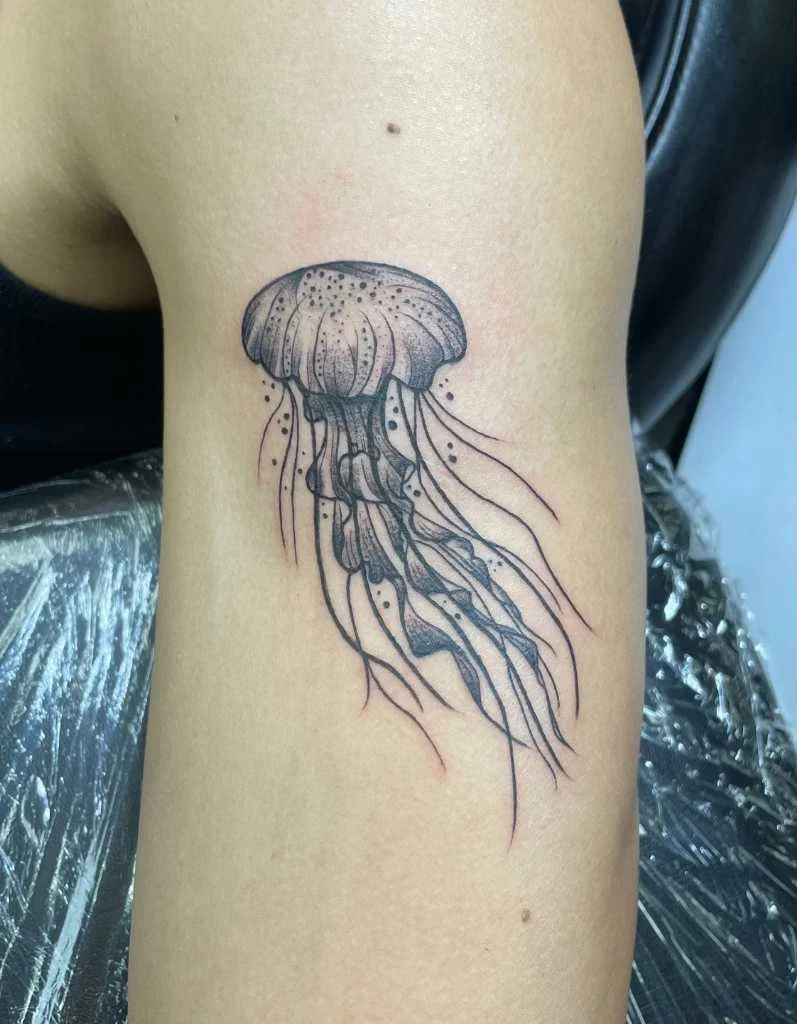
Vu Pham drew a jellyfish in fine line and light dotwork on the back of the lower leg. Thin tentacles trail down, with lots of open skin around them. Jellyfish drift with the current, so they suggest freedom, calm and a fragile kind of beauty. Those tentacles follow the calf toward the ankle, which adds movement to the piece. Fine line looks delicate but needs careful depth to last, so check healed work in the artist’s portfolio. It suits dreamers and anyone after a small, airy design that hides easily under pants.
Black and Grey Bonsai Tree on the Thigh
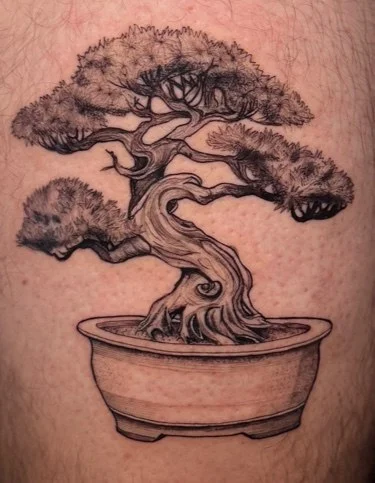
A bonsai tree in a detailed ceramic pot sits on the thigh in realistic black and grey, shared in a client review of Vu Pham’s work. Bonsai stands for patience, balance and slow growth, since the tree is shaped over many years by steady care. The pot and bark give the shading plenty to do, which shows off the depth that realism can reach. A design with this much detail works best on the thigh, where there is room to breathe. It’s ideal for anyone who values calm and persistence, so talk about scale with the artist at your consultation.
Choosing a Style for Your Leg Piece With Holistic Ink
Three styles shape most of the work that leaves our Boston studios, and each one behaves differently on a long, curved canvas like the leg. The table gives the short version. Notes below the table explain each style’s strengths and limits, so you can match the style to your idea instead of the other way around.
| Style | How the leg piece looks | Best size and placement | How it ages | Best for |
|---|---|---|---|---|
| Black & Grey Realism | Soft shading, real depth, no color | Large pieces on the thigh, calf or shin | Holds well when the contrast is strong | Animals, skulls, portraits and dark imagery |
| Color Realism | Rich, blended color with natural highlights | Thigh and calf, where the color has room | Lasts best with sun protection | Portraits, wildlife and bright symbols |
| Japanese / Irezumi | Bold outlines, wind bars and flowing backgrounds | Thigh-to-calf plans and full leg sleeves | Reads clearly for years | Big, story-driven projects |
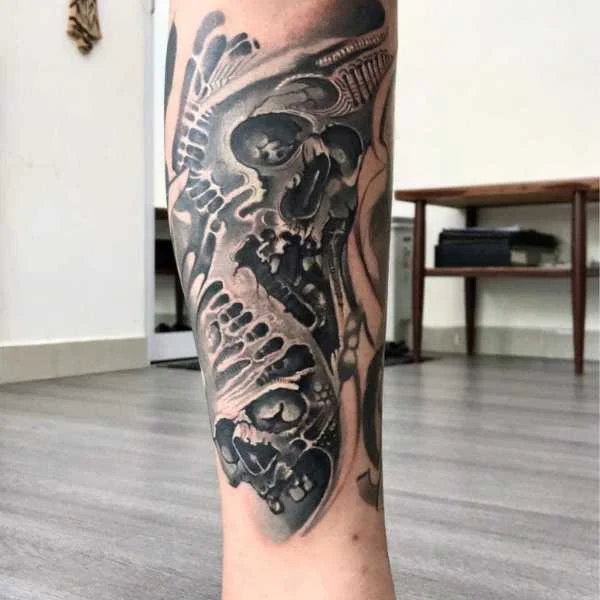
Black and grey realism builds depth with layered shading, so a skull with mechanical parts looks almost three-dimensional. The advantage over line-only styles is contrast, which keeps the design readable as the skin changes, and the benefit for you is a calm, serious look that still works from a few feet away. It needs space, and the calf and thigh offer plenty. It’s not ideal if you want a palm-sized portrait with tiny details.
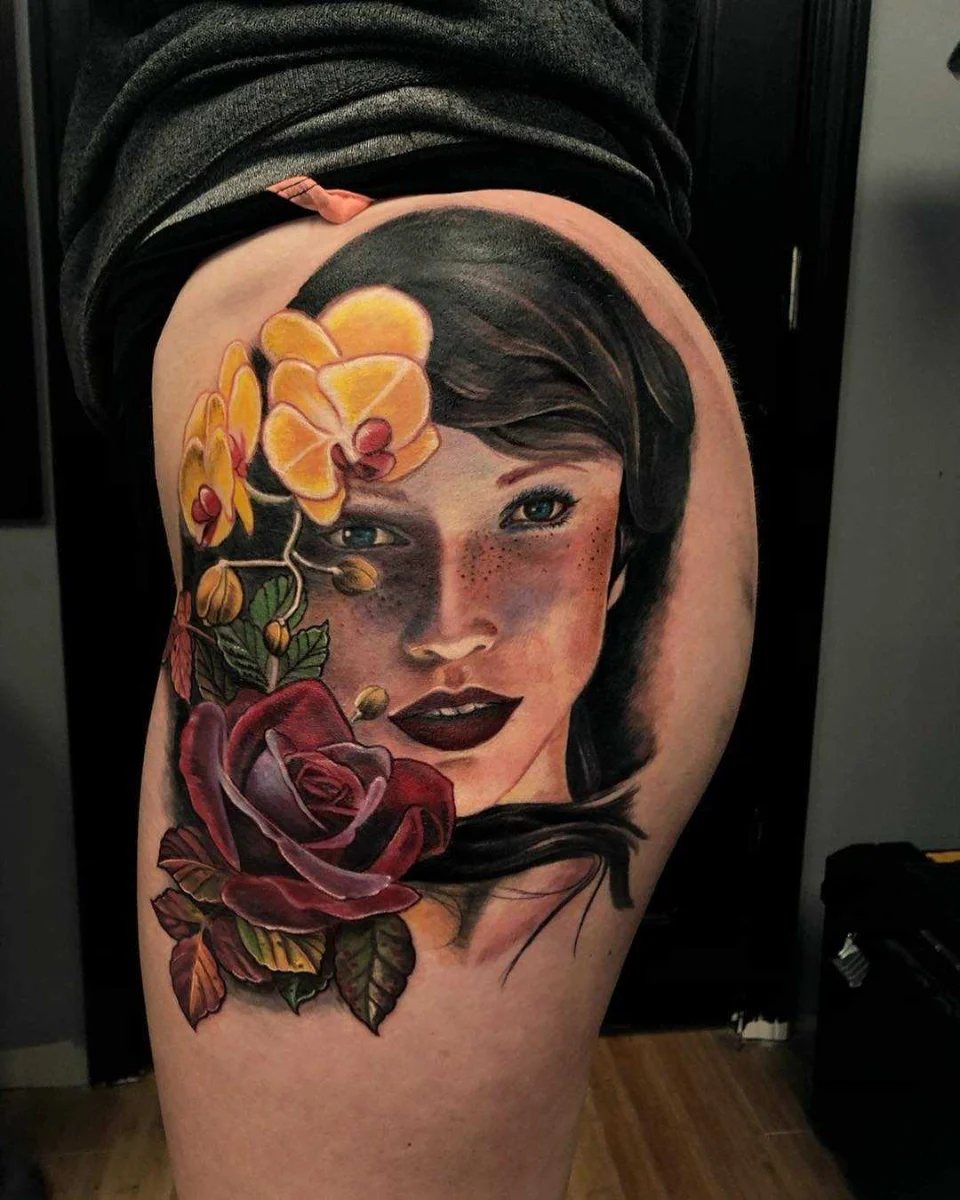
Color realism blends pigment so reds, yellows and pinks look lit from within, as in this portrait framed by orchids and roses. Layered color gives faces and flowers real life, and the design pops against bare skin. Holistic Ink artists often suggest it for people who want a tribute or a favorite character in full color. It asks for good sun habits, since bright colors fade faster without them.
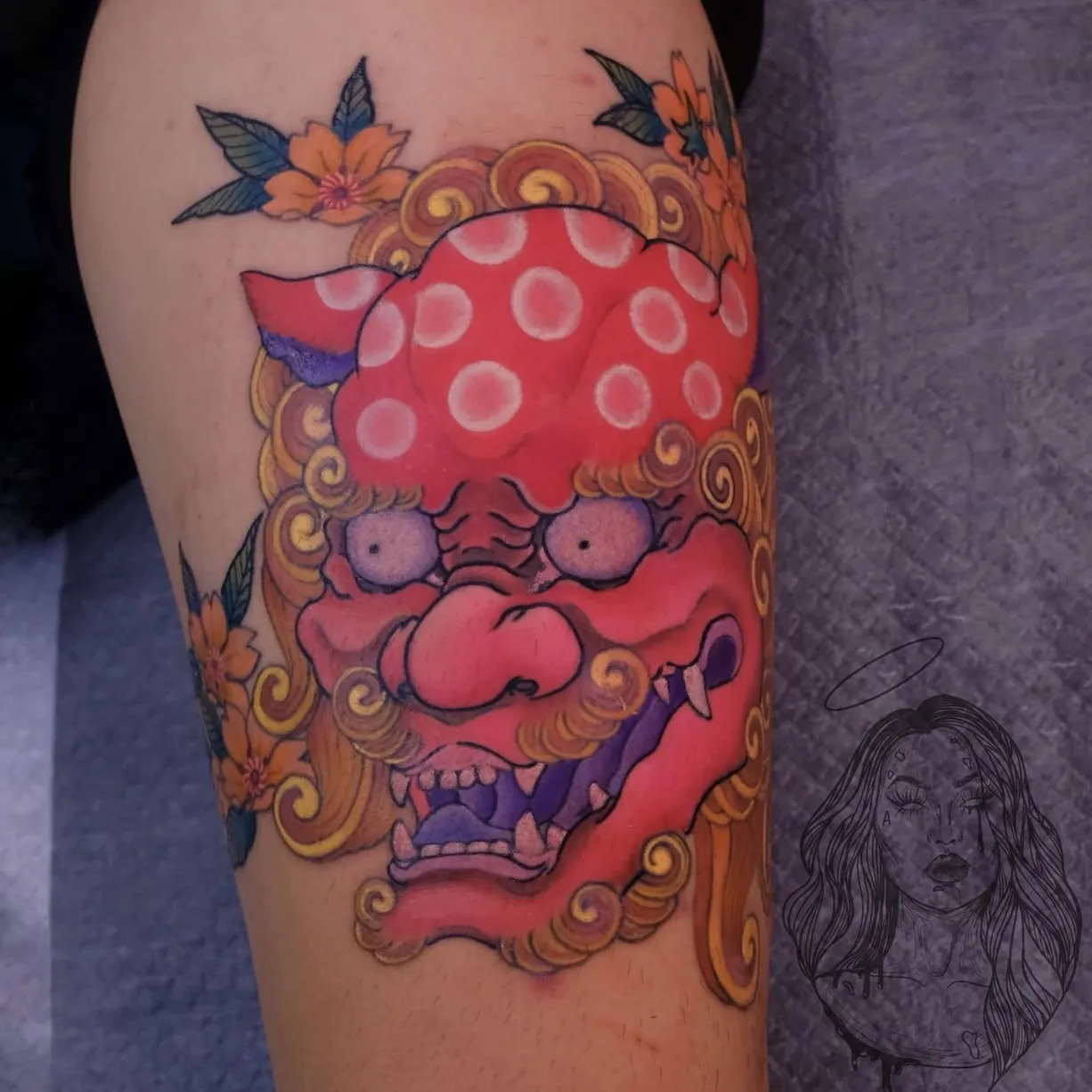
Japanese work uses bold outlines, wind bars and flowing backgrounds so that a big design stays legible for years, and this foo dog with blossoms shows how well it fills a thigh. The advantage is storytelling on a large scale, and the benefit is a piece that can grow into a full sleeve without looking pieced together. It’s not ideal for tiny, fast projects, because the style depends on the background.
Fine line and lettering also look great on the leg. Fine line suits small, quiet ideas and first visits, while lettering gives you a bold personal message in very little space. Ask your artist which one fits your idea best.
Common Mistakes, Cost Factors and Long-Term Durability
Most regrets about a leg piece come from planning, not from the needle. A few habits cause the majority of problems, and almost all of them are easy to avoid. Run through this list before you commit:
- Don’t pick a design from a flat photo without checking how it wraps around the muscle.
- Avoid tiny, crowded details, since small lines blur together as the skin ages.
- Insist on a stencil check while you stand, walk and sit, because the leg changes shape in each position.
- Skip the cheapest quote, since low prices often mean rushed shading and weak line work.
- When a sleeve is the goal, plan the first section so it connects to the rest.
Price depends on size, level of detail, color, the number of sessions and the artist’s experience, and an honest quote only comes after the artist sees your design and the exact spot. That’s why Holistic Ink prices pieces at a consultation instead of guessing from a photo. Bring reference images and ask for a session estimate.
Durability depends on what the skin meets every day. Socks, shoes and tight pants rub the lower leg, and sun fades color on days in shorts. Bony areas like the shin hold ink differently than soft areas like the thigh, and weight or muscle changes can stretch a design over time. Daily sunscreen once the skin has healed protects the ink, and a touch-up years later is normal for large color areas. Old pieces can often be covered with a darker, larger design, so ask the artist about a cover-up before you give up on them.
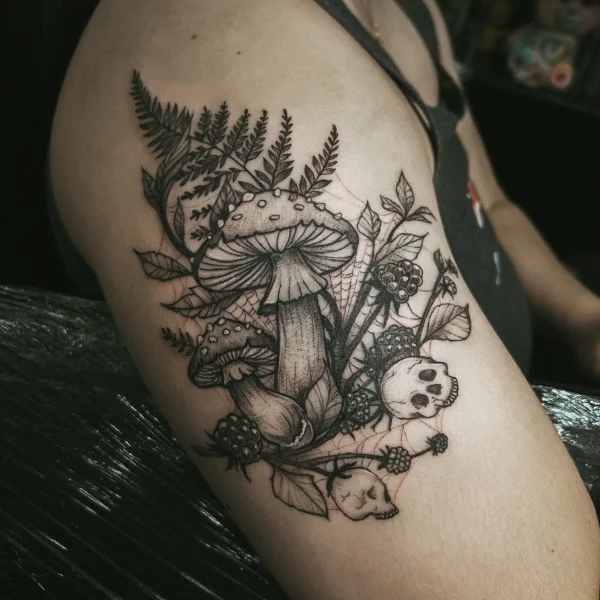
This hand-drawn mushroom, skull and fern shows what good planning looks like on a muscular surface. The lines flow with the shape of the thigh instead of fighting it, and the open space around the design keeps every detail clear.
Placement Guide for the Thigh, Knee, Shin and Calf
Your leg isn’t 1 spot but many, and each one changes how a design looks, how it feels and how it ages. Thigh and calf give the most forgiving surface, while the shin, knee and ankle ask more from you and from the artist. Use the table to match the spot to your idea.
| Area | Pain level | Design that fits | Style that suits |
|---|---|---|---|
| Front and outer thigh | Low | Portraits, large florals, animals | Black & Grey Realism, Color Realism |
| Inner thigh | High | Small, simple pieces | Fine line, minimal black work |
| Just above the knee | Moderate | Bold shapes with strong outlines | Japanese / Irezumi, neo-traditional |
| Knee and back of the knee | High | Compact, symmetrical designs | Bold black work, traditional |
| Shin | High | Long vertical designs, lettering | Fine line, Black & Grey Realism |
| Calf | Low | Tall animals, florals, wrap-around pieces | Color Realism, Japanese / Irezumi |
| Ankle and Achilles | High | Small bands, short words | Fine line, minimal black work |
Pain varies by person, so treat the table as general guidance only. Your own skin and your artist’s technique both change how a session feels.
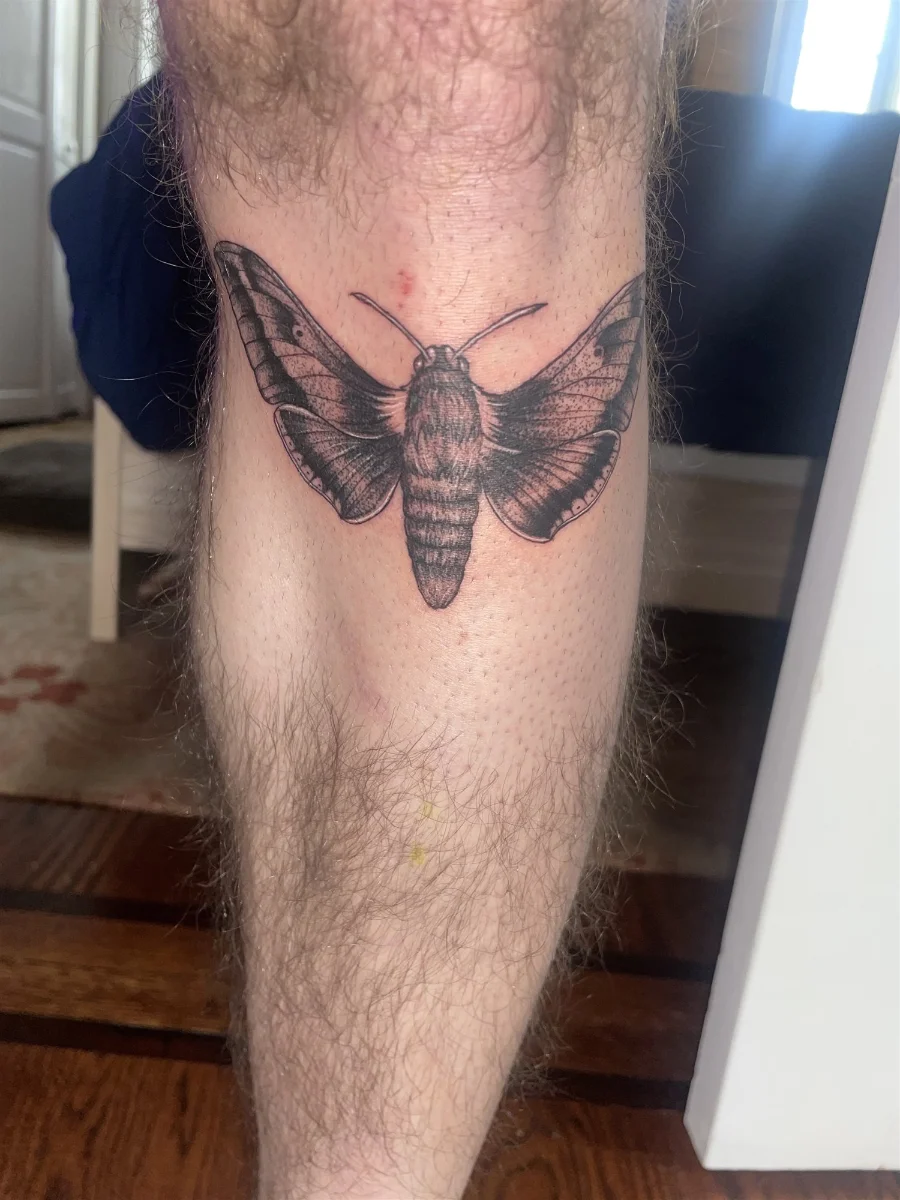
The area just below the knee sits between the shin and the calf, which makes it a good home for a compact design with a strong center. This hawk moth from a client review fits that spot, with its wings spread flat and its shading kept simple. Skin near the knee moves every time you bend, so ask your artist how to plan around the crease so the design doesn’t fold in half.
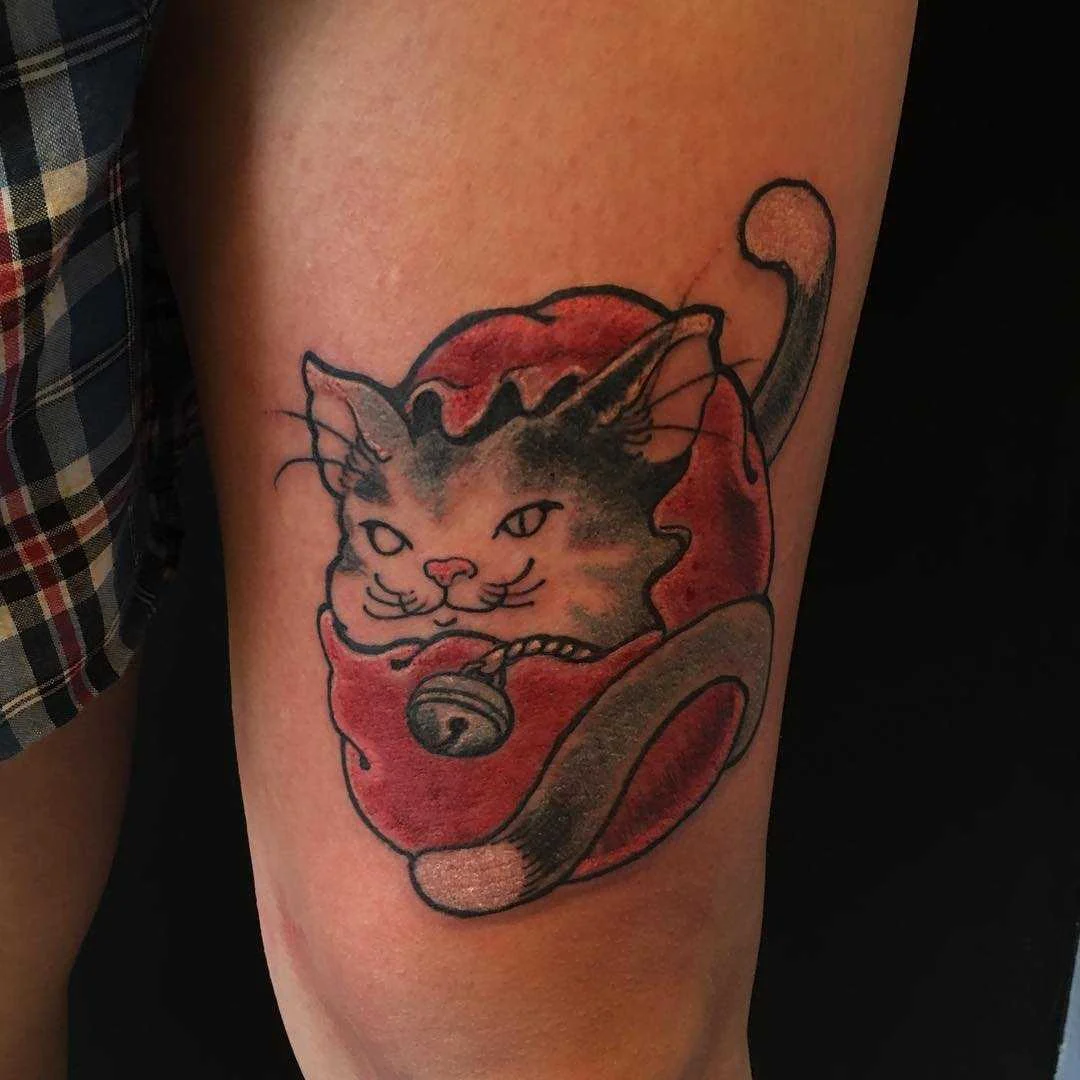
The thigh above the knee suits round and compact shapes, and this lucky cat in a red circle shows the idea. A circle gives the eye a clear border, so the design stays tidy even when the leg bends. The opposite is true for the inner thigh and the bony areas around the knee. They’re tender and rub against clothes or the other leg, so keep designs there simple and expect a slower heal.
Your Tattoo Journey From Consultation to Healed Skin
Every leg piece follows the same steps, and knowing them makes the day feel calm. At Holistic Ink the process starts with a consultation, where the artist looks at your idea, your reference images and the exact spot on the leg. You talk about size, style and how the design will flow with your muscles.
Next comes the stencil, a thin print of the design placed on your skin. Stand, walk a few steps and sit while the artist checks it, since the leg looks different in each position. Move the stencil until it feels right, because a few minutes of adjusting now saves years of second-guessing. The session itself starts with the outline, then moves into shading and color. Bring water and a snack, and ask for a break whenever you need one.
Aftercare begins the moment the artist wraps the piece. The first 2 weeks matter most. Legs take a beating from socks, shoes and daily movement, so keep this list handy while it heals:
- Wash and dry the area the way your artist showed you.
- Put on a thin layer of moisturizer, not a thick coat.
- Wear loose pants or shorts and soft socks so fabric doesn’t rub the fresh ink.
- Keep the leg raised when you sit, since swelling can build up near the ankle.
- Skip heavy leg days at the gym until the skin calms down.
- Don’t pick or scratch the flaking skin, since that can pull ink out.
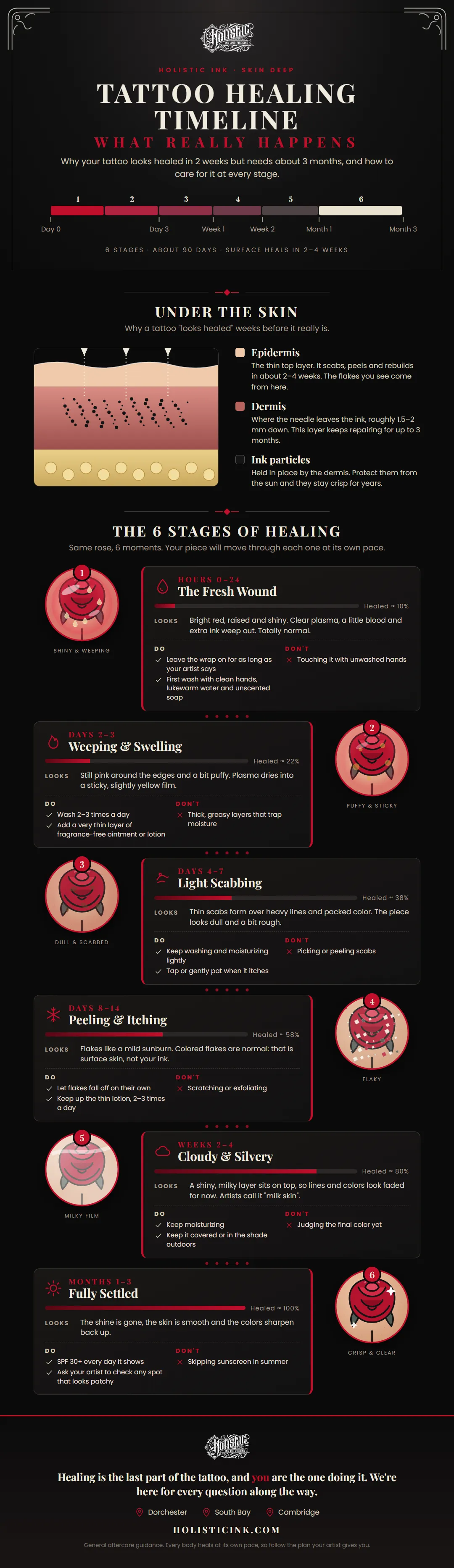
Long-term care is simple. Use sunscreen on healed skin, moisturize now and then, and book a touch-up if a line or a patch of color softens. The infographic below shows the healing timeline and what happens under the skin as each stage passes.
Quick Answers Before You Book
How long does a leg sleeve take to finish?
A full sleeve is a long project that usually takes several sessions spread over weeks or months, depending on size and detail. Artists work in stages so the skin can rest between visits. Your artist will map out the plan at the consultation, so ask for a session estimate before you start.
How much does a leg sleeve cost?
The price depends on size, detail, color and how many sessions the work needs, so no honest number exists until an artist sees the design and the area. Bring clear reference images to a consultation and ask for a session estimate. Compare the quote with the artist’s portfolio, not the total alone.
Can you walk and go to the gym after a leg tattoo?
Light walking is usually fine and often helps with swelling, but long runs, deep squats and sweaty workouts can irritate fresh ink. Stay out of pools and the ocean until the skin has healed. Ask your artist how long to rest, since larger pieces need more time.
Is the shin really the most painful spot on the leg?
Many people find the shin sharp because the skin sits thin over the bone, with little muscle or fat to cushion the needle. The calf and thigh usually feel easier. Everyone is different, so tell your artist if you need a pause.
Ready to Start Your Leg Piece With Holistic Ink
Good leg work starts with a clear idea, a style that suits it and a spot that makes sense for your body. You’ve now seen 10 designs with real meanings and the 3 styles our artists specialize in. Placement and aftercare steps that protect the result are covered too. If something here sparked an idea, bring it along, and book a consultation to talk through size, style and timing with an artist in Boston.
Ready for a bigger piece?
Our artists are known for large-scale work in 3 styles. Start with the one that fits your idea:
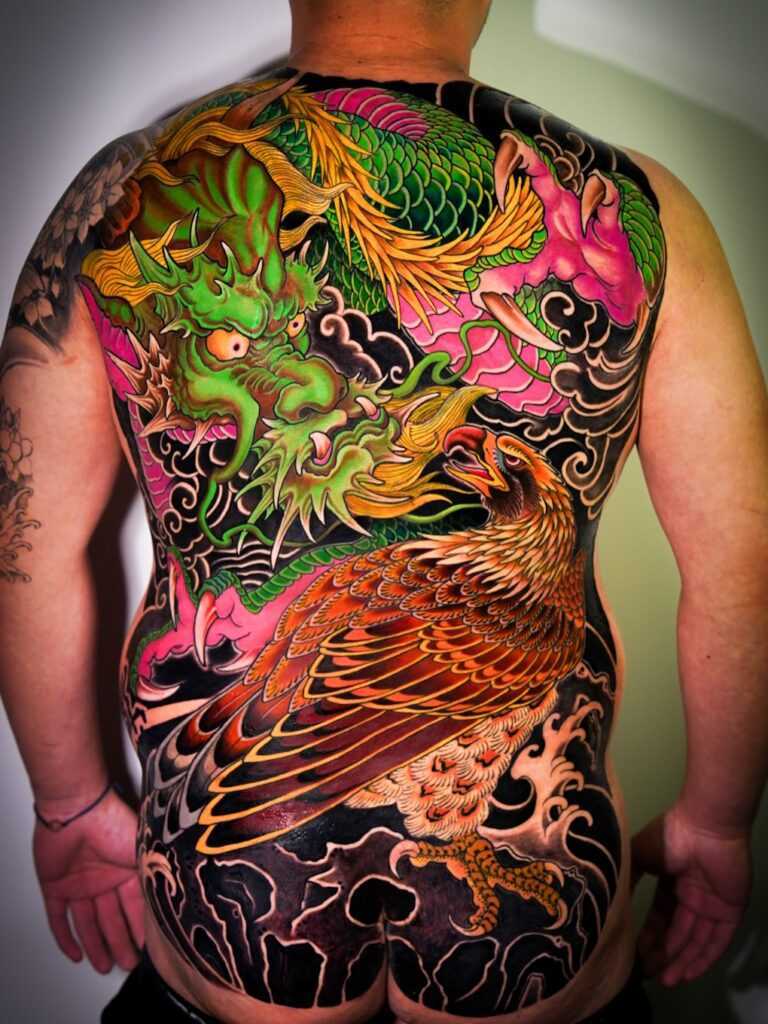 Best matchJapanese IrezumiDragons, koi, deities and full backpieces with traditional flow.
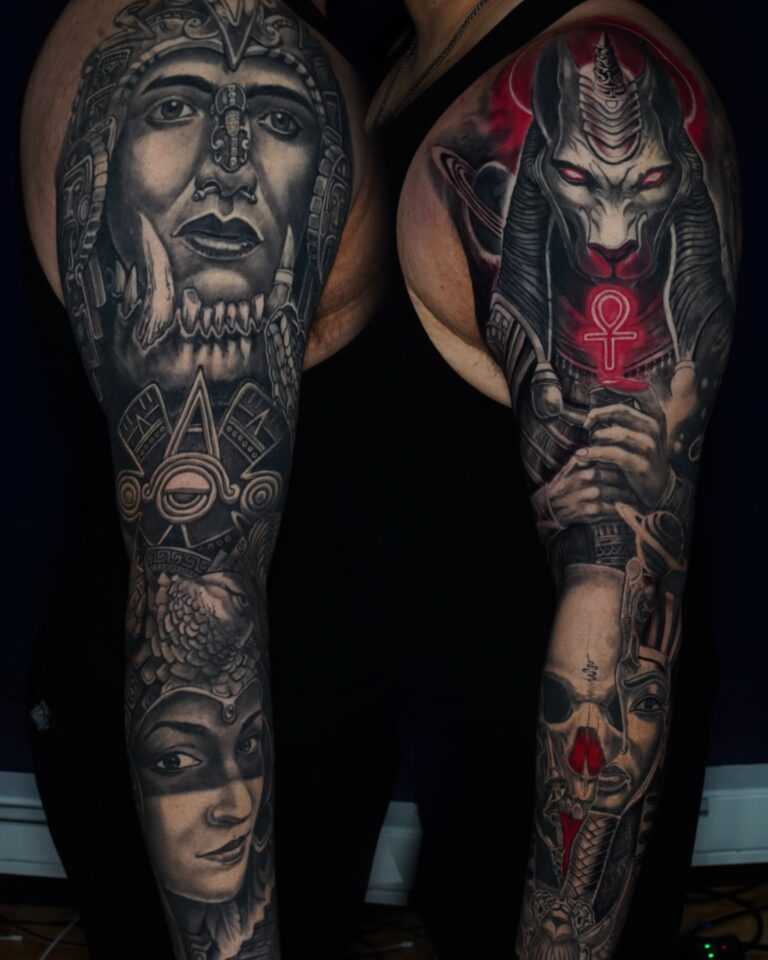 Black & Grey RealismPortraits, animals and sacred art in soft, deep shading.
 Color RealismSaturated, lifelike color for sleeves and large scenes.Signature project · Japanese IrezumiDragon Backpiece: 66 Hours, 3 Artists, Best of ShowPlacementFull backTime66 hours over 3 daysArtists3 artists, including Vinny NguyenSee the full project →
Bring your reference and placement. We plan large work session by session with you.
We also tattoo American traditional, fine line, script and small tattoos. Browse all styles →