
A spine tattoo naturally enhances the body’s silhouette while creating an elegant visual flow from the neck to the lower back. Whether you prefer a fine line floral design, a meaningful symbol, or a minimalist composition, this placement offers endless creative possibilities. At Holistic Ink, we have helped women create tattoos that reflect both personal style and lasting meaning. This guide features 30 tattoo inspiration ideas, along with practical advice to help you choose the right design with confidence.
30 Elegant Spine Tattoo Ideas for Women
The spine offers a canvas unlike any other. Vertical, centered, and deeply tied to the body’s core structure, it suits designs that are deliberate and proportionate. Below are 30 ideas grouped by visual style and symbolic theme — each explored in enough depth to help you decide whether it belongs on your body.
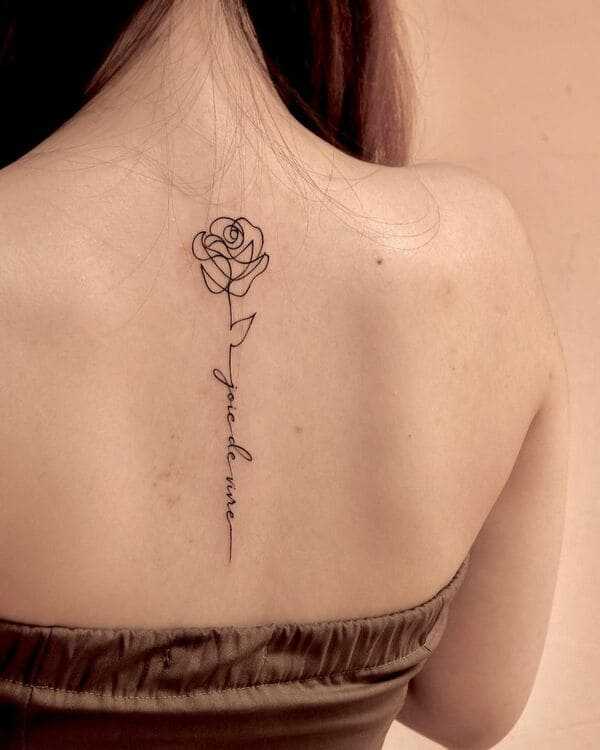
1. Single Stem Rose Fine Line
A single rose drawn in fine line along the upper spine remains one of the most enduring choices in feminine tattoo design. The stem follows the natural curve of the vertebrae while the bloom rests between the shoulder blades, creating a composition that feels restrained yet romantic. Its timeless simplicity also allows the design to age gracefully. Artists typically recommend keeping the stem under 20 cm to maintain balanced proportions across the upper back.
2. Lotus Flower Vertical Stack
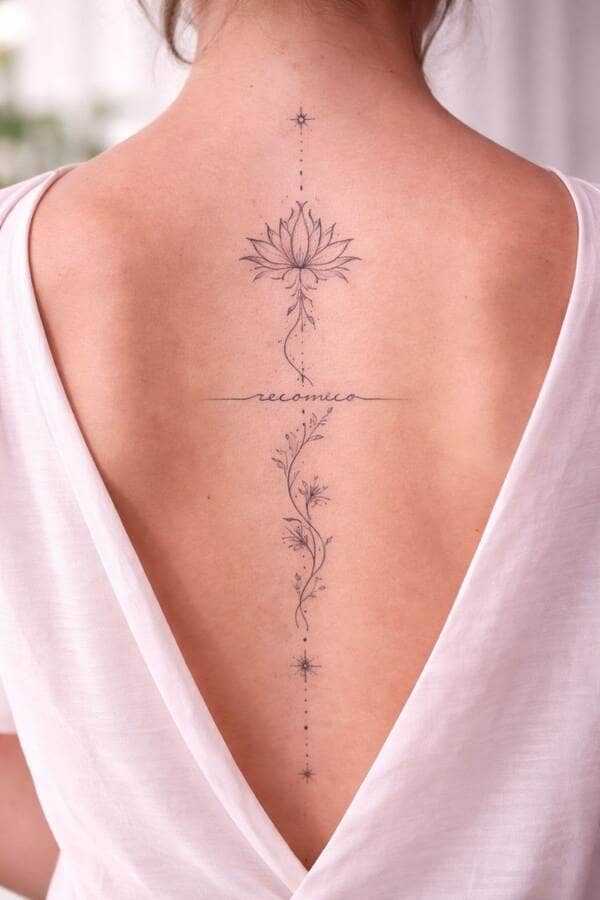
The lotus is tattooed along the spine more than almost any other floral tattoo motif, and for good reason. A vertical stack — bud at the base, open bloom at the top — mirrors the idea of upward growth from difficult ground. This placement gives the design room to breathe without requiring excessive coverage. The symbolic weight of resilience and spiritual transformation makes it a meaningful choice beyond its visual appeal.
3. Moon Phase Sequence
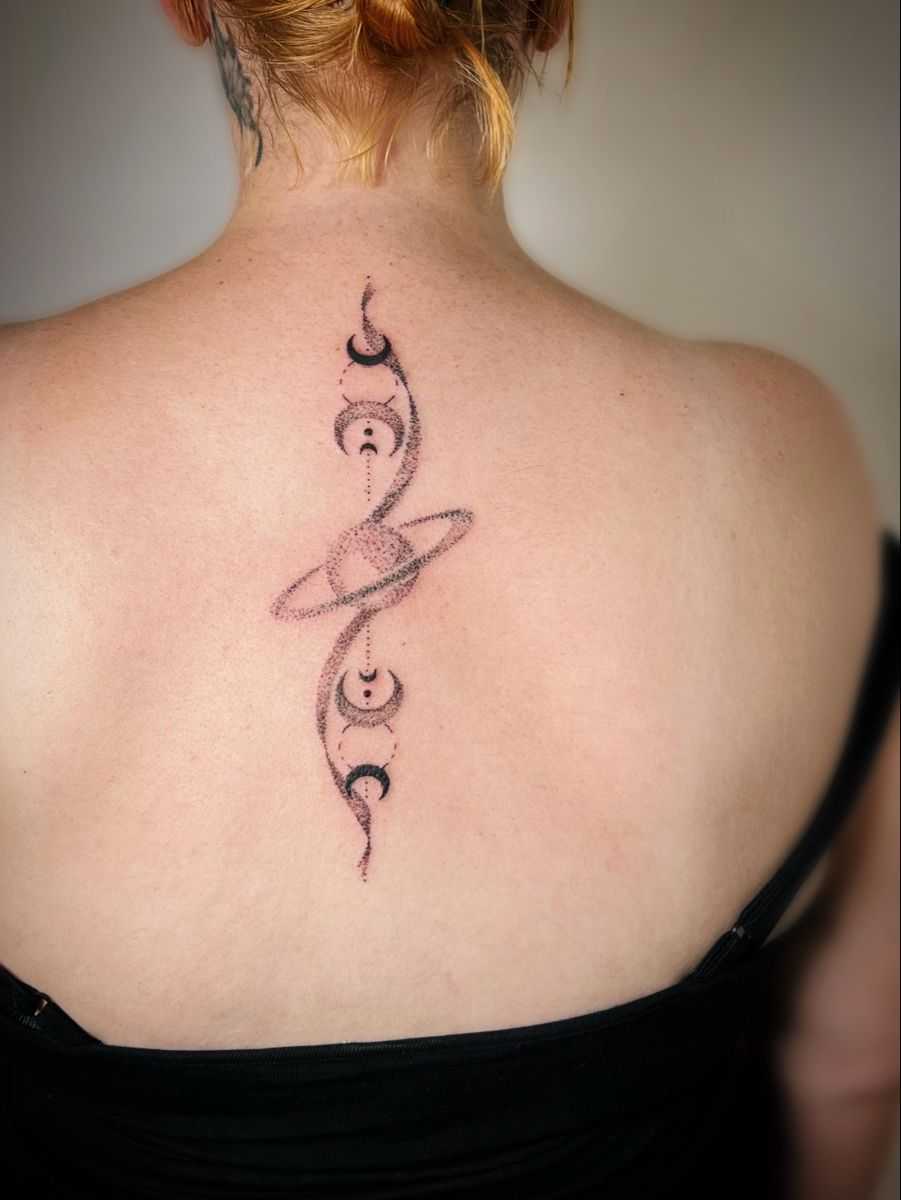
Moon phases arranged from the nape of the neck to the mid-back have become a popular celestial tattoo concept for women in contemporary studios. Each phase — new moon, crescent, half, gibbous, full — creates a visual rhythm down the spine. Women often connect this design to personal cycles: change, loss, renewal. The negative space between each moon keeps the composition airy rather than dense.
4. Mandala Centerpiece with Extending Linework
A single mandala placed at the center of the back, with fine geometric linework extending upward and downward, creates a design that is both symmetrical and dramatic. Mandala-based spine body art draws from sacred geometry traditions, using repeating radial patterns to suggest balance and inner harmony. The key is ensuring the linework tapers gradually so the design narrows naturally at both ends.
5. Snake Winding Down the Spine
A snake tattoo gains particular power on this placement. The natural S-curve of the spine mirrors the movement of a serpent, making the anatomy itself part of the design. Symbolic associations include transformation, duality, and the shedding of what no longer serves. In fine line execution, the scales are suggested rather than rendered in full — keeping the piece elegant rather than aggressive.
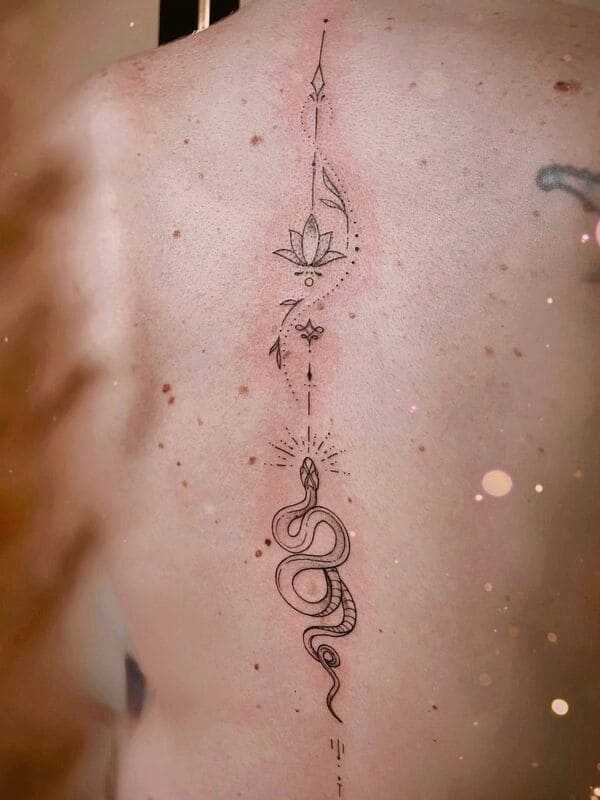
6. Botanical Branch with Leaves and Seeds
A long botanical branch illustrated in delicate fine line offers a versatile option for women seeking an organic and understated design. It can be adapted to any length, wrapping slightly around the ribs if needed. Leaves and seed pods add textural detail without requiring heavy shading. This type of delicate tattoo reads as nature-inspired and contemporary, while remaining timeless in its simplicity.
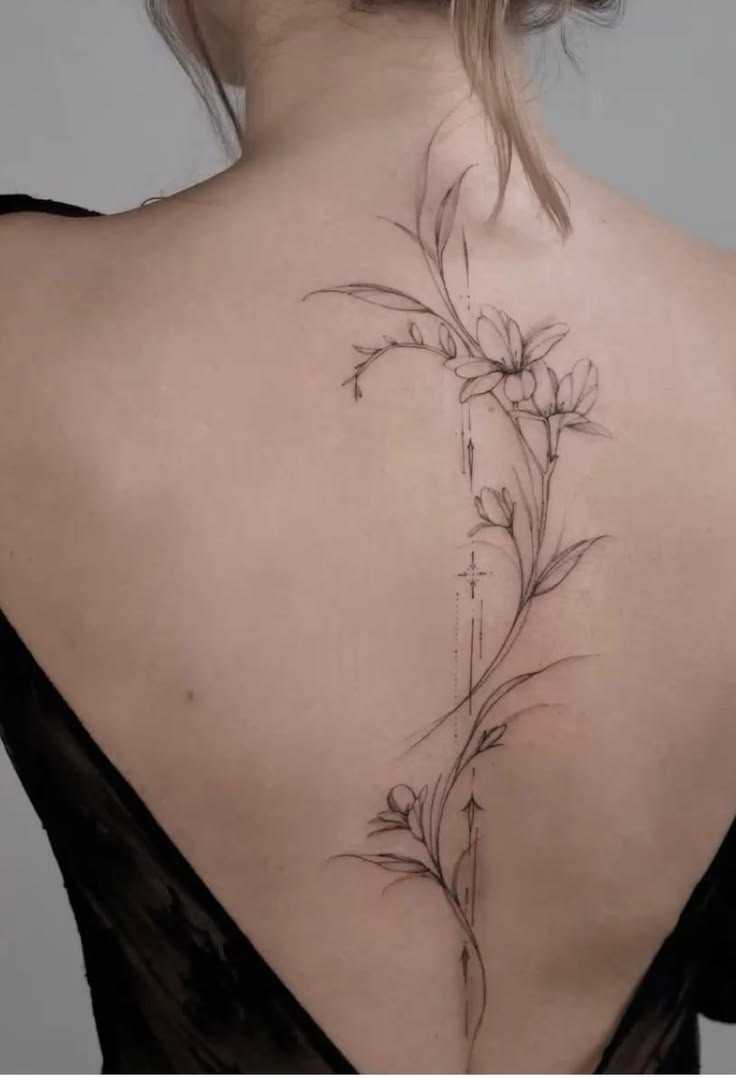
7. Butterfly Column
A vertical arrangement of two to four butterflies, spaced at intervals down the spine, creates movement while maintaining an elegant artistic composition. Each butterfly can be rendered slightly differently — one with wings open, another mid-flight — to suggest transformation in progress. The butterfly carries established meaning around freedom, personal evolution, and rebirth, making this arrangement a narrative as much as a decorative composition.
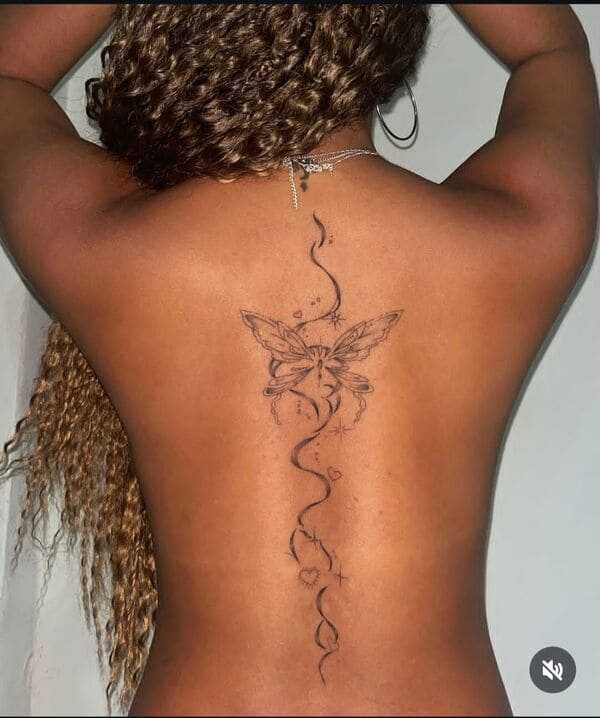
8. Script Quote in Flowing Calligraphy
A single sentence or short phrase rendered in fine calligraphic script creates one of the most personal tattoo designs in this collection. The key is brevity. A long quote loses legibility along a curved surface. One to two lines, chosen with care, can carry more weight than an entire paragraph. Languages other than English — Latin, French, Sanskrit — add a layer of aesthetic intentionality that many women find appealing.
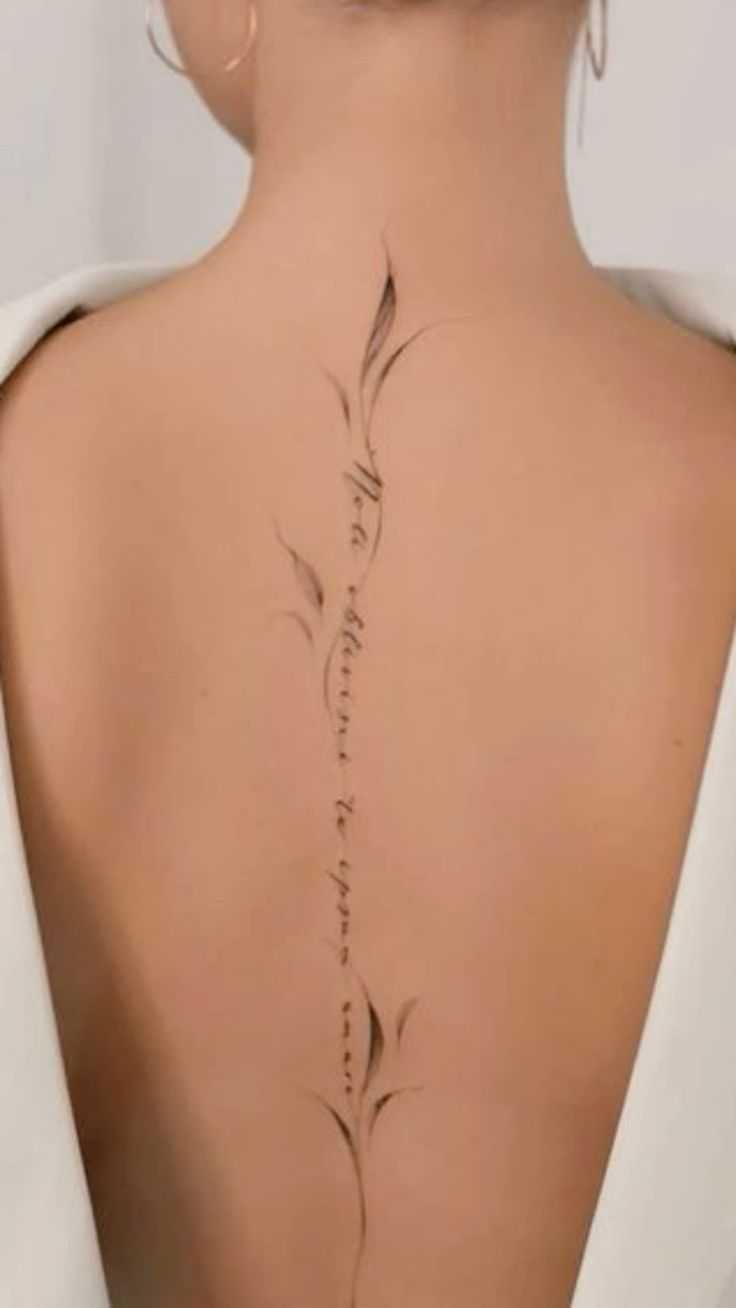
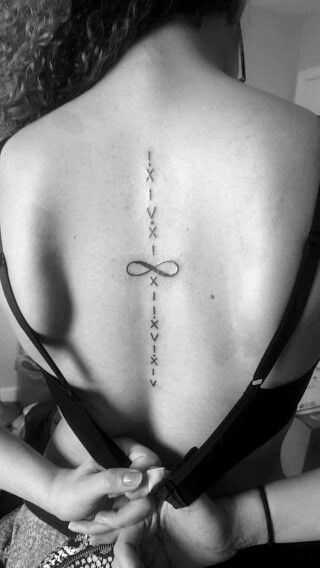
9. Roman Numeral Date
Roman numerals in a vertical column offer one of the most minimalist ways to mark a significant date. It may commemorate a birth date, a year of loss, or a year of survival. The numerals, stacked in single digits or arranged in short rows, read cleanly against the spine without requiring artistic complexity. This body design works particularly well for women who want something deeply personal but visually quiet.
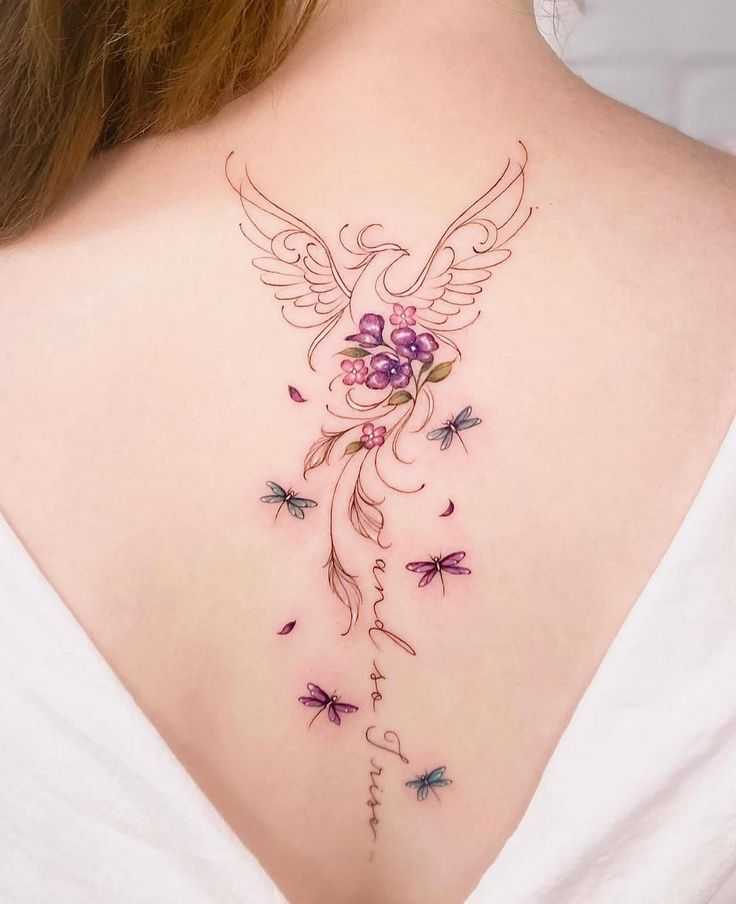
10. Phoenix Rising
A phoenix depicted in elongated, upward-reaching form is one of the few figurative designs that truly benefits from the length of the spine. The tail feathers begin at the lower back, the body extends through the mid-spine, and the head and wings reach toward the shoulder blades. The symbolism — rebirth, rising from hardship, transformation through fire — is well-matched to the backbone as a structural metaphor.
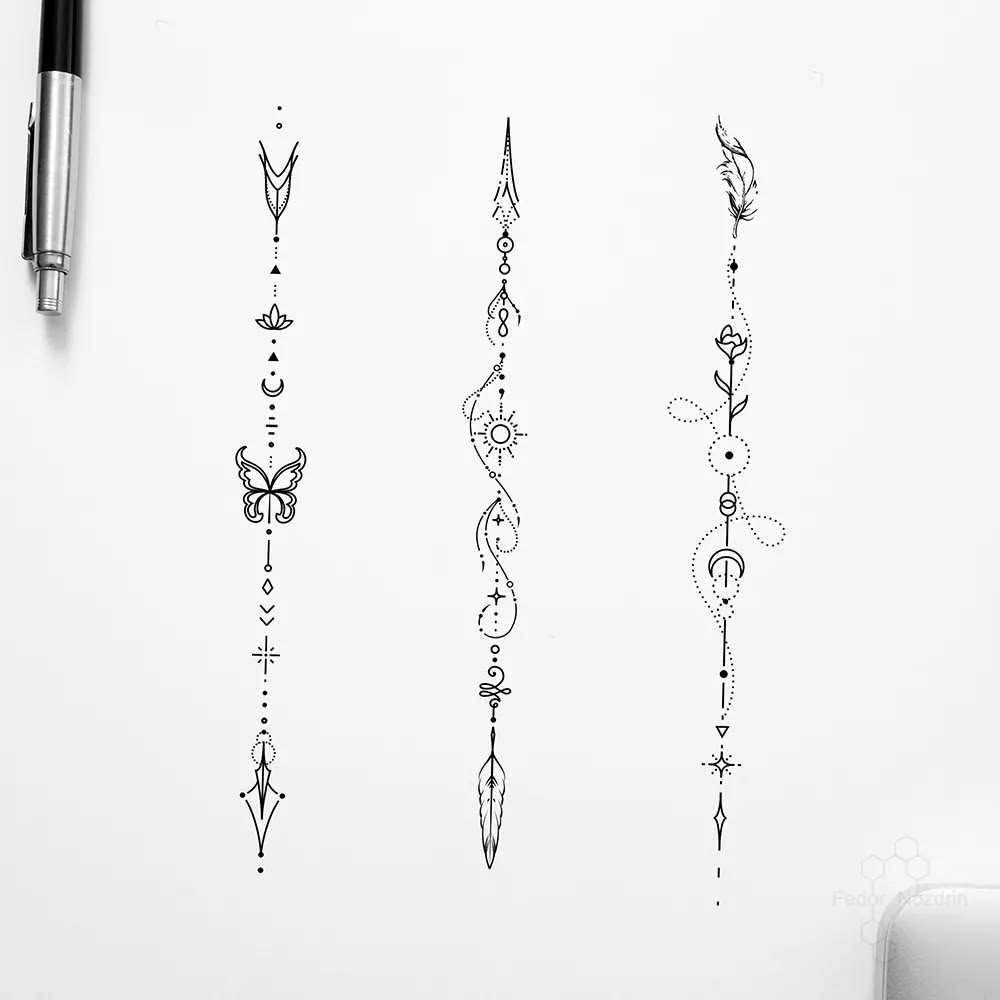
11. Geometric Arrow
A single arrow pointing upward along the spine creates a clean, graphic statement with timeless appeal. Clean geometric lines, a defined arrowhead, and minimal ornamentation keep the design sharp and contemporary. Many women choose to add small geometric accents — diamonds, triangles, or dots — along the shaft for added visual interest. The arrow has long symbolized direction, focus, and the determination to move forward.
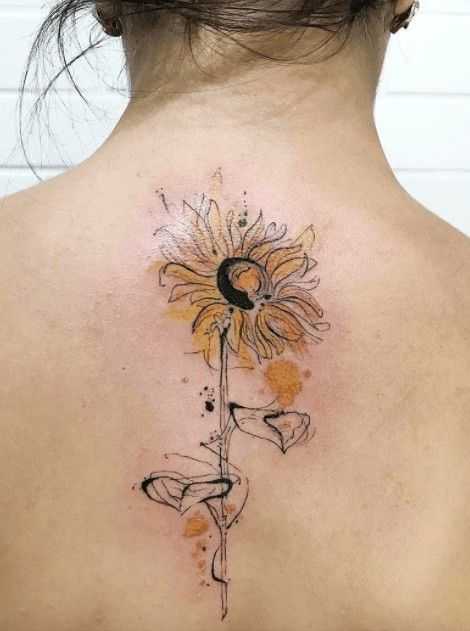
12. Sunflower with Stem
A sunflower rendered in fine botanical illustration style, with its stem aligned vertically along the spine and its bloom facing upward, carries connotations of optimism, vitality, and loyalty. Unlike roses, sunflowers are less common in spine compositions, which gives this choice a degree of originality. The large bloom works best centered between the shoulder blades, with the stem running into the mid or lower back.
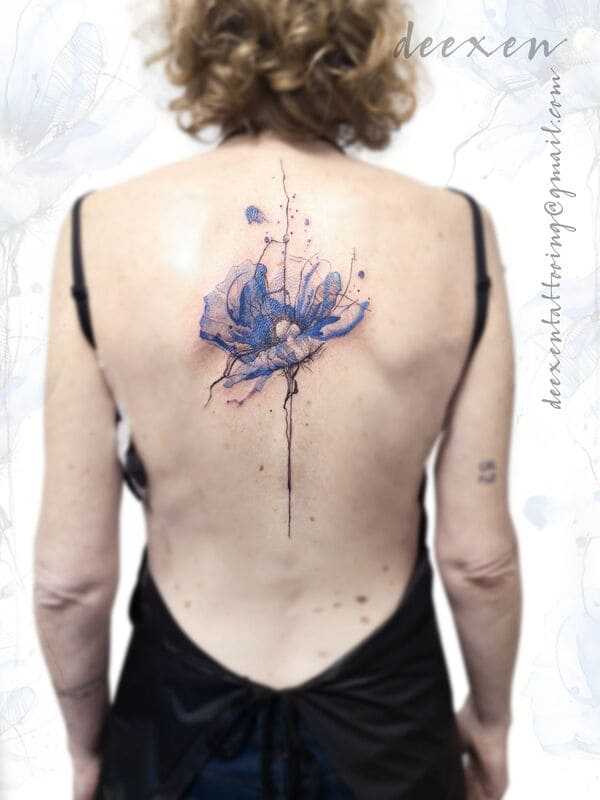
13. Watercolor Floral Wash
Watercolor technique applied to a floral composition creates a design that appears painted directly on skin — soft color bleeds, organic edges, no heavy outlines. This style suits anyone looking for traditional tattoo aesthetics with a softer artistic appearance. On the spine, a vertical watercolor floral arrangement reads as fluid and expressive. It requires an artist with specific experience in this technique, as watercolor work requires precise saturation control for long-term durability.
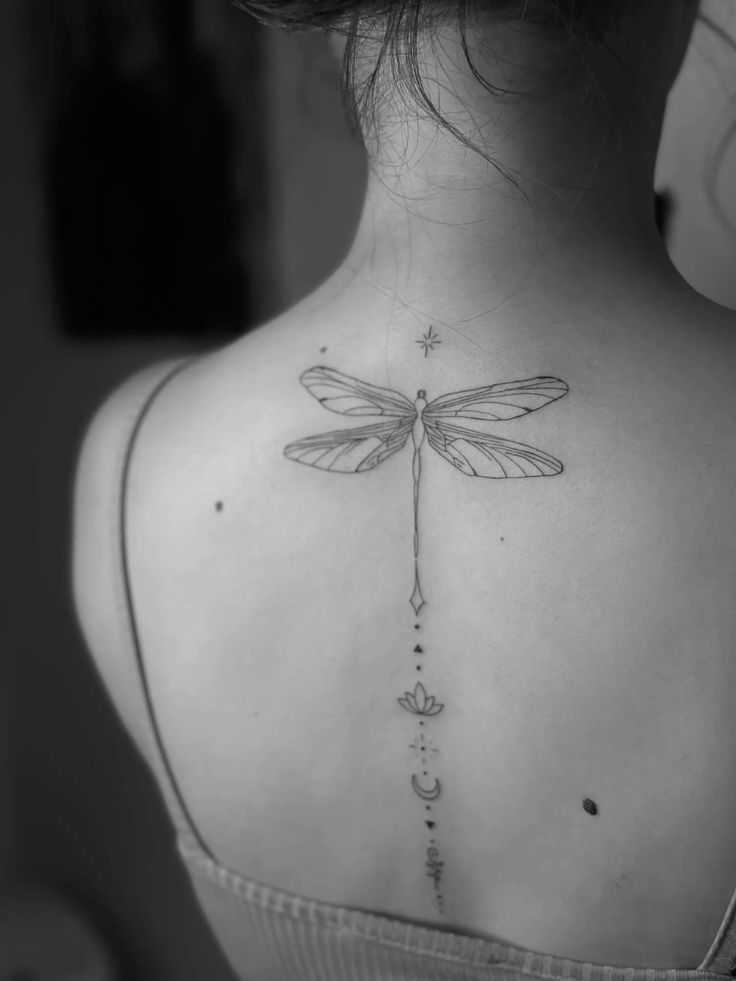
14. Dragonfly in Fine Line
The dragonfly, rendered in fine line with delicate wing detail, sits naturally on the upper or mid-spine. Its horizontal wingspan contrasts with the vertical spine, creating a balanced cross-like composition. The dragonfly carries symbolic meaning around adaptability, lightness, and the ability to shift perspective — themes that resonate with many women who choose meaningful body art.
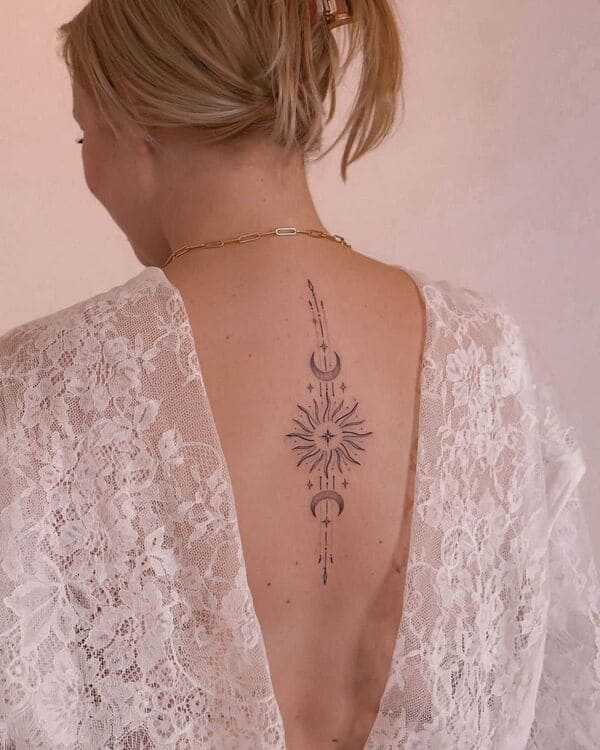
15. Celestial Sun and Crescent Moon Stack
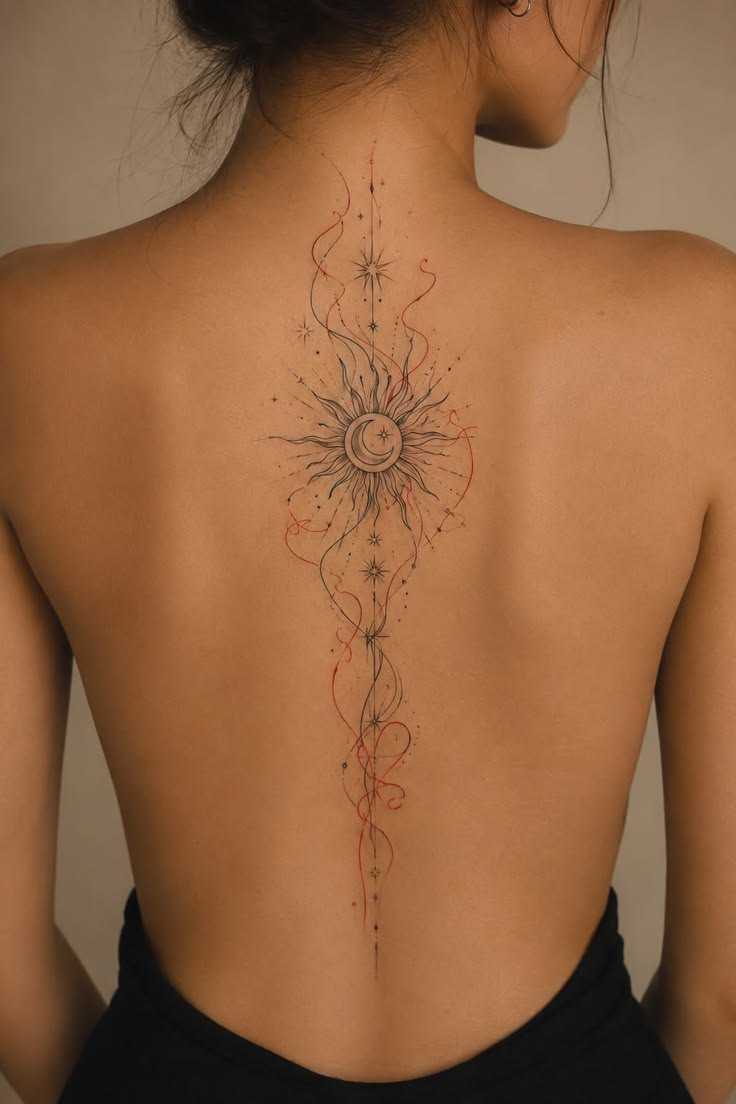
Placing a stylized sun at the top of the spine and a crescent moon below creates a composition centered on duality. Fine linework connects the two elements, symbolizing the balance between opposing forces such as warmth and coolness, day and night, and action and rest. This vertical pairing is especially effective when rendered in a consistent fine line or dot work (a technique using tiny dots to create shading and texture) style that unifies both elements.
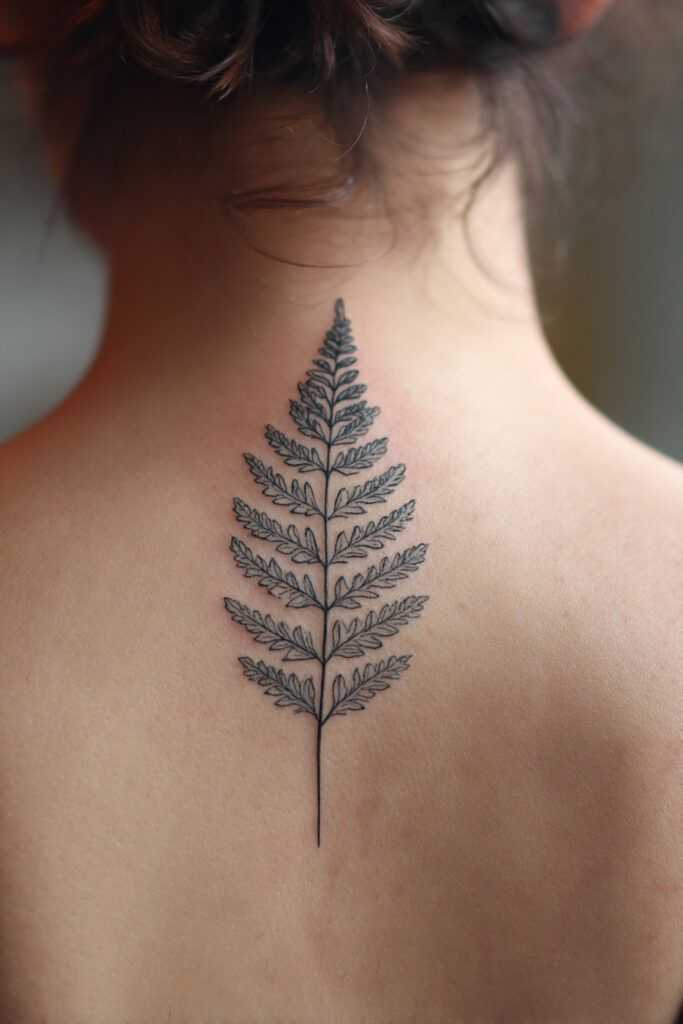
16. Fern Frond Unfurling
A single fern frond, illustrated from the base upward in the act of unfurling, is a botanical choice with strong symbolic resonance. The unfurling fern represents new beginnings, curiosity, and growth into the unknown. In fine line illustration style, the individual leaflets of the frond add intricate detail without requiring large coverage. This is an ideal design for women who want something rooted in nature and quiet in its statement.
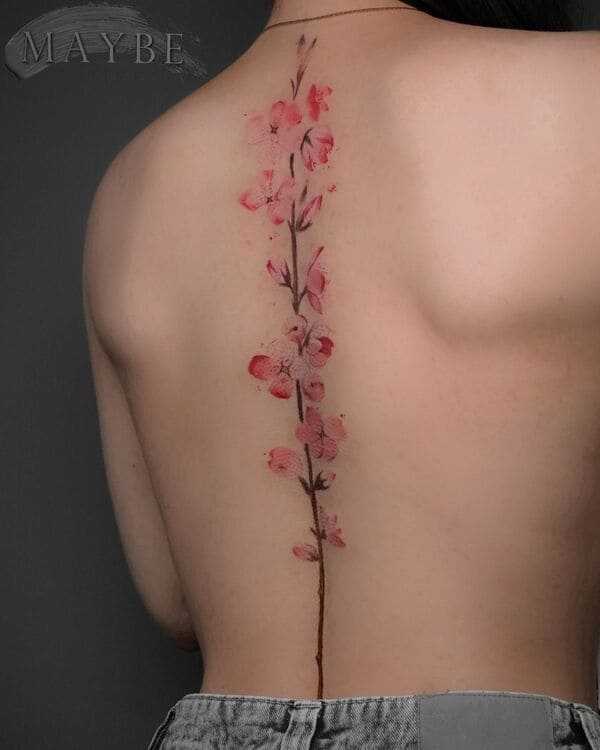
17. Cherry Blossom Branch
A cherry blossom branch arranged vertically along the spine is one of the most recognized expressions of Japanese-influenced aesthetic tattoo design outside of traditional Japanese tattooing. The falling petals can extend slightly off the central axis, adding softness. The symbolism — the beauty of impermanence, appreciation for the present — gives this art emotional depth that outlasts trends.
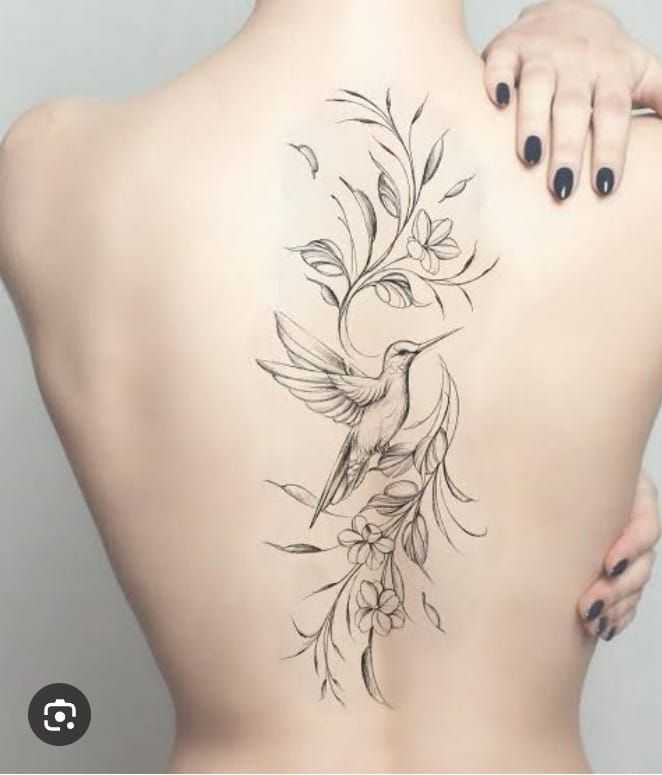
18. Hummingbird in Motion
A hummingbird positioned mid-spine, wings extended and body in motion, creates a dynamic focal point that contrasts with the stillness of a vertical line composition. The hummingbird is associated with joy, resilience, and the ability to find sweetness even in difficult circumstances. In fine line or illustrative style, the wing detail can be rendered with enough precision to suggest speed without sacrificing elegance.
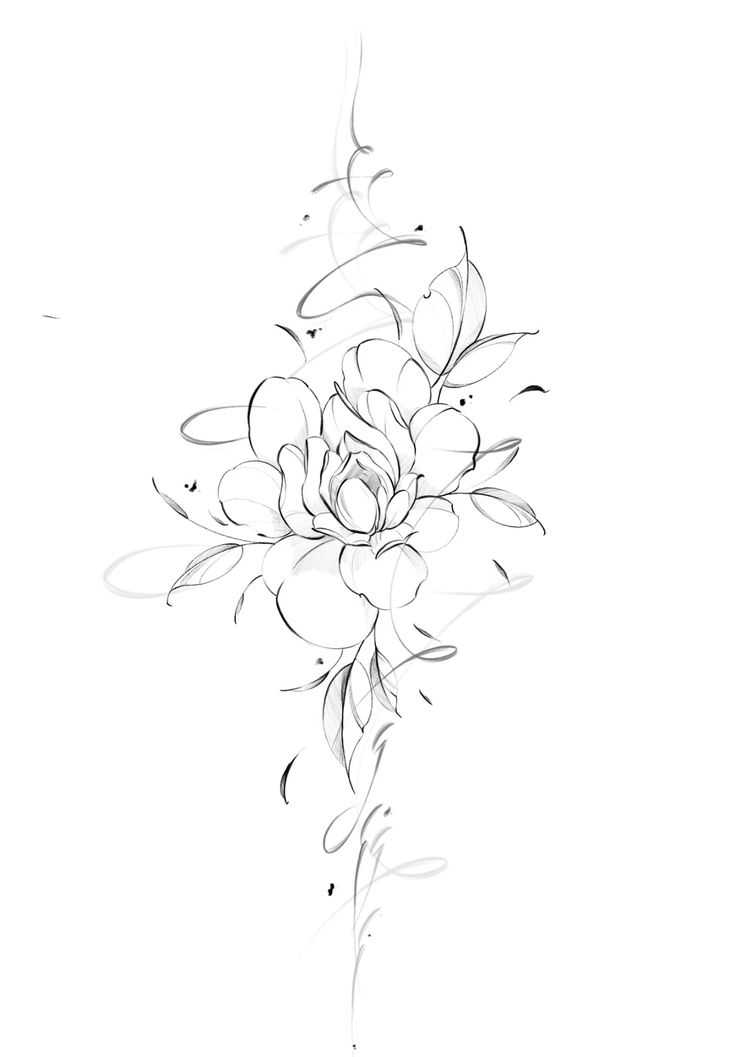
19. Peony Stack
Two or three peonies, stacked vertically with stems connecting them, create a lush and feminine composition that fills the spine without feeling excessive. The peony is associated with prosperity, romance, and beauty — but more importantly, it is visually generous. Each bloom provides enough detail to reward close viewing. This is an ideal design for women who want something undeniably beautiful without deeper symbolic intention.
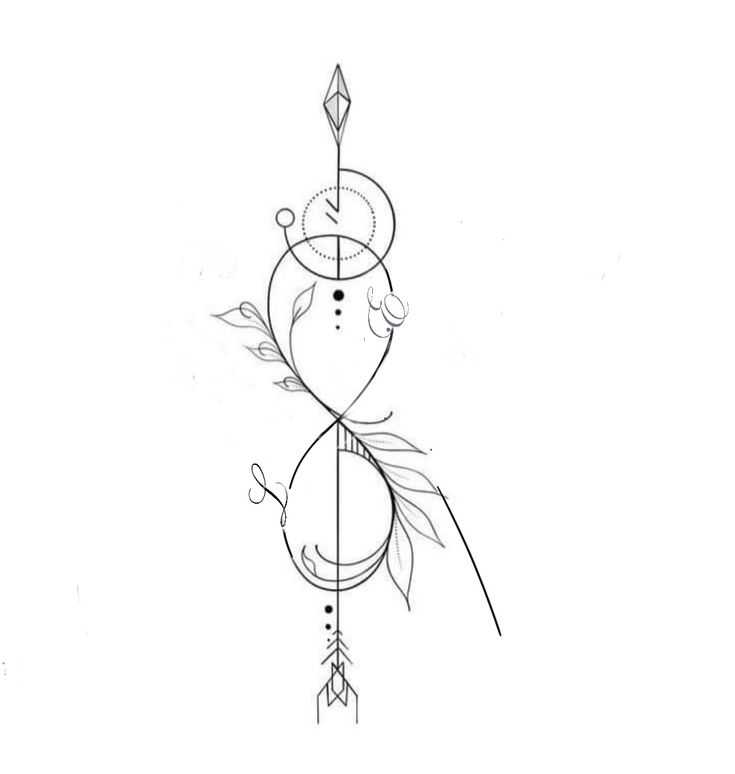
20. Infinity Symbol with Botanical Elements
An elongated infinity symbol running vertically — wider at the center, tapering at both ends — becomes a full spine composition when botanical elements are integrated into its loops. Small leaves, flowers, or fine vine work fill the interior of the curves. The infinity symbol conveys continuity, balance, and endless possibility. Combined with floral detail, the result is a design that is both conceptual and visually refined.
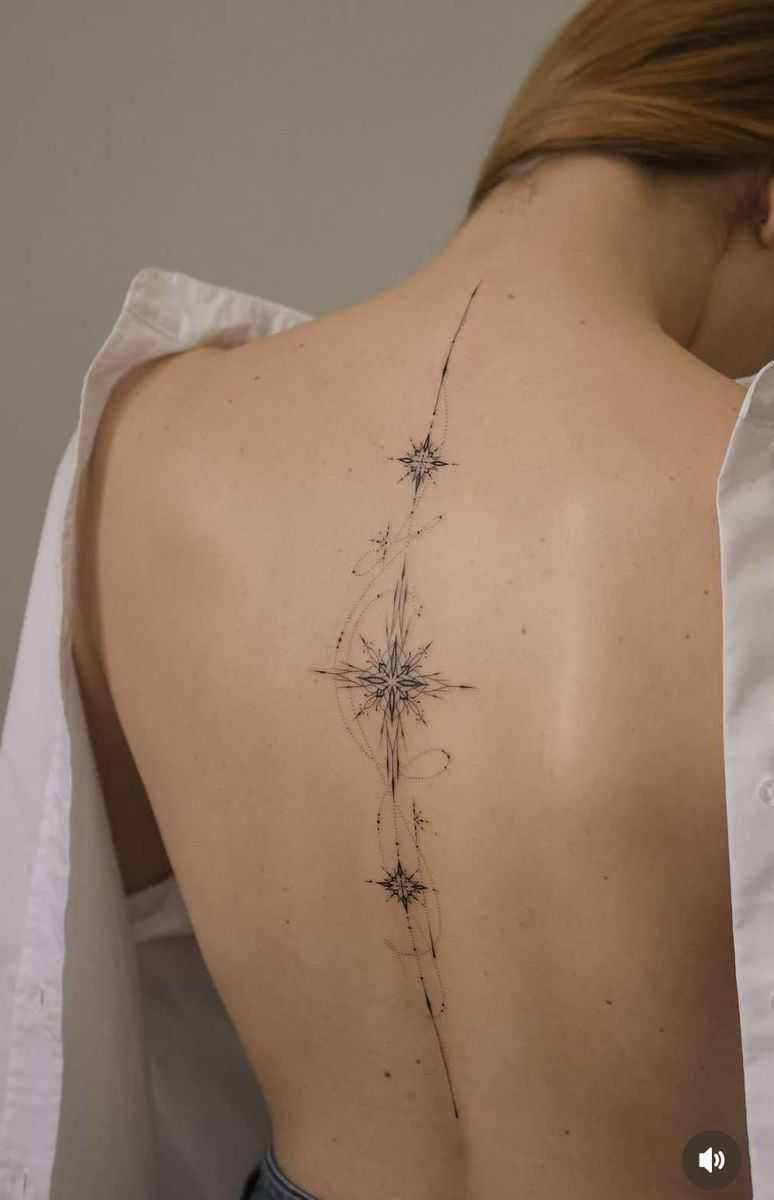
21. Ornamental Collar-to-Lower-Back Design
Full-length ornamental designs inspired by jewelry create the impression of a necklace extending down the back. Symmetrical patterns, teardrop motifs, chains, and fine geometric details give the composition a structured appearance while preserving an elegant aesthetic.
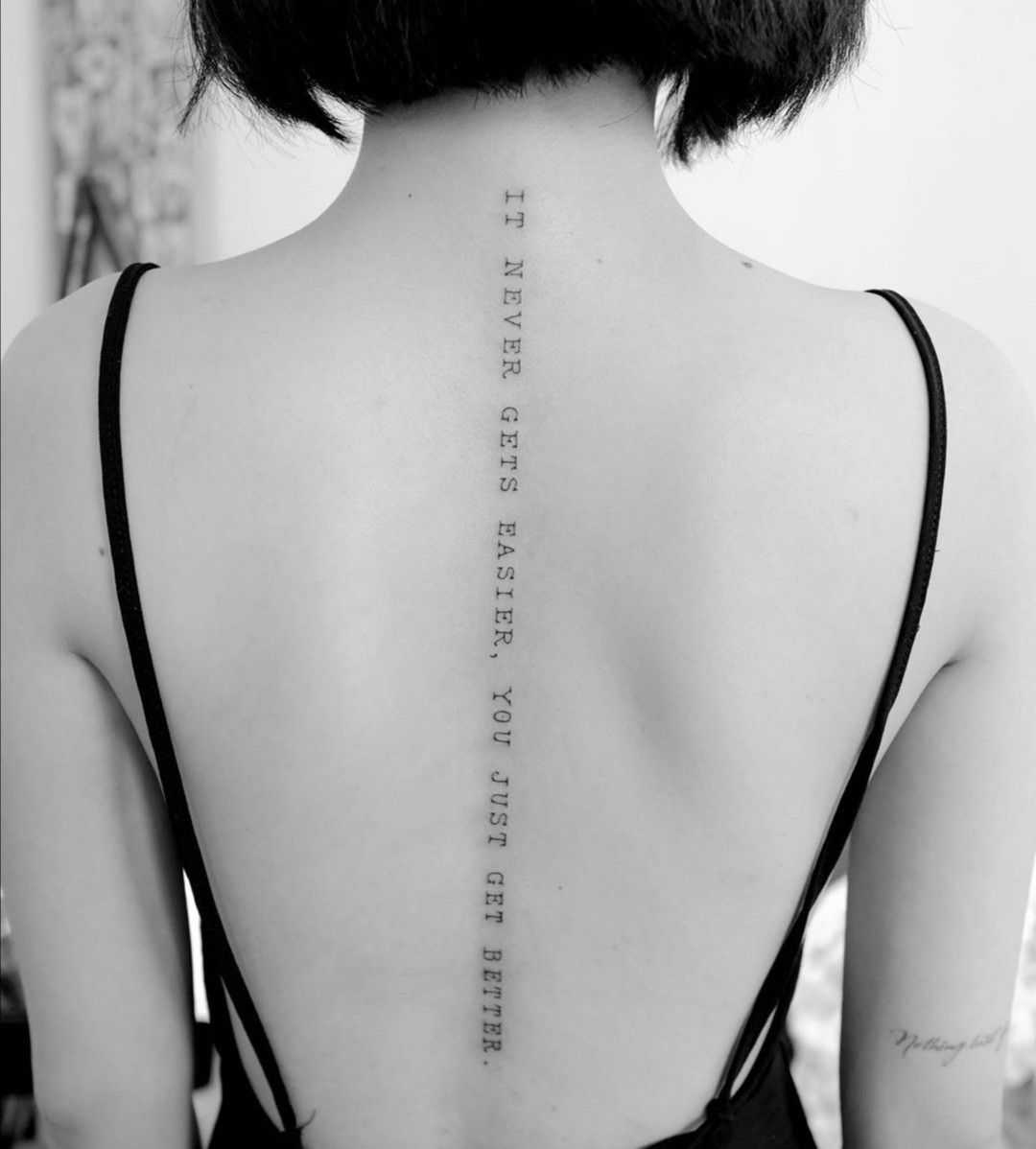
22. Single Word in Large Serif Typography
One word — rendered in a large, classic serif font and placed vertically along the spine — is one of the boldest minimalist statements available. Words like “resilience,” “enough,” or a name hold their meaning precisely because they are presented without decoration or context. The typography alone provides sufficient visual impact. This approach requires confidence in both the word and the font, but when chosen carefully, it becomes one of the most lasting decisions a person can make.
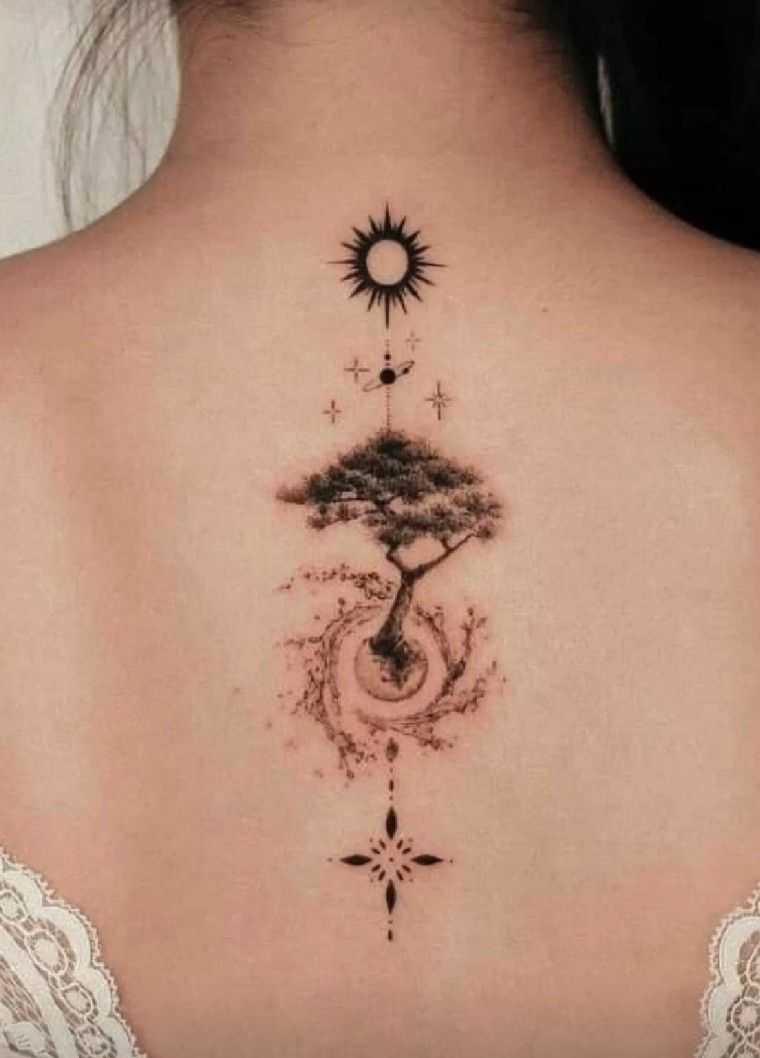
23. Tree of Life Silhouette
A tree of life silhouette — roots at the base of the spine, trunk running through the center, branches extending outward at the top — creates a complete vertical composition that uses the full length of the back as narrative space. This is one of the few designs that uses both upward and outward movement simultaneously. The symbolism of interconnection, family lineage, and rootedness makes this a deeply personal choice for many women.
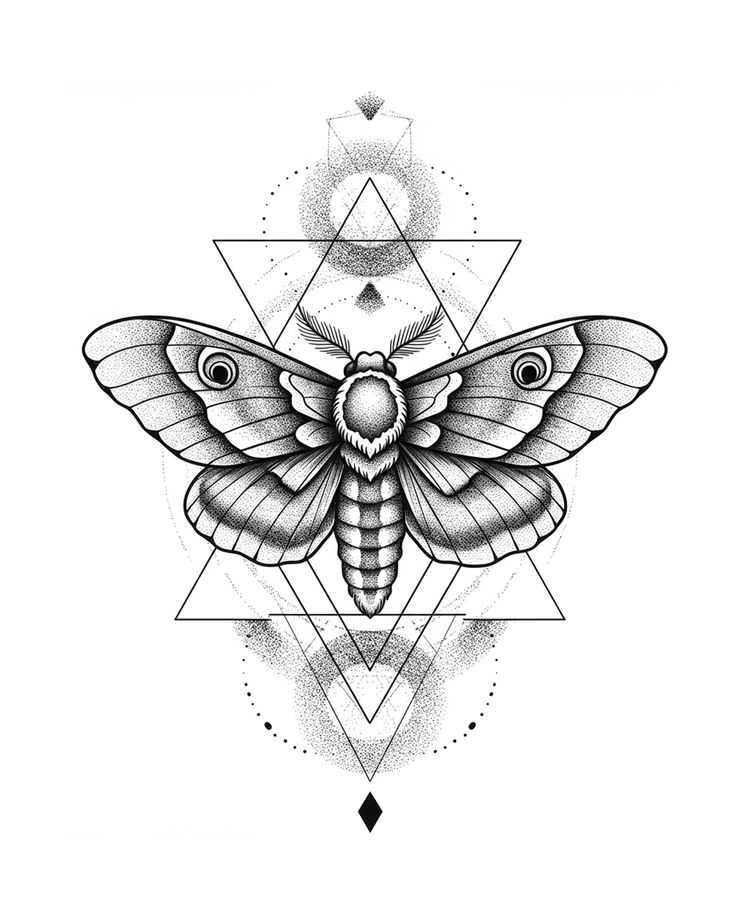
24. Moth with Geometric Frame
The moth, unlike the butterfly, carries associations with intuition, the subconscious, and the pursuit of light in darkness. Framed by a geometric border — a triangle, a diamond, or a series of fine horizontal lines — the moth becomes part of a composition that feels structured and intentional. This design suits women who are drawn to darker, more introspective symbolism within an elegant visual aesthetic.
25. Fibonacci Spiral
The Fibonacci spiral (a mathematical curve found in nautilus shells, sunflowers, and galaxies) translates into tattoo form as a precise, curving line that expands outward from a single point. Placed along the spine with the spiral originating at the center of the back, it creates a design that is simultaneously mathematical and organic. Women drawn to sacred geometry and the patterns underlying natural systems find particular meaning in this choice.
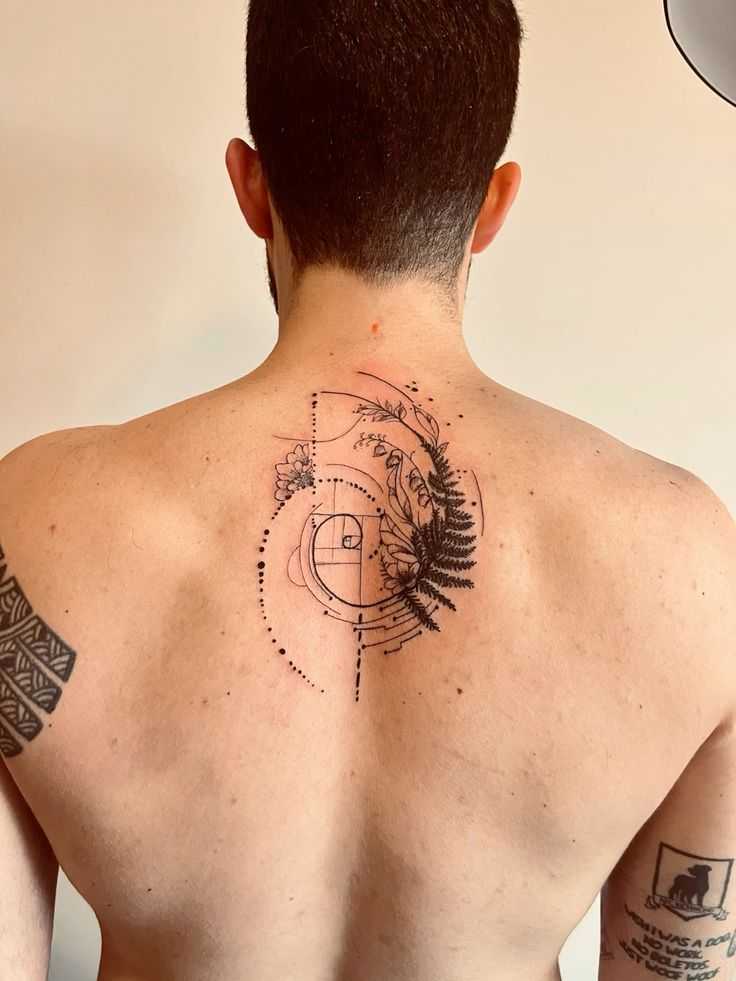
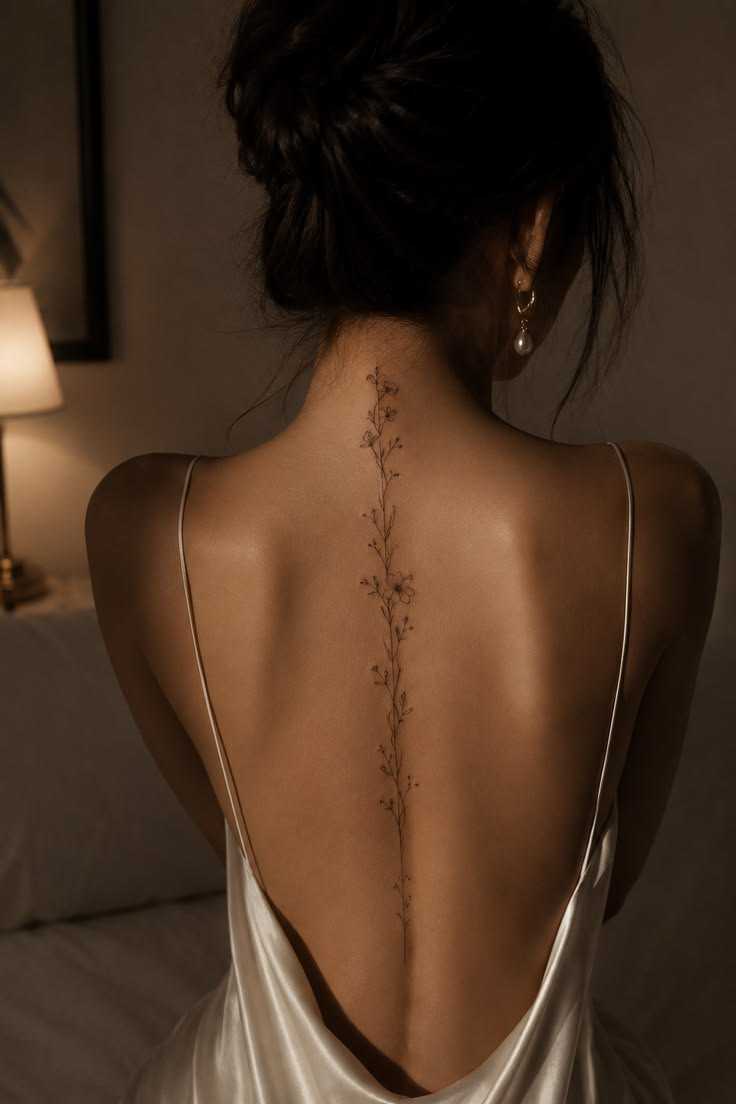
26. Vine with Micro Florals
A winding vine running the full length of the spine, punctuated by tiny flowers and leaves at irregular intervals, creates movement and organic unpredictability within a vertical structure. Unlike a straight branch, the vine can shift slightly left or right along the spine, which softens the overall composition. This is a versatile design that works across skin tones and adapts well to different body proportions.
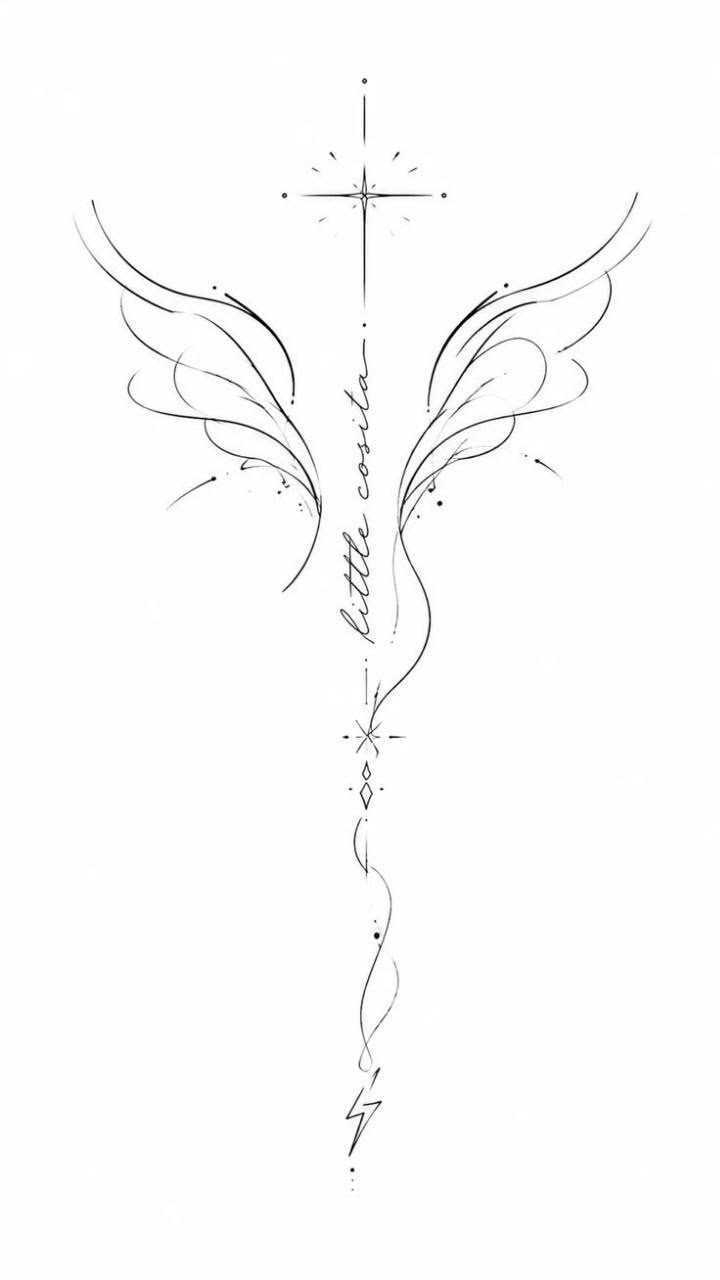
27. Angel Wings Spanning the Shoulder Blades
Symmetrical angel wings extending outward from the upper spine create one of the most dramatic upper-back compositions in feminine tattoo design. When rendered in fine line with detailed feather structure, the result is both delicate and expansive. This design works best when the wing span is proportioned to the width of the wearer’s back — neither too compressed nor extending too far past the shoulder line.
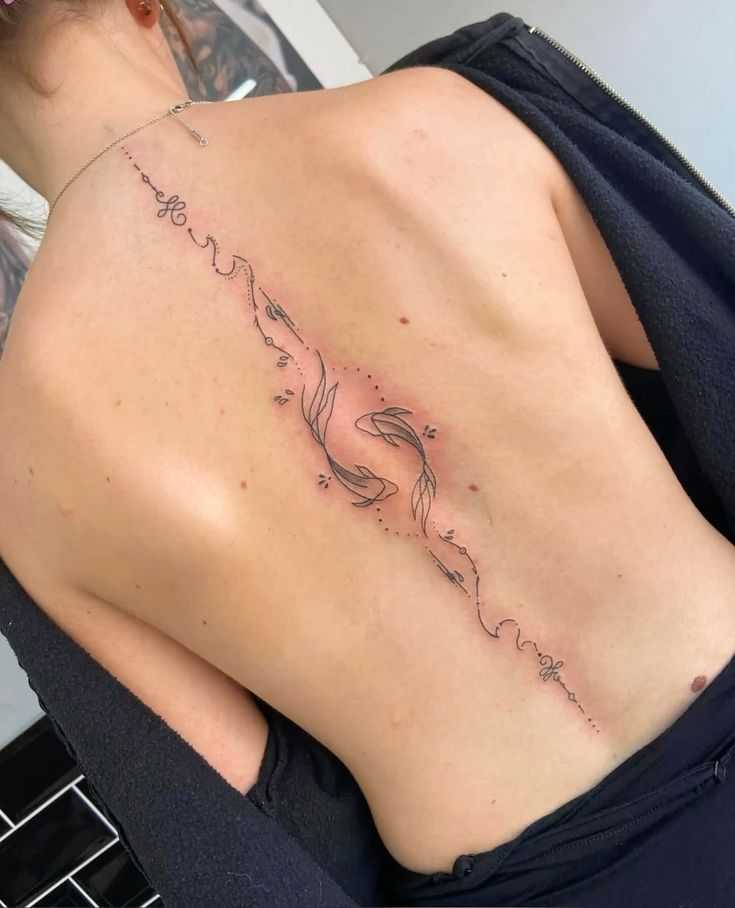
28. Koi Fish in Vertical Ascent
A koi fish swimming upward along the spine is a design borrowed from Japanese tattoo tradition but adapted here into a fine line or minimalist illustrative style. The koi is associated with perseverance, transformation, and the courage to move against the current. A single koi in a clean, contemporary rendering avoids the density of traditional Japanese tattooing while preserving the symbolic integrity of the motif.
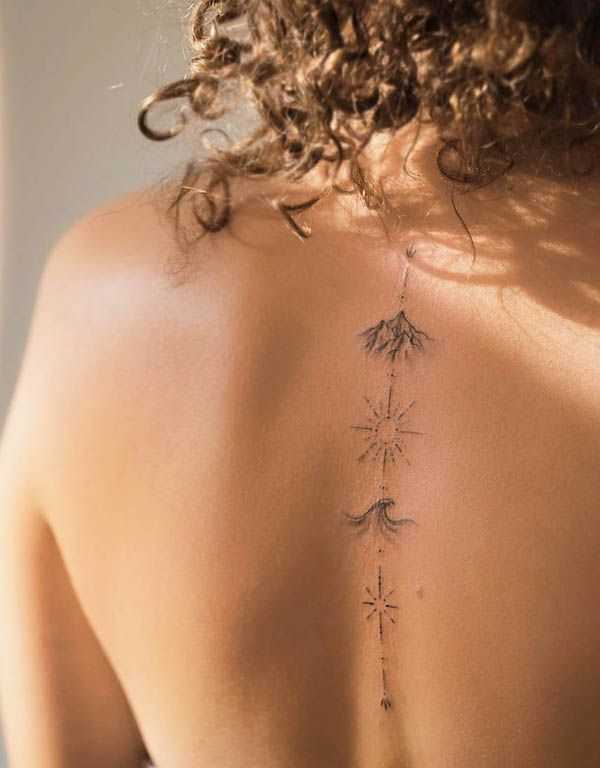
29. Minimalist Mountain Range
A minimal mountain range outline — peaks rendered in clean geometric lines — running along the lower spine creates a landscape composition that feels grounded and adventurous simultaneously. This design suits women who connect their identity to nature, travel, or the outdoors. The horizontal quality of a mountain range also provides an interesting contrast to the vertical axis of the spine, creating a naturally balanced tension.
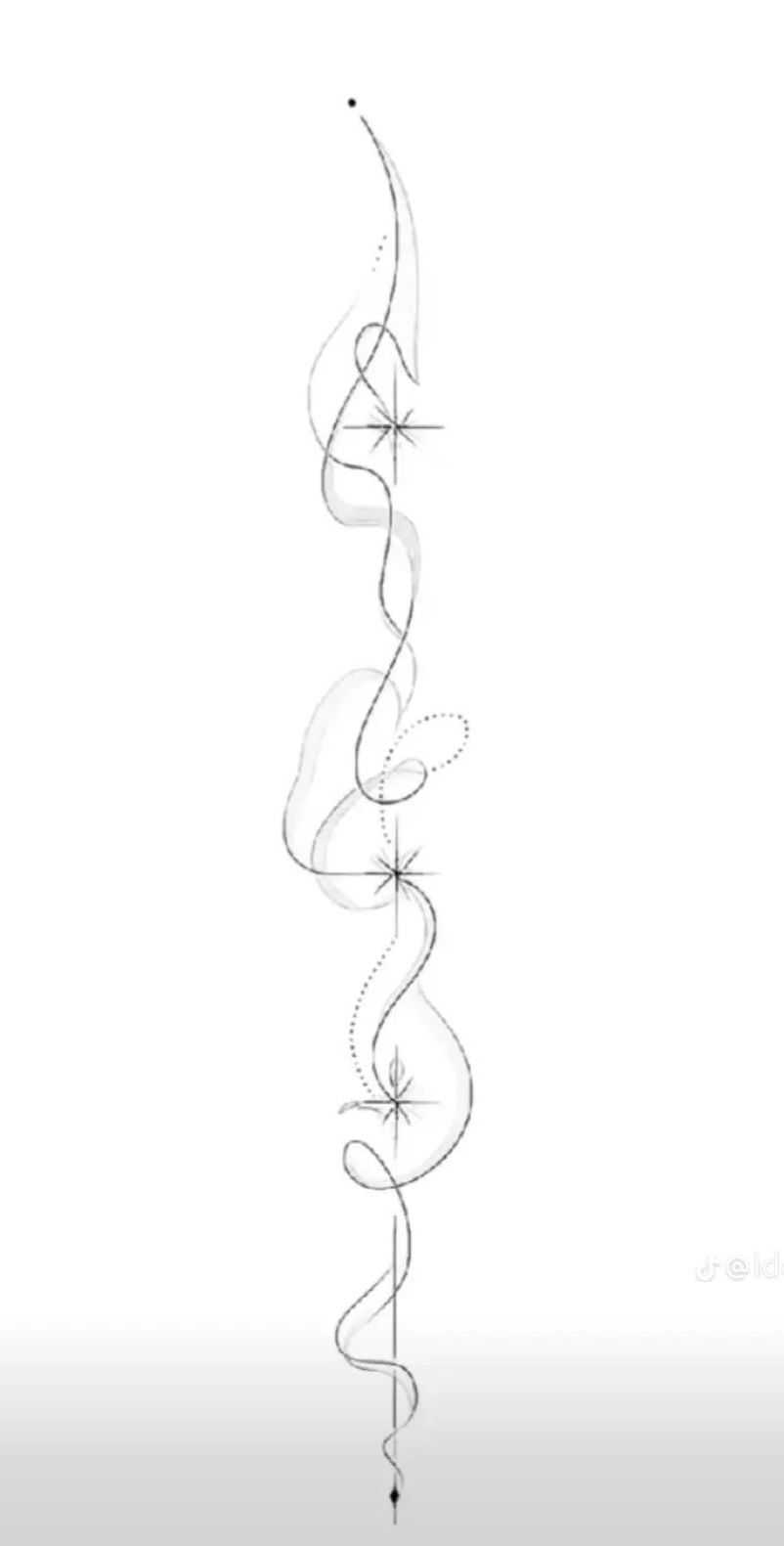
30. Abstract Fine Line Composition
Not every design requires a recognizable subject. Abstract fine line compositions instead draw meaning from the wearer rather than a predefined symbol. Its meaning comes from the wearer rather than from a predefined symbol. This approach requires the closest collaboration between client and artist, and the result is always singular. No two abstract compositions along the spine are ever alike.
Each of these 30 designs represents a different relationship between the body, the image, and the intention behind the ink. The best choice is rarely the most visually impressive — it is the one that continues to feel honest long after the healing is complete.
Although many concepts are presented in a delicate aesthetic, these ideas can also be adapted into Japanese tattoo, Neo traditional, black and grey tattoo, geometric tattoo, or minimal tattoo styles. Selecting the right artistic direction helps create a design that reflects both personality and visual preference.
How to Choose the Right Spine Tattoo for Your Style and Personality
Selecting a tattoo on the spine is a personal decision, but several practical factors help narrow the options.
Body proportion and placement. The spine offers three distinct zones: upper (between the shoulder blades), mid-back, and lower back. Each zone frames the body differently. A shorter tattoo works well on the upper back, while a longer, flowing piece benefits from the full length of the vertebral column.
Every person’s body contour is unique. The natural spinal curve, vertebral definition, and skin elasticity all influence how a tattoo settles after healing. An experienced artist accounts for these anatomical features to create a balanced composition.
Style and personality. Those drawn to structure and symmetry often gravitate toward ornamental or geometric designs. Women who prefer organic, flowing forms tend to choose botanical or illustrative pieces. Neither is better — both are valid expressions of a personal aesthetic.
Tattoo size and visual weight. A design that is too small may lose detail over time. One that is too large can feel overwhelming. A skilled tattoo artist will help assess what size suits your frame and the level of detail you want to preserve.
Pain tolerance. The spine area sits close to bone, which means tattooing here registers higher on most pain scales than fleshy areas like the thigh or arm. The experience varies by zone — the upper back near the shoulder blades tends to be more tolerable than the lower spine. Knowing this in advance helps with session planning.
Artist portfolio. Not every artist excels at every style. Before booking, review portfolios specifically for vertical back compositions and the style you want — fine line, floral, or ornamental.
Different artists specialize in different techniques. Before making a decision, compare portfolios featuring blackwork, dotwork, single needle, illustrative tattoo, micro realism or ornamental tattoo projects. Choosing an artist whose experience matches your preferred style often produces cleaner details and more consistent long-term results.
Placement influences both appearance and comfort. Many people compare the back with an upper back tattoo, lower back tattoo, shoulder tattoo, rib tattoo, or neck tattoo before making a decision. Each area offers different visibility, pain levels, and design possibilities depending on personal preferences.
Before Choosing Your Design
- Clarify the meaning you want to express
- Identify which style suits your personality
- Decide on the length and placement zone
- Assess your pain tolerance honestly
- Review your chosen artist’s portfolio
- Allow time for proper aftercare and healing
Everything You Should Know Before Getting a Tattoo
Even the most carefully chosen tattoo can fall short if the preparation and healing process is overlooked. This section addresses the most common questions and concerns before you commit.
Pain Level, Healing Timeline and Aftercare
Pain is the first concern for most people. The truth is, yes, tattooing along the spine is often more uncomfortable than other areas. The skin here is thin, and the needle works close to bone and nerve clusters. That said, pain tolerance varies significantly from person to person, and many women describe the sensation as intense but manageable.
Pain perception differs by location. Compared with a thigh tattoo or upper arm tattoo, this area generally ranks higher on most pain charts because the skin sits closer to bone. Reviewing a pain level comparison beforehand helps many first-time clients prepare mentally for the experience.
Healing typically follows this timeline:
- Days 1 to 3: Redness, swelling, and sensitivity are normal. The skin begins to close.
- Week 1 to 2: Peeling and light itching occur as the outer skin regenerates.
- Week 3 to 4: The surface appears healed, but the deeper layers continue to settle.
- Month 2 to 3: Full healing is complete. Color stabilizes and fine details sharpen.
Spine ink requires consistent care during this window. Keep the area moisturized, avoid direct sunlight, and stay out of pools or the ocean during the first four weeks.
Key aftercare practices:
- Apply a fragrance-free moisturizer twice daily
- Use SPF 50 or higher on healed skin when exposed to sun
- Avoid tight clothing that rubs the tattooed area
- Do not scratch or peel flaking skin
- Monitor for signs of infection: excessive redness, swelling, or discharge
Most appointments begin with a tattoo consultation to discuss ideas, body proportions, and expectations. The artist then prepares the stencil before starting the linework and adding shading if needed. Depending on the design, the process may take several hours or require multiple sessions. Some intricate pieces also benefit from a touch-up after healing.
Long-term appearance depends on more than healing. Regular sun protection helps reduce UV damage, while proper skincare improves pigment retention. Even well-executed artwork may experience natural fading over time, and some clients choose a touch up years later to restore crisp details.
Spine Tattoos For Women: Why They Choose This Placement
The spine is rarely chosen by chance. Women who choose this placement often describe a deliberate intention behind the decision.
The spine supports the entire body. Placing a tattoo here carries symbolic resonance: resilience, balance, self-reliance. Common themes that women connect to this placement include transformation, personal growth, femininity, and remembrance of someone or something significant.
A lotus running down the spine may represent emerging from hardship. A set of moon phases may reflect a personal journey through change. A single word or short phrase may capture something the wearer needed to carry with them permanently.
This is why the meaning behind a design matters just as much as its appearance. Spine body art is not decorative by accident. For most women who choose it, the placement itself is part of the message.
Beyond flowers and celestial motifs, many people also choose symbols such as a feather, compass, owl, dove, angel, or constellation. Each carries its own story and can be customized to represent guidance, wisdom, hope, spirituality, or important life experiences.
Preparation Checklist Before Your Session
- Eat a full meal at least two hours before your appointment
- Wear clothing that allows easy access to your back
- Avoid alcohol for at least 24 hours beforehand
- Clean the skin in the area to be tattooed
- Follow all pre-session instructions from your artist
- Arrange for rest and minimal physical activity the following day
Studio safety should never be overlooked. Always choose a licensed tattoo studio that follows proper sterilization procedures, uses single-use needles, and minimizes cross contamination. If you have sensitive skin, discuss possible allergic reactions or request a patch test before the appointment.
Pricing varies according to design complexity, size, and artist experience. Most studios estimate the session price or hourly rate during consultation. Larger projects generally require multiple appointments, while smaller minimalist designs can often be completed in a single visit.
If you already have reference images or would like a custom design, schedule a consultation with an experienced artist. Reviewing ideas together helps you plan the placement, proportions, style, timeline, and budget before booking your appointment.
A great piece of spine body art begins long before the needle touches skin. It begins with a clear intention, a style that feels genuinely personal, and the right artist to bring it to life.
The 30 ideas in this guide cover a range of aesthetics — from fine line botanical work to bold ornamental compositions — but the most important factor is always the same: choose a design that still feels like you in ten years.
Book an appointment with Holistic Ink today and start your tattoo journey!