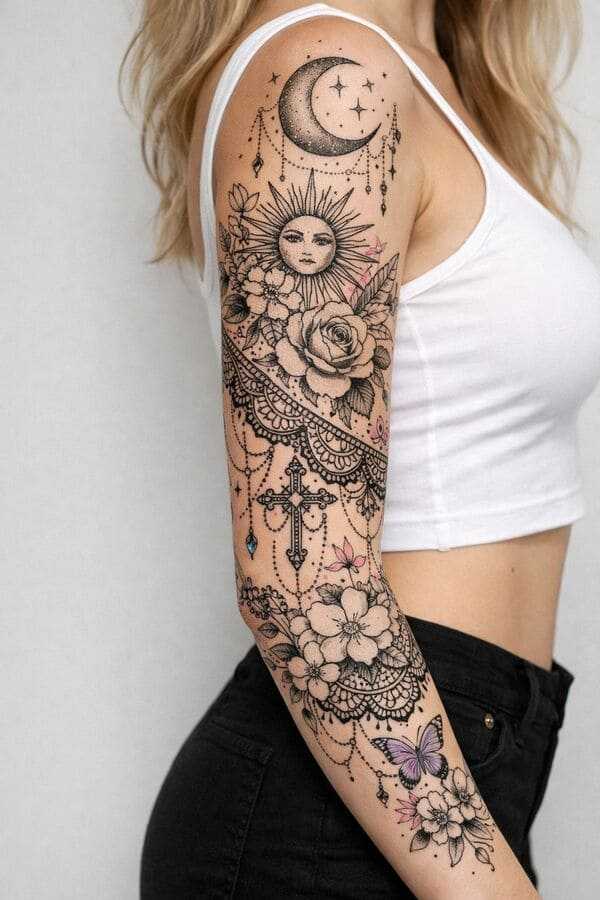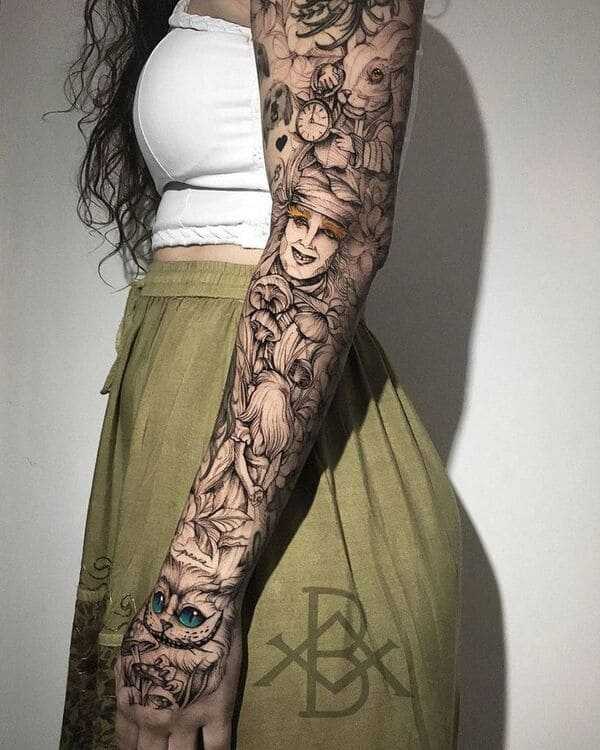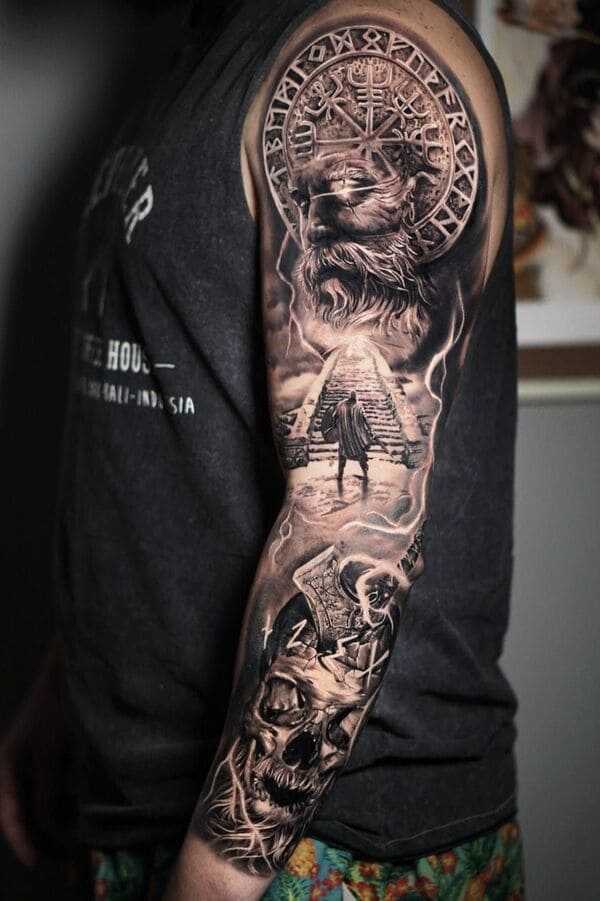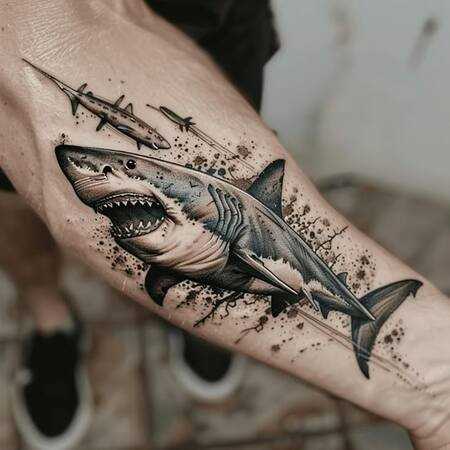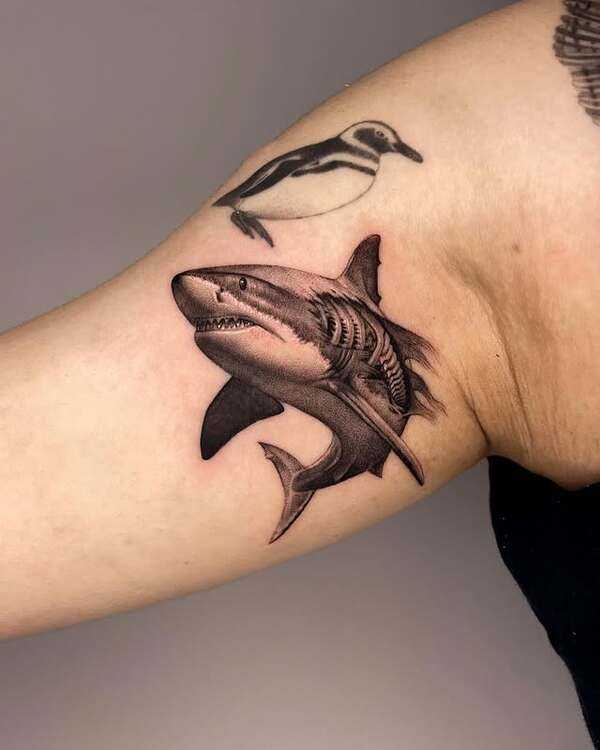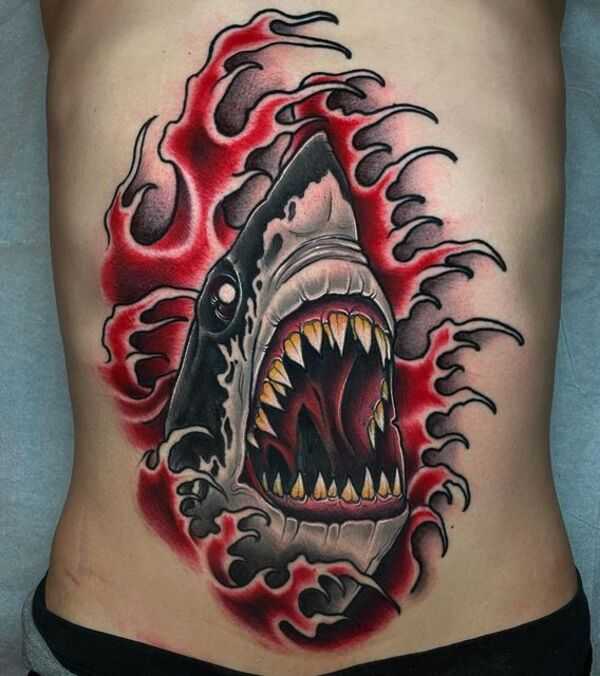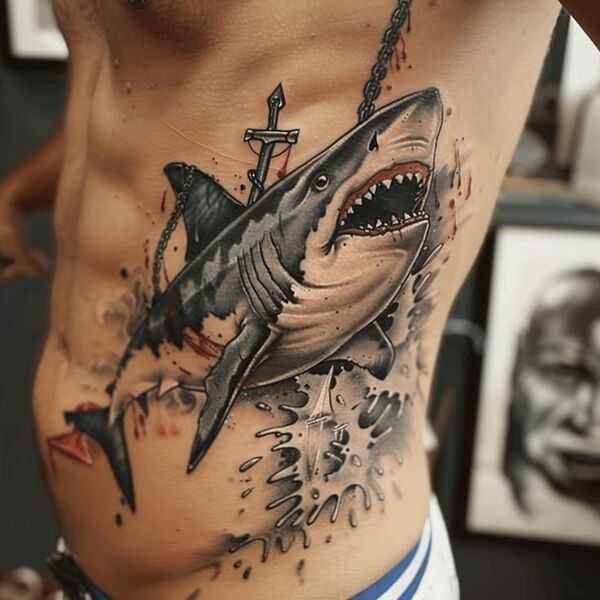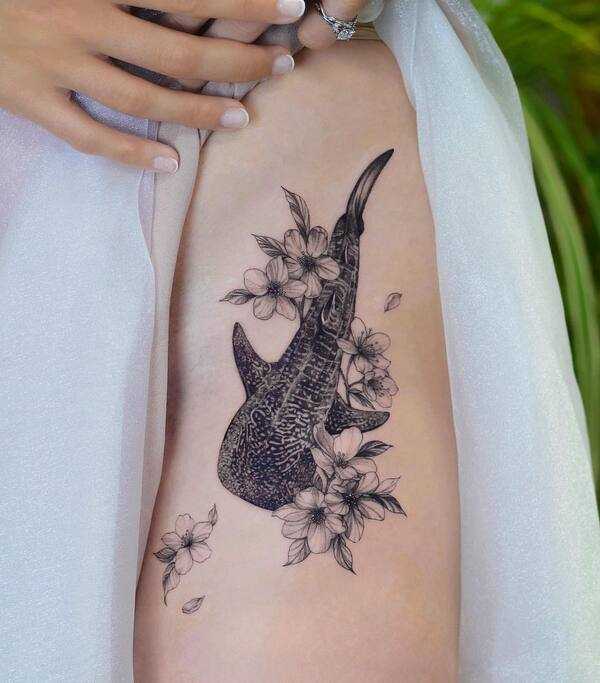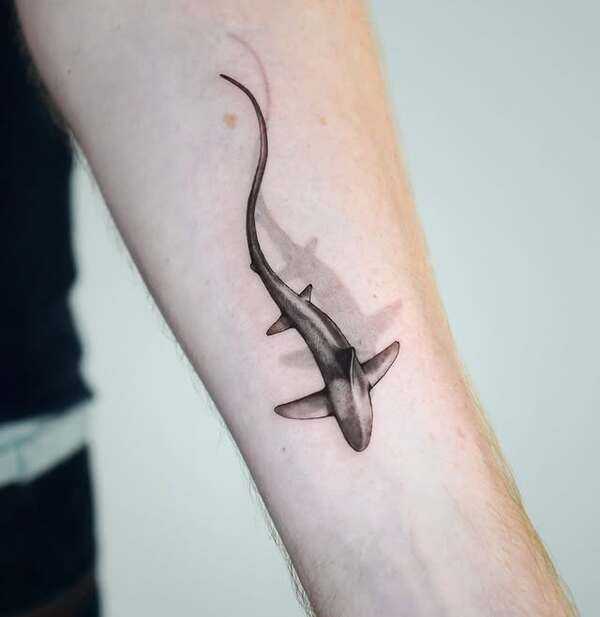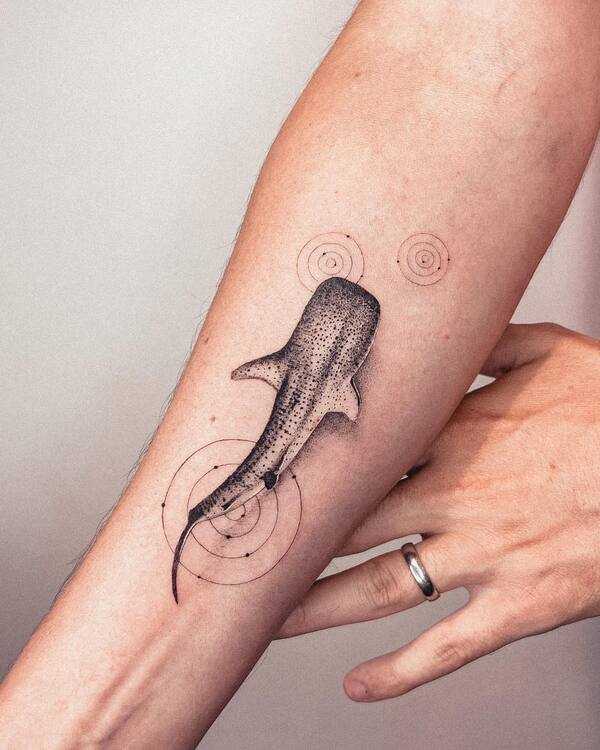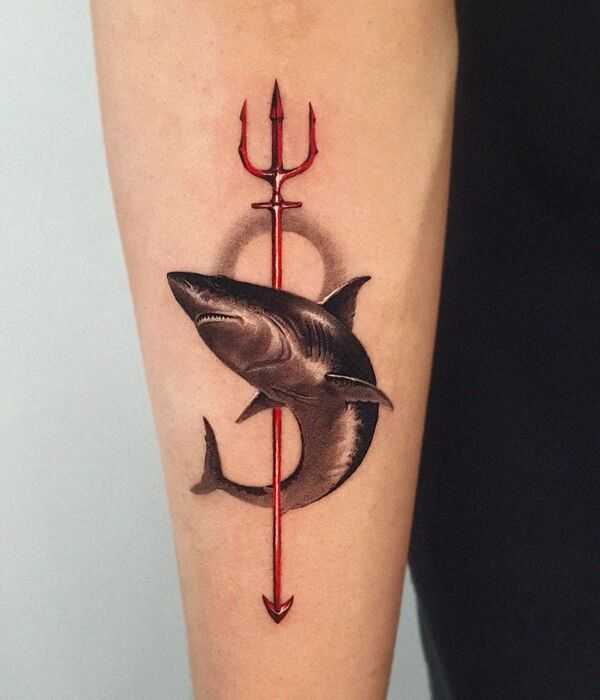
Categories
Blog

Dragon Tattoo Meaning in Chinese and Western Cultures for All

Dragons have captivated people for centuries, making them one of the most iconic tattoo motifs across different cultures. Whether inspired by Eastern mythology or Western legends, dragon tattoo meaning reflects strength, wisdom, protection, freedom, and personal transformation through a wide range of artistic styles. This guide explores the symbolism behind dragon designs, compares cultural interpretations, highlights popular tattoo styles, ideal placements, and inspiration for both men and women. At Holistic Ink, we can help transform these timeless meanings into a tattoo that truly reflects your story.

Discover Dragon Tattoo Meaning with Holistic Ink

Across cultures worldwide, dragons have long been admired as mythical creatures that represent power, mystery, and profound symbolism. Understanding dragon tattoo meaning begins with recognizing that although they share the same name, Asian and European dragons differ significantly in appearance and symbolism. These differences are not only evident in their physical traits but also in how each culture perceives and assigns unique values and meanings to this mythical creature.
Dragon Tattoo Meaning

One notable difference is that Asian dragons usually do not have wings, with snake-like bodies and four legs. Meanwhile, European dragons have wings and are often depicted as gigantic creatures soaring through the sky. Despite these physical differences, dragons in both cultures carry common meanings of strength and power.

Symbol of Strength

Dragons have always been seen as powerful creatures with extraordinary abilities. In both cultures, dragons symbolize superior strength in both physical aspects and supernatural capabilities. Whether benevolent or malevolent, they are always associated with mythical creatures of immense power and respect. Dragons symbolize not only physical strength but also ultimate supremacy and the ability to overcome challenges.

Connection to Power and Prestige

Dragons are revered as supreme beings with powers surpassing human capabilities in both cultures. In Asian culture, dragons are symbols of kings and emperors, especially in Chinese history, where the emperor is referred to as the “dragon body,” and their attire is called “dragon robes.” This highlights the strong connection between dragon tattoos and supreme power. Similarly, in European culture, dragons are often associated with kings or individuals of high status. In mythical tales, dragons guard treasures or territories, demonstrating the power and status of their bearers.

Symbol of Protection

Despite the differences in depiction, both Asian and European dragons play roles as protectors. In Asian culture, dragons are often linked to controlling weather and bringing favorable conditions, which contribute to abundant harvests. For the people, dragons are protectors and bringers of prosperity. Meanwhile, in European culture, dragons are creatures that guard treasures or territories, tasked with protecting valuable things, sometimes sacred ones, that humans must strive to conquer or fight for.

Representative of Freedom

A common feature in both cultures is that dragons are seen as beings unbound by any rules. Dragons symbolize absolute freedom, embodying the spirit of adventure and the untamable power of nature, bringing a sense of adventure and the power of nature that humans cannot control. This makes dragons a symbol of extraordinary traits, aspirations that go beyond boundaries, and the limitations of human life.

Overall Impression

It is a special choice for individuals with strong personalities, a desire to conquer, and a wish to stand out. They are not just artistic designs but also carry profound messages about the character and goals of the owner. Dragon tattoos are most suitable for confident, decisive individuals who always aim for excellence in life. They can be leaders, people with strong fighting spirits, or individuals who want to assert themselves in a crowd.

Asian dragons often represent harmony, wisdom, and good fortune. They bring a message of balance in life and the relationship between humans and nature, the universe. Those who believe in feng shui often choose dragons as a way to pray for prosperity and ward off misfortune. Meanwhile, those who love European dragon designs are often rebellious individuals, lovers of freedom, and unafraid to challenge societal or cultural norms. They see in dragon designs a reminder of strength, independence, and relentless ambition.

Those who choose dragons often want to convey a message of inner strength and a desire to control their destiny. They may use this tattoo to express protection for their family, loyalty to a value they aspire to, or respect for cultural traditions. Sometimes, tattoos of this mythical creature reflect transformation, the ability to overcome adversity, and strong rebirth after difficulties. Dragon tattoos, with their legendary power, become symbols of the ability to overcome challenges and rise in life.

Dragon tattoo designs categorization

Dragon tattoo designs have always been among the most popular choices due to their profound symbolic meanings and diverse design styles. Based on cultural characteristics and creative styles, tattoos can be categorized into the following main groups:

Dragon tattoo designs categorization

Japanese Dragons

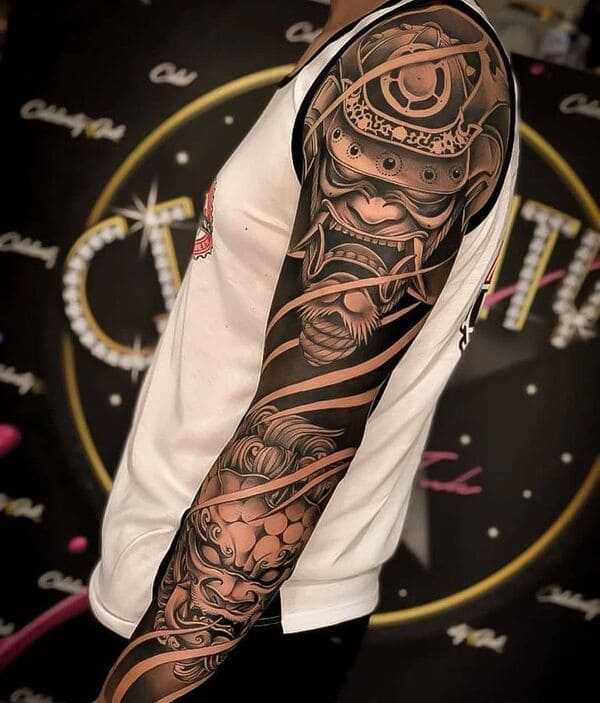
Particularly prominent in traditional Irezumi designs, known for their bold lines, vibrant colors, and intricate details. Japanese dragons symbolize wisdom, protective strength, and benevolence—key attributes in Japanese culture. In Japanese mythology, dragons are often depicted as mythical creatures living beneath the sea, fierce and powerful. According to legend, to pray for a bountiful fishing season, ancient Japanese people performed sacrificial rituals, offering a sheep and a virgin—a tale passed down through generations.

Japanese tattoos dragon symbolize protection and wisdom, often incorporating natural elements like ocean waves to reflect their connection to nature. Details like cherry blossoms and clouds are often included in designs, creating a perfect balance between strength and artistic beauty. This combination not only enhances the aesthetic value but also evokes deep meanings of harmony between nature and humanity, strength and the gentleness of life’s beauty.

Chinese Dragon Tattoo Designs

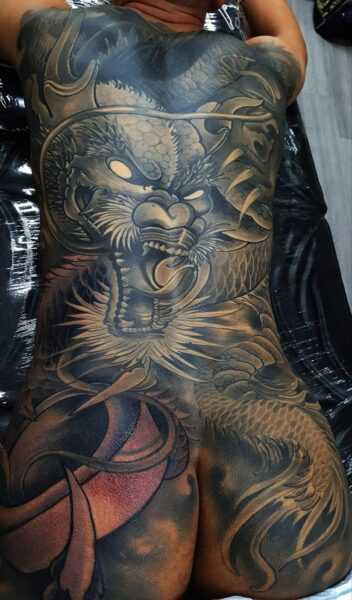
A powerful symbol of authority, wealth, and prosperity in Eastern culture. Chinese dragons are characterized by long, snake-like bodies, four legs, and no wings. Their appearance is often intricately detailed, featuring many scales, long whiskers, thick manes, and claws or mouths holding dragon pearls, exuding an aura of majesty and mystery. Chinese dragon tattoos are not only works of art but also carry significant feng shui values. Those who opt for this tattoo often wish to convey messages of prosperity, strength, and power. In addition to the powerful symbolism of the Chinese dragon, a phoenix tattoo often complements it, representing rebirth, immortality, and transformation. Together, these tattoos embody a harmonious balance between strength, prosperity, and renewal in Eastern culture

Additionally, Chinese dragons are associated with harmony with nature and feng shui elements, bringing balance, good fortune, and protection in life. As such, it not only showcases artistic beauty but also reflects a belief in the power, prosperity, and protective qualities of this mythical creature in Eastern culture. This stems from the dragon’s mythical ability to create rain, a vital aspect for agriculture in regions where people heavily depend on weather for farming, making the dragon a symbol of abundance.

Western Dragons

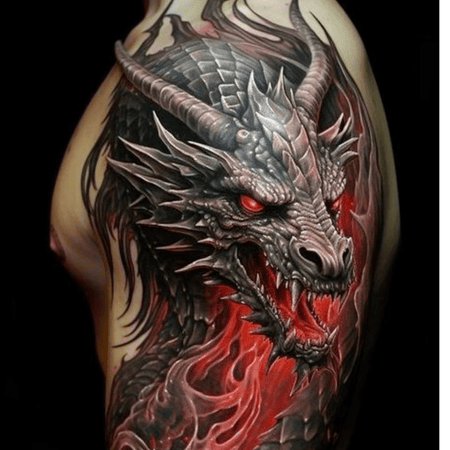
Western tattoos of this mythical creature have a style entirely distinct from their Eastern counterparts, often depicting creatures with large wings, fiery breath, and a menacing appearance. In Western culture, dragons symbolize destruction, malevolence, and evil. They are portrayed as embodiments of wickedness and opposition to God in Christian theology. Greek mythology serves as the foundation for most Western dragon stories, depicting dragons in various forms: seven-headed dragons, nine-headed dragons preying on beautiful maidens, and even hundred-headed dragons with glaring eyes. Such tales have ingrained in Western minds the image of a savage, greedy mythical creature. One of the most iconic representations is Smaug, the dragon from the Lord of the Rings series.

Choosing a Chinese dragon tattoo design often symbolizes power and good fortune, representing individuals who wish to express strength, confidence, and prosperity. Meanwhile, European dragons embody strength with a touch of brutality and destruction, a common theme in Western mythology and fantasy films often seen on screen. Ultimately, the choice of this depends largely on personal preference, cultural background, and the meaning one wants to convey or embrace through the tattoo.

Dragon Tattoo Styles

Dragon Tattoo Styles encompass a wide variety of styles, each offering a unique way to depict tattoos of this mythical creature, resulting in diverse expressions. Common styles include:

Dragon Tattoo Styles

Tribal Dragon Designs

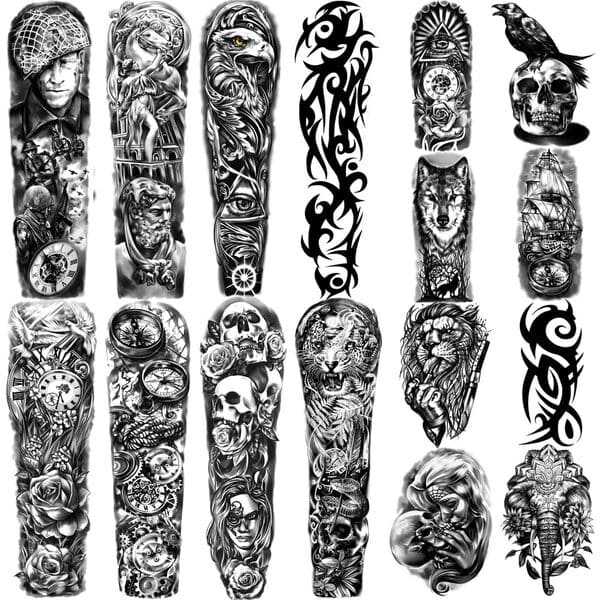
Tribal dragon tattoos blend the powerful imagery of dragons with simple yet captivating geometric artistry. This style is characterized by sharp black lines, rich in native aesthetics, layered or symmetrically arranged to form the shape of a dragon. Unlike traditional designs, tribal dragons focus less on intricate details and more on clear geometry and minimalism, exuding a modern, strong, and mystical vibe. Bold shapes and robust curves create a unique connection, highlighting the beauty of tattoo art.

Tribal dragons are not merely artworks but also symbols of strength, determination, and primal instincts. These tattoos are often chosen by individuals who appreciate minimalism yet want to showcase their strong personality and uniqueness. The monochrome, sharp lines and dragon imagery represent resilience, perseverance, and strength. This style also reflects a fierce zest for life and an unyielding determination to rise above challenges, making them ideal for those wishing to assert their identity and inner strength.

Fantasy-Inspired Dragons

Tattoos of this mythical creature inspired by fantasy are a stunning testament to boundless creativity. Drawing from mythology, fantasy novels, or films, these designs often incorporate magical elements to create unique and extraordinary dragon depictions. The standout features of fantasy dragons include surreal colors, glowing wings, radiant scales, or other extraordinary traits.

This style is popular among individuals who love the world of imagination and want to showcase their creativity and rich imagination. Fantasy dragons often carry powerful symbolism, representing adventure, freedom, and a passion for exploration.

Beyond their association with strength, fantasy Dragon Tattoo Styles symbolize belief in miracles and a connection to deep dreams. They resonate with those who cherish art, possess a whimsical spirit, and wish to etch personal stories through vibrant and surrealistic designs.

Traditional dragon tattoo

It is often paired with natural elements to create designs rich in symbolism and profound meaning. Depending on the element, Tattoos of this mythical creature can convey different messages:

  • Fire: This element is often associated with intensity, passion, and the power to destroy or regenerate. Fire dragons suit individuals with fiery, determined personalities, always burning with ambition.
  • Water: Water dragons, similar to the symbolism of a snake tattoo, represent peace, wisdom, and adaptability in the face of challenges. They embody flexibility and a readiness to overcome obstacles.
  • Wind: Symbolizing freedom, movement, and balance, wind dragon are favored by those who value liberty and seek meaning in every moment.
  • Earth: Depicting stability, strength, and protection, earth dragons are perfect for those wishing to affirm their reliability and robust character.

The black dragon tattoo

It is a powerful symbol in tattoo art, representing strength, mystery, and rebirth. With its wide-spread wings, sharp eyes, and serpentine body, the black tattoo design is often associated with protection and supernatural energy. In Eastern culture, it also symbolizes wisdom and prosperity. This tattoo design is typically crafted with intricate details, such as shimmering dragon scales and flowing curves, creating a unique impression and showcasing the personal style of its bearer.

Combining these elements not only enhances the Dragon Tattoo Styles but also allows the wearer to subtly convey personal messages. Each element symbolizes an aspect of life, transforming tattoos into meaningful and deeply personal artworks. Similarly, a bat tattoo can be incorporated to represent transformation, rebirth, and the mysterious aspects of life, further deepening the symbolic meaning of the overall design. Combining a bat tattoo with other elements like dragons or flowers can create a powerful visual story that reflects personal growth and the balance between light and darkness.

Small dragon tattoo

A small dragon tattoo is a refined and powerful choice. Its compact size captures the mystery and strength of the dragon in a subtle way. With its compact design, these tattoos often focus on simple lines and minimalist details while maintaining fluidity and harmony, highlighting the beauty of the mythical creature.

One of the reasons mini tattoos have become popular is their adaptability to various lifestyles and personalities. For those who love tattoo art but prefer a less conspicuous design, a small tattoo is an ideal choice. It can be placed on different body parts, such as the wrist, nape, ankle, or fingers, offering elegance and subtlety.

Additionally, dragons have long been symbols of strength, wisdom, and good fortune in many cultures. A tiny tattoo not only carries profound meaning but also allows the wearer to express their personality in a gentle manner. It’s a way to connect with traditional values without being overly ostentatious.

With the evolution of tattoo artistry, small dragon designs are becoming increasingly creative and diverse. They can be rendered in a minimalist style with delicate lines or enhanced with colors to add a striking touch. This versatility makes small dragon tattoos especially suitable for women or individuals with a gentle disposition.

Small-sized tattoos are ideal for those seeking a balance between art and symbolic meaning. For beginners in tattooing, a small design is a perfect choice to ease into the experience without taking too much risk. It’s also a practical solution for those working in professional environments where discretion and sophistication are required. For those looking for a small yet impactful tattoo, a scorpion tattoo design can be the perfect choice, offering a blend of power and elegance that fits well in both personal and professional settings without overwhelming the wearer.

Moreover, tattoos suit individuals with minimalist lifestyles who still want a special mark on their bodies. Those who appreciate cultural and mythological connections may choose a small tattoo to reflect their beliefs and values. Women often favor this design for its softness and delicacy, while men appreciate the strength it represents.

In conclusion, cute little tattoos are a fusion of art and profound meaning, making them an ideal choice for anyone wishing to express themselves while maintaining elegance and sophistication. With their design flexibility and timeless significance, these tattoos remain a captivating symbol, appealing to a wide range of people across all stages of life.

Placement of dragon tattoo

Placement of dragon tattoo in different positions will have unique meanings and be suitable for different sizes of designs:

Placement of dragon tattoo

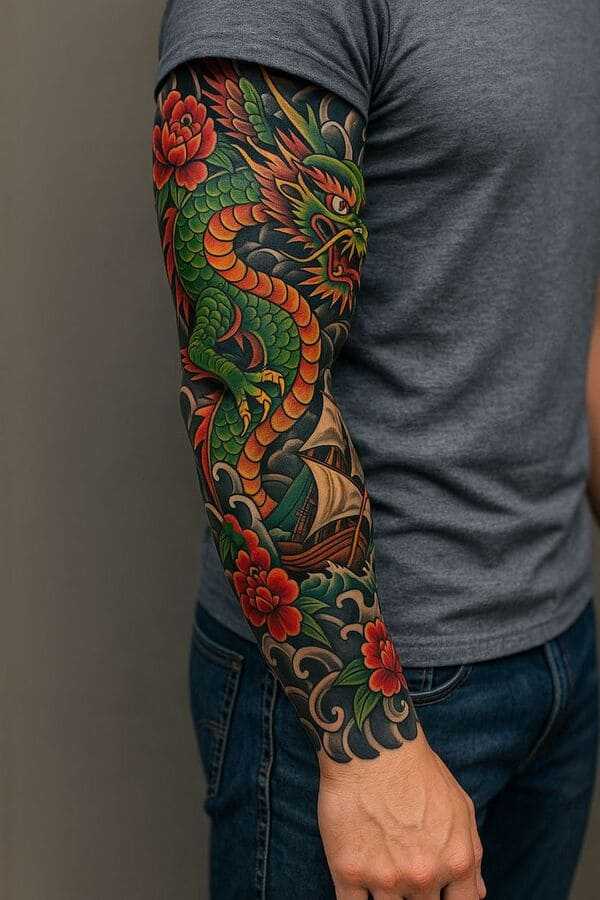
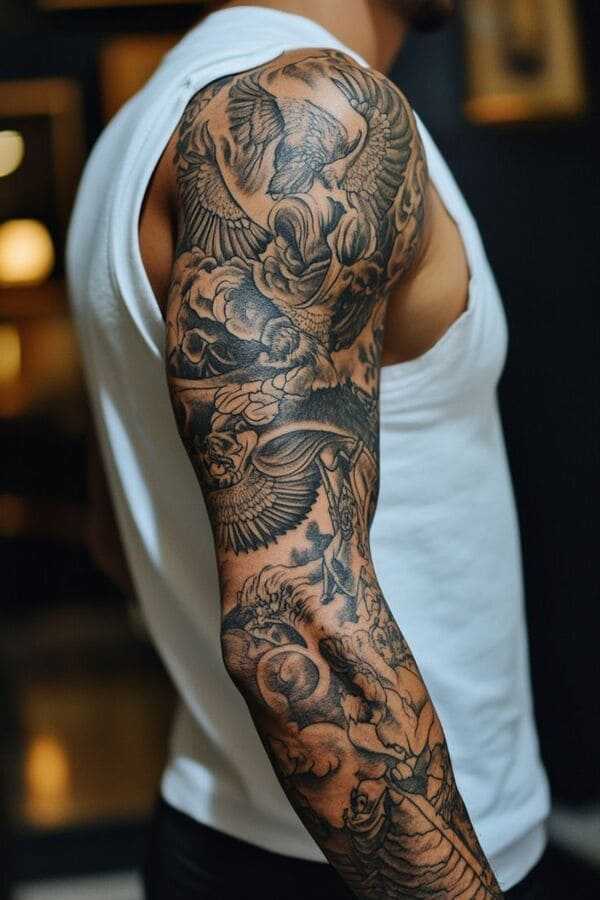
Dragon sleeve tattoo: Some people don’t like to show off their tattoos, while others consider it a way to express their individuality. If you’re not afraid to show off your tattoo design, getting one on your arm is a great choice. A tattoo on the forearm or upper arm symbolizes strength, the ability to maintain order, and the ability to carry out bold tasks.

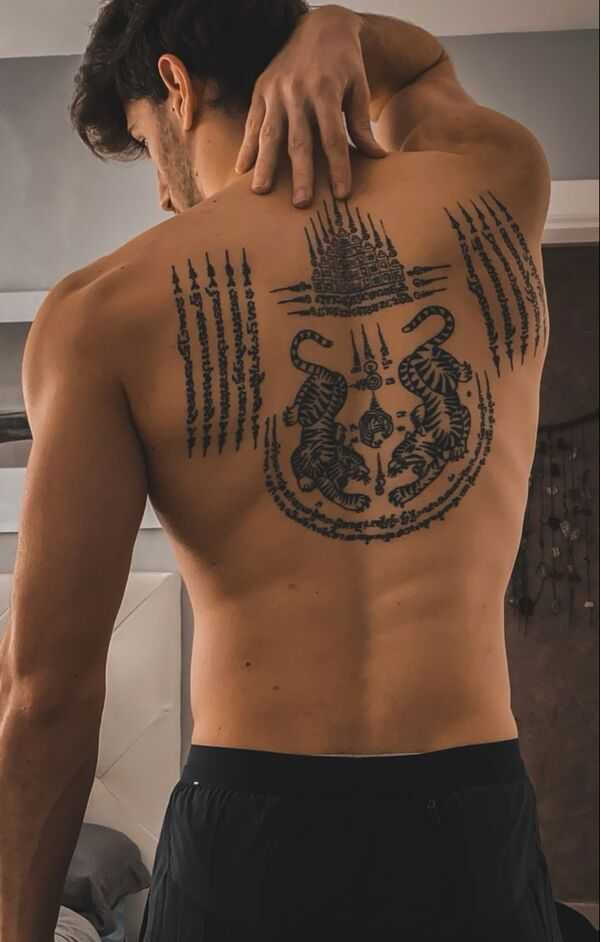
Dragon back tattoo: With its large area, if you want a big tattoo, consider the back. The back is the ideal place with a large surface area to tattoo complex dragon designs with many details. Additionally, this position is discreet enough that when you go to formal places, you can easily cover it, and it also carries the meaning of modesty and inner strength.

Dragon chest tattoo: The chest is close to the heart, so getting a tattoo there expresses deeper emotions and meanings than other places. A tattoo on the chest is often for those who carry passion, dedication, and a desire to assert their self-worth. This position also carries meanings related to core values in life.

Dragon leg tattoo: Placement of dragon tattoo on the leg, especially on the calf or thigh, represents freedom in thought and action. It symbolizes the journey of self-discovery, seeking enlightenment, and perseverance in following the right path.

Dragon shoulder tattoo: The shoulder is a discreet location but carries strength and solidity. A tattoo on the shoulder not only symbolizes self-protection but also represents determination and independence. For those who enjoy mystery, this is the ideal place.

Dragon tattoos for men

Dragon tattoos for men have long been a powerful symbol in tattoo art. With their majestic, heroic, and mysterious appearance, dragons embody strength, wisdom, and protection. Tattoos are not only about aesthetics but also represent a man’s strong personality and resilient spirit.

For men, dragon imagery is often designed in a bold style, featuring sharp lines and intricate details. Popular designs typically include dragons flying amidst clouds, fire-breathing dragons, or dragons combined with natural elements like lightning, water, or mountains. These tattoos, like a shark tattoo, create an impressive look while carrying profound symbolic meanings of dominance and strength. In Eastern cultures, dragons symbolize power good fortune. For men, they reflect aspirations to rise, inner strength, and the ability to protect loved ones.

Common placements for Dragon ink design among men include the back, arms, chest, and shoulders. The back is an ideal spot for large, detailed tattoos, showcasing the full majestic beauty of the creature. Meanwhile, tattoos on the arms or shoulders are suitable for those who want to display their bold personality, easily showing off the tattoo while maintaining an air of mystery. Tattoos on the chest, near the heart, symbolize loyalty, protection, and love.

Dragon tattoos for men are not just works of art but also a way for men to tell their own stories. Whether choosing the Asian dragon style with soft, flowing details or the Western dragon with rugged features, this tattoo always exudes a powerful and captivating appearance.

Dragon tattoos for women

Dragon tattoos for women are also popular for their combination of strength and charm. In designs for women, Tattoos of this mythical creature have a softer and more graceful beauty, while still retaining the power and mystique of the creature.

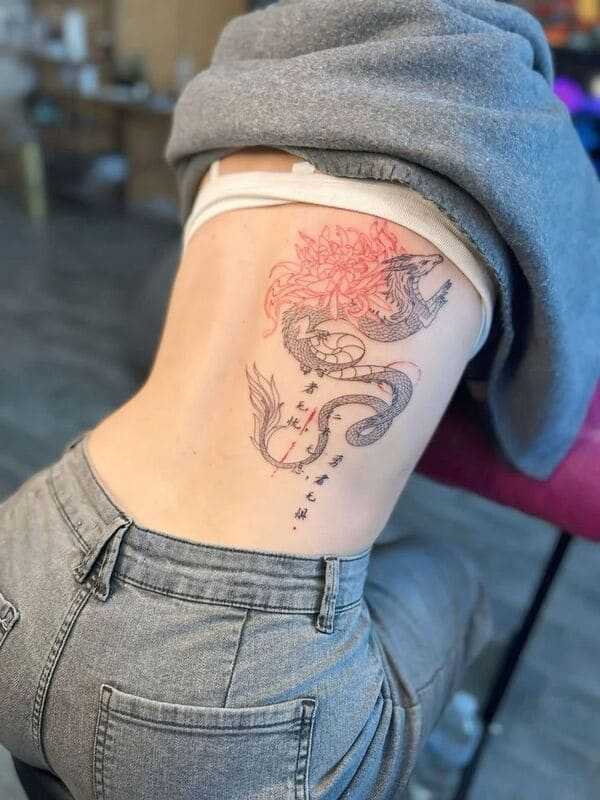
For women, tattoos not only symbolize inner strength but also represent freedom, independence, and pride. Many women choose to get a dragon design to express their desire to overcome life’s challenges or to remind themselves of resilience and the ability to regenerate after hardships. Designs often emphasize a balance between strength and elegance, with details such as a dragon soaring among flowers, or a dragon merging with elements like water, clouds, or moonlight.

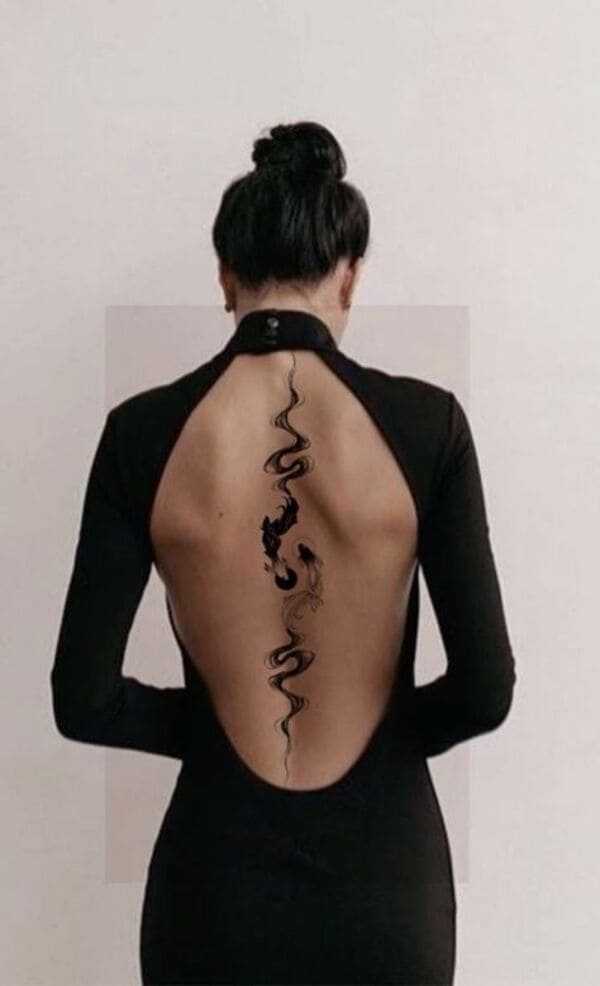
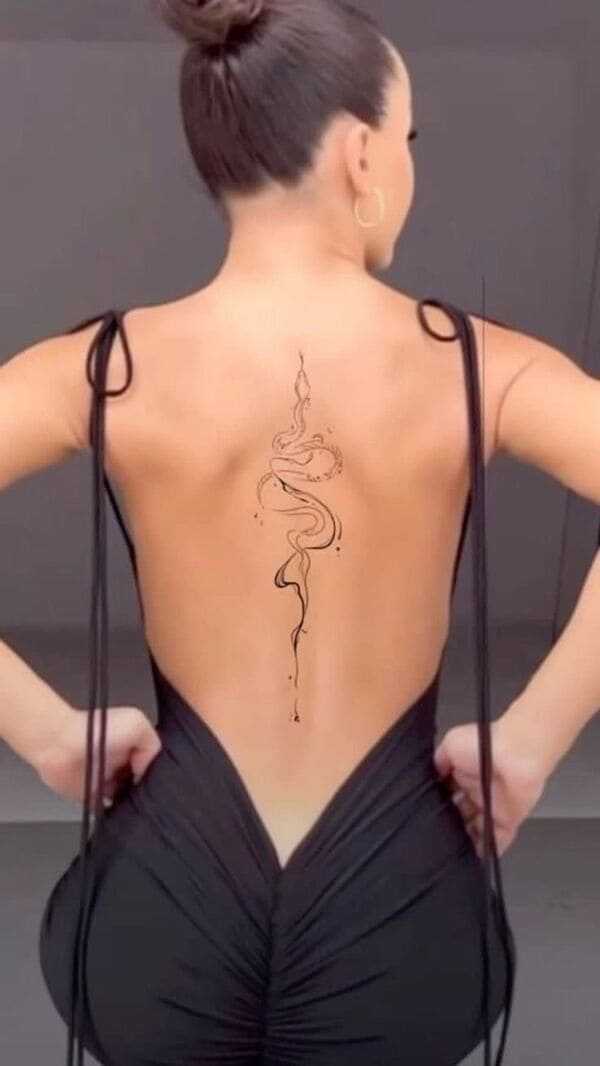
The placement of tattoos for women is also diverse, depending on personal preferences and style. A small tattoo on the wrist, back of the neck, or ankle often brings a gentle yet meaningful touch, while areas like the back, hip, or thigh reflect a more sensual beauty and strong personality. For those who love to stand out, a dragon winding along the spine or extending along the hip is an impressive choice, offering a sense of power while still being graceful.

Dragon tattoos for women often combine colors and lines in a delicate way. The softness of the design does not diminish the inherent strength of the dragon, but rather adds to its charm and uniqueness. For many women, a tattoo of this mythical creature is a symbol of independence, intelligence, and protection, while also expressing a strong personality and confidence in life.

A dragon tattoo symbolizes a free person, ready to face the challenges ahead. Whether it’s a mystical Chinese dragon or a small, cute dragon, various tattoo styles like Tribal, Fantasy-Inspired, and Elements can convey different stories that the tattoo owner wants to express. If you’re looking for a design that tells your unique story, visit Boston Tattoo at Holistic Ink, where our skilled artists will bring your vision to life with precision and creativity.
Categories
Blog Uncategorized

Full Sleeve Tattoos Meaning, Quarter Sleeve Tattoo or Half Sleeve for Your Arm

Sleeve tattoos are not just tattoos. They are a work of art that stretches along the arm, telling a personal story from the shoulder down to the wrist. Holistic Ink understands that many people still wonder: what exactly this style of tattoo is, which type they should choose, and whether the cost or level of pain is manageable. For many individuals, it is also a way to establish a personal identity — a tattoo identity — more clearly than words ever could. This article answers everything, from the definition to the criteria for choosing the right option for each person.

Sleeve Tattoos Meaning – Why Many People Choose Arm-Covering Tattoos

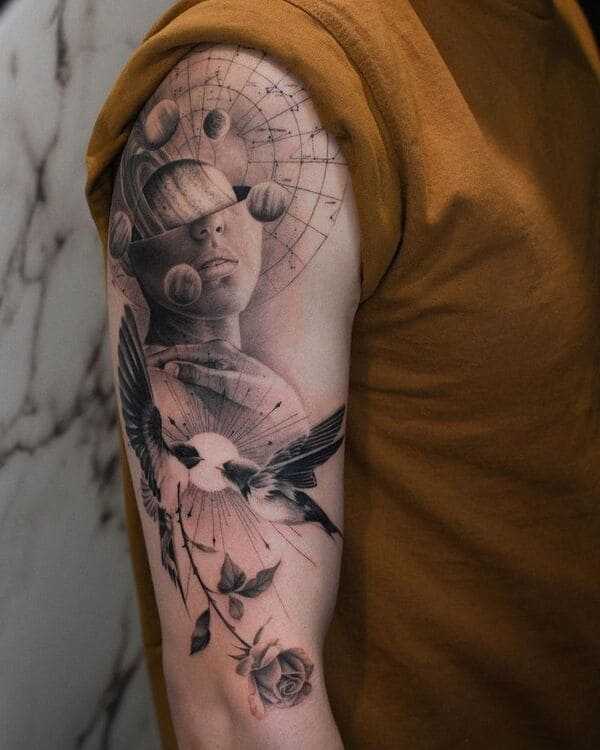
A sleeve tattoo is a style of tattoo that covers part or all of the arm, designed as a connected tattoo artwork rather than a collection of separate images. The term “sleeve” accurately reflects the layout that wraps around the arm along its natural length.

A sleeve tattoo is a style of tattoo that covers part or all of the arm | Nicolas D

Each element in the tattoo design plays a role in the overall composition, helping create a continuous visual flow that follows the curves of the body. Tattoo artists often consider visual balance, compositional structure, and the distribution of negative space so that details blend together across the entire body art canvas.

This element of tattoo storytelling — the ability to tell a story through images running across the arm — is what distinguishes sleeve tattoos from other tattoo forms. This is why arm sleeve tattoos are considered one of the tattoo artworks that require the highest level of technical skill in the industry.

The core value of a body canvas tattoo is transforming the body into a space for personal storytelling. Arm tattoo composition allows themes to unfold vertically, naturally wrapping around muscles and arm joints — something that small, separate tattoos are difficult to achieve.

Hình xăm nửa tay | Boldsir
Half Sleeve Tattoo | Boldsir

Sleeve tattoos have evolved from niche subculture markers into mainstream artistic expression, reflecting profound shifts in how contemporary society views body modification. Unlike isolated tattoos that function as discrete symbols, sleeves operate as integrated visual narratives — each element contributes to an overarching story that reveals itself progressively as the arm moves and rotates. This sequential revelation creates dynamic viewing experience impossible with static imagery, turning the arm into living gallery where art responds to gesture and motion.

The extended timeline of multiple sessions creates ritual space for reflection and intention-setting, distinguishing sleeves from impulsive single-session tattoos. This temporal investment attracts individuals seeking deliberate, conscious relationship with their body art rather than spontaneous decoration. Social media amplification has accelerated mainstream acceptance, showcasing technical mastery and conceptual depth possible in sleeve format, inspiring broader audiences to view tattoos as legitimate art medium deserving serious consideration and substantial investment.

View more: Buddha Tattoo Meaning spiritual symbolism, cultural significance & design inspiration

Types of Sleeve Tattoos

There are three common types, distinguished by coverage area:

  1. Full sleeve tattoo — from the shoulder to the wrist
  2. Half sleeve tattoo — from the shoulder to the elbow, or from the elbow to the wrist
  3. Quarter sleeve tattoo — covering about one-quarter of the arm, usually on the upper shoulder area
The reduced scope makes half sleeves more accessible financially | Diego Alfaya

Each type has its own characteristics in terms of surface area, execution time, and cost. The choice depends on personal style, budget, and the level of commitment to the tattooing process.

Full sleeve represents the ultimate commitment in arm tattooing, providing maximum canvas for complex storytelling and intricate design development. This comprehensive coverage allows artists to create narrative arcs that flow from shoulder to wrist, incorporating multiple thematic elements that build upon each other. The extended surface area enables greater compositional freedom — background elements can be developed fully, transitions between subjects become more organic, and the overall visual impact reaches its peak potential. However, full sleeves demand significant investment: 15-20+ sessions spanning 6-18 months, costs ranging from 15-50 million VND, and substantial pain tolerance as every arm zone must be tattooed including sensitive inner arm and elbow areas. Professional considerations also intensify — full sleeves remain visible in short-sleeved shirts, potentially affecting career opportunities in conservative industries.

Half sleeve offers strategic balance between visual impact and practical flexibility. Upper half sleeves (shoulder to elbow) provide professional discretion — completely concealable under standard short-sleeve business shirts while still offering substantial canvas for meaningful imagery. Lower half sleeves (elbow to wrist) maximize visibility during daily activities, ensuring your tattoo remains constantly visible to yourself and others. This option suits those wanting significant tattoo presence without full-arm commitment, requiring 5-10 sessions over 3-8 months with costs between 8-25 million VND. The reduced scope makes half sleeves more accessible financially and temporally while still providing sufficient space for complex designs.

Quarter sleeve serves as an ideal entry point for tattoo newcomers or those preferring contained, focused imagery. Concentrating on the shoulder cap or upper arm allows for impactful standalone pieces — large mandalas, animal portraits, or memorial tributes — without extensive coverage. This minimal commitment requires only 2-4 sessions completing within 1-3 months, costs ranging 3-10 million VND, and can easily be concealed under t-shirts. Quarter sleeves also function excellently as phase-one foundations for future expansion into half or full sleeves, allowing gradual commitment growth as comfort and vision develop.

Popular Design Styles for Arm Sleeve Tattoos

Each sleeve tattoo project is usually built around a specific artistic style to maintain consistency. Popular choices include Japanese tattoo style, blackwork tattoo, realism tattoo, geometric tattoo design, and neo traditional tattoo. Each style has a different approach to tattoo linework, tattoo shading, and tattoo color palette. Choosing the right style from the beginning helps ensure tattoo visual cohesion and prevents the finished artwork from feeling disjointed.

Hình xăm kín cánh tay dành cho nam giới | Netto Marcio
Sleeve tattoos for men | Netto Marcio

Japanese Irezumi: Eastern Symbolic Language

Japanese irezumi is not merely an aesthetic style but a complete storytelling system through symbolism, where each element carries profound cultural meaning accumulated over centuries. The core characteristic lies in its ability to create tattoo symbolic storytelling — telling a complex story about life, values, and personal aspirations through Eastern symbols arranged according to strict principles. Unlike Western styles that often focus on pure visual impact, irezumi prioritizes meaning layering — each detail contributes to the overall narrative with layers of meaning from surface to profound.

The deep significance of each main subject reflects Eastern life philosophy. Dragons are not simply mythological creatures but represent the path of transformation — from low to noble, from ignorance to wisdom. An ascending dragon on a sleeve symbolizes a personal journey overcoming adversity to achieve greatness, the image of a dragon rising from ocean waves embodies rising above life’s challenges. Conversely, a coiled dragon represents unreleased potential — power waiting for the right moment to burst forth, appealing to those in preparation stages before major life transitions.

Chăm sóc sau cho hình xăm tay áo Nhật Bản | Địch-mit-Stich
Aftercare for Japanese Sleeve Tattoos | Dich-mit-Stich
  • Koi Fish: perseverance and self-transformation — swimming against the current (facing present challenges), swimming with the current (overcoming obstacles), multiple koi swimming together (the continuous cycle of struggle and achievement).
  • Phoenix: rebirth and triumph over tragedy — especially resonant for people who have experienced loss, illness, or personal crises.
  • Tiger: a symbol of powerful protection and courage — often paired with dragons in the yin-yang relationship.
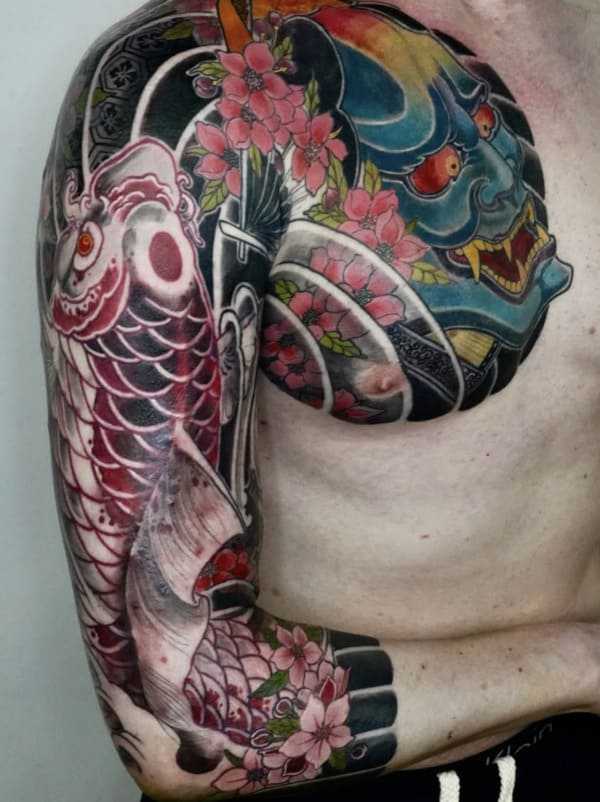
  • Hannya Mask: jealousy transformed into wisdom through pain — intense emotions leading to personal growth and maturity.

Supporting elements are not merely decorative but also add important layers of meaning. Cherry blossoms (Sakura) embody the Japanese concept of mono no aware — a profound awareness of impermanence, appreciating beauty precisely because it will fade, reminding the wearer to cherish present moments rather than cling to the past. Peonies, traditionally associated with masculine courage in Japanese culture despite their feminine appearance, represent the idea that one can be both graceful and strong — especially meaningful for modern men navigating the pressures of toxic masculinity. Lotus flowers rising from the mud serve as a Buddhist metaphor for enlightenment achieved despite hardship, symbolizing purity emerging from impurity, deeply resonating with anyone who has transformed a painful past into personal strength.

Japanese irezumi is not merely an aesthetic style but a complete storytelling system through symbolism | Bsutherland

Background elements such as waves, wind bars, and clouds all carry equal symbolic importance within the overall composition. Waves represent the inevitable ups and downs of life — stormy waves suggest turbulent periods, gentle waves symbolize peaceful times, and whirlpools represent the cyclical nature of fate. Wind bars imply the invisible forces shaping destiny — things beyond personal control that must nevertheless be navigated skillfully. Clouds separating different elements symbolize mystery, transitions between stages of life, and the boundary between earthly existence and the spiritual realm.

Contemporary Japanese sleeve tattoos are undergoing a major transformation, moving away from traditional approaches. The trend toward restraint and refinement is becoming increasingly evident:

  • Carefully selected color palettes: shifting from maximum color saturation to black-and-gray foundations with strategic color highlights that emphasize the most important elements.
  • Hyperfine detailing: extremely intricate patterns and feather textures made possible through modern precision techniques.
  • Asymmetrical compositions: breaking away from perfect symmetry, embracing natural wildness and imperfection as a form of authentic beauty.
  • Female-centered imagery: powerful goddesses and female warriors replacing traditionally male-dominated symbols.

Blackwork: The Philosophy of Minimalism

The deliberate use of heavy black ink to cover large areas of skin while emphasizing the remaining negative space carries powerful metaphorical meaning:

  • Sacrifice and letting go: removing unnecessary elements to reveal essential truths.
  • Finding light within darkness: forest scenes emerging from shadows symbolize the light discovered through hardship.
  • Hidden beauty: recognizing that existence can endure and even thrive despite difficult conditions.
  • Intentional limitation: choosing only what is essential rather than pursuing excess, reinforcing self-discipline and clarity of focus.

This radical aesthetic approach particularly resonates with people who have experienced major life decline or upheaval — loss forcing them to abandon what is unnecessary, crises revealing what truly matters, and darkness paradoxically illuminating their deepest priorities.

Chọn tay áo dài, tay áo ngắn hoặc tay áo lửng | Chọn tay áo dài, tay áo ngắn hoặc tay áo lửng
Choose a Full Sleeve, Half Sleeve, or Quarter Sleeve | Choose a Full Sleeve, Half Sleeve, or Quarter Sleeve

The evolution of Blackwork reflects a broader cultural reassessment of minimalism and authenticity. Recent movements within the scene show artists pushing boundaries in unexpected directions:

  • Black-and-white Brutalist architecture: raw geometric forms and industrial aesthetics reflecting an appreciation for rough, honest beauty in the post-pandemic era.
  • Single-line minimalism: complex imagery created from one uninterrupted continuous line, symbolizing an indivisible personal journey.
  • The fusion of Blackwork and realism: combining photorealistic elements with bold geometric framing, bridging natural human experience with rational structure.
  • Text integration: philosophical quotations and poetic passages woven into geometric patterns, merging visual and linguistic expression.

Neo-Traditional: Reinventing Heritage

Neo-traditional tattooing achieves a remarkable balance by honoring artistic history while refusing to be confined by historical limitations. The style preserves what made traditional American tattooing timeless — bold lines that ensure durability, highly saturated colors that create immediate visual impact, and graphic clarity readable from a distance — while incorporating modern artistic possibilities such as dimensional shading, illustrative complexity, expanded color palettes, and more sophisticated storytelling. This thoughtful evolution strongly appeals to progressive individuals who respect tradition: people who value cultural heritage and proven techniques yet reject rigid traditionalism that suppresses creative growth.

The symbolic evolution within neo-traditional tattooing distinguishes it from its predecessors through far deeper layers of meaning. Roses transcend cliché romantic symbolism to represent maturity gained through pain — beauty that exists despite, or even because of, protective thorns; the inherent complexity of passion contrasted against the danger of defense; the fleeting nature of life taught through wilting petals. This multidimensional symbolism allows the same rose imagery to carry different personal meanings: cancer survivors may see beauty emerging from painful treatment, survivors of violence may recognize strength forged through hardship, and artists may identify with the way suffering often deepens creative expression.

Daggers are not merely symbols of aggression but representations of necessary acts in personal development — cutting away toxic relationships that drain energy, removing limiting beliefs that hinder growth, and finding the courage to pierce through confusion in pursuit of difficult truths. Hourglasses symbolize a refined awareness of time — recognizing that every passing moment is a nonrenewable investment, feeling the urgency to live authentically before the inevitable end, and understanding how daily choices gradually shape the final form of a life.

The style preserves what made traditional American tattooing timeless | Sommers Wendi

Female Imagery — Agency and Complexity

Female figures in neo-traditional tattooing carry far greater depth than the pin-up girls of traditional tattoo culture:

  • Art Nouveau-inspired women: flowing hair intertwined with natural elements such as flowers, vines, and water, symbolizing feminine power as a source of creative energy.
  • Female sugar skulls inspired by Día de los Muertos: honoring deceased ancestors while celebrating vibrant life, expressing wisdom about the role of death in giving meaning to existence.
  • Goddess archetypes: Athena (wisdom and strategy), Freya (love and independence), Kali (destruction that enables rebirth) — diverse representations of sacred feminine strength.

These are not passive objects of beauty but powerful, active beings that resonate with contemporary understandings of gender, rejecting the historically restrictive roles imposed upon women.

Animal Symbolism — Psychological Depth

  • Wolves: loyalty to chosen family rather than blood alone, intelligence balanced with instinct, and the wisdom to know when to lead, when to follow, and when to walk alone.
  • Bears: fierce protection combined with comfort in solitude, with the cycle of hibernation and reemergence serving as a metaphor for depression and recovery.

  • Owls: wisdom gained through darkness, the ability to see clearly when others remain blind, and psychological composure in the face of uncertainty.

Decorative elements — including intricate ornamental carvings, geometric motifs, and elaborate embellishment lines — serve two important purposes. Functionally, they visually connect separate components into a unified composition, preventing fragmentation. Symbolically, ornate framing suggests that life experiences are valuable enough to be preserved like museum artifacts; decorative borders define distinct chapters of life while still expressing connection to a larger narrative; and ornamental lines symbolize the unexpected beauty found in transitional periods between major life events.

Định nghĩa về hình xăm kín tay trong nghệ thuật xăm hình | Maryana
Definition of Sleeve Tattoos in Tattoo Art | Maryana

Neo-traditional tattooing is undergoing a fascinating transformation that reflects broader cultural shifts. What artists are exploring today is not merely aesthetic preference, but also a response to evolving values and lived experiences:

  • Dark neo-classical palettes: muted tones such as deep burgundy, forest green, midnight blue, and charcoal gray reflecting post-pandemic emotional heaviness and inner melancholy.
  • Refined layered linework: intricate detailing embedded within strong structural frameworks, creating visual interest across multiple scales.
  • Complete narrative storytelling: fully realized stories with clear beginning-middle-end structures, transforming chaotic life experiences into personal mythology.
  • Cultural fusion: the respectful integration of Celtic, Polynesian, and Aztec imagery, reflecting the development of increasingly globalized identities.
  • Neo-classical portraiture: applying dimensional shading techniques to the faces of loved ones, combining emotional connection with superior aging characteristics over time.

Things to Consider Before Getting a Sleeve Tattoo

Before committing to a sleeve tattoo, understanding the full scope of implications — physical, financial, professional, and emotional — ensures informed decision-making that aligns with your long-term vision. A sleeve represents one of the most visible and permanent body modifications you can make, affecting everything from daily wardrobe choices to career opportunities and social perceptions. Unlike smaller tattoos that can be easily concealed or removed, sleeves demand careful consideration of lifestyle compatibility, future goals, and personal readiness for extended commitment.

The decision encompasses more than aesthetic preference; it requires honest assessment of pain tolerance across multiple lengthy sessions, financial capacity to sustain quality work over months or years, and willingness to maintain proper aftercare protocols that directly impact final results. Professional environment considerations also merit serious evaluation — while tattoo acceptance has increased substantially, industry-specific attitudes vary dramatically, potentially limiting advancement in conservative fields like law, finance, or corporate management. Social dynamics shift as well; family reactions, relationship partner preferences, and community cultural norms all factor into the psychological experience of wearing prominent visible tattoos.

Things to Consider Before Getting a Sleeve Tattoo | Duston

Additionally, skin aging, weight fluctuation potential, and evolving personal taste over decades should influence design choices and placement strategies. These multifaceted considerations don’t discourage sleeve tattoos but rather encourage thoughtful preparation ensuring your investment delivers lasting satisfaction rather than eventual regret. Taking time to evaluate these factors honestly — and discussing concerns openly with your chosen artist — creates foundation for successful sleeve journey from concept through completion and decades beyond.

Choose a Reputable Tattoo Artist

A professional tattoo artist is not only skilled in tattooing but also capable of advising on composition, artistic direction, and adapting designs to suit each person’s arm structure. This process typically includes evaluating tattoo flow along the arm, developing an overall sleeve concept, and ensuring artistic consistency among all elements throughout the project.

Before making a decision, carefully review the artist’s tattoo portfolio, especially previous full-sleeve tattoos they have completed. For individuals seeking to cover old tattoos, full-sleeve cover-up work requires expertise in working over existing ink layers — making it essential to choose a studio with specialized experience.

Aftercare Guide for Full Sleeve Tattoos

Proper tattoo aftercare directly affects color quality and long-term durability. Basic steps include:

  1. Wash gently with fragrance-free soap twice daily during the first week.
  2. Moisturize with a dedicated tattoo aftercare cream — avoid applying excessively thick layers.
  3. Avoid direct sunlight during the healing process to protect the tattoo from fading.
  4. Do not soak the tattoo in water or scratch it, even if itching occurs.
  5. Monitor for signs of infection. If redness persists or unusual swelling appears, contact the studio immediately.
Hình xăm tay truyền thống với nhiều chi tiết đường nét phức tạp | sadfgxsdf
A traditional tattoo sleeve with many intricate line details | sadfgxsdf

Surface healing typically takes between two and four weeks, while complete healing beneath the skin can take up to three months.

How to Keep Tattoo Colors Vibrant for Longer

Once the tattoo has fully healed, proper care will help extend its longevity. Strong sunlight is one of the most common causes of tattoo fading, so applying sunscreen to tattooed areas when outdoors is highly recommended. After several years, certain details may require touch-ups to restore sharpness and clarity. Keeping the skin moisturized and minimizing friction also help preserve tattoo color and maintain the artwork’s contrast.

A full sleeve tattoo is a long-term commitment — involving time, financial investment, and consistent aftercare. Choosing between a full sleeve, half sleeve, or quarter sleeve depends on your personal style, budget, and willingness to invest in the process. Most importantly, finding the right tattoo artist — someone who understands the story you want your tattoo to express — is essential. We are ready to accompany you from the initial design consultation to the final tattoo session.

If you need additional information or technical consultation about sleeve tattoos, please contact Holistic Ink for a free consultation. Our team of artists will provide detailed guidance and professional support.

Categories
Blog

Explore Koi Fish Tattoo Meaning and Design Inspirations

Koi fish tattoo meaning goes far beyond aesthetics, reflecting centuries-old Japanese tradition and symbolism. Representing resilience, perseverance, transformation, and good fortune, this iconic design continues to inspire tattoo enthusiasts worldwide. From the meanings of the different colors to ideal placement and aftercare tips, this guide from Holistic Ink will help you understand the symbolic meaning behind a Koi carp tattoo and choose a design that truly reflects your personal journey.

Koi Fish Tattoo Meaning in Japanese Culture – Holistic Ink Shares

The koi has long been admired in Japanese culture as a symbol of strength, perseverance, transformation, and good fortune. Koi fish tattoo meaning is closely connected to the fish’s legendary journey of swimming upstream against powerful currents, representing the challenges people face throughout life, personal growth, unwavering determination, and the pursuit of success. More than an eye-catching design, it embodies resilience, courage, and the ability to overcome adversity, making it one of the most meaningful tattoo choices for those seeking a design with lasting significance.

The meaning of koi fish tattoo

According to Japanese folklore, the koi fish’s tale of transformation into a dragon is one of the most powerful stories associated with the species. It is said that a koi fish swam upstream the Yellow River and, after leaping over a waterfall, transformed into a dragon. This myth symbolizes the ability to overcome the greatest of challenges and emerge victorious, representing the journey of self-improvement and the potential for extraordinary transformation through dedication and hard work. This imagery makes the koi ink particularly meaningful for those who have experienced struggles in their own lives or for those who believe in the potential for personal reinvention and growth.

In the context of tattoo art, the koi fish design is not just an aesthetically pleasing form but also a deeply personal symbol of resilience and tenacity. For many people, a carp tattoo serves as a reminder of their own struggles and successes. The tattoo’s symbolism extends beyond its appearance, making it a powerful tool for self-expression. The koi’s journey up the river acts as a metaphor for the obstacles one may face in life, whether in relationships, career, or personal struggles. The koi fish’s ability to navigate these difficult waters and continue swimming forward serves as an inspiring reminder to tattoo wearers of the strength and courage they possess to overcome their challenges.

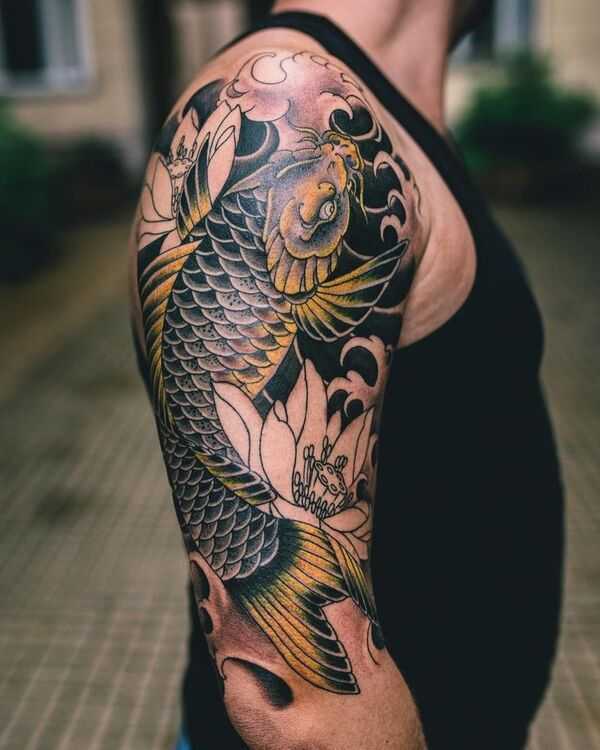
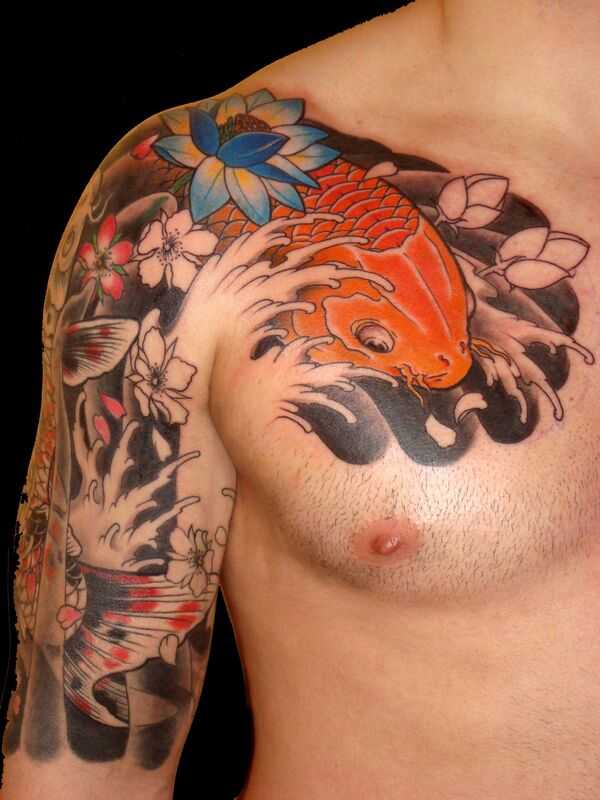
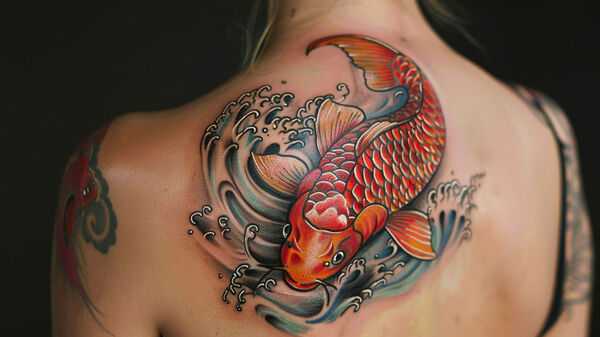
The colors of the koi fish tattoo play a crucial role in further enhancing their symbolic meanings. Each color has its own unique interpretation in Japanese culture, offering even more depth to the tattoo design. A red koi fish is perhaps the most symbolic of all, representing love, passion, and courage. This vibrant color embodies the power of the heart and signifies strong emotions, deep devotion, and unwavering commitment. The red koi is often chosen by those who want to celebrate their love, passion for life, or dedication to a cause.

The colors of a koi tattoo significantly enhance its symbolic meaning

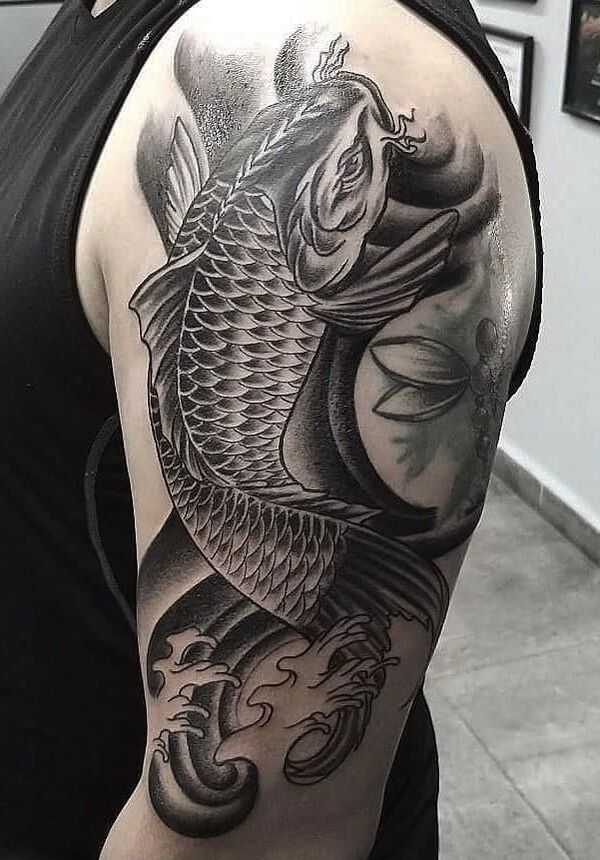
On the other hand, a black koi fish represents strength and the ability to overcome struggles, particularly those that are personal and deeply emotional. The black koi is a symbol of fortitude and resilience, making it ideal for those who have faced significant obstacles in their lives and emerged stronger as a result. It’s often chosen as a tribute to overcoming adversity or as a representation of inner strength in the face of life’s challenges.

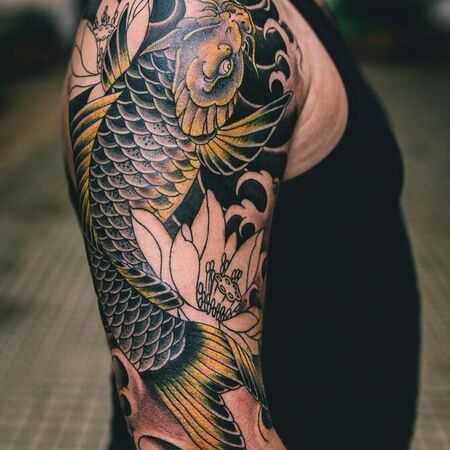
The golden koi fish carries connotations of wealth, prosperity, and good fortune. It is often linked to success in business and personal achievements, serving as a talisman to bring luck and abundance. For those who seek to attract good fortune or represent their success in life, the golden koi is a fitting choice. Similarly, the blue koi fish symbolizes calmness, tranquility, and peace. This color is associated with harmony and the ability to maintain emotional balance in the face of external pressures. A blue koi fish serves as a reminder to value inner peace, resilience, and the ability to stay grounded amidst life’s turbulence.

Beyond the colors, koi inks also offer a wide range of artistic possibilities. The koi’s flowing body and dynamic movement make it an excellent choice for both traditional and modern tattoo designs. Some people choose to have large, intricate tattoos that cover a significant portion of the body, such as the back or sleeve, while others prefer smaller, more minimalist designs. The koi can be incorporated into larger tattoos with other symbolic elements such as lotus flowers, waves, or dragons, adding more layers of meaning to the design.

A koi fish ink can also represent more than just individual growth; it can also symbolize a person’s connection to nature and the spiritual world. In Japan, the koi is often seen as a connection to both the physical and spiritual realms, embodying both earthly struggles and transcendent transformation. For many people, getting a koi fish tattoo design is not only about self-expression but also about connecting with the broader spiritual and cultural values that the koi fish represents.

Why Koi Fish Tattoo is a Popular Choice for Tattoo Lovers – Holistic Ink Explains

Koi fish have soared in popularity over the years, becoming one of the most beloved and enduring tattoo designs around the world. Their appeal spans across cultures and generations, particularly among tattoo enthusiasts who seek not only beauty but also a deeper meaning in their tattoos. The koi fish is more than just a decorative design; it represents resilience, transformation, and personal growth, which resonates with people from all walks of life.

The Cultural Significance of Koi Fish 

One of the main reasons koi fish ink is so popular is their deep cultural significance, particularly in Japan. In Japanese folklore, the koi symbolizes perseverance, strength, and determination. The most well-known legend tells of a koi fish swimming up the Yellow River and transforming into a dragon after leaping over a waterfall, representing overcoming obstacles and achieving success. The koi’s ability to swim upstream, despite strong currents, serves as a metaphor for the challenges we face in life. This symbolism of resilience makes the tattoo of a koi fish a powerful choice for those who have overcome adversity or are on a journey of personal growth.

Visual Appeal and Design Versatility

Apart from its cultural and symbolic significance, the koi ink is also renowned for its stunning visual appeal. The koi fish’s graceful, flowing body and dynamic movement make it a visually striking design that can be customized in a variety of ways. The lines of the koi are fluid and elegant, allowing tattoo artists to create intricate designs that highlight the fish’s natural beauty, much like other creative fish tattoo designs.

Visual Appeal and Design Versatility

Whether you’re drawn to vibrant, traditional styles that incorporate bold reds, oranges, and blues or prefer something more minimalist and contemporary, the koi fish can be adapted to suit any aesthetic. Traditional Japanese tattoos are often full of color and intricate detail, while more modern interpretations might include geometric shapes, black and grey shading, or a more subtle design. This flexibility allows tattoo enthusiasts to personalize their carp tattoo to reflect their own tastes, creating a design that is uniquely their own.

The flowing movement of the koi makes it an ideal tattoo for large, expansive areas such as the back, sleeve, or thigh. It can wrap around the body in a dynamic, continuous motion that emphasizes the movement and energy of the fish. Smaller, delicate koi design can also be placed in more subtle areas, such as the ankle, wrist, or behind the ear, allowing the design to remain personal while still showcasing its elegance.

Personal Significance and Connection

Beyond its aesthetic beauty, one of the most compelling reasons people choose koi fish ink is their personal significance. The koi fish symbolizes perseverance and growth, making it a powerful representation of one’s life journey. Many people opt for koi inks to mark personal milestones, commemorate overcoming difficult periods, or symbolize their ongoing pursuit of success and transformation.

For some, this design represents the strength to overcome adversity. Whether it’s the loss of a loved one, a tough breakup, or a personal battle, the koi’s struggle against the current serves as a reminder that no matter how difficult life gets, perseverance will lead to success. Others might choose the koi fish as a representation of their growth, both spiritually and personally, as they continue to evolve and pursue their goals.

The koi fish design is also popular among those who believe in the power of transformation. Much like the koi in the myth, individuals who are undergoing personal growth or change may find the koi fish to be a symbol of their own metamorphosis. The koi’s ability to transform into a dragon is a powerful metaphor for how individuals can transform themselves through hard work, dedication, and the willingness to change. Similarly, some choose alternative designs, like a duck tattoo, to represent adaptability and resilience, embracing a different yet equally profound journey of self-discovery.

Color and Personalization

One of the key aspects of koi fish is the ability to personalize them through color. Each color used in this tattoo carries its own distinct meaning, allowing for a more individualized design that reflects the wearer’s personality, beliefs, and life experiences.

Timelessness and Universal Appeal

The koi design’s enduring popularity can also be attributed to its timeless appeal. While tattoo trends may come and go, the Japanese tattoo remains a constant favorite for tattoo lovers worldwide. Its deep cultural roots, meaningful symbolism, and striking visuals make it a design that transcends generations and cultures. Whether chosen for its beauty, its symbolic meaning, or both, the koi fish ink continues to resonate with people around the world, making it a universal choice for anyone looking for a meaningful and visually stunning tattoo.

Timelessness and Universal Appeal

Koi Fish Tattoo: Explore Unique Colors and Tattoo Design

The koi fish tattoo is not just a beautiful design; it is rich in symbolism and offers a variety of color choices, each carrying a unique meaning. Below, we will explore the most common colors in design and their meanings, as well as the versatility of koi fish ink.

1. Red Koi Fish: Love, Passion, and Courage

The red koi fish is one of the most popular and significant color choices in koi ink. It symbolizes love, passion, and courage. This color is often associated with strong emotions, especially those tied to romantic love and devotion. People who choose a red koi fish is usually drawn to its deep connection to love and the emotional strength it represents.

Red koi fish tattoo
Red koi fish tattoo

2. Black Koi Fish: Strength and Overcoming Struggles

A black koi fish symbolizes strength, resilience, and the ability to overcome obstacles. It represents personal growth through hardship and struggles, making it a powerful choice for those who have triumphed over difficult situations or those who wish to commemorate their journey toward self-improvement and empowerment.

Black koi fish tattoo

3. Golden and Yellow Fish: Wealth and Prosperity

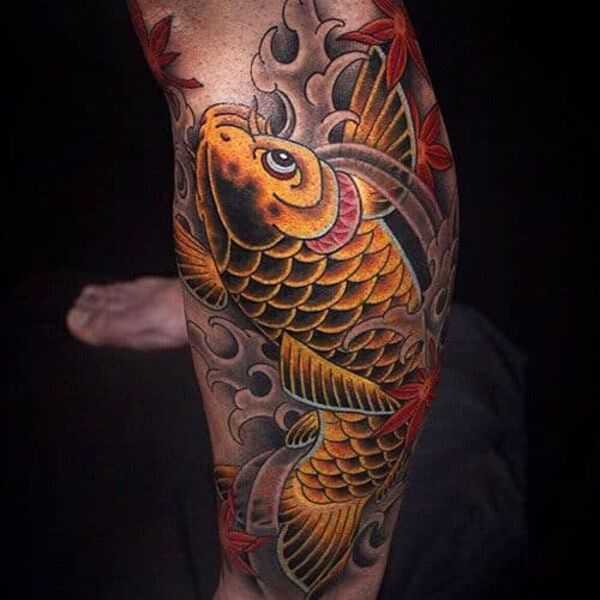
The golden and yellow koi fish are symbols of good fortune, wealth, and prosperity. A golden koi is often chosen by individuals who seek success in business or other personal endeavors. This tattoo is seen as a charm to attract positive energy and abundance, making it a great option for those looking to invite success into their lives.

Golden and Yellow Koi Fish

4. Blue Koi Fish:Tranquility and Harmony

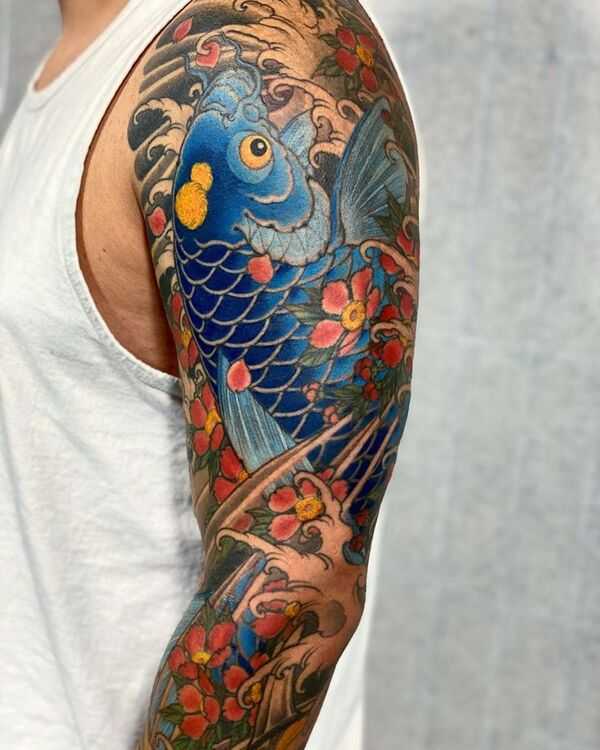
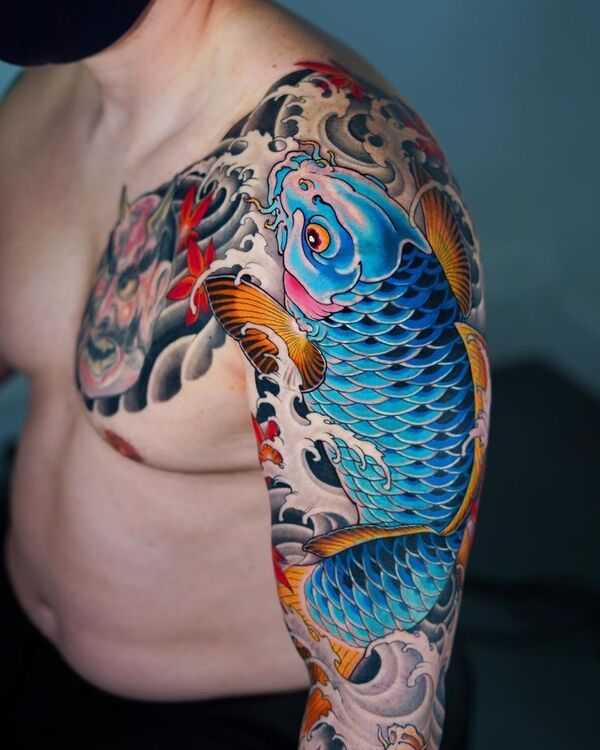
Blue koi fish design symbolize calmness, tranquility, and harmony. This color is linked with maintaining emotional stability and peace of mind. The blue koi represents a desire for inner peace and balance, making it a favorite for those who value serenity in their lives.

Blue koi ink
Blue koi ink

5. White Koi Fish: Purity and Spiritual Growth

A white koi fish is a symbol of purity, spiritual growth, and new beginnings. In traditional Japanese culture, white koi also represent the pursuit of peace and are linked to spiritual enlightenment. This tattoo is ideal for those who are embarking on a fresh chapter in their life or seeking spiritual awakening.

White koi fish design

6. Green Koi Fish: Fertility and Renewal

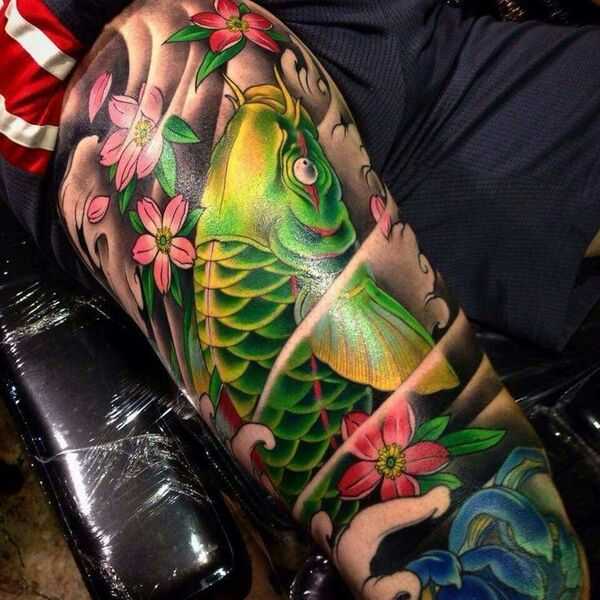
The green koi fish is a symbol of fertility, renewal, and connection to nature. It represents growth, vitality, and a deep connection to the earth. Those who choose this color of koi often seek to celebrate personal or spiritual renewal or to symbolize a fresh start in life.

Green Koi Tattoo
Green Koi Tattoo

Versatility of Koi Fish Designs

Koi fish is highly versatile in terms of design. Whether you prefer the traditional, vibrant Japanese style with intricate details or a more minimalist, modern approach, the koi fish can adapt to various styles. Here are some design ideas for koi fish tattoo:

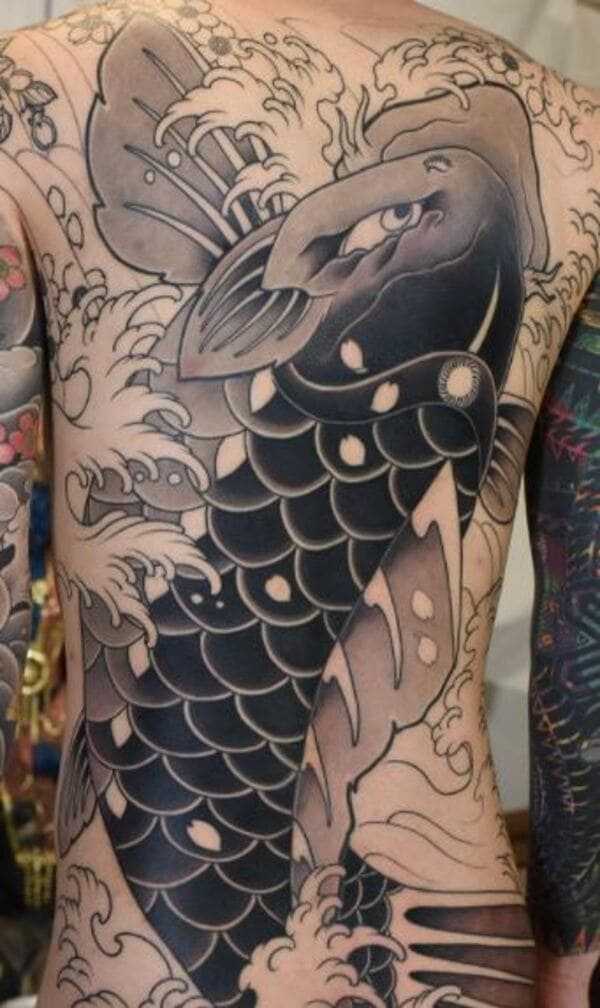
Full-body designs: Koi fish ink can be large and detailed, covering the back, chest, or even wrapping around the entire body.

Full body designs
Full body designs

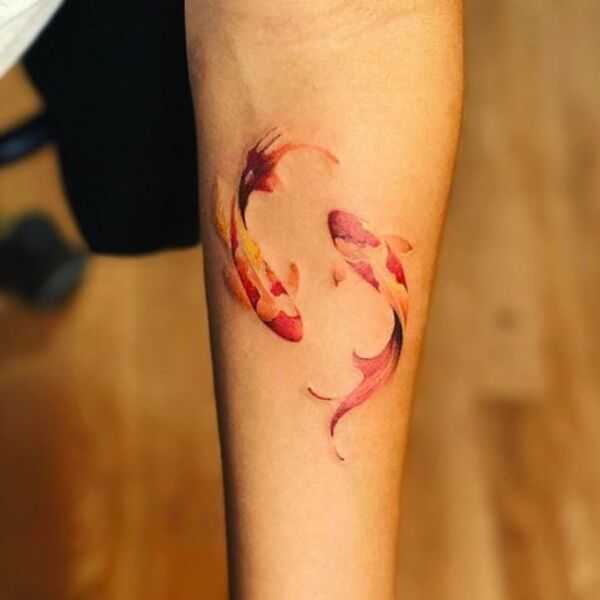
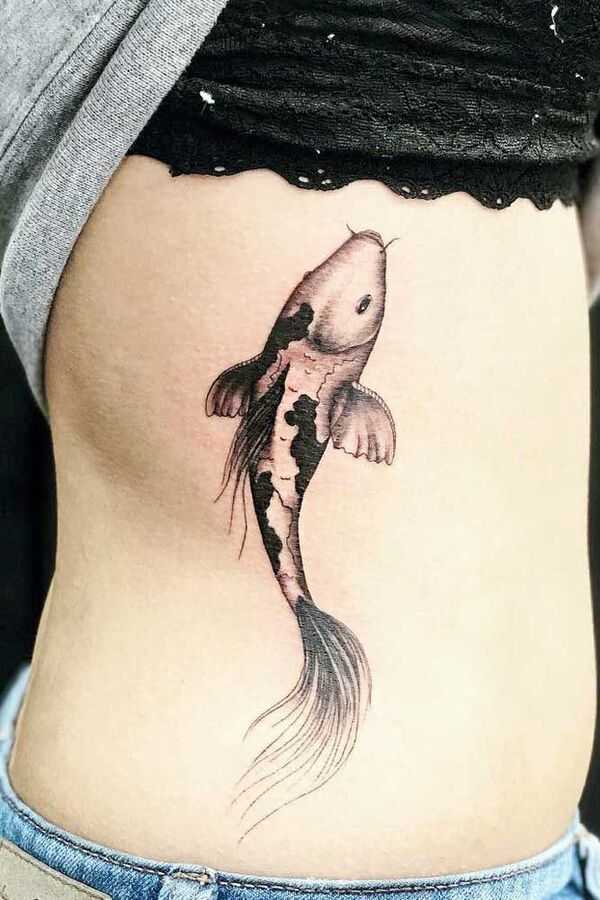
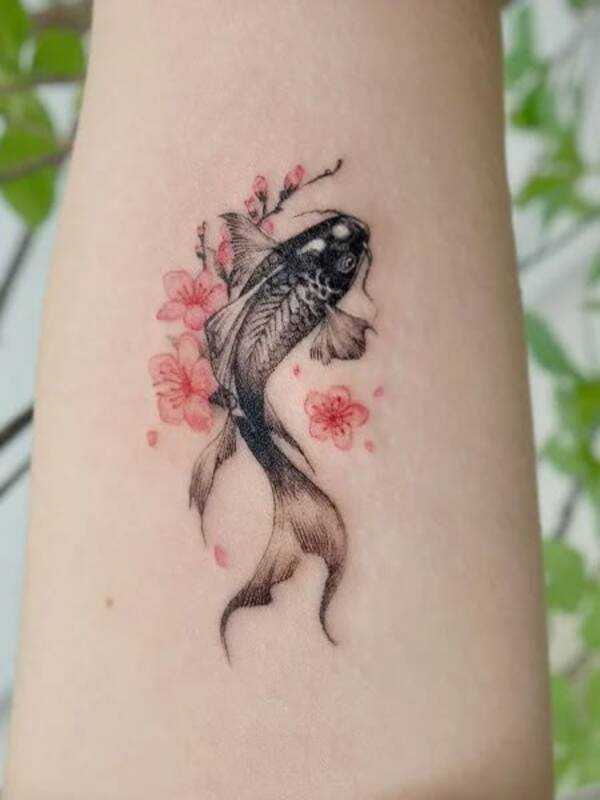
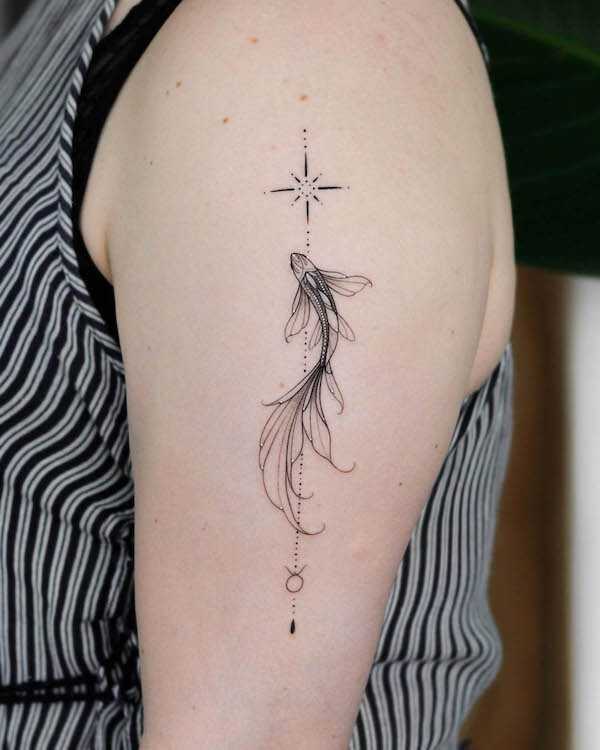
Minimalist designs: For those who prefer a subtler look, a minimalist koi fish design can focus on simple outlines and elegant curves.

Minimalist designs
Minimalist designs

Symbolic combinations: Koi fish can be paired with other traditional symbols, such as lotus flowers, waves, or dragons, creating a more complex and personalized design.

Symbolic combinations

The koi fish symbology is an incredibly meaningful and customizable design that offers both aesthetic beauty and profound symbolism. From the colors that carry individual significance to the flexible design options, a koi fish is an excellent choice for those seeking a tattoo that reflects their personal journey, resilience, and aspirations. Whether you’re drawn to its symbolism or simply its stunning appearance, this tattoo is a timeless design that can be adapted to fit any style.

Common Koi Tattoo Placement Ideas for Fish Ink

The koi tattoo is a versatile design that can be placed in various locations on the body, making it a popular choice for many tattoo lovers. The flowing, dynamic lines of the koi fish allow it to be adapted to different parts of the body, and its symbolism of strength, perseverance, and transformation can be showcased through its placement. Holistic Ink suggests some of the most popular koi fish tattoo placement ideas below:

1. Back

The back is one of the most popular placements for tattoo of a koi fish. Due to the large area it provides, the back allows for a full-body koi design, where the fish can be shown swimming across the entire back. The flowing movement of the koi can create an impressive visual effect, making it a bold and eye-catching placement. This placement also allows for the inclusion of other elements, such as waves, lotus flowers, or dragons, enhancing the design’s impact.

Koi Tattoo in Back
Koi Tattoo in Back

2. Arm (Sleeve)

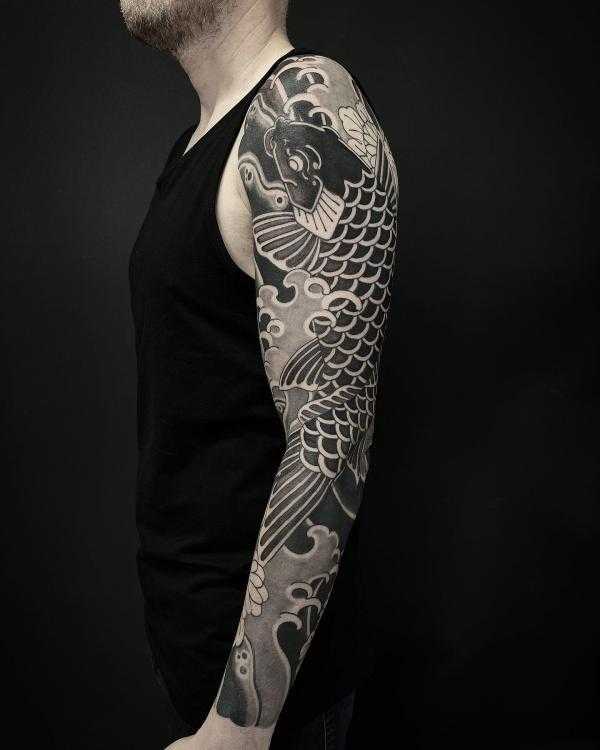
A full arm sleeve is another common placement for tattoo featuring koi fish. The fish can be designed to wrap around the arm, swimming from the upper arm to the forearm, creating a flowing, dynamic piece of art. The placement works well for those who want a tattoo that is visible but still easily covered if necessary. The design can also be adjusted to suit the shape of the arm, creating a natural, seamless flow.

Explore more: Top Forearm Tattoo Ideas for Men and Women

Tattoo in arm
Tattoo in arm

3. Leg

Similar to the arm or leg, a hip tattoo provides a great area for koi fish ink. The tattoo can run along the calf or wrap around the thigh, allowing the koi to be placed in a flowing, swimming pattern that follows the natural contours of the leg. This tattoo on the leg can be a great option for individuals who want a larger design without it being on the torso or arms. This placement is also ideal for more intricate designs, where the fish can be detailed and spread out.

4. Side (Ribs or Flank)

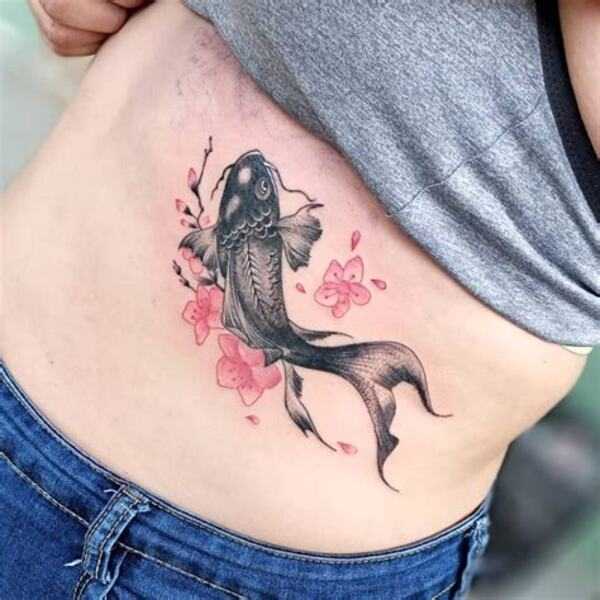
For a more subtle yet impactful placement, the side (rib or flank area) is an excellent option. This type of tattoo placed along the ribs can be designed to follow the natural curve of the body, creating a sense of movement and fluidity. This placement allows the tattoo to be relatively hidden, making it ideal for individuals who prefer more private tattoos. It can also be a great place to incorporate other elements, such as waves or flowers, to enhance the design.

5. Chest

The chest is another location where a koi fish can stand out. A koi tattoo can be placed on the chest, either covering the full chest area or positioned to one side, with the fish swimming across the torso. This placement allows for a larger design, and its location close to the heart can add personal significance for many. It is also a great placement for individuals who want a tattoo that is more intimate and personal.

6. Shoulder

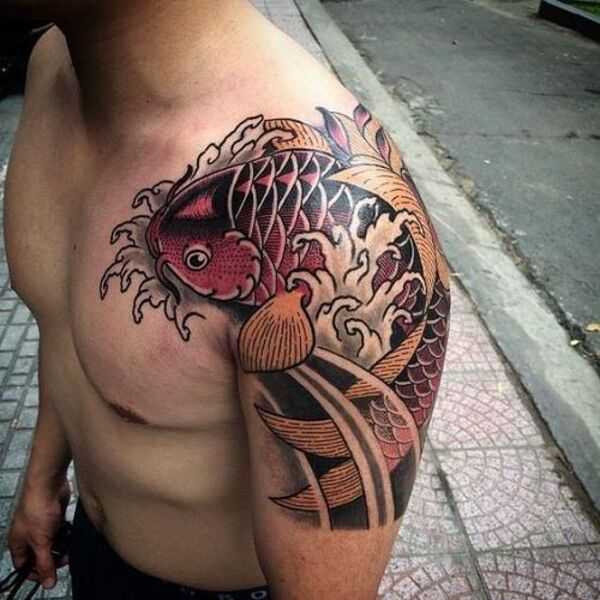
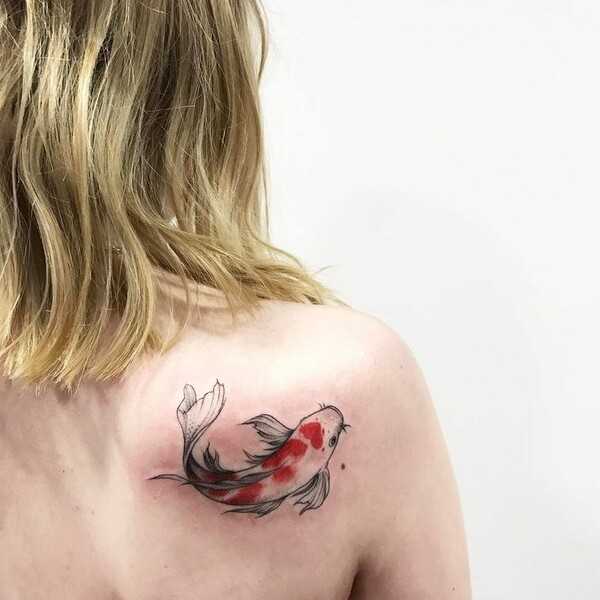
The shoulder is a great placement for a koi symbol, particularly when combined with other elements. The tattoo can start on the upper arm and extend over the shoulder, creating a fluid design that wraps around the body. This placement works well for smaller to medium-sized tattoos and is an excellent option for those who want the tattoo to be visible but not too large.

Koi Tattoo in Shoulder

7. Neck

For those who prefer more visible tattoos, the neck is an option for koi fish designs. While this placement can be bold and striking, it works best for smaller koi design. The koi can be positioned on the side of the neck, wrapping slightly around to the front or back. It’s an ideal placement for individuals who want a tattoo that stands out and makes a statement.

8. Ankle

For a smaller, more subtle tattoo, the ankle can be a great placement. The tattoo can be designed to wrap around the ankle or be placed on the side, showcasing the koi fish in a smaller form. This placement is perfect for those who want a more discreet design, while still incorporating the beauty and symbolism of the koi fish.

How to Choose the Right Tattoo for Your Personality

Koi fish ink are not only visually stunning but also rich in symbolic meaning. The koi fish is often associated with strength, perseverance, transformation, and overcoming challenges, making it an excellent choice for those who want a tattoo that reflects their journey through life. If you’re considering this design of tattoo, it’s important to choose a design that aligns with your personality, values, and experiences. Here are some steps to help you choose the perfect koi design that truly represents you:

  1. Consider the Symbolism Behind the Koi Fish

Each koi fish design carries a specific symbolism that can be personalized to reflect your own life story. The koi fish is known for its ability to swim upstream and overcome obstacles, making it a symbol of resilience and perseverance. However, different colors of koi fish represent different meanings.

Consider the Symbolism Behind the Koi Fish
  • Red Koi symbolizes love, passion, and courage, making it perfect for those who value emotional strength and devotion.
  • Black Koi represents strength and the ability to overcome challenges, particularly personal struggles, so it’s ideal for individuals who have faced significant adversity.
  • Gold Koi is associated with wealth, prosperity, and good fortune, appealing to those who aspire for success or want to attract positive energy.
  • Blue Koi symbolizes tranquility, calmness, and balance, making it suitable for those seeking inner peace or going through a transformative journey.

Take some time to reflect on which color of koi resonates with you the most, depending on the aspects of your life that you wish to highlight or commemorate.

  1. Reflect on Your Life Journey and Values

A koi is deeply symbolic of personal growth, challenges, and transformation. If you’ve experienced major life changes or overcome struggles, this can serve as a reminder of your resilience and strength. For example, if you’ve recently gone through a difficult time but have emerged stronger, a black koi might reflect your journey. Alternatively, if you are striving for personal growth or embracing a new phase in life, a red or golden koi might symbolize the energy and prosperity you’re seeking.

  1. Think About the Design and Style

This type of tattoo can come in many styles, from traditional Japanese to more modern and minimalist designs. The design style you choose should reflect your personality and aesthetic preferences. If you love intricate details and vibrant colors, a traditional Japanese fish tattoo with bold colors and detailed waves or flowers might be a perfect match. If you prefer something simpler, a more minimalist koi design or a small black ink koi might suit your style better.

Consider whether you want the koi to be a central piece or part of a larger design. A koi fish can swim solo or be accompanied by elements like lotus flowers, waves, dragons, or cherry blossoms to further personalize the design. The positioning of the tattoo, such as whether it’s on your back, arm, or leg, can also contribute to the overall feeling of the piece.

  1. Personalize the Placement

Placement is crucial when selecting a koi ink. The flow of the koi, with its elegant, dynamic lines, can be designed to follow the natural lines of your body. The back and arms are common placements, where the koi can flow gracefully, wrapping around the arm or covering the back. The placement can also enhance the symbolism; for instance, a koi on the chest near the heart can represent love and passion, while a koi on the forearm or leg might symbolize the strength to move forward.

Consider how visible you want your tattoo to be, as koi fish ink can be striking and bold, but can also be subtle depending on the placement.

  1. Think Long-Term

A koi fish design, like any tattoo, is permanent, so it’s essential to choose something that will continue to resonate with you over time. Reflect on your current stage in life and consider how the koi ink will continue to symbolize your journey as you grow. Since koi fish symbolize transformation, you may find that the meaning behind your tattoo evolves as you continue to progress through life.

How to Care for and Maintain the Longevity of Your Tattoo

Getting a koi fish tattoo is an exciting experience, but proper aftercare is essential to ensure that your tattoo heals well and stays vibrant for years to come. Following the right steps will help prevent infections, maintain the clarity of your design, and promote healthy skin. Here’s a guide on how to care for and maintain the longevity of your tattoo:

  1. Follow Your Tattoo Artist’s Aftercare Instructions

After getting a tattoo, your artist will provide specific aftercare instructions, and it’s crucial to follow them carefully. Each tattoo artist may have slightly different recommendations based on their techniques and the type of ink used, so make sure to listen to their advice. Generally, aftercare instructions will involve keeping the tattoo clean, moisturized, and protected from the sun.

  1. Keep the Tattoo Clean

During the healing process, keeping your tattoo clean is essential to avoid infections. Gently wash the tattoo with mild, unscented soap and lukewarm water. Use your hands to clean the area, not a washcloth or sponge, as they can harbor bacteria. Pat the tattoo dry with a clean paper towel or soft cloth—don’t rub, as this can irritate the skin.

Keep the Tattoo Clean
  1. Moisturize Regularly

Moisturizing is key to keeping your tattoo hydrated and helping it heal properly. Apply a thin layer of fragrance-free tattoo aftercare ointment or a non-comedogenic moisturizer recommended by your tattoo artist. Make sure not to over-apply, as too much product can clog pores and lead to irritation. Continue moisturizing for several weeks until the tattoo has fully healed.

  1. Avoid Scratching or Picking at the Tattoo

As your tattoo heals, it may itch or flake. While it can be tempting, it’s important not to scratch, peel, or pick at the scabs. Doing so can damage the tattoo, cause infection, and potentially ruin the ink. If the area becomes too itchy, try gently patting it with a clean, cold compress.

  1. Protect Your Tattoo from Sun Exposure

Sun exposure can fade your tattoo over time, especially during the healing phase. Always apply a broad-spectrum sunscreen with a high SPF (30 or higher) once the tattoo has healed. Avoid direct sun exposure during the initial healing period, and wear protective clothing or a bandage if you need to go out in the sun right after getting your tattoo.

  1. Avoid Soaking the Tattoo

For the first few weeks, avoid submerging your tattoo in water. This means no swimming pools, hot tubs, or long baths. Prolonged exposure to water can interfere with the healing process and lead to infection. Quick showers are fine, but be sure to avoid letting the tattoo stay under the water stream for too long.

  1. Stay Hydrated and Maintain Healthy Skin

Hydration is essential for your skin’s healing process. Drink plenty of water to keep your skin healthy and promote optimal healing. Maintaining good skin health also helps preserve your tattoo’s appearance over time. Keep the surrounding skin moisturized and avoid products that may cause dryness or irritation.

  1. Avoid Tight Clothing or Excessive Friction

During the healing process, avoid wearing tight clothing or anything that will rub against the tattooed area. Excessive friction can cause irritation, discomfort, and may even affect the koi fish tattoo’s clarity. Opt for loose, breathable fabrics to prevent irritation and ensure the tattoo heals without interference.

Consider the Symbolism Behind the Koi Fish
  1. Maintain Regular Touch-Ups

After your tattoo has fully healed, it’s important to keep it looking fresh by maintaining it. Some tattoos may need a touch-up after a few years, particularly if they’ve faded or if the design has experienced minor wear and tear. Regular maintenance, such as moisturizing and keeping the tattoo out of the sun, will help it look vibrant for many years.

More than just aesthetic body art, this timeless design represents a journey of strength, growth, and personal transformation. By understanding koi fish tattoo meaning, you can choose a design that reflects your unique experiences and aspirations. The wide range of colors, styles, and placement options makes it easy to create a meaningful piece that tells your personal story. With proper aftercare and guidance from Holistic Ink, your tattoo can remain vibrant and significant for years to come. Whether you’re drawn to the koi for its beauty or its deep symbolism, exploring a trusted Boston tattoo studio can help bring your vision to life.


Categories
Blog

Shark Tattoo Meaning And Top 15+ Best Design Ideas

Shark tattoo meaning reflects a unique blend of strength, serenity, resilience, and harmony with nature, making it a meaningful choice for tattoo enthusiasts who want more than just an eye-catching design. In this guide, Holistic Ink explores the symbolism behind this majestic marine creature while showcasing 15+ inspiring design ideas and placement options to help you find the perfect tattoo for your personal style.

Shark Tattoo Meanings & Symbolism: What Does this Tattoo Represent?

Before diving into your tattoo journey, understanding the rich shark tattoo meaning behind these designs can help you create something truly meaningful. Approximately 78% of our Holistic Ink clients choose shark imagery for its powerful symbolism rather than just aesthetic appeal.

Strength and Power: The Shark as a Symbol of Resilience

Sharks have dominated the oceans for over 450 million years, surviving multiple mass extinctions that wiped out countless other species. When inked on your skin, a shark represents unmatched strength and resilience. Many clients of our studio who’ve overcome significant challenges choose these tattoos to commemorate their personal triumphs.

Take Mike, for example. After recovering from a near-fatal accident, he chose a hammerhead shark design to symbolize his newfound strength. “Every time I look at my tattoo,” he says, “I’m reminded that I can survive anything life throws at me.”

Protection and Guidance: Sharks in Polynesian and Tribal Cultures

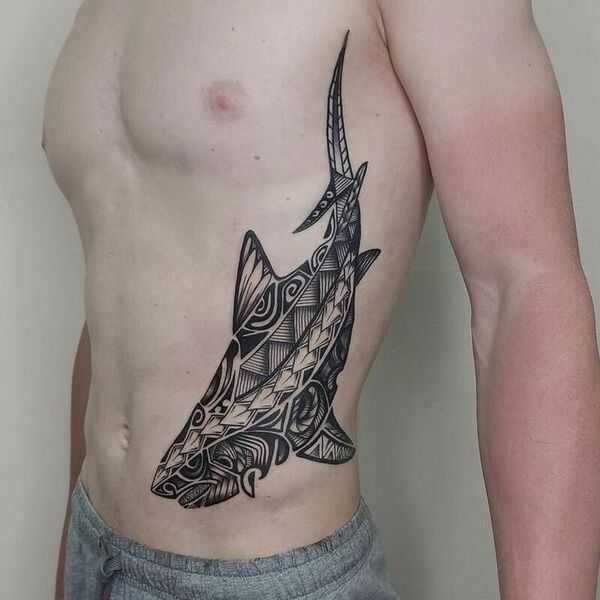
In traditional Hawaiian culture, sharks (or ‘mano’) are revered as ‘aumakua’ – family guardians that offer protection and guidance. Nearly 30% of our Polynesian-style shark tattoos at Holistic incorporate traditional patterns that honor this protective aspect.

These designs typically feature geometric patterns that flow with the body’s natural contours, creating a sense of movement that mimics the shark’s graceful power in water.

Take a closer look: Tattoo shops in Boston

Shark tattoo meanings and symbolism | _ink.yan_

Independence and Fearlessness: Why Sharks Symbolize Freedom

Sharks embody unfettered freedom as apex predators that roam vast oceanic territories. This tattoo can represent your independent spirit and fearless approach to life. At Holistic Studio, we’ve noticed that entrepreneurs and free spirits particularly gravitate toward these designs, with about 40% of our shark tattoo clients identifying as self-employed or creative professionals.

Adaptability and Persistence: Overcoming Challenges Like a Shark

Sharks must keep swimming to survive – a powerful metaphor for persistence that resonates with many tattoo enthusiasts. Their ability to adapt to different environments over millions of years also symbolizes flexibility in the face of change.

Connection to the Ocean: Spiritual and Environmental Meanings

For ocean lovers and conservationists, shark inks represent a deep connection to marine environments. With 37% of shark species now threatened with extinction, many Holistic Ink clients choose these tattoos to raise awareness about ocean conservation. Your tattoo can serve as both a personal statement and a conversation starter about protecting these vital marine predators.

Best Shark Tattoo Designs & Styles to Consider

The versatility of shark imagery allows for incredible creative freedom. At Holistic Ink, we’ve developed expertise in various shark tattoo styles to suit different preferences and personalities.

Traditional & Old School Shark Designs

Traditional tattoos feature bold outlines, limited color palettes, and stylized designs that have stood the test of time. Dating back to sailors’ tattoos of the early 20th century, these designs often show sharks with exaggerated features like gaping jaws and prominent teeth.

About 25% of Holistic clients choose this timeless style, appreciating its boldness and how well it ages over decades.

Traditional Shark Tattoo Design

Realistic & 3D Shark Inks

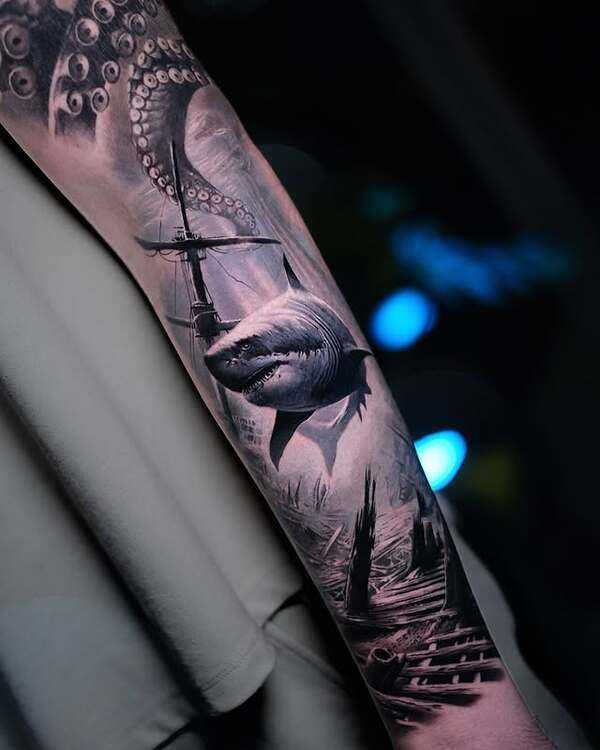
For the ultimate impact, realistic shark designs capture every detail of these magnificent creatures. Using advanced shading techniques, our artists can create three-dimensional effects that make the shark appear to be breaking through your skin.

These designs require significantly more time – typically 3-5 sessions compared to 1-2 for simpler styles – but the results are breathtaking. Approximately 35% of our larger

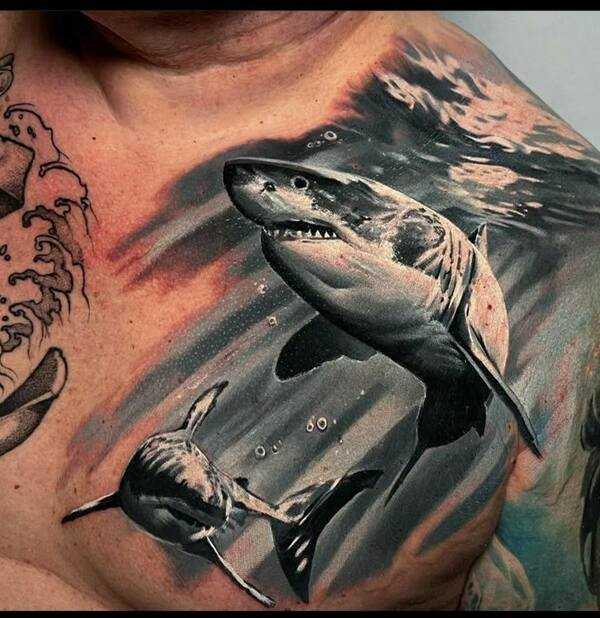
Realistic Shark Tattoo

Minimalist & Geometric Shark Artworks

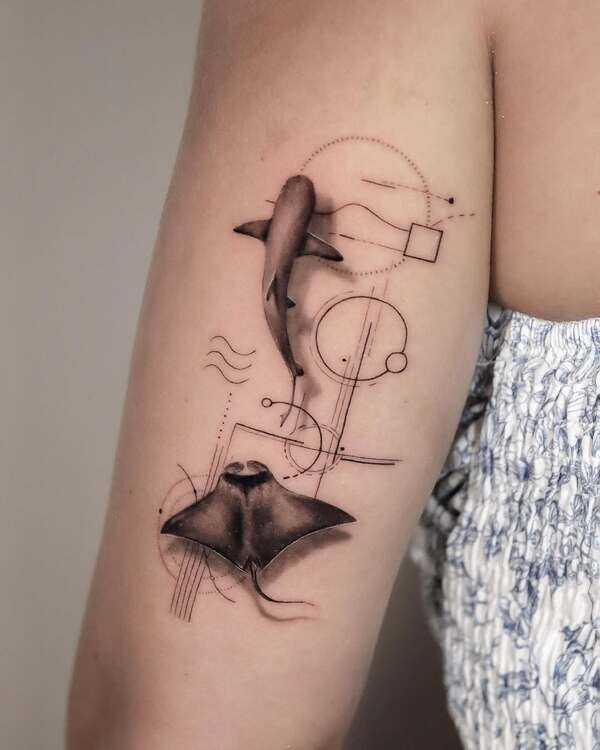
If you prefer subtlety, minimalist tattoos use clean lines and negative space to create elegant designs. These tattoos have grown 60% in popularity over the past three years at Holistic Ink, especially among first-time tattoo clients.

Geometric shark tattoos break down the shark’s form into shapes and patterns, creating a modern, stylized look that works beautifully in both color and black ink.

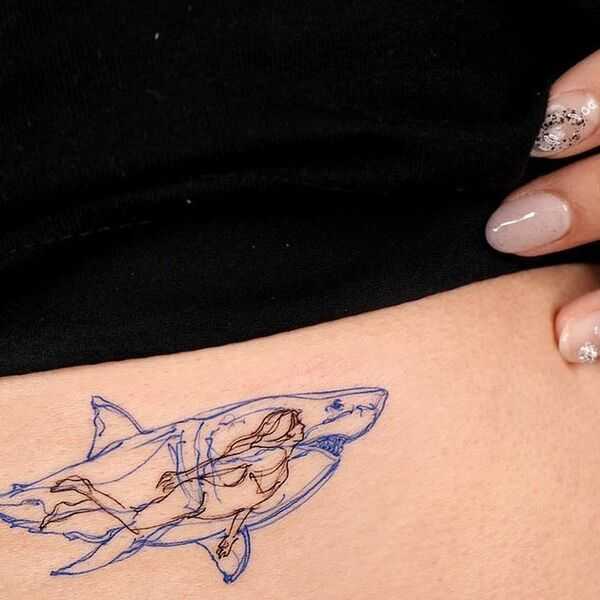
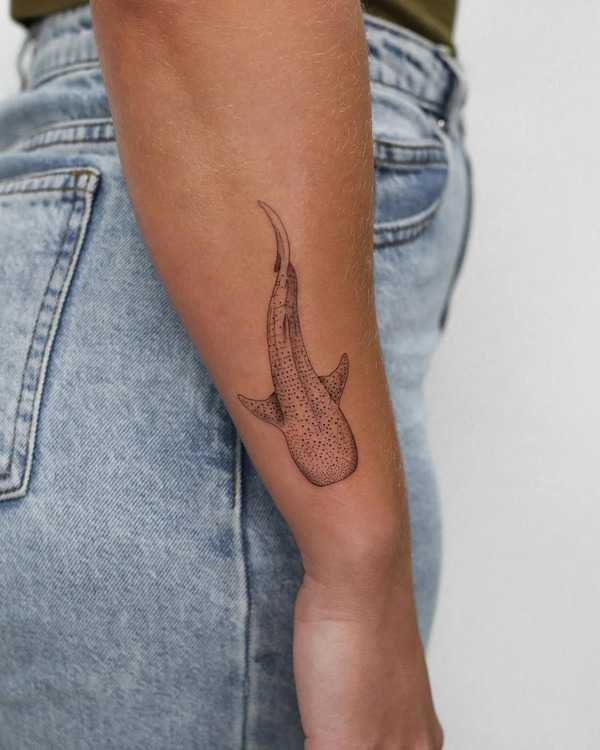
Minimalist Shark Tattoo

Watercolor & Abstract Shark Body Inks

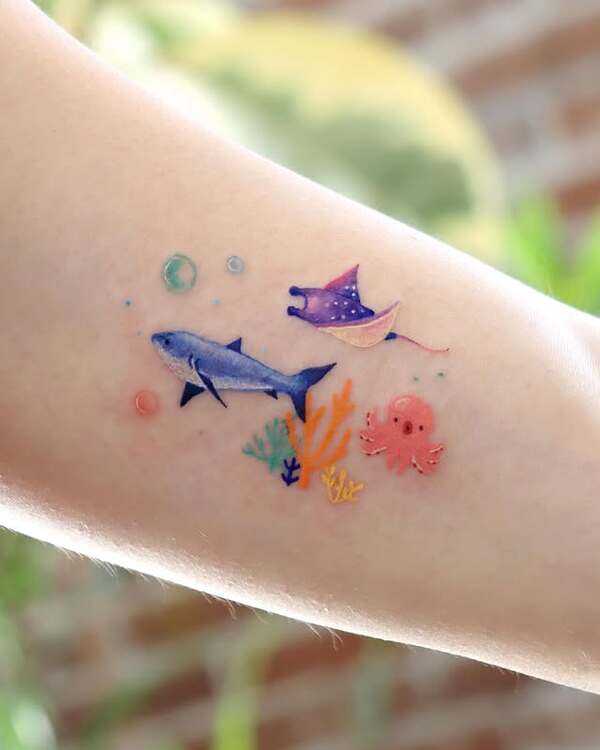
Watercolor techniques add a dreamy, artistic quality to shark body arts. This style mimics the fluidity of water with soft edges and color bleeds that contrast beautifully with the shark’s powerful form.

Our studio’s artists specialize in creating watercolor effects that maintain their vibrancy for years, addressing the common concern that these tattoos might fade more quickly than traditional styles.

Watercolor shark ink | theartoftattooingofficial

Japanese-Inspired & Tribal Shark Inks

Japanese inks (same) incorporate elements of traditional Japanese art, often featuring dynamic compositions with waves and other sea elements. These designs typically cover larger areas of the body and tell a complete visual story.

Tribal tattoos draw from Polynesian, Maori, and other indigenous traditions where sharks hold cultural significance. These patterns use bold blacks and negative space to create rhythm and movement across the skin.

Japanese-inspired shark design | txttoo

Shark Tattoo Ideas & Extra Design Elements

The best shark tattoo ideas often incorporate complementary elements that enhance their meaning and visual impact. Here are some popular additions our Holistic Ink artists recommend:

Ocean Waves & Water Effects

Adding dynamic water elements can bring your shark tattoo to life. Over 80% of our larger shark designs include some form of wave or splash effect. These elements create context and movement, showing the shark in its natural environment.

Shark Tattoo and Ocean Waves

Coral Reefs & Marine Fauna

Including coral reefs, fish, or other marine life creates a complete underwater scene. This approach works particularly well for sleeve tattoos or larger back pieces where the canvas allows for storytelling.

Shark tattoo with other marine fauna | ivanruotolo.ink

Nautical Symbols Like Anchors & Ships

Combining sharks with traditional nautical elements like compasses, ships, or anchors connects to maritime traditions and seafaring symbolism. About 22% of Holistic clients choose these complementary elements for their tattoos.

Nautical shark tattoo | arnnaash

Tribal & Polynesian Shark Patterns

Incorporating traditional Polynesian patterns can add cultural depth and visual complexity to your shark design. These patterns often tell stories about protection, family heritage, and strength.

Tribal Shark Tattoo
Tribal Shark Tattoo

Cartoon & Fun Tattoos for a Playful Vibe

Not all tattoos need to be serious or intimidating. Approximately 15% of our Holistic Ink shark tattoos take a more lighthearted approach, featuring cartoonish sharks with playful expressions or situations.

Cartoon and fun shark ink work | ovenlee.tattoo

Ideal Placement for Your Shark Tattoo

The placement of your tattoo significantly impacts both its appearance and meaning. Here’s what our experts recommend:

Arm & Forearm: Showcasing Strength

The arm and forearm are among the most popular locations for your tattoos, chosen by approximately 45% of our clients. This placement allows for easy visibility and showcases the shark’s dynamic movement. The curved surface of the forearm particularly complements the natural swimming motion of a shark design.

Forearm Shark Tattoo

Back & Shoulder: Large and Detailed Designs

For more elaborate shark scenes, the back offers the largest canvas on the body. About 20% of our Holistic clients choose this location for detailed underwater compositions featuring multiple elements.

The shoulder blade area works especially well for designs showing sharks breaking through water, with the natural contour of the shoulder creating a three-dimensional effect. Because of this dynamic placement, many people choose a shoulder tattoo to highlight movement and depth within the design.

Leg & Calf: Unique and Bold Placement

The calf provides an excellent cylindrical canvas that wraps naturally around the leg, perfect for depicting a shark in circular motion. This location has grown in popularity by 35% in recent years at Holistic Ink.

Chest & Rib Cage: Intimate and Meaningful Spots

Placing a shark tattoo on the chest, particularly over the heart, can symbolize deep personal meaning or protection. The ribcage’s natural contours can accentuate the shark’s streamlined form, though be prepared – this is among the more painful locations for tattooing.

Shark Tattoo on Chest

Ankle & Foot: Small Yet Impactful Designs

For more subtle shark imagery, the ankle and foot work beautifully. About 18% of Holistic clients opt for smaller shark silhouettes or minimalist designs in these areas, while others may extend the concept to a knee tattoo for a slightly more noticeable yet still stylish placement. These tattoos can be easily covered but revealed when desired.

Shark vs. Whale Shark Tattoo: Which One Should You Choose?

The distinction between regular shark and whale shark tattoos reflects significantly different symbolism and aesthetic choices.

The Difference Between Regular Sharks and Whale Sharks in Tattoos

Regular shark inks typically feature predatory species like great whites, hammerheads, or tiger sharks, emphasizing power and dominance. In contrast, whale shark body arts depict the world’s largest fish – a filter-feeding gentle giant that reaches lengths of up to 40 feet.

The difference between shark and whale shark tattoo | kyla_rose_tattoo

The Symbolism of Whale Shark Artworks: Gentle Giants of the Ocean

While traditional shark themed tattoos represent strength and fearlessness, whale shark inks symbolize peaceful power, wisdom, and tranquility. At Holistic Ink, we’ve noticed about 15% of clients specifically request whale sharks for these gentler connotations.

Who Should Get this Tattoo?

Whale shark tattoo particularly appeals to those who identify with quiet strength rather than aggressive power. They’re popular among environmentalists, divers who’ve had transformative experiences swimming with these creatures, and people drawn to the juxtaposition of immense size with gentle nature.

Are Shark Tattoos for Men or Women? Gender-Based Trends & Designs

While tattoo preferences should never be limited by gender, we do observe some trends in how different clients approach shark imagery.

For Men: Bold and Powerful Designs

Approximately 65% of male clients at our studio opt for larger, more aggressive shark depictions, often featuring open jaws or hunting scenes. Traditional and realistic styles dominate this category.

Shark tattoo for men | Apso_tattoo

For Women: Elegant and Mysterious Styles

Female clients frequently choose more fluid, artistic interpretations of sharks, with watercolor and minimalist styles being particularly popular. About 40% incorporate additional elements like flowers or moonlight to create unique juxtapositions.

Shark ink for women | do.artink

Unisex Designs That Work for Everyone

Geometric, tribal, and silhouette shark designs have universal appeal. These styles focus on the shark’s streamlined form and symbolic meaning rather than gender-specific aesthetic preferences.

Unisex shark tattoo | elva__ink

The Shark Tattoo Process: What to Consider Before Getting Inked

Before committing to a shark tattoo, consider these important factors based on our decade of experience at Holistic Ink:

  1. Size and detail level: More intricate shark designs require larger sizing to maintain detail integrity over time. We recommend a minimum 4-inch length for designs with significant detail.
  2. Color vs. black and gray: While colored tattoos can be striking, they typically require more maintenance to keep vibrant. Black and gray designs generally age better, with 65% of our clients ultimately choosing this option.
  3. Artist specialization: Find an artist experienced in the specific style you want. At our shop, we match clients with artists who specialize in their preferred shark ink style.
  4. Pain threshold: Some placements hurt more than others. Ribcage, inner arm, and foot shark themed inks typically cause more discomfort than outer arm or leg designs.
  5. Aftercare commitment: Proper aftercare is crucial for preserving your tattoo’s appearance. Be prepared to follow detailed instructions for at least 2-4 weeks after getting inked.
Things to consider before getting a shark ink | acaldeira.ink

Shark Tattoo Mistakes to Avoid: Don’t Make These Common Errors!

After creating hundreds of shark tattoos at Holistic Ink, we’ve identified several common pitfalls to avoid:

  1. Anatomical inaccuracies: Even stylized sharks should maintain basic anatomical correctness. About 25% of clients come to us to fix previous tattoos with misplaced fins or unrealistic proportions.
  2. Overcrowding the design: Adding too many elements can make your tattoo look cluttered and confusing. Focus on what’s essential to your vision.
  3. Choosing the wrong scale: A detailed great white shark squeezed into a tiny space will lose definition over time. Match your design complexity to an appropriate size.
  4. Ignoring future aging: Sharp teeth details and fine line work may blur over decades. Our artists design with long-term aging in mind, ensuring your tattoo remains recognizable for years to come.
  5. Rushing the decision: Take time to research styles, meanings, and artists. Approximately 90% of our most satisfied clients dedicated at least a month planning their tattoo.
Shark tattoo and some common mistakes to avoid | jiro_painter

Frequently Asked Questions About Shark Tattoos

  • Are These Tattoos Only for Men?

Absolutely not! At Holistic Ink, we’ve seen a 45% increase in women choosing this animal tattoo over the past five years. The symbolism of strength, protection, and adaptability resonates regardless of gender.

  • How Much Does a Shark Ink Cost?

The cost varies significantly based on size, complexity, and location. At our shop, small shark silhouettes might start around 150. Most medium-sized shark tattoos fall in the 350−350-350−700 range.

Frequently asked questions about shark tattoo | sasha_vologdin_tattoo
  • Will a Shark Design Fade Over Time?

All tattoos experience some fading, but proper aftercare and placement significantly impact longevity. Shark artworks on regularly sun-exposed areas like forearms typically show more fading than protected locations. Using sunscreen on your tattoo can extend its vibrancy by up to 70%.

  • What’s the Best Ink Color for a Shark Pattern?

While traditional gray and blue tones create realistic shark appearances, there are no rules. About 30% of our clients choose unexpected color schemes for their shark patterns, from vibrant watercolors to bold neo-traditional palettes.

  • Can I Customize My Tattoo to Make It Unique?

Absolutely! The most meaningful tattoos often include personal elements. Our artists specialize in creating custom designs that blend shark imagery with personal symbolism, ensuring your tattoo is one-of-a-kind while maintaining artistic integrity.

Remember, whether you’re drawn to the shark’s power, adaptability, or simply its iconic silhouette, your tattoo should ultimately reflect your personal connection to this magnificent creature. At Holistic Ink, we’re committed to creating a shark tattoo that remains meaningful and beautiful throughout your life’s journey. Book a consultation with our expert artists today!

Categories
Blog

Chest Tattoo Meaning And Popular Symbols Explained

A chest tattoo is more than just artwork on the skin. For many people, it marks a defining moment in life, whether it is a painful loss, a fresh beginning, or a promise too meaningful to express with words alone. Placed close to the heart, these designs often carry far greater significance than their visual appeal. Whether you are drawn to a lion, a phoenix, or a simple compass, every symbol tells a different story and reflects a unique personal meaning. Understanding that meaning helps you choose a design that will remain meaningful for years to come. At Holistic Ink, we believe every tattoo tells a personal story.In this guide, we explore the most popular tattoo symbols for the chest, explain how placement can shape their meaning, and share practical advice to help you make a decision you will never regret. 

Chest tattoo
Chest tattoo | Gunjua Daddy

What Makes A Chest Tattoo Deeply Meaningful – Holistic Ink

The decision to get a chest tattoo has long been associated with one of the most symbolic places on the body because the chest is closely connected to emotion, identity, and the sense of self. Throughout history, everyone from ancient warriors to sailors chose this area to honor love, preserve memories, express faith, celebrate resilience, and commemorate defining moments in their lives. Positioned close to the heart, these designs provide the perfect space for artwork with deeply personal meaning while balancing privacy with self-expression. This unique combination allows each design to serve as both a quiet reminder of what matters most and a confident reflection of who the wearer is. 

Why Do Chest Tattoos Appeal to So Many People for Telling Their Story?

People choose chest tattoos for many different reasons, but most are rooted in self expression, emotional connection, and the desire to capture their life journey in a deeply personal way.

Full chest tattoo
Full chest tattoo tell personal stories | The Tattooed Life

The most common reasons include:

  1. Remembrance — Honoring someone special, a meaningful moment, or a life chapter that shaped who they are.
  2. Healing — Marking recovery from illness, grief, or a difficult personal experience.
  3. Courage — Representing a commitment to face fear, embrace change, or pursue personal growth.
  4. Identity — Expressing a sense of self that cannot be confined to labels or expectations.

The chest also offers clear anatomical advantages. Its broad, relatively flat surface works well for everything from delicate fine line designs to large scale compositions filled with intricate detail. Few placements allow a single tattoo to grow into a complete visual story that unfolds across the body.

For many people, a tattoo also represents a personal legacy and the milestones that have defined their lives. It can symbolize a journey of self discovery, the strength to overcome adversity, or the emotional healing that follows life’s greatest challenges. These experiences give every design a meaning that extends far beyond its appearance.

Chest tattoo reflect personal stories
Chest tattoo design reflect personal stories | Sánchez Laura

How Does Tattoo Placement Shape Its Meaning?

The placement of a tattoo is never just a matter of preference. It influences how the design is perceived both visually and symbolically.

  • Tattoos placed in the center of the chest or along the sternum often represent balance, symmetry, and serve as the visual anchor of the overall composition.
  • Designs on the left side sit closest to the heart, making them a meaningful choice for memorial tattoos, expressions of love, and deeply personal stories.
  • Tattoos on the right side are often associated with strength, purpose, ambition, and the energy people project into the world around them.
  • A half-chest piece creates space to focus a story on one side of the body, while a full-chest piece tattoo delivers a unified visual statement that follows the natural shape of the chest.
Chest piece tattoo
Chest piece tattoo placement shapes its meaning | vaskevych

Experienced tattoo artists understand how to work with the anatomy of the chest, including the collarbone, sternum, and natural muscle lines, so the artwork flows naturally with the body instead of competing against it. When a design is placed thoughtfully, it becomes part of the body rather than something that simply sits on the skin.

Beyond choosing the left, right, or center of the chest, artists also consider body contours, the natural flow of the pectoral muscles, and how the design connects with the collarbone or a chest sleeve. These details help create a balanced composition that maintains its visual harmony even as the body moves.

Popular Chest Tattoo Symbols and the Meaning Behind Them | Holistic Ink

While every tattoo carries a personal story, many symbols used in chest tattoo designs share meanings that have been shaped by culture, spirituality, and traditions passed down through generations. 

Chest piece symbols and the meaning
Chest piece tattoo symbols and the meaning | Lucker Step

Some of the most popular choices include:

  • Lion — Strength, courage, and leadership. Often chosen by people who have overcome difficult times and want to celebrate their resilience.
  • Phoenix — Rebirth, endurance, and transformation. A powerful symbol for those rebuilding their lives after loss or failure.
  • Dragon — Wisdom, protection, and power. In many Eastern cultures, dragons are respected as guardians, while Western traditions often portray them as challenges to overcome.
  • Eagle — Freedom, vision, and ambition. A popular choice for chest tattoos for men who value independence and forward thinking.
  • Wolf — Loyalty, family, and instinct. Frequently chosen to represent strong personal bonds or a sense of belonging.
  • Rose — Love, sacrifice, and beauty. The contrast between soft petals and sharp thorns reflects the complexity of life’s most meaningful relationships.
  • Lotus — Growth, peace, and enlightenment. Rising from muddy water, the lotus represents the journey from hardship to inner strength.
  • Angel Wings — Protection, remembrance, and guidance. A meaningful option for chest tattoos for women created in memory of a loved one.
  • Sacred Heart — Faith, devotion, and spiritual commitment.
  • Compass — Direction, purpose, and staying true to your path through life’s uncertainties.
  • Clock — Time, memories, and the milestones that shape a person’s journey.
  • Mandala — Inner balance, harmony, and mindfulness. A favorite choice for small chest tattoos for men who appreciate clean designs with deeper symbolic meaning.

Beyond these well known symbols, many people also choose the Tree of Life, the Sun, the Moon, koi fish, owls, or mythological figures such as Medusa, Hannya, and Odin. Each carries its own symbolism, representing qualities such as wisdom, balance, protection, or personal transformation.

Chest tattoos for men
Chest tattoos for men | Tattoo Ideas

The meaning of any symbol is never fixed. It is shaped by the combination of the imagery, artistic style, placement, and the personal story behind it. That is why a thoughtful consultation is such an important part of the tattoo process. At Holistic Ink, every design consultation is conducted directly with experienced tattoo artists who create original artwork based on your ideas rather than relying on pre-made designs.

How to Choose the Right Tattoo Design and Care for It Over Time

Choosing the right tattoo design is about more than finding inspiration. It begins with understanding yourself and the meaning you want your design to carry. When you know what to expect throughout the process, from selecting a style that reflects your story to following proper aftercare, you can move forward with confidence and enjoy a tattoo that continues to hold its value for years to come.

Small chest tattoos for men
Small chest tattoos for men | Fun Shop

Choose a Style That Reflects Your Personality

The style you choose has a major influence on the overall look and feel of your tattoo. Each approach creates a different visual impact and tells a story in its own way.

  • Realism — Captures lifelike detail, making it an excellent choice for portraits, animals, and memorial pieces.
  • Blackwork — Uses bold black ink and strong lines to create striking symbolic or geometric designs.
  • Fine Line — Features delicate, minimalist lines that work beautifully for smaller tattoos or designs with subtle emotional meaning.
  • Japanese — Draws on traditional Japanese composition and imagery, often featuring dragons, waves, and cherry blossoms to tell a larger story.
  • Neo Traditional — Blends classic tattoo techniques with richer colors and more detailed illustrations.
  • Ornamental — Inspired by decorative patterns, jewelry, and architecture, with a strong emphasis on symmetry and elegance.
  • Geometric — Relies on clean lines and precise shapes to create balanced compositions that appeal to people who appreciate structure and order.

The most important question is not which style is currently popular. It is which style genuinely reflects who you are. A design built with thoughtful composition, effective use of negative space, balanced contrast, appropriate line weight, and carefully planned texture will remain visually compelling long after trends have changed.

Chest tattoos for women
Chest tattoos for women | Tattoo Kefalonia Ervis

Beyond these well known styles, you may also want to explore Illustrative, Watercolor, Black and Grey, Tribal, Biomechanical, or Sketch tattoos. Each offers a distinct visual language that can be tailored to your story and the level of artistic detail you want your tattoo to express.

Prepare for Proper Healing and Lasting Results

Many people spend a great deal of time choosing a design but pay far less attention to aftercare. In reality, proper healing plays a major role in preserving the appearance and quality of a tattoo for years to come.

Before the tattoo session begins, your artist will typically guide you through a consultation, discuss skin preparation, and test the stencil placement to make sure the design fits your body naturally. This process helps prevent unnecessary adjustments and ensures the composition looks balanced before the tattooing begins.

The healing process for a tattoo generally follows these stages:

  1. First week — Mild redness, swelling, and light fluid discharge are normal as your body begins to heal.
  2. Second week — The skin starts to peel. Allow it to shed naturally and avoid scratching or picking at it.
  3. Weeks three and four — The outer layer of skin recovers, and the tattoo may appear slightly dull before the colors settle.
  4. Months two and three — The deeper layers of the skin complete the healing process.
Prepare chest tattoo for proper healing and lasting results
Prepare chest tattoo for proper healing and lasting results | Marina

Once your tattoo is finished, keep the area clean, moisturize it with a fragrance free and alcohol free lotion, and avoid prolonged sun exposure. After the skin has fully healed, applying sunscreen whenever you spend time outdoors is one of the best ways to protect the color and preserve the artwork over the long term. If a touch up is needed, your tattoo artist will evaluate how the ink has settled and assess the overall appearance before making any adjustments. Following the recommended healing timeline helps ensure any refinements are done at the right time and keeps the tattoo looking its best for years.

Pain levels vary depending on the exact placement of the tattoo. Areas close to the sternum and collarbone are generally more sensitive than the surrounding muscle. Knowing this in advance can help you prepare mentally, especially if it is your first tattoo.

Chest Tattoo Checklist Before Your Appointment

A great chest tattoo begins long before the first drop of ink touches your skin. Taking the time to think through the key decisions in advance will help you choose a design that remains meaningful and visually appealing for years to come.

The right design offers more than aesthetic satisfaction. It can foster a sense of empowerment, strengthen self confidence, and bring lasting inner peace. When your tattoo reflects your own story, its value extends far beyond changing trends.

Checklist before the first drop of ink touches your skin
Chest tattoo checklist before your appointment | ISAEVA_TATTOO

Before booking your appointment, make sure you have considered the following:

  • Define the meaning you want your tattoo to express.
  • Choose a symbol that reflects your personal story.
  • Select a style that matches your personality.
  • Consider the placement based on your body shape and anatomy.
  • Decide on a size and composition that fit your vision.
  • Work with an experienced tattoo artist.
  • Understand the healing process before your session.
  • Follow proper aftercare once the tattoo is complete.
  • Think about how the design will age over time.
  • Prioritize originality over short lived trends.

A chest tattoo is more than an image on your skin. It represents a commitment to a part of your story that you choose to carry with you for a lifetime. Choosing the right symbol, the right placement, and the right artistic style while working with a tattoo artist who truly understands your vision lays the foundation for a decision you will continue to value for years to come.

If you would like expert guidance or have questions about the tattoo process, the team at Holistic Ink is here to help. Contact us for a free consultation and receive professional advice tailored to your ideas and goals.

Categories
Blog Uncategorized

Cross Tattoo Meaning and the Best Designs for First-Time Tattoo Wearers

Cross tattoos represent one of the most requested first tattoo choices globally, combining spiritual symbolism, personal storytelling, and adaptable design structure. While rooted in religious tradition, modern interpretations extend far beyond faith-based meaning into memorial art, identity expression, and minimalist aesthetics making them a consistently low-regret choice for people getting their first tattoo. Holistic Ink has guided hundreds of beginers through this decision, and the pattern is consistent: these designs work because they scale with meaning without requiring visual complexity.

Cross Tattoos That Tell Your Story

Why Cross Tattoos Are the Perfect First Ink — Holistic Ink

The timeless meaning behind the cross

A cross tattoo carries symbolism that shifts depending on its design, context, and personal narrative rather than functioning as a single fixed symbol. In Christian tradition, the cross represents sacrifice, redemption, and spiritual devotion. In contemporary tattoo culture, however, its significance extends far beyond religion to include strength in the face of adversity, a tribute to a deceased loved one, and personal transformation on a faith journey.

The cross in tattoos in the bible
Tattoos in the bible inspired by the cross

From a professional consultation standpoint, tattoo artists frequently encounter clients who choose this symbol during transitional life phases, such as recovery, grief, or spiritual reassessment. A permanent mark can capture emotions, memories, and personal milestones in a way that words often cannot. Its versatility is precisely what gives the design lasting significance without requiring visual complexity.

For others, body art marks the end of one chapter and the beginning of another. It may become a healing tattoo, a self-discovery tattoo, or a life transition piece. For many, it also serves as a quiet reminder of resilience and personal growth.

The Timeless Symbolism Behind Every Cross Tattoo

It is a common misconception that the cross symbol is exclusively religious. In practice, many clients choose it for aesthetic balance, memorial significance, or personal symbolism entirely unrelated to faith. A spiritual tattoo does not need to follow any specific religion; what matters most is the personal connection the wearer feels toward the symbol.

  • Not all cross symbolism carries religious meaning
  • Spiritual symbolism adapts to each person’s story and life experience.
  • Memorial and tribute functions are among the most common modern motivations

Why beginners choose this symbol as their first ink

These designs address the two biggest concerns for beginners: pain and long-term satisfaction. Their structural simplicity reduces session time significantly compared to detailed illustrative work, while their symbolic depth ensures the piece remains meaningful well beyond the initial decision.

Crown of thorns in tattoos in the bible
Cross and crown of thorns in tattoos in the bible
  • Simple line structure reduces session length and physical stress
  • Small formats suit most beginner-friendly placements
  • Symbolic depth supports long-term emotional connection to the design

Does Getting Your First Tattoo Hurt?

Most beginners worry more about pain than the design itself. A simple composition is often recommended because it requires less time and can be placed in areas with lower sensitivity. Understanding the tattoo pain chart, pain scale, and least painful placement options helps reduce first-tattoo anxiety. A professional consultation also allows clients to discuss pain expectations and choose a location that matches their comfort level.

Beginner-Friendly Designs That Never Go Out of Style — Holistic Ink

From a technical standpoint, these formats also suit beginner constraints well. Compact proportions reduce session length and physical stress. Clean line structures heal more predictably than shaded or detailed work. The design scales across nearly all body placements without losing visual integrity, giving clients flexibility that more complex compositions cannot offer.

Among the most requested beginner designs, tiny compositions often become the starting point for people with lower pain tolerance or strict workplace visibility requirements. Delicate tattoo execution defined by thin line weight, restrained scale, and an absence of fill shading produces elegant, refined results while remaining well within the technical reach of most licensed studios.

Small Cross Tattoos with Timeless Style and Deep Personal Significance

The most effective beginner formats currently documented in studio practice include:

  • Small cross tattoo: compact proportions, low pain exposure, fast healing cycle
  • Fine line execution: thin-stroke work suited to sensitive skin and discreet placements
  • Minimalist cross tattoo: reduced visual complexity with no sacrifice of symbolic clarity
  • Micro tattoo ,defined as designs under 2cm , ideal for behind-ear or finger placement where surface area is limited
  • Cross tattoo on hand or wrist: high daily visibility, reinforcing the symbol’s function as a personal reminder
  • Combined with initials or botanical elements: increases personal specificity without increasing design complexity

The best designs for first-time wearers are not necessarily the smallest or simplest available .They are the ones that carry sufficient personal meaning to remain relevant across the years that follow.

Keep Fine Line Tattoos Crisp with Proper Daily Care

Design scale also influences the final result. A tiny composition offers subtle symbolism and easy concealment, while a larger piece can become a powerful statement that incorporates additional details, shading, or personal elements without losing symbolic integrity.

Many clients begin with inspiration from online galleries but later decide to create a custom piece. Even small changes to a sketch can transform a reference image into a deeply personalized artwork — an approach that consistently creates stronger emotional value.

How to Choose a Design That Matches Your Personality and Style

Minimalist and modern approaches for subtle self-expression

This design category prioritizes structural precision over decorative complexity, using reduced line weight and clean proportions to create visual impact through restraint rather than elaboration. The style performs well in professional environments where tattoo visibility carries social weight, while still maintaining the symbolic function the piece is chosen for.

Three execution styles define this category in current practice. The geometric variant uses angular precision to create a structured, contemporary aesthetic associated with clarity and intentionality. Fine line execution applies thread-weight strokes that read as understated from a distance while revealing technical detail on closer inspection.

Precision Meets Simplicity in Modern Cross Tattoo Designs

One-line tattoo work  in which the entire composition is rendered as a single continuous stroke represents the most technically demanding format, requiring an artist with strong muscle control and line consistency. Among cross tattoos for men, geometric and one-line formats increasingly appear as alternatives to traditional blackwork, reflecting a broader shift toward subtle identity expression.

Minimalist religious tattoo designs occupy a distinct position within this category: they retain explicit faith-based iconography while adopting the spare, contemporary aesthetic of secular minimalism , appealing to clients who want doctrinal clarity without the visual heaviness of traditional religious body art.

  • Geometric: structured, angular, visually precise
  • Fine line: elegant and discreet, requires careful long-term aftercare
  • One-line execution: technically demanding, high visual distinctiveness
  • Minimalist religious: retains symbolic clarity within a contemporary visual register
Explore Cross Tattoo Styles from Geometric to Minimalist Faith

Popular Styles Beyond Minimalism

Minimalism is only one direction in modern body art. Some people prefer the intricate details of a Celtic cross, while others are drawn to the bold appearance of a gothic or tribal composition. Contemporary artists also work in blackwork, realistic, watercolor, and neo-traditional styles — each offering stronger visual identity and more opportunities for personalization.

Find the Cross Tattoo Style That Matches Your Personality

Cross tattoos for women tend to incorporate softer details, delicate line work, and botanical elements, while designs for men more frequently favor bold lines and geometric structure. Neither approach is better than the other; both reflect different forms of personal expression.

Symbolic designs that tell a personal story

Personalized compositions often incorporate a rose and cross tattoo, angel wings, a dove, or a Bible verse to create a deeper emotional connection. In Latin American tattoo culture, the cruz tattoo — drawn from the Spanish word for cross — carries the same symbolic weight while reflecting a distinct regional and cultural identity. These additions allow the artwork to tell a more specific story while preserving the simplicity of the original symbol.

The 3 cross tattoo configuration, referencing the three crosses at Golgotha, carries specific theological significance in Christian tradition and remains one of the most recognizable symbolic compositions in religious body art.

Memorial designs in this format differ from purely aesthetic choices in one important respect: the decision criteria are not visual preference but emotional accuracy. The artwork feels meaningful when it reflects the person or memory it was created to honor, not when it matches a reference image from an online gallery.

Before selecting a design, the most effective consultation questions are: Does this reflect who I am rather than who I was when I made the appointment? Is it connected to something I expect to value in ten years? These questions shift the decision from aesthetic preference to identity alignment — which is where long-term satisfaction is built.

  • Personalized designs extend meaning through specific elements, not visual complexity
  • Family remembrance work uses the symbol as a compositional anchor for memorial detail
  • Design selection based on identity alignment produces significantly lower regret rates

The Best Placements and Aftercare Tips for Your First Tattoo

The best places to start

Placement decisions affect pain experience, healing difficulty, long-term visual clarity, and the symbolic weight the artwork carries in daily life. For beginners, professionals consistently recommend placements where skin is thicker, movement is moderate, and the surface is relatively flat — conditions that support cleaner execution and more predictable healing.

Placement Pain level Healing difficulty
Forearm Moderate Low
Shoulder / Upper arm Moderate Low
Ankle Moderate–High Moderate
Behind ear High Moderate
Chest High Moderate–High

Healing and aftercare for beginners

Tattoo healing progresses through defined stages regardless of design complexity or placement. Days one through three involve inflammation and surface sensitivity. Days four through fourteen produce scabbing and visible peeling as the skin regenerates. Weeks three through six complete surface-level recovery, though full dermal stabilization continues for several months beneath the visible layer. Understanding these healing stages allows clients to distinguish normal recovery from early infection indicators.

Proper Aftercare Is the Key to a Healthy, Long-Lasting Tattoo

First tattoo care protocol follows four non-negotiable principles: clean the area twice daily using fragrance-free soap, apply tattoo moisturizer consistently to prevent cracking, avoid submersion and direct sun exposure until surface healing is complete, and refrain from scratching or peeling regardless of itching intensity. A fifth step specific to beginner placements is avoiding tight clothing over the tattooed area for at least seven days, as friction from fabric is a leading cause of premature ink loss and uneven healing. Preventing tattoo infection requires consistent hygiene discipline rather than reactive treatment — early warning signs include excessive heat, swelling beyond the first 48 hours, and any discharge.

Long-term tattoo maintenance involves two ongoing practices: daily moisturization of the tattooed skin and consistent SPF application to any exposed area. UV exposure is the primary cause of ink fading and line blurring over time, particularly in fine line and minimalist work that lacks the density to compensate for pigment loss.

  • Clean, moisturize, and protect from sun during the first six weeks
  • Avoid tight clothing contact over the tattooed area for at least seven days
  • Long-term SPF application preserves line clarity and ink contrast
Keep Fine Line Tattoos Crisp with Proper Daily Care

How Much Should You Budget?

Pricing varies depending on size, placement, and artist experience. A small piece is usually considered an affordable starting point, but pricing differs between studios. Understanding small tattoo cost, cross tattoo price, and the factors that influence overall cost helps clients prepare financially and avoid choosing an artist based solely on low prices. Quality work and proper safety standards should always be part of the decision.

Current trends show growing interest in modern religious body art and clean, symbolic compositions. Many first-time clients also explore celebrity references and online inspiration galleries before making a final decision — a process that often helps people discover styles better suited to their personality and long-term preferences.

A Timeless Cross Tattoo That Grows with Your Story

A meaningful tattoo rarely goes out of style. Whether it represents faith, remembrance, or personal growth, a timeless cross tattoo continues to resonate because it can evolve alongside the person wearing it. Small and minimalist formats suit the practical constraints of a first experience, while the design’s symbolic adaptability supports long-term emotional relevance. The right composition, thoughtful placement, and proper aftercare help ensure that a first piece remains just as meaningful years from now as it was on the day it was created.

If you need more information or technical advice, please contact Holistic Ink tattoo shop for a free consultation and professional, prompt service.

Categories
Blog

Back Tattoo Meaning Popular Symbols And Their Hidden Messages

Some decisions in life take years to make, and choosing a back tattoo is often one of them. It is not simply because of the pain, but because the meaning behind the design is too significant to rush. This placement is often reserved for the most important story a person wants to carry throughout life. At Holistic Ink, we understand that. This guide explores its symbolism, popular design choices, and key technical considerations so you can walk into your consultation with confidence instead of uncertainty.

Discover Back Tattoo Meaning And Symbolism With Holistic Ink

A back tattoo stands out not only for its size and visual impact but also for the deeply personal message it carries. From the placement itself to every individual element, each detail helps tell a story about the wearer’s beliefs, life journey, and identity. Before exploring the meanings behind popular symbols, it is important to understand why the back is considered one of the most meaningful placements in tattooing and how its expansive space allows a design to reach its full potential.

Discover back tattoo meaning
Discover back tattoo meaning | Ideas Tatoo

Why A Back Tattoo Works Best On The Body’s Largest Canvas

Most people who choose a back tattoo do not begin with appearance alone. They begin with a simple question. What is meaningful enough to carry for a lifetime? That is why this placement, even though it is usually hidden from view, often holds the most personal and profound stories.

In both traditional and modern tattooing, the back carries its own symbolic meaning. Across many cultures, it represents the burdens people carry through life, including heritage, memories, and quiet inner strength. A tattoo that follows the spine is often chosen to express resilience. The spine represents physical support, while it also symbolizes emotional strength and determination. This is not a coincidence. It is a deliberate form of body language chosen by the wearer.

Back tattoo works best on the body's
Back tattoo works best on the body’s | Doston Steven

What truly sets the back apart from the wrist, forearm, or neck is the amount of space it provides. The upper back, lower back, spine, and full back can each serve as an individual canvas or come together as one unified composition. The natural curves of the spine and shoulder blades create a built in framework that allows the artist to achieve balance and proportion without forcing the design. The body’s natural shape becomes part of the artwork itself.

Another important advantage is control over visibility. This type of tattoo is not constantly on display. The wearer decides when and with whom to share it. Every reveal becomes an intentional choice rather than an accidental moment. That sense of control adds another layer of meaning to the piece.

The back also offers room for future expansion. A small design on the upper back can later grow into a full-back composition or even become part of a larger bodysuit if it is planned carefully from the beginning. For that reason, many people choose to start with a central symbol that can gradually expand instead of covering the entire area in a single session.

A back tattoo works best on the body's largest canvas
A back tattoo works best on the body’s largest canvas | Ilona Brazhnik Tatoo

Popular Back Tattoo Symbols And The Messages They Represent

The generous space of the back allows symbols to be displayed in their complete form without being cropped or reduced to the point where their meaning is lost. Each symbol carries its own significance, and understanding that meaning is the first step toward choosing a design that truly reflects your story.

The dragon represents strength, wisdom, and protection in East Asian culture. On the back, it is often designed to flow along the spine or wrap across the entire back, making it one of the most iconic compositions in traditional Japanese tattooing. The phoenix symbolizes rebirth and transformation. It is especially meaningful for people who have overcome loss, illness, or major turning points in life and want to commemorate the moment they began again.

Popular back tattoo symbols and the messages
Popular back tattoo symbols and the messages | flowie

Angel wings represent freedom, spiritual faith, and divine protection. Their wide placement across the shoulder blades takes full advantage of the body’s natural proportions in a way that few other tattoo placements can. The lion symbolizes courage and the desire to protect loved ones. It remains a popular choice for back tattoos for men who want to express responsible strength rather than aggression. The wolf represents loyalty to family, survival instincts, and a deep connection with nature.

The lotus flower rises from muddy water without losing its purity, making it a symbol of resilience, enlightenment, and personal growth through adversity. A mandala, with its symmetrical geometric structure, represents inner balance and harmony with the universe. This design is especially meaningful for people drawn to meditation or spiritual practice, and the center of the back provides an ideal location where a complete mandala can expand naturally in every direction.

In Japanese tradition, the koi fish swimming upstream symbolizes perseverance, determination, and transformation. The Tree of Life represents the connection between the past, present, and future by linking ancestors, the individual, and future generations. A compass symbolizes direction, purpose, and the ability to find yourself after losing your way. Every one of these symbols can be interpreted through different artistic styles, including realism, blackwork, and geometric tattooing, allowing the design to reflect each person’s unique story.

Beyond these familiar choices, many people also find inspiration in Celtic symbolism, Norse symbolism, Polynesian tattoo traditions, and Buddhist symbolism. Each culture has its own symbolic language rooted in history, beliefs, and philosophy. Learning the origins of these symbols before choosing a design helps preserve both their cultural significance and their personal meaning.

Popular back tattoo symbols and their meanings
Popular back tattoo symbols and their meanings | Itakeyou Wedding

How To Choose A Tattoo For Your Back That Reflects Your Story

Choosing a tattoo should not begin with images. It should begin with one important question. What personal story do you want this tattoo to preserve? This is always the first step our team focuses on during every consultation because once you have the answer, every other decision becomes much clearer.

The next step is choosing the symbol before selecting the final artwork. Many people do the opposite. They find an attractive tattoo online and want to copy it. However, a symbol that reflects your own journey will always hold greater long term value than a design chosen only for its appearance. Once the symbolism is clear, the artist can create artwork that grows naturally from its meaning instead of forcing your personal story into an existing design.

A high quality tattoo always begins with a professional tattoo consultation rather than an impulse decision. During the consultation, the artist develops a custom tattoo, prepares a tattoo sketch, creates a stencil, and carefully considers your body anatomy to build a composition that fits your natural proportions. This process creates a more balanced design, reduces the need for future adjustments, and preserves the original vision behind the tattoo.

Full back tattoo
Full back tattoo | Mairehuhtala

The tattoo style is the next important consideration. Fine line tattoos work well for smaller and more personal designs. Japanese tattooing is ideal for powerful symbolic compositions with epic storytelling. Neo traditional offers a balance between classic and modern aesthetics. Other popular choices include ornamental, dotwork, illustrative, and biomechanical styles for people who want a distinctive artistic identity.

The exact placement on the back also shapes the story your tattoo tells. Back tattoos for women often feature vertical compositions along the spine or elegant designs that extend across the shoulder blades using delicate linework. Popular choices include lotus flowers, angel wings, mandalas, and ornamental patterns with intricate decorative details. Back tattoos for men more commonly cover larger areas and use bolder visual styles. These are not strict rules but simply common preferences. The most important goal is choosing a design that genuinely reflects your personality and personal journey.

If this is your first tattoo, it is often better to choose a design that leaves room for future expansion instead of covering the entire back from the beginning. This approach works especially well for anyone getting a first tattoo, planning a large tattoo, or expecting to expand the artwork over time.

Finally, think about the future of your design. If you may want to add new elements years from now, the original composition should be built around a clear central structure with intentional open space. That planning allows future additions to blend naturally with the existing artwork instead of disrupting the overall composition.

Back tattoos for women
Back tattoos for women | Parssatalebian

Preserve The Beauty And Meaning Of Your Back Tattoo

A back tattoo keeps its value only when both the design and the aftercare receive the attention they deserve. Choosing a timeless style is important, but following the proper aftercare routine is just as essential for preserving the artwork’s beauty, sharpness, and personal meaning for many years.

Choose A Timeless Tattoo Design

A lasting tattoo is not defined only by how it looks on the day it is finished. It should continue to hold its character and structure ten or even twenty years later as your skin and body naturally change with age.

Size is the first factor to consider. Details that are too small, especially lines thinner than one millimeter, are more likely to blur over time, particularly in areas exposed to frequent movement or sunlight. A design with larger details that can maintain clear definition over the years is often a more practical choice, even if it appears less delicate at first.

A balanced composition also plays a major role in long term visual appeal. Designs built around a clear central structure and a natural visual flow are less likely to lose harmony as the skin ages. Artwork that follows the natural curves of the spine and shoulder blades continues to look balanced even as the body changes. Careful attention to visual balance, a strong focal point, effective use of negative space, and appropriate line weight all help preserve depth and aesthetic quality over time.

Back tattoo female
Back tattoo female | shi chelsea

Choosing between black and grey tattoos and color tattoos is another important consideration. Black and grey tattoos generally age better because black ink contains larger pigment particles that are more resistant to ultraviolet light. However, a color tattoo created with high quality ink and proper technique can also remain vibrant for many years when it receives consistent care. Today, geometric and blackwork styles are widely recognized for maintaining crisp details over time, while watercolor tattoos usually require more frequent touch ups to keep their original appearance.

Care For Your Tattoo Properly

The healing process for a large tattoo usually takes between three and six weeks, depending on the size of the design and your skin’s condition. During the first week, the priority is keeping the tattoo clean while avoiding unnecessary friction. Wash the area gently twice a day with fragrance free soap, then pat it dry with a clean paper towel instead of rubbing it with a fabric towel, since rough fibers can damage the new layer of healing skin.

Healing is also affected by your skin type, ink saturation, and the length of each tattoo session. Dry skin, oily skin, and skin with existing scar tissue all heal differently. Understanding these factors helps set realistic expectations and allows you to work closely with your artist throughout the recovery process.

Back tattoos for men
Back tattoos for men | Mood Hello Monday

Starting on the second day, apply a tattoo moisturizer after every wash. Avoid products that contain alcohol or artificial fragrances because they can irritate the skin and slow healing. Apply only enough ointment or moisturizer to keep the skin comfortable. The tattoo should feel hydrated without becoming overly greasy because the skin still needs to breathe.

Sunlight is one of the biggest threats to tattoo ink. Prolonged ultraviolet exposure reduces color retention and can speed up ink migration over time. Protecting your tattoo from the sun remains one of the most effective ways to preserve its quality for years.

Sleeping position is another detail that many people overlook. During the first two weeks, sleeping on your back while wearing or resting on soft cotton fabric is usually the best option. Sleeping on your stomach places pressure and friction directly on the fresh tattoo, which can cause discomfort and affect the final healing result.

Do not scratch or pick at scabs, no matter how itchy they become. This is one of the most common causes of uneven color loss because pigment can be pulled away before the new skin has fully secured it. Wear loose, soft clothing throughout the healing period to reduce unnecessary friction.

Once the skin has fully settled, usually between six months and one year after the tattoo is completed, schedule a touch up if needed. At that stage, the artist can refresh faded areas or refine any lines that have softened. A well timed touch up can extend the tattoo’s visual quality for many more years.

Keep these essential aftercare tips in mind throughout the healing process.

  • Wash the tattoo gently with fragrance free soap twice a day during the first week.
  • Apply a specialized tattoo moisturizer after every wash using only a thin layer.
  • Avoid swimming and soaking the tattoo for at least three weeks.
  • Keep the tattoo out of direct sunlight until it has completely healed.
  • Never scratch or remove scabs while the skin is healing.
  • Wear loose, soft clothing to minimize friction.
  • Apply SPF 50 sunscreen whenever the healed tattoo is exposed to the sun.
  • Schedule a touch up after six months to one year if any adjustments are needed.
Care for your back tattoo properly
Care for your back tattoo properly | taya

If you notice unusual symptoms such as prolonged swelling or discharge, contact your tattoo artist or a healthcare professional as soon as possible for guidance. Using an appropriate tattoo ointment, staying well hydrated, and paying close attention during the peeling stage all help reduce the risk of infection and support a smooth healing process.

A back tattoo is far more than an aesthetic choice. It is a commitment to yourself that your story deserves to be told, preserved, and carried with you every day, even when no one else can see it. From choosing the right symbol and defining the right style to following every step of the aftercare process, each decision contributes to a meaningful piece of art with lasting value.

If you would like more information or professional guidance, contact Holistic Ink for a free consultation. Our experienced team is ready to provide expert advice, professional service, and prompt support.

Categories
Blog

Heart Tattoo Meaning, Stories, Symbolism and Design Ideas at Holistic Ink

A heart tattoo is more than a timeless symbol—it represents love, resilience, remembrance, and the stories that shape who you are. Whether you’re honoring someone special, celebrating a personal milestone, or expressing your identity, every design carries a unique meaning. In this guide, Holistic Ink explores the symbolism behind heart tattoos, popular styles, ideal placements, and expert tips to help you choose a design that truly reflects your story. 

Popular Heart Tattoo Symbols and Their Meanings

Not all heart symbols read the same. Each variation carries its own emotional register, cultural background, and visual language. Understanding the difference helps you choose a design that says exactly what you mean — nothing more, nothing less.

Popular Heart Tattoo Symbols and Their Meanings | zp3ktra.ink

Anatomical

The anatomical heart tattoo depicts the organ as it actually exists inside the body — chambers, valves, arteries, and all. It moves away from romantic idealization and toward something rawer: the literal seat of life.

Some wear this design for different reasons. Some are drawn to its honesty — the idea that love is not soft or perfect, but complex, muscular, and sometimes fragile. Others choose it to honor survival after open-heart surgery, a serious medical journey, or recovery from a life-threatening illness. Medical professionals sometimes wear it as a mark of their field.

Semantically, this design sits at the intersection of realism tattoo and symbolic tattoo. It pairs well with botanical elements like roses or thorns, or with text — a name, a date, a single word that anchors it to a specific person or moment. The tattoo piece does not try to be pretty. That restraint is exactly where its power comes from.

Sacred

The sacred heart carries one of the longest symbolic histories in Western tattoo tradition. Rooted in Catholic iconography, it depicts a heart encircled by a crown of thorns, emitting flames, and often marked with a cross at the top. Each element has meaning: the thorns represent suffering, the flames represent divine love, and the cross represents faith and redemption.

Beyond religion, many people today choose this design for its emotional weight rather than its doctrinal meaning. It speaks to sacrifice — loving something so deeply that it costs you. It speaks to resilience — carrying pain without being destroyed by it.

This is a spiritual tattoo in the truest sense. It works in traditional, neo-traditional, and fine line styles. In all three, the composition is strong enough to stand alone or anchor a larger sleeve. The sacred heart is never subtle, and that is the point.

The sacred heart carries one of the longest symbolic histories in Western tattoo tradition | Zaw Lwin

Black

The black heart tattoo operates on a different emotional frequency from its red counterpart. Where red speaks of passion and warmth, black speaks of grief, dark romanticism, and the parts of love that do not resolve neatly.

What does it mean? The answer depends on context. For some, it marks a period of loss — a relationship, a person, a version of themselves. For others, it symbolizes a deliberate aesthetic choice: an alignment with darker sensibilities, gothic visual culture, or the beauty found in melancholy.

Blackwork and fine lines are the natural homes for this design. Solid fill creates weight and permanence. It creates something more fragile, more ambiguous — which suits the emotional complexity this symbol often carries. It is a meaningful tattoo precisely because it does not explain itself.

Broken

A broken heart design — typically depicted as a heart split down the middle, sometimes with a crack, a tear, or a literal fracture line — is one of the most emotionally direct symbols in tattoo art. It does not hide what it conveys.

But what does a broken heart piece mean beyond the obvious? Survival. Wearers often choose to not to memorialize loss, but to mark the fact that they came through it. The break becomes evidence of resilience, not failure. It is an emotional tattoo that transforms pain into something permanent and visible.

It also functions as a tribute tattoo for those who have lost someone suddenly or traumatically. The crack in the shape is not a weakness — it is the record of something real that happened. Some designs incorporate stitches or a weld line across the break, reinforcing the idea of repair and continued strength.

Flaming

The flaming heart is passion made visible. Flames rising from a heart communicate intensity — love that burns, belief that consumes, desire that does not settle. It continues to be one of oldest motifs in traditional tattoo culture, and it has never lost its force.

Unlike the sacred heart, which frames flames within religious meaning, a standalone flaming heart is more personal. It serves as transformation through feeling — the idea that being deeply moved by something changes you permanently.

This design suits traditional and neo-traditional styles particularly well, where bold outlines and saturated fills let the flames read clearly at any size. It also works in fine line for a quieter interpretation — heat implied rather than declared.

Heartbeat Tattoo

A heartbeat tattoo — the flat line that rises into a pulse and returns to stillness — is one of the most direct ways to say: I am alive, and that matters. It references the EKG (electrocardiogram, the medical monitor that reads the heart’s electrical activity) and carries strong associations with survival, medical experiences, and tribute.

A heartbeat tattoo — the flat line that rises into a pulse and returns to stillness | la niña Claus

It is commonly chosen by people after a health crisis — their own or someone else’s. Others use it as a memorial tattoo, incorporating a name or date alongside the pulse line. A heartbeat tattoo design can also be combined with other elements: a name written along the line, a small symbol at the peak of the pulse, or a meaningful date placed where the line returns to flat.

Its strength is in its simplicity. A single continuous line holds enormous meaning without requiring elaboration.

Infinity

The infinity heart combines two of the most universally recognized symbols into one compact form. The infinity loop — a figure eight on its side — represents endlessness, and when shaped into or merged with a heart, it speaks directly to the idea of love without limit or expiration.

This is a popular choice for soulmate tattoos and family tattoos, particularly between partners, between a parent and child, or among close friends who want a shared symbol. It works as a matching piece or as a standalone design.

The infinity heart suits fine line and minimalist styles best. Elaborate decoration can dilute the clarity of the symbol. At its most effective, this design is clean, precise, and immediately legible — which mirrors what it means.

Heart with Flowers Tattoo

Pairing a heart with botanical elements adds layers of meaning that shift depending on the flower chosen. Each species carries its own symbolic language, and when combined with a heart, the two meanings compound.

  • Rose: Romantic love, beauty, the coexistence of softness and thorns
  • Lotus: Resilience, spiritual growth, beauty emerging from difficulty
  • Sunflower: Warmth, loyalty, unwavering devotion
  • Peony: Prosperity, honor, deep affection
  • Wildflowers: Freedom, organic growth, love without constraint

This combination suits fine line, watercolor, and neo-traditional styles. Among the most versatile heart tattoo designs available — adaptable to any size, placement, and emotional intention.

Heart with Wings Tattoo

Wings added to a heart lift it — literally and symbolically. This design represents a soul in motion: freed from physical limits, ascending, no longer confined to the earthly. It is one of the most common memorial tattoo choices, used to honor someone who has died.

The wings can be angelic — soft, feathered, symmetrical — or bird-like, or abstract. Each interpretation shifts the emotional register slightly. Angelic wings suggest peace and arrival. Bird wings suggest freedom and flight. Dark or skeletal wings suggest something more complicated — a love that was not gentle, or a grief that is still raw.

This tattoo works across styles. Traditional renditions are bold and declarative. Fine line versions are quieter and more intimate.

Heart with Dagger Tattoo

The heart pierced by a dagger is one of the oldest and most psychologically complex symbols in tattoo art. It does not have one meaning — it holds several in tension simultaneously.

Betrayal is one reading. Sacrifice is another. The dagger through the heart can represent a painful breakup or broken trust. It may also symbolize a deliberate act of self-sacrifice for someone or something valued above personal safety. In some traditions, It is often associated with the courage to love despite knowing the risk.

This design is strongest in traditional and neo-traditional styles, where the visual contrast between the softness of the heart and the hardness of the blade is most clearly drawn. It is a meaningful tattoo for those who do not want to soften what they have been through.

The heart pierced by a dagger is one of the oldest and most psychologically complex symbols in tattoo art | Wo Sunny

The Stories Behind Choosing a Heart Symbol

People do not choose this symbol on impulse. Behind almost every piece is an emotional tattoo rooted in something real.

Grief is one of the most common motivations. A tattoo placed over the chest or wrist becomes a permanent tribute — a way to hold someone close when they can no longer be present. The name, a birth date, or a single initial transforms the design from decorative to deeply personal.

Others arrive at this symbol through recovery. From illness. From addiction. From a relationship that dismantled them and a slow process of rebuilding. The heart in these cases is not sentimental — it is defiant. It says: I came through this, and I chose to mark it.

Remembrance takes many forms. Some pieces honor a parent, a child, a best friend. Others carry the memory of a version of oneself that no longer exists — younger, more naive, less certain of what they could survive. A tribute tattoo like this does not need to be explained to carry its full weight. The person wearing it knows exactly what it means.

The Stories Behind Choosing a Heart Symbol | mgts

Resilience, grief, healing, and life story all live inside this one shape. That is why an emotional piece ages differently from decorative ink. It does not fade in meaning — it deepens.

Many people choose designs that symbolize connection, such as matching tattoos, couple tattoos, or family tattoos. Beyond romantic partners, close friends and family members also often choose mother-daughter tattoos or siblings tattoos to commemorate meaningful milestones they have shared together.

In addition to classic heart motifs, many people are drawn to variations such as arrow heart, lock and key, double heart, heart outline, pixel heart, and tribal heart. Each design tells a different story and can be combined with a wide range of tattoo styles, allowing the wearer to create a piece that reflects their own identity and personal journey.

Heart Tattoo Styles That Match Every Personality | Holistic Ink

Choosing a symbol is only half the decision. The style determines how that symbol lands — its emotional weight, its visual presence, and how it will age over time. Two people can choose the same motif and produce entirely different results depending on the style they select.

Fine Line

Fine line work uses a single needle or a tight grouping of needles to create delicate, precise lines with minimal shading. The result is subtle, almost drawn rather than inked.

This design is especially popular among people who prefer understatement. The piece communicates without demanding attention. A fine-line piece works well in small formats — the wrist, the finger, the collarbone — and pairs naturally with minimalist design principles.

The trade-off is longevity. Fine line tattoos require careful aftercare. Depending on the placement, they may also need a touch-up after one or two years. Sun exposure is the primary cause of fading. With proper care, the definition holds well.

Heart Tattoo Styles That Match Every Personality | T. P. Ana

Minimalist

Minimalism in tattoo design means reduction to essentials. No fill, no shading, no decorative elements that do not earn their place. Just the outline — or sometimes just a few lines that imply a shape without fully completing it.

This approach suits people who value precision and restraint. The design stays clear and readable even at small sizes. That makes it ideal for tiny, micro, outline, and dainty tattoo enthusiasts. These understated styles remain easy to wear while preserving a refined and timeless appearance. It also works as a discreet piece for someone who wants personal meaning without public declaration.

A modern heart tattoo in minimalist style often uses negative space (the untattooed skin as part of the composition) to create dimension without added ink. This technique requires a skilled artist to execute correctly.

Realism

Realism aims to replicate texture, dimension, and depth — to make this artwork look three-dimensional on a flat surface. For heart imagery, this most commonly applies to the anatomical heart, where veins, muscle texture, and shading create something that looks genuinely organic.

This style demands technical skill and sufficient size. Details collapse at small scales. Placement matters: areas with less movement and curvature hold realism work better over time. The forearm, upper arm, and chest are strong placements for realistic pieces.

People who choose realism are usually drawn to its honesty. There is no stylization softening the image. What you see is what the symbol actually is.

Realism aims to replicate texture, dimension, and depth | Bunn Eileen

Blackwork

Blackwork uses solid black ink — fills, geometric shapes, heavy outlines — without color or gradation. This creates high contrast, graphically strong, and visually immediate.

This style suits people who want impact. A blackwork piece reads clearly from a distance and holds its definition longer than styles that rely on color saturation. It ages with authority rather than fading quietly.

Blackwork designs often incorporate geometric patterns (mandalas, linework grids, sacred geometry) or negative space shapes carved out of solid fill. The interplay between filled and empty areas creates visual complexity without relying on color.

Traditional

Traditional tattooing — also called American Traditional — is defined by bold outlines, a limited color palette (red, green, yellow, black), and flat fills with minimal shading. One of the oldest styles in Western tattoo culture and remains one of the most durable.

A traditional piece is built to last. The thick lines resist blurring over decades. The flat fills do not fade unevenly. The composition is direct and readable — no ambiguity, no subtlety.

This approach appeals to people who appreciate history and permanence. It does not try to be contemporary. That is precisely its strength.

Neo-Traditional

Neo-traditional builds on the foundations of traditional tattooing but introduces more complex shading, a wider color palette, and more illustrative detail. Proportions become more dynamic. Compositions gain depth.

The finished look is a style that honors its roots while expanding what is visually possible. A neo-traditional piece can carry fine botanical detail, nuanced skin tones in portrait elements, or layered textures that traditional flat fills cannot achieve.

This style works for people who want visual richness without sacrificing structural solidity. It remains one of the most versatile approaches for complex, multi-element tattoo designs.

Watercolor

Watercolor tattooing mimics the look of paint on paper — soft color bleeds, brushstroke textures, edges that dissolve rather than terminate cleanly. It is expressive and visually distinctive.

The trade-off is longevity. Without strong outlines, watercolor tattoos can gradually lose definition, especially in areas that receive frequent sun exposure. Many experienced artists recommend pairing watercolor fills with a clean outline to anchor the composition structurally.

This option is ideal for people who respond to emotion over structure — who want their ink to feel painted rather than drawn. It works especially well for designs combined with botanical elements or abstract color fields.

Watercolor tattooing mimics the look of paint on paper | Next Luxury

Geometric

Geometric tattooing applies mathematical precision to organic forms. A heart rendered in geometric style may be composed of triangles, straight line segments, or interlocking shapes that suggest the symbol without tracing its natural curve.

This style appeals to people who think in systems — who find meaning in structure and find beauty in precision. It also lends itself well to mandala integration, sacred geometry motifs, and symmetrical compositions.

Geometric work holds detail well in blackwork and fine line formats. Color can be added, but the structural logic of the tattoo is always the primary driver. This approach produces a tác phẩm xăm that feels considered, almost architectural — and entirely unlike anything produced by sentiment alone.

Best Placement for a Heart Symbol

Where you place your ink shapes how it reads — to yourself and to others. Placement is not a secondary decision. It affects visibility, longevity, pain level, and how the motif interacts with the body’s natural contours.

Every placement creates a different experience. A tattoo pain chart can help you understand the pain level of each area based on skin thickness and nerve density. If you have a low pain tolerance, it is generally best to start with the least painful placements before considering more sensitive areas.

Wrist

The wrist is one of the most chosen locations for personal and memorial pieces. It stays in your line of sight daily — a quiet reminder rather than a public statement. Fine line and minimalist designs work best here. The skin is thin and close to bone, so pain is moderate. Ink in this area fades faster due to friction and sun exposure. Touch-ups are common after two to three years.

Finger

Finger placements carry an intimate, understated quality. They suit small, simple designs — a single outline, a minimal shape, a short initial. The trade-off is significant: finger skin regenerates quickly, and ink here fades and spreads faster than almost any other placement. Expect to return for touch-ups more frequently.

Finger placements carry an intimate, understated quality | Genç Öznur

Chest

A chest placement sits closest to the physical heart — which is why it carries such strong emotional resonance for tribute and devotion pieces. It offers a large, relatively flat canvas. Pain is moderate near the sternum and increases closer to the collarbone. This placement ages well when kept out of prolonged sun exposure.

Forearm

The forearm offers visibility without commitment to constant exposure. It suits a wide range of design sizes and styles — from small fine line pieces to detailed realism or blackwork. Pain is low to moderate. Ink holds definition well here, making it a reliable placement for complex or multi-element compositions.

Shoulder and Upper Arm

The shoulder and upper arm provide ample space and relatively low pain. These placements conceal easily under clothing and reveal naturally in casual settings — a balance that suits people who want personal meaning without constant visibility. Realism and neo-traditional styles perform particularly well on the upper arm’s rounded surface.

Rib

The rib is one of the most private placements available. It is also one of the most painful — the skin sits directly over bone with minimal cushioning. People who choose the rib usually want the piece to remain theirs alone. The placement rewards long, vertical compositions. A heartbeat tattoo design running along the rib line is a strong example of form following placement.

Neck

The neck is a high-commitment placement. It reads as a statement — deliberate, visible, unapologetic. Small designs behind the ear carry a different register from pieces along the side or front of the neck. Pain is high in most neck placements. This location suits people who have already built a considered collection and know exactly what they want the piece to communicate.

Hand

Hand placements are expressive and immediate. They communicate openness — This artwork is always visible, always forward-facing. Ink on hands fades and spreads more quickly than most placements due to constant movement, washing, and sun exposure. Bold, simple designs with strong outlines hold best. A queen of hearts tattoo reduced to its essential graphic elements translates well to this location.

Beyond the most popular placements, many clients also consider a behind ear tattoo, ankle tattoo, thigh tattoo, hip tattoo, back tattoo, or collarbone tattoo. Each placement differs in terms of visibility, concealability, and how well the tattoo ages over time, so it’s worth discussing your options with your tattoo artist before making a final decision.

The cost typically depends on the tattoo’s size, level of detail, session length, and the artist’s experience. Custom tattoo pricing is usually different from the cost of pre-designed flash tattoos. In addition, the hourly tattoo rate, the colors used, and the number of touch-ups or revisions can all affect the final tattoo cost.

Personalize Your Heart Design

A generic shape becomes a personal statement the moment it connects to something specific. Personalization is not about adding more elements — it is about choosing the right ones.

Add Text and Dates

A name, a set of initials, or a birth date transforms the composition into a tribute. Text placement matters: along the curve of the composition, beneath it, or woven through it each creates a different visual relationship. Choose a typeface that matches the style of the piece — serif fonts suit traditional work, fine script suits fine lines.

Incorporate Meaningful Flowers

Each flower carries its own symbolic vocabulary. A rose speaks to love and its complications. A lotus speaks to growth through difficulty. A peony signals deep, enduring affection. A wildflower mix suggests freedom. Choosing the right botanical element strengthens the personal meaning of the composition without requiring explanation.

A name, a set of initials, or a birth date transforms the composition into a tribute | davi_stattoo

Combine tattoo heart with Complementary Symbols

Certain pairings extend meaning in specific directions:

  • Butterfly: transformation, emergence, a life chapter that has closed and opened
  • Crown: strength, self-sovereignty, personal authority
  • Infinity loop: permanence, a bond without expiration
  • Kingdom hearts tattoo motifs: for those who grew up with the game and want nostalgia and emotional depth woven into the same piece
  • Zodiac elements: identity, personality, a connection to astrological self-understanding
  • Wings: freedom, a departed soul, spiritual ascension

Use Color Intentionally

Color is not decoration — it is meaning. Red signals passion. Black signals depth or grief. Soft pinks and peaches signal tenderness. A blue heart represents calm and loyalty, while a green heart symbolizes growth and renewal. A purple heart conveys creativity, and a white heart often represents purity and remembrance.

Customize the Shape Itself

Not every heart needs to follow the standard silhouette. A heart composed of two hands. A heart formed from a continuous knot. A heart with deliberately asymmetrical proportions. The shape itself can be customized to carry additional meaning before a single secondary element is added. This is where a skilled artist at our studio earns their value — translating an idea into a composition that works on skin, not just on paper.

Before the tattooing begins, the artist will conduct a tattoo consultation to confirm the concept and discuss the details of the design. They will then create a custom design, prepare the stencil, and position it on the skin to ensure the placement looks right. Once the client gives design approval, the tattooing process can begin. The needle size, tattoo machine, and ink quality are carefully selected based on the size of the tattoo and the level of detail required.

Heart Design Aftercare: Keep Your Ink Beautiful

A well-executed piece deserves proper care. Aftercare is not optional — it is part of the work. How a piece heals in the first four weeks determines how it looks for the next twenty years.

The Healing Timeline

Understanding each stage prevents mistakes that damage the ink permanently.

  • Days 1–3 (Inflammation stage): Redness, swelling, and tenderness are expected responses. The skin is repairing. Keep the area clean with fragrance-free soap. Apply a thin layer of healing ointment as instructed by your artist. Do not re-wrap unless advised.
  • Days 4–7 (Peeling stage): The surface skin begins to flake and peel. This is normal. Do not pick, scratch, or peel the skin manually. Doing so pulls ink out of the healing layer beneath.
  • Week 2 (Surface healing): The outer skin closes. The piece looks slightly dull or cloudy — this is the layer of dead skin still sitting above the settled ink. It resolves on its own.
  • Weeks 3–4 (Color clarification): True color and line definition emerge. This is when the piece begins to show its final appearance. Avoid prolonged sun exposure during this window.
  • Month 2–3 (Deep healing): The deeper dermal layers finish settling. Full healing is complete. Schedule a touch-up assessment with your artist if any areas lost definition during healing.
Heart Design Aftercare | TR

Daily Aftercare Practices

  1. Moisturize with a fragrance-free, alcohol-free lotion twice daily — morning and evening — once the initial ointment phase is complete
  2. Apply SPF 50 sunscreen to the healed piece every time it will be exposed to sunlight
  3. Avoid submerging the piece in water — pools, the sea, bathtubs — until fully healed
  4. Wear loose, breathable fabric over the piece during the first two weeks
  5. Do not apply makeup, perfume, or skincare products directly over healing ink
  6. Stay hydrated — skin condition affects how ink settles and how evenly it heals

Long-Term Maintenance

Ink fading is gradual and largely preventable. Sun exposure is the primary cause of color loss and line blurring over time. Consistent SPF application extends the life of the piece significantly. Dry or neglected skin causes ink to look dull — regular moisturizing keeps the colors reading cleanly. If a touch-up is needed, wait until the piece is fully healed before returning to the studio.

Fine line and watercolor pieces require more attentive long-term care than blackwork or traditional styles. This is not a flaw — it is the nature of the technique. Knowing this in advance allows you to maintain the piece properly from the beginning.

The longevity of a tattoo is influenced by UV exposure, ink quality, and how well the skin is cared for. Over time, tattoo fading is a natural part of the aging process, but it can be minimized with regular moisturizing and consistent sun protection. Some designs also require an appropriate touch-up frequency to maintain optimal pigment retention and keep the artwork looking its best.

Common Mistakes to Avoid Before Getting a Heart Symbol Tattooed

Preparation separates a piece you wear with pride for decades from one you regret within months. The mistakes below are the most common — and the most avoidable.

Common Mistakes to Avoid Before Getting a Heart Symbol Tattooed | Tattoo2me Tatuagem

Choosing Based on Trends

A design that is everywhere right now will not be everywhere in five years. Ink is permanent. Trends are not. Choose a design connected to something personal — a feeling, a person, a moment — rather than something you saw repeated on social media. The most enduring pieces are the ones rooted in individual meaning, not collective momentum.

Skipping the Consultation

A tattoo consultation is not a formality. It is the stage where a skilled artist catches problems before they become permanent ones. Proportion issues. Placement mistakes. Design elements that will not translate cleanly to skin. Skipping this step to save time is one of the most common reasons people return for expensive corrections.

When choosing a tattoo artist, prioritize a licensed tattoo artist whose tattoo portfolio aligns with the style you want. You should also pay close attention to the studio’s hygiene standards, sterilization procedures, and the use of FDA-approved ink. These factors play a crucial role in ensuring both the safety of the tattooing process and the long-term quality of your artwork.

Not Researching the Artist

Every artist has a specialty. A portfolio built on fine line work does not automatically translate to strong realism. Before booking, spend time studying the artist’s actual output — not their best pieces, but their consistent work. Look for clean lines, even saturation, and designs that have aged well on previous clients.

Ignoring Placement Consequences

Placement affects how a tattoo ages, how painful the session feels, how visible it is, and how clearly the tattoo reads at its intended size. A complex composition forced into a small finger placement will lose detail within two years. A design chosen for its social media appearance without considering the body’s actual contours will not translate.

Underestimating Aftercare

The studio’s work ends when you walk out the door. Everything that happens after that is your responsibility. Neglected aftercare leads to patchy healing, lost definition, and color that never fully settles. It is the most controllable variable in the entire process — and the one most often treated as optional.

Rushing the Decision

A meaningful piece deserves time. Time to find the right reference. Time to find the right artist. Time to sit with the motif and confirm it still feels right after a week, a month, a season. Urgency and tattoos are not compatible.

If you would like more information or professional guidance on a heart tattoo, contact Holistic Ink for a free consultation. Our experienced artists are here to provide prompt, personalized advice and help you create a design that truly reflects your story. Every service we offer is built on listening first—because every tattoo deserves to begin with your unique journey.

Categories
Uncategorized

Fine Line Tattoo Meaning and Everything You Need to Know Before Getting Inked

The first time you see a fine line tattoo—a delicate floral branch wrapping around a wrist or a subtle signature running along the ribs—you may wonder how tattoo art can be so refined. More than a passing trend, this style demands specialized techniques, precise execution, and a deep understanding of how ink behaves in the skin. At Holistic Ink, we specialize in this style and have created this guide to help you understand what makes it unique, explore the best placement options, pain levels, pricing, aftercare, and learn how to choose a tattoo artist with genuine expertise before making your decision.

What Is a Fine Line Tattoo?

A fine line tattoo is created using ultra-thin lines produced with small needles and highly controlled hand movements. The result is delicate tattoo artwork that appears soft and elegant while maintaining remarkable clarity and detail. Unlike traditional tattoo styles, this approach requires patience, precision, and exceptional technical skill from the tattoo artist, as every thin line must be placed with accuracy to achieve clean, long-lasting results.

What truly sets this style apart is control. Rather than relying on bold outlines or large areas of solid fill, the artist must execute every line accurately on the very first pass.

What defines a fine line tattoo?

From a technical perspective, a fine line tattoo typically features:

  • Thin, clean, and consistent single lines without blowouts or ink spreading
  • Minimalist designs or intricate details that remain crisp and recognizable
  • Little to no heavy shading
  • Small to medium-sized designs that suit subtle placements on the body

This is why the style is often referred to as a minimalist tattoo or precision tattoo—not because it lacks meaning, but because every element has been refined down to only what is truly essential.

A fine line tattoo is created using ultra-thin lines | K2zzz

Is a fine line tattoo the same as a single needle tattoo?

This is one of the most common questions, and the answer is yes and no—they are closely related, but they are not exactly the same.

A single needle tattoo is created using just one tattoo needle to produce exceptionally fine lines. Over time, these tattoos naturally soften and fade slightly. A fine line tattoo, however, may be created using either a single needle or a small grouping of needles, depending on the design, allowing greater flexibility in execution.

In terms of tattoo needle configuration, tattoo artists commonly use small liner needles such as 1RL or 3RL, together with a rotary tattoo machine, cartridge needles, and disposable grips to create smooth, consistent lines. Many professional studios also use vegan tattoo ink with highly durable black pigment to improve both safety and long-term definition.

The key difference lies in line consistency. Single needle tattoos often have a more handcrafted, organic appearance, while fine line tattoos can achieve greater refinement and precision in highly detailed work. Understanding this distinction will help you communicate your expectations more effectively during your consultation with your tattoo artist.

Fine Line Tattoo Meaning Explained

Not everyone gets tattooed for aesthetics alone. Many people choose the fine line style because of its unique ability to carry a deeply personal story in a design that is subtle, understated, and discreet. Below are the four most common meanings behind fine line tattoos—and why so many people choose this style over any other.

Memorial Tattoos — Honoring Those We’ve Lost

Memorial tattoos are among the most common forms of meaningful tattoos seen at studios specializing in fine line and linework. People choose a meaningful date, a loved one’s signature, a favorite flower, or an object closely tied to a cherished memory, placing it somewhere they can see every day. Not because they’re afraid of forgetting—but because they know they never will, and they want a place where they can rest their hand whenever they think of that person.

The appeal of a memorial tattoo goes beyond aesthetics. Its delicate nature mirrors the emotion behind it—a loss that isn’t loud, yet never truly disappears. Sometimes a few carefully drawn lines can express more than a large, colorful piece ever could.

One important consideration is how well the chosen symbol will age over time. Reproducing a loved one’s original signature, for example, presents a significant technical challenge because natural handwriting often contains extremely fine strokes alongside heavier lines. Not every tattoo artist has the experience to execute this successfully. Before committing, ask to see healed examples of signature tattoos—not just photographs taken immediately after the session.

Memorial Tattoos — Honoring Those We've Lost | Sacred Joanne
Memorial Tattoos — Honoring Those We’ve Lost | Sacred Joanne

Spiritual Tattoos — A Quiet Expression of Faith

Spiritual symbols are not limited to any one religion. They may represent a fine line cross tattoo, a crescent moon in Islamic tradition, a lotus flower in Buddhism, the Tree of Life in Celtic culture, or simply a circle—a symbol of wholeness and continuity shared across many cultures. Fine line tattooing complements these designs because it communicates meaning without demanding attention. Faith is deeply personal, and a subtle design often expresses that more authentically than a bold, heavily saturated tattoo.

One characteristic shared by many spiritual tattoos is that they require no explanation. The tattoo itself speaks for the wearer. Because of this, the design consultation becomes even more important than usual. The artist must understand the specific meaning the client associates with the symbol rather than simply reproducing a reference image.

One practical consideration is that many spiritual symbols originate from distinct cultural traditions. Before making a decision, take the time to understand the history behind the symbol and ensure its use aligns with the meaning it holds for you. This is not a legal issue—it is about creating a tattoo that genuinely belongs to your own story rather than simply copying an attractive image found online.

Love and Connection — Matching Tattoos and Family Symbols

Matching tattoos have become a meaningful way for two people to celebrate their relationship—and not only romantic relationships. Childhood best friends, sisters, mothers and daughters, or other close family members can all choose a shared symbol while wearing it in their own unique way. The same design placed on two different bodies in two different locations becomes a story in itself.

Linework family tattoos rarely focus on realistic portraits. Instead, they rely on symbolic imagery such as a deeply rooted tree, birds and a nest, or a sequence of meaningful dates connecting family members. Their minimalist nature helps the design remain timeless rather than following short-lived trends.

When choosing matching tattoos, remember that identical designs may heal differently on different parts of the body. The thin skin of the wrist generally heals differently from the thicker skin of the upper arm, and ink can appear differently across various skin tones. For the closest possible match, both people should ideally be tattooed by the same artist, in the same session, and on the same body placement.

Love and Connection — Matching Tattoos and Family Symbols | Mayaloji

Personal Growth — Marking a Turning Point

This category represents moments of transformation: overcoming depression, leaving a toxic relationship, achieving a long-term goal, or simply surviving a chapter of life that once seemed impossible to escape. These tattoos are not meant to prove anything to other people. Instead, they serve as a personal reminder that the wearer once accomplished something they never believed they could.

Resilience is the idea most commonly associated with this category. Popular symbols include a sprouting seedling, ocean waves, mountains, or a rising sun—each representing perseverance, hope, and moving forward. Fine line tattooing is especially well suited to these themes because it does not need to be large or dramatic to carry emotional weight.

According to many experienced tattoo artists, this category also has one of the lowest rates of tattoo regret. The reason is simple: people who choose these designs usually spend considerable time reflecting on their experiences before committing. The tattoo is rarely an impulsive decision. Instead, it becomes the natural conclusion of a long personal journey. And when the meaning runs deep enough, the gradual softening of the ink over time does nothing to diminish its significance.

A meaningful tattoo doesn’t have to be elaborate to express powerful emotions. Sometimes a single curve or one carefully chosen word says everything that needs to be said. That is the power of self-expression through fine line body art.

Beyond its visual appeal, many people see fine line tattooing as a form of self-expression, a way to affirm their identity, or to commemorate a journey of emotional healing. Symbols with deeply personal meaning often represent empowerment and remembrance, making every design as unique as the individual who wears it.

Why Are Fine Line Tattoos So Popular?

The rise of social media has changed the way people perceive tattoos. Small, elegant designs that complement a wide range of personal styles—without drawing excessive attention—have become increasingly popular. As a result, elegant minimalist tattoos are now commonly seen on the wrist, collarbone, and upper arm, especially among younger generations.

Some of the reasons behind their popularity include:

  • Minimalism has become a defining trend in modern fashion and art.
  • Tiny tattoos are easier to conceal or coordinate with different outfits than larger pieces.
  • Subtle tattoos fit more comfortably in professional environments where visible tattoos may still be viewed conservatively.
  • First-time clients often choose this style because it is generally less intimidating and makes it easier to commit to a smaller design.

However, there is one important thing you should understand before getting one: fine line tattoos are not low-maintenance. They require proper aftercare and may need a touch-up after several years. The real question isn’t “Is it worth it?”—it’s “Are you willing to commit to maintaining it?”

Before making your decision, ask yourself:

  • Do you prefer clean, minimalist designs?
  • Are you looking for a subtle tattoo that doesn’t immediately draw attention?
  • Is this your first tattoo?
  • Are you willing to return for a touch-up in three to five years if necessary?

Beyond the minimalist movement, many fine line designs are also influenced by Korean tattoo styles, modern tattoo aesthetics, and inspiration found through Pinterest tattoo ideas. Celebrity tattoos have also played a major role in popularizing the style and inspiring people to create designs that reflect their own personal stories.

Fine line designs are also influenced by Korean tattoo styles, modern tattoo aesthetics, and inspiration | shemet

Popular Fine Line Tattoo Styles and Design Trends

Line art tattoos are not limited to a single theme. Each design direction has its own visual language and requires a distinct technical approach. Below are six of the most requested styles at studios specializing in fine line and linework tattoos.

Many first-time clients begin by exploring first tattoo ideas or tiny tattoo inspiration before committing to a larger design. Matching tattoo ideas, tattoos for women, and tattoos for men are also highly popular because they offer a high level of personalization and can easily be adapted to suit individual styles.

Botanical Tattoos — Inspired by Nature

Botanical tattoos draw inspiration from the natural world, featuring elements such as fern leaves, olive branches, ancient tree roots, or delicate sprigs of herbs. Their beauty lies in the balance between organic forms and geometric structure. The lines are neither perfectly straight nor completely irregular, and that carefully controlled imperfection gives the design a sense of life that purely geometric artwork often cannot achieve.

From a technical standpoint, botanical tattoos require continuous control of needle pressure throughout every curve. A well-executed leaf should appear delicate while still preserving the definition of its veins after healing—a true sign of craftsmanship. This style works especially well on the forearm and collarbone, where the body’s natural contours enhance the flow of the design.

One advantage that is rarely discussed is how easily botanical tattoos can evolve over time. A single branch can later be expanded with additional leaves, flowers, or roots without disrupting the original composition. Few tattoo styles offer this level of flexibility, allowing the artwork to grow alongside the person wearing it.

Floral Tattoos — Elegant Without Being Ordinary

Flowers are the most requested subject in fine line minimalist tattooing. Roses, peonies, cherry blossoms, and tulips can all be reduced to a handful of delicate lines while remaining instantly recognizable. Achieving this requires the artist to understand which features define each flower—and which details can be removed without losing its identity.

The greatest challenge in floral tattooing is creating layers within the petals. Without relying on heavy shading, the artist must build depth through overlapping lines alone. When executed properly, the finished piece resembles a finely drawn pencil sketch—light, graceful, and full of dimension.

One common mistake to avoid is choosing flowers that are too small yet contain too many petals. A five-petal flower is far easier to execute than a twenty-petal daisy at the same size. When too many lines are packed into a limited space, they may naturally spread during healing and lose their definition. An experienced tattoo artist will recommend the minimum safe size for each flower before the tattooing process begins.

Popular Fine Line Tattoo Styles and Design Trends | Sujoy

Script Tattoos — Handwriting That Carries Emotional Weight

A script tattoo is much more than lettering. It can preserve the words of someone who has passed away, a quote that has shaped a person’s life, or simply the name of someone deeply loved. Few tattoo styles are more personal, because no one else in the world will have those exact words placed in that exact location on their body.

In fine line tattooing, font selection is critical. Extremely thin fonts can become difficult to read if the design is too small. Serif fonts generally retain their clarity better over time than highly decorative cursive scripts. The inner forearm and ribs remain the most popular placements for script tattoos.

Beyond font choice, kerning—the spacing between letters—is equally important. Letters placed too closely together may blur into one another after several years, while letters placed too far apart lose their visual rhythm. This is why the design consultation is not simply a formality; it is an essential step to ensure the tattoo remains legible for years to come.

Geometric Tattoos — Precision in Every Line

Geometric tattoos celebrate the beauty of pure geometry through straight lines, sharp angles, concentric circles, and interlocking polygons. This style demands absolute precision. A line that deviates by only a few degrees can disrupt the entire symmetry of the design—and the human eye will immediately recognize that something feels off, even without knowing exactly why.

Many artists combine geometric tattooing with mandala designs to create pieces that are both visually striking and spiritually meaningful. This style performs particularly well on flatter areas of the body, such as the upper back or outer upper arm, where the skin undergoes minimal distortion as muscles move.

One lesser-known advantage of geometric tattoos is that they often age more gracefully than many other styles. Because they contain little or no solid fill, the natural softening of the ink over time can create the appearance of an aged sketch rather than a neglected tattoo.

Animal Tattoos with Micro Realism

Animal tattoos rarely attempt to recreate an entire animal in perfect detail. Instead, the artist selects only its most recognizable features—the texture of a cat’s fur, a lion’s mane, or the delicate wings of a butterfly—and renders them with just enough detail to make the subject immediately identifiable. The goal is not to include as much detail as possible, but to determine how much can be left ofine line tattoo but while preserving recognition.

Micro realism techniques are often incorporated by adding subtle shading or a handful of fine strokes to suggest the texture of fur, skin, or scales. The result is a tattoo that feels more lifelike than a simple outline while still maintaining the elegance and lightness of fine line work.

The greatest challenge lies in the eyes and facial expression. A tiny shift in the position of an eye can completely change the emotion conveyed by the artwork. This is why an artist who excels at botanical or geometric tattoos may not necessarily be equally skilled at animal tattoos—they require a specialized ability to observe and recreate subtle expressions.

Animal Tattoos with Micro Realism | lamemim

Fine Line Blackwork — Minimalism at Its Purest

Blackwork appeals to those who want strong visual impact without relying on color or heavy shading. Every element is created using black ink alone, placing complete emphasis on the quality of each individual line. Nothing distracts the eye, and nothing conceals imperfections.

This style exposes an artist’s skill more directly than almost any other. There is no color to hide mistakes and no shading technique to compensate for an uneven line. For that reason, fine line blackwork is often considered one of the clearest indicators of a studio’s expertise in linework tattooing.

In terms of longevity, blackwork generally retains its appearance better than tattoos containing multiple colors. Black pigment tends to remain more stable under UV exposure than colored inks. Even so, every tattoo will naturally soften over time. This should not be viewed as a flaw, but rather as a characteristic of the medium that every client should understand before making a decision.

A common question is: Which style is right for me? The answer ultimately depends on three factors—where you want the tattoo placed, the size you envision, and the story you want your tattoo to tell.

Best Placement for Delicate Linework

Tattoo placement has a direct impact on both the longevity and appearance of a tattoo. Some of the most popular and suitable placements include:

  • Wrist tattoos: Easy to see and perfect for small symbols or script tattoos.
  • Finger tattoos: Delicate and eye-catching. However, they tend to fade the fastest because the hands are constantly exposed to sunlight, water, and friction.
  • Forearm tattoos: Offer ample space, are relatively low on the pain scale, and work well for more detailed designs.
  • Collarbone tattoos: Highly elegant and visually striking, but they require an experienced artist since tattooing over bone can be more uncomfortable.
  • Spine tattoos: Create a long, graceful visual effect, although they are generally more painful than most other placements.
  • Behind the ear and ankle: Ideal for very small, deeply personal designs.

In addition, shoulder tattoos, chest tattoos, rib tattoos, and sternum tattoos are popular choices because their larger surface areas make it easy to expand the design over time.

One question clients frequently ask is, “Which placement holds up the best over time?” The answer is fairly consistent: the forearm and collarbone are generally considered the best locations for preserving the clarity of fine line tattoos.

Best Placement for Delicate Linework | Robertrodenbach

How Well Does This Style Age?

The honest answer is yes. They typically fade faster than bold, heavily outlined tattoos—but that does not mean they lack durability.

Tattoo ink is deposited into the dermis rather than the epidermis because the dermis remains much more stable as the skin naturally renews itself. Over time, however, changes in collagen, skin elasticity, and melanin levels can gradually soften a tattoo’s sharpness, especially in areas with significant scar tissue.

Several factors influence tattoo longevity, including:

  • The skin is constantly renewing itself. The finer the lines, the more noticeable ink spread becomes over the years.
  • UV exposure accelerates fading, especially on areas regularly exposed to sunlight.
  • Natural skin aging reduces firmness and gradually changes the appearance of the tattoo.

The most practical solution is a touch-up every three to five years, which is both common and recommended. If you decide to alter the design, options such as a cover-up tattoo, tattoo correction, or laser tattoo removal may also be appropriate, depending on the degree of fading and the tattoo’s current condition. This is not a sign of poor workmanship—it is simply a natural characteristic of fine line tattooing.

Pain Levels by Tattoo Placement

Pain depends on the tattoo’s location, your personal pain tolerance, and the experience of your tattoo artist. In general, fine line tattoos are considered less painful than heavily shaded or fully saturated tattoos because the needle spends less time working in each area.

Areas that are typically more sensitive include:

  • Spine
  • Ribs
  • Fingers
  • Neck
  • Inner elbow

Areas that are generally less painful include:

  • Outer forearm
  • Upper arm
  • Shoulder
  • Outer thigh

The tattoo healing process usually lasts two to four weeks, during which mild itching is completely normal.

Certain individuals should consult a healthcare professional before getting tattooed, including those who are pregnant, breastfeeding, living with diabetes, eczema, psoriasis, autoimmune diseases, or taking blood thinners. Discussing these conditions beforehand can help minimize potential complications during healing.

Pain Levels by Tattoo Placement | pmtsketch

How Much Does It Cost?

There is no universal price because several factors determine the final cost, including:

  • The artist’s experience: Experienced fine line tattoo artists generally charge higher rates—and for good reason.
  • Design complexity: Intricate artwork with numerous small details requires more time and technical precision.
  • Size and placement: Tattoos in difficult-to-reach areas or positions requiring awkward body placement often cost more.
  • Studio reputation: Licensed studios that maintain strict medical-grade hygiene standards typically reflect that quality in their pricing.

Avoid choosing a fine line tattoo shop based on price alone. With a style that depends so heavily on precision, the quality of both the artist and the materials will have a lasting impact on the final result.

How to Care for Your New Tattoo

Proper aftercare plays a major role in preserving your tattoo’s appearance. A basic aftercare routine includes:

During the First Week (Days 1–7)

  • Wash the tattoo gently with fragrance-free soap or an antibacterial cleanser.
  • If recommended by your artist, wear a second skin bandage during the first few days.
  • As the tattoo enters the peeling stage, continue a regular moisturizing routine using an appropriate healing ointment to reduce itching.
  • Apply a thin layer of tattoo lotion without over-moisturizing.
  • Avoid soaking the tattoo in water, swimming, or taking baths.

During the Second and Third Weeks (Days 7–21)

  • Light peeling is normal—do not scratch or pick at the skin.
  • Continue moisturizing consistently.

Long-Term Care

  • Apply sunscreen whenever the tattoo will be exposed to sunlight to minimize UV damage.
  • Stay hydrated and maintain healthy skin moisture to help preserve the ink.
  • Schedule tattoo maintenance when the lines begin to soften.

If proper hygiene is not maintained, complications such as infection, allergic reactions, blowouts, overworked skin, or keloid formation can occur. Choosing a studio that follows strict sterilization procedures significantly reduces the risk of cross-contamination and helps protect your tattoo for years to come.

Choosing the Right Tattoo Artist

This is arguably the most important part of the entire process. An inexperienced artist can turn an otherwise beautiful design into blurred or blown-out lines within just a few months.

Before every appointment, professional tattoo artists typically conduct a tattoo consultation to discuss your ideas. They then create a custom design, prepare a tattoo stencil, and perform the stencil transfer before tattooing begins. The skin is also prepared through shaving, cleansing, and skin disinfection to reduce the risk of infection throughout the tattoo session.

Choosing the Right Tattoo Artist | Daria Shkuratova

What to Look for in a Professional Tattoo Artist

When searching for the best fine line tattoo artists, pay close attention to the following:

  • Their tattoo portfolio should include healed tattoos—not only freshly completed work.
  • The studio should be fully licensed and follow strict hygiene standards.
  • The artist should work in a sterile environment and use medical-grade tattoo ink.
  • Their artistic style should remain consistently strong across multiple pieces, not just a handful of standout examples.

Questions to Ask Before Booking

A quality tattoo consultation should help you understand both your design and the entire tattooing process.

Consider asking questions such as:

  • Can I see photos of tattoos that have healed for six months or one year?
  • How do you sterilize your equipment?
  • What is your touch-up policy?
  • How should I prepare before my appointment?
  • Is there an additional fee for a custom tattoo design?

Final Checklist Before Booking

  • Review healed tattoos—not just fresh ones.
  • Verify the artist’s experience.
  • Confirm the studio’s sterilization procedures and hygiene standards.
  • Ask about the ink and equipment being used.
  • Discuss healing expectations and the studio’s touch-up policy.
  • Request a personalized design consultation.
  • Compare studios based on quality, not simply price.

Many clients also ask whether a tattoo will age well, whether it is suitable for dark skin, when a touch-up may be needed, whether color can be added later, or whether laser tattoo removal is an option if they decide to make changes. Discussing these questions directly with your tattoo artist is the best way to determine the most appropriate solution for your individual situation.

Final Checklist Before Booking | Abolfazl_heydari

A fine line tattoo is not the right choice for everyone. However, for those seeking a tattoo that is elegant, deeply personal, and capable of aging gracefully, it is certainly a style worth considering. At Holistic Ink, we believe every tattoo deserves to be created by an artist who understands not only the technical precision required but also the story behind the design.

If you’d like to learn more or receive professional guidance, contact Holistic Ink for a complimentary consultation. Our experienced team is here to provide expert advice and exceptional service every step of the way.

Categories
Blog

Explore 10+ Underboob Tattoo Designs and Other Boob Tattoos

Underboob tattoo designs have become one of the most popular and daring tattoo styles for those looking to accentuate the natural curves of the body. These inks, positioned on the lower part of the chest, just below the breast, offer a unique and intimate space for self-expression. Whether you opt for a delicate design or a bold pattern, these tattoos can accentuate your curves and add a personal touch. If you’ve been considering getting an underboob piece or a side boob tattoo, it’s important to understand the considerations and design options available. Let’s delve into the world of tattoo with Holistic Ink to explore everything you need to know about this wonderful art.

7 Trending Under Breast Tattoo Ideas to Inspire You

The underboob tattoo has become a highly sought-after canvas for body ink in recent years. With its unique placement and intimate appeal, it offers an opportunity for creating designs that blend sensuality with artistry. Below, let’s explore some of the most popular ideas for tattoos on the underboob.

  • Floral Underboob Art: Symbolizing Femininity and Beauty

One of the most timeless choices for this kind of ink is floral designs. Flowers have long been symbols of femininity, beauty, and growth, making them a perfect fit for this delicate area. From large, bold roses to intricate lotus blossoms, floral artwork on the underboob can convey a sense of grace while adding a touch of softness to the body.

Depending on the flower chosen, a tattoo on the underboob can evoke personal meanings that resonate with the wearer’s journey or worldview. The flexibility of floral patterns allows for customizations, making it possible to create a piece that fits perfectly along the curves of the chest, subtly enhancing the natural body shape.

Floral underboob tattoo | Pis Saro
  • Mandalas: The Spiritual and Geometric Appeal

Mandalas are another popular underboob design. These intricate patterns are not only visually captivating but also have spiritual significance. When placed under the chest, the mandala pattern often flows outwards, creating a beautiful symmetry that complements the body’s curves.

For those who seek a design that combines both beauty and meaning, a mandala tattoo on the underboob can provide both. The complexity of mandalas also allows for artistic exploration, with many tattoo artists adding their unique twists, such as incorporating shading or adding personal symbols.

Mandala underboob ink | steph.tattoos
  • Geometric Shapes: Modern and Minimalist Underboob Art

For a more modern or minimalist aesthetic, geometric shapes are a popular choice for tattoos on the underboob. These designs can range from simple lines and triangles to more intricate patterns, offering clean, sharp designs that make a bold statement. The symmetry and precision of geometric patterns appeal to those who prefer sleek and contemporary designs.

The appeal of geometric underboob designs lies in their versatility—whether you’re opting for a single, small shape or a more complex design that stretches across the ribs, the tattoo can be tailored to suit individual style preferences. 

Geometric underboob tattoo | Hellens Saigi
  • Animal-Inspired Underboob Pieces: Strength and Protection

Animal-themed tattoos have always been popular, and when it comes to underboob artwork, many choose animals that symbolize strength, power, or protection. For example, a fierce lion or a graceful phoenix placed under the chest can evoke feelings of empowerment, while delicate butterflies or birds may represent freedom, transformation, or rebirth. More personal designs such as a paw print tattoo are also meaningful choices, often symbolizing loyalty, companionship, or a deep emotional bond with a beloved pet.

Animal-inspired designs on the underboob are often chosen by those looking to express their inner strength or resilience. These designs, which can be realistic or stylized, often carry deep personal meanings, making them a powerful form of self-expression.

Animal-inspired underboob pieces | alinabaertattoo
  • Celestial Designs: Stars, Moons, and Sun Symbols

Celestial bodies, such as stars, moons, and suns, are a popular choice for underboob themed designs, symbolizing guidance, mystery, and power. Stars, for instance, are often associated with aspirations, goals, and dreams, while the moon, with its various phases, can symbolize cycles, intuition, and feminine energy.

These celestial designs can range from small, subtle symbols to larger, more intricate representations that span across the underboob and ribs. Many people opt for celestial body ink to reflect their connection to the universe or to mark a significant moment in their life. 

Celestial underboob tattoo | Ann Pokes
  • Script and Quote Underboob Art: Personal Empowerment

For those seeking a more personal touch, underboob body ink featuring meaningful quotes, names, or words is a popular choice. This type of underboob themed design can be a powerful way to express one’s beliefs, values, or personal mottos. Whether it’s a single word like “strength,” a phrase that holds significant meaning, or the name of a loved one, script tattoos placed under the chest can serve as a constant reminder of what matters most.

These tattoos are highly customizable and can be tailored to fit the space available. The use of elegant, flowing fonts can add a touch of femininity, while bold, straight lettering can make a more powerful statement. Whatever the words may be, a script tattoo on the underboob provides a unique way to express oneself.

Quote underboob tattoo | len_art_
  • Watercolor Underboob Pieces: Artistic Freedom

For those who want to step away from traditional designs and embrace something truly unique, watercolor tattoos offer an opportunity for artistic freedom. These tattoos are often created with splashes of color, fluid lines, and creative shapes that flow naturally across the underboob area. Designs inspired by nature and movement, such as a dragonfly tattoo, work especially well with watercolor techniques, symbolizing transformation, lightness, and personal growth.

These underboob tattoo designs can be deeply personal, as they often represent the wearer’s individuality and creativity. The underboob area provides the perfect canvas for this free-flowing style, allowing artists to experiment with colors and shapes that reflect the wearer’s essence.
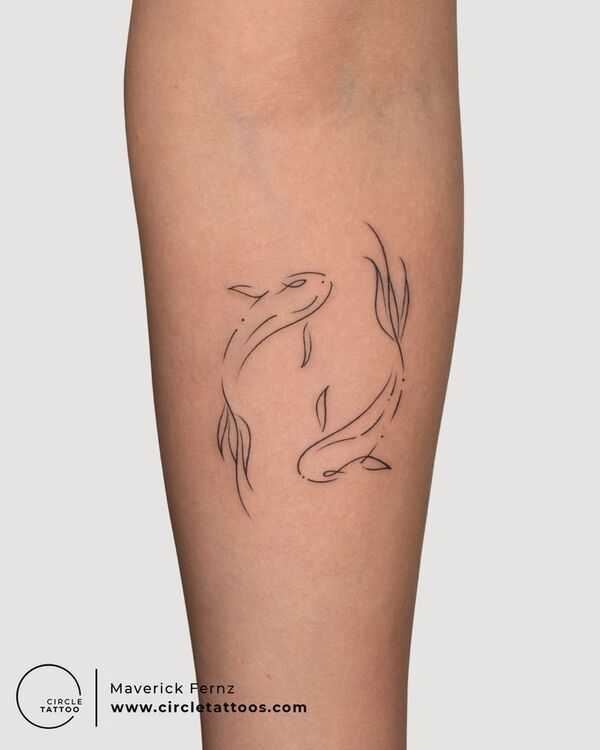
Watercolor underboob tattoo | kiwa_jip

Explore Underboob Tattoo Evolution and Transformation 

Over the years, one of the most fascinating trends in the tattoo world is the rise of underboob tattoo designs, which was once considered an unconventional placement and has now become a popular choice among individuals seeking a blend of sensuality, beauty, and artistry. In this section, we’ll dive into the progression of this particular style of body ink and explore its significance in different periods.

  1. Early Beginnings: The Advent of Underboob Ink

Inks on the underboob first started to appear more prominently in the tattoo scene during the late 20th century, particularly around the 1990s and early 2000s. During this time, tattoos began moving away from traditional locations such as the arms, back, and shoulders, with people becoming more experimental about where to place their ink. For many, this area was a personal and intimate space, one that could be decorated with designs that made a statement but remained hidden beneath clothing.

At this stage, tattoos on the underboob were seen as edgy and somewhat taboo. The area is naturally sensitive and typically concealed, making it a symbol of confidence, mystery, and sensuality. Initially, the designs were often minimalistic—small, discreet symbols or delicate florals that wrapped slightly around the ribs or under the chest. This approach allowed wearers to keep their tattoos hidden from public view while still giving them a sense of personal expression.
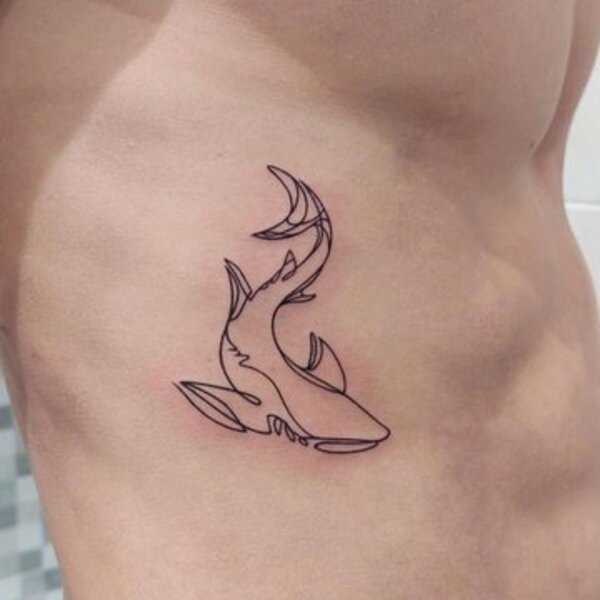
What made the tattoo on this body part so unique during this period was not only the design itself but also the act of choosing such a private and intimate space. For many, it was a form of self-expression reserved for themselves or loved ones. The appeal was rooted in the power of keeping something beautiful hidden away—something that only the wearer had full access to. This made it both personal and rebellious, a subtle but powerful form of body art.

Underboob tattoo evolution and transformation | inktime_tattoo
  1. The Mainstream: A Growing Popularity in the 2010s

By the early 2010s, the underboob design began gaining more visibility. Celebrities like Rihanna, who boldly flaunted her underboob ink, helped push this style into the mainstream. The trend quickly found its way into pop culture, and more individuals were drawn to this placement as a way to express their style, femininity, and confidence.
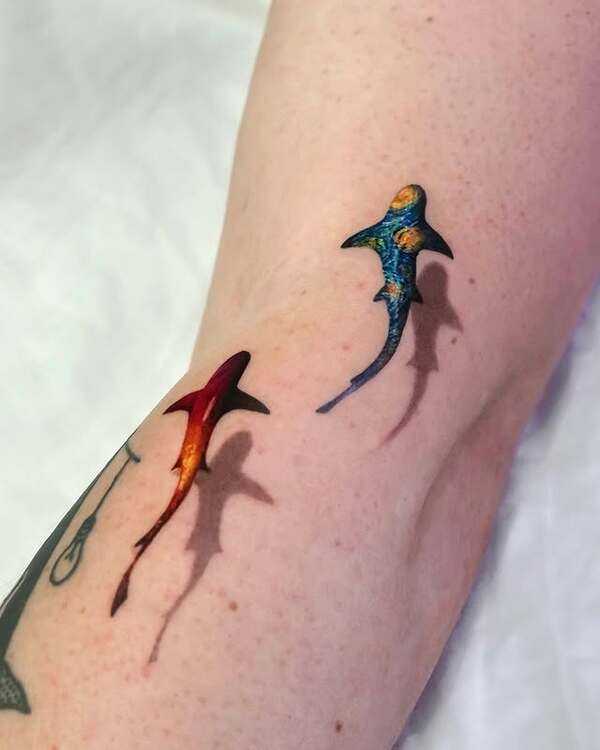
During this period, this kind of ink expanded beyond minimalist pieces. The underboob area was now regarded as a canvas for larger, more intricate designs. Patterns like mandalas, geometric shapes, and ornate floral designs began to dominate the scene. Women and men alike were looking for tattoos that were not only personal but also highly artistic. The focus shifted to creating pieces that could wrap around the torso, extending from one side of the body to the other, with patterns that fit and complemented the curves of the chest.

Many people turned to this placement for designs with deep personal meanings, such as phoenixes symbolizing rebirth, roses representing love and passion, or script tattoos conveying messages of empowerment. The idea behind the artwork was not only about aesthetics but also about the emotional significance it held for the wearer.

  1. Modern-Day Trends: The Fusion of Art and Personal Expression

Today, the underboob piece is seen as a bold and beautiful way to express individuality. The trend has only continued to grow, with artists pushing the boundaries of creativity and design. Modern-day underboob tattoo now features a fusion of different styles—everything from abstract art to realistic depictions of nature, animals, and celestial beings.
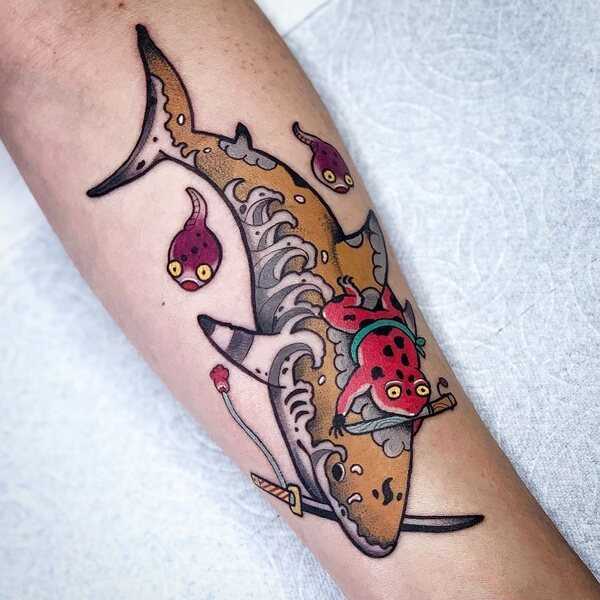
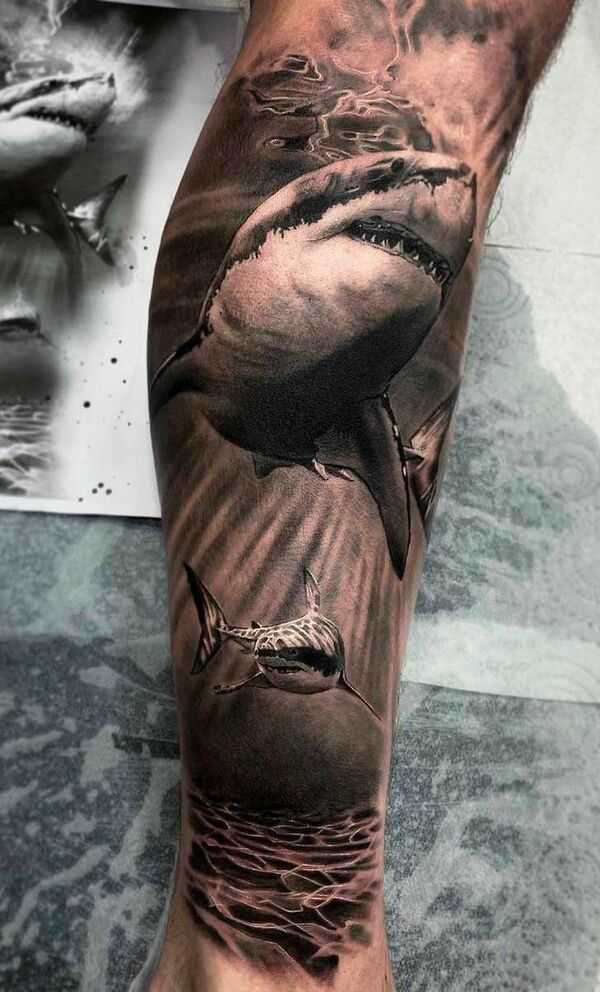
A noticeable trend is the increasing use of this kind of art as a reflection of the wearer’s journey or life experiences. Some individuals opt for large, detailed pieces that represent significant milestones, such as growth or overcoming obstacles. Others choose to have tattoos that honor personal relationships, family bonds, or their own sense of self-worth. This evolution in meaning has made the tattoo more than just an aesthetic choice—it has become an emblem of resilience and identity.
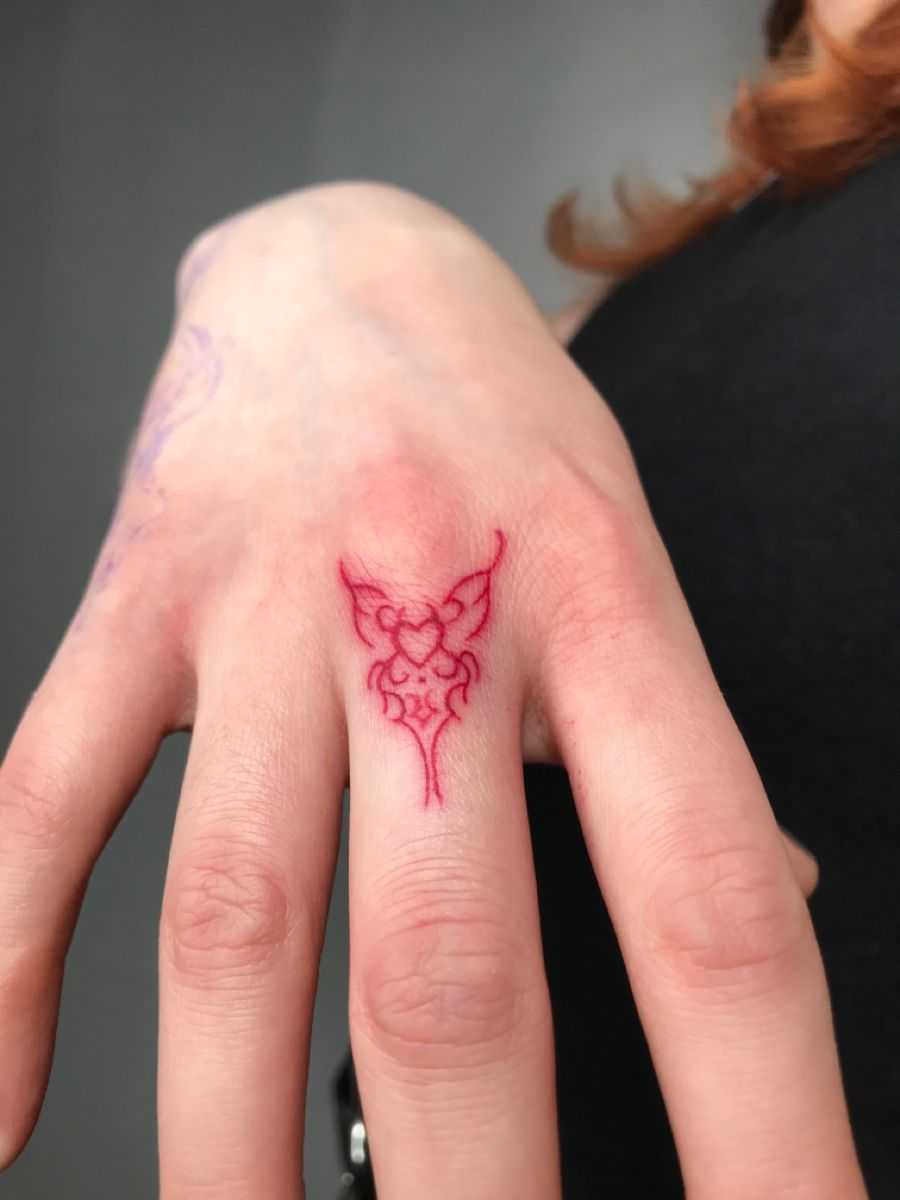
Another interesting shift in the modern trend is the expansion of the underboob artwork to incorporate other body parts, such as the stomach, ribs, and back. Today’s designs often flow seamlessly between these areas, creating cohesive pieces that are both stunning and symbolic. 

Modern-day trends of underboob ink | lenkasink_
  1. The Future of Underboob Art: Exploring New Frontiers

As tattoo technology advances and trends continue to evolve, it’s fascinating to imagine where the underboob trend will go in the future. One potential direction is the incorporation of innovative techniques such as 3D tattoos or hyper-realistic artwork, which could further transform this area into an even more dynamic and eye-catching canvas.

The trend may also continue to expand beyond traditional tattoo, incorporating elements from different disciplines, such as body painting or augmented reality tattoos. Tattoos on the underboob could become even more interactive, with designs that change or reveal hidden meanings under different light conditions or when combined with certain clothing styles.

With each new design, the underboob area is transforming from just a space for personal expression into a bold, powerful medium for storytelling. Whether through intricate patterns, meaningful symbols, or transformative works of art, the tattoo is no longer just a passing trend but a lasting part of the ever-evolving tattoo culture.

The evolution of the underboob tattoo trend reflects a shift toward more personal, artistic, and expressive ink. What began as an edgy and intimate placement has blossomed into a powerful form of personal expression, with its own distinct place in modern tattoo culture. The underboob design is no longer just a trend—it has become a symbol of confidence, creativity, and individuality.
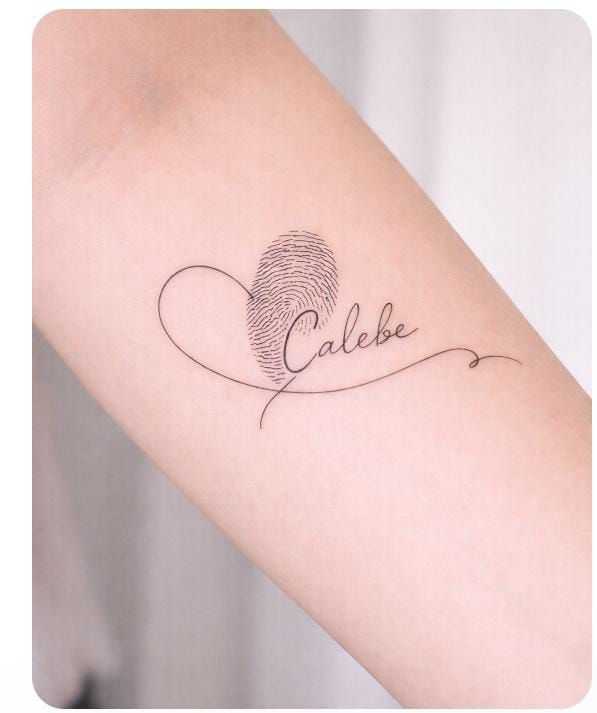
Boob Tattoos Popular Placements and Key Considerations 

Boob tattoos have gained significant popularity in recent years, becoming a favorite choice for many seeking a blend of elegance, sensuality, and personal expression. This body part offers several placements for tattoos, each carrying its own appeal and meaning. Below, we will discover the various tattoo placements on the boob and some designs recommended. 

1. Side Boob Tattoo: Bold and Eye-Catching

This placement stretches from the side of the chest and can extend towards the ribs, wrapping around the body. Side boob artwork is often larger than upper boob pieces, as it has a larger canvas to work with. It’s an ideal placement for individuals who want a design that is both bold and beautiful.
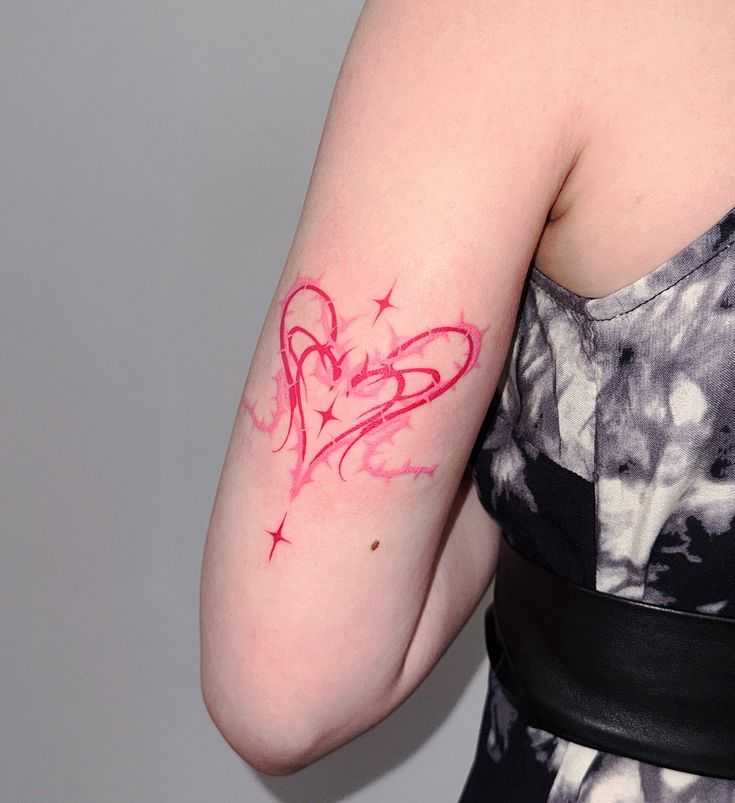
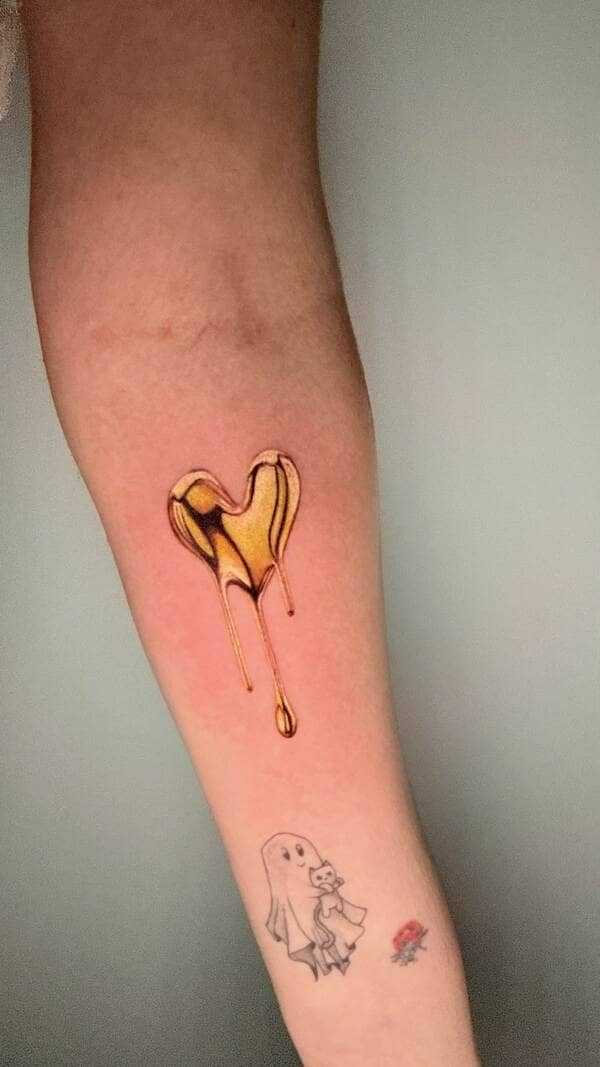
This position allows for more intricate and elaborate designs, including floral patterns, geometric shapes, or larger symbolic tattoos. The placement of these designs can accentuate the side of the chest and add flow to the body’s shape, making them a great option for anyone looking for something a little more dramatic.

Side boob tattoo | konstantin_siegel

2. Center Chest Tattoos: Statement and Symmetry

Tattoos placed directly in the center of the chest are often bold statement pieces that require careful consideration. These tattoos typically cover the space between the breasts, sometimes extending down towards the sternum or across the collarbones. Central chest artwork can be larger and more detailed, often taking the form of symmetrical designs or patterns that draw the eye to the center of the chest.

A boob design in the center of the chest can symbolize strength, beauty, or balance, and it often emphasizes a sense of confidence. These tattoos are highly customizable, ranging from tribal patterns to floral designs or even quotes and script.

3. Upper Boob Inks: Subtle and Feminine Designs

Another popular placement for boob art is the upper boob area, particularly around the clavicle and the top of the breast. Tattoos in this area are often subtle and feminine, and they can be a beautiful way to accentuate the natural curves of the body.

The upper boob area provides a relatively small space for designs, which makes it ideal for smaller, delicate tattoos like tiny flowers, minimalist symbols, or fine line tattoo. Because this area is often visible when wearing certain clothing, such as low-cut tops or dresses, upper boob body ink tends to be a statement piece that balances visibility and elegance.

Upper boob tattoos recommendation

4. Around the Boob: Curved Designs for a Natural Flow

Another creative placement for boob design is along the natural curve of the breast. Tattoos placed around the boob allow for a design to follow the body’s shape, enhancing the curves while creating a smooth and elegant flow of artwork. This placement is ideal for those who want to combine intricate detailing with the natural lines of the chest.

This kind of tattoo placement can be used to emphasize the natural contours of the breast while still offering artistic and personal expression. Many people choose to get floral, vine-like designs or soft geometric shapes to complement this type of placement. For those looking for something more unique, an eye tattoo placed near the breast can create an intriguing focal point, symbolizing insight or protection. The placement of an eye tattoo can add depth and mystique, offering a bold contrast to softer designs and further enhancing the overall aesthetic

5. Full Chest Tattoos: Bold and Empowering Choices

For those who want to make a bold statement, full chest tattoos, which cover both boobs, are a striking option. These large-scale pieces can encompass the entire chest, crossing from one side to the other, and may even extend down to the stomach or ribs. A full boob piece is a daring choice, as it is hard to hide and will be more visible than smaller tattoos.

Full chest tattoos are often highly detailed and can range from intricate mandalas to detailed depictions of animals or celestial bodies. Therefore, these boob tattoos require significant time and consideration, as they are larger and more complex than smaller pieces, and the pain associated with this area may be more intense.

Full chest tattoo
Full chest tattoo

The boob area offers a diverse range of possibilities for tattoos, from subtle upper chest designs to bold full-chest pieces. Whether you’re looking for something delicate or dramatic, there’s a perfect placement for everyone.

Essential Factors to Consider Before Getting Underboob Ink

Getting an underboob ink is a bold and beautiful choice for those who want to express themselves through a tattoo. However, before you decide on a tattoo on the underboob, it’s important to take several factors into account. Below are the key aspects to think about before committing to this type of body art.

  • Body Changes and the Impact on Your Design

This area is sensitive to changes in your body, such as weight fluctuations, pregnancy, or natural aging. As the skin stretches or loses elasticity over time, the appearance of your underboob design may shift. For example, if you gain weight or experience pregnancy, the tattoo may stretch, altering the original shape or flow of the design. On the other hand, losing weight may cause the skin to shrink, affecting the design’s clarity. Before having an underboob piece, consider how the area might change over the years and choose a design that is flexible. Opting for more abstract or fluid patterns can be a smart choice, as they’re less likely to look distorted with body changes. 

  • Pain and Sensitivity

The underboob area is relatively sensitive, and tattooing this part of the body may be more painful than other placements. The skin around the ribs and the breast can be delicate, and the closer the tattoo is to your sternum, the more intense the pain might be.  The level of discomfort will vary from person to person, depending on their pain tolerance. If you’re unsure, it’s a good idea to start with a small piece in the area to gauge how your body reacts to the sensation before committing to a larger or more complex underboob artwork.

Essential factors to consider before getting an underboob tattoo | Zihwa
  • Design and Placement

Choosing the right design for your underboob body ink is a critical decision. It’s essential to consider how the design will fit within the specific contours of your body. Placement is also important. Will the tattoo be centered in the middle of the chest or wrap around the ribs? Do you want it to peek out from underneath clothing, or would you prefer a design that’s more discreet? It’s worth discussing your vision with your tattoo artist, who can help you determine the most flattering placement and design that will complement your natural body shape.

  • Aftercare and Clothing Considerations

Proper aftercare is essential to ensuring your underboob art heals well and retains its vibrancy. This area is prone to irritation due to its proximity to the chest, and friction from clothing can lead to discomfort or even affect the healing process. Be mindful of the type of clothing you wear during the healing phase—tight bras or clothing that rubs against the tattooed area should be avoided. 

  • Professionalism of the Tattoo Artist

Choosing the right tattoo artist is especially important for underboob artwork, as the area requires a high level of precision and skill. Not all artists may be experienced with tattoos in such a sensitive and delicate location, so it’s important to select someone who has experience with tattoo around the chest and rib area. Many people also look to well-established tattoo shops in Boston as references for professional standards, hygiene, and expertise when researching artists for intricate placements like underboob tattoos. Look for an artist who understands your vision and is capable of creating the intricate designs that suit this particular space. 

  • Long-Term Care and Fading

As with any tattoo, fading is inevitable over time. The underboob part is exposed to friction from clothing, sweat, and natural skin oils, all of which can contribute to the design fading more quickly. To minimize fading, be sure to use sunscreen when the tattoo is healed and avoid excessive exposure to the sun. Choosing a design with bold lines or darker ink may also help maintain its vibrancy for a longer period.

Incorporate Boob Tattoos into a Larger and Seamless Design 

Many people are now choosing to incorporate their boob tattoos into expansive inks that flow seamlessly across the chest, ribs, or even to other areas of the body. When done right, these artworks can serve as a foundation for a broader design, connecting the upper body to other tattoos on the back, stomach, or arms.

Flowing Designs Across the Chest and Ribs

One of the most common ways to integrate a boob design into a larger piece is by allowing the artwork to flow across the chest and ribs. This type of design creates a sense of continuity, as the tattoo wraps around the torso, seamlessly connecting the boob area to the rest of the body.

These designs are often more intricate, with the pattern adjusting to the curves and angles of the chest, allowing the tattoo to take advantage of the natural shape of the body. This method gives the artwork a dynamic quality, making the tattoo feel like a cohesive whole rather than a standalone piece.

Incorporating Symmetry for a Balanced Look

Many people opt for symmetrical designs that mirror each other on both sides of the chest, creating a harmonious look. This pattern or design helps to create a visually appealing balance, drawing attention to the chest area while blending seamlessly with other art. For instance, a large floral design on one side of the chest can be mirrored with a similar piece on the opposite side, bringing symmetry to the entire chest and upper body.

Incorporate boob tattoos into a larger design | Karoo_dame

Creating a Full-Sleeve or Back-to-Front Piece

For those who want to create a larger piece of art, a boob design can be integrated into a full-sleeve tattoo or even a back-to-front piece. In these designs, the tattoo on the boob serves as a starting point, flowing upwards towards the shoulder or down towards the stomach, eventually connecting to other tattoos on the back or limbs. This type of design gives the artist the opportunity to create an interconnected piece that spans the torso and limbs, with the boob art acting as a focal point. 

Complementing Other Areas of the Body

Finally, a tattoo on the boob can serve as a complementary element for tattoos elsewhere on the body. Many individuals choose to match their boob design with tattoos on the arms, back, or even the legs, creating a harmonious piece that spans multiple areas of the body. This approach helps create a flow in the artwork, with each piece of the tattoo enhancing the others. By strategically positioning designs across different areas, individuals can build a cohesive, well-rounded body art piece that highlights the natural curves and contours of their body. Even foot tattoos for women can be incorporated into this concept, adding an extra layer of elegance and continuity to the overall design.

Boob tattoos can be a stunning starting point for larger, interconnected body art pieces. Whether it’s flowing across the chest, creating symmetry, or complementing other tattoos on the body, a tattoo on the boob can be a key part of a beautiful and cohesive design. When incorporated thoughtfully, the boob design can enhance the overall tattoo, adding depth, meaning, and aesthetic value.

Underboob Tattoo and Expert Tips for the Ultimate Experience

Choosing to get a tattoo beneath the bust is an exciting experience, but to ensure it turns out beautifully and heals properly, there are several professional tips to keep in mind. Whether you’re preparing for your first underboob tattoo or adding another piece, the guidelines below will help you achieve the best outcome before, during, and after your session.

  1. Choose the Right Design and Placement

Before you get your tattoo, it’s crucial to work closely with a professional tattoo artist to choose a design that suits the shape and size of the area. An expert artist will help you visualize how the tattoo will flow across your chest and around your ribs. Be sure to discuss the tattoo’s exact placement to ensure it aligns perfectly with your body, as this will impact both the aesthetics and comfort of the final piece.

  1. Prepare for the Pain and Sensitivity

This area is known for its sensitivity, especially near the ribs and sternum. Professional tattoo artists recommend that you mentally prepare for some discomfort, as this area tends to hurt more than others. To help manage the pain, consider eating a healthy meal before your appointment to stabilize your blood sugar and ensure you’re feeling strong. Additionally, stay hydrated to help your skin respond well to the tattooing process. If you’re concerned about pain, discuss options with your tattoo artist, who may recommend numbing creams, though these should only be used under their guidance.

Underboob tattoo and expert tips for the ultimate experience | Costa_tattoo_replublic
  1. Wear Comfortable Clothing and Choose the Right Time

On the day of your tattoo appointment, wear loose-fitting, comfortable clothing that allows easy access to the underboob area. A loose tank top or button-down shirt works well, as it won’t irritate the freshly inked skin. Also, plan your session when you have ample time to relax and recover afterward, as the process can take a few hours depending on the complexity of the design.

  1. Proper Aftercare for Long-Lasting Results

Proper aftercare is crucial to ensuring your artwork heals correctly and retains its vibrant appearance. It’s essential to follow their instructions for cleaning the tattoo, which typically involves gently washing the area with unscented soap and lukewarm water. Avoid using rough towels or scrubbing the tattoo, as this can damage the ink and cause irritation. For the first few weeks, keep the area clean and moisturized with a tattoo-friendly aftercare ointment. Be careful to avoid tight clothing that might rub against the freshly inked skin, as this can cause discomfort and potentially lead to infection.

  1. Listen to Your Body and Communicate with Your Artist

Throughout the process, it’s important to listen to your body and communicate openly with your tattoo artist. If you experience significant discomfort, dizziness, or other concerns during the session, don’t hesitate to let your artist know. A professional will adjust the pace of the tattooing process to ensure you’re as comfortable as possible.

By following these professional tips before, during, and after your ink session, you can ensure a smooth tattooing experience and a beautiful final result. 

Underboob Tattoo and 5 Most Frequently Asked Questions 

Getting an underboob tattoo is a bold decision, and there are often many questions people have before taking the plunge. Here are some frequently asked questions that might help you prepare for your experience.

  1. How Long Does an Underboob Ink Session Typically Take?

The duration of the session depends on the size and complexity of the underboob pattern. Smaller designs can take around 1-2 hours, while larger, more detailed pieces may take 3-5 hours. If you’re planning a larger body art, be prepared for multiple sessions, especially if your design extends across the chest or ribs.

  1. Is It Okay to Wear a Bra Over My Fresh Underboob Artwork?

It’s best to avoid wearing a tight bra or clothing that rubs directly on your freshly inked underboob area during the healing process. For the first few weeks, opt for loose-fitting clothes to avoid irritation and pressure on the tattooed skin. Your tattoo artist will give you specific aftercare instructions to follow, and this usually includes avoiding tight clothing to ensure the healing process goes smoothly.

5 most frequently asked questions about underboob tattoo | Kunstwerk.chelle
  1. What Should I Wear When Getting an Underboob Design?

When heading to your appointment, it’s essential to wear loose, comfortable clothing that allows easy access to your chest. A loose tank top or button-down shirt works well, as it won’t interfere with the tattooing process and allows the artist to have full access to the area. Avoid wearing clothes that might irritate your skin or rub against the tattooed area post-session.

  1. Can I Lie Down on My Freshly Finished Tattoo?

It’s generally not recommended to lie directly on a freshly finished tattoo, especially during the initial healing phase. The tattooed area is sensitive and can be easily irritated by pressure or friction, which may cause the ink to blur or the skin to become inflamed. To protect your new tattoo, try to sleep in a position that avoids putting pressure on it. You can also use soft, clean cloths or sheets to create a barrier between the tattoo and surfaces you rest on. Following your artist’s aftercare instructions will ensure optimal healing and prevent any unnecessary damage.

  1. Can I Get an Underboob Piece if I Plan to Get Pregnant?

If you plan to get pregnant in the future, it’s important to consider how the tattoo on the underboob might be affected by changes in your body. Pregnancy can cause the skin to stretch, which might distort the artwork. If you’re unsure, discuss your concerns with your artist for personalized advice.

By understanding the process and addressing these questions, you can ensure a smoother experience when you get your underboob ink.

Underboob tattoo is more than just a tattoo; it’s a statement of individuality and confidence. As you explore your options for these unique boob tattoos, remember to consider factors like pain tolerance, design complexity, and aftercare to ensure the best results. Ultimately, the right design can be empowering, adding a meaningful touch to your body. If you’re ready to get your own underboob ink or a side boob tattoo, come to Holistic Ink, where skilled artists will help bring your vision to life with precision and care.