Small tattoos are no longer a compromise for those wary of long term commitment. They have become a standalone artistic statement, where value is defined by intentional simplicity rather than size. At Holistic Ink, we understand that even the smallest lines carry their own story. Minimalist body art requires far greater precision than traditional tattoo styles. A well executed micro tattoo must balance expressive clarity with lasting sharpness. This is why our fine line tattooing process is built on advanced single needle technology combined with high grade anti fade pigments. The art of small scale tattooing is not simply a reduced version of larger designs. It demands an entirely different design mindset, from managing negative space to choosing the appropriate needle depth for each area of the skin. In this article, you will explore the full journey from concept to aftercare, along with the key factors that determine 80 percent of the final outcome of a tiny tattoo.
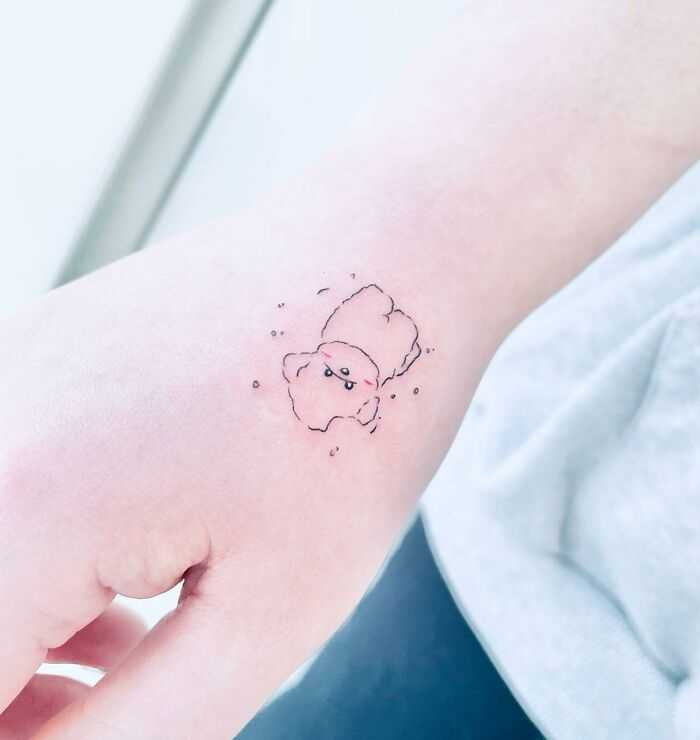
Cute Tattoo | dubu_tattoo
Why Have Small Tattoos Become a Modern Artistic Trend? Holistic Ink Share
As a growing preference in contemporary body art, small tattoos reflect a shift toward thoughtful choices that balance visual appeal with everyday practicality. Their appeal comes not only from their compact scale but also from the way they fit different lifestyles, personalities, and levels of commitment. To understand why this style continues to attract so many people, it is worth looking at what defines these designs and what motivates people to choose them.
Definition: Minimal Form With Significant Expressive Power
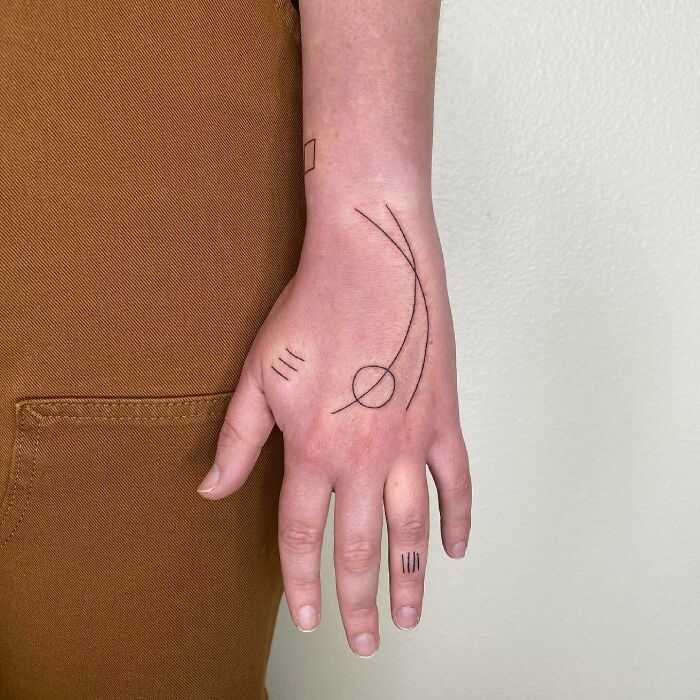
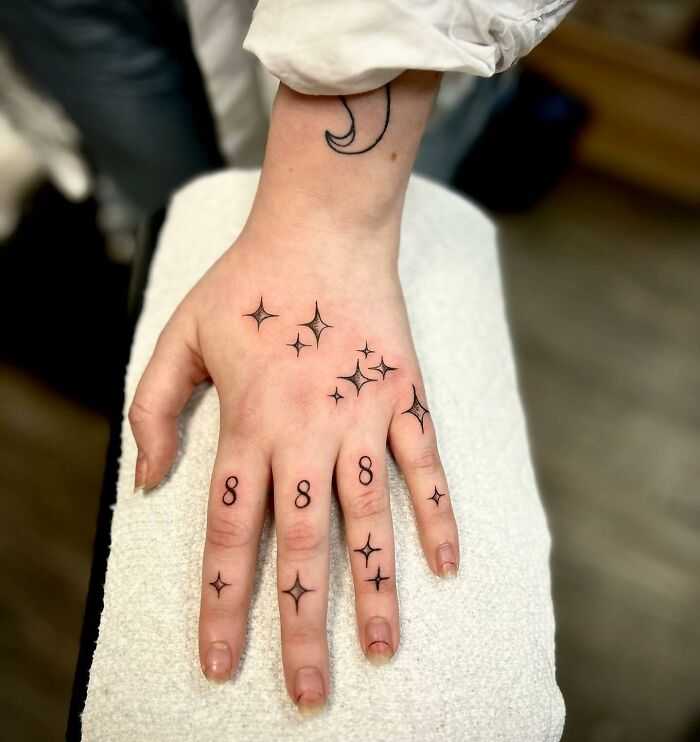
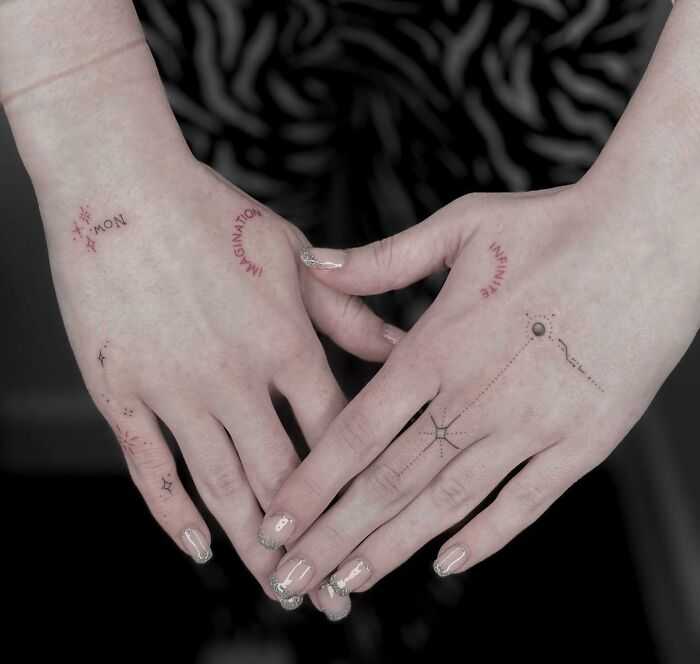
The definition of small tattoos is often understood as designs under five centimeters that use delicate lines and simplified details. However, the essence of minimalist body art goes far beyond this technical description. A successful micro tattoo is not measured by size, but by its ability to convey a clear message within a limited space. Fine line tattoos use a single needle or ultra thin needle clusters to create strokes as delicate as strands of hair. This technique allows artists to render intricate details that were once possible only in larger pieces. A tiny flower on the wrist may contain up to fifteen petals with visible vein structure, and a zodiac constellation behind the ear can still retain the sharpness of each point of light. Symbolic art in small scale tattooing often draws from the power of cultural symbols. A simple curve may represent the ocean, the lunar cycle, or the rhythm of breath. Subtle tattoos do not shout for attention, yet they leave a lasting impression upon closer observation. They create a quiet, intimate dialogue between the wearer and the viewer. Modern tiny tattoo ideas are no longer limited to basic flash designs. The trend is shifting toward full personalization. Clients now request pieces inspired by handwritten notes from loved ones, their child’s fingerprint, or a small sketch tied to a meaningful memory. Hand poked techniques are also gaining popularity for their unique texture and reduced skin trauma. Minimalist works also rely heavily on the stability of the artist’s technique. Stroke length, needle taper, and ink viscosity all determine the consistency of each line. When the artist controls torque and hand pressure effectively, the fine lines become more durable and less prone to pigment spreading over time.
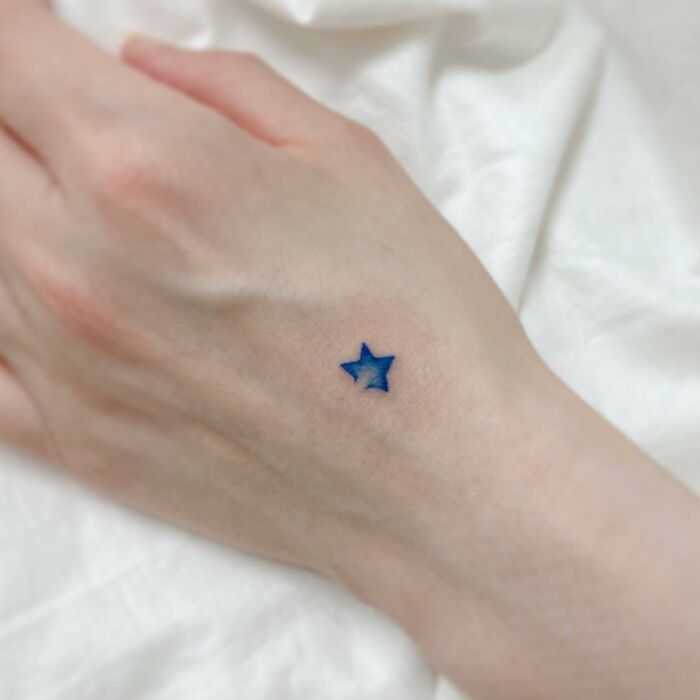
Blue Small Star Tattoo | yeonhwa_tt
User Psychology: Why So Many People Choose Small Tattoos?
Discreet tattoos for professionals have become a leading choice in modern office environments. A small tattoo on the wrist can be easily covered by a watch or bracelet, and a design behind the ear disappears the moment the hair is let down. This flexibility allows individuals to fully control who sees their artwork. Age demographics show that people between twenty five and forty make up the majority of clients choosing smaller designs. They are often individuals with established careers who must maintain a professional image while still wishing to express their personal identity. The compatibility between lifestyle and tattoo placement has therefore become an important factor when they consider both location and size. Beginner friendly tattoos often start with smaller sizes for several practical reasons:
The procedure takes less time, usually under thirty minutes
The cost is more reasonable compared to larger projects
There is less pressure regarding long term commitment
They can be added to or expanded into a sleeve later on
The first tattoo choice usually leans toward smaller designs because the commitment is minimal both in time and sensation. Not everyone is ready to sit for hours for a large piece on their very first session. A small tattoo allows them to experience the process, become familiar with the feeling, and observe how their skin responds before taking the next steps. Low pain tattoos are another key factor. The question “Do small tattoos hurt less” often has a more complex answer than a simple yes or no. In terms of endurance, a small tattoo session is certainly shorter. However, pain level is influenced more by location than by size. A tiny tattoo on the rib area can hurt more than a larger tattoo on the upper arm. Design preferences are also closely linked to personal character. Those who appreciate simplicity often gravitate toward archetype symbolism, while individuals in professional environments tend to prioritize career safe placement. Understanding personality mapping allows the artist to suggest designs that align with each client’s emotional journey.
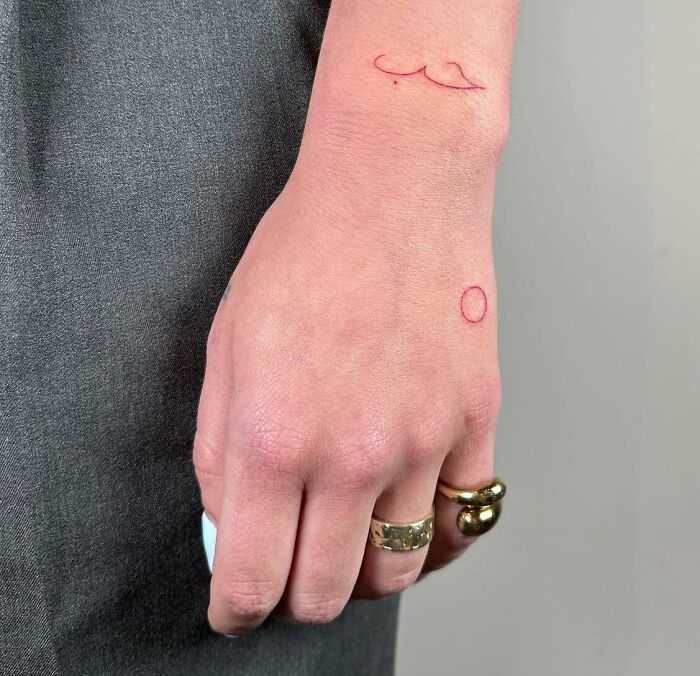
Lover Word Tattoo On Hand | nikol.ink.tattoo
Key Factors That Shape the Result of a Small Tattoo at Holistic Ink
Checklist: Essential Criteria to Consider Before Getting a Tattoo
A Design Style That Matches Your Personality You should define your aesthetic direction before beginning the process. Fine line work suits those who appreciate elegance and subtle detail. Geometric micro art aligns well with clients who prefer structure and logic. Floral miniatures appeal to individuals who value natural beauty, while abstract minimal tattoos allow complete freedom of personal interpretation. Small tattoo designs for men often lean toward strong symbols such as arrows, mountains, or dotwork techniques. Watercolor micro style is becoming popular among those who prefer soft and gentle color expression. Matching tattoos are also a meaningful choice for couples or close friends who want complementary designs.
Choosing the Right Tattoo Placement The best placement for small tattoos has a direct impact on how well the design holds over time. Certain areas of the skin experience more abrasion or have variable elasticity, making it harder for the lines to stay sharp, especially in places that move frequently such as the wrist or fingers. Wrist tattoos are easy to care for but prone to friction
Finger tattoos are expressive but fade quickly due to constant movement
Tattoos behind the ear are discreet and experience minimal contact
The collarbone area is thin and more sensitive but retains detail well
Tattoos on the hands are eye catching but require more frequent touch ups
Good Days & Bad Days Tattoo On Hand | tavi_tattoo
Technology and Technique Used in the Process
Precision tattooing requires specialized equipment and a high level of skill. A rotary machine is more suitable than a coil machine for fine line work because it offers better stability and controlled speed. When the artist adjusts stroke calibration and needle taper appropriately, the lines become more consistent and the risk of slight pigment spread on softer skin areas is reduced. Needle configurations from one round liner to three round liner allow for different line widths. Ink penetration depth must remain even to prevent some sections from appearing darker while others look faint.
There are also important medical considerations. Individuals taking blood thinning medication, those with skin conditions, or those who are pregnant should postpone their session. Proper skin preparation requires the skin to be dry and free from sunburn for at least two weeks beforehand.
Minimal Geometric Tattoo | yard_n_gnome
A common case among office professionals involves choosing a small design placed on the wrist, such as a minimalist lotus motif. Many first time clients often worry about the possibility of ink spreading over the years, especially after reading about fine line fading. However, observations over an eighteen month period show that the lines can remain stable and sharp when the artist uses anti fade ink combined with a low trauma needling technique. In some instances, only a light touch up on a small detail is needed after more than a year. The initial cost is typically around one point two million, with a touch up priced at three hundred thousand. The healing process usually takes about ten days for the skin to fully recover.
In addition to single needle technique, the artist must adjust machine stroke dynamics and motor torque to achieve better control of vibration. Newer devices use a stabilized shaft mechanism that helps maintain consistent fine lines. When combined with low viscosity pigment, the ink absorption process becomes more stable and reduces the risk of broken or uneven lines on softer areas of the skin.
Assessing Fading Risks and Planning for Long Term Maintenance The question “Do small tattoos fade faster” is one of the most important concerns. The answer depends on three factors: skin type impact, aftercare consistency, and sun exposure. Oily skin tends to retain pigment better than dry skin, while areas that are frequently exposed to water or chemicals will fade more quickly. What affects tattoo longevity? Beyond skin characteristics, longevity is influenced by pigment quality, the artist’s technique, and personal care habits. Seasonal considerations also play a role. It is best to avoid getting a tattoo during the summer if you expect frequent sun exposure or swimming. Autumn and winter are ideal because the skin experiences fewer environmental stresses. Durability is also affected by the skin microbiome balance and the rate of epidermal turnover. Dry or fast peeling skin can cause pigment to shift unpredictably. In high humidity environments, sweat chemistry may impact pigment stability. Areas exposed to constant friction are more likely to develop gradual blurring over time.
Small Hand Tattoos | nolimit_ink
Design Process and Care at Holistic Ink
Optimized Fine Line and Single Needle Process
The question “How are fine line tattoos done” is answered through a standard international process that includes five steps: Consultation and sketching: The artist creates a real sketch to check proportions
Stencil accuracy: The stencil is placed with precise alignment
Single needle execution: Each line is applied with steady and controlled movement
Ink saturation check: The artist evaluates the consistency of pigment density
Aftercare briefing: Detailed instructions are given for proper care
The low trauma technique allows the skin to recover more quickly. Instead of repeatedly puncturing the same area, this method uses a moderate depth with the minimum number of passes. As a result, swelling and fluid discharge are reduced, and the healing timeline becomes thirty to forty percent shorter.
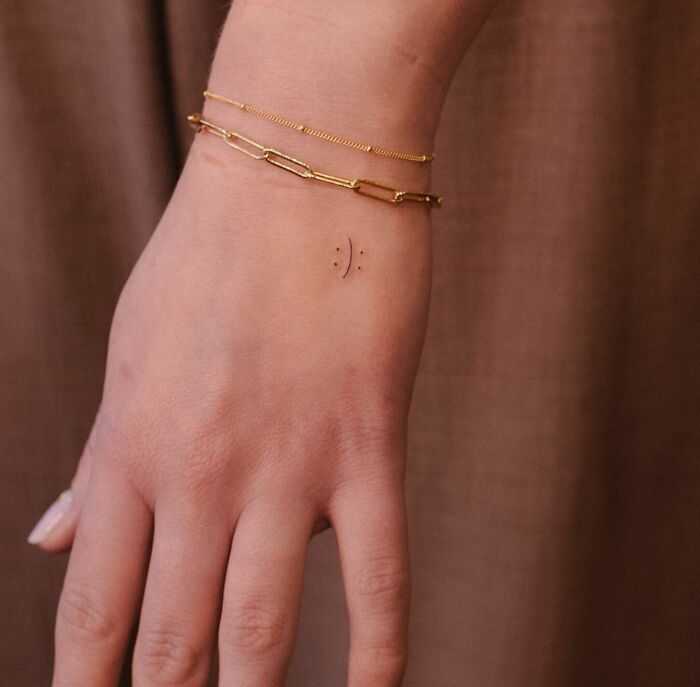
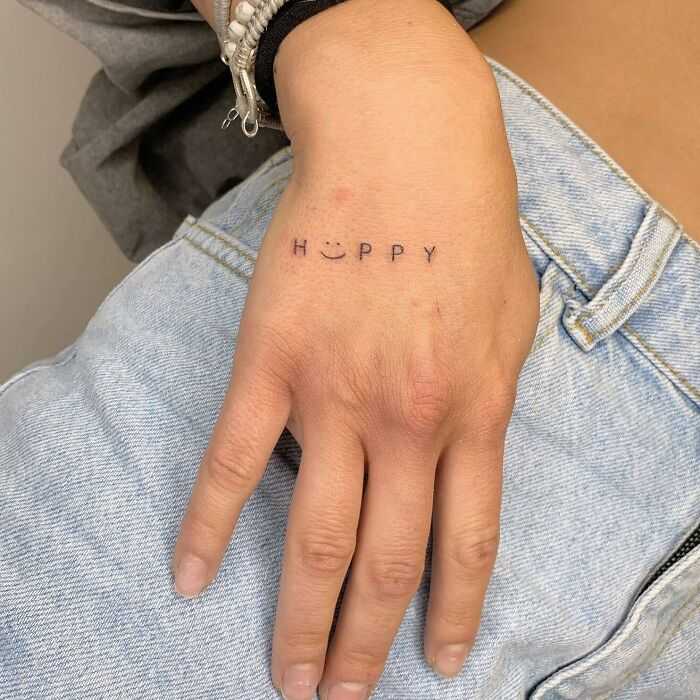
Don’t Worry, Be Happy | ns_tattoo_boutique
Signature Design Styles
Botanical micro tattoos are one of the studio’s core strengths. We specialize in recreating local floral species with precise botanical detail. Beyond visual beauty, each design reflects the true biological characteristics of the plant it represents. Minimalist symbols draw from the power of geometry and cultural iconography. A Zen circle. A balanced triangle. A single continuous line representing a cycle. Geometric micro art combines simple shapes into more complex compositions. When enhanced with negative space structuring or monoline geometric accents, the layout becomes more open and maintains clarity over time. Small tattoos for women often lean toward zodiac constellations with accurate star connections, abstract mini tattoos inspired by expressive brushstrokes, and micro realism that portrays small portraits or sentimental objects. Small tattoos for men tend to favor stronger symbols and sharper geometric designs. Holistic Ink stands out through its unique blend of traditional Vietnamese symbolism and modern minimalism. The studio is among the few in Vietnam with a team fully specialized in micro style and a portfolio composed entirely of fine line work. Many clients are drawn to negative space minimalism or micro ornamental styles that reflect an East Asian aesthetic. Some designs take inspiration from the Japanese enso or Nordic line symbolism, creating a meditative feeling. This fusion of cultural tradition and contemporary minimalism expands the creative possibilities for the artist.
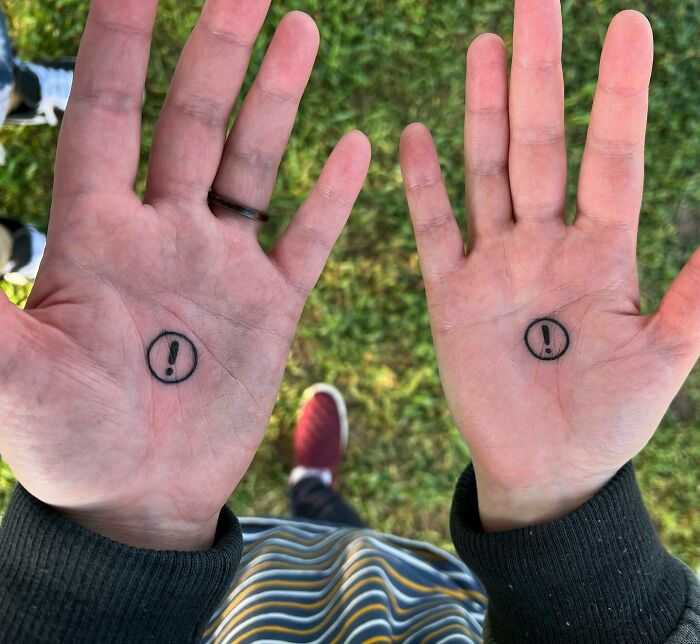
Palm Tattoos | spaditattoos
Checklist for Keeping Your Tattoo Sharp for the Longest Time
The question “How to care for small tattoos” can be answered through a simple step routine that should never be skipped:
Step 1: Proper cleaning from day 1 to 14
Wash gently with unscented soap 2 to 3 times a day
Avoid soaking the area and keep showers quick
Pat dry with a clean paper towel without rubbing
Step 2: Moisturizing and recovery from day 3 to 30
Apply a thin layer of unscented moisturizer 3 to 4 times a day
Avoid petroleum based or lanolin based creams that may clog pores
Allow the skin to breathe and avoid covering it continuously
Step 3: Long term sun protection for life
Use sun protection with SPF 50+ whenever you go outside
Avoid direct sunlight during the first 6 months. A consistent photoprotection routine combined with a long term hydration cycle helps stabilize pigment, especially in fine line designs that are highly sensitive to ultraviolet light.
IInk retention depends about 70 percent on proper sun protection
Simple Hand Tattoos | zap.ink
The question “How long do tiny tattoos take to heal” is common. The outer layer of skin usually heals in 2 to 3 weeks, while deeper layers require 3 to 4 months. Swimming restrictions apply for at least 3 weeks. Gym activities should be avoided for 10 to 14 days, especially movements that stretch the tattooed area. The question “Can tiny tattoos be covered up” has a yes answer, but it depends on saturation and placement. Fine line tattoos are easier to cover than bold tattoos because they contain less pigment. However, areas such as the fingers or behind the ear are difficult to cover due to limited space.
The question “Why do fine line tattoos blur” relates mainly to lack of moisture and ultraviolet exposure. Dry skin causes uneven pigment movement, and ultraviolet rays break down color molecules, leading to spreading of lines. Long term tattoo maintenance requires daily discipline, not just a few weeks of care. Some clients choose a silicone recovery film to reduce moisture loss and support barrier repair. When combined with a non occlusive moisturizer, the epidermis heals more quickly. This reduces pigment dispersion and increases the likelihood of maintaining crisp fine lines during the peeling stage.
Small meaningful tattoos are not only an aesthetic decision but also a long term commitment. From choosing the right design to undergoing a professional process, every step influences the outcome. Precision micro needling combined with anti fade ink technology at Holistic Ink ensures that your tattoo stays sharp from the first day and for many years afterward. For additional information about small tattoos or technical consultation, you can contact Holistic Ink for support.
The spider has long been a symbol of mystery, creativity, and transformation. With rich cultural spider tattoo meanings, it has become a popular choice for body art enthusiasts around the world. From the bold presence of a spider body art to the delicate intricacies of a spider design, each design holds its own unique symbolism. Whether it’s the connection to patience and balance or the bold statement of personal growth, these tattoos offer a blend of deep meaning and artistic expression. In this article, we will explore the various styles, placements, and symbolism behind spider art, including the increasingly popular spider art and the striking spider’s web elbow tattoo.
Learn Spider Tattoo Meanings and Cultural
The spider designs have captivated tattoo enthusiasts around the world for centuries with their intricate patterns and rich symbolism that span across various cultures and eras. As body art of self-expression, spider designs continue to rise in popularity. Whether designed with delicate, fine lines or portrayed as realistic creatures, these tattoos hold deep meanings that extend far beyond their aesthetic appeal. Exploring the ancient significance and modern interpretations behind spider tattoo meaning reveals how this timeless design continues to evolve while maintaining a profound connection to both cultural and personal symbolism.
Spider tattoo cultural and personal meanings
The Ancient Symbolism of Spiders in Various Cultures
Throughout history, spiders have been revered, feared, and admired in various cultures across the globe. Their role in mythology, art, and symbolism has varied, but many of these interpretations share a common thread: the spider is both an intelligent creator and a force to be reckoned with. In ancient times, the spider was often seen as a symbol of creativity and patience due to its methodical and precise nature in weaving webs. This perception of the spider’s intricate skill in constructing its web has influenced numerous tattoo designs, often portraying the spider as a symbol of patience, craftsmanship, and intelligence.
In Greek mythology, for instance, the spider was associated with the goddess Arachne, a talented weaver who was transformed into a spider by the goddess Athena after she challenged the gods in a weaving contest. The story of Arachne’s transformation embodies both creation and downfall, showcasing how the spider can represent both beauty and tragedy. The tale highlights the themes of hubris (excessive pride) and the consequences of challenging divine authority, making the Spider’s physical arts a symbol of resilience, artistry, and the complexities of fate. Arachne’s transformation also touches upon the idea of the cyclical nature of life, where creation and destruction are intertwined.
Similarly, in Native American cultures, the spider is revered as a creator and protector. The Spider Woman, a deity in many Native American myths, is believed to have created the world’s first web and taught people the art of weaving. This spiritual connection to creation and the web reflects the spider’s role as a symbol of interconnectedness, unity, and the balance between all things. The spider is seen as a teacher of wisdom, emphasizing the idea that all elements of life are intricately linked. Thus, tattoos in these cultures embody creation and the enduring strength of community and the interconnected nature of life.
Spiders as Symbols of Transformation and Patience
In many cultures, spiders are also seen as symbols of transformation, rebirth, and renewal. This symbolic association arises from the process of the spider shedding its exoskeleton during molting, which mirrors personal growth, evolution, and self-discovery. Just as a spider must transform to emerge stronger, individuals who choose tattoos often see this as a reminder of their own ability to evolve through challenging circumstances. The spider’s capacity to reinvent itself is a powerful symbol for Self-improvement and the resilience required to overcome obstacles in life.
For those who draw inspiration from Eastern philosophies, particularly Buddhism, the spider represents patience and mindfulness. Just as the spider spends time and energy weaving its web with great precision, those who wear a spider tattoo may view it as a reminder to be patient and deliberate in their actions. The intricate and purposeful nature of the spider’s thread reinforces the idea that success, enlightenment, and personal growth require time, effort, and a mindful approach. Spider’s frame arts are often chosen by individuals who prioritize patience as a core principle of personal development and spiritual growth.
Modern Interpretations and Personal Symbolism
As time has passed, spider tattoo meanings have evolved, and in today’s society, they have become increasingly personal and modern. While the ancient cultural and symbolic meanings continue to hold significance, contemporary interpretations of tattoos are diverse and adaptable. Individuals can now inject their own personal experiences, beliefs, and values into the design, making the spider skin art a highly customizable symbol.
Modern and personal symbolism of spider tattoo
For many people, the spider’s torso design represents inner strength, resilience, and determination. The image of the spider, often depicted as calm yet strong in its environment, serves as a reminder to the wearer of their own ability to face life’s challenges and thrive despite adversity. This modern interpretation centers around the idea of power, fortitude, and overcoming the trials life presents, much like the spider is able to survive and thrive even in the face of destruction or challenge.
In the context of tattoo art, the design of the spider is often tailored to reflect the personality and experiences of the individual. Some people opt for minimalist spider-skin arts, where only the outline of the spider is visible, symbolizing simplicity, clarity, or even solitude. On the other hand, more detailed and realistic spider ink designs may evoke a deeper connection to nature, fearlessness, or a fascination with the mysterious and enigmatic aspects of life. The spider’s role as both a creature of the earth and an intricate weaver of webs also adds to the spiritual and philosophical resonance that some wearers find in this tattoo design.
Spider Designs as Symbols of Protection
Another modern interpretation of the spider’s frame art is its connection to the concept of protection. The spider’s web functions not only as a home for the spider but also as a trap for prey, symbolizing the spider’s ability to create a safe space for itself. In this sense, the spider body art is often chosen by individuals who wish to symbolize their own protective instincts or desire to safeguard themselves and their loved ones. The web serves as a metaphor for creating boundaries, whether emotional, physical, or psychological, that protect one’s inner world from external threats.
Many people wear Spider Art as a form of personal armor, a visual reminder of their capacity to defend themselves and create a sense of security. This is particularly meaningful for those who may have experienced trauma or emotional hardship and who want to reclaim their personal space and strength. The web of a spider represents the strength found in both structure and flexibility, offering the wearer a symbol of their own capacity to endure and protect.
Spider Markings as a Statement of Individuality
One of the key reasons for the growing popularity of spider art is their ability to serve as a powerful statement of individuality. Spanning a wide variety of designs, styles, and meanings, spider tats offer immense flexibility and versatility. The design can be bold and graphic, dark and gothic, elegant and intricate, or minimalist and subtle. It is a tattoo that can be molded to reflect the wearer’s unique personality, experiences, and values.
Modern and personal symbolism of spider tattoo|giseo_tattoo
The spider design is also seen as a way to convey a sense of fearlessness and autonomy. Those who choose this design often view the spider as an independent, self-reliant creature that does not shy away from challenges. In this light, the creepy crawly tattoo becomes a personal declaration of courage, individuality, and the willingness to forge one’s own path.
Additionally, the spider tattoo has transcended cultural boundaries and become a symbol that resonates with people of all walks of life. It is no longer confined to a particular cultural or spiritual context but has become a global expression of personal meaning, creativity, and self-expression.
Spider Web Tattoo Symbolism and Meaning
Spider web tattoos have long been celebrated for their intricate designs and deep symbolic meanings that span across various cultures. The arachnid web, with its delicate yet complex network of threads, serves as a powerful metaphor for the connections that exist in our lives. Over time, the arachnid web ink has evolved into a meaningful expression of protection, personal growth, and the interconnectedness of all things. In this article, we will explore the deeper meanings behind these designs and how they reflect these complex themes.
Spider web tattoo symbolism and meaning|satchel.ink
Protection One of the most common symbolic meanings of web tattoos is protection. In many cultures, the spider’s web is seen as a safeguard or shield, offering safety to the spider by trapping potential threats. Similarly, these tattoos can be viewed as a personal barrier, protecting the wearer from harmful influences, negative energies, or emotional harm.
For some, the design serves as a visual representation of an emotional or psychological boundary, reminding the wearer to guard themselves against negativity or to stay protected during vulnerable moments. Much like how a spider carefully constructs its web with precision, the tattoo wearer may see it as a symbol of their ability to create boundaries to protect their well-being.
Connection At its core, the spider’s net is a powerful symbol of interconnectedness. Each individual thread is connected to others, creating a cohesive structure. This interconnectedness is vital to the web’s overall function, much like how relationships, experiences, and actions in life create a network that supports growth and survival.
For those who choose this design, it serves as a reminder of the interwoven nature of life. It represents the ways in which we are all connected, from family and friends to the broader community. The tattoo also symbolizes the realization that every choice, interaction, and relationship can have far-reaching effects, influencing both our lives and others. It represents participation in a larger, interconnected system.
Personal Growth and Transformation Webs are often associated with resilience and transformation. One striking aspect of the design is the spider’s ability to rebuild its web after it’s damaged or destroyed. The spider’s process of constructing a new web, sometimes repeatedly, serves as a metaphor for personal growth and renewal.
Personal growth and transformation|mystik. tatt
Similarly, individuals may face setbacks and challenges in life, but these can serve as opportunities for reinvention. A tattoo like this can symbolize the wearer’s ability to overcome adversity, rise from failure, and embrace change. It represents the cyclical nature of life, reminding the wearer that no matter how many times setbacks occur, they have the strength and resilience to rebuild and emerge stronger.
Spiritual Significance In several cultures, the spider thread holds spiritual meaning. For instance, in Native American traditions, the spider is seen as a creator, with the Spider Woman playing a key role in many creation myths. Her web ties together the world, symbolizing the interconnectedness of all living things and the unity of the universe. A tattoo in this context signifies a deeper connection to creation, wisdom, and the understanding that life is a vast web of interdependent forces.
Similarly, in Greek mythology, the spider represents fate and destiny. The goddess Arachne transformed into a spider after challenging the gods, embodies the idea of fate and the consequences of one’s actions. For those with a philosophical or spiritual connection to their journey, such tattoos may symbolize acceptance of destiny and the unpredictable nature of life’s path.
Aesthetic and Artistic Value Beyond their rich symbolic meanings, these tattoos are highly regarded for their artistic beauty. The geometric and symmetrical structure allows tattoo artists to create intricate, detailed patterns that flow beautifully on the skin. Whether done as a delicate piece or a larger, more elaborate design, these tattoos provide endless creative possibilities.
For those who appreciate both beauty and meaning, this tattoo offers a versatile canvas. The design can range from minimalist fine lines to elaborate full-body artwork, making it adaptable to various body parts and personal styles. This flexibility makes it an ideal choice for anyone seeking a tattoo that is both visually stunning and deeply symbolic.
Symbol of Balance Balance is another key theme tied to this form of body design. Each thread in the design must be placed carefully to create a functional structure. If one thread is misaligned, the whole web can collapse. Similarly, balance is essential in life—whether it’s emotional stability, harmony in relationships, or maintaining a healthy work-life equilibrium.
Symbol of balance spider web tattoo|r.n._tattooing
This tattoo serves as a reminder to maintain balance in one’s life. It symbolizes the importance of being grounded while also being open to growth and change. The tattoo can act as a visual cue to stay centered, even amidst challenges. Just as the spider skillfully creates a balanced web, the wearer may see it as a metaphor for striving to maintain harmony in their personal journey.
In conclusion, the spider web tattoo holds a powerful array of meanings. Whether representing protection, interconnectedness, personal growth, spirituality, beauty, or balance, it offers a deeply personal expression of life’s complexities. Elbow web tattoos, in particular, amplify these meanings, making them a perfect choice for anyone wishing to express their journey through the body.
The Artistic and Symbolic Significance of Spiders in Art
The spider, often viewed as a creature of mystery and intricacy, has long been a subject of fascination in the world of art. Whether depicted as a solitary, creeping figure or intertwined within the delicate threads of its web, the spider carries with it a wealth of symbolic meaning and artistic allure. Artists across centuries have found inspiration in the spider’s unique form, weaving it into their works as a symbol of various themes including creativity, transformation, and interconnectedness.
The artistic and symbolic significance of spider tattoo
The Spider’s Intricate Form and Its Appeal in Visual Art
At the heart of the spider’s artistic appeal lies its intricate form. With eight long, spindly legs and a seemingly fragile body, the spider is a creature that invites both awe and unease. Its web, a complex and symmetrical structure, is perhaps its most captivating feature. These webs are often seen as symbols of precision and craftsmanship—qualities that resonate deeply with artists who seek to portray the beauty of detail. The mathematical symmetry of the web and the spider’s ability to create it from thin air presents a natural metaphor for the artist’s own creative process, which requires both vision and meticulous execution.
In visual art, the spider has been portrayed in various mediums, from paintings and sculptures to modern installations. The fine details of a spider’s legs, its glistening web, and the stark contrast of its black or brown body against the background make it an ideal subject for artists aiming to explore texture, form, and shadow. Artists such as Louise Bourgeois, who is famous for her massive spider sculptures like Maman, have made the spider an iconic symbol of strength and protection, as well as a metaphor for motherhood. The large, imposing spider becomes a representation of the delicate balance between vulnerability and power.
Symbolism of Spiders in Art
The symbolism behind the spider in art is vast and multi-layered, often depending on the context in which it is used. One of the most prominent themes associated with the spider is creativity. Just as a spider spins its web, an artist creates their work. Both acts require patience, skill, and attention to detail. The web, with its geometric beauty, can also symbolize connection—how each thread is interconnected, much like the relationships and networks that artists and individuals form in their lives.
The spider’s mystery is another symbolic aspect. Often seen as a creature that operates in the shadows, spiders evoke a sense of the unknown. In art, this quality of mystery is harnessed to create works that evoke curiosity, intrigue, and even fear. The web itself, as an instrument of both creation and capture, can symbolize the delicate nature of life and fate, where one misstep may lead to entrapment. It can represent the fragility of human existence or the idea that life itself is an intricate web of interconnected events, relationships, and choices.
Transformation and Rebirth
Another key symbolic theme that emerges in spider art is transformation. The act of spinning a web, as well as the spider’s ability to shed its skin and grow, is often linked to ideas of personal or spiritual transformation. In some cultures, the spider is seen as a guide for navigating change or moving through a process of renewal. This concept of transformation can be powerful in artistic representations, particularly in works that deal with themes of growth, self-discovery, or overcoming obstacles.
Transformation and rebirth of spider tattoo
Artists may use the spider’s ability to weave, destroy, and reweave its web as a metaphor for the constant ebb and flow of creation and destruction in life. The cyclical nature of the spider’s actions could represent the idea of rebirth, with the web being both a place of creation and destruction. Just as the spider rebuilds its web after it has been destroyed, humans too must rebuild and grow from the challenges they face.
Modern Interpretations and Popularity in Contemporary Art
In contemporary art, the spider’s symbolism has been further explored and expanded. Artists like Bourgeois, whose work frequently centers on themes of family, sexuality, and emotional complexity, use the spider to address more personal and psychological issues. The spider, with its ability to evoke both comfort and unease, can symbolize the complexities of the human experience—the tension between strength and fragility, the interplay of memory and trauma, and the sense of being both creator and destroyer.
In modern tattoo culture, the spider continues to be a popular subject, often symbolizing personal growth, empowerment, and resilience. Spider designs, particularly those with elaborate webs, are frequently chosen to represent the wearer’s journey through life, a visual metaphor for their interconnected experiences and relationships.
Spider Tattoo Placement and Size Guide
When choosing a spider tattoo, placement, and size are key factors that influence both its aesthetic impact and the symbolism it carries. Here’s a more detailed guide to popular spider art placements and how size affects the design:
Back
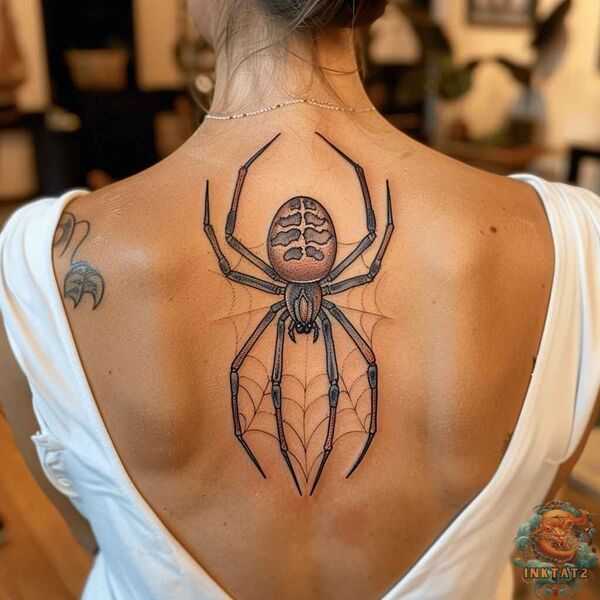
The back is one of the largest areas for spider body art, offering plenty of space for intricate and detailed designs. A spider skin on the back can symbolize strength, protection, or the spider’s role in fate and creativity. The expansive space allows for large, sprawling web designs that can cover the entire back, creating a bold and dramatic statement. This area is perfect for detailed tattoos that incorporate a large spider or an intricate web structure.
spider back tattoo
Chest
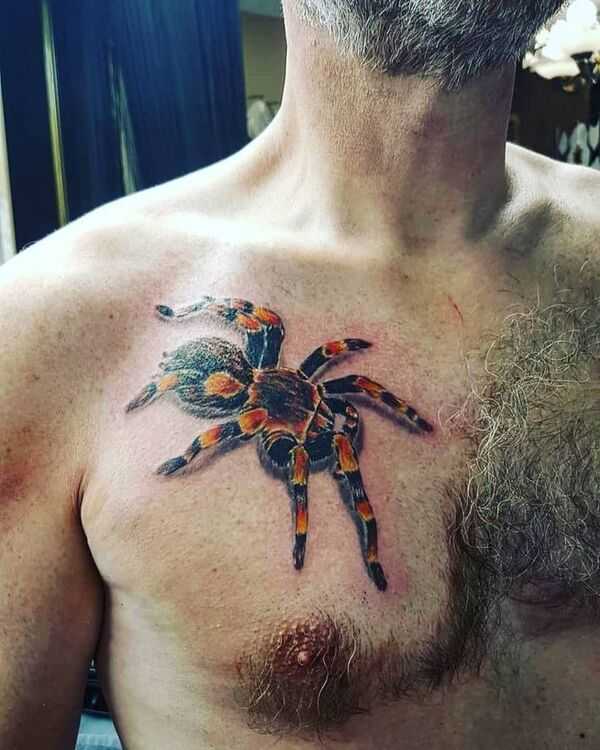
A spider tat on the chest is a prominent location, often associated with the heart and emotional strength. This placement can symbolize resilience, personal transformation, and overcoming adversity. The chest offers a symmetrical surface that works well for large, balanced designs. Whether centered over the heart or spanning across the chest, the tattoo can incorporate detailed webbing or large spiders, creating a striking, meaningful design. Many choose this placement for its deep personal significance and its ability to showcase a bold statement piece.
spider chest tattoo
Forearm
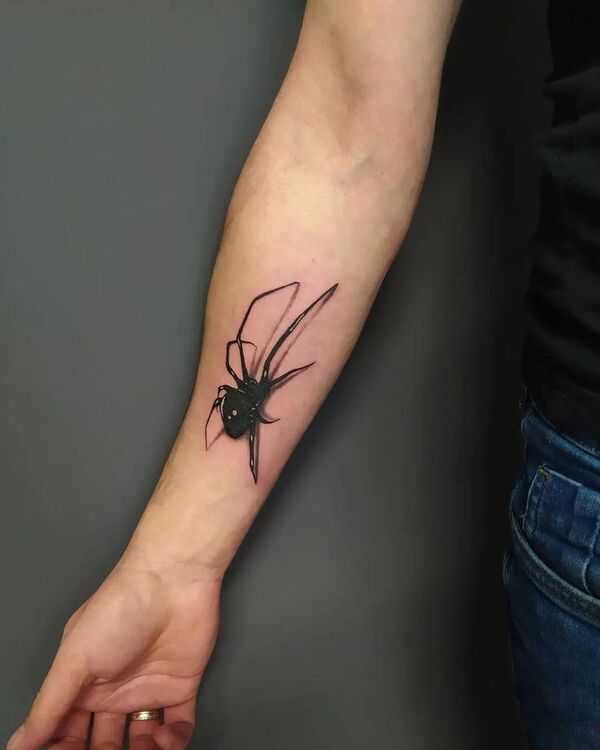
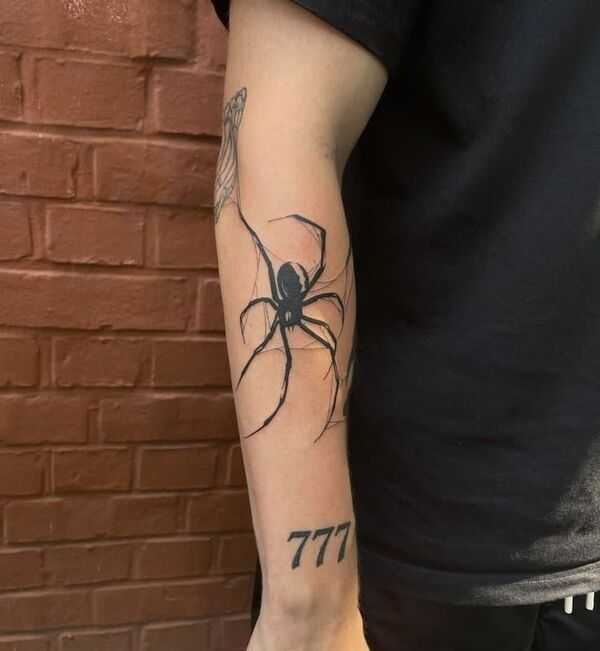
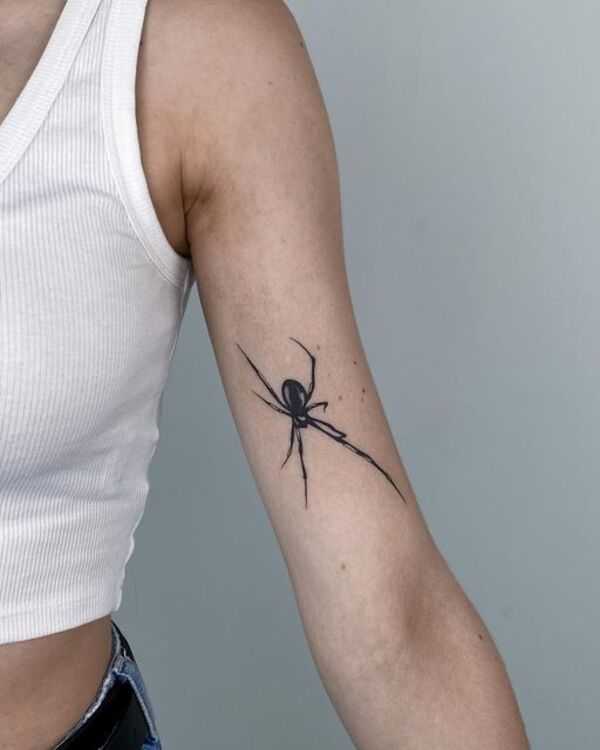
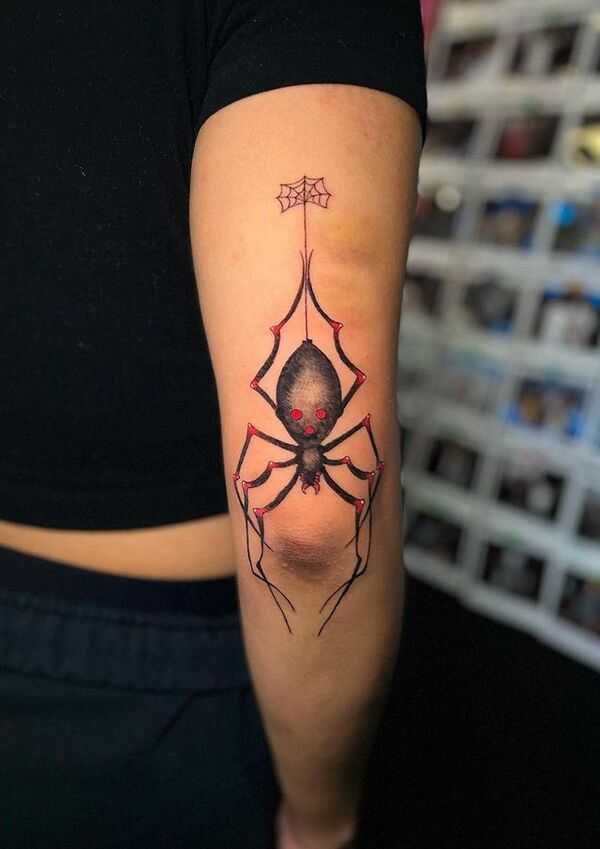
The forearm is a popular placement for spider inks, providing a visible yet versatile space. This area is ideal for both smaller and medium-sized designs, as it offers enough room for a spider to be clearly displayed. A tattoo on the forearm can symbolize personal empowerment, strength, and resilience. This placement allows the tattoo to be easily visible, making it a statement piece, while still offering the option to cover it if desired. It’s a great choice for those who want a tattoo that can be shown off but also kept subtle when necessary.
Spider forearm tattoo
Legs
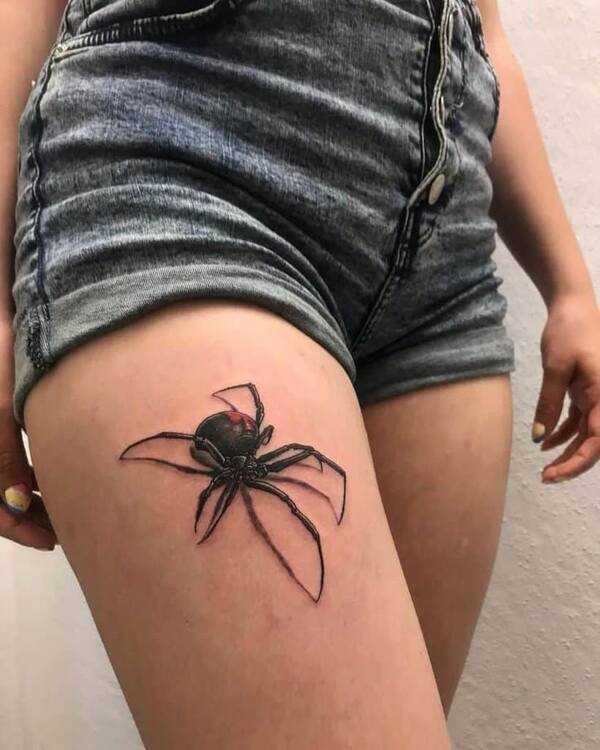
Spider body arts on the legs, particularly the thigh or calf, can make bold, eye-catching statements. This area provides ample space for both small and large tattoos, allowing for intricate details or flowing web designs. A tattoo on the leg often symbolizes independence, freedom, and strength. Larger designs can wrap around the leg or flow with the natural contours of the body, enhancing the visual appeal. Spider arts on the leg are perfect for those who want a design that stands out and draws attention.
spider legs tattoo
Wrist or Ankle
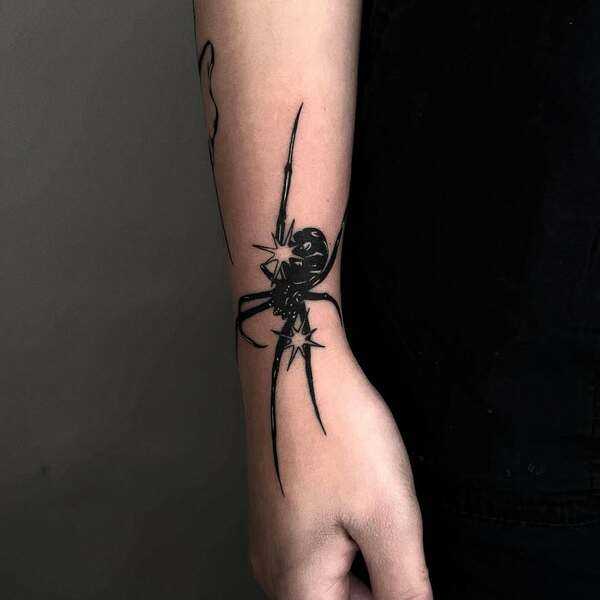
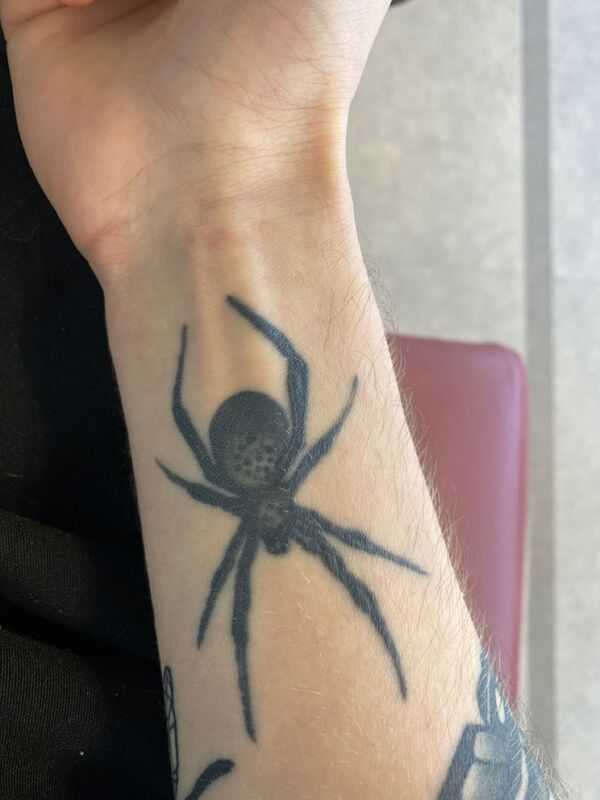
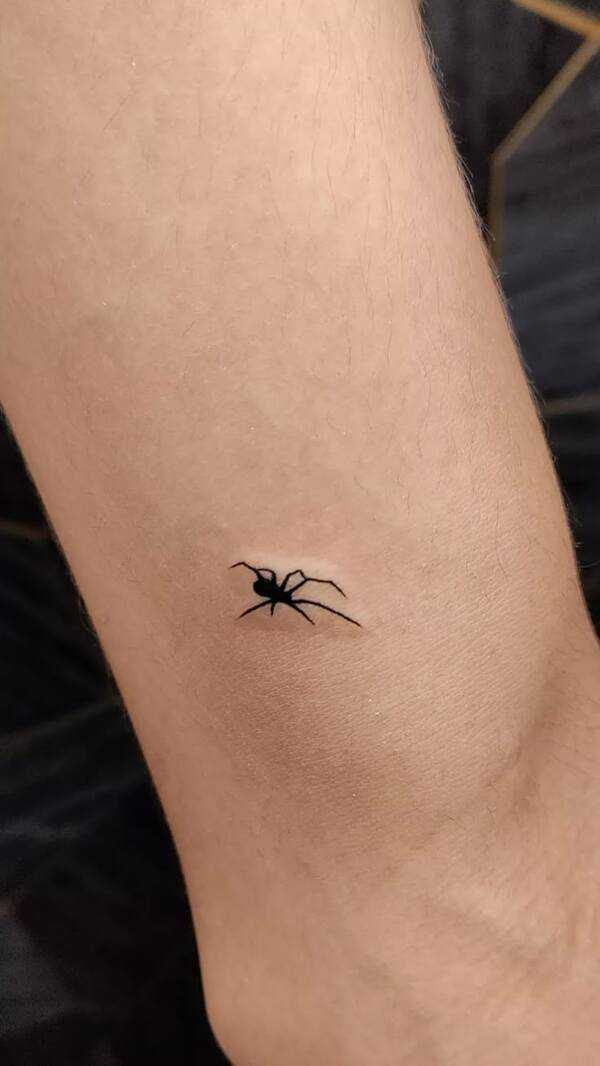
Smaller, more subtle spider body arts on the wrist or ankle are ideal for minimalist designs. These placements often symbolize personal freedom, protection, and movement, offering a delicate yet meaningful design.
spider wrist tattoo
Neck
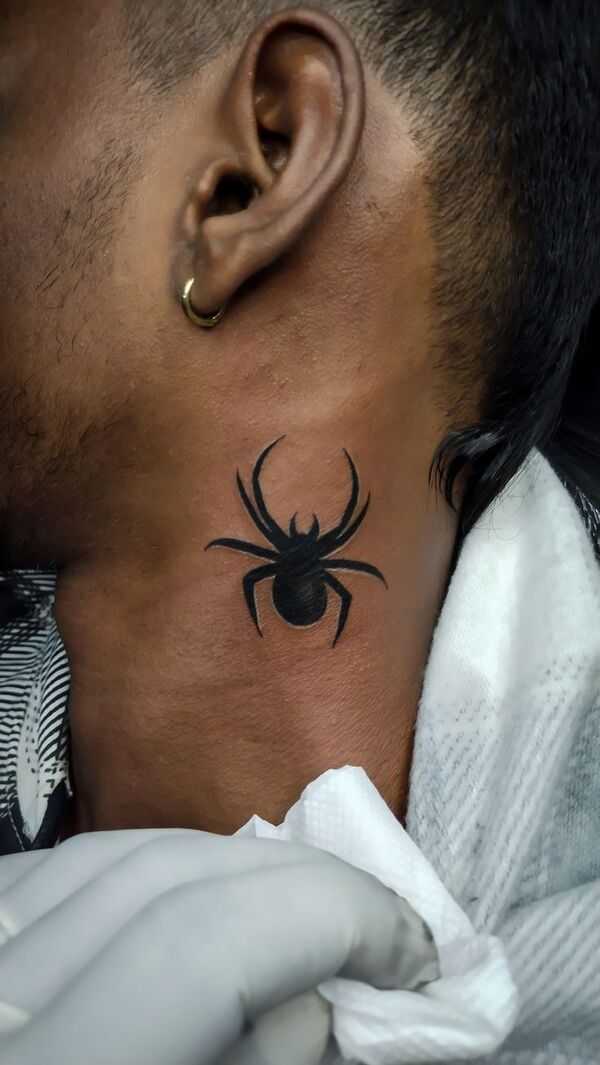
A spider skin on the neck is bold and attention-grabbing, symbolizing strength, transformation, or mystery. It makes a dramatic statement due to its visibility and is often chosen for its powerful symbolism.
spider neck tattoo
Size of the Tattoo
The size of the spider tat greatly impacts its design and visibility, and it is important to consider how much detail you want to include.
Small Tattoos:
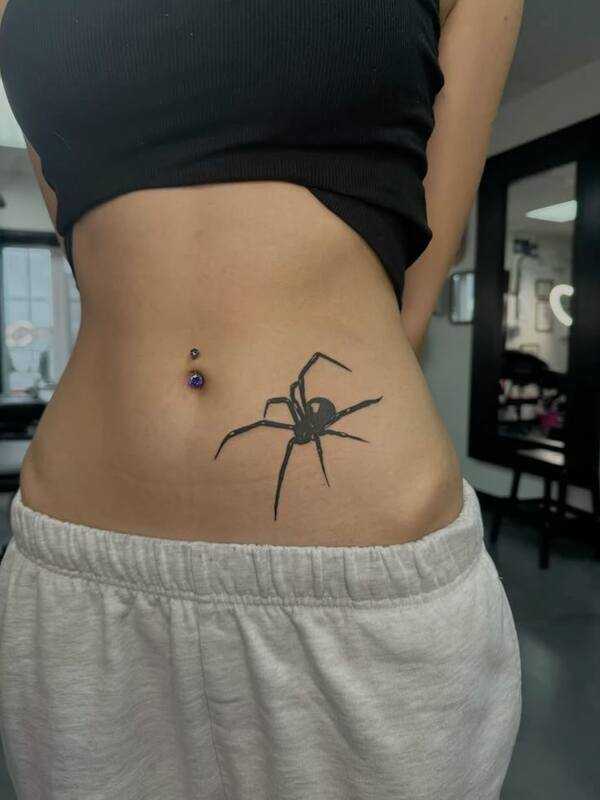
Small spider arts are perfect for discreet placements like the wrist, ankle, or behind the ear. These tattoos are often minimalist in design, focusing on the essential elements of the spider or web. While small, these tattoos can carry deep symbolic meaning, making them an excellent choice for those who prefer a subtle and personal design.
small spider tattoo
Medium Tattoos:
Medium-sized spider tattoo offers a balance between visibility and subtlety. These tattoos allow for more intricate design elements, such as detailed webbing, shading, or patterns. Medium tattoos are versatile and can be placed on areas like the forearm, thigh, or shoulder, offering enough space for a more detailed design without being overwhelming. They are a great option for those who want something noticeable but not too large.
medium spider tattoo
Large Tattoos:
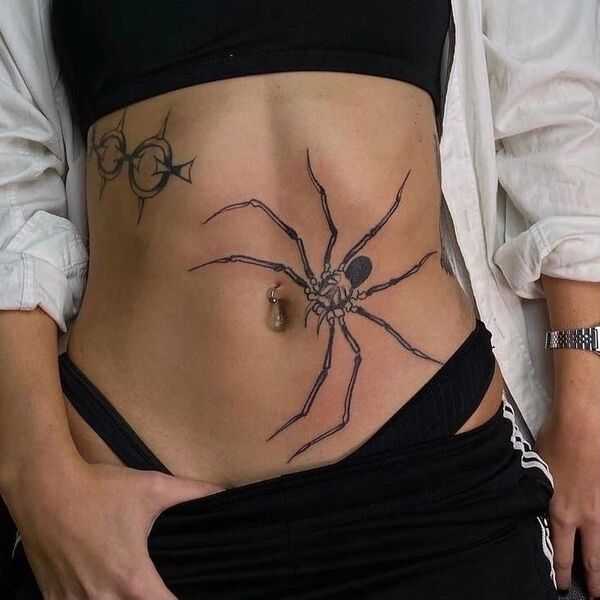
Large spider arts are bold, dramatic designs that often span larger areas like the back, chest, or upper arm. These tattoos can feature elaborate designs, detailed shading, and larger spiders or webs. Large tattoos make a powerful statement and are often chosen to symbolize significant life events or deep personal meanings. With enough space, large tattoos allow for intricate details and depth, making them ideal for individuals who want their tattoo to be a standout piece.
large spider tattoo
Spider Web Tattoo Variations of Spider Silk Designs
A spider web tattoo is a popular choice for many due to its symbolism and aesthetic appeal. There are several design variations to consider, each with its unique style, complexity, and meaning. Below are some of the most popular styles:
Simple Spider Net Body Arts
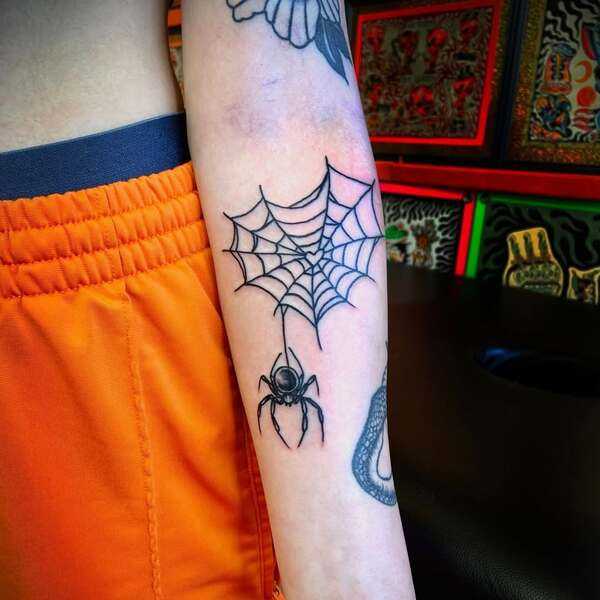
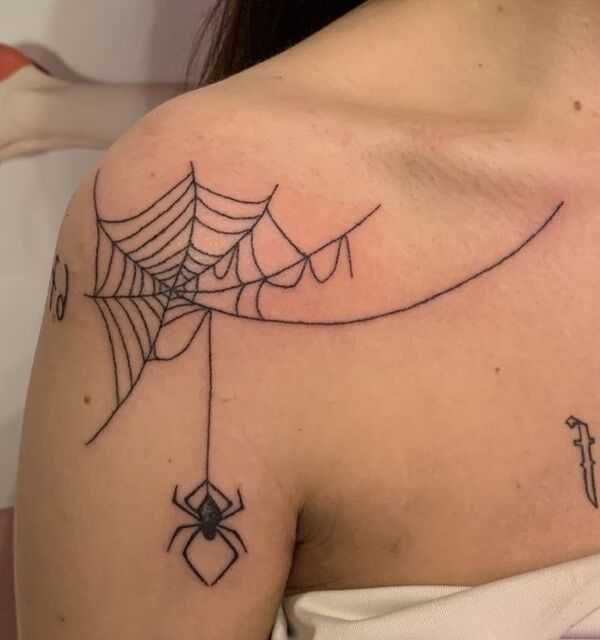
These tattoos often feature clean, bold lines to create a minimalistic and straightforward representation of a spider’s net. The design focuses on the basic structure of the web, with fewer details, making it ideal for those who prefer a more subtle and timeless look. Simple spinning skin arts can be placed anywhere on the body, such as the wrist, ankle, or behind the ear, for a delicate and understated effect.
Simple spider web tattoo
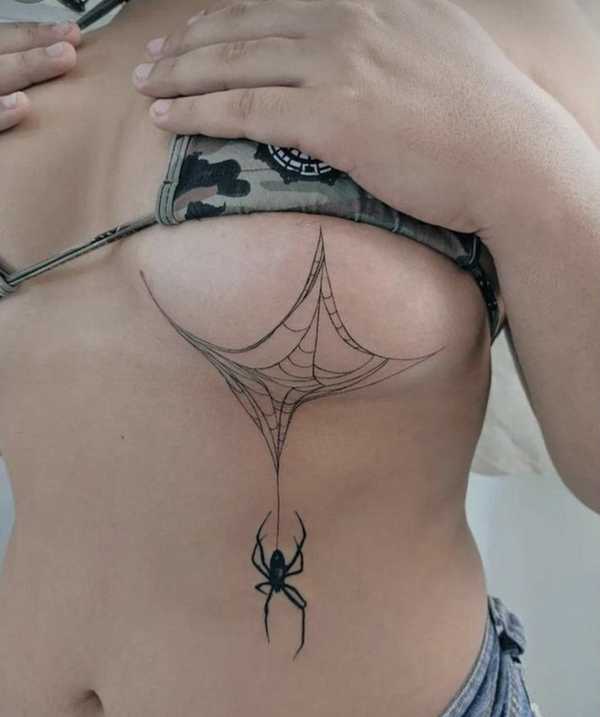
Intricate and Detailed Arachnid Web Markings For those who appreciate complexity, intricate spider silk inks offer a more detailed approach. These designs may include finer lines, additional patterns, and shading that give the structure a three-dimensional and realistic look. The design can appear more lifelike, with every thread carefully defined. Intricate designs often have a sense of depth, making them eye-catching and visually striking. These tattoos are typically larger and are often placed on the back, thigh, or chest.
Intricate and detailed arachnid web markings
Geometric Spider Silk Arts Geometric netting combines the natural form of the structure with geometric shapes and symmetry. These designs are often more abstract and modern, utilizing sharp lines, angles, and perfect symmetry to create a sleek and contemporary look. The geometric approach adds a layer of artistic interpretation to the design, making it more stylized and visually intriguing. These tattoos are ideal for those who like clean, structured designs.
Geometric spider silk arts
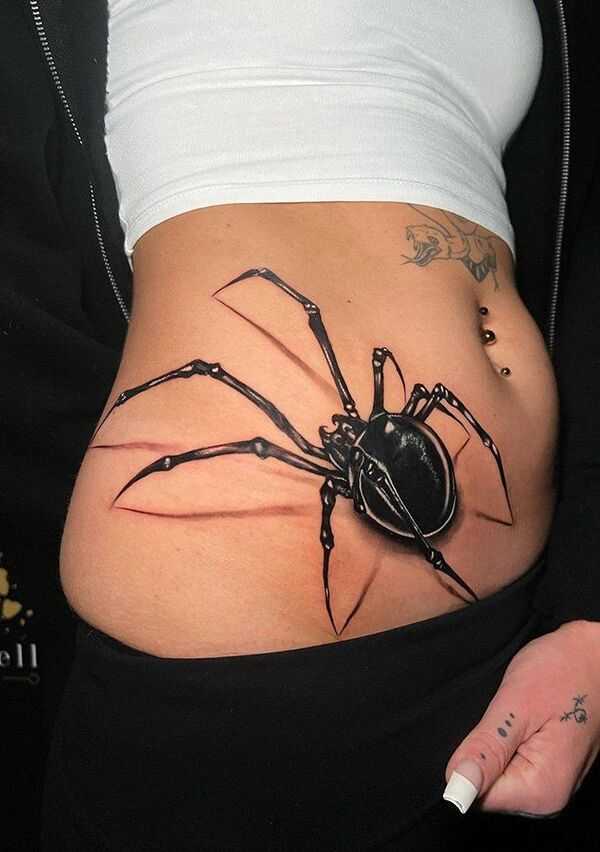
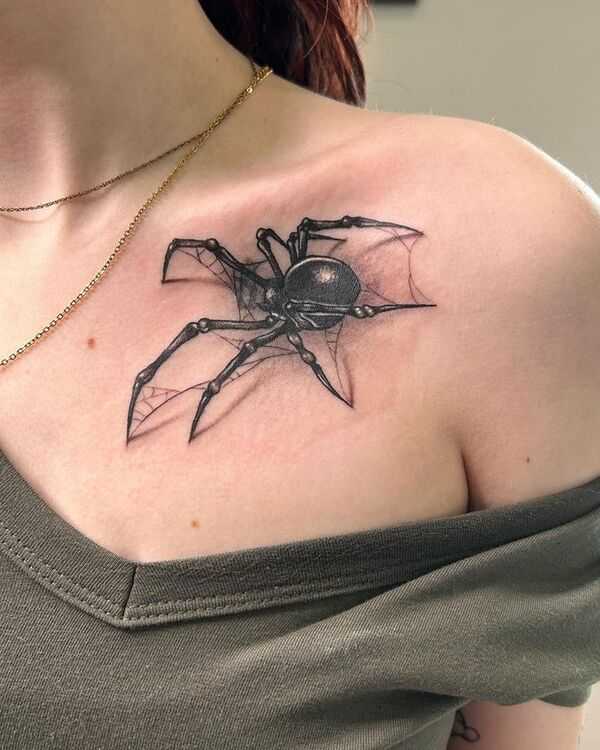
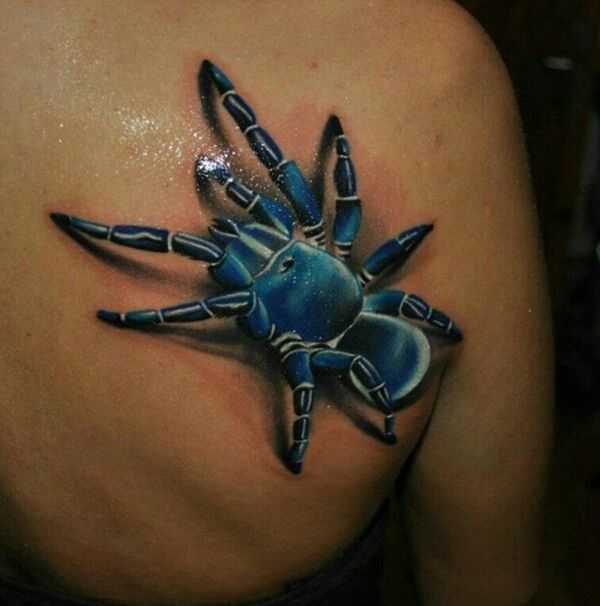
3D Arachnid Web Inks These tattoos give the illusion of depth and dimension, creating a structure that appears to be floating or emerging from the skin. 3D spider body art uses shading, perspective, and shadow work to create a realistic effect that makes the design appear lifelike. These designs often feel dynamic, as though the net is tangible and can be touched. These tattoos can be bold and dramatic, with intricate detailing and strategic shading to enhance the illusion of three-dimensionality.
3D arachnid web ink
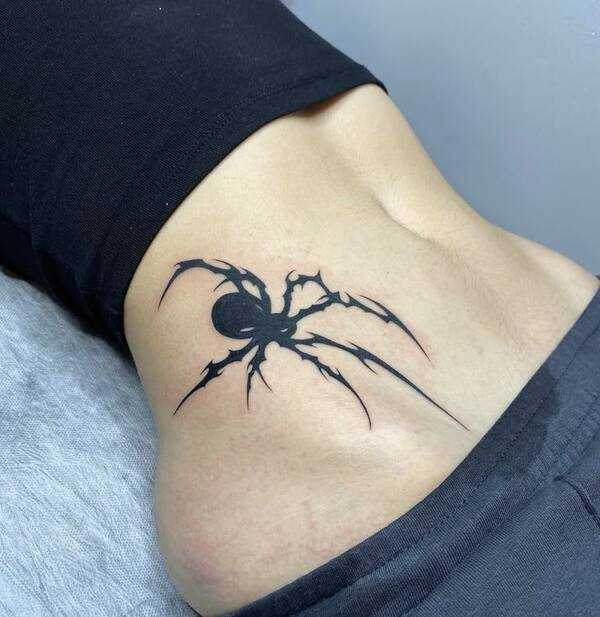
Blackwork Arachnid Web Tats Blackwork spider skin arts are a bold and striking option, relying on solid black ink and heavy shading to create a powerful visual impact. These tattoos are often done with thick lines and heavy contrast, making them stand out against the skin. The solid black ink allows for intricate patterns and dramatic designs, making blackwork arachnid tattoos an excellent choice for those who want a piece that makes a statement.
Blackwork spider web tattoo
Watercolor Web Structure Design
Watercolor Arachnid net designs offer a more artistic and vibrant approach to the traditional style. These tattoos use a mix of bright, flowing colors to create the illusion of a painted structure, with splashes of color surrounding the design. This style gives the tattoo a fluid, organic feel, making it look like it’s been created with brushstrokes or paint splatters. The colors add a touch of whimsy and creativity, making it unique and visually appealing.
Watercolor web structure design
Spider Eblow Tattoos
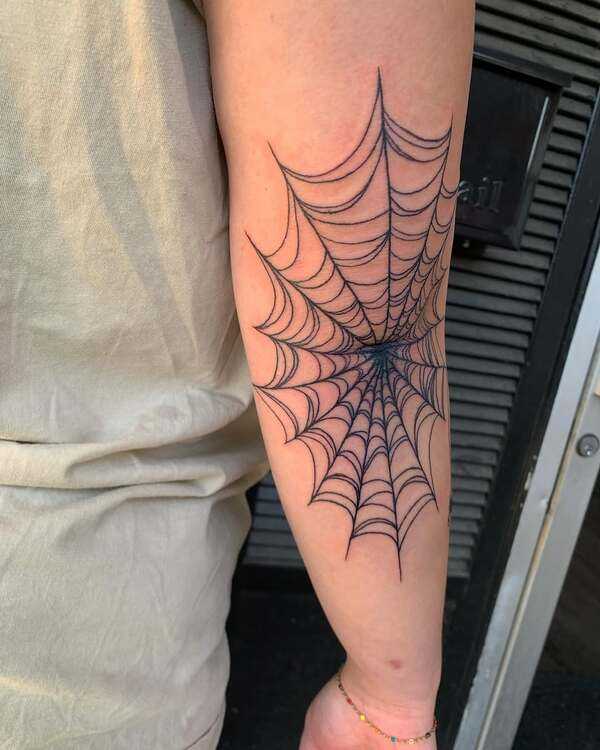
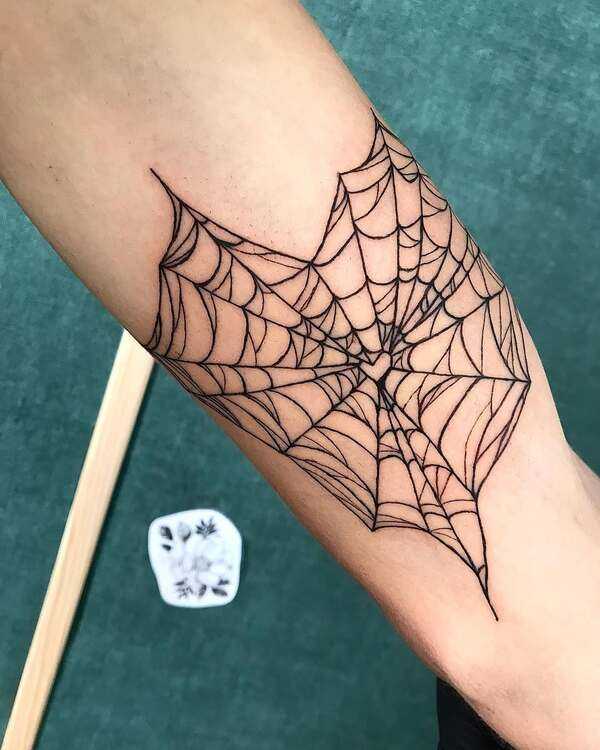
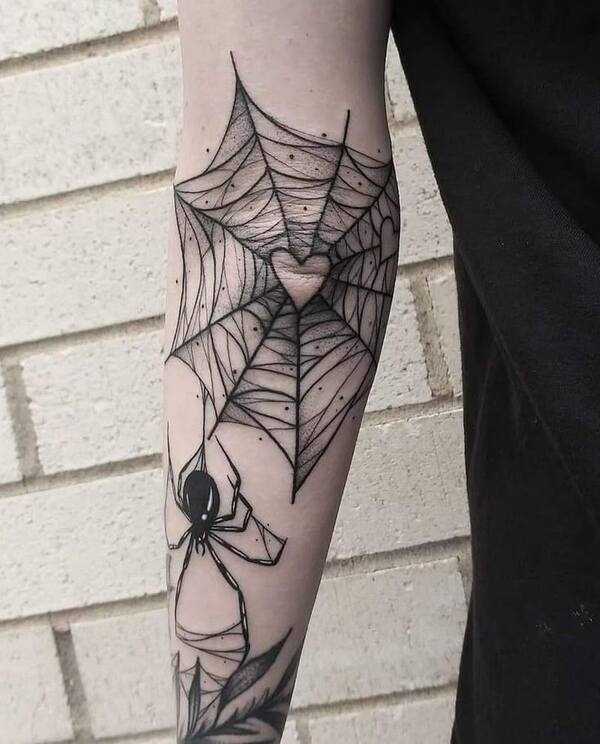
One of the unique and striking placements for web structure designs is the elbow. A spider web tattoo blends the complexity of the web structure with the natural movement and shape of the elbow. It creates a dynamic visual effect and can symbolize protection or interconnectedness. This type of tattoo works well in both medium and large designs, wrapping around the elbow joint to create a dramatic statement.
Spider elbow tattoo
Popular Designs and Styles of Spider Arts
Spider design is a captivating form of body creation, offering a wide range of designs and styles to suit individual preferences. From lifelike depictions to minimalist designs, these tattoos can hold a variety of meanings, from resilience to transformation. Below, we explore some of the most popular spider-inspired body artwork designs and styles that are favored by tattoo enthusiasts.
Popular designs and styles of spider tattoo
Realistic Spider Designs
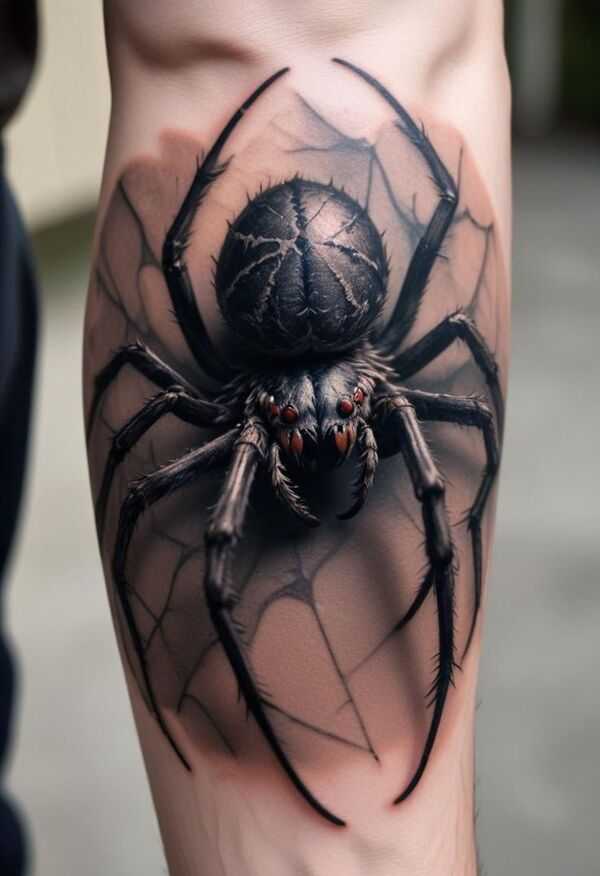
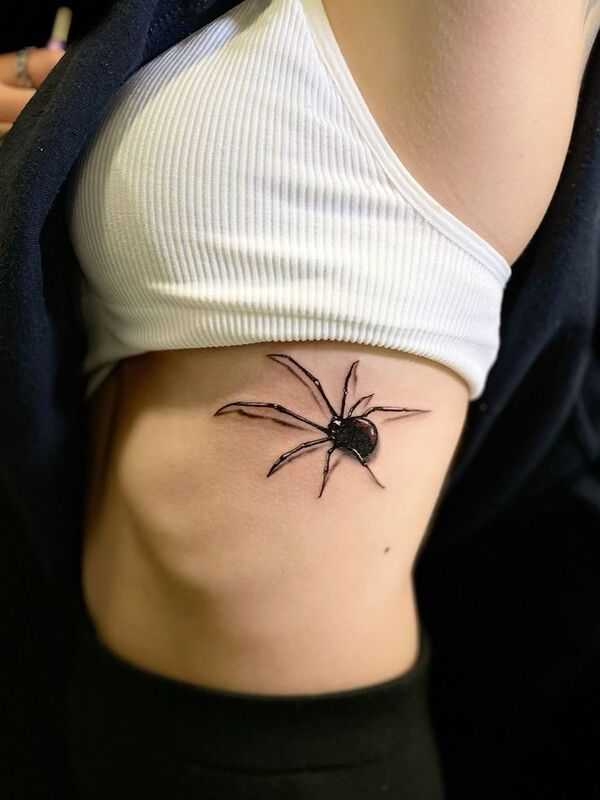
Realistic webbing tattoos are all about capturing the natural beauty of a spider with incredible detail. These tattoos showcase the fine features of the spider, including the body, legs, and web, in a way that makes them appear lifelike. Realistic tattoos are perfect for those who appreciate the beauty of nature and want to highlight the spider’s intricate structure.
Traditional spider designs
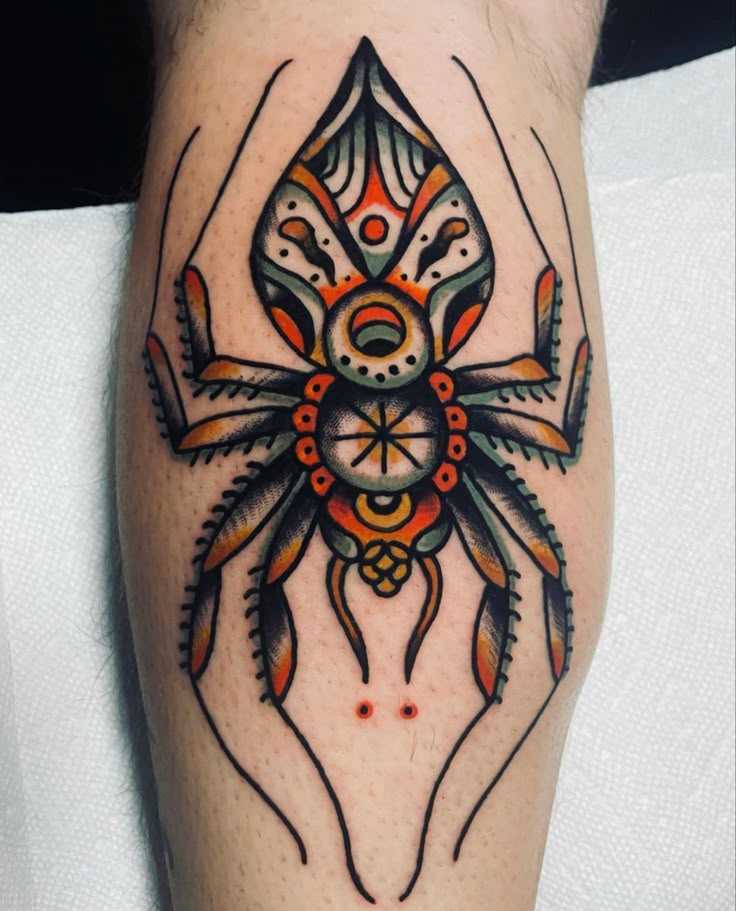
Traditional spider arts, rooted in classic tattoo styles, are characterized by bold lines, bright colors, and simplified designs. These tattoos often feature spiders with exaggerated features like large eyes or oversized legs, using vibrant colors like red, yellow, and green to create a striking visual impact.
Minimalist Spider Designs
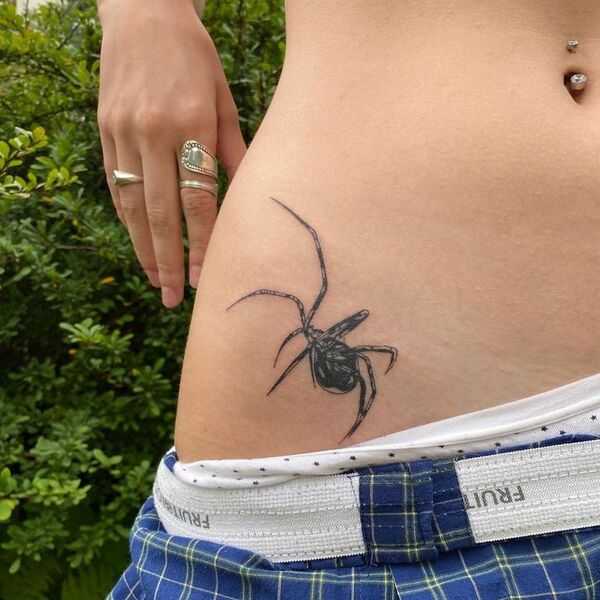
For those who prefer simplicity, minimalist spider tats are a perfect choice. These tattoos typically feature clean, thin lines and focus on the basic shape or outline of the spider body art. They are designed to be subtle, often relying on negative space and geometric shapes to create a minimal yet effective design.
Blackwork and Dotwork Spider Tats
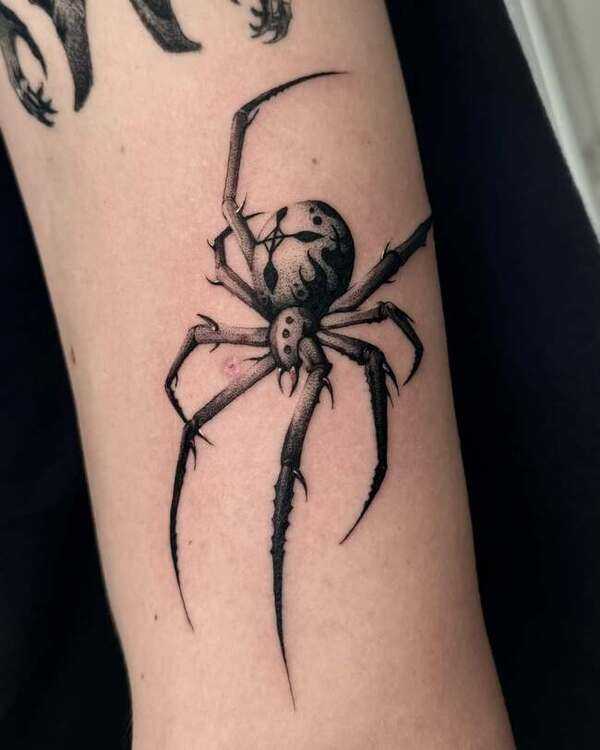
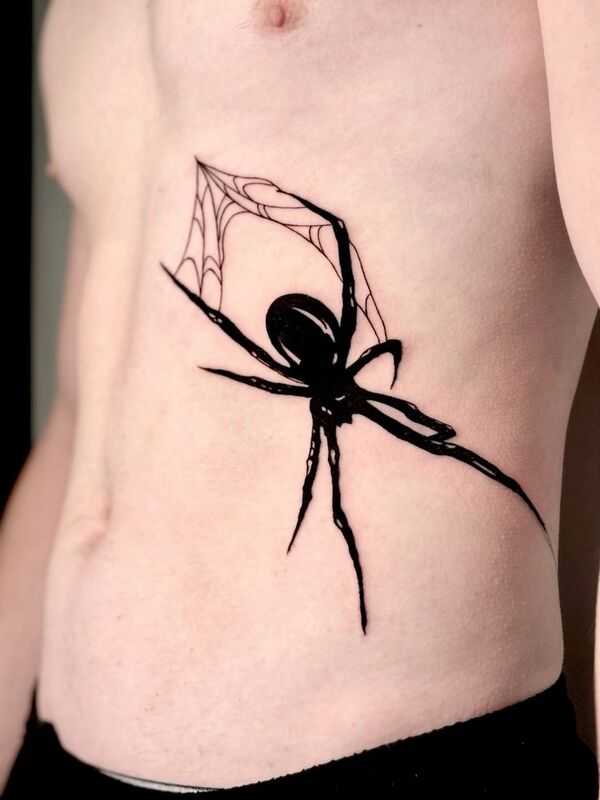
Blackwork and dotwork spider body designs are known for their striking contrast and intricate detail. Blackwork tattoos typically use solid black ink to fill in the spider, with bold lines creating the shape of the spider and its web. Dotwork tattoos, on the other hand, use tiny dots of ink to build up the design, creating a soft, textured effect.
Both styles are ideal for those who appreciate detailed shading and the interplay between light and dark. Blackwork and dotwork spider art is often placed on larger areas like the back, chest, or thigh, where the complexity and depth can be fully showcased.
Neo-Traditional Spider Tats
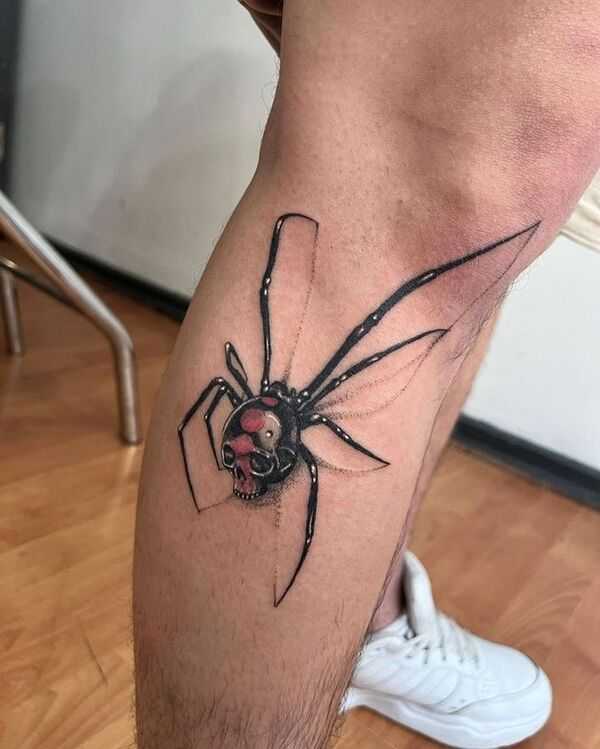
Neo-traditional spider body arts combine elements of both traditional tattoo styles and modern techniques. These tattoos maintain the bold lines and bright colors of traditional tattoos but incorporate more detailed shading, softer lines, and a wider color palette.
Neo traditional spider tattoo
Neo-traditional spider-inked designs are versatile and allow for more personal expression, combining the classic aesthetic of traditional tattoos with the artistic freedom of modern styles. They can be placed in various locations, such as the upper arm, back, or leg, and are perfect for those who want a tattoo that feels both timeless and contemporary.
Spider Tattoo Pain Levels and Essential Aftercare
Getting a spider tattoo can be a unique and rewarding experience, but like any tattoo, it comes with certain levels of pain depending on the placement, size, and complexity of the design. Understanding the pain involved and the proper aftercare can help ensure that you have a smooth healing process.
Spider tattoo pain levels and essential aftercare
Pain Levels
General Pain Tattoo pain varies from person to person, but spider design generally causes moderate to high discomfort. The pain can be compared to a constant scratching or stinging sensation. While getting the tattoo, some people find it uncomfortable but manageable.
Pain by Placement The pain level is influenced by the tattoo’s placement on your body. For example, areas with more flesh and muscle, like the upper arm, thigh, and shoulder, tend to be less painful. On the other hand, areas with less flesh and closer to bone, such as the ribs, hands, feet, spine, and elbow (especially for a spider silk elbow design), can be more painful.
The elbow, being a joint, is especially sensitive due to its constant movement and the proximity to bones, making a spider thread art here more uncomfortable.
Complex Areas Intricate designs that require a lot of shading, fine lines, or layering tend to take longer to complete and may cause more pain, particularly in areas where the skin is thinner or more sensitive. For creepy crawly tattoos, locations like the neck, chest, and inner forearm can be more painful due to their sensitivity and the level of detail often involved in spider sild designs.
Aftercare Tips
Cleaning and Hygiene Immediately after getting your tattoo, gently clean the area with lukewarm water and a mild, fragrance-free soap. Avoid scrubbing or using harsh chemicals that can irritate the skin. Pat the tattoo dry with a clean towel or let it air dry.
Aftercare tips for spider body art
Moisturize Apply a thin layer of fragrance-free, dermatologist-approved tattoo aftercare ointment or cream. Avoid applying too much, as this can suffocate the tattoo and slow down the healing process.
Avoid Scratching and Picking As your tattoo heals, it will likely scab over and itch. Resist the urge to scratch or pick at it, as this can cause infection or scarring. Allow the scabs to fall off naturally.
Keep the Tattoo Clean and Dry Avoid submerging your tattoo in water (such as swimming pools, hot tubs, or oceans) until it is fully healed. Showering is fine, but avoid letting the tattoo soak in water for extended periods.
Sun Protection Once the tattoo is healed, protect it from the sun by using sunscreen to avoid fading. Direct sun exposure during the healing process can lead to discoloration and irritation.
Rest and Proper Nutrition Rest is essential for the healing process. Ensure that you get plenty of sleep and stay hydrated. Eating healthy foods rich in vitamins can help speed up the healing process.
Aftercare tips for spider body art
In conclusion, a spider tattoo is more than just striking body art—they carry deep symbolism, from transformation and creativity to balance and personal growth. Whether it’s the boldness of a spider or the intricate details of a spider silk, these tattoos offer a unique way to express personal journeys and beliefs. With various designs and placements, spider tats remain a versatile and meaningful choice, with trends like the spider web elbow tattoo continuing to grow in popularity.