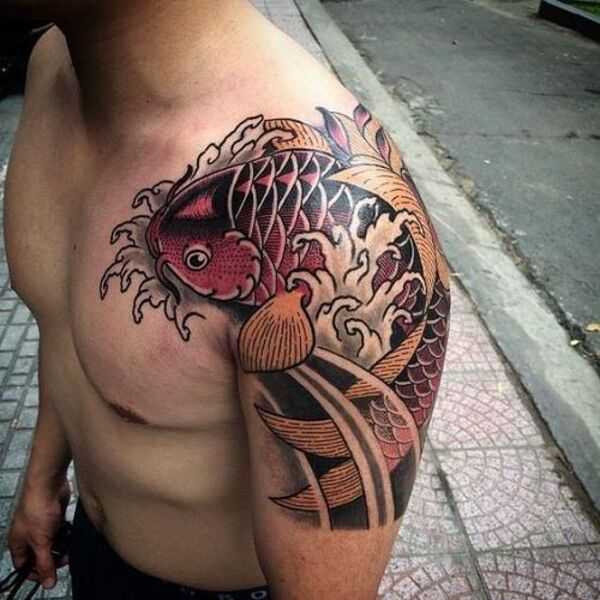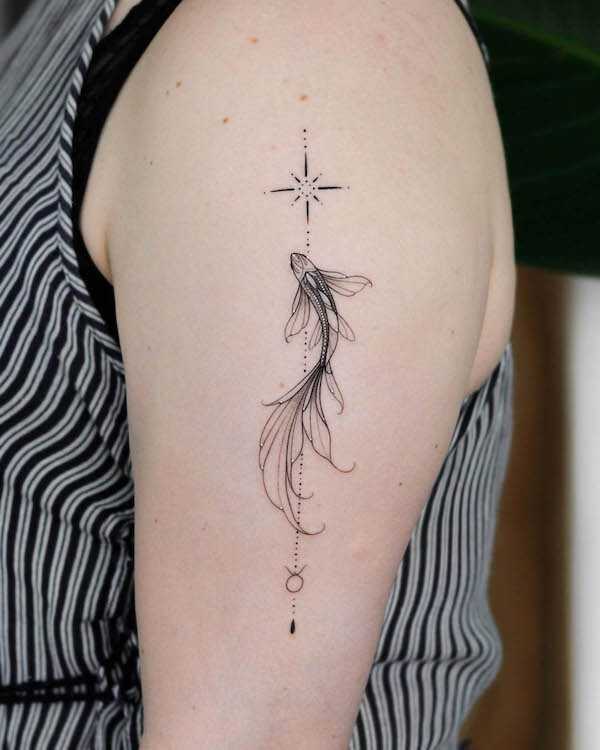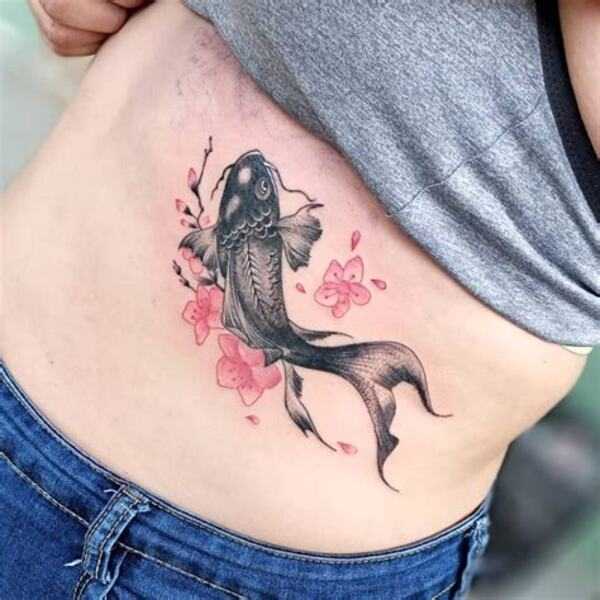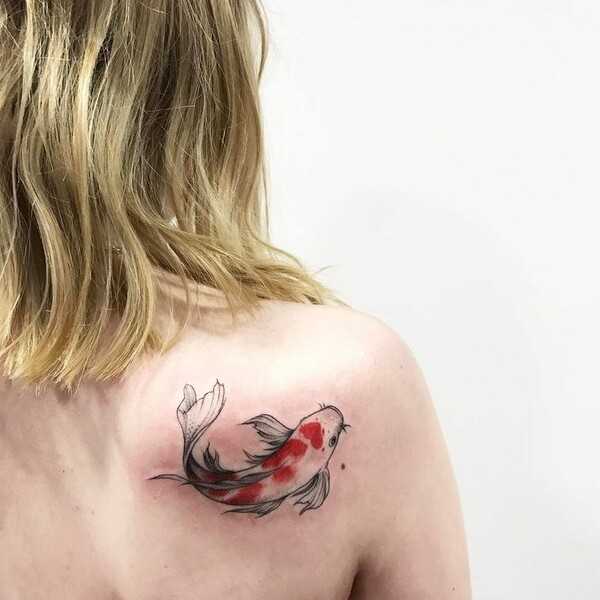
There is something about a forearm tattoo that feels different from ink placed anywhere else on the body. This placement strikes a balance between visibility and personal meaning—close enough for you to see every day, yet exposed enough to catch the attention of others. Based on Holistic Ink’s experience, the forearm is consistently the most requested placement during tattoo consultations. Its popularity is not driven by a passing trend, but by its ability to combine three essential qualities: an ideal canvas for tattoo artists, strong expressive potential, and the flexibility to fit seamlessly into everyday life. This guide explores tattoo ideas, styles, symbolism, and the practical process of getting one, giving you the knowledge you need before sitting in the chair.
Why the Forearm Tattoo Is Still the Most Popular Tattoo Placement
A forearm tattoo remains one of the most popular choices because it combines visual impact with everyday practicality. Its versatile placement allows for a wide range of styles, sizes, and levels of visibility, making it suitable for both first-time clients and experienced tattoo enthusiasts.
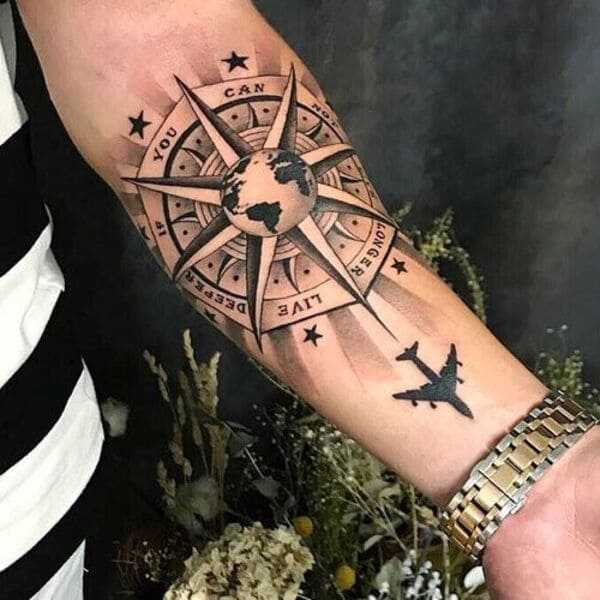
The Practical Advantages of the Forearm
Most people choose a tattoo placement based on emotion. Professional tattoo artists, however, choose it based on technique—and the forearm excels in both.
From an anatomical perspective, the forearm offers a relatively flat surface and is less affected by weight fluctuations than areas such as the thighs or abdomen. The underlying muscles and bones provide a stable foundation for precise needlework, making this placement especially suitable for highly detailed styles like fine line and realism. With the skin held evenly taut, ink settles more consistently, colors appear more even, and intricate details remain sharper over time.
From a lifestyle standpoint, the forearm is one of the most versatile tattoo placements available:
- It can be displayed when you want to express yourself or easily covered with a long-sleeved shirt in professional or formal settings.
- The skin experiences less constant friction than areas like the palms or heels, helping the tattoo retain its color for longer.
- The healing process is generally smoother, with fewer complications than tattoos placed over joints or on thinner skin, such as the armpits or neck.
- During the session, you can watch every stage of the tattooing process firsthand—a factor that many first-time clients say helps them feel significantly more at ease.
One advantage that is often overlooked is how easy the forearm is to touch up. Artists can access the area comfortably from virtually any angle without requiring the client to hold awkward positions, making touch-up sessions faster, more efficient, and more precise.
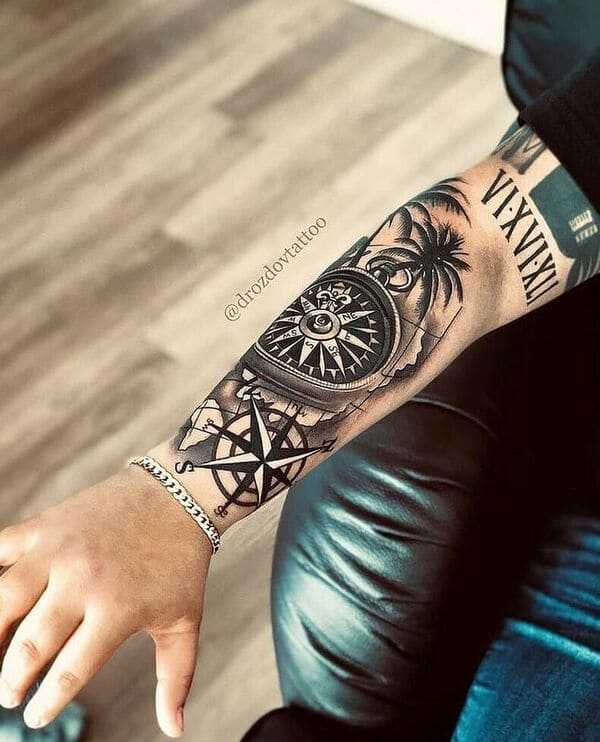
Inner vs. Outer Forearm Tattoos — More Than Just Personal Preference
Choosing between an inner and outer forearm tattoo influences three key factors: symbolism, technical execution, and pain level.
- Inner Forearm — A Space for Personal Meaning: The skin on the inner forearm is thinner, softer, and contains more nerve endings than the outer forearm, making it more sensitive during the tattooing process. However, these same characteristics make it an ideal placement for fine line and watercolor tattoos. Its smooth, even surface allows delicate lines to settle with exceptional precision, creating an almost printed appearance when viewed up close. Symbolically, an inner forearm tattoo is meant primarily for you—it remains visible to others only when you turn your arm or intentionally reveal it. For this reason, it is the preferred placement for deeply personal designs, such as a loved one’s handwritten signature, the geographic coordinates of a meaningful place, a life-changing date, or a symbol whose significance is understood only by those closest to you.
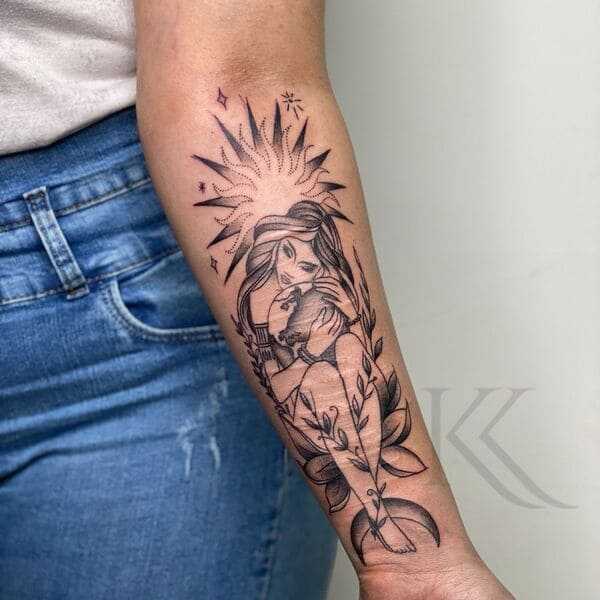
- Outer Forearm — The Natural Showcase for Artwork: The outer forearm is the part of your arm that naturally faces outward when it rests at your side. This placement is equally popular for bold statement pieces and outer forearm tattoos for females, thanks to its visibility and ability to showcase intricate artwork. The skin is firmer, the surface more stable, and natural light falls directly on this area, creating ideal conditions for highly detailed compositions. Animal portraits with realistic fur and shading, landscapes with a strong sense of depth, and geometric patterns that demand perfect line precision all perform exceptionally well on the outer forearm. Shading techniques also produce smoother, more consistent transitions here because of the area’s more uniform skin texture.
- Wraparound Designs — When the Boundary Disappears: Some clients choose neither side exclusively. Instead, they create a wraparound composition that can later evolve into a forearm sleeve tattoo, using the contrast between the inner and outer forearm as an intentional design element. The primary motif may be placed on the outer forearm, while supporting details extend onto the inner forearm, allowing the artwork to appear dynamic as the arm moves. This approach is especially well suited for those planning to develop the tattoo into a full sleeve in the future, as each new addition can integrate naturally with the original composition rather than feeling like a collection of separate pieces.
A Practical Checklist Before Choosing Your Tattoo Design | Holistic Ink
Many people skip the preparation stage and only begin thinking seriously about their tattoo after they are already in the chair. That mistake can cost both time and money in future revisions or cover-ups. The six points below are not just a formality—they provide the foundation for a tattoo that will continue to serve you well for years to come.
- Define the personal meaning before choosing the artwork: Ask yourself what the tattoo represents—a chapter of your life, someone important, or a core value. Your answer will significantly narrow down the design options.
- Choose a style that suits your skin tone, not just your favorite design: Not every tattoo style works equally well on every skin tone. Fine line tattoos on darker skin often require a higher level of technical skill to maintain crisp contrast. Discuss this openly with your tattoo artist before making a decision.
- Consider the size in relation to your overall body proportions: A small tattoo that looks perfect on Instagram may lose important details when translated onto real skin. On the other hand, an oversized composition can appear unbalanced if it is not designed with your body’s proportions in mind.
- Decide on the exact placement and arrive at your consultation with a clear preference: Don’t leave the entire decision to the artist. You are the one who will live with the tattoo, so have a clear opinion about whether you prefer the inner forearm, outer forearm, or a wraparound design. During your tattoo consultation, discuss visibility, scale, and how the design could evolve if you plan to expand it in the future.
- Choose your artist based on a portfolio that matches your preferred style: Every tattoo style requires a specialized skill set. An artist who excels at blackwork may not deliver the same level of quality in realism. Look for someone with at least five to ten completed pieces in the style you want.
- Ask about the aftercare process during your first consultation: Certain styles, such as watercolor and fine line tattoos, require more careful aftercare during the first week of healing. Understanding the process in advance allows you to prepare properly and achieve the best possible result.
Best Forearm Tattoos for Men — Symbolism, Meaning, and Style
Forearm tattoos for men generally revolve around three major themes: strength and instinct, personal journeys and philosophy, and cultural identity and heritage. These categories are not mutually exclusive—in fact, many of the most compelling tattoos blend elements from all three.
Strength and Instinct
- Lion: A lion forearm tattoo remains one of the most requested tattoo designs worldwide—not because it lacks originality, but because of its enduring symbolism. In iconography, the male lion represents a dual burden: the power to lead and the responsibility to protect. It is not the image of a triumphant hero, but of someone who carries weight for others. That symbolism resonates deeply with many men as they mature. In realism, the layered detail of the lion’s mane creates exceptional visual depth, and the outer forearm—with natural light highlighting the design—is one of the best placements to maximize that effect.
- Wolf: Few animal motifs embody such an intriguing duality. The wolf is both an independent hunter and one of the most socially bonded creatures in the natural world. It does not choose between personal freedom and loyalty—it lives by both. As a result, wolf tattoos are often chosen during major life transitions: after a divorce, after leaving a long-term career, or when starting over in a new city. Blackwork, with its bold lines and strong contrast, is particularly striking on the outer forearm.
- Eagle: Whether rendered in American Traditional or Japanese style, the eagle conveys the same core symbolism despite their dramatically different visual approaches: vision, perspective, and the ability to rise above what others cannot see. The eagle’s outstretched wings naturally wrap around the forearm, creating one of the most effective compositions for taking advantage of the body’s three-dimensional form.
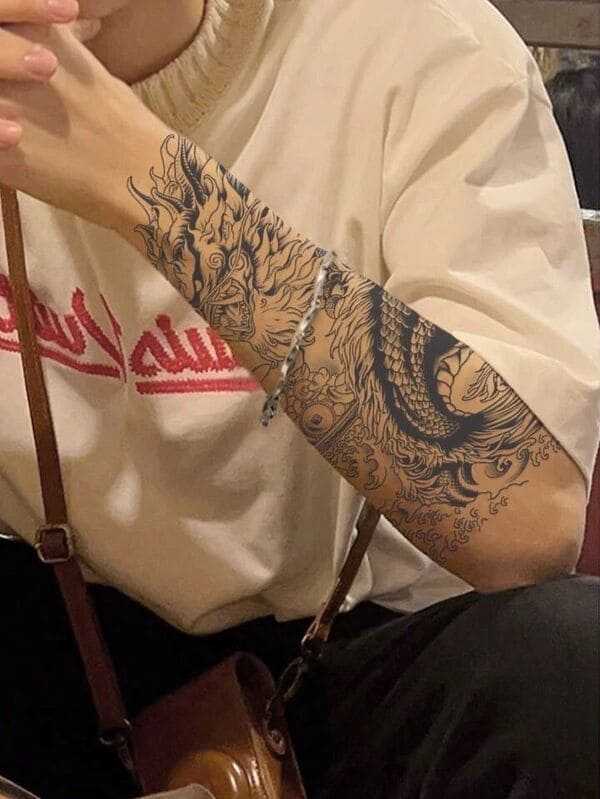
- Eastern Dragon: Eastern dragons differ fundamentally from their Western counterparts in both appearance and meaning. In Japanese and Chinese traditions, dragons are not monsters to be defeated—they are guardians associated with water, wisdom, and protection. Their long, flowing bodies naturally follow the length of the forearm, making them one of the most iconic sleeve compositions in Irezumi, the traditional Japanese tattoo style. The bokashi shading technique, with its signature soft tonal transitions, creates a remarkable sense of depth that few other styles can replicate.
- Samurai and Warriors: Traditional Japanese depictions of samurai are often paired with cherry blossoms, a combination rich in philosophical meaning. Cherry blossoms bloom brilliantly before falling quickly, symbolizing mono not aware—the appreciation of life’s impermanence. The warrior lives courageously because he understands that everything is temporary. This is not a tattoo about violence; it is a tattoo about accepting mortality with dignity.
- Polynesian Tribal Patterns: Polynesian tribal tattooing is one of the most sophisticated symbolic systems in traditional body art. Every line, shape, and pattern carries specific meanings related to family, status, ancestry, life journeys, and protection. These designs are far more than decoration. If you do not have Polynesian heritage, it is important to discuss your approach with an experienced artist. Many professionals can create artwork inspired by Polynesian visual language while avoiding the direct reproduction of sacred or ancestral symbols.
Personal Journeys and Philosophy
- Hourglass Combined with Flowers or Birds: This composition tells a story about time without using a single word. The falling sand represents time slipping away, while blooming flowers symbolize beauty that exists despite its temporary nature. Many people choose this design after experiencing loss or during a major turning point in life, as a reminder that time is limited and should be lived with intention.
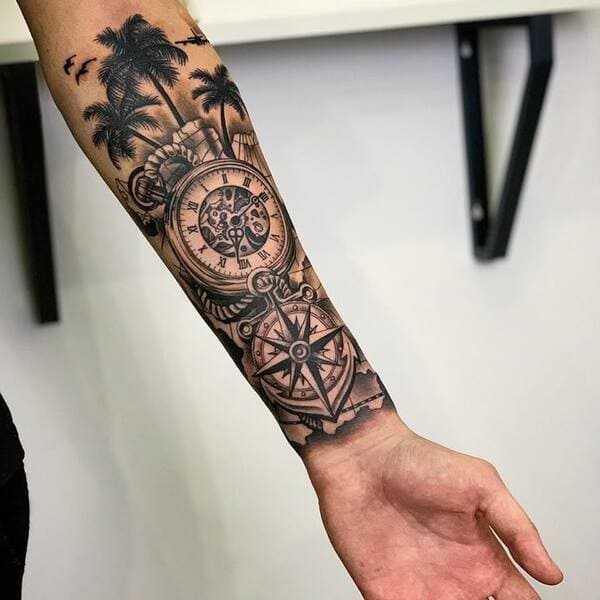
- Compass or Map: A compass is not just for travelers. Symbolically, it represents the ability to stay oriented when everything around you feels uncertain—not necessarily knowing where you are going, but knowing where you stand. Many clients choose this motif after overcoming periods of profound uncertainty, such as a career crisis, depression, or addiction. GPS coordinates of a meaningful place—where they were born, where a life-changing decision was made, or where a new chapter began—are often incorporated into the design to make it deeply personal.
Whether inspired by animals, cultural traditions, or personal milestones, the best forearm tattoos for men are those that tell a story unique to the person wearing them.
Best Forearm Tattoos for Women — Elegant, Empowering, and Rich in Meaning
The line between “men’s” and “women’s” tattoo designs continues to fade—and that’s a positive evolution. Even so, forearm tattoos for women remain among the most requested choices, not because they are inherently more feminine, but because their symbolism resonates with life experiences and emotions that many women choose to commemorate.
- Rose: The rose is one of the most enduring tattoo designs—not because it is simple, but because, when executed well, it combines visual beauty with profound symbolic meaning. In Western iconography, the rose embodies duality: beauty and thorns, love and loss, strength and vulnerability. A fine line rose tattoo on the inner forearm is often a true test of an artist’s technical ability. When the proportions and linework are executed with precision, the difference in craftsmanship becomes immediately apparent.
- Butterfly: Butterflies are often reduced to a simple symbol of transformation. What makes them more compelling, however, is the nature of that transformation. A butterfly does not merely grow—it completely dissolves inside the chrysalis, losing its original form before becoming something entirely new. That is why this motif is so often chosen after periods of profound personal change, when someone has had to leave behind an old version of themselves. In realism, the intricate wing scales and reflected light create extraordinary depth on the skin. Watercolor offers a softer, more delicate appearance, although it generally requires periodic touch-ups to maintain its vibrancy.
- Lotus: The lotus is frequently misunderstood as a symbol of peace and serenity alone. In Buddhist philosophy, its original meaning is far deeper. The lotus grows from muddy water, rises through it, and blooms on the clean surface—not despite the mud, but because of it. It symbolizes the ability to transform hardship into beauty and enlightenment, rather than escaping adversity altogether. The mandala lotus, which combines the flower with symmetrical mandala patterns, remains especially popular because it unites the symbolism of transformation with balanced geometric design.
- Moon Phases: A sequence of moon phases—from the new moon and crescent to the half moon, waxing gibbous, and full moon—creates a composition that is both visually elegant and deeply symbolic when arranged along the forearm. Across many spiritual traditions, the moon represents cycles rather than endings. A crescent moon is not incomplete; it is in the process of becoming. Many women choose this design during periods when they are learning to embrace the idea that they do not have to feel “complete” at every stage of life.
- Feathers: Few tattoo motifs carry such a broad range of meanings, with the symbolism depending heavily on the bird species and its cultural origins. Eagle feathers hold sacred significance in many Native American traditions, representing spiritual connection and courage. Peacock feathers symbolize confidence, protection, and beauty. White feathers are often associated with angels and peace in many Western traditions. If you choose a feather tattoo, knowing exactly which bird you want to represent adds depth and authenticity, transforming the design from a generic decoration into a meaningful personal symbol.
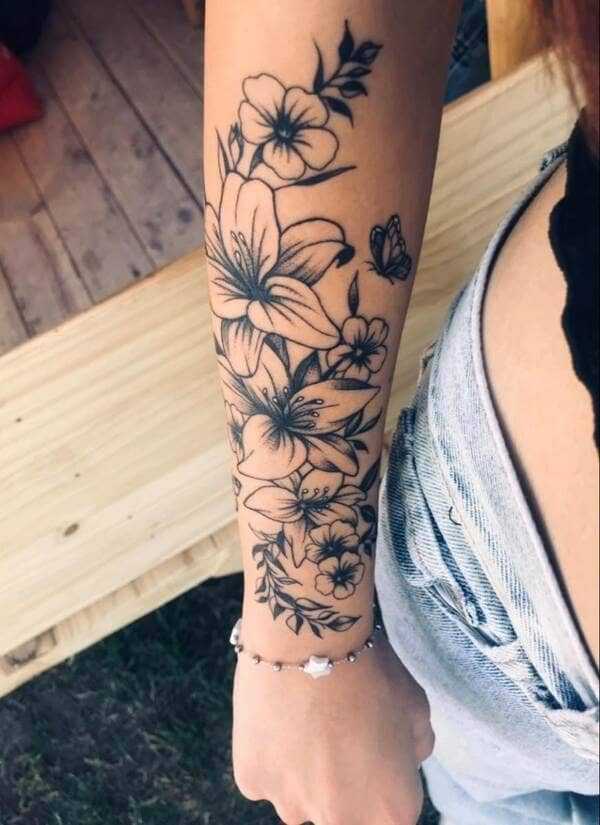
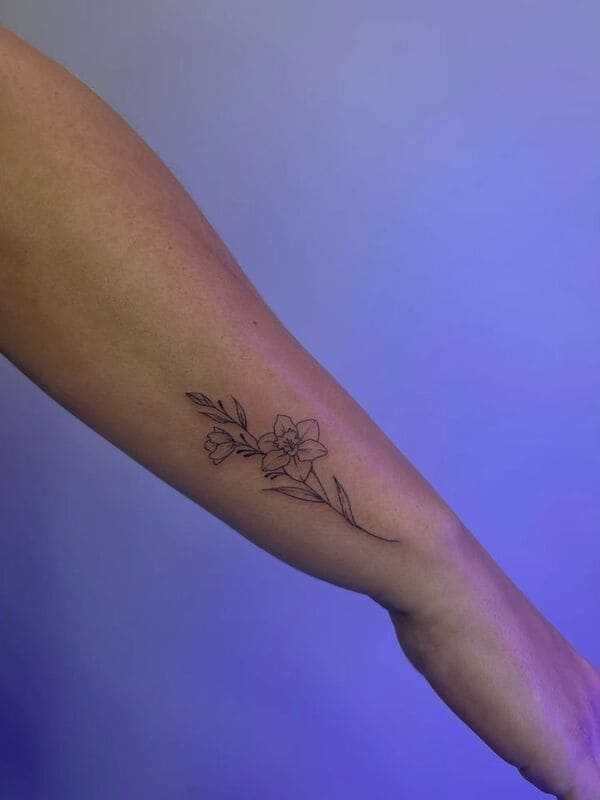
- Botanical and Wildflower Designs: Botanical tattoos offer perhaps the greatest level of customization among all tattoo motifs. A delicate sprig of lavender on the inner wrist and an elaborate botanical composition wrapping around the entire forearm both draw from the same visual language, yet create entirely different impressions in terms of scale and impact. One of the greatest strengths of botanical designs is their flexibility. You can begin with a small forearm tattoo in a single location, then gradually expand it with additional branches, flowers, and details over time, allowing the artwork to evolve naturally without compromising the integrity of the original piece.
A Deeper Meaning — When a Tattoo Becomes a Memory
Linh came to us in March 2023, about four months after her father passed away unexpectedly from a heart attack. She didn’t know exactly what she wanted—only that she needed something that could keep him with her in the most tangible way possible.
Her first consultation lasted nearly two hours. She brought a small piece of paper bearing her father’s handwritten signature from a letter he had written to her when she was eighteen. After three consultation sessions, the artist proposed a composition centered around the signature, framed by delicate fine line cherry blossom branches—the same trees her father had cared for in their yard for more than twenty years. Nothing more was added. Nothing more was needed.
The tattoo was placed on the inner side of her left forearm, where Linh could see it every morning while holding her cup of coffee. When the session was finished, she sat quietly, looking at her arm for a long time before softly saying, “This is the first time since he passed away that I feel he’s still here.”
That is what a truly meaningful tattoo can do. It is not simply decoration on the skin—it preserves what words alone cannot hold.
Some of the most meaningful forms of personal tattoos include:
- Memorial Tattoos: A memorial tattoo does not have to be a portrait. Sometimes a handwritten signature, a familiar phrase, or simply a birth and death date written in a loved one’s own handwriting creates a stronger emotional connection than any image could. The key is choosing an element that reflects your personal memories of that individual—not something that others will immediately recognize.
- Matching Tattoos: Rather than identical designs, many people choose a shared motif with individual variations. For example, two people may have the same tree branch, but one features fresh green leaves while the other shows leaves drifting away. This approach creates a meaningful connection while preserving each person’s individuality, allowing the tattoo to tell a deeper story about the relationship.
- Milestone Tattoos: These commemorate defining moments in life, such as a sobriety date, the day someone was discharged from the hospital after a serious illness, or the beginning of a new chapter following a divorce or business failure. These tattoos do not need to be explained to anyone else—their significance lies entirely with the person who wears them.
- Cultural Heritage Tattoos: Classical Chinese characters, Arabic calligraphy, Celtic symbols, and traditional ethnic patterns are often chosen as a way to reconnect with one’s cultural roots. For many people, especially those whose identities have evolved across generations or through immigration and cultural adaptation, wearing these symbols on the skin becomes a meaningful expression of heritage and belonging.
Tattoo Styles and Current Design Trends
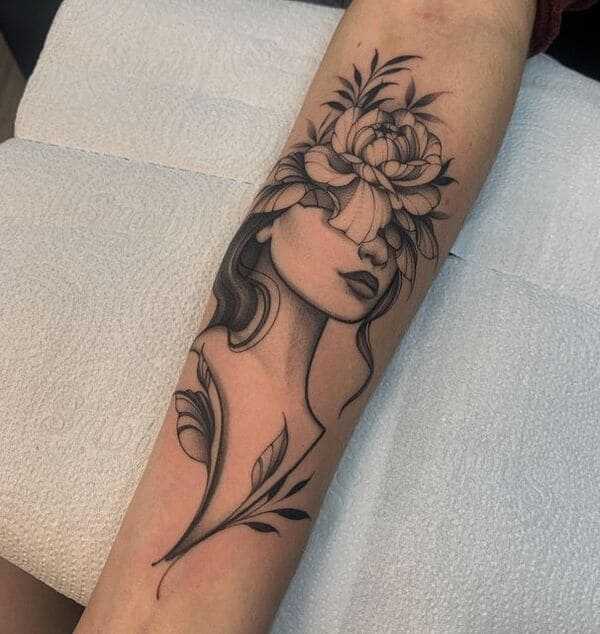
Every tattoo style is its own visual language, defined by distinct technical characteristics and aesthetic limitations. In recent years, modern tattoo design and contemporary tattoo styles have become increasingly popular for their ability to blend multiple artistic influences within a single piece while preserving a strong sense of individuality. Understanding these differences allows you to make an informed decision rather than relying on appearance alone.
- Fine Line: Characterized by lines thinner than 1 mm, fine line tattoos emphasize intricate detail with little to no color. Their greatest strength lies in the level of subtlety and precision that traditional tattoo techniques cannot easily achieve. One important consideration is that these delicate lines are more likely to spread (blowout) or gradually soften after five to seven years without touch-ups, particularly on oily skin or skin exposed to frequent sunlight. This does not mean the style should be avoided—it simply means periodic touch-ups should be considered part of maintaining the artwork.
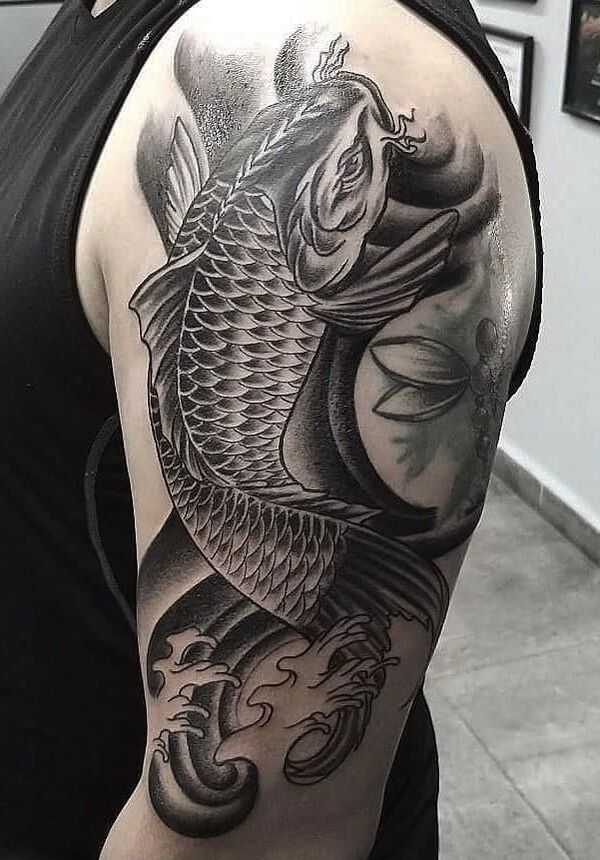
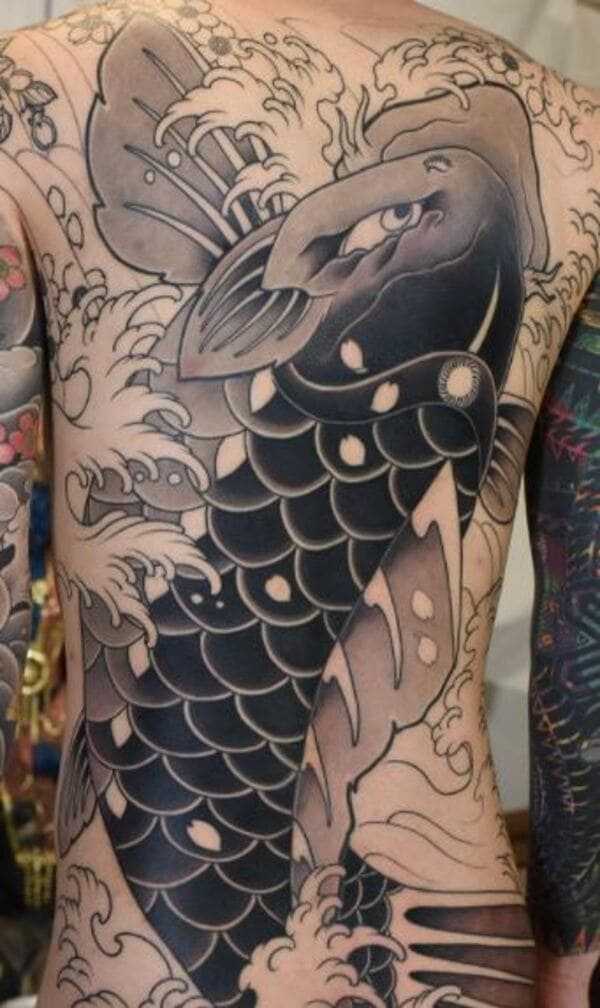
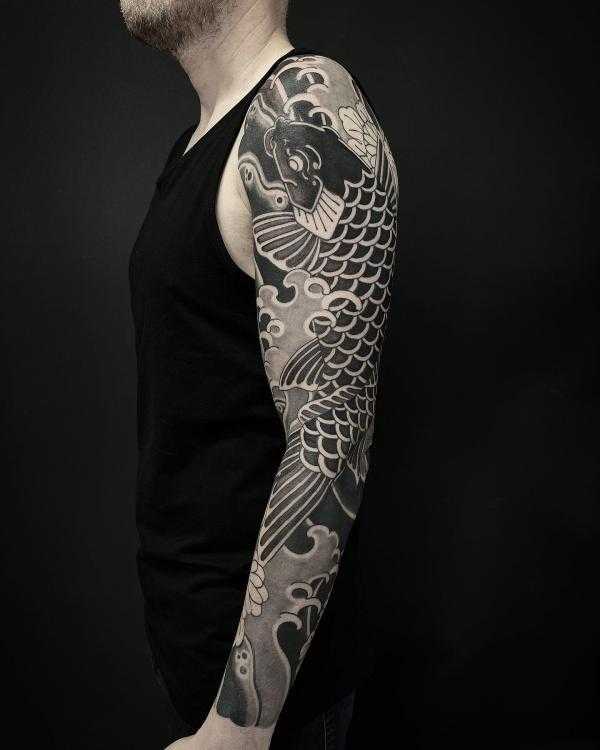
- Blackwork: Created entirely with black ink, blackwork relies on bold contrast rather than soft color gradients. It is particularly well suited to geometric, tribal, illustrative, and certain botanical designs. Among all tattoo styles, blackwork is one of the most durable because black ink resists fading from UV exposure better than colored pigments, and its strong contrast helps preserve visual clarity over time. The trade-off is that there is little room for error—a slightly uneven line in blackwork is far more noticeable than it would be in a watercolor design.
- Realism: Realism seeks to recreate subjects with lifelike accuracy through carefully rendered light, shadow, texture, and depth. When executed by a skilled artist, the result can resemble a high-resolution photograph on skin. However, realism demands exceptional technical expertise and often requires multiple sessions to complete larger pieces. When evaluating an artist, always ask to see healed realism tattoos rather than freshly completed ones, as the healed result provides a much more accurate indication of long-term quality.
- Geometric: Geometric tattoos use fundamental shapes—straight lines, triangles, circles, and polygons—to create visually complex compositions from simple forms. The strength of this style lies entirely in precision. A line that is misaligned by even half a millimeter can disrupt the symmetry and compromise the entire design. For that reason, not every tattoo artist specializes in geometric work. Before making a decision, look for an artist whose portfolio includes at least ten completed geometric tattoos.
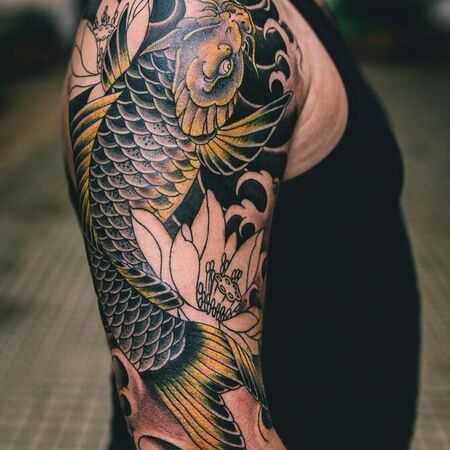
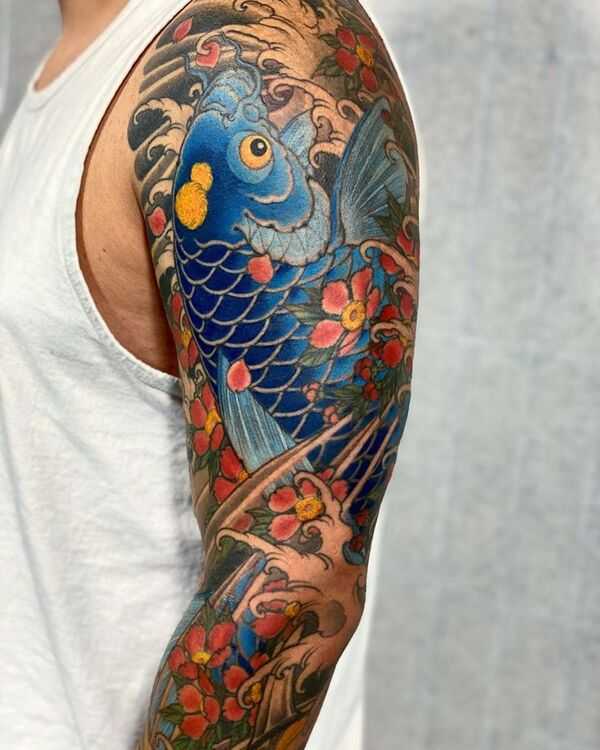
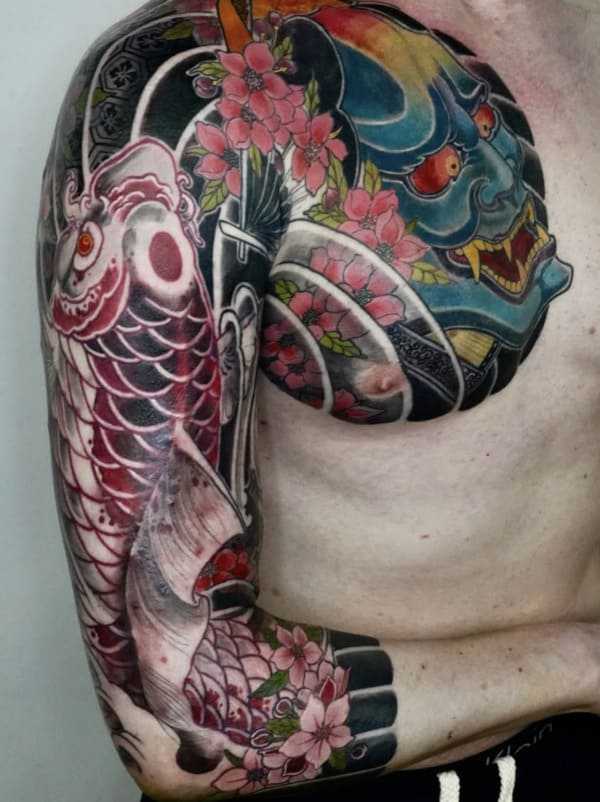
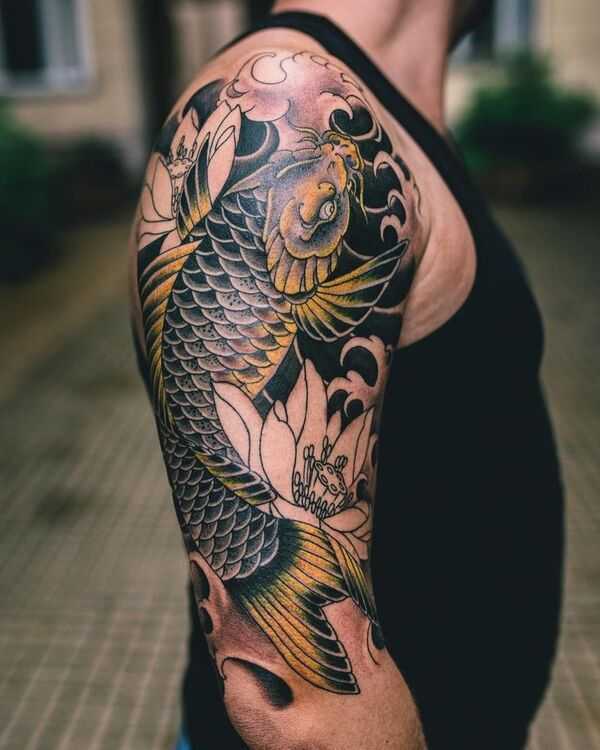
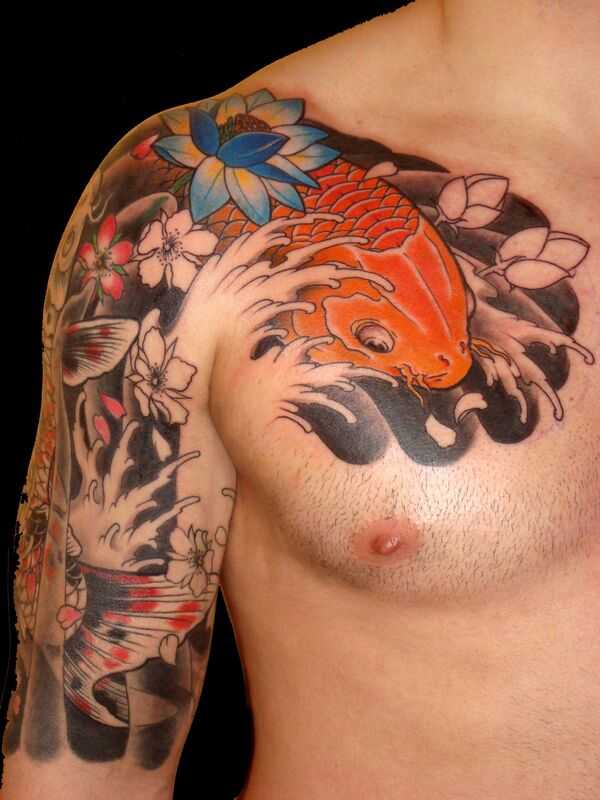
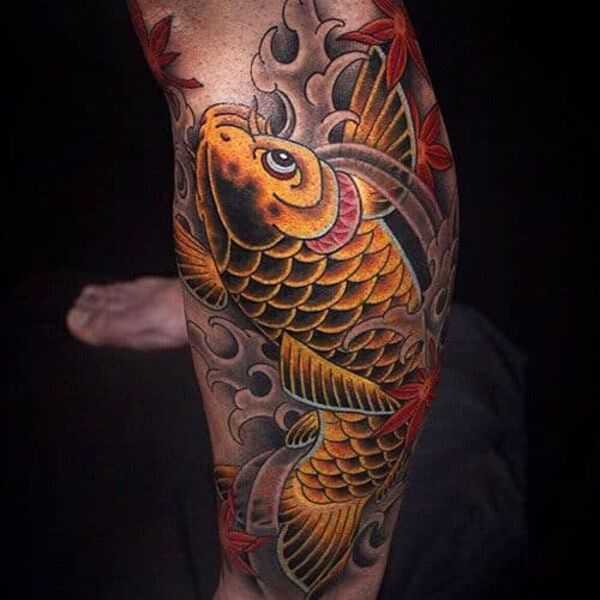
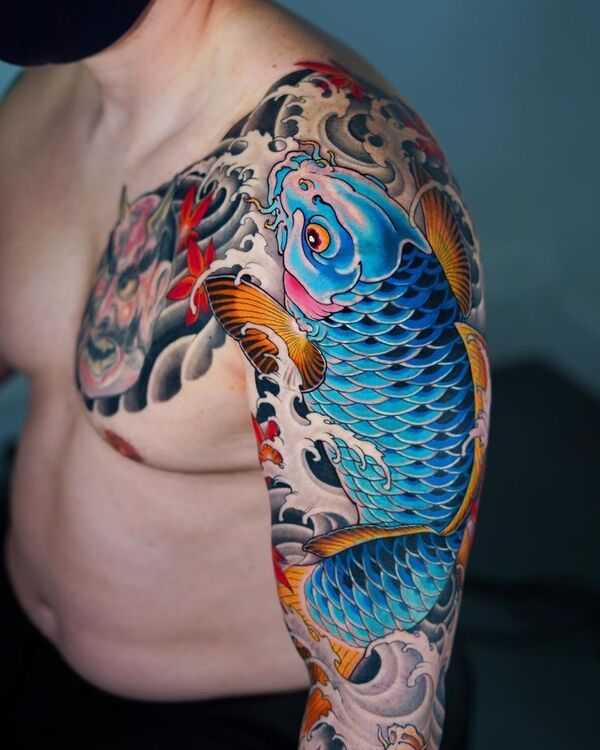
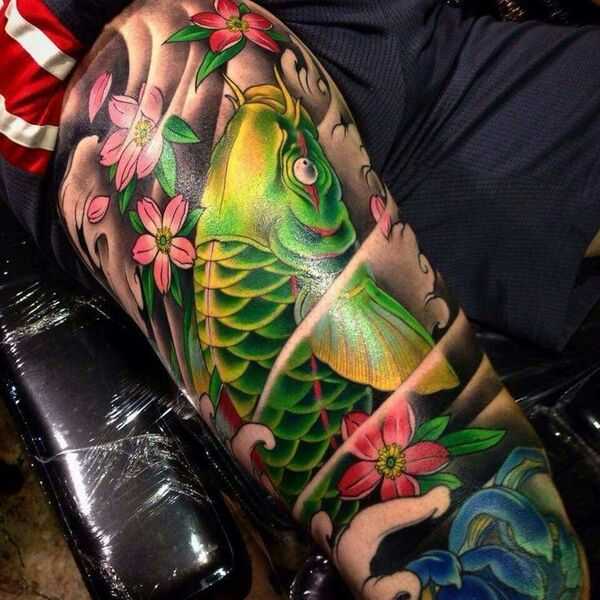
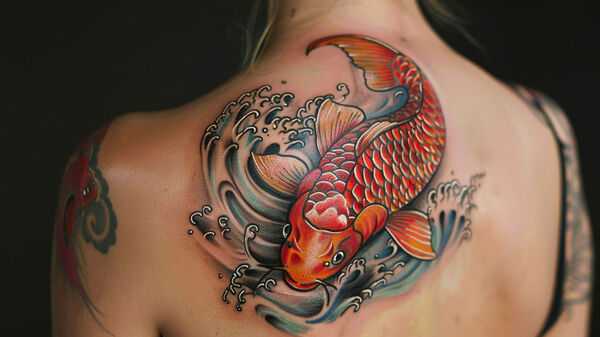
- Japanese (Irezumi): Traditional Japanese tattooing is defined by bold colors, strong outlines, and a sophisticated symbolic system deeply rooted in Japanese culture. Its signature bokashi shading technique creates subtle tonal transitions and a remarkable sense of depth that few other styles can replicate. Irezumi is typically a long-term commitment requiring multiple sessions, as traditional compositions are designed to cover large areas of the body and function as a unified work of art rather than a collection of individual tattoos.
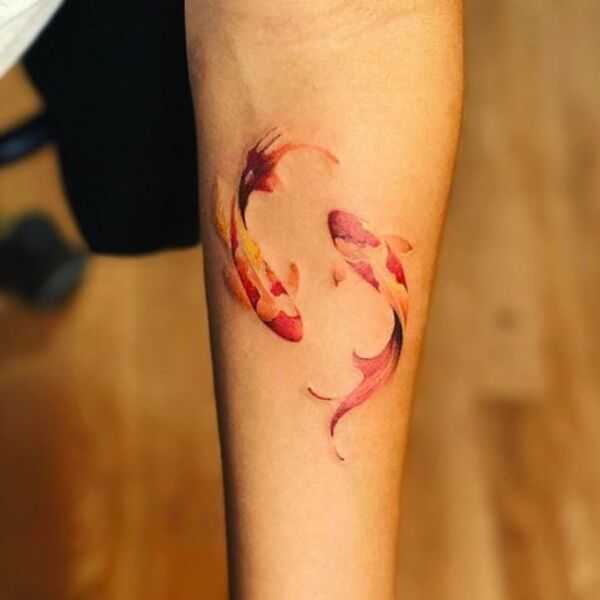
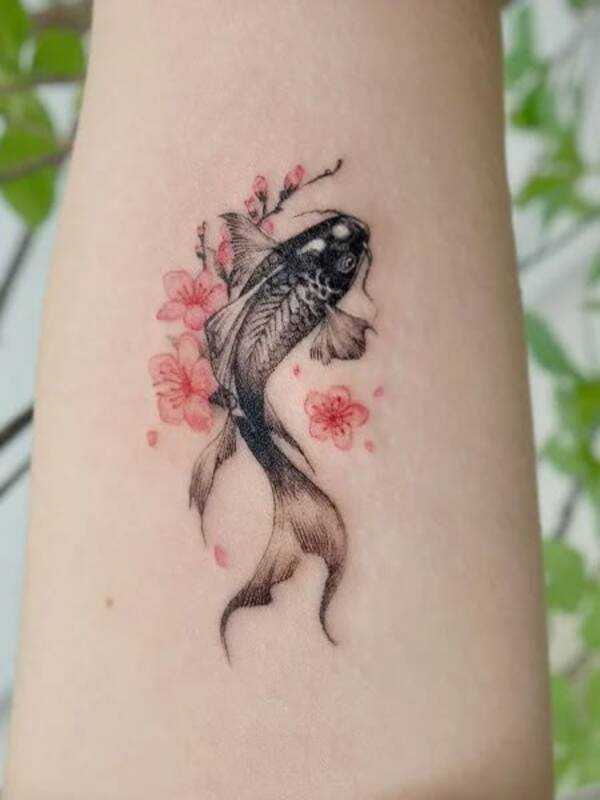
- Watercolor: Watercolor tattoos mimic the appearance of flowing paint, using soft color transitions without prominent outlines. The aesthetic is distinctive and immediately recognizable. However, watercolor is also one of the fastest-fading tattoo styles. Within three to five years, lighter pigments may lose up to 40% of their saturation if they are not properly protected from sun exposure and periodically refreshed. Some artists recommend incorporating subtle outlines to help preserve the composition’s definition as the colors gradually fade.
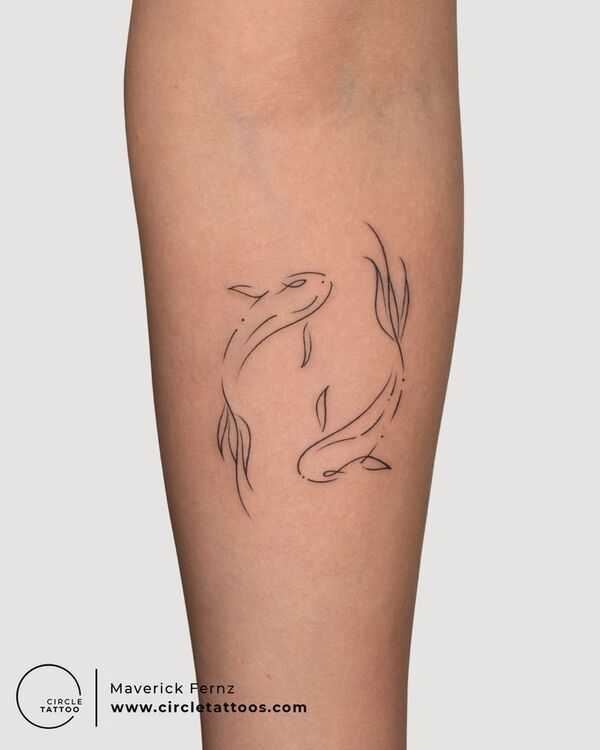
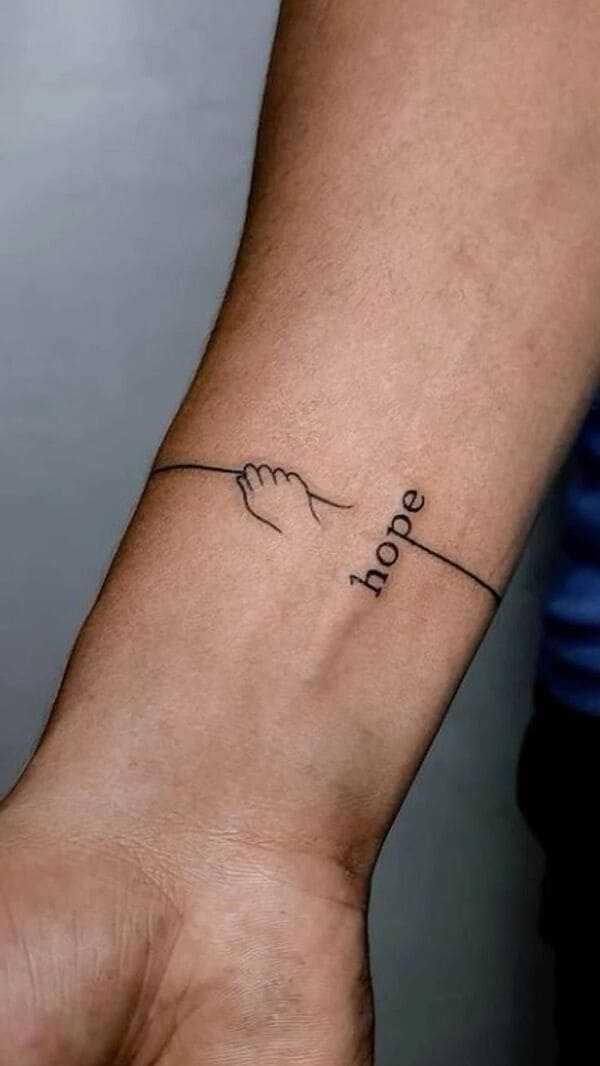
- Minimalist: Minimalist tattoos reduce visual elements to the essentials while demanding intentional meaning behind every line. With no unnecessary details to hide imperfections, every stroke must serve a purpose. Cool forearm tattoos in this style are an excellent choice for first-time clients or anyone seeking a design with strong personal significance without committing to a large-scale piece.
- Lettering, Script, and Name Tattoos: These styles preserve meaningful quotes, handwritten signatures, names, or important milestones. Compared with symbolic imagery, lettering tattoos offer a greater degree of personalization through custom tattoo design while remaining highly adaptable in terms of size and placement.
When developing a tattoo concept, many clients begin with a small tattoo design and gradually expand it into a forearm sleeve tattoo or full sleeve over time. Deciding on your long-term vision from the beginning allows the artist to plan the composition strategically, ensuring that future additions integrate seamlessly with the original design.

Natural and Spiritual Symbols
- Tree of Life: The Tree of Life appears across many of the world’s major cultures—including Celtic, Norse, Mesopotamian, and East Asian traditions—while conveying the same fundamental philosophy: the deeper the roots grow, the higher the branches can reach. More than a symbol of generational connection, it reminds us that visible strength depends on the depth of the foundation beneath it. Many clients choose this motif during periods when they are focused on building lasting foundations in their careers, families, or mental well-being, rather than simply pursuing outward success.
- Mandala: In Buddhist and Hindu traditions, the mandala is far more than a decorative pattern—it is a symbolic representation of the universe used as a tool for meditation. Each concentric circle extending outward from the center represents a different level of consciousness or layer of reality. People who choose a mandala tattoo are often seeking inner balance, not because life is already peaceful, but because they are navigating chaos and want a lasting reminder of their center.
- Mountains and Forests: When arranged vertically along the forearm, mountain and forest compositions create the distinctive miniature landscape aesthetic associated with contemporary Scandinavian blackwork. In symbolism, mountains represent more than nature—they embody challenges that are greater than ourselves yet still possible to overcome. Many clients choose this motif not because they enjoy mountaineering, but because they have recently conquered something they once believed was impossible.
- Sacred Geometry: Designs such as the Flower of Life, Metatron’s Cube, and the Fibonacci Spiral are rooted in the observation that certain mathematical proportions appear repeatedly throughout nature, from the structure of DNA to the shape of galaxies. These tattoos appeal to those who seek the intersection of science and spirituality—a place where mathematical order and visual beauty coexist.
- Owl: In many Indigenous cultures, the owl is not regarded as an ominous figure but as a symbol of wisdom and the ability to perceive what remains hidden. An owl sees clearly in darkness not because its eyes are larger, but because they are uniquely adapted to low-light conditions. As a tattoo, it represents the capacity to find clarity in situations where others see only uncertainty.
Beyond natural symbolism, many people choose a cross tattoo, angel tattoo, or prayer tattoo as a personal expression of faith. Although these designs are often minimalist in appearance, they carry profound spiritual meaning and are especially meaningful for those who wish to keep their core beliefs and values close throughout life.
Pain Level and Cost — What to Expect
Pain Level: The forearm is generally considered one of the less painful areas to tattoo, ranking in the low-to-moderate range on the pain scale. The outer forearm is commonly rated around 4 to 5 out of 10, while the inner forearm tends to be slightly more sensitive at 5 to 6 out of 10. For comparison, the ribs are often rated 8 to 9, the spine 7 to 8, and the palms around 7. Most people describe the sensation as a combination of mild heat and continuous scratching—uncomfortable but well within the tolerance of most first-time clients when they are properly prepared.
Several factors influence the level of discomfort, including needle configuration, the artist’s working speed, and the tattoo style itself, with shading generally being more uncomfortable than linework. Your physical condition on the day of the appointment also makes a significant difference. Eating a proper meal beforehand, getting enough sleep, and avoiding alcohol for at least 24 hours before your session are three basic preparations that can noticeably improve your experience.
Cost: There is no universal price for a forearm tattoo. The final cost depends on several key factors:
- Size and complexity: Small forearm tattoos with simple designs may be completed in about an hour, while a large realism piece can require six to ten hours spread across multiple sessions.
- Style: Realism and Japanese tattoos generally cost more because they demand advanced technical expertise and significantly more time to complete.
- Artist experience: A tattoo is a long-term investment. Choose an artist based on the quality of their portfolio in the style you want—not simply on who offers the lowest price.
Beyond aesthetics, many people also consider tattoo visibility in professional settings. Designs placed on the inner forearm are generally easier to conceal with everyday clothing, making them a practical choice for those who value tattoo concealment while maintaining a professional appearance in formal workplaces.
Aftercare and Long-Term Maintenance
Tattoo healing takes place in two stages. The outer layer of skin typically heals within two to four weeks, while the deeper layers require an additional two to three months to fully stabilize. This second stage plays a critical role in determining how evenly the ink settles and how well the tattoo retains its appearance over time.
During the first four weeks, follow these essential aftercare guidelines:
- Gently wash the tattoo with a fragrance-free soap no more than twice a day.
- Apply a tattoo-specific moisturizer as recommended by your artist.
- Avoid soaking the tattoo in water, including swimming pools, hot tubs, and baths.
- Do not scratch, pick, or peel any flaking skin during the healing process.
Long-Term Maintenance
- Apply a broad-spectrum sunscreen with SPF 30 or higher whenever the tattoo is exposed to sunlight. UV radiation is the leading cause of ink fading and has a direct impact on tattoo fading, tattoo aging, and the overall ink longevity of your tattoo.
- Keep your skin well moisturized to maintain its elasticity and preserve crisp, well-defined linework.
- Schedule touch-ups according to your artist’s recommendations. Fine line and watercolor tattoos commonly benefit from a touch-up after 12 to 18 months to maintain their original appearance.
A great tattoo begins with informed decisions—about placement, style, symbolism, and the tattooing process itself. Whether you are choosing a small design that preserves a deeply personal memory or planning a full sleeve composition, every decision deserves careful thought before the needle touches your skin. At Holistic Ink, we believe every tattoo represents a lifelong commitment, and that commitment deserves to be done right from the very beginning.
If you would like additional information or professional guidance, contact Holistic Ink for a free tattoo consultation. Our experienced artists are ready to provide expert advice, personalized recommendations, and professional service throughout every stage of your tattoo journey.