Some tattoos are chosen for beauty. Others are carried like a reminder — of who you are, where you’re headed, and what you believe in. Buddha tattoos almost always belong to the second category.
From Hanoi to Los Angeles to Bangkok, the image of the Buddha continues to appear on skin across cultures and continents — transcending religion, geography, and personal background. At Holistic Ink, we believe a custom tattoo only holds real value when its meaning is as strong as its execution. This article explores every stage of the journey, from spiritual symbolism and cultural considerations to design choices, placement ideas, and aftercare. By the end, you’ll leave with not only a meaningful tattoo but also a deeper understanding of the symbolism you choose to wear.
What Does a Buddha Tattoo Mean? The Spiritual Symbolism Behind the Design | Holistic Ink
The core values behind the design
A Buddha tattoo doesn’t carry a single meaning. Each pose, each expression, each element within the design holds its own layer of symbolism, rooted in Buddhist philosophy — one of the oldest and most influential systems of thought in human history.
The three core values this imagery represents are enlightenment, wisdom, and inner peace. These form the philosophical foundation of Buddhism, and they’re also why this tattoo continues to hold timeless appeal. On a deeper level, the figure of the Buddha reflects an inward journey — moving through fear, attachment, and suffering to arrive at clarity and balance.
The most common themes associated with this tattoo symbol:
- Enlightenment and self-awareness: understanding the true nature of existence.
- Mindfulness and intentional living: being fully present in each moment.
- Compassion and empathy: extending understanding beyond oneself.
- Inner peace and emotional equilibrium: not passivity, but the ability to remain emotionally balanced.
- Spiritual awakening and transformation: a turning point in the journey of self-discovery.
- Karma: every action carries a consequence, and we can always choose a different path.
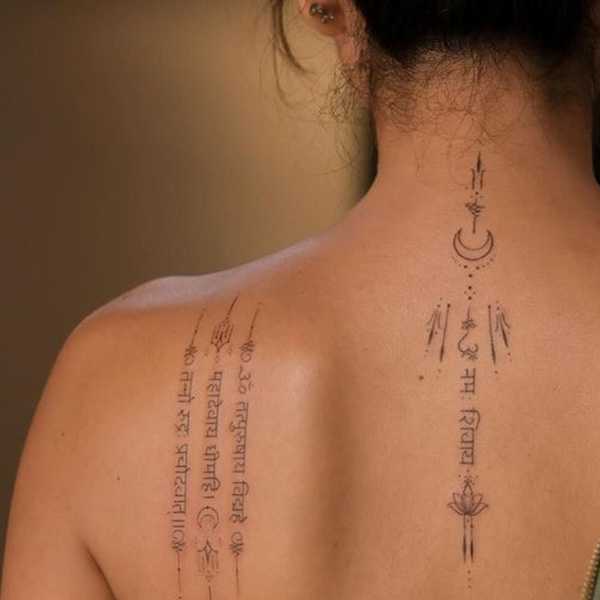
Buddha imagery in tattoo art is also associated with inner harmony. Not in a superstitious sense, but from a psychological standpoint, regularly seeing a symbol of meditation and stillness can help orient the mind and emotions in a more grounded direction. This quality is precisely why the image appears not only across Buddhist cultures but within global communities centered on meditation practice, yoga, and personal development.
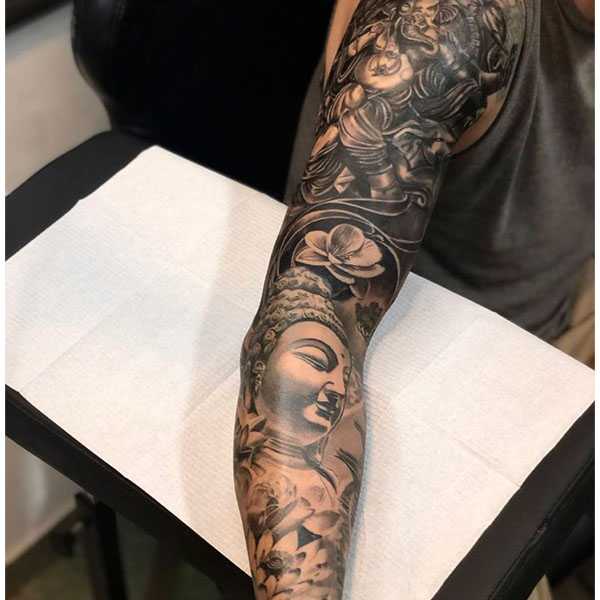
Three foundational Buddhist concepts frequently reflected in tattoo designs include Dharma (the teachings — the principles guiding ethical life), Karma (cause and effect — emphasizing personal responsibility), and Nirvana (the state of liberation from suffering). Understanding these three concepts helps the wearer choose imagery and composition that aligns with the values they want to express. Many designs also draw inspiration from Buddhist teachings, especially the Four Noble Truths and the Eightfold Path. These principles encourage people to understand the causes of suffering, cultivate mindfulness, and embrace Buddhism as a philosophy of balanced living rather than viewing it purely as visual inspiration.
Why this artwork becomes a personal anchor
Not everyone who chooses a Buddha tattoo does so for religious reasons. Among tattoo enthusiasts, this imagery comes after a period of burnout, loss, or a major life transition. They’re not looking for a symbol of faith. They’re looking for an anchor — something to look at and remember to pause, to breathe, to live more consciously.
A meditating Buddha on the wrist, the face of the Buddha across the chest, or the Bodhi tree running down the arm — each placement, each choice reflects its own story. The tattoo doesn’t speak for the person wearing it. But it’s present every day, like a small personal reminder in the middle of a chaotic life.
In practice, this tattoo often marks a healing chapter — after illness, after loss, after life-altering decisions. It’s a philosophy of living etched into the skin: resilience doesn’t come from avoiding difficulty, but from the ability to rise and continue. That emotional strength is what clients want to carry with them — not on display, not requiring explanation, just present enough to serve as a daily reminder to themselves.
Over time, this symbol has become tied to the journey of self-growth, cultivating hope, learning acceptance of what cannot be changed, and practicing forgiveness. For many tattoo enthusiasts, it’s also a prompt to hold gratitude for the experiences that shaped them.
Is It Respectful to Get a Buddha Tattoo? | Holistic Ink
This is, by a wide margin, the most searched question surrounding Buddhist tattoo imagery. The answer isn’t a simple yes or no.
Many countries with Buddhist traditions — particularly Thailand, Sri Lanka, and Myanmar — hold strict views on using the image of the Buddha in tattoo art. Placement carries significant cultural weight: sacred imagery is traditionally treated with a high level of reverence, those choosing this design positioning it below the waistline. On the other hand, many cultural researchers argue that intention and genuine understanding are the core factors — not the wearer’s background or religious affiliation.
Determining whether a Buddha tattoo is considered offensive depends largely on intent. The difference between cultural appreciation and cultural appropriation lies in whether the wearer understands the meaning behind the symbol instead of picking it purely for its appearance. Respect begins with awareness, not with religion. This is a fundamental principle of tattoo etiquette that anyone should internalize before making the decision.
A pre-decision checklist:
- Research the cultural and spiritual significance of the imagery you want.
- Avoid placements considered disrespectful by Buddhist standards.
- Choose imagery that reflects genuine cultural appreciation, not purely aesthetic appeal.
- Consult with an experienced tattoo artist or tattoo designer who has worked with religious symbolism.
- Approach the symbol with sincerity, knowledge, and respect for its origins.
Popular Buddha Tattoo Designs and What Each One Represents
Not all Buddhist tattoo designs are the same. Each form of expression carries its own distinct layer of meaning:
- Meditating Buddha: mindfulness, inner stillness, focused awareness — suited for those who regard stillness as a foundation for living.
- Laughing Buddha (Budai): joy, abundance, gratitude, and an open embrace of life. More commonly found within East Asian cultural contexts.
- Buddha face: serenity, wisdom, compassion — a reminder to maintain equilibrium regardless of shifting external circumstances.
- Buddha and lotus flower: The lotus is a symbol of purity and the capacity to rise from adversity. Combined with the figure of the Buddha, this design emphasizes transformation and inner awakening. The meaning of this combination: beauty born from hardship, purity independent of one’s starting conditions.
- Mandala and Buddha: spiritual journey, sacred geometry, blending Buddhist and Hindu philosophical traditions.
- Bodhi tree: the site of the Buddha’s enlightenment, a symbol of spiritual origin and rootedness.
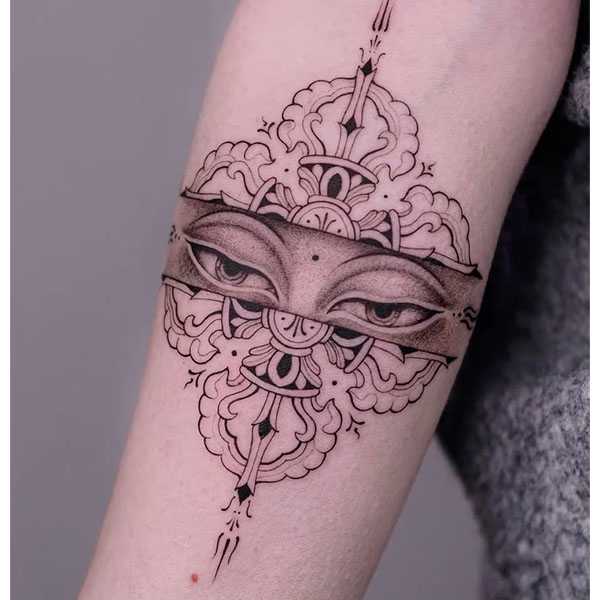
- Buddha Eyes: drawn from Nepalese spiritual art, representing omniscience and all-seeing awareness.
- Minimalist silhouette: conveying meaning through pure line work, without the need for elaborate detail.
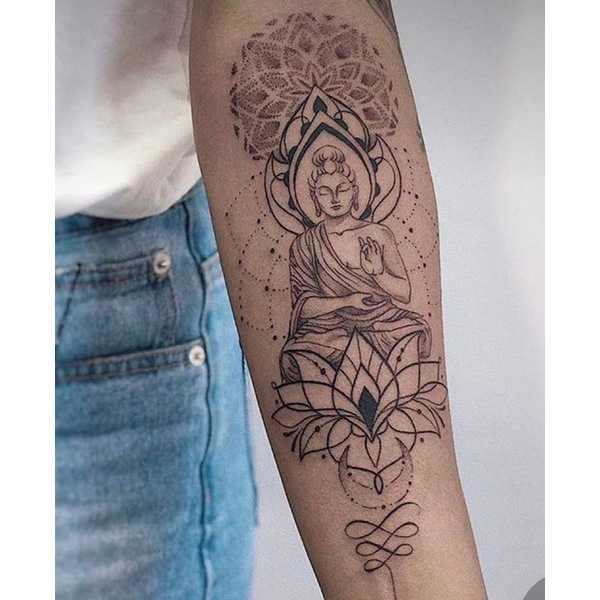
Buddhist symbols tattoos are increasingly popular because they allow multiple layers of meaning to coexist within a single composition. The strongest pieces in this genre tend not to showcase the quantity of symbols used, but rather the philosophical consistency between each chosen element.
Choosing the Best Tattoo Style for Your Buddha Design
Tattoo style directly shapes the emotional tone a design conveys. The practical question is which style best serves Buddha imagery — and the answer depends on both personal aesthetic and the meaning you want to foreground. Some of the most established directions:
- Realism: emphasizes surface texture, shadow depth, and facial expression — producing visual depth close to photographic quality.
- Black and grey: holds well over time, carries a contemplative quality, and sits within the tradition of classic tattoo artistry.
- Fine line: minimalist and refined, well-suited for smaller pieces or designs requiring precise detail work.
- Geometric: marries mathematical structure with spiritual symbolism — typically creates a feeling of balance and order.
- Dotwork: builds depth through stippling, commonly used for mandala-integrated compositions.
- Minimalist: focuses on the most essential line work, stripping out all unnecessary detail — well-suited for those who want to carry significant symbolism without drawing attention.
- Watercolor: vibrant and highly artistic, suited for those seeking a distinctive use of color.
- Ornamental: incorporates decorative patterning surrounding the central motif.
- Contemporary blackwork: uses bold black fills to create strong contrast and a modern visual presence.
Beyond these established styles, many custom tattoo studios develop designs in the direction of micro realism, illustrative tattooing, neo traditional, linework, or sketch tattoo to produce pieces with a distinctive signature. Each technique produces a different visual effect, helping the work better suit the proportions of the body and the personal narrative behind it.
Best Placement Ideas for a Buddha Tattoo
Placement affects not only aesthetics but cultural meaning — especially when a design incorporates sacred Buddhist imagery. Choosing the right placement involves balancing three factors: the size of the design, body proportions, and cultural considerations.
Commonly recommended placements:
- Buddha forearm tattoo: visible daily, flexible in scale, compatible with a wide range of styles.
- Buddha shoulder tattoo: follows the body’s natural contour, balanced in composition, can be extended into a full sleeve.
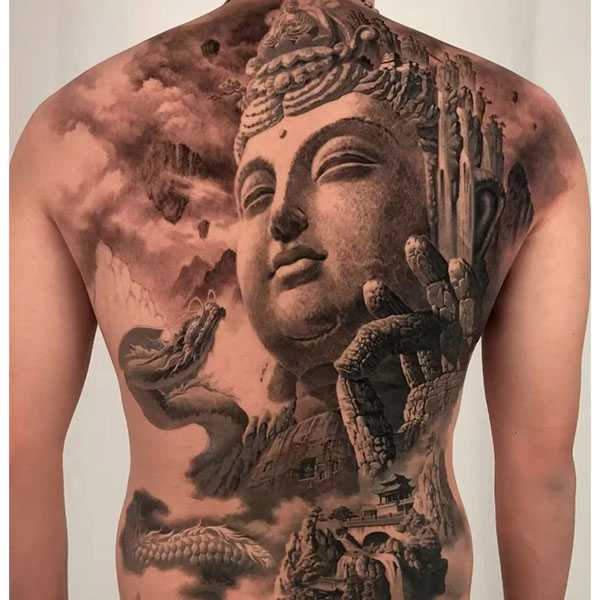
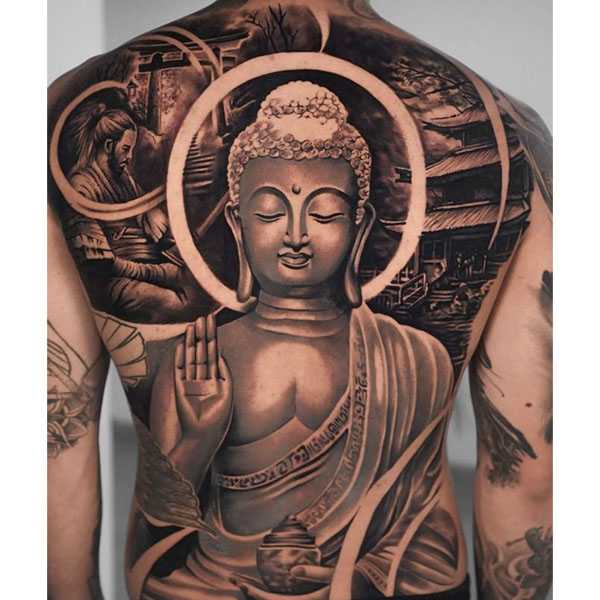
- Buddha back tattoo: expansive canvas, suited for complex, high-detail work with a spiritual narrative — the ideal placement for those building a full composition incorporating the Bodhi tree, mandala, or lotus.
- Buddha leg tattoo: flexible and expandable in the future. Cultural appropriateness should be carefully considered before placing sacred imagery below the waistline.
- Buddha hand tattoo: high visibility, strong statement — but requires careful consideration of long-term ink retention, as the hands are subject to significant light exposure and friction.
- Chest: deeply personal placement, associated with spiritual protection.
- Thigh: generous surface area, less painful than bony or jointed areas, well-suited for medium to large-scale pieces.
- Full sleeve: allows the construction of a unified narrative drawing from multiple Buddhist symbols.
A thoughtfully planned composition will elevate both the aesthetic quality and symbolic depth of the overall piece. Beyond these common placements, rib tattoo, neck tattoo, and calf tattoo are also a practical option for a more distinctive focal point — though pain tolerance, professional visibility, and cultural context should all factor into the decision.
Combining Buddha with Other Spiritual Symbols
A spiritual tattoo doesn’t have to stand alone. Pairing the figure of the Buddha with complementary symbols layers additional meaning into the overall composition. The significance of common pairings:
- Lotus flower: purity rising through adversity, transformation and rebirth — combined with the Buddha, it creates a complete symbolic arc from suffering to enlightenment.
- Mandala: spiritual journey, wholeness, and cosmic balance — combined with the Buddha, it evokes a structured path of meditative practice.
- Bodhi tree: the origin of enlightenment, the site where Siddhartha Gautama reached awakening.
- Dharma wheel: the Eightfold Path of Buddhist teaching, representing the continuous movement of karmic law.
- Om symbol: the primordial sound of the universe in Indian philosophy, often used to open or close a composition.
- Prayer beads (mala): patience, mental cultivation, and the daily practice of meditation.
- Chakras: spiritual energy flowing through the body — combined with the Buddha, the design takes on a layered meaning of holistic balance.
- Yin Yang: the principle of complementary opposites, adding philosophical depth around the concept of harmony.
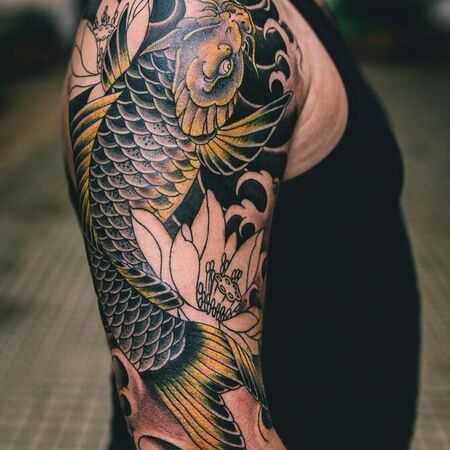
- Koi fish: perseverance through hardship, transformation in the face of adversity.
- Dragon: strength, protection.
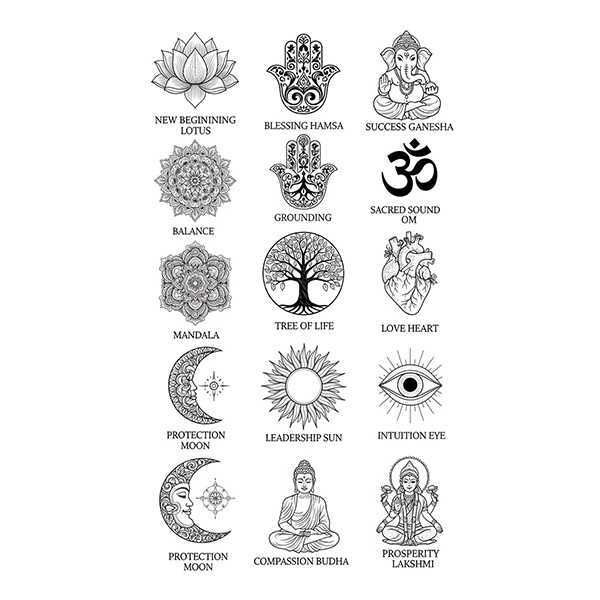
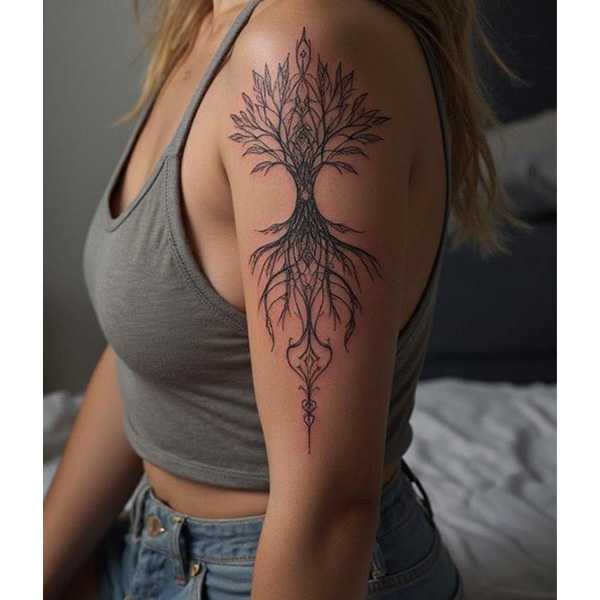
Beyond these familiar symbols, pairings with Unalome tattoo, Om tattoo, Hamsa tattoo, Tree of Life tattoo, or Zen tattoo elements are also worth exploring. These elements help expand the narrative of personal growth, spiritual protection, and mental equilibrium within a single unified composition.
Buddha Tattoo Ideas for Different Personal Styles
Buddha tattoo imagery doesn’t follow a single template. The range of styles and placements allows each person to find the form of expression that fits them best.
Female Buddha tattoos tend to lean toward fine line, watercolor, or ornamental styles — softer line work, often incorporating lotus flowers or mandalas. Popular placements include the wrist, collarbone, behind the ear, and the thigh.
Male Buddha tattoos typically favor realism, black and grey, or geometric approaches — more intricate detail, stronger compositional weight. Common placements include the arm, chest, back, and full sleeve.
Small minimalist designs are an increasingly popular choice for both groups — particularly for those who want to carry spiritual symbolism in a quieter, less conspicuous way. A smaller scale doesn’t diminish symbolic value. In fact, restraint often communicates meaning more powerfully than a complex composition. Full back tattoos featuring the Buddha are reserved for those ready to invest in a comprehensive piece — one where the entire back becomes a unified spiritual composition.
Design inspiration can come from traditional Buddhist art, temple architecture, classical sculpture, or the contemporary tattoo art movement. What’s worth considering is approaching your source of inspiration consciously, rather than following momentary trends.
How to Care for a Buddha Tattoo After Getting Inked
Aftercare quality determines the long-term vibrancy and crispness of any piece.Tattoo healing happens in two stages. The outer layer usually recovers within 2–4 weeks, while the deeper layers continue healing for several months. For this reason, aftercare doesn’t end when the peeling stops.
Basic aftercare protocol:
- First 24–48 hours: keep the protective wrap in place, avoid direct contact with hands.
- Days 2–14: cleanse gently with fragrance-free soap, pat dry with a clean towel, apply a thin layer of moisturizer — enough to keep the skin hydrated, not enough to clog pores.
- Avoid submerging the tattoo (pools, baths) for at least 3–4 weeks.
- Avoid direct sun exposure during the healing phase. Afterward, always use a tattoo sunscreen with SPF 30 or higher to minimize fading. Tattoo peeling during the fresh tattoo stage is normal, provided there are no signs of infection.
- Don’t scratch or pick at scabs — the peeling layer protects the ink underneath. Early interference is one of the leading causes of uneven fading and loss of line definition.
- Monitor for signs of infection: prolonged abnormal swelling, discharge, or fever — seek medical attention immediately rather than self-treating.
- Schedule a touch-up session 3–6 months out to maintain contrast and detail, particularly for pieces with fine line work or complex shading.
Frequently Asked Questions About Buddha Tattoos
Does a Buddha tattoo bring good luck? Many cultures associate the figure of the Buddha with positive energy, protection, and harmony. But the deeper value lies not in luck, but in the qualities the imagery encourages — mindfulness, wisdom, and inner peace.
Can non-Buddhists get this tattoo? Yes. Individuals who don’t follow Buddhism choose this piece because they connect with the universal values it represents. What matters most is approaching it with respect and a genuine understanding of the symbol’s origins.
Is a Buddha tattoo religious? That depends on the wearer’s intention. For a practicing Buddhist, it is an expression of faith. For others, it represents universal values such as wisdom, compassion, and mindfulness — not tied to any specific religion.
How painful is it? Pain level depends on placement. The ribs, spine, and neck tend to produce more pronounced discomfort compared to the thigh or upper arm, where thicker muscle provides natural cushioning. The size of the design and total session time are also significant factors.
How much does it cost? Pricing varies widely depending on size, placement, complexity, style, and the artist’s experience level. It’s worth prioritizing quality over cost when choosing a tattoo designed to retain lasting meaning.
Which design best represents peace? The meditating Buddha — particularly in the Dhyana mudra (hands resting in the lap, eyes gently closed) — is the most widely recognized imagery associated with stillness and inner harmony.
How to Choose a Buddha Tattoo That Reflects Your Values | Holistic Ink
A skilled tattoo artist doesn’t just execute technique. They help you translate an idea into imagery that fits your body and your personal story.
A tattoo consultation typically begins with sharing reference images — helping the tattoo designer understand your aesthetic direction and build a design concept accordingly. This isn’t about copying; it’s about helping the artist understand the visual language you’re drawn toward. From there, the artist creates an original design tailored to your chosen placement. A concept that looks impressive on paper does not always translate well to the natural contours of the body.
Once the design is finalized, both parties schedule the session. Waiting time typically ranges from a few days to several weeks, depending on design complexity and the artist’s schedule. This is the period to revisit your thinking one final time — placement, scale, any details you want refined.
When selecting a professional tattoo studio, review the artist’s actual portfolio rather than relying solely on edited or filtered images. Also take time to understand the studio’s hygiene standards and working process before booking. An experienced artist will ask questions before waiting for your brief — that’s a mark of genuine professional engagement.
Questions to ask yourself before committing
How do you find a Buddha tattoo that truly fits? The first step isn’t searching for a design — it’s getting clear on a few things:
- Which aspects of Buddhist symbolism align most honestly with your personal journey and values?
- When you look at this tattoo, what do you want to feel — peace, strength, or a reminder of a specific commitment?
- Which placement on your body makes sense given your lifestyle, profession, and cultural perspective?
- Which aesthetic style do you want to live with long-term — not the trending style of the moment, but the one that most accurately reflects who you are?
- Do you want to plan for a design that can be expanded in the future, or keep it as a self-contained piece?
A consultation with your artist is the right place to work through these questions — not after you’ve decided on a design, but before.
Working with a professional tattoo artist
A skilled artist doesn’t just execute technique. They help you translate an idea into imagery that suits your body and your story. Planning the design is not the final step in the process — it’s the first. When searching for the right person, look at their actual portfolio rather than filtered images. Investigate the studio’s hygiene standards. Don’t overlook the initial consultation — it’s where you assess technical ability, professionalism, and communication skills.
Complete checklist:
- Clearly define the personal meaning you want to attach to the design.
- Choose imagery that honors the cultural and spiritual origins of the symbol.
- Decide on a placement that works both aesthetically and culturally.
- Work with an artist whose experience and style are the right fit.
- Commit fully to the aftercare process once the work is complete.
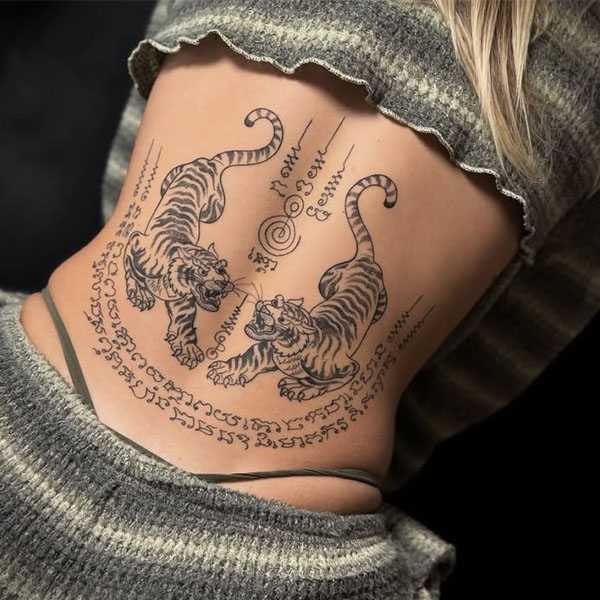
For many within the tattoo community, this isn’t simply body art — it’s meaningful ink that reflects a personal value system and contributes to a positive tattoo culture. When developed with care from concept through execution, it also becomes a lasting source of tattoo inspiration for the chapters ahead.
A Buddha tattoo — chosen with intention — becomes more than a work of art on the skin. It is a symbol of wisdom, mindfulness, compassion, and the ongoing journey toward enlightenment. When approached with understanding and respect, it becomes a lasting affirmation of the path the wearer is on.
At Holistic Ink, every project begins with a consultation and continues through custom design development to the finished tattoo. Our goal is to ensure every piece reflects the client’s story while meeting the highest technical standards.