A deer tattoo can stand for grace, gentleness, renewal and a quiet kind of strength. Some people want a towering stag in a misty forest, while others prefer a doe among peonies or a skull that speaks to the cycle of life. This guide from Holistic Ink in Boston walks through 10 designs and what each one means, then covers styles, placement, the steps from consultation to healed skin, and the questions people ask most.
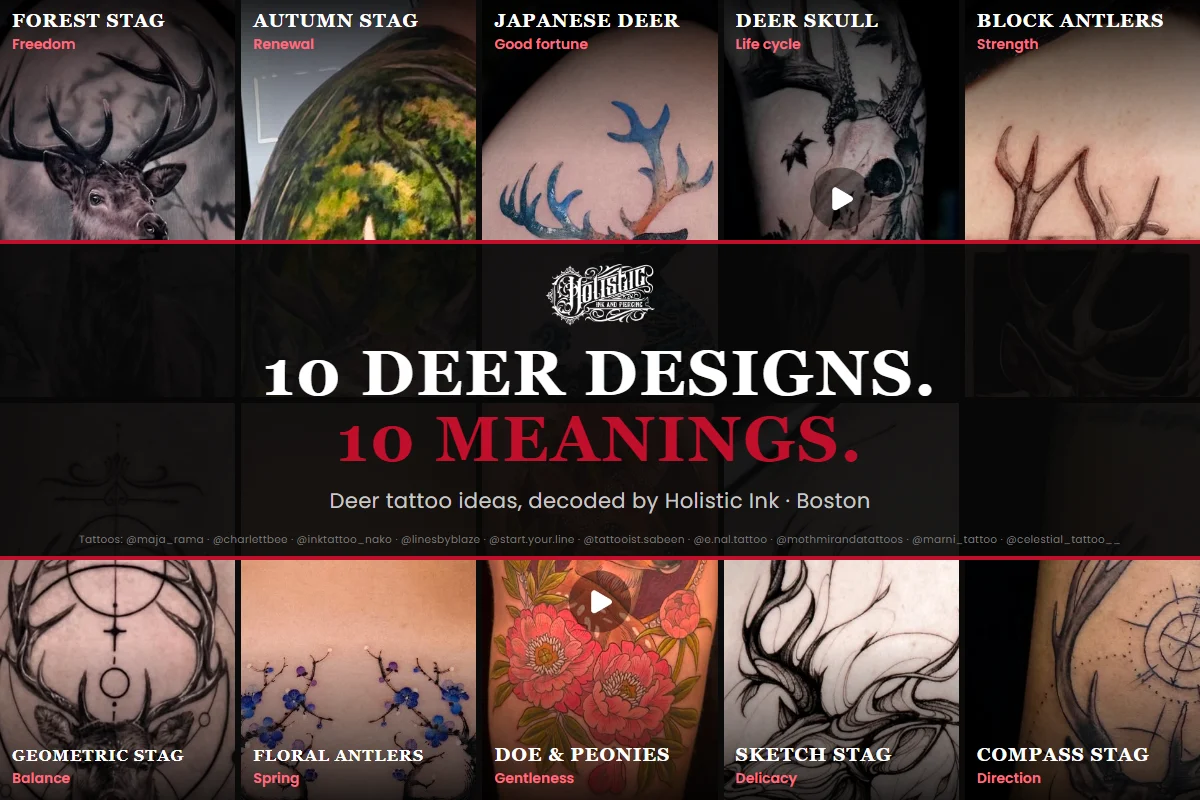
Deer Tattoo Designs and Their Meanings by Holistic Ink
Across many cultures the deer is a symbol of gentleness and freedom, and the stag adds strength and a sense of leadership. Antlers are shed and regrow every year, so they also point to renewal and starting over. Pose, species and style change the story a great deal, so use the ten designs below as a starting point for your own.
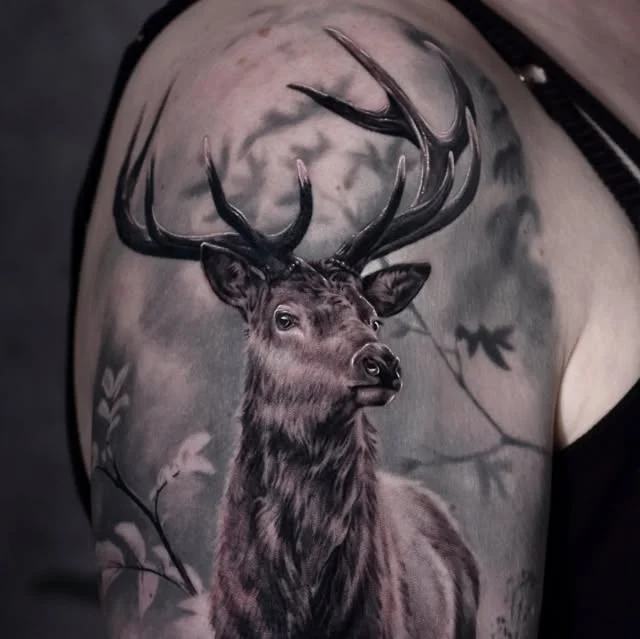
Black and Grey Realism Stag in a Forest
A large stag stands in profile on the upper arm, its antlers wide, with a hazy forest and drifting mist behind it, all in soft black and grey realism. The smooth gradients make the animal look calm and powerful at once. A stag like this usually means freedom, dignity and quiet confidence, so it speaks to people who feel most at home in open land. If you like a dramatic, detailed piece, the shoulder and upper arm give the antlers a lot of room to spread.
Color Realism Stag With Autumn Leaves
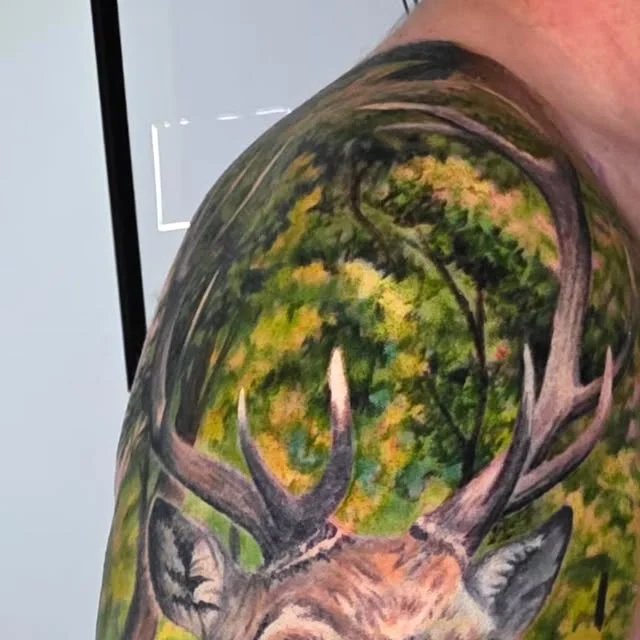
A stag’s head sits on the shoulder, rendered in lifelike shades of brown and framed by green, gold and orange leaves. The original post describes it as a cover-up, which explains the dark antlers and dense foliage. Autumn leaves point to change and letting go, so the design suits someone closing one chapter and opening another. It works well for people who like warm, rich color, though a cover-up like this always depends on what lies underneath.
Japanese Style Deer With Waves and Clouds
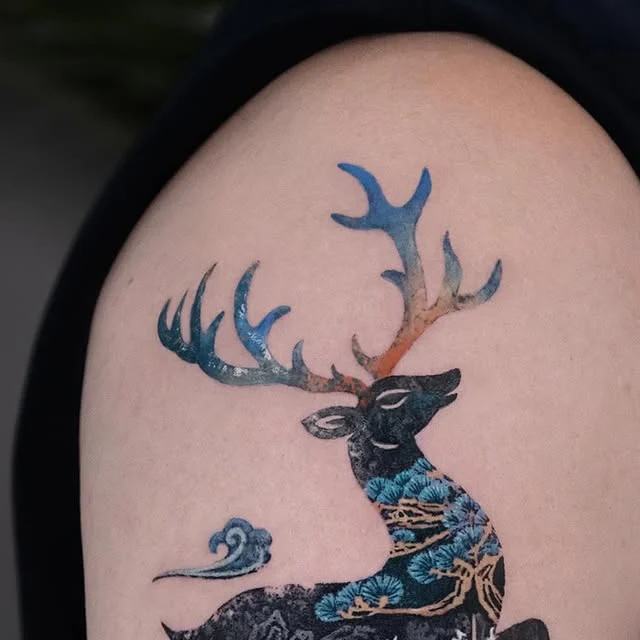
A deep indigo deer sits on the upper arm with blue and orange antlers, wrapped in Japanese waves and clouds, and a small red seal rests nearby. It is neo-Japanese work that borrows bold outlines and wave patterns from Irezumi without being a traditional full-color Irezumi piece. In Japan, deer are often linked with shrines and messengers, so the design can read as graceful and lucky. That makes it a strong pick for anyone who wants a graphic, story-rich design on a larger area.
Deer Skull With Antlers
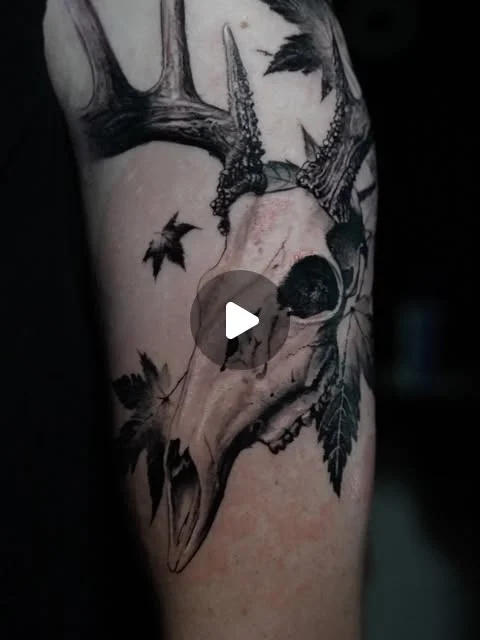
A bleached deer skull sits on the forearm with a full set of antlers, shaded in smooth grey with leafy branches curling around it. A deer skull tattoo often speaks about the cycle of life, the passing of time and what remains afterward. It can feel solemn without being morbid, because the antlers and branches keep a sense of growth in the picture. People often choose this design for memorials or to mark a hard season they came through.
Antlers in a Block Frame
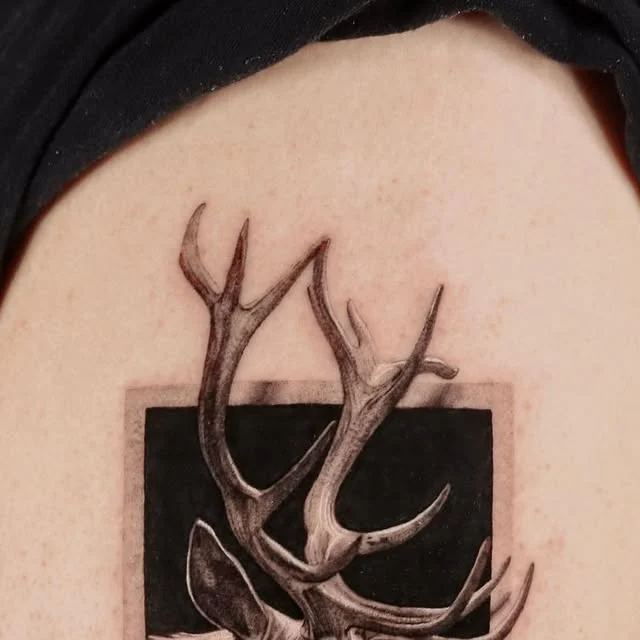
On the upper arm, a pair of antlers sits inside a solid black square frame, drawn with bold lines and stippled shading. The frame turns the antlers into a bold emblem, almost like a stamp. Antlers by themselves often mean strength and protection, and the block makes that message feel solid and deliberate. It works well for anyone who wants a graphic, high-contrast look that stays clear as the tattoo ages.
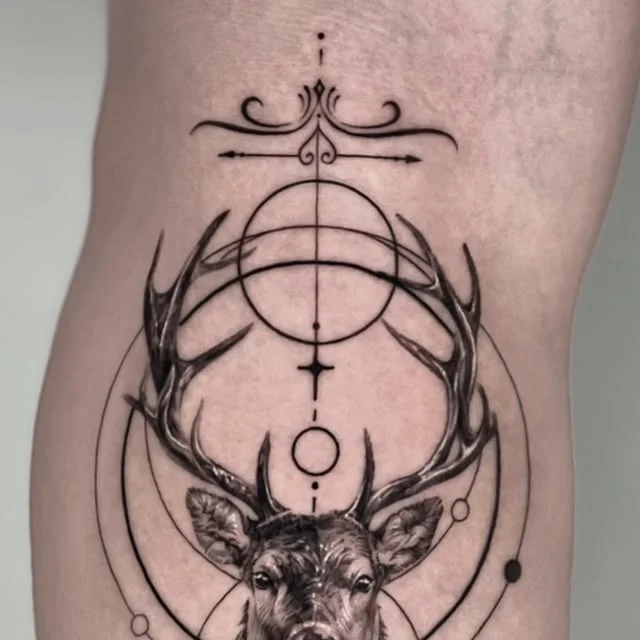
Geometric Stag
A stag head is drawn in thin lines on the arm, with its antlers curving around a circle and a crescent moon. The geometric frame brings in ideas of balance and the turning of cycles, and the moon adds a calm, nighttime feel. It’s a good choice if you like order, symbols and clean shapes. Keep the lines at a size where the circle and moon stay open, since fine details close up as skin changes over the years.
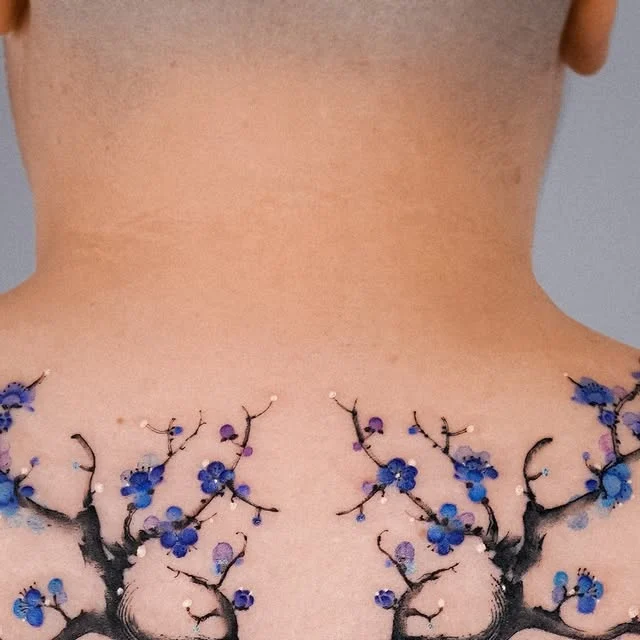
Floral Antlers
Across the upper back, the antlers are drawn as branches of plum blossom, painted with soft brush strokes in blue and purple. Because blossoms return every spring, the design stands for growth, fertility and fresh starts. It’s gentle yet striking, a good fit for anyone who wants the strength of a stag with a softer, more artistic touch. The upper back gives the branches a lot of room to spread naturally without bending around a joint.
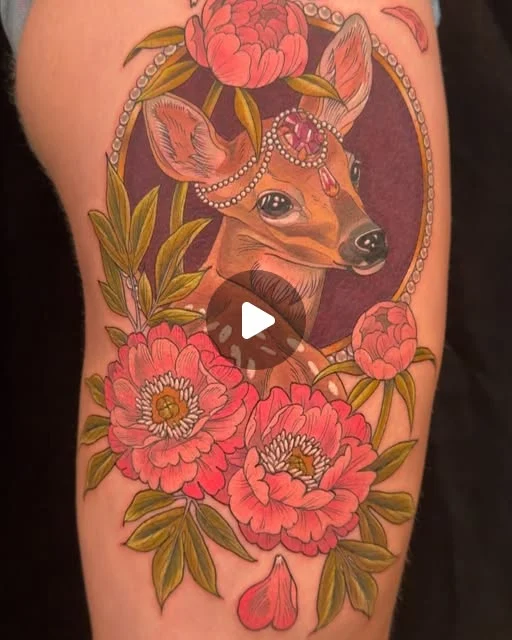
Doe With Peonies
A doe looks straight at the viewer on the arm, framed by pink peonies in bold outlines and saturated color, and the strong neo-traditional outline keeps her face readable from far away. In this pairing the doe points to tenderness, motherhood and gentle charm, and the peonies add a sense of beauty and good fortune. That makes it a good match for anyone who wants warmth and softness rather than the raw power of a stag.
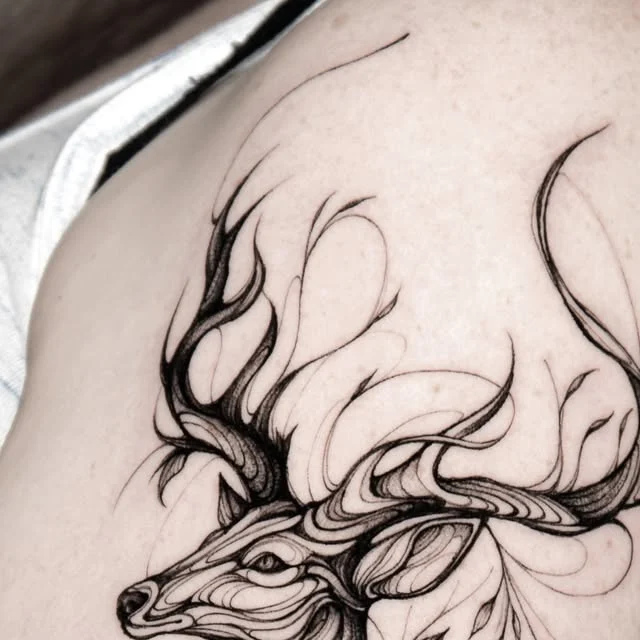
Ethereal Sketch Stag
On the upper arm, a stag is drawn with thin sketch lines, and its antlers fade outward like wisps of smoke. The loose, unfinished look gives the animal a dreamy, ethereal quality. This kind of piece often stands for spirit, memory and something just out of reach. Ideal for people who prefer a light, airy design, though very thin lines soften sooner, so ask your artist how to keep the strokes strong enough.
Stag With a Compass
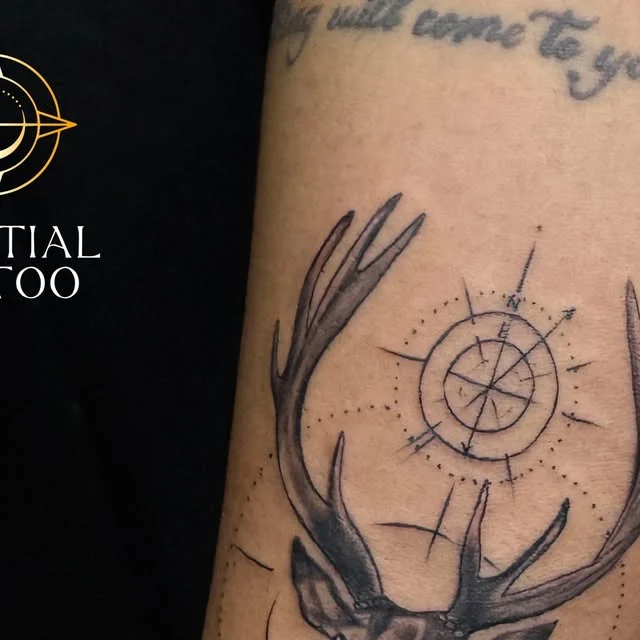
A slim stag outlined in black stands on the forearm, its antlers framing a small compass surrounded by dotted details. Pairing a stag with a compass says you are finding your direction, and the stag brings steadiness to that search. It’s a good fit for travelers, people starting a new chapter, or anyone who wants a meaningful design that is not too large.
Choosing a Style for Your Stag Piece With Holistic Ink
The style you choose changes how a stag reads, how it ages and how much room it needs. Our artists at Holistic Ink work across many styles, but three cover most animal designs. Our portfolio doesn’t include a deer in each style yet, so the examples below show the same techniques on other animals.
| Style | How the stag looks | Best size and placement | How it ages | Best for |
|---|---|---|---|---|
| Black & Grey Realism | Soft gradients, deep antler shadows, a calm face | Medium to large, upper arm, forearm or shoulder | Holds depth well when the darks are strong | A lifelike stag or a deer skull |
| Color Realism | Warm browns, leaf colors, bright eyes | Medium to large, upper arm or thigh | Needs sun care to keep the blends | A stag in autumn colors |
| Japanese Style | Bold outlines with waves, clouds and blossoms | Large, shoulder, chest or sleeve | Reads clearly from a distance | A graceful deer with a story |
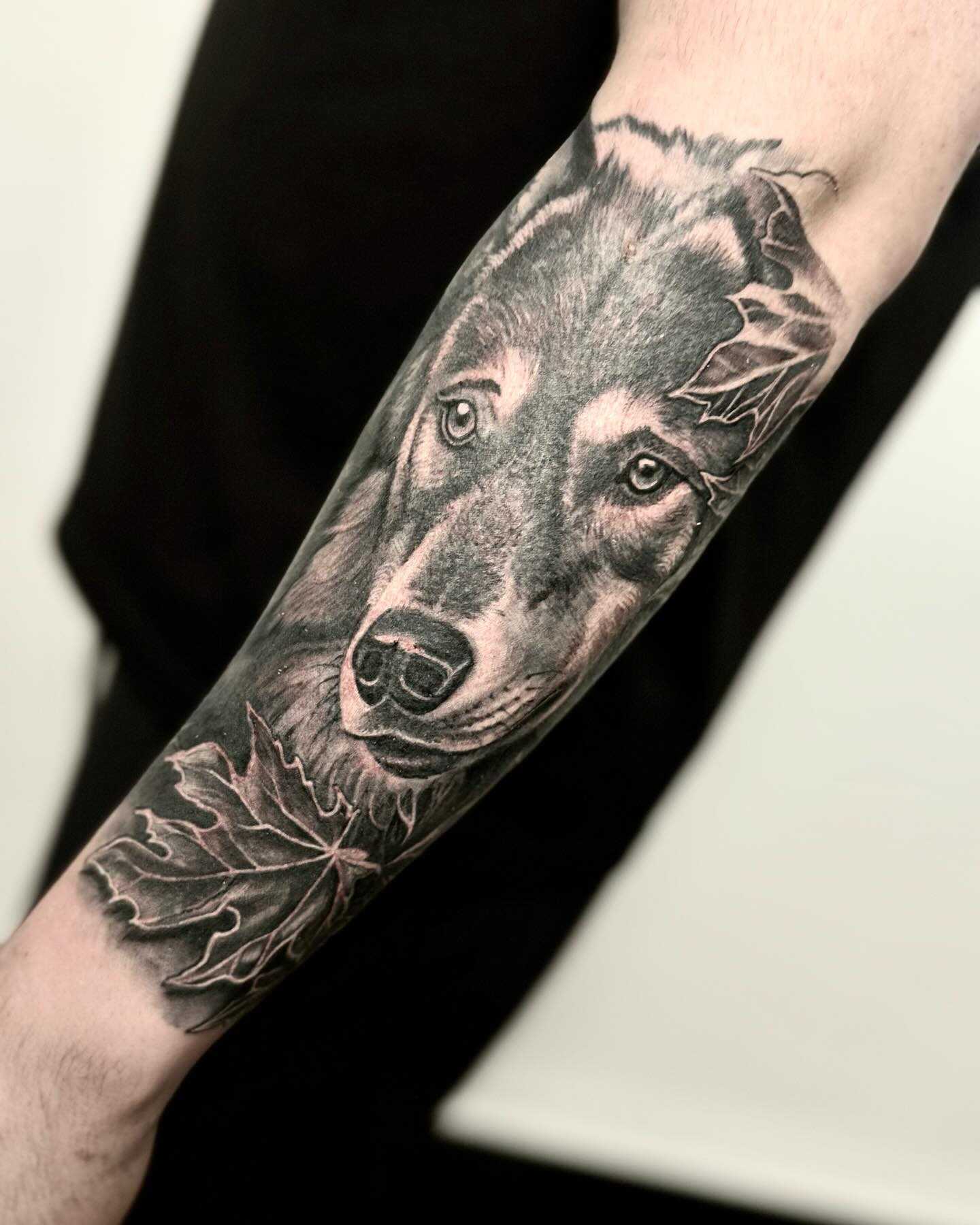
Black and grey realism builds fur from layered shading, and the wolf below, framed by maple leaves on the forearm, shows how smooth gradients give an animal weight and a living gaze. The advantage is depth, since strong shadows help the face and antlers keep their shape as the years pass. For a realistic stag or a deer skull, this is often the strongest choice. It isn’t ideal for a very small piece, since fine fur and antler detail can blur at a few inches.
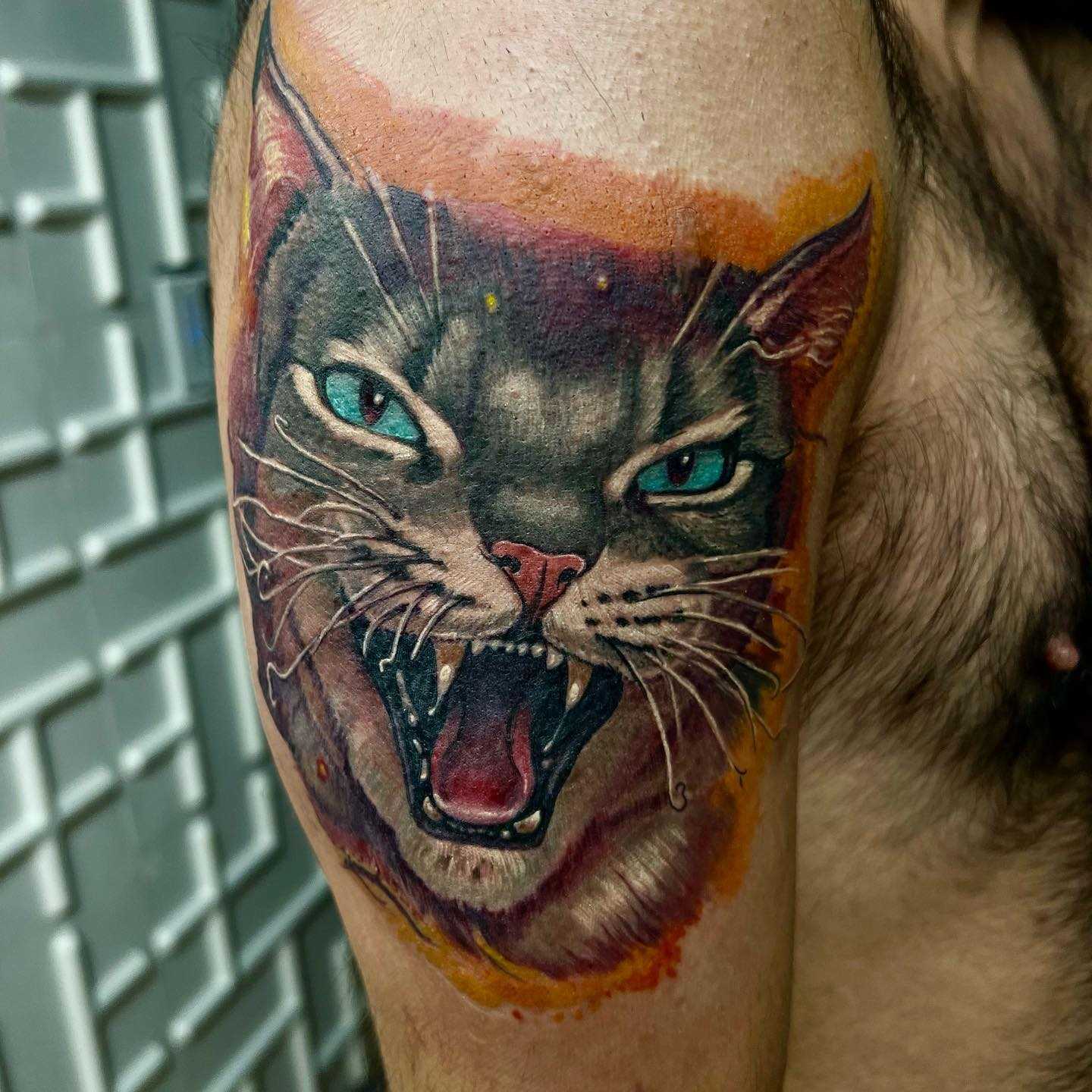
Color realism layers hue and light, which helps an animal look warm instead of flat. The snarling cat below, with turquoise eyes and an orange splash behind it on the upper arm, shows how color can add mood and energy to a face. A piece like this stands out at once. The trade-off is that sun exposure can fade the colors over the years, so plan on sunscreen and an occasional touch-up at Holistic Ink.
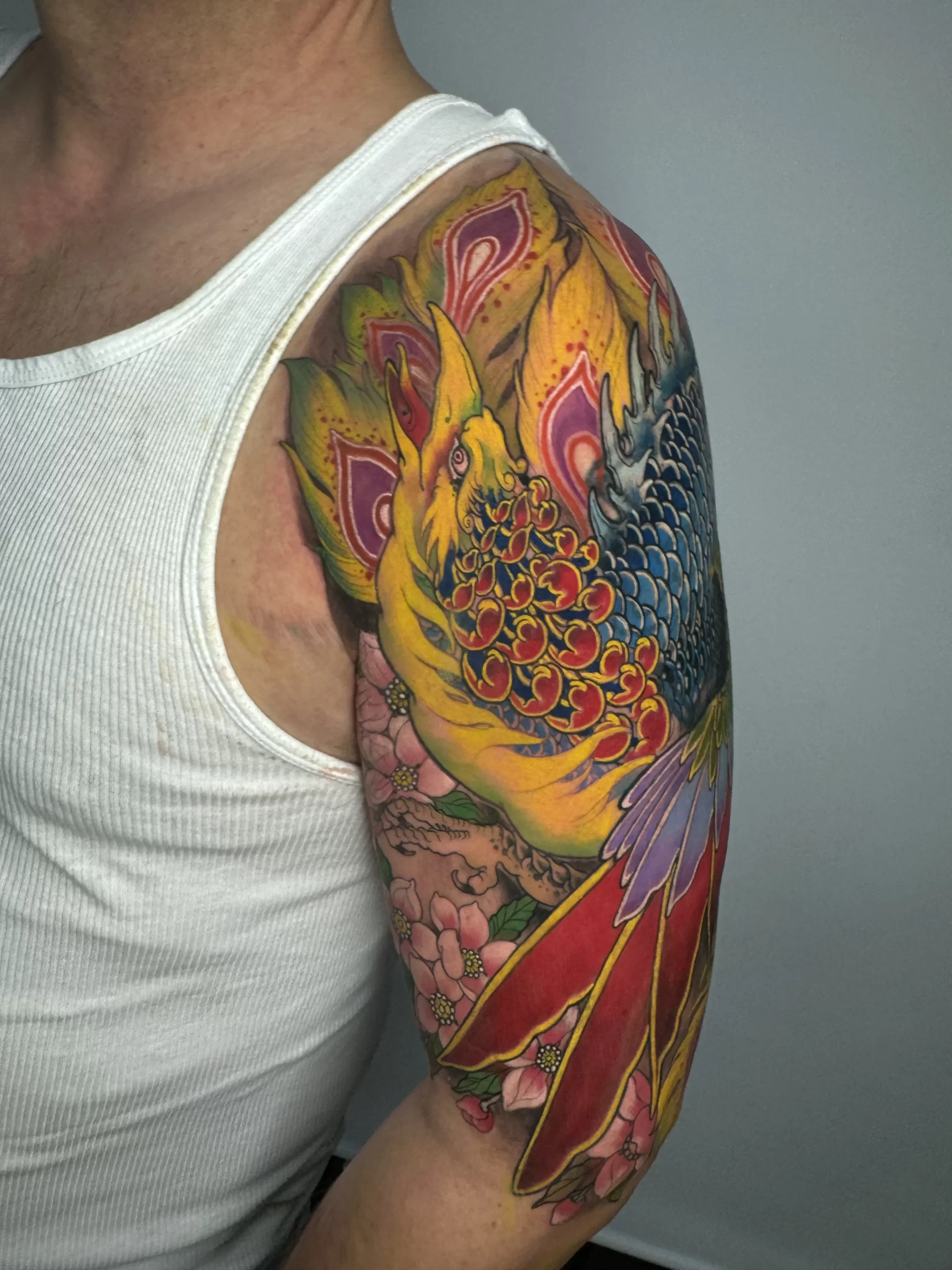
Japanese style uses bold outlines, saturated color and natural motifs to tie a figure into one shape across a large area. The phoenix below, wrapped in cherry blossoms and waves on the shoulder and upper arm, shows how rich color and flow suit big spaces. Consider it for a deer drawn with waves, clouds or blossoms. It reads well from across a room, but it won’t suit anything tiny and discreet.
Beyond these three, fine line and geometric work suit gentler ideas such as the sketch stag or a small doe. Keep those simple, since thin lines soften as skin changes.
Common Mistakes, Cost Factors and Long-Term Wear for Realistic Animal Work
Animal realism depends on contrast, and most problems come from losing it. Fur is texture, so the artist needs enough size and enough dark areas to show it. When the design is shrunk too far, the fur turns into a gray patch and the eyes sink into the face. Planning the piece with your artist before the stencil goes on prevents most of these problems. Cover-ups need the same care, since a new design often has to be larger and darker than the old one it hides. This list covers the mistakes that come up most often:
- Shrinking a detailed stag until the antlers and fur merge into one shape.
- Choosing very light shading on skin that needs strong contrast to read.
- Putting a complicated scene on a spot that bends or stretches a lot.
- Skipping sunscreen, since sun exposure fades both color and fine detail.
- Choosing an artist by price alone instead of by photos of their healed work.
Price depends on several factors and not on a flat rate. Size comes first, followed by the amount of fur and antler detail, whether the piece uses color, where it sits on the body and how many sessions it needs. Custom drawing takes longer than flash. An artist can only quote a price after seeing your idea and the spot, so ask about cost at your consultation with Holistic Ink, and don’t be shy about asking what could make the quote go up or down. Small changes to size or shading often shift the number more than people expect.
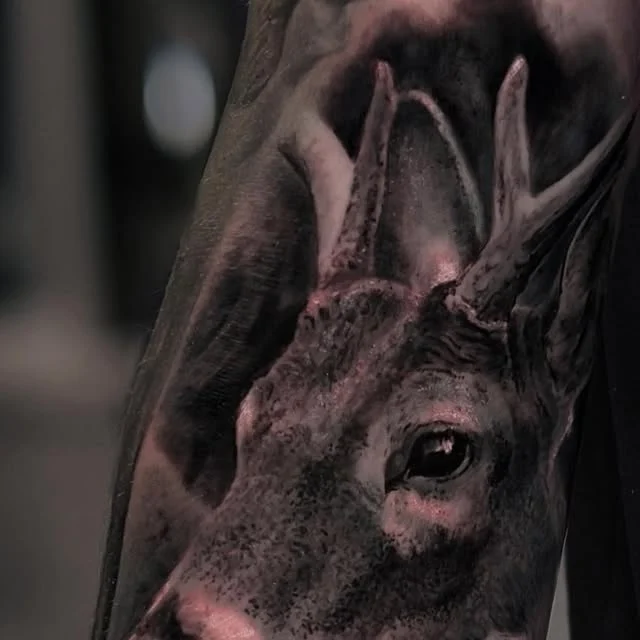
As for longevity, deep darks keep their shape the longest, while very pale shading and light color soften sooner. Applying sunscreen daily to a healed tattoo is one of the best ways to slow fading, and a touch-up can sharpen an area that has softened. Line weight matters as well, since thin lines and tight gaps around the eyes and antler tips tend to blur sooner than bold, well-spaced ones. The close-up below shows how much fur detail a realistic portrait holds, and that kind of finish depends on a skilled artist and careful care afterward.
Best Placements for Stag and Antler Designs, From Forearm to Knee
Antlers need room to spread, so think about the direction of the design as well as the spot. The upper arm and shoulder give a broad, curved area for a stag head, while the forearm suits tall, narrow designs that follow the arm. The back and chest offer the most space for a full scene with a forest behind the animal, and wraparound antlers can follow a rounded area such as the knee. Use the table to match a common spot with a design that fits it.
| Area | Pain level | Deer design that fits | Style that suits |
|---|---|---|---|
| Upper arm / shoulder | Low | Realistic stag, color stag with leaves | Black & grey realism, color realism |
| Forearm | Low to moderate | Deer skull, stag with a compass | Black & grey realism, fine line |
| Upper back | Moderate | Floral antlers, a large forest scene | Illustrative, realism |
| Chest | Moderate to high | Large stag head or full scene | Realism or Japanese |
| Thigh / calf | Low to moderate | Doe with peonies, standing deer | Color realism, neo-traditional |
| Knee | High | Antlers wrapping the kneecap | Bold blackwork, Japanese |
Pain varies by person. Treat the pain ratings in the second column as general guidance, not a guarantee. Bony areas such as the knee tend to feel sharper than the upper arm for many people, and softer spots are usually easier to sit through, though it’s worth telling your artist if you’re nervous.
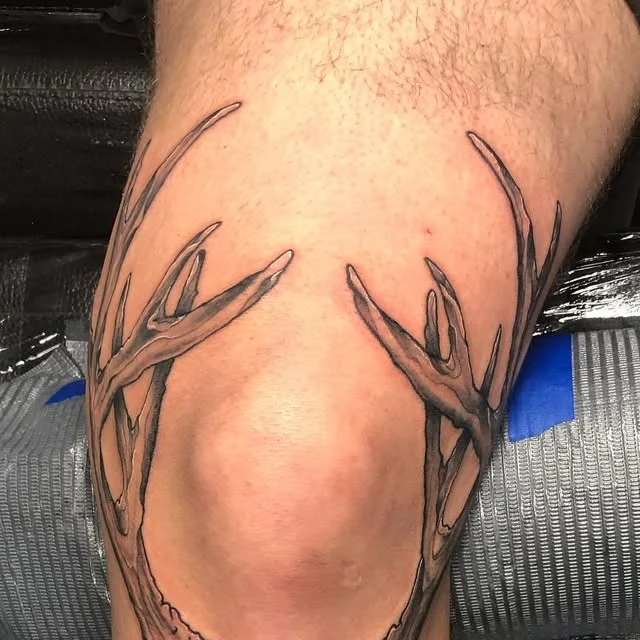
A pair of antlers fits the knee well because the two sides can curve around the kneecap. Here the antlers are drawn in heavy black lines, which keeps them readable on a spot that moves and stretches all day. Ask your artist how the design will look when you bend your leg, since a joint changes the shape of the lines.
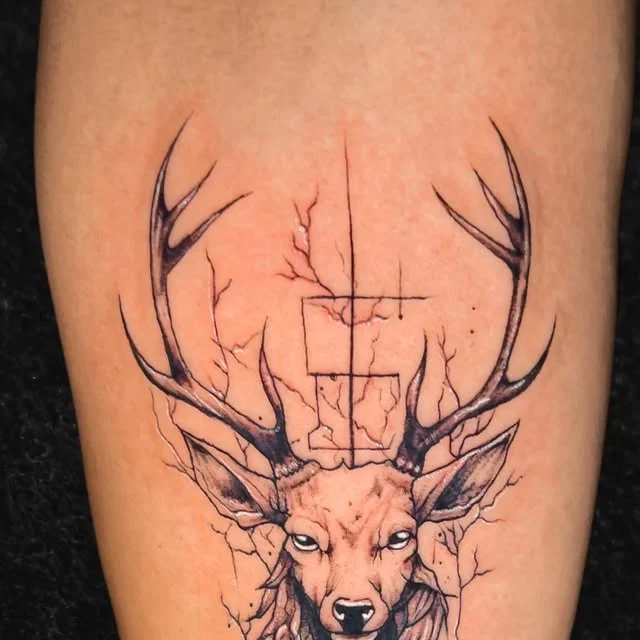
The forearm is a flat, easy-to-see canvas that keeps a stag head centered. Here the head is drawn with thin geometric lines running between the antlers, and the straight lines follow the shape of the arm. Think about how you’ll wear the tattoo day to day, and talk it through with your artist at Holistic Ink, since a watch band or sleeve cuff can rub a spot and change how it heals.
From Consultation to Healed Ink, Step by Step
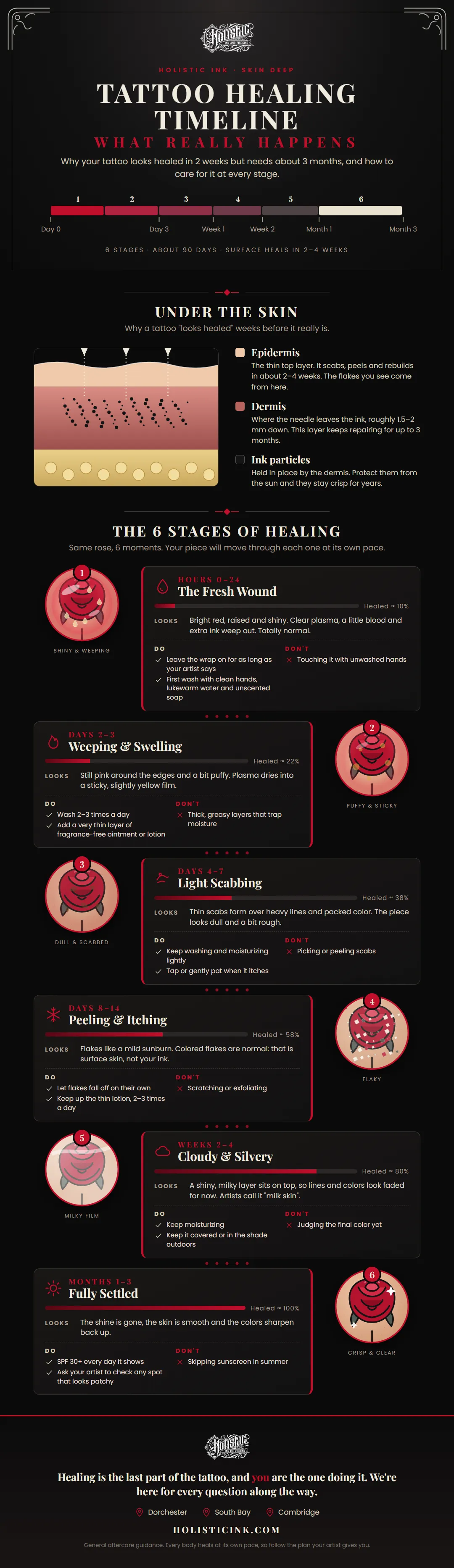
Every tattoo follows the same path from idea to healed skin, and knowing the order takes the stress out of a first visit. The infographic below shows the healing timeline and what happens under the skin, and the preparation steps matter just as much.
It begins with a consultation, where you talk through the meaning, the style, the spot on your body and the size you have in mind. Photos of real animals, ideally from several angles, help your artist capture the way the head sits and how the antlers branch. You don’t need to have every detail figured out, since the consultation is where you shape the idea together.
Next comes the stencil. The artist places the outline on your skin, and you check it in a mirror while standing, sitting and moving. For antlers, this is the moment to look at how the branches flow with your muscles and how the head sits on the curve of the arm. If anything feels off, ask for changes now, before the needle starts, because a stencil is easy to adjust and a tattoo isn’t.
During the session, the artist usually works on the outline and main shapes first and then builds the shading in layers. Large pieces are often split across several visits. Eat beforehand, stay hydrated and tell your artist when you need a break. Staying relaxed and keeping the area still helps the artist work with more precision.
Aftercare begins right away, and the early weeks of healing need the most attention. Keep this short list close while your skin heals:
- Wash the tattoo gently and let it dry the way your artist showed you.
- Apply a thin layer of moisturizer, not a thick coat.
- Wear loose clothing over the area to avoid rubbing.
- Stay out of direct sun, pools, hot tubs and the ocean until it heals.
- Don’t scratch or pick at the flaking skin, since that can pull ink out.
After that, daily sunscreen keeps the piece sharp for years. If a light area looks faded once the skin has fully settled, our team at Holistic Ink can look at it and talk through a touch-up.
Frequently Asked Questions
What is the difference between a stag and a doe design?
A stag is an adult male deer with antlers, so it usually means strength, leadership and renewal. With no antlers, a doe tends to mean gentleness, motherhood and grace, which makes it a softer, more tender choice.
Does a deer skull mean something dark?
Not necessarily. It most often speaks about the cycle of life and the passing of time, and the antlers add a sense of growth. Plenty of people pick it for memorials or to mark a hard season they’ve come through.
Can antlers alone carry the meaning?
Yes, and they don’t need the whole animal. A pair of antlers keeps the ideas of strength, protection and renewal without drawing the whole animal. They also fit smaller spots and wraparound areas, which is why many people like them for the knee or upper arm.
Is a small design a good idea?
It can be, as long as it stays simple. Thin lines and tight gaps soften with time, so a small stag needs bold shapes and open space. Your artist can tell you the smallest size that will stay clear on your skin.
Bring Your Stag Idea to Holistic Ink
From the realistic stag to the gentle doe, each of these ten designs carries a meaning of its own, so choose the one that feels like you. When you’re ready, book a consultation at our Boston studio and bring your reference images. Our artists will help shape your idea into a custom piece built to age well.
Take your deer tattoo further
A deer design can grow into a full sleeve or backpiece. Our artists are known for large-scale work in 3 styles. Start with the one that fits your idea:
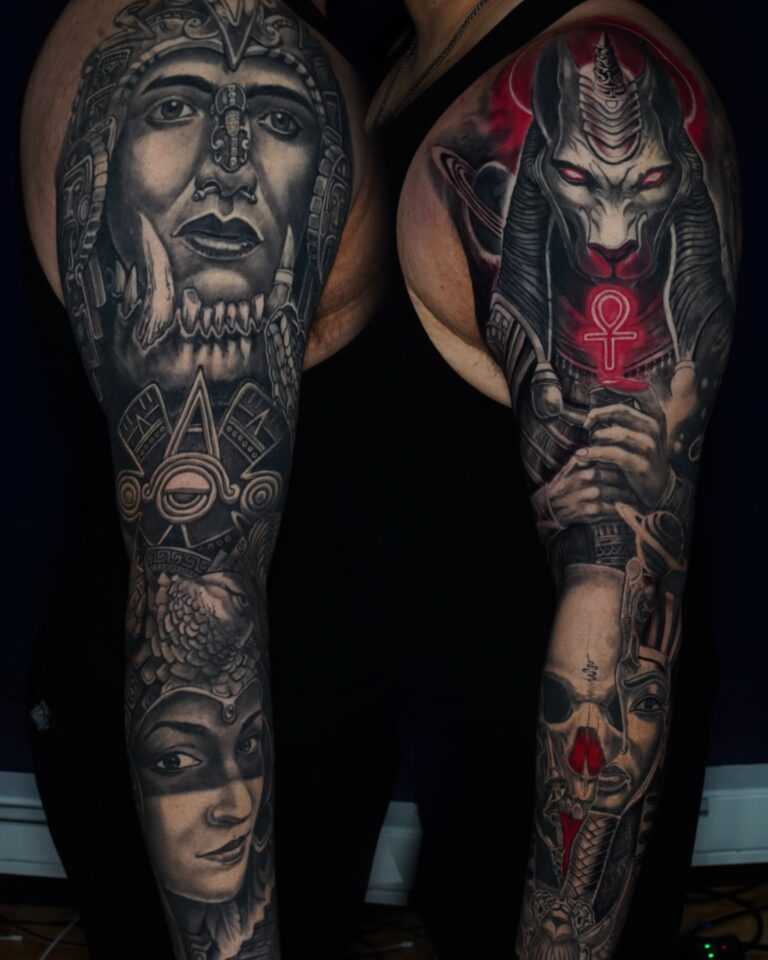 Best matchBlack & Grey RealismPortraits, animals and sacred art in soft, deep shading.
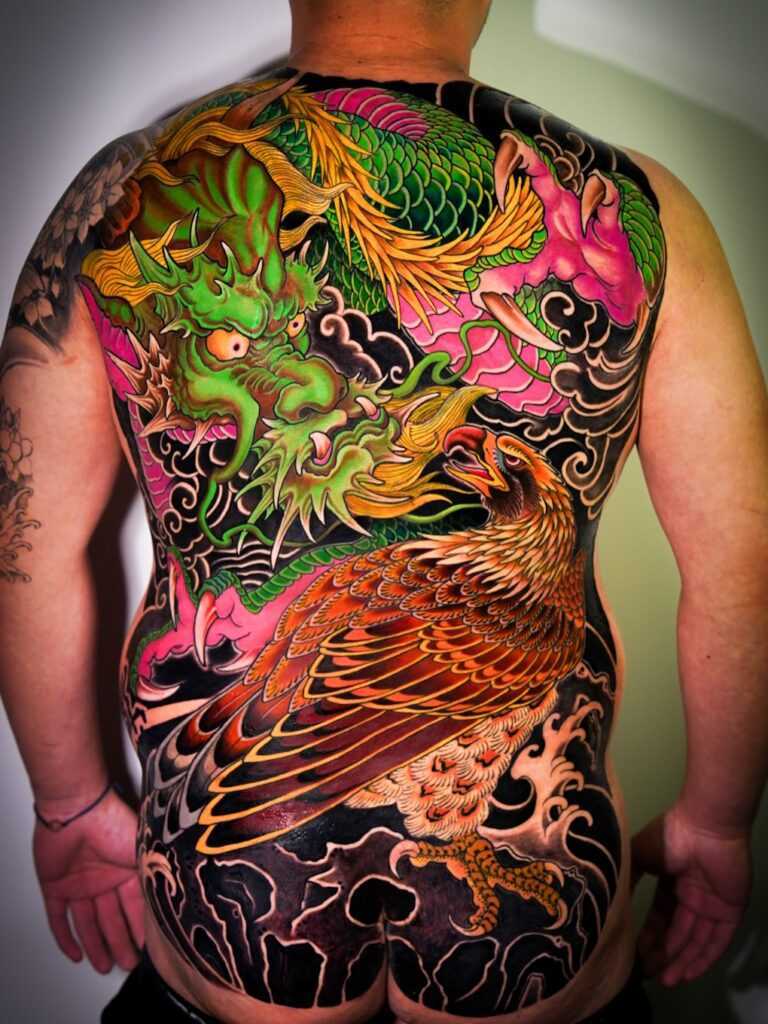 Japanese IrezumiDragons, koi, deities and full backpieces with traditional flow.
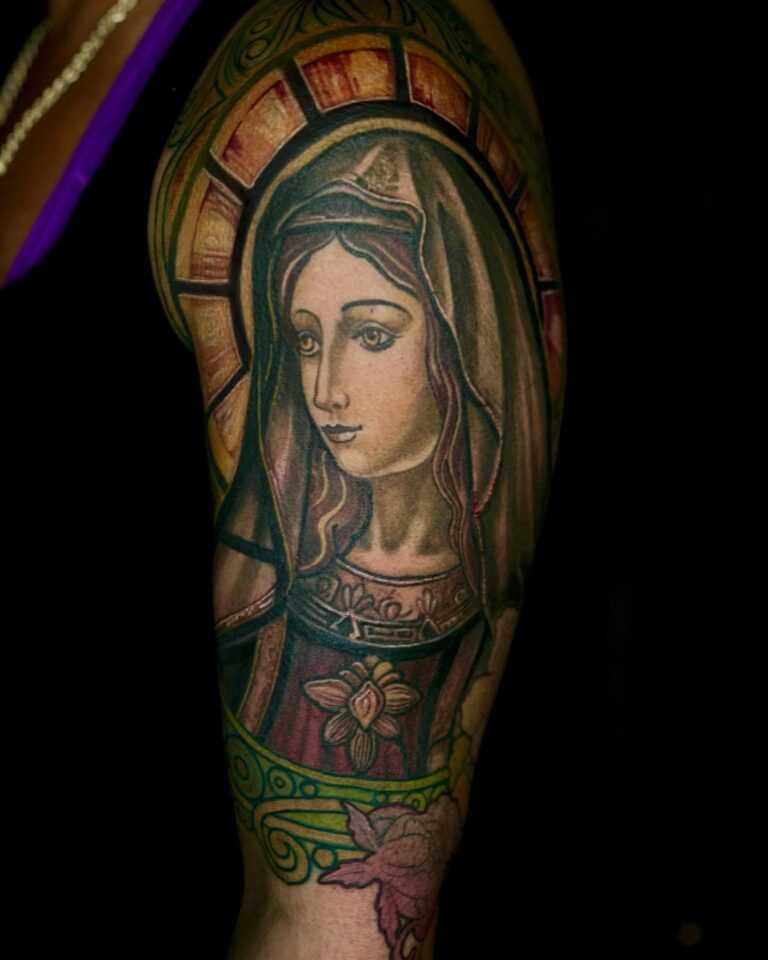 Color RealismSaturated, lifelike color for sleeves and large scenes.
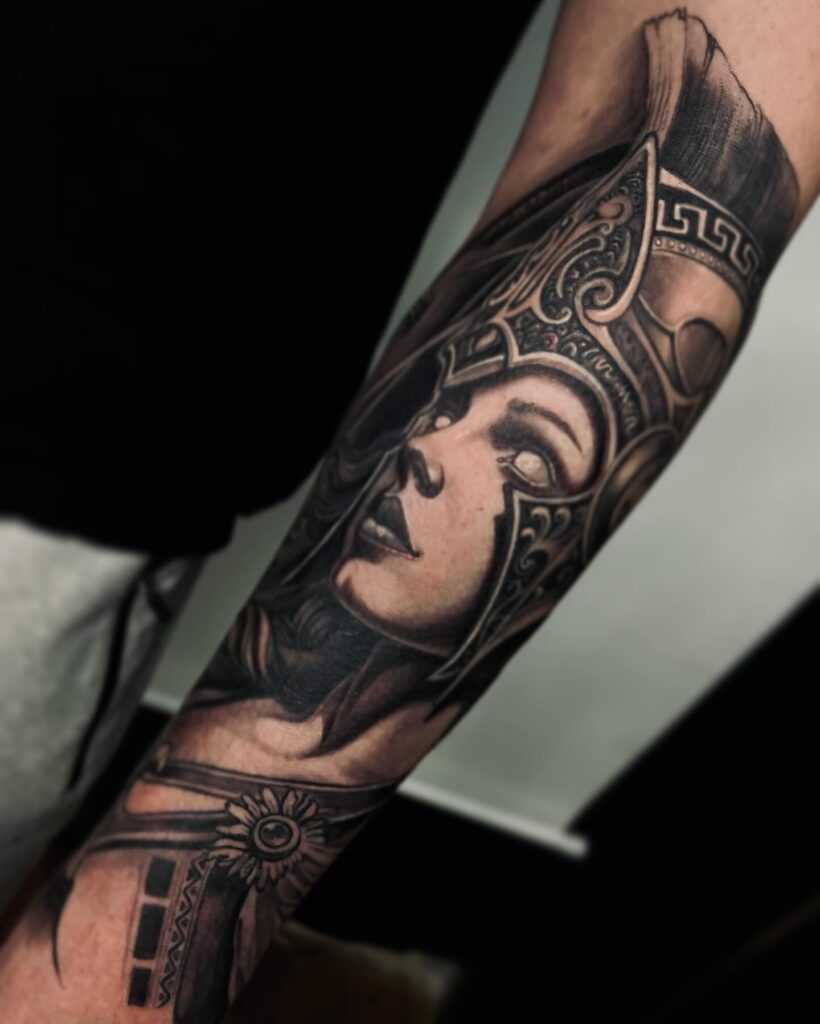 Portfolio · Black & Grey RealismBlack & grey realism by our artistsStyleSoft shading, deep contrastBest forPortraits, animals, sacred artSizeForearm to full sleeveSee the portfolio →
Bring your reference and placement. We plan large work session by session with you.
We also tattoo American traditional, fine line, script and small tattoos. Browse all styles →