Some things endure through time not because they have been carefully preserved, but because they have never truly lost their relevance. Egyptian tattoos are one of them.
In the modern tattoo world, few design styles have maintained their appeal as consistently as Egyptian-inspired artwork. From the Eye of Horus inked on a forearm to an imposing Anubis design stretching down the spine, these motifs appear everywhere. Yet behind their mysterious beauty lies a rich historical foundation that many people rarely explore. At Holistic Ink, we believe that a tattoo chosen with a deep understanding of its origins and symbolism will always carry more meaning than a design selected solely for its appearance.
In this article, we’ll explore the origins of tattooing in ancient Egyptian civilization, how it evolved through different eras, and how to choose a design that reflects your own personal story.
The Origins of Tattooing in Ancient Egyptian Civilization – Holistic Ink
When Did Egyptian Tattooing Begin?
In 2018, researchers announced a discovery that reshaped our understanding of tattoo history. Two mummies from Gebelein, dating from approximately 3351 to 3017 BCE, were confirmed to have genuine tattoos preserved on their skin. These are currently recognized as the oldest known tattooed mummies in the world, pushing the history of tattooing back more than 5,000 years.
Beyond the Gebelein mummies, tattoo evidence has also been discovered in Upper Egypt and throughout the Nile Valley. These findings date back to the Predynastic period. Archaeological evidence from the Middle Kingdom through the New Kingdom suggests that body marking was not an isolated practice. Instead, it gradually became part of cultural and spiritual life throughout the development of Egyptian civilization. These early practices laid the foundation for what we now recognize as Egyptian tattoos.
The markings found on these mummies were far from random decorations. The male mummy bore images of a wild bull and a Barbary sheep, while the female mummy displayed linear and S-shaped patterns on her shoulders and upper arms. These tattoos indicate a deliberate and meaningful practice. Additional archaeological discoveries include:
- The mummy of Amunet, a priestess from the Middle Kingdom around 2000 BCE, bearing dotted and linear tattoo patterns across her body.
- Bronze tattooing tools uncovered at several archaeological sites in Upper Egypt.
- Images depicting sacred body markings on pottery and murals from the Predynastic period.
Who were the first people to wear ancient Egyptian tattoos? Current evidence suggests that women—particularly priestesses and ceremonial dancers—were among the earliest tattoo bearers. This indicates that tattooing was closely connected to spiritual power from the very beginning.
The Cultural and Spiritual Meaning of Ancient Egyptian Tattoos
Tattooing in ancient Egypt was deeply intertwined with religious life. For the people of this civilization, the body served as a vessel for expressing their relationship with the divine world. Sacred markings were created for protection, healing, and reinforcing beliefs about the afterlife.
Some of the most common symbols and their original meanings include:
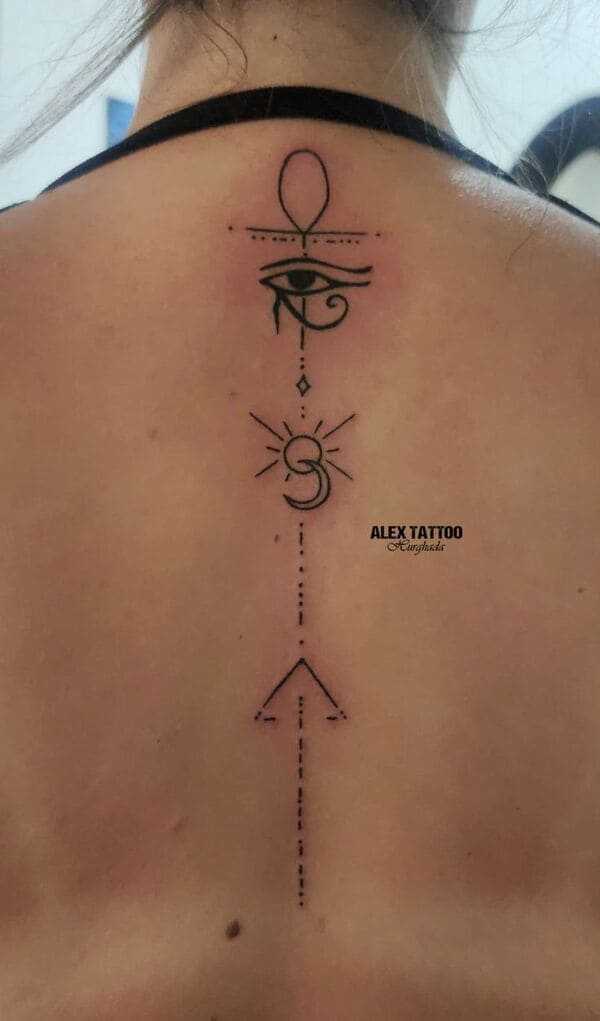
- Ankh: The key of life, representing immortality and divine energy.
- Eye of Horus: A symbol of protection and restoration, believed to ward off evil.
- Scarab Beetle: Associated with the god Khepri, representing the solar cycle and rebirth.
- Lotus Flower: Symbolizing purity, enlightenment, and the ability to rise above darkness.
Many of these symbols were closely connected to ancient Egyptian religion. They reflected beliefs about the afterlife, sacred rituals, and the role of deities in everyday life. These markings served not only as decoration but also as spiritual protection, helping individuals connect with the divine and with values beyond the material world.
Today, many people choose Egyptian symbols primarily for their visual appeal without realizing that each design once served a specific religious or ceremonial purpose. Understanding this history does not diminish the value of a modern tattoo—it enriches it.
Holistic Ink’s Perspective: From Sacred Symbols to Contemporary Tattoo Art
Egyptian symbols have survived for thousands of years not merely because they endured, but because each generation found new ways to reinterpret them.
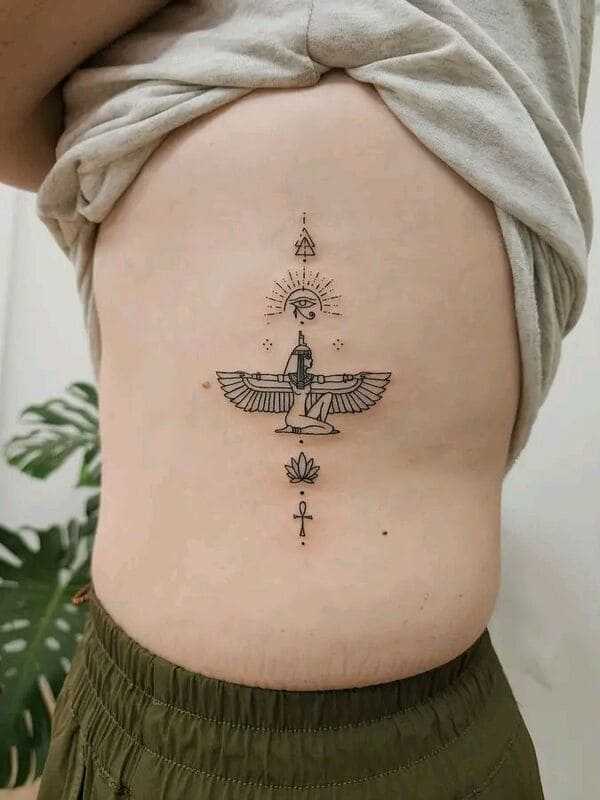
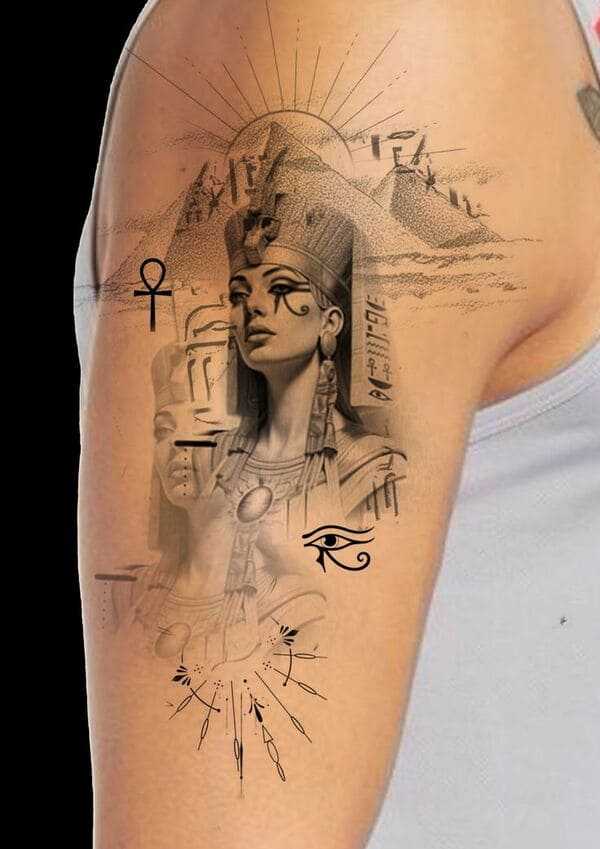
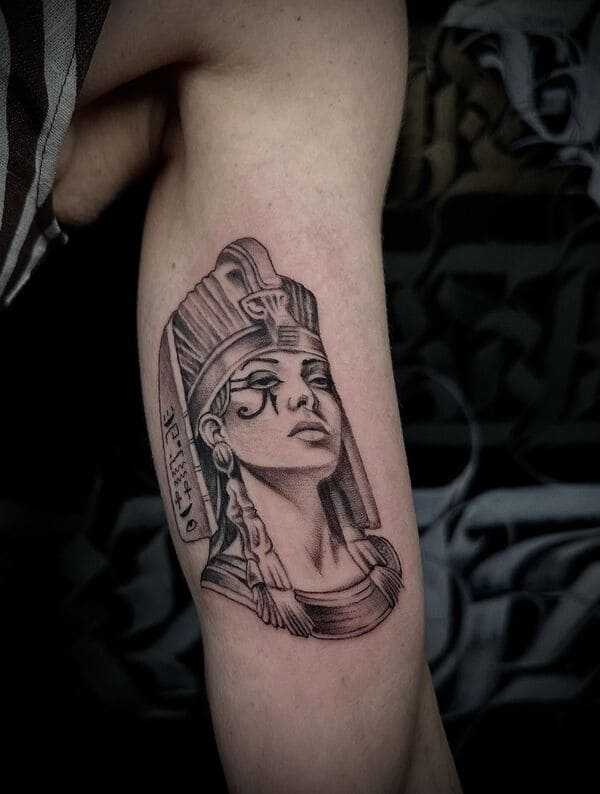
Ancient Egyptian gods continue to inspire modern tattoo artists and collectors alike. Anubis, the guide of souls, is frequently portrayed in dark black-and-grey designs that evoke mystery and power. Horus, the sky god, symbolizes strength, vision, and protection. Ra, the sun god, represents vitality and life force, while Isis embodies protection, nurturing, and wisdom.
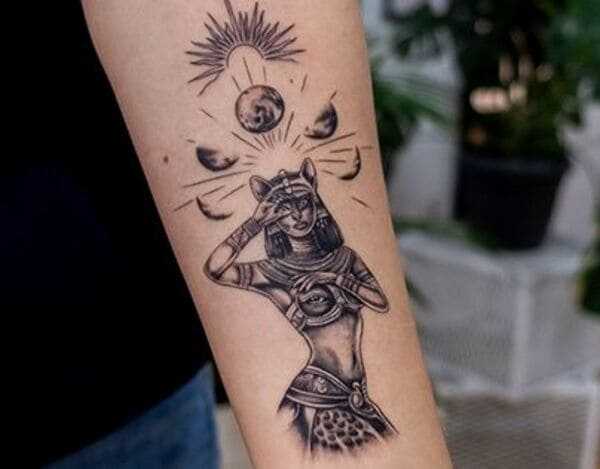
Other popular choices include Osiris tattoos, often associated with resurrection and transformation; Thoth tattoos, symbolizing knowledge and intellect; and Sekhmet tattoos, representing courage, strength, and resilience. Bastet tattoos, inspired by the feline goddess who protected the home, have become increasingly popular in fine-line and minimalist styles.
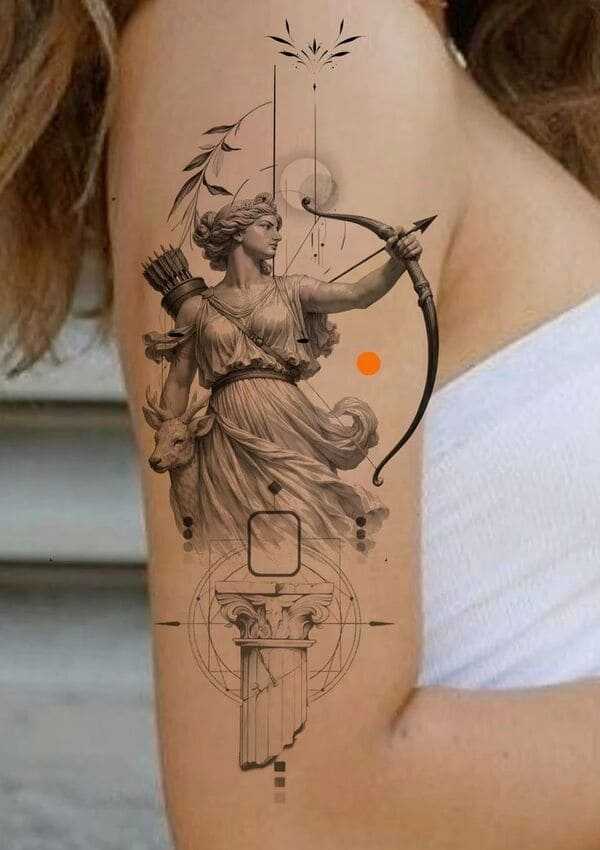
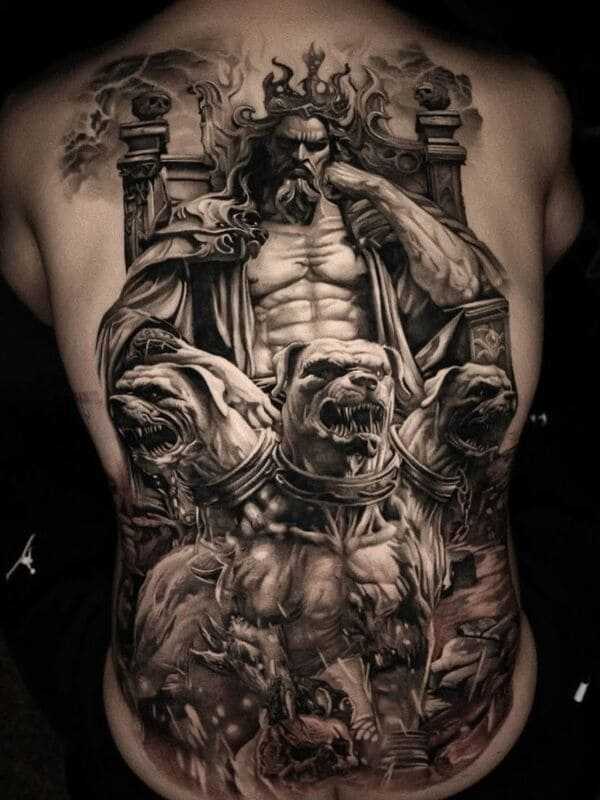
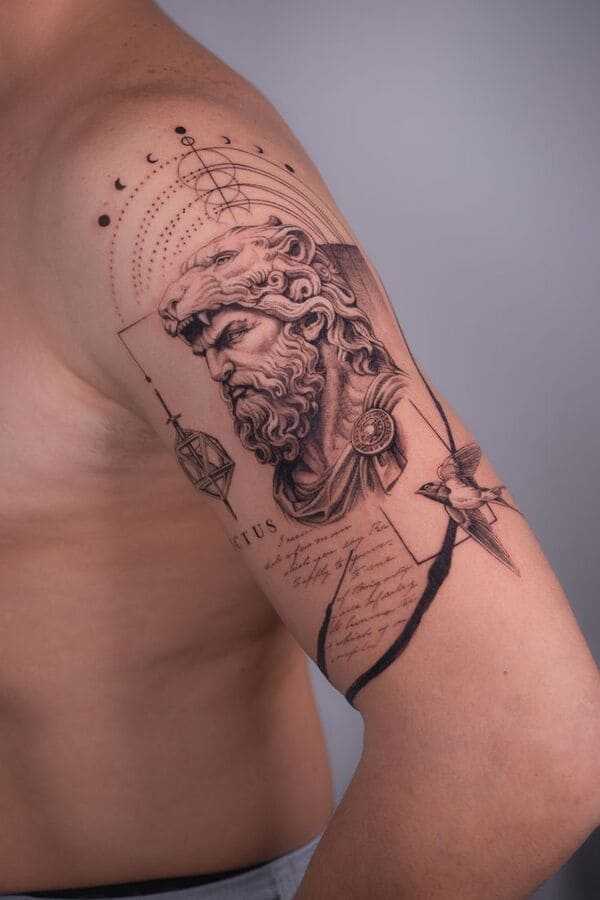
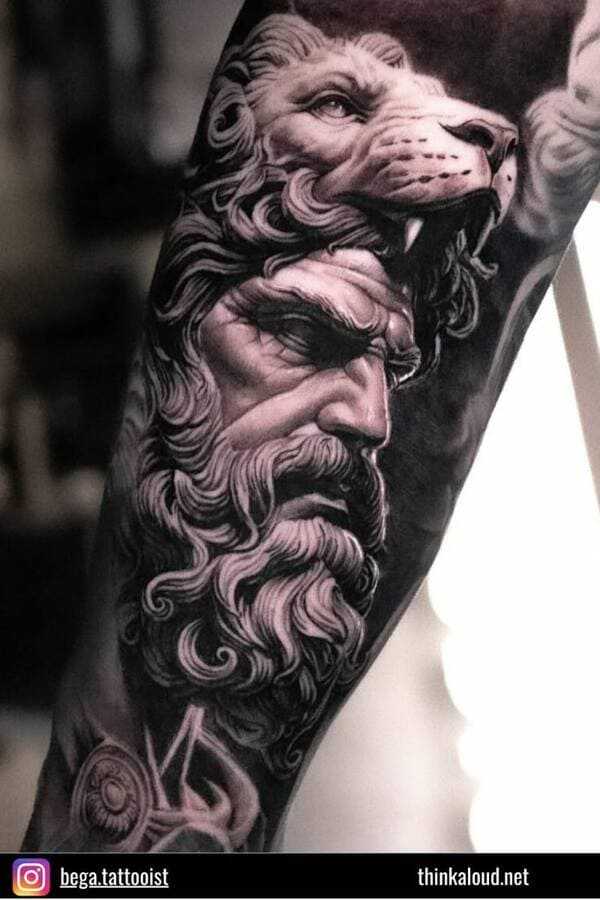
Some collectors even blend Egyptian and Greek mythology, pairing Bastet with Artemis or Hercules to create multicultural narratives that combine different symbolic traditions.
Beyond these well-known figures, many modern designs incorporate symbols such as the Eye of Ra, Cartouche tattoos, the Djed Pillar, the Winged Sun, and the iconic Sphinx. These elements are associated with power, stability, wisdom, protection, and spiritual authority, adding further depth to Egyptian-inspired artwork.
Advancements in tattoo technology and digital design techniques now allow artists to recreate these ancient motifs with greater precision, detail, and artistic sophistication than ever before.
Popular Styles and How to Choose the Right Design
Popular Egyptian Tattoo Styles Today
Each tattoo style offers a different way of telling a story:
- Realism: Highly detailed and ideal for portraits of Egyptian gods and mythological figures.
- Black and Grey: Timeless, mysterious, and suitable for nearly any Egyptian theme.
- Fine Line: Elegant and subtle, perfect for smaller tattoos and discreet placements.
- Geometric: A contemporary approach that pairs well with simple symbols like the ankh or scarab.
- Blackwork: Bold and dramatic, commonly used for larger statement pieces.
- Minimalist: Ideal for those who want Egyptian symbolism in a clean and understated form.
How to Choose a Tattoo That Reflects Your Personal Story
Before selecting a design, consider the message you want your tattoo to communicate. Which symbol best represents your values, experiences, or personal journey?
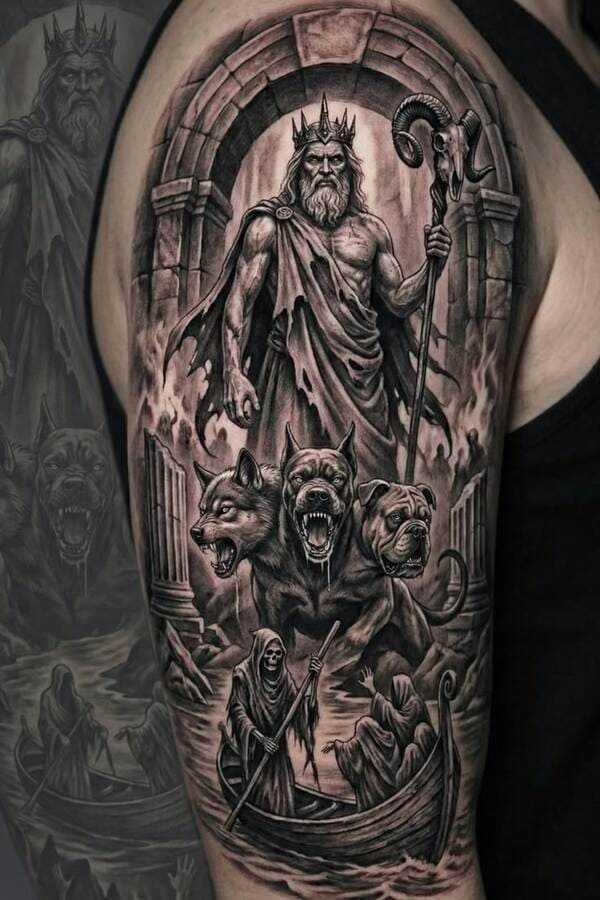
Placement is equally important. Egyptian-inspired sleeve tattoos work well for complex compositions filled with intricate details. Forearm and chest placements are excellent for individual symbols that deserve strong visual emphasis and daily visibility.
Meanwhile, back and shoulder tattoos provide a larger canvas, allowing artists greater creative freedom for elaborate compositions.
Before tattooing begins, artists typically use a tattoo stencil process to refine the layout and determine the exact placement of the design. Elements such as linework, shading, and detail execution directly impact the final result. For more complex concepts, choosing an experienced tattoo artist working in a professional tattoo studio with knowledge of mythology and ancient cultures is essential.
Proper aftercare is equally important. During the tattoo healing process, using a quality tattoo moisturizer, protecting the skin with tattoo sunscreen, and taking steps to prevent fading can help preserve the artwork’s sharpness and longevity.
One of the most common mistakes is selecting a symbol simply because it looks attractive without understanding its meaning. Another is choosing a size that is too small for a design that requires space to showcase its details effectively.
A Real Client Story
Minh, a 29-year-old client, came to us with a simple idea: he wanted an Eye of Horus tattoo on his forearm because he found the image powerful and visually striking.
During the consultation process, he learned that the symbol is traditionally associated with protection and rebirth. Coincidentally, he was going through a significant transition in his life at the time. Together, we refined the concept by adding a small scarab beneath the Eye of Horus, creating a more complete narrative.
The final result was a detailed black-and-grey piece that Minh says reminds him of the reasons behind his decision to embrace change every time he looks at it.
More than 5,000 years after the first tattoos were etched onto Egyptian skin, their legacy continues to inspire modern tattoo art. From sacred symbols to mythological figures, Egyptian tattoos represent far more than the beauty of an ancient civilization. They carry stories of belief, identity, transformation, and personal growth.
It is this rich historical depth and symbolic significance that has allowed Egyptian-inspired designs to remain relevant across generations. When people understand the stories behind these images, they wear more than a piece of art—they carry a connection to culture, history, and their own personal journey.
At Holistic Ink, every custom tattoo design begins with a thoughtful consultation process designed to uncover the story and meaning behind the artwork. If you’re considering an Egyptian-inspired tattoo, our team is ready to guide you from concept development to the final tattoo, creating a piece that is both visually striking and deeply personal.