
Many tattoos serve only as decoration. Japanese tattoo is different — they are stories permanently engraved on the body. For centuries, the art of Japanese tattooing has gone far beyond the role of beautifying the body. Every line and symbol conveys its own message, from inner strength to one’s life journey and reverence for nature. Holistic Ink accompanies you in exploring this tattoo style. This article introduces the historical origins, symbolic meanings, and the most popular designs of Japanese tattoos. It also discusses suitable tattoo placements and what you should prepare before booking an appointment.
What Is Irezumi? Origins and History of Japanese Tattooing| Holistic Ink
What Is Irezumi?
Irezumi is a traditional tattoo style originating from Japan. The word “irezumi” literally means “to insert ink into the skin” — an expression that reflects the permanent nature of this form of Japanese body art.
The design composition often covers large areas, using bold lines, vibrant colors, and highly symbolic imagery. Each tattoo piece is not only aesthetically beautiful but also serves as a way to express the wearer’s personality and cultural depth.
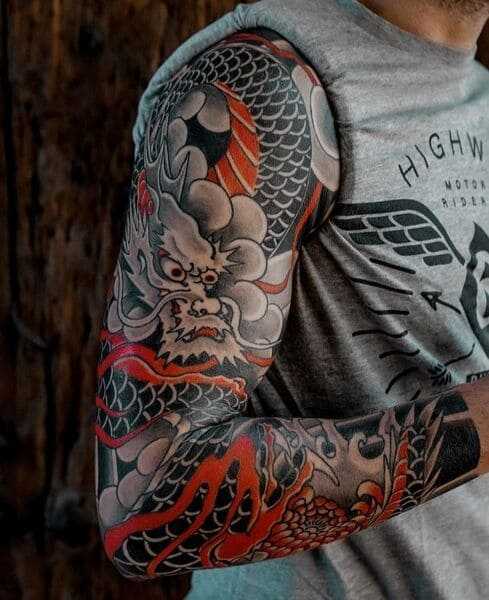
Traditional Tebori Tattoo Technique
Unlike modern tattoo machines, the tebori tattoo technique uses a rod with needles dipped in ink to manually insert pigment into the skin. This method allows the artist to control ink depth and shading with great precision. Many artists believe that this traditional Japanese tattoo technique creates smoother color transitions than electric machines. Although it takes more time, hand poke Japanese tattoos are still highly valued for their craftsmanship and artistic significance.
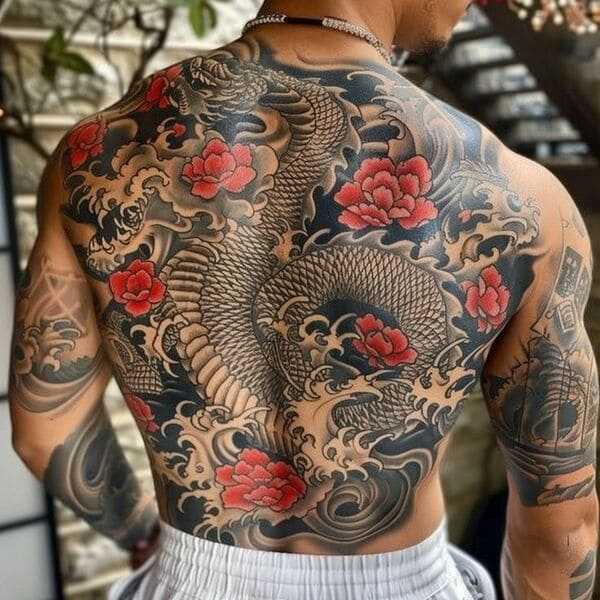
Historical Development
The history of Japanese tattooing spans more than 5,000 years. The most significant turning point occurred during the Edo period (1603–1868) — when irezumi developed into an independent art form.
- In the early Edo period, tattoos were used as a punishment to mark criminals.
- Later, craftsmen and sailors began tattooing their bodies as symbols of strength.
- Ukiyo-e woodblock prints (a popular folk art form from the 17th–19th centuries) directly influenced the visual language of irezumi — from composition and colors to the way backgrounds are treated with waves, clouds, and floral elements.

Popular Symbols and Meanings in Japanese Tattoos
Traditional Japanese tattoos feature a rich collection of symbols. Each design carries its own layer of meaning:
- Dragon (Ryū): Wisdom, strength, and protection. Japanese dragons are often seen as creatures of positive energy, unlike the more aggressive dragons found in Western mythology.
- Tiger (Tora): A symbol of courage and physical power. In Japanese tattoos, the tiger is often depicted in a combat-ready pose, representing an indomitable spirit.
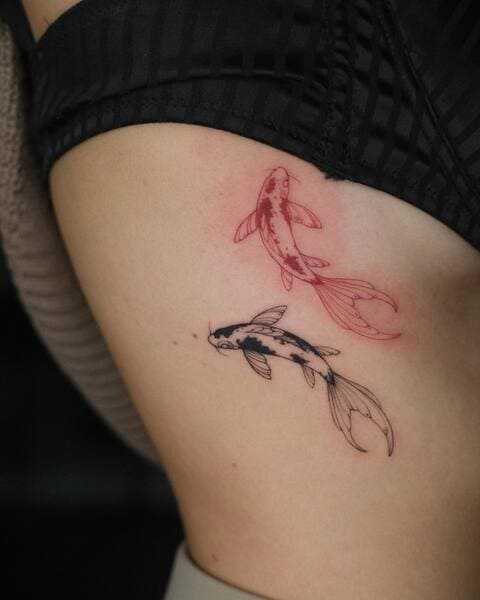
- Koi Fish (Koi): Associated with the legend of the koi swimming upstream and transforming into a dragon. This tattoo symbolizes perseverance and determination — a perseverance tattoo many people choose after overcoming major challenges in life.
- Cherry Blossom (Sakura): A reminder of impermanence — beautiful and vibrant, yet short-lived.
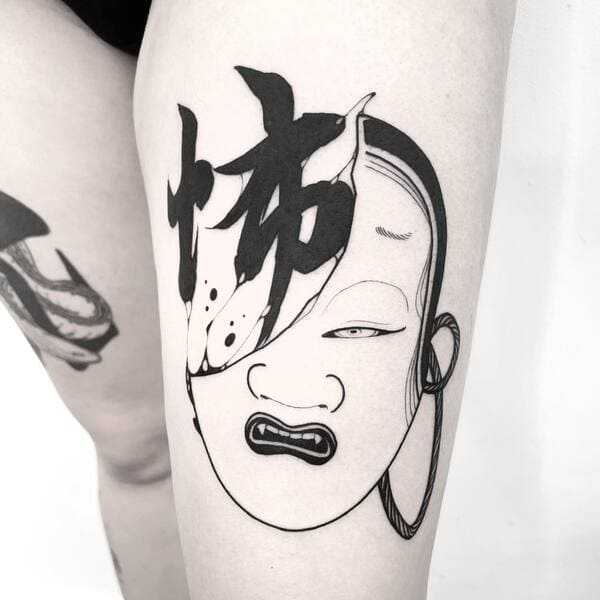
- Oni Mask: This Japanese mask tattoo represents protection, believed to ward off evil spirits.
- Peony (Botan): A symbol of prosperity and honor.
- Fox (Kitsune): A mythical creature symbolizing intelligence, cunning, and transformation.
Beyond the main symbol, the tattoo background is often built with many supporting elements. Artists use Japanese tattoo composition to combine the central figure with background elements such as waves, wind bars, or traditional cloud patterns. These background elements create visual depth and connect the details into a unified story within the design.
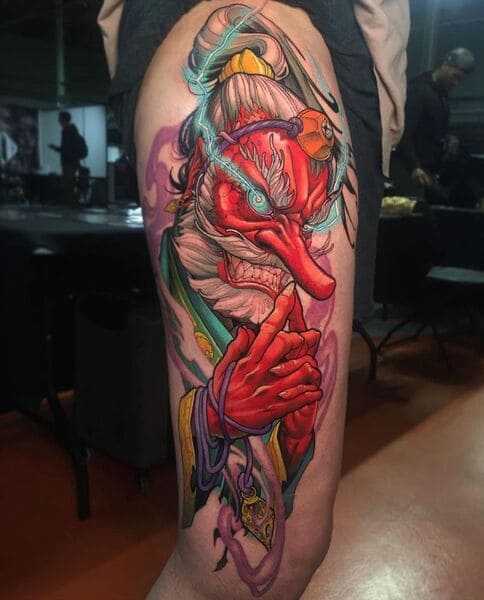
How Is Irezumi Different From Other Tattoo Styles?
Many people wonder how irezumi differs from other popular tattoo styles. Below are three of the clearest distinctions:
- Compared with American Traditional: Both styles use bold lines, but irezumi prioritizes large compositions that often cover large parts of the body, with backgrounds of waves or swirling clouds. American Traditional designs are usually separate, standalone pieces that are more compact.
- Compared with Realism: Tattoos in the realism tattoo style aim to reproduce details like a photograph. Irezumi, by contrast, stylizes its imagery and emphasizes symbolism rather than photographic accuracy.
- Compared with Neo Japanese: This is a modern variation of irezumi that combines contemporary techniques with traditional foundations. Neo Japanese tattoos typically use a broader color palette and more flexible line work.
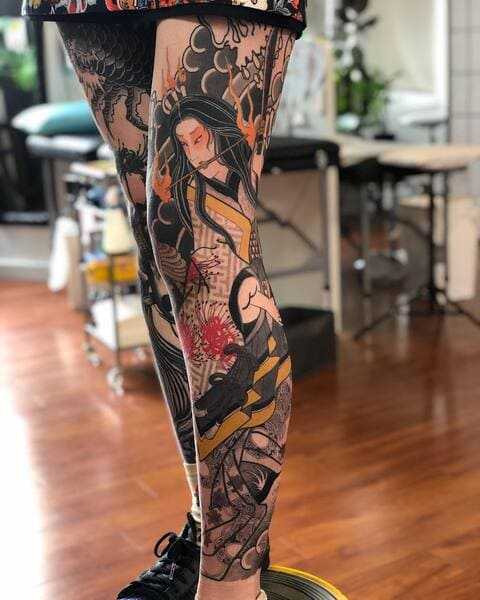
Suitable Tattoo Placements and Designs
Irezumi reaches its full visual impact when applied over large areas of the body. The most suitable placements include:
- Arm (Sleeve): A Japanese tattoo sleeve design covering the entire arm allows the artist to tell a continuous story. A Japanese half sleeve tattoo is ideal for those who want to start with a moderate size before eventually expanding to a full sleeve.
- Back: The largest canvas on the body — perfect for grand tattoo designs such as dragons or scenes featuring Mount Fuji.
- Chest and ribs: Highly personal placements, often chosen for symbols with deep personal meaning.
One distinctive feature of this style is designing according to the body’s natural movement, known as body flow tattoo. The artist observes muscle movement and natural curves before creating the composition. By applying principles such as tattoo anatomy flow and body contour tattoo, images like dragons, fish, or flowers are arranged to flow naturally along the body’s shape. This approach helps the overall design look harmonious and creates a sense of natural movement across the body.
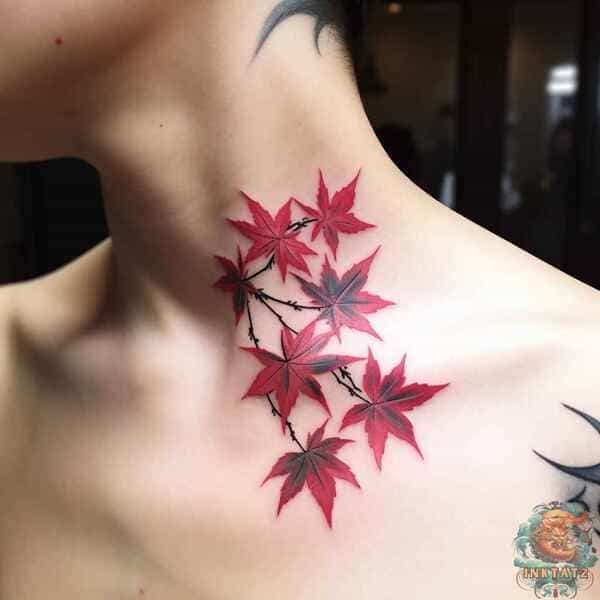
Timing and Preparation Before Getting a Tattoo
Before getting tattooed, keep the following in mind:
- Get enough sleep and eat beforehand to maintain stable blood sugar levels throughout the tattoo session.
- Avoid alcohol for at least 24 hours before the appointment — alcohol thins the blood and can affect how well the ink settles in the skin.
- Moisturize the skin in the area to be tattooed for 1–2 weeks beforehand so the skin is in its best condition to receive the ink.
After the tattoo is done, proper aftercare determines how well the colors last over time. During the 2–4 week healing period, you should keep the tattoo clean, avoid soaking it in water, apply fragrance-free moisturizer, and limit direct sun exposure. Applying sunscreen regularly after the skin has healed helps the ink maintain its vibrancy for a long time.
The Design Process Before Tattooing
Before starting, clients usually go through a tattoo consultation. The artist will discuss the idea, size, and placement to create a custom tattoo design that suits the body. After that, the artist completes a draft sketch to refine the composition and details before the tattooing begins. This preparation step ensures that the final piece is both aesthetically pleasing and clearly personalized.
Frequently Asked Questions
What do Japanese tattoos mean?
Each symbol carries its own message — from strength and perseverance to protection and impermanence. The meaning can also depend on the personal story of the person wearing the tattoo.
Does getting a tattoo hurt?
Pain levels depend on the placement. Areas with more bone (such as the spine or ribs) tend to hurt more than areas with more muscle (like the upper arm or thigh).
Are Japanese tattoos suitable for women?
Absolutely. Cherry blossoms, foxes (kitsune), and peonies are among the most popular designs chosen by women within this tattoo style.
Do the colors fade over time?
When high-quality ink is used and the tattoo is cared for properly, the colors can remain vibrant for a long time. Avoiding excessive sun exposure and moisturizing regularly are two key factors.
Which design is best for beginners?
A medium-sized koi fish or cherry blossom design is a good choice — relatively easy to execute, meaningful, and suitable for many placements on the body.
Irezumi is not just a pattern on the skin. It is art, symbolism, and personal storytelling combined into one. By choosing the right design, the right artist, and following proper aftercare, a tattoo can accompany you over time without losing its original beauty.

If you are searching for Japanese tattoo near me or looking for design inspiration, visit our gallery to find ideas that resonate with your own story.
If you need more information or technical advice, please contact Holistic Ink Tattoo Studio for a free consultation, where you can receive detailed guidance and support with booking an appointment.