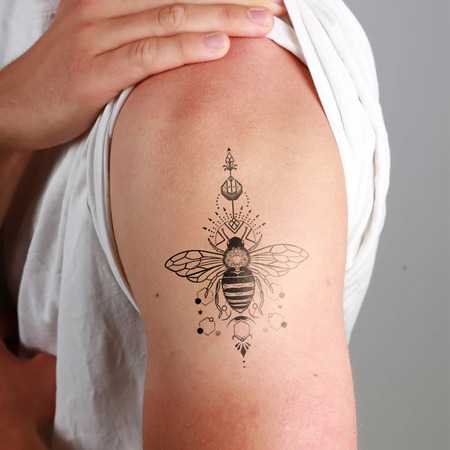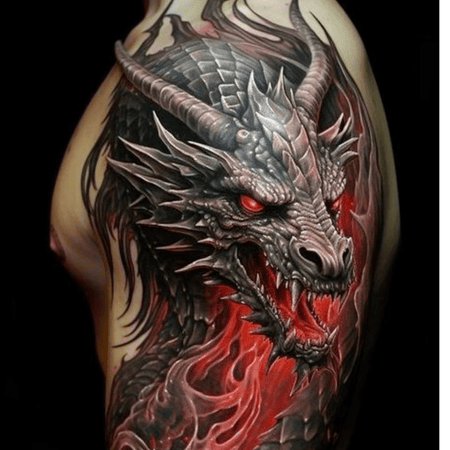
Henna tattoos have become a rising trend among young people thanks to their artistic charm and ability to create unique decorative patterns on the skin. From delicate wrist designs to intricate mandala motifs on the hands, henna art offers countless options for those who want to express their personality while still staying safe.
In the U.S., clients often search for services like “henna near me,” “henna artist near me,” or reputable studios in their area to ensure both safety and quality. Holistic Ink is highly regarded for its transparent process and experienced artists, delivering a more professional experience compared to many other henna shops across the country.
Choosing the right area of skin for mehndi not only enhances aesthetics but also directly affects how long the stain lasts and the meaning behind each design. Every skin area has its own characteristics—from the thickness of the outer layer to how frequently it comes into contact with water. Understanding these factors will help you achieve a beautiful and long-lasting henna result.
Traditional Henna – Jagua – Mehndi at Holistic Ink: What’s the Difference and Which One Is Safe?
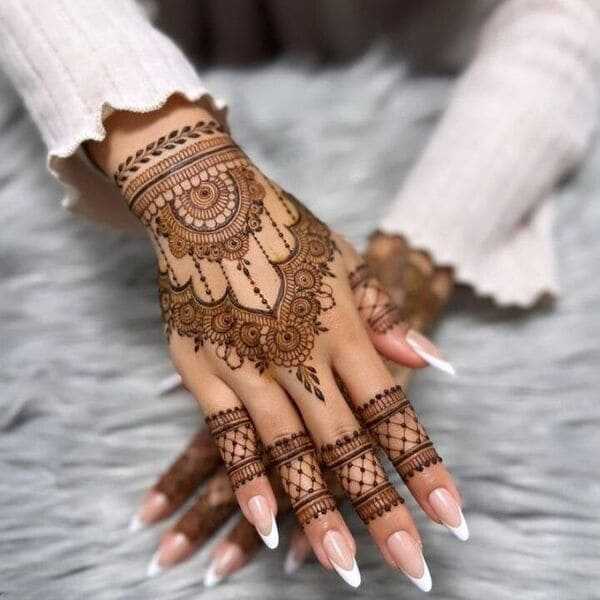
Traditional henna is extracted from the leaves of the Lawsonia inermis plant, giving it a signature orange-brown stain. Jagua henna, originating from South America, produces a natural deep blue-black color. Meanwhile, “mehndi” is the Indian term for the art of creating traditional patterns using henna paste.
Organic henna contains no preservatives or synthetic dyes, making it safe for most skin types. However, it typically takes longer to develop, requiring about 6–8 hours to reach its full color intensity.
How to Use Jagua Henna Safely & Its Drying Time
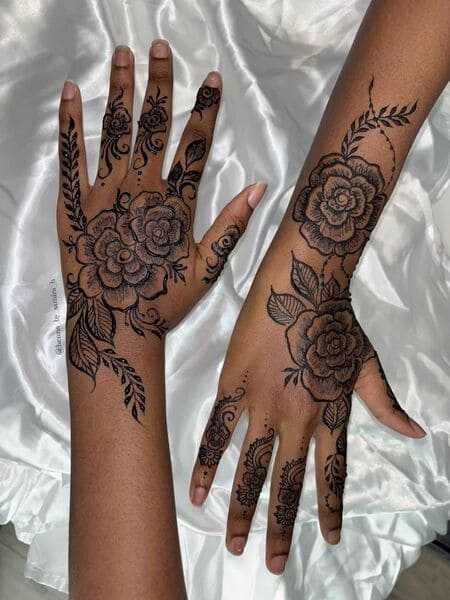
When using jagua, it’s important to perform a patch test 24 hours beforehand to check for potential allergic reactions. The drying time of henna varies: jagua usually takes 4–6 hours to dry, while traditional paste needs about 6–8 hours. Many clients also wonder whether to use stencils or freehand application—stencils are ideal for beginners, whereas freehand techniques offer more natural and fluid lines.
10+ Beautiful and Meaningful Henna Tattoo Placements: Hands – Fingers – Wrists – Feet – Shoulders – Waist
Choosing the best placement for your henna tattoo designs directly affects both their visual appeal and how long the stain lasts. Each area of the skin has its own characteristics—such as thickness and daily friction—that influence the final result.
Most Popular Henna Placement Areas at Holistic Ink:
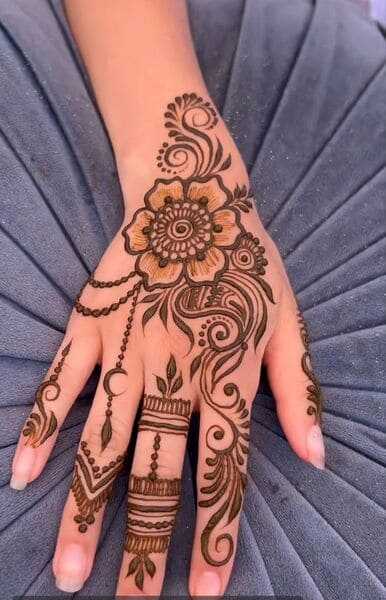
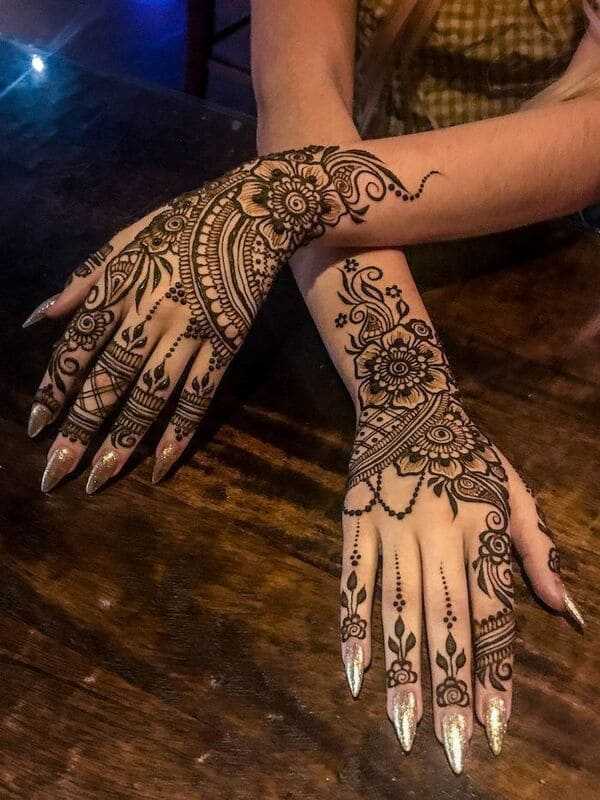
- Hands & Fingers:
Symbolizing connection, femininity, and softness, this is the most popular placement for henna. Finger mandalas, symmetrical motifs, and traditional mehndi patterns often develop into deep, bold stains that stand out beautifully with every gesture. Perfect for festivals, weddings, and photoshoots.
- Wrists:
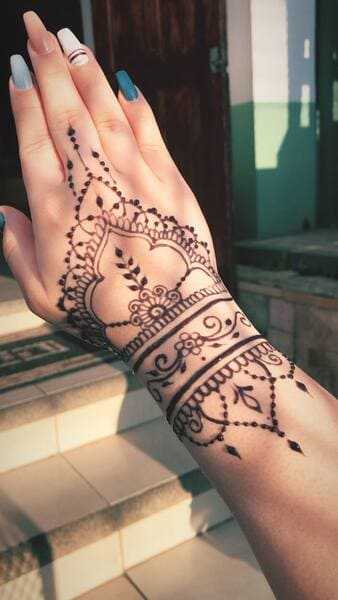
The wrist offers a refined, elegant look, and becomes even more charming when paired with jewelry. Designs such as boho line art, geometric details, or bracelet-style patterns accentuate softness and work well in both professional and casual settings. It’s a discreet yet visually appealing area.
- Arms:
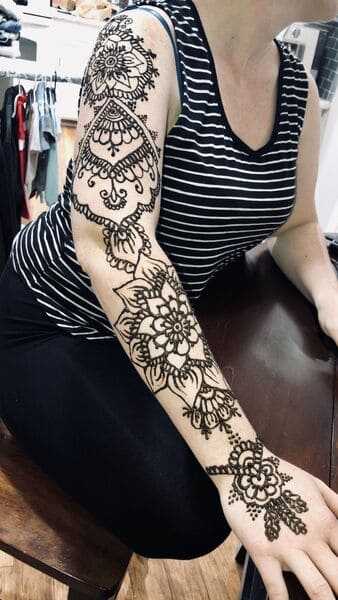
An ideal canvas for more intricate designs. Forearm henna or jagua sleeve styles create a bold, modern visual impact. With a wider and flatter surface, this area allows artists to showcase fine details and achieve long-lasting results—great for those wanting a stain that stays vibrant longer.
- Feet / Ankles:
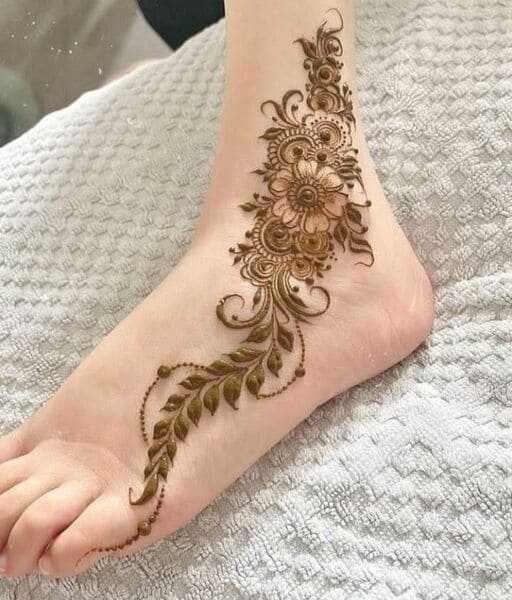
Soft, feminine, and graceful, henna on the feet or ankles is especially popular for special occasions such as events, beach-style photoshoots, or outdoor weddings. Floral vines, leafy patterns, or small mandalas create delicate accents. When paired with sandals or open-toe shoes, these designs become even more eye-catching.
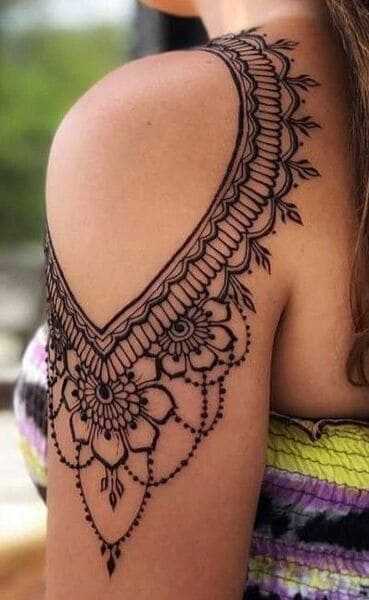
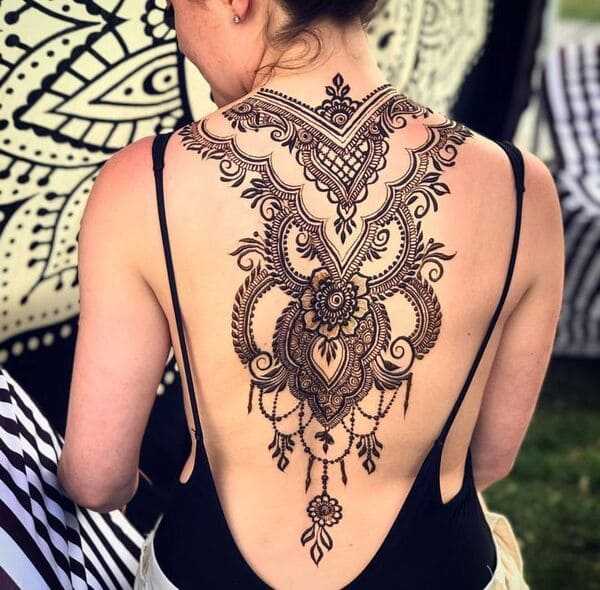
- Shoulders & Back:
These areas highlight artistic expression, especially with large boho patterns, mandalas, or geometric spreads. Shoulder and back henna evoke a sense of freedom, confidence, and allure. When worn with off-shoulder tops, crop tops, or festival outfits, the effect becomes striking and unforgettable.
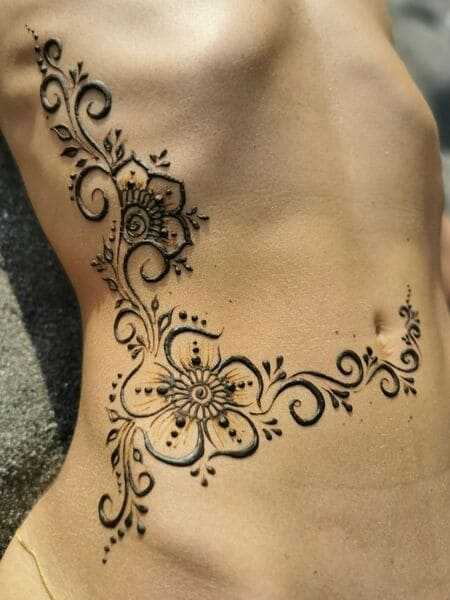
- Waist & Hips:
A sensual, modern, and personal placement. Henna on the waist or hips is often chosen to enhance natural curves. Delicate lines, boho straps, or fine floral patterns that follow the body’s shape create subtle highlights—perfect for bikinis, evening wear, or stylish summer outfits.
The Meaning of Henna Based on Different Body Placements
Each area of the body carries its own symbolic meaning. Henna hand tattoo designs on the hands represent creativity and blessings. The feet symbolize one’s journey and stability, while the shoulders embody strength and responsibility.
Brides often choose traditional mehndi tattoo designs on their hands and feet, featuring intricate Arabic-style patterns. Festival-inspired henna motifs are also popular at music events and cultural celebrations.
Henna is used for many purposes—bridal decoration, festival styling, or adding a highlight for beach vacation photoshoots. For those with sensitive skin, gentle, skin-safe henna formulas help minimize irritation, while children should use mild, kid-friendly options to ensure absolute safety.
Choosing Designs, Application Techniques, and 6 Tips for Long-Lasting Color at Holistic Ink
How to Choose the Right Design for Your Style & Skin Tone
Mandala henna, with its concentric circular patterns, works beautifully on both fair and tan skin. Boho henna blends natural elements such as leaves and floral motifs, while minimalist henna focuses on simple, elegant lines.
For fair skin, lighter brown henna in geometric styles tends to stand out more. Those with deeper skin tones shine with floral motifs or bold, richly colored mehndi tattoo patterns.
Professional Henna Techniques and Tools at Holistic Ink
Freehand henna requires the artist to skillfully control the pressure of the cone to create smooth, fluid lines. Meanwhile, using henna stencils provides consistency and ease of application, especially for designs that demand perfect symmetry. High-quality henna cones with stable consistency help produce clean, continuous strokes. Fast-drying formulas combined with professional tools can also significantly shorten the application time.
To improve stain longevity and reduce smudging, artists can apply a henna sealant and use a sugar–lemon coating to help the paste adhere firmly to the skin. Both the consistency of the mixture and the artist’s pressure control have a direct impact on the sharpness of each motif. When done correctly, the stain will stabilize and develop beautifully within the first 24–48 hours.
How to Achieve a Darker Henna Stain: 6 Essential Tips
For a darker, sharper stain, proper aftercare is crucial in the first few hours. Avoid getting the area wet for 6–8 hours to allow the dye to fully absorb into the skin, and continue limiting water exposure for the next 24 hours to protect the developing stain. Regular moisturizing with coconut or argan oil prevents dryness and peeling, helping the color stay rich and long-lasting. When showering or changing clothes, reduce friction to avoid wearing down the stain.
Henna can fade faster when exposed to chlorinated pool water, salty ocean water, or excessive sweat. Hot weather may lead to uneven color development, while cold climates can dry the skin and cause cracking. Adjusting your aftercare routine based on the environment will help maintain a smooth, even stain.
It’s also important to shield the design from direct sunlight, as UV rays can cause the color to fade quickly. Always choose high-quality organic henna to ensure safety and better stain longevity. When combined with professional stenciling and proper aftercare, your henna can stay vibrant for up to two weeks.
If you need additional guidance or technical advice, feel free to contact Holistic Ink for expert support, free consultations, and professional service.