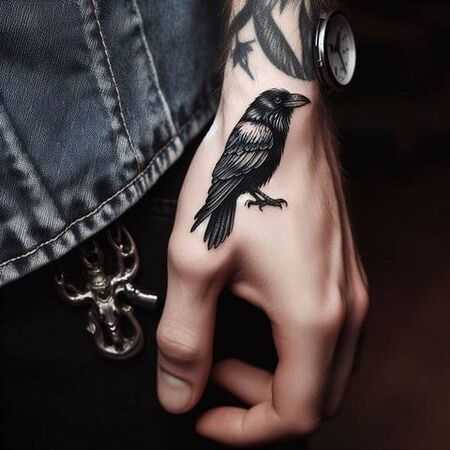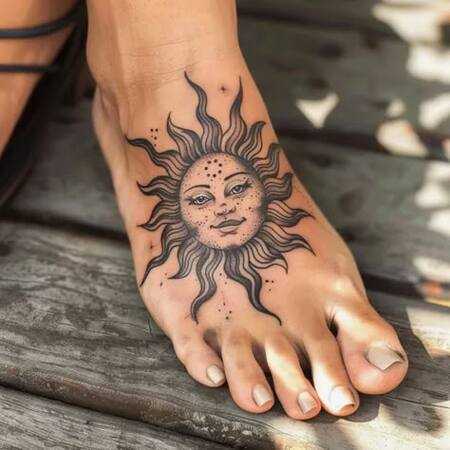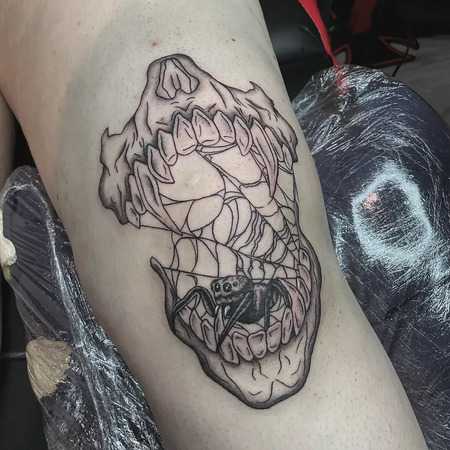
The first time you see a fine line tattoo—a delicate floral branch wrapping around a wrist or a subtle signature running along the ribs—you may wonder how tattoo art can be so refined. More than a passing trend, this style demands specialized techniques, precise execution, and a deep understanding of how ink behaves in the skin. At Holistic Ink, we specialize in this style and have created this guide to help you understand what makes it unique, explore the best placement options, pain levels, pricing, aftercare, and learn how to choose a tattoo artist with genuine expertise before making your decision.
What Is a Fine Line Tattoo?
A fine line tattoo is created using ultra-thin lines produced with small needles and highly controlled hand movements. The result is delicate tattoo artwork that appears soft and elegant while maintaining remarkable clarity and detail. Unlike traditional tattoo styles, this approach requires patience, precision, and exceptional technical skill from the tattoo artist, as every thin line must be placed with accuracy to achieve clean, long-lasting results.
What truly sets this style apart is control. Rather than relying on bold outlines or large areas of solid fill, the artist must execute every line accurately on the very first pass.
What defines a fine line tattoo?
From a technical perspective, a fine line tattoo typically features:
- Thin, clean, and consistent single lines without blowouts or ink spreading
- Minimalist designs or intricate details that remain crisp and recognizable
- Little to no heavy shading
- Small to medium-sized designs that suit subtle placements on the body
This is why the style is often referred to as a minimalist tattoo or precision tattoo—not because it lacks meaning, but because every element has been refined down to only what is truly essential.
Is a fine line tattoo the same as a single needle tattoo?
This is one of the most common questions, and the answer is yes and no—they are closely related, but they are not exactly the same.
A single needle tattoo is created using just one tattoo needle to produce exceptionally fine lines. Over time, these tattoos naturally soften and fade slightly. A fine line tattoo, however, may be created using either a single needle or a small grouping of needles, depending on the design, allowing greater flexibility in execution.
In terms of tattoo needle configuration, tattoo artists commonly use small liner needles such as 1RL or 3RL, together with a rotary tattoo machine, cartridge needles, and disposable grips to create smooth, consistent lines. Many professional studios also use vegan tattoo ink with highly durable black pigment to improve both safety and long-term definition.
The key difference lies in line consistency. Single needle tattoos often have a more handcrafted, organic appearance, while fine line tattoos can achieve greater refinement and precision in highly detailed work. Understanding this distinction will help you communicate your expectations more effectively during your consultation with your tattoo artist.
Fine Line Tattoo Meaning Explained
Not everyone gets tattooed for aesthetics alone. Many people choose the fine line style because of its unique ability to carry a deeply personal story in a design that is subtle, understated, and discreet. Below are the four most common meanings behind fine line tattoos—and why so many people choose this style over any other.
Memorial Tattoos — Honoring Those We’ve Lost
Memorial tattoos are among the most common forms of meaningful tattoos seen at studios specializing in fine line and linework. People choose a meaningful date, a loved one’s signature, a favorite flower, or an object closely tied to a cherished memory, placing it somewhere they can see every day. Not because they’re afraid of forgetting—but because they know they never will, and they want a place where they can rest their hand whenever they think of that person.
The appeal of a memorial tattoo goes beyond aesthetics. Its delicate nature mirrors the emotion behind it—a loss that isn’t loud, yet never truly disappears. Sometimes a few carefully drawn lines can express more than a large, colorful piece ever could.
One important consideration is how well the chosen symbol will age over time. Reproducing a loved one’s original signature, for example, presents a significant technical challenge because natural handwriting often contains extremely fine strokes alongside heavier lines. Not every tattoo artist has the experience to execute this successfully. Before committing, ask to see healed examples of signature tattoos—not just photographs taken immediately after the session.
Spiritual Tattoos — A Quiet Expression of Faith
Spiritual symbols are not limited to any one religion. They may represent a fine line cross tattoo, a crescent moon in Islamic tradition, a lotus flower in Buddhism, the Tree of Life in Celtic culture, or simply a circle—a symbol of wholeness and continuity shared across many cultures. Fine line tattooing complements these designs because it communicates meaning without demanding attention. Faith is deeply personal, and a subtle design often expresses that more authentically than a bold, heavily saturated tattoo.
One characteristic shared by many spiritual tattoos is that they require no explanation. The tattoo itself speaks for the wearer. Because of this, the design consultation becomes even more important than usual. The artist must understand the specific meaning the client associates with the symbol rather than simply reproducing a reference image.
One practical consideration is that many spiritual symbols originate from distinct cultural traditions. Before making a decision, take the time to understand the history behind the symbol and ensure its use aligns with the meaning it holds for you. This is not a legal issue—it is about creating a tattoo that genuinely belongs to your own story rather than simply copying an attractive image found online.
Love and Connection — Matching Tattoos and Family Symbols
Matching tattoos have become a meaningful way for two people to celebrate their relationship—and not only romantic relationships. Childhood best friends, sisters, mothers and daughters, or other close family members can all choose a shared symbol while wearing it in their own unique way. The same design placed on two different bodies in two different locations becomes a story in itself.
Linework family tattoos rarely focus on realistic portraits. Instead, they rely on symbolic imagery such as a deeply rooted tree, birds and a nest, or a sequence of meaningful dates connecting family members. Their minimalist nature helps the design remain timeless rather than following short-lived trends.
When choosing matching tattoos, remember that identical designs may heal differently on different parts of the body. The thin skin of the wrist generally heals differently from the thicker skin of the upper arm, and ink can appear differently across various skin tones. For the closest possible match, both people should ideally be tattooed by the same artist, in the same session, and on the same body placement.
Personal Growth — Marking a Turning Point
This category represents moments of transformation: overcoming depression, leaving a toxic relationship, achieving a long-term goal, or simply surviving a chapter of life that once seemed impossible to escape. These tattoos are not meant to prove anything to other people. Instead, they serve as a personal reminder that the wearer once accomplished something they never believed they could.
Resilience is the idea most commonly associated with this category. Popular symbols include a sprouting seedling, ocean waves, mountains, or a rising sun—each representing perseverance, hope, and moving forward. Fine line tattooing is especially well suited to these themes because it does not need to be large or dramatic to carry emotional weight.
According to many experienced tattoo artists, this category also has one of the lowest rates of tattoo regret. The reason is simple: people who choose these designs usually spend considerable time reflecting on their experiences before committing. The tattoo is rarely an impulsive decision. Instead, it becomes the natural conclusion of a long personal journey. And when the meaning runs deep enough, the gradual softening of the ink over time does nothing to diminish its significance.
A meaningful tattoo doesn’t have to be elaborate to express powerful emotions. Sometimes a single curve or one carefully chosen word says everything that needs to be said. That is the power of self-expression through fine line body art.
Beyond its visual appeal, many people see fine line tattooing as a form of self-expression, a way to affirm their identity, or to commemorate a journey of emotional healing. Symbols with deeply personal meaning often represent empowerment and remembrance, making every design as unique as the individual who wears it.
Why Are Fine Line Tattoos So Popular?
The rise of social media has changed the way people perceive tattoos. Small, elegant designs that complement a wide range of personal styles—without drawing excessive attention—have become increasingly popular. As a result, elegant minimalist tattoos are now commonly seen on the wrist, collarbone, and upper arm, especially among younger generations.
Some of the reasons behind their popularity include:
- Minimalism has become a defining trend in modern fashion and art.
- Tiny tattoos are easier to conceal or coordinate with different outfits than larger pieces.
- Subtle tattoos fit more comfortably in professional environments where visible tattoos may still be viewed conservatively.
- First-time clients often choose this style because it is generally less intimidating and makes it easier to commit to a smaller design.
However, there is one important thing you should understand before getting one: fine line tattoos are not low-maintenance. They require proper aftercare and may need a touch-up after several years. The real question isn’t “Is it worth it?”—it’s “Are you willing to commit to maintaining it?”
Before making your decision, ask yourself:
- Do you prefer clean, minimalist designs?
- Are you looking for a subtle tattoo that doesn’t immediately draw attention?
- Is this your first tattoo?
- Are you willing to return for a touch-up in three to five years if necessary?
Beyond the minimalist movement, many fine line designs are also influenced by Korean tattoo styles, modern tattoo aesthetics, and inspiration found through Pinterest tattoo ideas. Celebrity tattoos have also played a major role in popularizing the style and inspiring people to create designs that reflect their own personal stories.
Popular Fine Line Tattoo Styles and Design Trends
Line art tattoos are not limited to a single theme. Each design direction has its own visual language and requires a distinct technical approach. Below are six of the most requested styles at studios specializing in fine line and linework tattoos.
Many first-time clients begin by exploring first tattoo ideas or tiny tattoo inspiration before committing to a larger design. Matching tattoo ideas, tattoos for women, and tattoos for men are also highly popular because they offer a high level of personalization and can easily be adapted to suit individual styles.
Botanical Tattoos — Inspired by Nature
Botanical tattoos draw inspiration from the natural world, featuring elements such as fern leaves, olive branches, ancient tree roots, or delicate sprigs of herbs. Their beauty lies in the balance between organic forms and geometric structure. The lines are neither perfectly straight nor completely irregular, and that carefully controlled imperfection gives the design a sense of life that purely geometric artwork often cannot achieve.
From a technical standpoint, botanical tattoos require continuous control of needle pressure throughout every curve. A well-executed leaf should appear delicate while still preserving the definition of its veins after healing—a true sign of craftsmanship. This style works especially well on the forearm and collarbone, where the body’s natural contours enhance the flow of the design.
One advantage that is rarely discussed is how easily botanical tattoos can evolve over time. A single branch can later be expanded with additional leaves, flowers, or roots without disrupting the original composition. Few tattoo styles offer this level of flexibility, allowing the artwork to grow alongside the person wearing it.
Floral Tattoos — Elegant Without Being Ordinary
Flowers are the most requested subject in fine line minimalist tattooing. Roses, peonies, cherry blossoms, and tulips can all be reduced to a handful of delicate lines while remaining instantly recognizable. Achieving this requires the artist to understand which features define each flower—and which details can be removed without losing its identity.
The greatest challenge in floral tattooing is creating layers within the petals. Without relying on heavy shading, the artist must build depth through overlapping lines alone. When executed properly, the finished piece resembles a finely drawn pencil sketch—light, graceful, and full of dimension.
One common mistake to avoid is choosing flowers that are too small yet contain too many petals. A five-petal flower is far easier to execute than a twenty-petal daisy at the same size. When too many lines are packed into a limited space, they may naturally spread during healing and lose their definition. An experienced tattoo artist will recommend the minimum safe size for each flower before the tattooing process begins.
Script Tattoos — Handwriting That Carries Emotional Weight
A script tattoo is much more than lettering. It can preserve the words of someone who has passed away, a quote that has shaped a person’s life, or simply the name of someone deeply loved. Few tattoo styles are more personal, because no one else in the world will have those exact words placed in that exact location on their body.
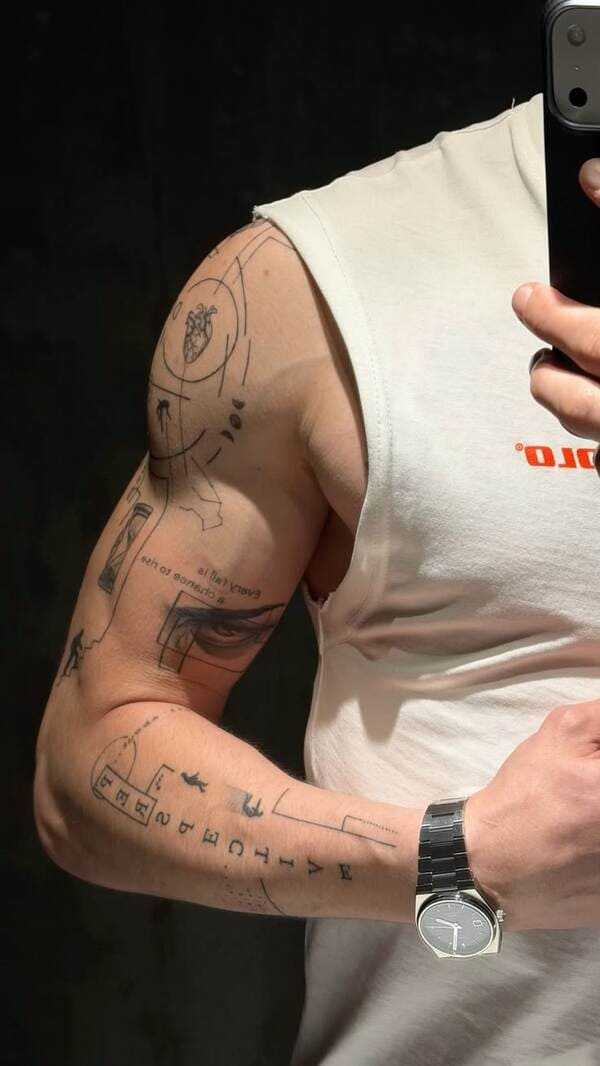
In fine line tattooing, font selection is critical. Extremely thin fonts can become difficult to read if the design is too small. Serif fonts generally retain their clarity better over time than highly decorative cursive scripts. The inner forearm and ribs remain the most popular placements for script tattoos.
Beyond font choice, kerning—the spacing between letters—is equally important. Letters placed too closely together may blur into one another after several years, while letters placed too far apart lose their visual rhythm. This is why the design consultation is not simply a formality; it is an essential step to ensure the tattoo remains legible for years to come.
Geometric Tattoos — Precision in Every Line
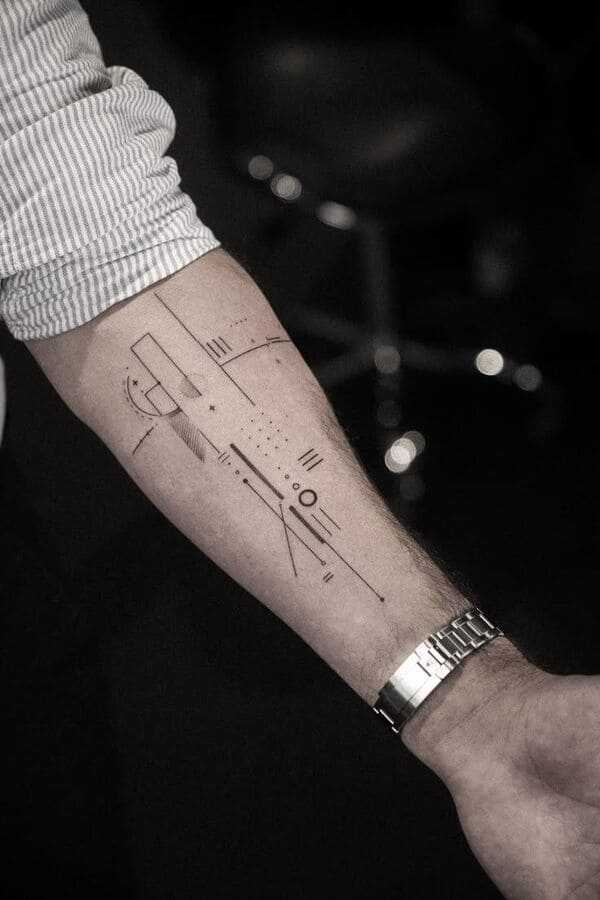
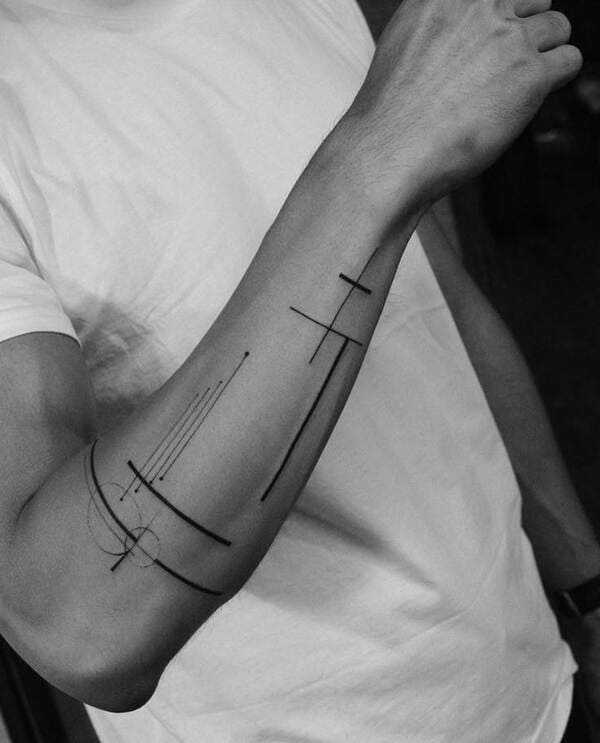
Geometric tattoos celebrate the beauty of pure geometry through straight lines, sharp angles, concentric circles, and interlocking polygons. This style demands absolute precision. A line that deviates by only a few degrees can disrupt the entire symmetry of the design—and the human eye will immediately recognize that something feels off, even without knowing exactly why.
Many artists combine geometric tattooing with mandala designs to create pieces that are both visually striking and spiritually meaningful. This style performs particularly well on flatter areas of the body, such as the upper back or outer upper arm, where the skin undergoes minimal distortion as muscles move.
One lesser-known advantage of geometric tattoos is that they often age more gracefully than many other styles. Because they contain little or no solid fill, the natural softening of the ink over time can create the appearance of an aged sketch rather than a neglected tattoo.
Animal Tattoos with Micro Realism
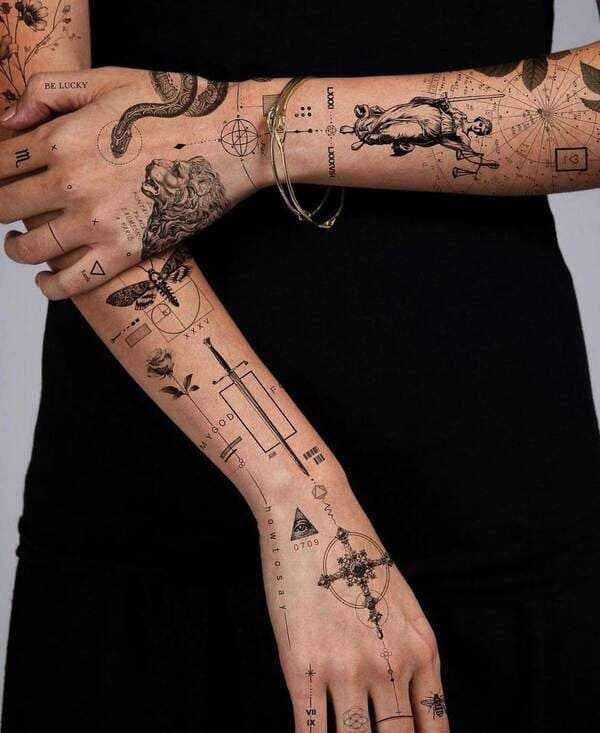
Animal tattoos rarely attempt to recreate an entire animal in perfect detail. Instead, the artist selects only its most recognizable features—the texture of a cat’s fur, a lion’s mane, or the delicate wings of a butterfly—and renders them with just enough detail to make the subject immediately identifiable. The goal is not to include as much detail as possible, but to determine how much can be left ofine line tattoo but while preserving recognition.
Micro realism techniques are often incorporated by adding subtle shading or a handful of fine strokes to suggest the texture of fur, skin, or scales. The result is a tattoo that feels more lifelike than a simple outline while still maintaining the elegance and lightness of fine line work.
The greatest challenge lies in the eyes and facial expression. A tiny shift in the position of an eye can completely change the emotion conveyed by the artwork. This is why an artist who excels at botanical or geometric tattoos may not necessarily be equally skilled at animal tattoos—they require a specialized ability to observe and recreate subtle expressions.
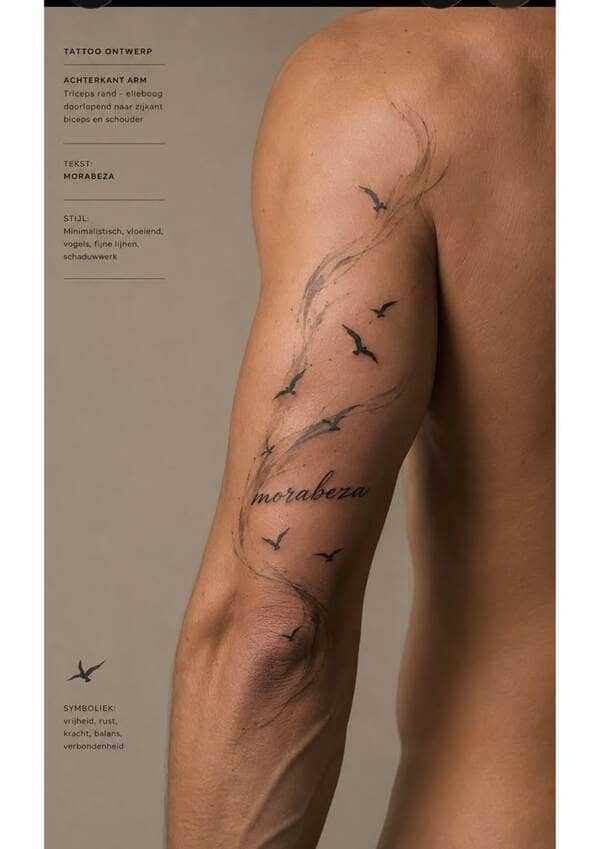
Fine Line Blackwork — Minimalism at Its Purest
Blackwork appeals to those who want strong visual impact without relying on color or heavy shading. Every element is created using black ink alone, placing complete emphasis on the quality of each individual line. Nothing distracts the eye, and nothing conceals imperfections.
This style exposes an artist’s skill more directly than almost any other. There is no color to hide mistakes and no shading technique to compensate for an uneven line. For that reason, fine line blackwork is often considered one of the clearest indicators of a studio’s expertise in linework tattooing.
In terms of longevity, blackwork generally retains its appearance better than tattoos containing multiple colors. Black pigment tends to remain more stable under UV exposure than colored inks. Even so, every tattoo will naturally soften over time. This should not be viewed as a flaw, but rather as a characteristic of the medium that every client should understand before making a decision.
A common question is: Which style is right for me? The answer ultimately depends on three factors—where you want the tattoo placed, the size you envision, and the story you want your tattoo to tell.
Best Placement for Delicate Linework
Tattoo placement has a direct impact on both the longevity and appearance of a tattoo. Some of the most popular and suitable placements include:
- Wrist tattoos: Easy to see and perfect for small symbols or script tattoos.
- Finger tattoos: Delicate and eye-catching. However, they tend to fade the fastest because the hands are constantly exposed to sunlight, water, and friction.
- Forearm tattoos: Offer ample space, are relatively low on the pain scale, and work well for more detailed designs.
- Collarbone tattoos: Highly elegant and visually striking, but they require an experienced artist since tattooing over bone can be more uncomfortable.
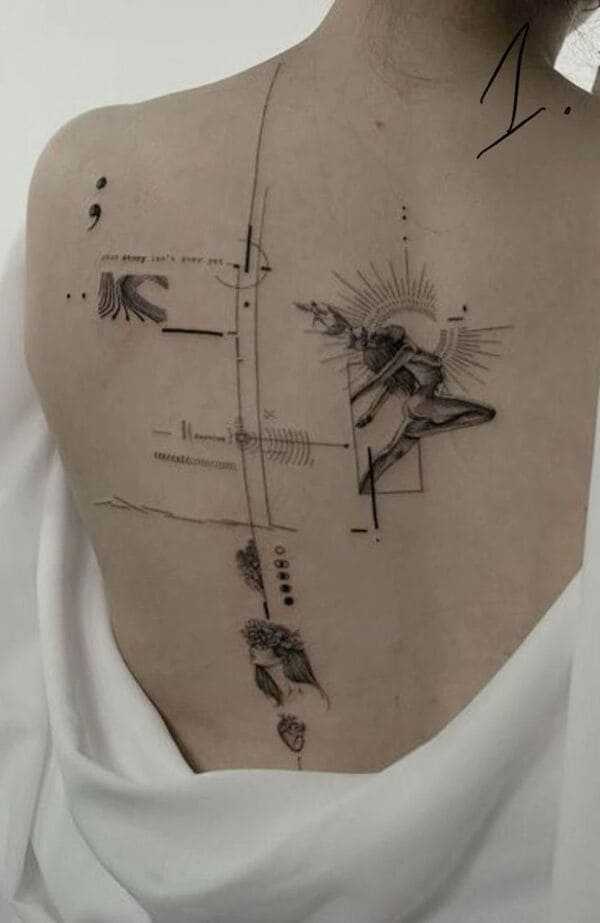
- Spine tattoos: Create a long, graceful visual effect, although they are generally more painful than most other placements.
- Behind the ear and ankle: Ideal for very small, deeply personal designs.
In addition, shoulder tattoos, chest tattoos, rib tattoos, and sternum tattoos are popular choices because their larger surface areas make it easy to expand the design over time.
One question clients frequently ask is, “Which placement holds up the best over time?” The answer is fairly consistent: the forearm and collarbone are generally considered the best locations for preserving the clarity of fine line tattoos.
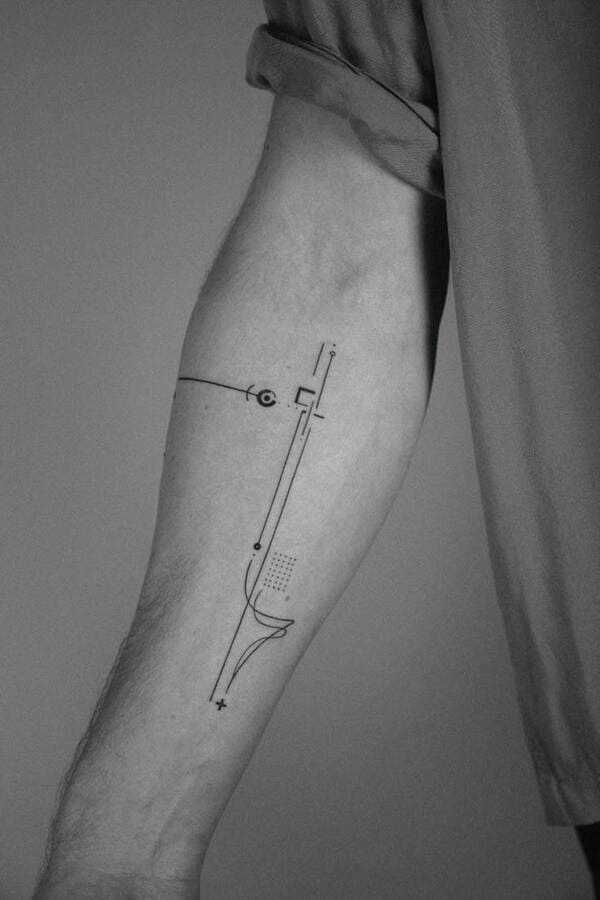
How Well Does This Style Age?
The honest answer is yes. They typically fade faster than bold, heavily outlined tattoos—but that does not mean they lack durability.
Tattoo ink is deposited into the dermis rather than the epidermis because the dermis remains much more stable as the skin naturally renews itself. Over time, however, changes in collagen, skin elasticity, and melanin levels can gradually soften a tattoo’s sharpness, especially in areas with significant scar tissue.
Several factors influence tattoo longevity, including:
- The skin is constantly renewing itself. The finer the lines, the more noticeable ink spread becomes over the years.
- UV exposure accelerates fading, especially on areas regularly exposed to sunlight.
- Natural skin aging reduces firmness and gradually changes the appearance of the tattoo.
The most practical solution is a touch-up every three to five years, which is both common and recommended. If you decide to alter the design, options such as a cover-up tattoo, tattoo correction, or laser tattoo removal may also be appropriate, depending on the degree of fading and the tattoo’s current condition. This is not a sign of poor workmanship—it is simply a natural characteristic of fine line tattooing.
Pain Levels by Tattoo Placement
Pain depends on the tattoo’s location, your personal pain tolerance, and the experience of your tattoo artist. In general, fine line tattoos are considered less painful than heavily shaded or fully saturated tattoos because the needle spends less time working in each area.
Areas that are typically more sensitive include:
- Spine
- Ribs
- Fingers
- Neck
- Inner elbow
Areas that are generally less painful include:
- Outer forearm
- Upper arm
- Shoulder
- Outer thigh
The tattoo healing process usually lasts two to four weeks, during which mild itching is completely normal.
Certain individuals should consult a healthcare professional before getting tattooed, including those who are pregnant, breastfeeding, living with diabetes, eczema, psoriasis, autoimmune diseases, or taking blood thinners. Discussing these conditions beforehand can help minimize potential complications during healing.
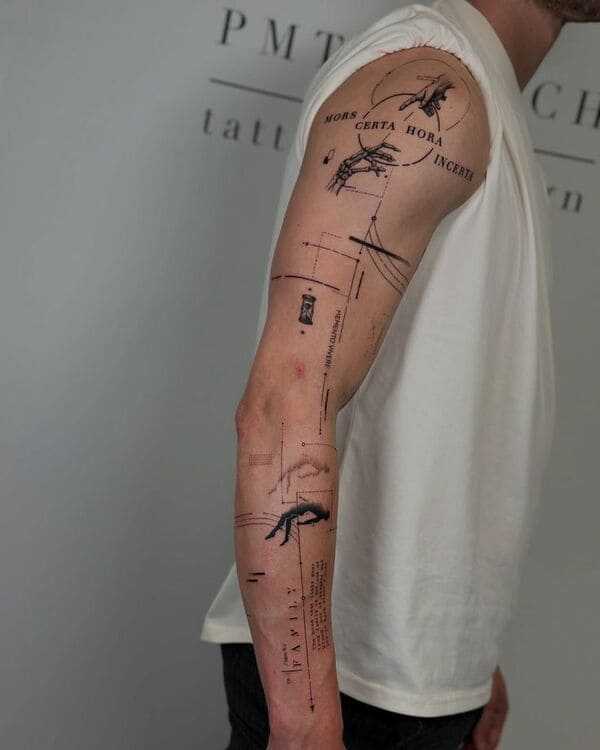
How Much Does It Cost?
There is no universal price because several factors determine the final cost, including:
- The artist’s experience: Experienced fine line tattoo artists generally charge higher rates—and for good reason.
- Design complexity: Intricate artwork with numerous small details requires more time and technical precision.
- Size and placement: Tattoos in difficult-to-reach areas or positions requiring awkward body placement often cost more.
- Studio reputation: Licensed studios that maintain strict medical-grade hygiene standards typically reflect that quality in their pricing.
Avoid choosing a fine line tattoo shop based on price alone. With a style that depends so heavily on precision, the quality of both the artist and the materials will have a lasting impact on the final result.
How to Care for Your New Tattoo
Proper aftercare plays a major role in preserving your tattoo’s appearance. A basic aftercare routine includes:
During the First Week (Days 1–7)
- Wash the tattoo gently with fragrance-free soap or an antibacterial cleanser.
- If recommended by your artist, wear a second skin bandage during the first few days.
- As the tattoo enters the peeling stage, continue a regular moisturizing routine using an appropriate healing ointment to reduce itching.
- Apply a thin layer of tattoo lotion without over-moisturizing.
- Avoid soaking the tattoo in water, swimming, or taking baths.
During the Second and Third Weeks (Days 7–21)
- Light peeling is normal—do not scratch or pick at the skin.
- Continue moisturizing consistently.
Long-Term Care
- Apply sunscreen whenever the tattoo will be exposed to sunlight to minimize UV damage.
- Stay hydrated and maintain healthy skin moisture to help preserve the ink.
- Schedule tattoo maintenance when the lines begin to soften.
If proper hygiene is not maintained, complications such as infection, allergic reactions, blowouts, overworked skin, or keloid formation can occur. Choosing a studio that follows strict sterilization procedures significantly reduces the risk of cross-contamination and helps protect your tattoo for years to come.
Choosing the Right Tattoo Artist
This is arguably the most important part of the entire process. An inexperienced artist can turn an otherwise beautiful design into blurred or blown-out lines within just a few months.
Before every appointment, professional tattoo artists typically conduct a tattoo consultation to discuss your ideas. They then create a custom design, prepare a tattoo stencil, and perform the stencil transfer before tattooing begins. The skin is also prepared through shaving, cleansing, and skin disinfection to reduce the risk of infection throughout the tattoo session.
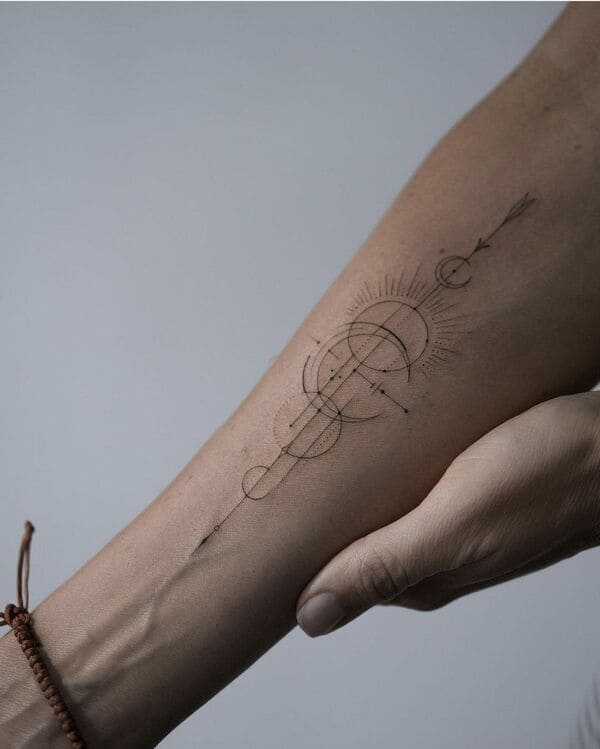
What to Look for in a Professional Tattoo Artist
When searching for the best fine line tattoo artists, pay close attention to the following:
- Their tattoo portfolio should include healed tattoos—not only freshly completed work.
- The studio should be fully licensed and follow strict hygiene standards.
- The artist should work in a sterile environment and use medical-grade tattoo ink.
- Their artistic style should remain consistently strong across multiple pieces, not just a handful of standout examples.
Questions to Ask Before Booking
A quality tattoo consultation should help you understand both your design and the entire tattooing process.
Consider asking questions such as:
- Can I see photos of tattoos that have healed for six months or one year?
- How do you sterilize your equipment?
- What is your touch-up policy?
- How should I prepare before my appointment?
- Is there an additional fee for a custom tattoo design?
Final Checklist Before Booking
- Review healed tattoos—not just fresh ones.
- Verify the artist’s experience.
- Confirm the studio’s sterilization procedures and hygiene standards.
- Ask about the ink and equipment being used.
- Discuss healing expectations and the studio’s touch-up policy.
- Request a personalized design consultation.
- Compare studios based on quality, not simply price.
Many clients also ask whether a tattoo will age well, whether it is suitable for dark skin, when a touch-up may be needed, whether color can be added later, or whether laser tattoo removal is an option if they decide to make changes. Discussing these questions directly with your tattoo artist is the best way to determine the most appropriate solution for your individual situation.
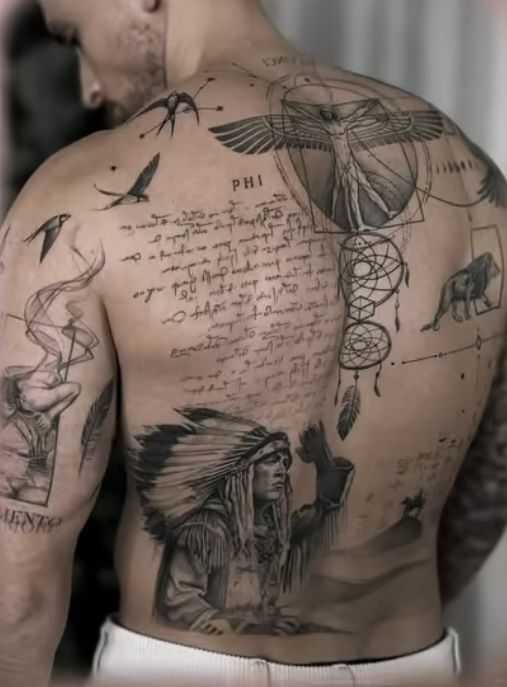
A fine line tattoo is not the right choice for everyone. However, for those seeking a tattoo that is elegant, deeply personal, and capable of aging gracefully, it is certainly a style worth considering. At Holistic Ink, we believe every tattoo deserves to be created by an artist who understands not only the technical precision required but also the story behind the design.
If you’d like to learn more or receive professional guidance, contact Holistic Ink for a complimentary consultation. Our experienced team is here to provide expert advice and exceptional service every step of the way.